Sunday, June 14, 2026
11.5 C
Lusaka
Home Blog Page 94

PF Loses More Members to UPND Ahead of 2026 Polls

The Patriotic Front (PF) has continued to lose members to the ruling United Party for National Development (UPND), just months before the August 13 general elections.

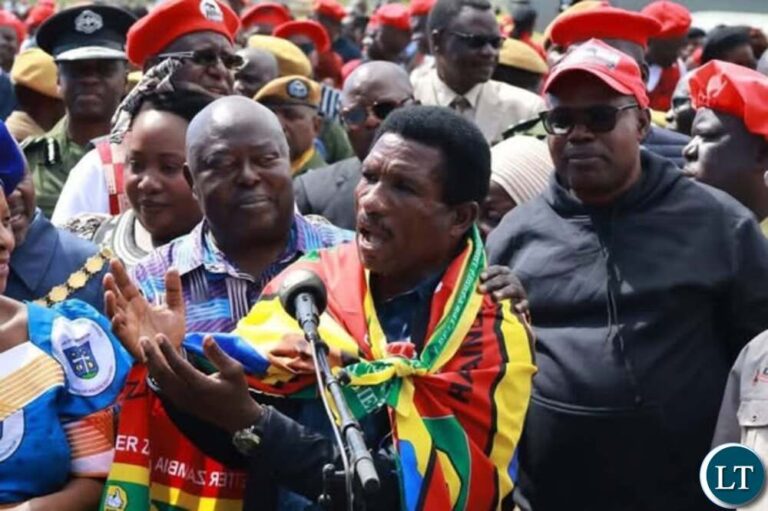
The latest to defect is Masaiti Member of Parliament Michael Katambo, a former Minister of Agriculture under the late President Edgar Lungu.

Mr Katambo announced his decision in Western Province during the Kuomboka Ceremony, which was attended by President Hakainde Hichilema.

He attributed his defection to what he described as President Hichilema’s visionary leadership and delivery on key promises, including the enhanced Constituency Development Fund (CDF).

Mr Katambo said his decision was backed by the people of Masaiti, whom he claimed had urged him to support President Hichilema ahead of the 2026 elections.

“I have come to testify to the good works of President Hakainde Hichilema… From now on, Mr President, I am one of you,” he said.

The development comes barely a week after Kanchibiya MP Sunday Chanda and Isoka MP Majory Nakaponda declared their support for President Hichilema’s development agenda.

The two lawmakers were accompanied by Leader of the Opposition and PF acting president Robert Chabinga, along with several other defectors.

Also joining the ruling party were council chairpersons from Nakonde, Chinsali, Shiwang’andu, Isoka, Mafinga and Kanchibiya districts.

Hichilema Targets Doubling of Zambia’s Economy Post-2026 Elections

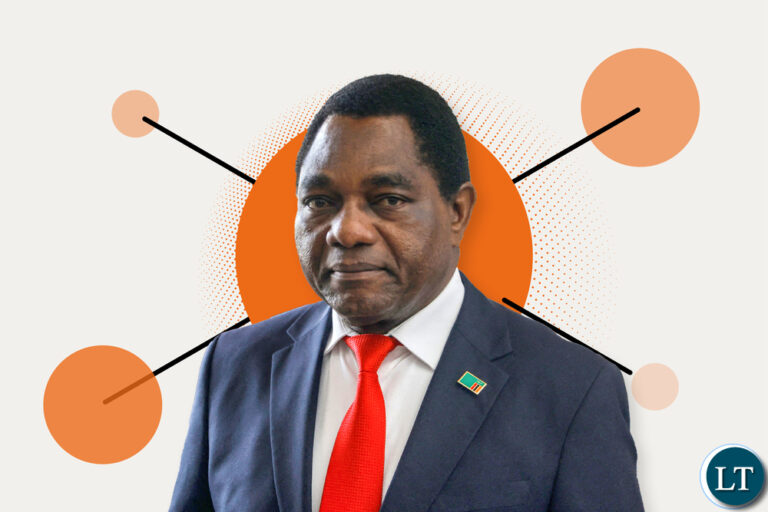
President Hakainde Hichilema says his administration is working towards doubling Zambia’s economy following the August 13, 2026 general elections.

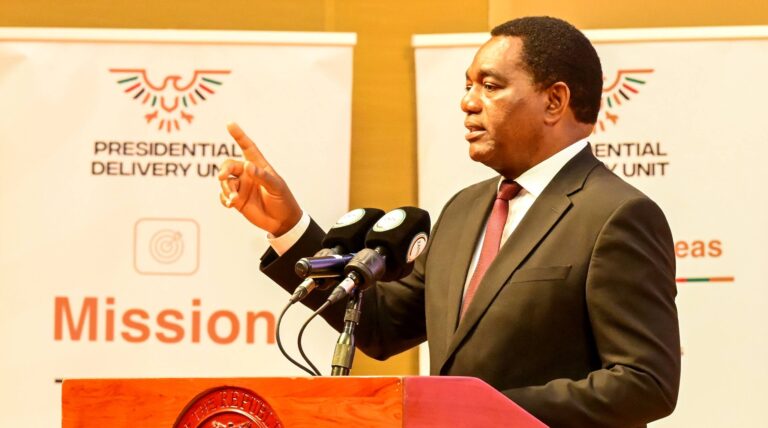
Speaking during the Presidential Delivery Unit (PDU) National Delivery Day at the Mulungushi International Conference Centre, President Hichilema said the ambitious target would be achieved “God willing, courtesy of the people of Zambia.”

“We want to grow the economy and double it… we are in sight to more than double this economy,” he said.

The Head of State explained that the Presidential Delivery Unit (PDU), established in March 2023, was created to accelerate the implementation of key government priorities and improve service delivery.

He said the initiative aligns with government’s broader objective of enhancing economic growth and improving living standards.

President Hichilema further emphasised the need for provinces to leverage their natural resources and comparative advantages to drive local and national economic growth.

“We need the mindset to change, then drive the regional economy… the endowments are there,” he said, adding that regions with untapped potential would be targeted to boost productivity.

Zambia’s economy grew by 4.5 percent in the first quarter of 2025, recovering from a slower pace in 2024 despite challenges such as drought and low electricity supply.

The International Monetary Fund (IMF) has projected that Zambia’s economy will grow by 6.2 percent this year, a figure the President said he aims to surpass.

He noted that provinces such as Luapula Province have the potential to contribute significantly more to the national economy if their resources are fully utilised.

Diesel shortage lifts, scrutiny intensifies

Diesel has returned to filling stations across Zambia, but attention has moved from availability to whether the earlier shortage was driven by deliberate withholding within the supply chain.

The shift in focus follows a warning from President Hakainde Hichilema that licences could be revoked if suppliers failed to meet demand. Shortly after that intervention, fuel began to reappear, creating a sequence that has raised questions about how the shortage developed and why supply improved so quickly.

The timing has drawn calls for accountability. c has urged authorities to identify companies suspected of hoarding diesel, arguing that the pattern of scarcity followed by sudden release cannot be treated as a routine supply fluctuation. He says the public deserves clarity on whether the shortage was the result of genuine logistical challenges or market behaviour designed to restrict availability.

Fuel shortages carry immediate consequences across the economy. Transport operators are forced to scale down activity, costs rise across supply chains, and small businesses dependent on steady fuel access struggle to operate. The disruption extends beyond mobility, feeding into food prices, service delivery and the daily cost of living. When supply returns abruptly, it changes how those earlier impacts are interpreted.

This is where the story shifts. A shortage linked to import delays or distribution constraints would follow a predictable pattern tied to logistics and timing. A shortage that disappears rapidly after regulatory pressure suggests a different dynamic. That distinction is critical, because it determines whether the issue is structural or behavioural.

Government intervention appears to have played a decisive role. The threat to revoke licences is one of the strongest regulatory tools available in the energy sector, and its immediate effect suggests that suppliers responded to pressure. What remains unclear is whether that response reflects compliance with existing obligations or an adjustment to avoid sanctions after withholding supply.

No company has been publicly named in connection with hoarding. Authorities have not announced any formal investigations or enforcement actions. That gap leaves the situation unresolved, even as the market stabilises. Without disclosure, suspicion continues to circulate without confirmation or dismissal.

The petroleum sector operates within a tightly regulated framework, where licences are tied to compliance with supply obligations. Enforcement mechanisms exist to prevent market distortion, but their effectiveness depends on consistent application. A shortage that raises questions about hoarding places those mechanisms under scrutiny.

There is also a broader issue of trust. Consumers and businesses rely on predictable fuel availability. When supply becomes uncertain, it affects planning, pricing and confidence in the system. A return to normal supply is only part of the solution. Understanding the cause of the disruption is equally important in restoring confidence.

The current situation leaves two possible interpretations. One is that supply constraints were resolved through intervention and coordination. The other is that market actors responded to regulatory pressure after withholding fuel. The difference between those explanations will shape how future shortages are handled.

If hoarding occurred, identifying and penalising responsible parties would establish a deterrent against similar behaviour. If it did not, authorities will need to explain what structural weaknesses allowed the shortage to develop and how they will be addressed going forward.

The diesel crisis has therefore moved beyond availability. It now sits at the intersection of regulation, market conduct and public accountability. Supply has returned, but the underlying questions remain unanswered.

Lightning Strike Kills 11 Animals in Nyimba

1

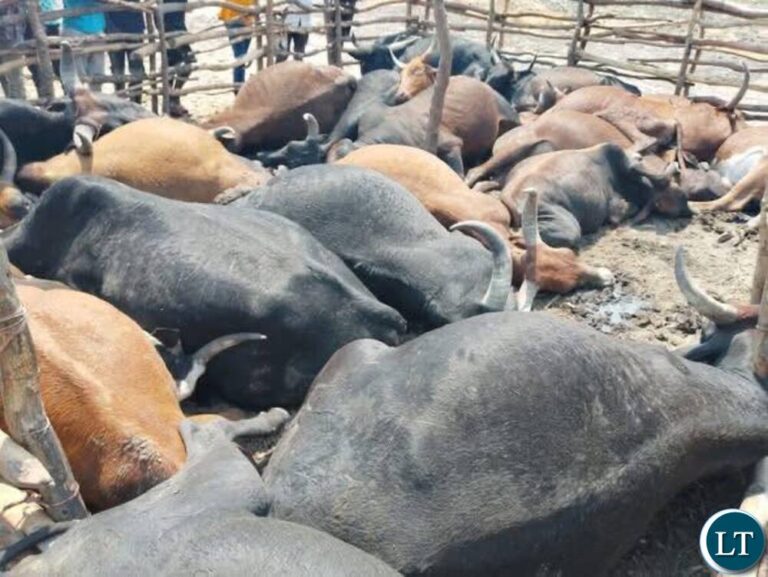
Eleven animals valued at K71,500 have been killed by lightning in Nyimba District in Eastern Province.

The incident occurred in Kamponi Village under Chief Ndake at around 15:40 hours, according to Eastern Province Police Commanding Officer Robertson Mweemba.

Mr Mweemba said the animals belonged to Fackson Daka, who had reportedly secured them in a kraal before leaving for his home.

However, shortly after, the area experienced heavy rainfall accompanied by a powerful storm and intense lightning, which struck and killed the animals instantly.

The development comes barely a day after a 15-year-old girl tragically lost her life due to a lightning strike in the same district.

Following the incident, relatives of the livestock owner moved in to dispose of the carcasses.

UPND Preparing for Convention, Says Mwiimb

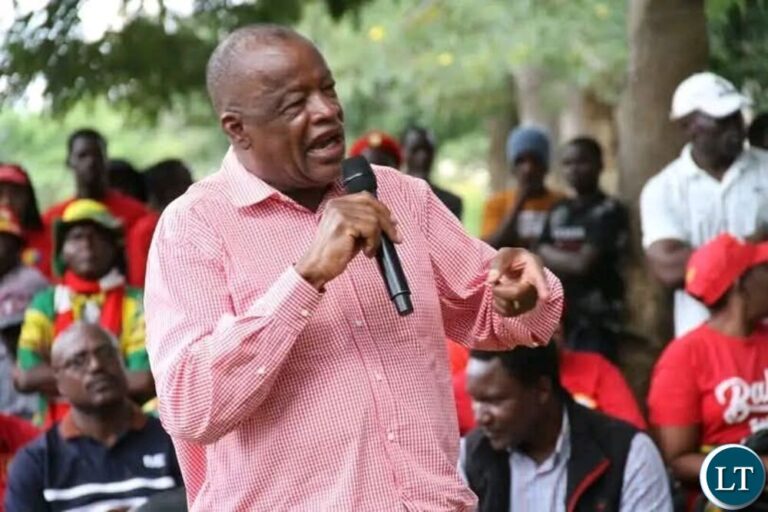
United Party for National Development (UPND) Legal and Constitutional Affairs Chairperson Jack Mwiimbu says the party has not refused to hold a convention and is currently making arrangements for one.

Speaking at a press briefing in Livingstone, Mr Mwiimbu said the UPND remains committed to upholding democratic principles.

He, however, noted that the party would not discuss the matter on social media or other public platforms, as it is currently before the courts.

Mr Mwiimbu was referring to a case filed by Charles Longwe, who has alleged that the UPND has failed to hold a convention.

He said the party has since engaged its legal team to handle the matter through the courts in line with established procedures.

Mr Mwiimbu further questioned Mr Longwe’s standing in the party, stating that if he were a genuine member, he would have raised the issue through internal party structures rather than seeking legal action.

Zambia, Sweden Sign Political Consultations Agreement

0

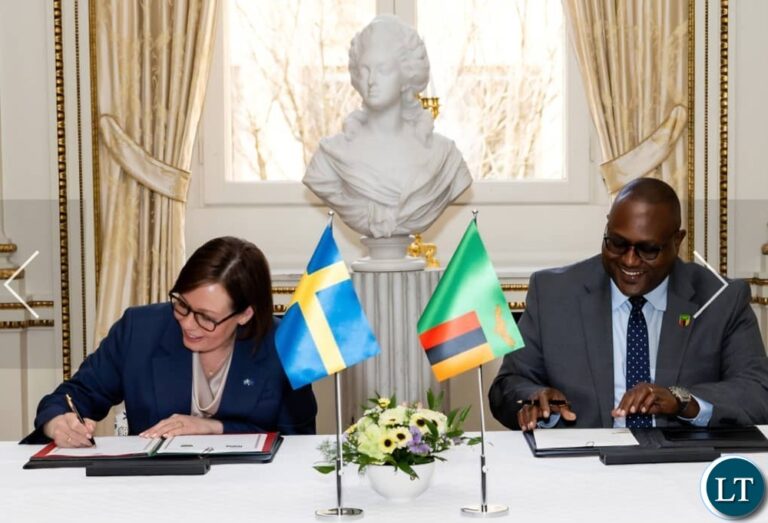
Zambia and Sweden have signed a Memorandum of Understanding on Political Consultations, establishing a framework for regular dialogue and engagement between the two nations.

The agreement signals a strengthened commitment to deepening bilateral relations into a more strategic and results-oriented partnership.

Foreign Affairs and International Cooperation Minister Mulambo Haimbe signed on behalf of the Zambian Government, while Maria Malmer Stenergard signed on behalf of the Swedish Government.

Mr Haimbe is currently in Sweden at the invitation of Ms Stenergard.

The visit also saw the inaugural session of the Political Consultations held at Sweden’s Ministry of Foreign Affairs.

The platform is expected to enable both countries to review existing cooperation, explore new areas of collaboration, and exchange views on regional and global issues of mutual interest.

Hichilema Anticipates Maize Surplus, Urges Market Expansion

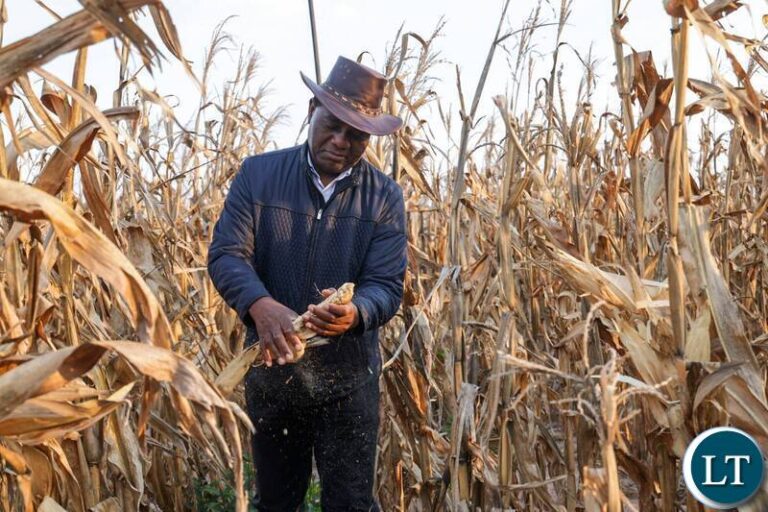
President Hakainde Hichilema says Zambia could soon face the challenge of producing more maize than it can consume, warning that failure to secure markets could result in losses for farmers.

Speaking during the 2026 National Delivery Day at the Mulungushi International Conference Centre, President Hichilema said the country is projected to harvest over four million metric tonnes of maize this year, following increased agricultural production.

However, he noted that Zambia consumes between 2.7 and 3 million metric tonnes annually, raising concerns about how to manage the surplus.

“So now, what do we do with the rest? If it sits at farm gates with farmers, that is a disaster,” he said.

The Head of State explained that while farmers have responded positively to government policies, the focus must now shift towards securing reliable markets both locally and internationally.

President Hichilema cautioned against abruptly closing export channels, warning that Zambia risks losing regional markets to competitors if supply becomes inconsistent.

He cited past experiences where countries such as Democratic Republic of the Congo and South Africa turned to alternative suppliers after Zambia restricted exports.

“[DR] Congo, South Africa took away our market; now we are struggling to get it back because we shut it,” he said.

The President also urged citizens to stop viewing foreign buyers—particularly from the Democratic Republic of Congo—as smugglers, instead describing them as legitimate customers who should be engaged through formal trade channels.

“I don’t want anyone calling Congolese ‘smugglers’, those are our customers; let’s provide them with a proper channel of business,” he said.

He revealed that government is already engaging neighbouring countries with food deficits to secure markets for the expected surplus.

President Hichilema emphasised that increased production must go hand in hand with market planning to ensure farmers benefit from their efforts.

The event was organised by the Presidential Delivery Unit (PDU), which was established in March 2023 to accelerate implementation of priority government programmes and improve service delivery.

Chipata Trader Foils Counterfeit Attempt, Suspect Arrested

0
A 34-year-old man of Munga Compound in Chipata has been arrested after allegedly attempting to use counterfeit money in a transaction at a local market.

The suspect, identified as Julius Banda, is accused of using a fake K500 note to purchase pork worth K50, while expecting K450 in change.

However, his plan was thwarted by alert trader Felix Samwenda, 23, of Mchini Compound in Mtenguleni Village, who detected the counterfeit note.

The incident occurred around 18:09 hours on Saturday at the busy Saturday Market in Chipata and was later reported to Zambia Police Service at Chipata Central Police Station.

According to reports, Mr Samwenda initially handed over K450 in change before noticing that the banknote appeared suspicious. Upon closer inspection and consultation with a fellow trader, the note was confirmed to be counterfeit.

The suspect had already left the scene, but traders launched a search and later apprehended him near Chipata College of Education.

Eastern Province Police Commanding Officer Robertson Mweemba confirmed that the suspect was taken to Chipata Central Police Station, where another suspected counterfeit note was found in his possession.

Police have since opened a case docket, and the suspect remains in custody as investigations continue.

Zambia, Korea enjoys cordial relations- Vice President

Vice President Mutale Nalumango says the government values the strong bilateral relations that exist between Zambia and Korea.

Mrs Nalumango states that the government appreciates the cordial relations that the two countries continue to enjoy.

She disclosed that the existing bilateral ties have continued to grow over the years.

The media reports that the Vice President said this today, when South Korea Ambassador to Zambia Jae Kyung Park paid courtesy on her in Lusaka.

Mrs Nalumango thanked the Korean government for having supported Zambia in driving its development agenda.

She also has thanked the government of Korea for rendering support to Zambia in the areas of education, health, science and technology.

Mrs Nalumango also cited community development and social services as other areas that Zambia has received support from Korea.

Meanwhile, Mrs Nalumango has implored Koera to partner with Zambia in developing resettlement areas.

Mrs Nalumango says the government does not want resettlements to remain underdeveloped but to turn them into hubs of development.

She explained that youths will now be attracted to go and settle in resettlements if they are fully developed.

Mrs Nalumango said the government is looking for support from Korea that will help in developing resettlement areas.

She assured the Ambassador that any support that will be rendered to the government in developing resettlements will be used for its intended purpose.

Mrs Nalumango said the government is looking forward to working more closely with the government of Korea in transforming rural communities in Zambia.

And Mr Park said he is confident that Zambia will hold peaceful and transparent elections as the country goes to the polls this year.

He noted that Zambia’s elections are going to be inclusive and fair adding that Zambia has set the bar high in terms of democratic transitions.

Immigration Department Surpasses 2025 Revenue Target

The Immigration Department has recorded strong performance in 2025, collecting approximately K1.6 billion in revenue, exceeding its target of about K1.1 billion.

Speaking at the official opening of the Senior and Regional Immigration Officers’ Annual Conference in Livingstone, Home Affairs and Internal Security Minister Jack Mwiimbu commended the department for its achievement.

Meanwhile, Director General of Immigration Japhet Lishomwa revealed that about 12,000 illegal immigrants, including illegal miners, were detained in 2025, an increase from around 10,000 recorded in 2024.

Mr Lishomwa also disclosed that the department issued about 25,000 employment permits and 2,000 investor permits in 2025, reflecting growth compared to the previous year.

He further noted an increase in cross-border movement, with approximately 2.8 million entries and 2.6 million exits recorded in 2025, up from about 2.5 million entries and 2.4 million exits in 2024.

Hichilema Targets Economic Doubling Through Regional Growth

President Hakainde Hichilema pledges to double Zambia’s economy after August 2026 elections by positioning provinces as development engines.
Speaking at the Presidential Delivery Unit National Delivery Day in Lusaka yesterday, Hichilema cited medicine availability rising above 80 percent and declining maternal mortality as evidence of policy effectiveness. The President addressed provincial leadership, civil servants and private sector representatives gathered to review implementation progress under the Eighth National Development Plan.
The Public-Private Dialogue Forum and Presidential Delivery Unit, introduced in 2023, transformed public sector delivery from laissez-faire to results-oriented service, Hichilema said. He noted that when he took office in 2021, unnecessary processes hampered government action, requiring structured intervention to unlock implementation capacity across ministries.
Hichilema highlighted Copperbelt Energy Corporation and ZCCM-Investment Holdings capitalisation increases as proof of improved investment climate, with market values rising from US$300 million to US$1 billion and US$350 million to US$2 billion respectively between 2021 and 2025. ZCCM-IH Chairperson Phesto Musonda commended the PDU for ensuring economic reforms reach line ministries responsible for mining, energy and agriculture sectors.
The decentralised development strategy shifts implementation authority to provincial centres, aiming to distribute growth beyond traditional urban hubs. This approach aligns with the Eighth National Development Plan’s emphasis on regional economic participation and resource allocation. Treasury Secretary Felix Nkulukusa said the revised 2026 Benchmark Bond Policy will make domestic bond markets more predictable and efficient, supporting government borrowing strategy.
Agriculture remains central to the economic agenda, with maize production projected at four million tonnes this year. Hichilema described surplus management through value addition and market access expansion as critical to sustaining farmer incomes and food security. He noted that increased maize availability could reduce pressure on illegal cross-border exports by providing alternative domestic supply channels.
“National interest must come before personal interest,” Hichilema said, calling for unity across public and private sectors to achieve coordinated development outcomes.
The government’s focus on provincial empowerment coincides with the Constituency Development Fund increase to K40 million per constituency, which has delivered 13,581 community projects including 4,090 classrooms and 830 health posts. Grade nine pass rates rose from 54.4 percent to 72.2 percent under the expanded fund, according to PDU reports presented at the event.
Commerce Minister Chipoka Mulenga confirmed the night travel ban on commercial vehicles lifts April 1 via Statutory Instrument, supporting the Kazungula One Stop Border Post’s 24-hour operations with Botswana. This measure advances the 24-hour economy vision and cross-border trade facilitation, with the Southern Africa Development Community Truckers Association welcoming the policy shift.
With general elections scheduled for August 2026, the administration faces pressure to demonstrate tangible results from policy interventions before voters decide. Opposition figures have questioned whether provincial decentralisation can deliver measurable improvements within the remaining campaign period, though Economic Front president Wynter Kabimba stated that elections do not warrant suspension of legal accountability mechanisms.
Economic indicators including copper production targets of 3 million tonnes annually by 2031 and beef export revenue goals of $1 billion per year require sustained investment and policy consistency beyond the electoral cycle. The Zambia Association of Manufacturers has called for tailored financing solutions to support productivity gains in the manufacturing sector.
The Presidential Delivery Unit will coordinate ministry performance tracking against Eighth National Development Plan benchmarks, with quarterly public reporting on provincial development metrics starting next month.

One Dead, 12 Injured in Lusaka Road Accident

3
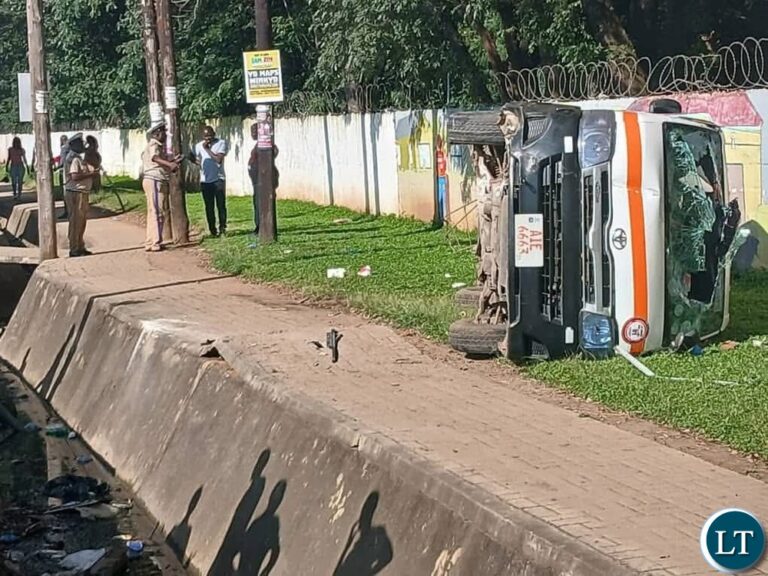
ONE person has died while 12 others have sustained injuries following a road traffic accident that occurred near Showgrounds Bus Stop.

The victims were travelling to the Lusaka Central Business District when the accident happened.

Police spokesperson Godfrey Chilabi said the accident involved a Toyota Hiace minibus, registration number AIE 6663, driven by Kakoma Oscar, 45, of Chawama Compound.

“The vehicle was carrying thirteen passengers and was en route to the Lusaka Central Business District at the time of the accident,” he said.

Mr Chilabi identified the deceased as Daniel Mwanza, 47, of John Laing Compound, who sustained severe injuries and was pronounced dead upon arrival at Levy Mwanawasa University Teaching Hospital.

The 12 injured passengers were also rushed to the same hospital, where they are currently receiving treatment. The driver sustained minor injuries.

Preliminary investigations indicate that the accident occurred after the driver allegedly lost control of the vehicle due to excessive speed, causing the minibus to hit a streetlight pole before overturning.

“The body of the deceased has been deposited in the mortuary pending a postmortem examination. Investigations into the matter are ongoing,” Mr Chilabi said.

ZRA Apprehends Businessman Shawki Fawaz Over Alleged K100 Million Tax Fraud

3

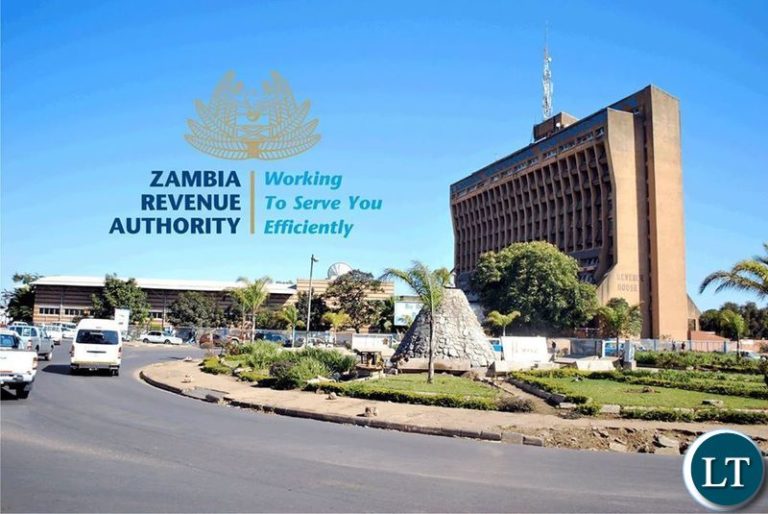
The Zambia Revenue Authority, in collaboration with other law enforcement agencies, has apprehended prominent businessman Shawki Fawaz over alleged tax-related offences involving more than K100 million.

ZRA Manager for Corporate Communications Oliver Nzala said preliminary investigations indicate that Mr Fawaz, in his capacity as director and beneficial owner of several companies, allegedly acted with others to defraud the State.

Mr Nzala said the alleged offences include fictitious Value Added Tax (VAT) claims, under-declaration of income and submission of false tax returns.

“He is currently in lawful custody and is expected to appear in court soon,” he said.

According to ZRA, Mr Fawaz is linked to multiple companies that have been under investigation for various tax fraud activities amounting to millions of kwacha.

Mr Nzala reiterated the Authority’s commitment to safeguarding public revenue and ensuring strict compliance with tax laws, noting that efforts are ongoing to seal revenue leakages caused by economic sabotage and illicit financial flows.

“The Authority further warns taxpayers and individuals involved in tax malpractices that they will be pursued and brought to justice. Members of the public are therefore encouraged to report any suspected tax-related offences,” he said.

President Hichilema Hails $12 Billion Mining Investment After Economic Turnaround

President Hakainde Hichilema says his administration has restored investor confidence in Zambia’s economy, attracting over US$12 billion in mining investments since taking office.

Speaking during the 2026 Presidential Delivery Unit National Delivery Day at the Mulungushi International Conference Centre, President Hichilema said his government inherited a struggling economy but has since put it back on a path to recovery through key reforms.

The President noted that the value of ZCCM-IH has grown significantly, rising from about US$300 million to over US$1 billion.

He also called for support towards Copperbelt Energy Corporation to enhance its tax contributions, which he said are critical in financing social programmes such as free education.

President Hichilema added that efforts are underway to strengthen the financial position of ZESCO as part of broader economic reforms.

He further urged the Zambia Statistics Agency to ensure timely and accurate updates of key economic indicators, including Gross Domestic Product (GDP), to support informed decision-making.

The Head of State also called on the civil service to fully embrace the government’s development agenda, emphasising the importance of cost efficiency, quality work and timely delivery of public services.

HH Unveils Economic Blueprint Ahead of 2026 Elections

President Hakainde Hichilema says he has a clear blueprint to double Zambia’s economy if re-elected in the August 2026 General Elections, with a strong focus on unlocking the potential of regional economies.

Speaking during the 2026 Presidential Delivery Unit National Delivery Day at the Mulungushi International Conference Centre, President Hichilema said his administration is targeting sector-specific growth by leveraging the country’s diverse natural and economic resources.

The Head of State explained that the creation of the Presidential Delivery Unit (PDU) was aimed at improving efficiency and transforming the culture of public service delivery.

He noted that although the initiative initially faced resistance, it has now gained acceptance across the public sector.

“I wanted us to do things in a more structured way, and I am delighted that what faced resistance before has now been embraced,” he said, adding that he remains committed to improving the livelihoods of Zambia’s citizens.

President Hichilema also commended institutions such as the Zambia Air Force (ZAF), Zambia National Service (ZNS), and the Zambia Correctional Service for their growing involvement in agricultural activities, describing it as part of a broader national vision.

He observed that military institutions around the world are increasingly participating in commercial ventures to support national development.

The President emphasised the need for leadership that prioritises national interest over personal gain, stressing that citizens expect tangible results rather than prolonged processes.

“People want to see results. If processes are not working, change them. We must embrace a culture of delivery in public service,” he said.