
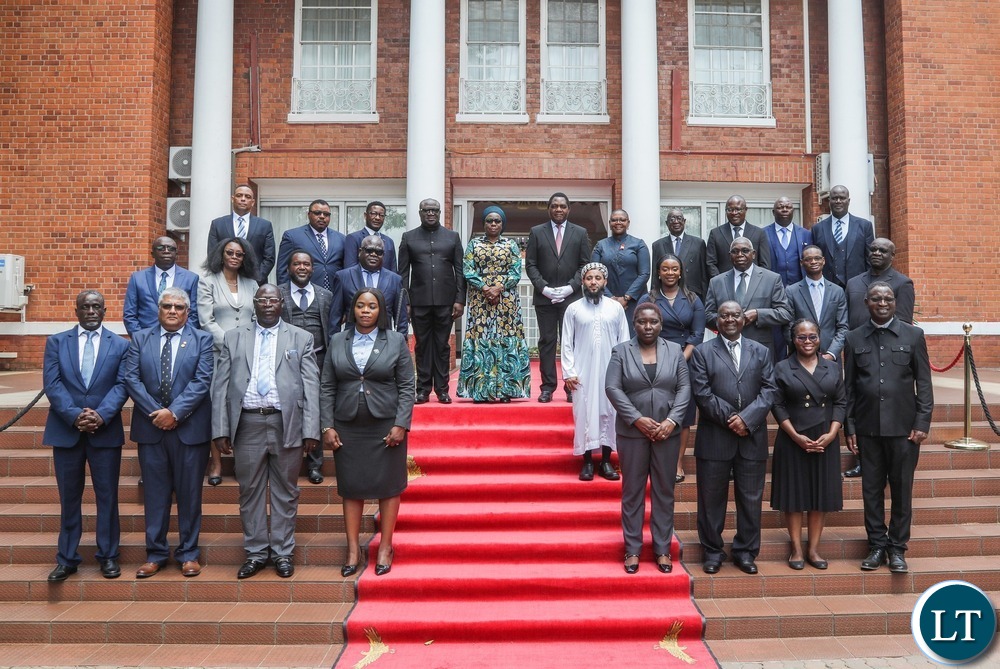
President Hakainde Hichilema has sworn in members of the technical committee on the constitution amendment Bill number Seven ,with a call for them to embrace divergent views and conclude the consultations on time.
Mr Hichilema says the government is committed to a transparent and quality constitution amendment process, hence the decision to constitute an all-inclusive technical committee with representation from various stakeholders such as the church, traditional leaders and the civil society organisations, among others.
The President was speaking when he swore-in members of the technical committee on the constitution amendment Bill number Seven at State House today.
“As you embark on this delicate exercise, I call on you to reflect on the diversity of views by listening to the concerns of every citizen from across the country, the people of Zambia expect you to deliver this quality undertaking in a timely manner,” he said.
Mr Hichilema expressed confidence in the selected technical team, to execute the amendment process diligently and within the shortest possible time, stressing that time is money and must be respected.
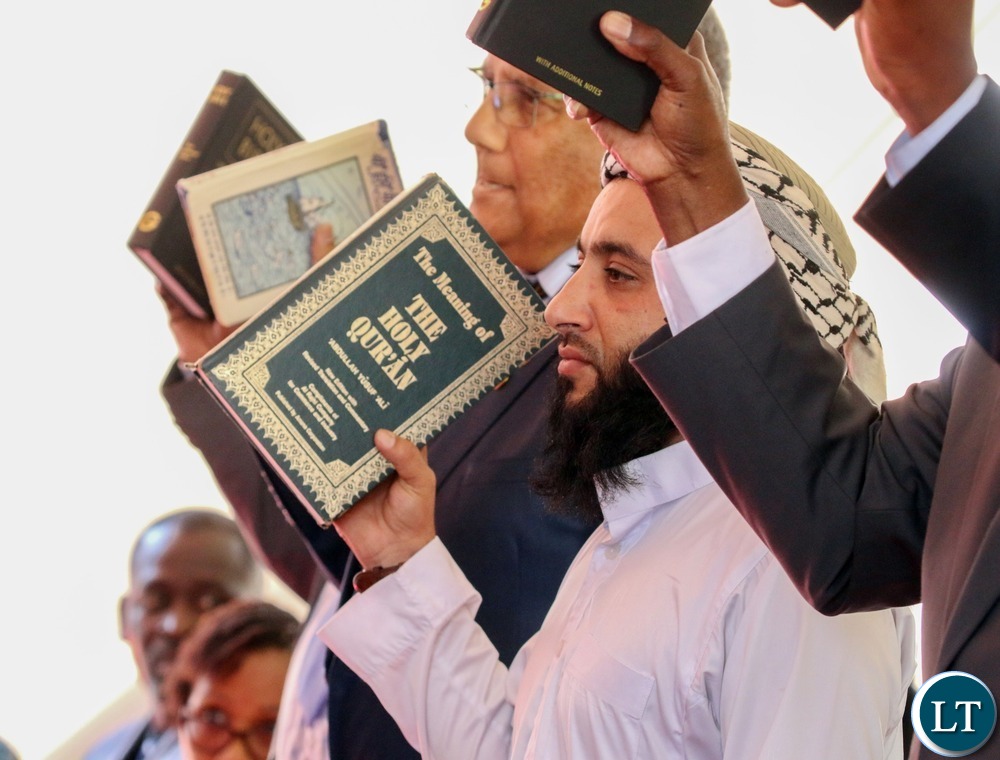
The Head of State further prodded the technical committee to hear every concern that people will advance during the process by always remembering the one Zambia one nation motto, if they are to come up with a comprehensive amended constitution.
He expressed gratitude that the technical committee has representation from the church, civil society organisations, traditional leaders and people with disabilities among others.
“I am pleased to swear-in the technical committee on the constitution amendment Bill number Seven, which has members from the body of Christ, traditional leaders and civil society organisations, among others,” he said.
And President Hichilema has paid glowing tribute to the Human Rights Commission for their diligence in executing their mandate by putting facts straight that the corruption fight by government is done according to the law and not on ethnic background.
He has since pledged the government’s total support to the technical committee and the Human Rights Commission for them to deliver tangible outcomes that speak to people’s aspirations.
Meanwhile, Technical Constitution Amendment Committee Chairperson, Christopher Mushabati, has promised to immediately embark on getting views and concerns from citizens.
Justice Mushabati said the technical team will strive to work tirelessly, in order to conclude the process in a timely and expeditious manner, in efforts to try and respond to the President’s directive to work diligently and timely.
The Human Rights Commission also promised to continue from where they ended earlier this year when the process was halted.
Human Rights Commission Chairperson, Pamela Sambo, pledged to respond to the President’s call by embracing diversity and inclusivity in the amendment process.
Dr Sambo has since reiterated the need to handle the constitution amendment process with professionalism as per the commission’s mandate.
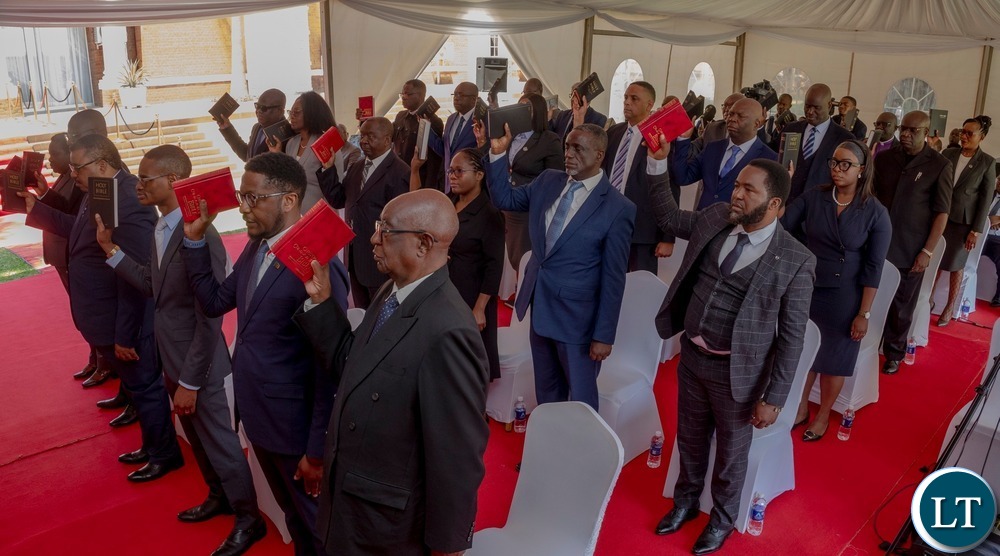




Christian nation my foot, swearing in with a Koran, kaliba,. Can you be sworn in with a Bible in Iran or Iraq ?
Especially the puritanical and intolerant Iran and Saudi Arabia.
The constitution will not be changed until after next year’s elections. Ba HH, mukaleka abantu bakaiponone. Let’s follow your own determination before elections. You entirely refused. Ngalelo chaisa shani? Ala liken ifimulechita. Mukepaisha abantu yama imwe. Filekeni ifi.
7 months before dissolution of Parliament! These are constitution making Olympics!
At the heart of this debate is the President’s role in reminding citizens that the constitution is the supreme law of the land and that everyone, from the presidency to the citizen, must obey and uphold it. The constitution does not exist to suit any single party or government; it exists to structure government, define powers, protect rights, and ensure accountability. This is why, in many countries, the presidency is ceremonial in part because the constitution clearly delineates powers and limits. In Zambia, however, the expectation is that the office holder and all institutions enforce the law with impartiality, transparency, and a commitment to the national interest.
Recent discussions in Lusaka Times about the ongoing constitution amendment process raise a fundamental and timely concern: how should a nation treat its supreme law when political actors seek to bend or cloak it for convenience? The troubling thread running through the coverage is not the ambition to reform, but the perception that some actors are partial to political gain and may try to “hide” behind the GRZ (Government of the Republic of Zambia) to push a partisan agenda.
In a healthy democracy, the constitution must remain the undeniable standard by which all actions are judged.