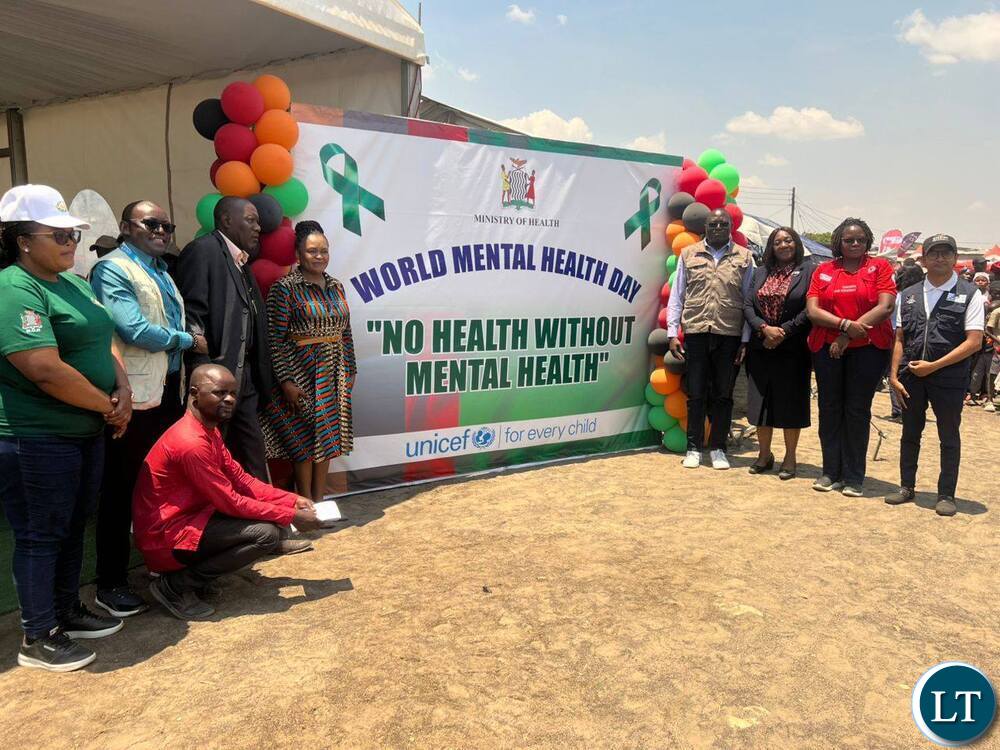
Zambia joined the global community in commemorating World Mental Health Day under the theme “Access to Services: Mental Health in Catastrophes and Emergencies.” The event, held on 10 October, emphasized the importance of expanding mental health services and integrating mental health support into emergency response systems.
Health Minister Dr. Elijah Muchima, represented by the Ministry of Health’s Director for Public Health, Dr. Matilda Simpungwe, said the day marks an important occasion when countries reaffirm their commitment to improving mental health outcomes and ensuring that mental health is recognized as a universal human right.
Dr. Muchima noted that mental health challenges continue to affect millions globally, particularly during crises. He cited natural disasters such as floods, disease outbreaks including cholera, droughts, road traffic accidents, fires, and mining incidents as major factors disrupting families, livelihoods, and essential services — all of which significantly impact mental well-being.
He explained that while most individuals affected by such events experience psychological distress, a portion of them develop more severe mental health conditions such as depression and post-traumatic stress disorder (PTSD).
To strengthen Zambia’s capacity to address mental health needs during emergencies, Dr. Muchima outlined several key recommendations. These include:
-
Full utilization of international guidelines on Mental Health and Psychosocial Support (MHPSS) to improve preparedness and response during emergencies.
-
Inclusion of mental health and psychosocial support measures in all-sectoral emergency preparedness plans, including hazard and vulnerability assessments, capacity-building efforts, coordination frameworks, and contingency planning.
-
Establishment of a cross-sectoral mental health and psychosocial support technical working group to coordinate national activities in alignment with global best practices.
-
Strengthening of community self-help and social support networks, ensuring that vulnerable populations — including people with pre-existing mental health conditions — are fully involved.
-
Continued orientation of frontline workers in psychological first aid to equip them with skills to provide immediate emotional and mental health support to people in distress.
-
Dissemination of key public messages and service information to promote positive coping mechanisms and encourage individuals to seek help.
-
Provision of clinical mental health care for priority conditions at general health facilities, using trained and supervised health workers who follow evidence-based protocols.
-
Protection and promotion of the rights of individuals with severe mental health conditions, including those living in psychiatric hospitals, social care homes, and rehabilitation facilities for substance use.
-
Establishment of referral networks connecting mental health specialists, general healthcare providers, community-based supporters, schools, social welfare offices, and emergency relief services.
Dr. Muchima further directed all Provincial and District Health Directors, as well as heads of health facilities, to prioritize mental health service delivery in their annual planning meetings. He urged them to take stock of available mental health professionals within their jurisdictions and ensure that basic mental health services are accessible to all communities.
He emphasized that improved access to mental health care is essential for building national resilience, particularly as Zambia continues to confront emergencies that affect public health and social stability.
The commemoration of World Mental Health Day aligns with Zambia’s broader efforts to integrate mental health into the country’s health system and to promote awareness of psychological well-being at all levels of society.