
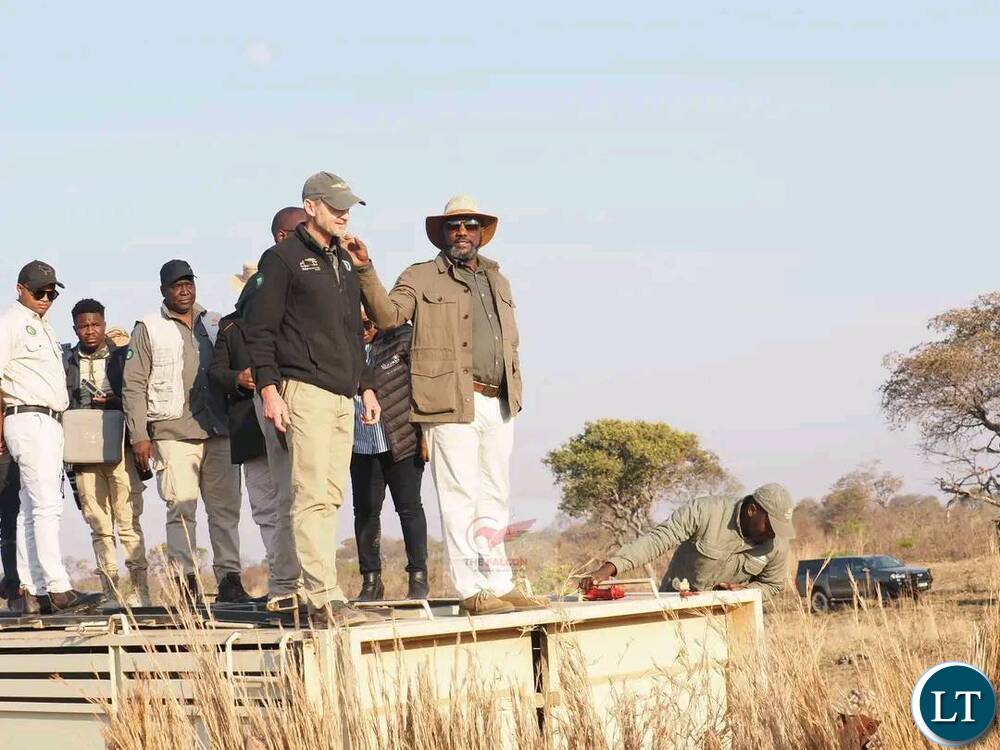
Lichtenstein’s hartebeest has been reintroduced in Liuwa Plain National Park for the first time after 50 years of disappearance from the ecosystem due to poaching.
Liuwa Park Manager Deon Joubert says the reintroduction of the animal species will help restore the Liuwa’s natural heritage and reinforce ecological integrity while enhancing its tourism potential.
speaking during the historic occasion of the ceremonial release of hartebeest into Liuwa’s wilderness, Mr Joubert said the reintroduction measure is part of a long-term vision meant to help restore the park’s ecological system to its past and natural conservation status.
He stated that since African Parks took over the management of Liuwa Plain National Park 20 years ago, animal species such as lion, buffalo, eland and wild dog have successfully been reintroduced.
He said all of the reintroduced species were doing well, and their numbers were increasing.
Meanwhile, Department of National Parks and Wildlife (NDPW) Assistant Director of Conservation and Management, Jones Masonde, said that the hartebeest species had been translocated from Mulobezi Game Management Area.
Mr Masonde reaffirmed that the hartebeest would enhance a balanced herbivore species, wildlife diversity and a healthy ecosystem in the Liuwa plains.
He expressed happiness that the ceremonial release had been blessed with a newborn calf being recorded during the two days the game animals were still in the holding pen.
“It is about sustaining livelihoods, preserving cultural heritage, and maintaining ecological integrity for generations to come,” he said.
Mr Masonde stated that beyond the immediate milestone, the translocation contributes meaningfully to Zambia’s broader biodiversity goals.
“It enhances species diversity, strengthens ecosystem resilience, and restores natural ecological processes that are essential to the long-term stability of our protected areas. Such initiatives bring us closer to meeting our national and global commitments under the convention on biological diversity and the sustainable development goals,” he said.
He further paid glowing tribute to Litunga for shaping the conservation status of Liuwa Plain National Park.
“We are deeply honoured that this milestone coincides with the silver jubilee of His Majesty King Lubosi Imwiko II — twenty-five years of devoted service, leadership, and guardianship. This moment is, in many ways, a fitting tribute to His Majesty’s enduring commitment to conservation and the well-being of his people.
“Today’s event is far more than a wildlife translocation. It is a celebration of vision, partnership, and enduring stewardship. It takes us back to the foresight of His Majesty King Lewanika, whose declaration of Liuwa as a protected area in the late 1800s stands as one of the earliest acts of conservation leadership on the African continent. His wisdom laid the foundation for what Liuwa plain represents today — a living testament to harmony between people, wildlife, and tradition,” Mr Masonde said.
And the Barotse Royal Establishment (BRE) noted that the restoration of Liuwa’s ecological balance demonstrates His Majesty’s enduring commitment to conservation and the well-being of local communities living within the national park.
Induna Likubangwa stated that the disappearance of the Lichtenstein’s hartebeest from Liuwa plains due to poaching was a wakeup call to all stakeholders involved in sustainable wildlife conservation.
The traditional leader had since implored the local communities to support the partnership between BRE, African Parks, and NDPW, in a bid to protect the newly reintroduced hartebeest and other game species available across the Liuwa plains ecosystem.
He observed that the conservation work builds into Liuwa plain’s tourism goals of a more diversified portfolio of game animals, sustainable ecological system and enhanced community





Doesn’t it have an African name?