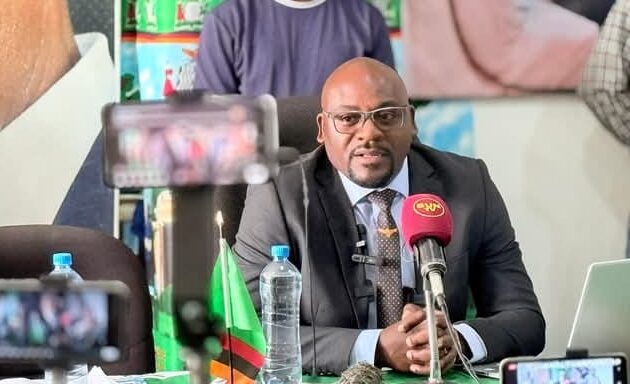
Economist Lubinda Haabazoka has welcomed Zambia’s newly announced historic US$5.2 billion worth gross international reserves (GIRs), describing the achievement as a clear indication that the country’s economy has reached a turning point.
Dr Haabazoka says the milestone places Zambia among the top performing countries in the region, ranking 5th highest in the Southern African Development Community (SADC) and 13th in Africa in terms of reserve levels.
He told journalists in Lusaka that the increase in reserves reflects a shift from crisis to recovery and is expected to stimulate economic stability, employment creation and renewed investor confidence.
“We are now looking at positivity because we have left the crisis. We expect strengthened economic growth and a stable currency. Investors will bring more money into the country, and the government’s ability to service debt will be enhanced as the Kwacha becomes more stable and planning becomes easier,” he explained.
Dr Haabazoka further noted that the improved reserve position will contribute to a better national credit rating, which will in turn lower the cost of borrowing for both government and industry.
He stated that a significant portion of the reserves includes gold, whose value has grown from US$69 million in 2022 to a projected US$300 million in 2025, representing more than threefold growth.
Dr Haabazoka said the rise shows that Zambia is beginning to take its rightful place among African nations with notable gold reserves.
He has since commended the government for successfully navigating the economic downturn, adding that the indicators now point toward sustained growth.
Recently, Finance and National Planning Minister, Situmbeko Musokotwane, announced in parliament that Zambia’s gross international reserves (GIRs) have climbed to a historic high of US$5.2 billion, marking the strongest external buffer ever recorded in the country’s history.
GIRs refer to the foreign currency & related assets held by Bank of Zambia to support the Kwacha, meet international payment obligations & cushion the economy against external shocks.