
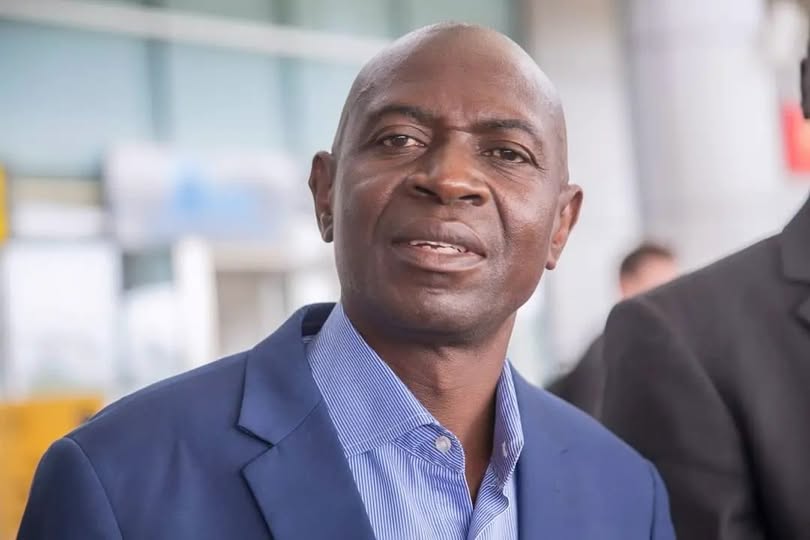
Ng’ona says PF disputes go beyond individuals
Patriotic Front faction secretary general Morgan Ng’ona has admitted that the internal crisis gripping the former ruling party has moved beyond individual personalities, saying the PF now faces a deeper problem that it must confront honestly.
Ng’ona made the remarks in an interview published on Monday, December 29, 2025, in which he acknowledged that the party’s prolonged leadership disputes have spread well beyond himself and Robert Chabinga, the figure at the centre of one of the competing PF factions.
“PF wrangles have now continued beyond me and Chabinga. We are a problem,” Ng’ona said, in what appeared to be one of the most candid admissions yet from within the divided party.
His comments come amid ongoing court battles and competing claims over PF leadership, a dispute that has left the party fractured and uncertain of its direction. Ng’ona’s faction is aligned with Chabinga, whose claim to the PF presidency has been challenged internally and is currently subject to legal proceedings.
Ng’ona said the crisis has widened to the point where even PF acting president Given Lubinda has become a target of hostility from within the party. He said Lubinda is now being insulted by individuals he previously removed from party positions, including being referred to as “a white man” by those he dropped, language Ng’ona cited as evidence of how toxic the internal environment has become.
The remarks underline the extent to which the PF’s disputes have shifted from structured disagreement to personal and factional confrontation. Ng’ona suggested that the party’s inability to resolve leadership questions has created space for bitterness, name-calling, and erosion of internal discipline.
The current standoff traces back to earlier turmoil involving former PF member Miles Sampa, who at one stage took control of party structures before later publicly conceding that his takeover had been unlawful. That episode deepened divisions within the PF and triggered a series of legal and organisational battles that remain unresolved.
Following Sampa’s exit, Chabinga emerged as a central figure in a rival PF faction. Critics of the Chabinga camp argue that his ascension did not follow the party’s constitutional process, alleging that no properly sanctioned PF convention endorsed his leadership. Those claims form part of the disputes now before the courts.
Opposing PF factions and critics have also accused Ng’ona’s grouping of being a state-sponsored faction shielded from accountability. They allege that the continued recognition of Chabinga’s leadership, despite legal and constitutional questions, reflects political protection rather than internal party legitimacy. These claims remain contested and have not been determined by the courts.
Concerns have also been raised by critics about the pace at which the judiciary has handled PF-related cases. Some opposition figures describe the delays as selective and politically convenient, though no judicial ruling confirming such allegations has been issued.
Ng’ona did not directly respond to accusations of state backing or judicial interference in the interview. Instead, he focused on the consequences of the prolonged infighting, saying the PF’s internal disorder has damaged its credibility, confused supporters, and weakened its capacity to function as a coherent opposition force.
By conceding that “we are a problem,” Ng’ona appeared to acknowledge that the crisis is no longer sustainable. His remarks suggested that attempts to pin blame on individual actors have obscured the need for broader institutional reckoning within the party.
The admission also reflects growing recognition within PF ranks that unresolved leadership disputes are taking a toll on the party’s public standing. With parallel structures, rival claims, and court cases dragging on, the PF remains locked in a cycle of instability that continues to shape Zambia’s opposition politics.
Ng’ona’s comments add to a series of public statements from PF figures signalling frustration with the party’s trajectory. Whether his acknowledgement marks a turning point or simply underscores the depth of the crisis remains an open question as legal battles and internal divisions persist.
Credit/Source: Daily Revelation (Dec 29–30, 2025)



I left MMD in 1994 because I had already seen the end of MMD. PF will be extinct very soon because it stepped away from the late Micheal Sata vision upon his passing. It had transformed itself into great corruption, graft and power struggle. These cats are done. They’re now completely suffering from UPND syndrome.
The good thing with PF is that its structures are still intact country wide and even stronger than UPND structures
No former ruling party has ever come back from political defeat and political oblivion .Stop dreaming coz PF won’t come back to life especially with the destruction they left as their legacy.
With the visible failure of the party in government, PF should have capitalised on that but obviously those that fear PF so much have managed to destabilise them using money as usual
May PF political disputes ,internal wars and self destruction continue .You don’t destroy a nation with rotten leadership and think it won’t come back to bite you.
You mean we in for decades more deceitful lies and promises
and now tribal division
Surely not !!