
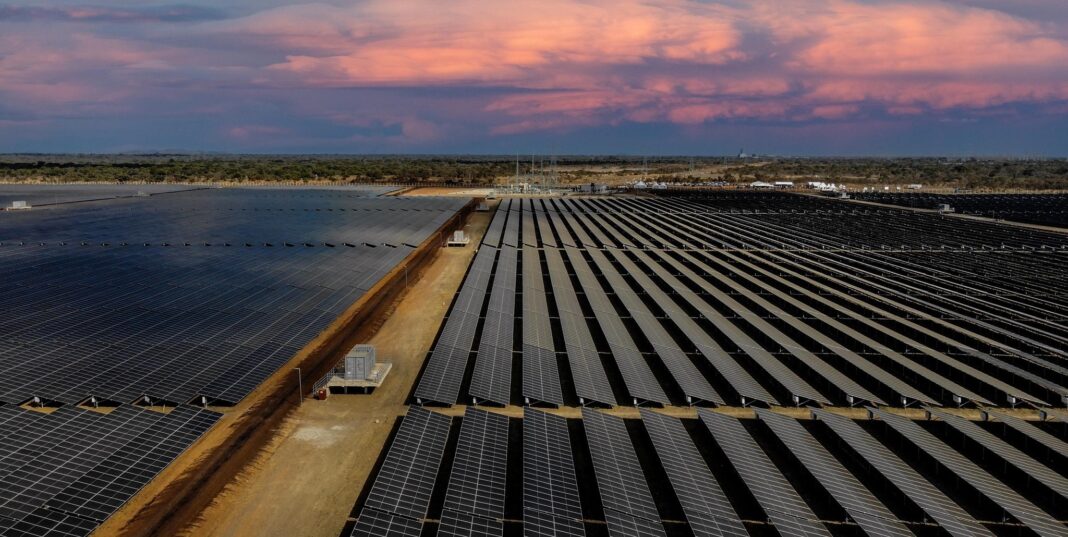
Government Signals New Large-Scale Solar Power Project
The Government has announced plans to introduce another mega solar power project as part of ongoing efforts to strengthen electricity generation capacity and improve energy security across the country.
According to the Times of Zambia, the planned project forms part of a broader strategy to diversify Zambia’s energy mix and reduce reliance on hydropower, which has faced pressure during periods of reduced rainfall. Authorities say expanding solar generation is critical to ensuring consistent electricity supply for households, businesses, and key economic sectors.
Zambia’s power system has historically depended heavily on hydroelectric generation. While hydropower remains a major component of the national grid, variability in water levels has exposed vulnerabilities, prompting government to accelerate investment in alternative energy sources. Solar power has emerged as a central pillar in this diversification drive.
Officials indicated that the new mega solar project is expected to add significant capacity to the national grid, supporting stability and reducing the risk of load management. Large-scale solar facilities are designed to feed directly into transmission networks, allowing power to be distributed across regions.
The project is also aligned with national development goals that emphasise sustainable energy, climate resilience, and private sector participation. Government has previously stated that renewable energy projects offer opportunities for investment, job creation, and technology transfer.
The Times of Zambia reports that preparatory work for the project includes feasibility assessments, site identification, and engagement with potential developers. While specific capacity figures and timelines were not disclosed in the initial announcement, officials said the project would meet international standards and integrate with existing infrastructure.
Solar energy projects have gained momentum in recent years, with Zambia commissioning several utility-scale installations and encouraging independent power producers to enter the market. These initiatives have contributed to improved generation diversity and reduced pressure on hydro assets.
Authorities noted that solar power provides advantages in terms of scalability and speed of deployment. Compared with large hydro projects, solar facilities can be developed in shorter timeframes, allowing capacity to be added more rapidly to meet growing demand.
The new mega solar project is expected to support economic activity by providing more reliable power to industrial zones, commercial centres, and rural communities connected to the grid. Stable electricity supply is viewed as a prerequisite for manufacturing growth, mining operations, and service delivery.
Government officials also highlighted the role of renewable energy in meeting environmental commitments. Expanding solar generation contributes to lower greenhouse gas emissions and aligns with regional and global efforts to transition toward cleaner energy sources.
The project forms part of a wider pipeline of energy investments aimed at modernising Zambia’s power sector. In addition to solar, authorities continue to explore options for thermal, wind, and other renewable technologies to balance the grid.
As demand for electricity continues to grow alongside population increase and economic expansion, energy planners say diversified generation sources are essential. The planned mega solar project is expected to play a role in meeting future demand while enhancing resilience against climate-related risks.
The Government maintains that expanding solar capacity is not only a response to current challenges but also a long-term investment in sustainable development and energy security.





Very vague. Is it a secret project?