
Zambia’s standing on the global corruption perception index has fallen, renewing calls from governance advocates for stronger institutional safeguards and clearer political accountability ahead of the national election period.
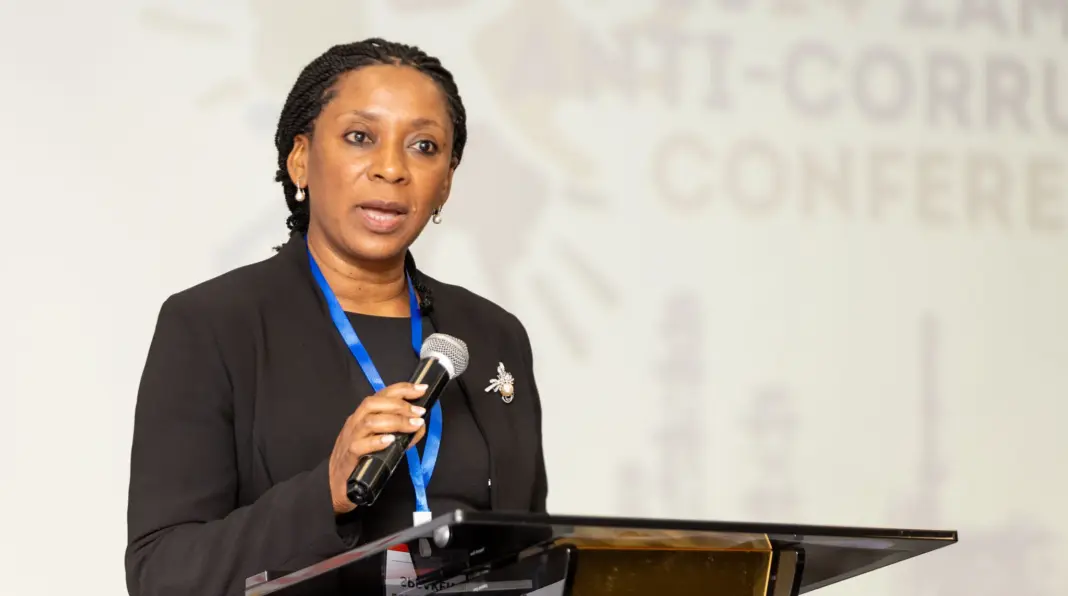
Transparency International Zambia president Priscilla Chansa confirmed that the country’s latest score dropped from 39 to 37, pushing Zambia down several places in the international ranking. Speaking during a public briefing in Lusaka this week, Chansa said the shift reflects growing concerns about the strength of democratic checks and the perception that public office is increasingly influenced by private interests.
Chansa explained that the index measures how corruption is viewed by business leaders, policy experts and governance specialists rather than recording individual criminal cases. She said the drop should not be interpreted as a sudden spike in wrongdoing but as a warning signal about public confidence in accountability systems. According to her, citizens expect procurement processes, political financing and public decision-making to remain transparent, especially as election season approaches.
The briefing highlighted procurement practices as one of the areas drawing the most scrutiny. Chansa pointed to recurring complaints about contract management and oversight, saying reforms must focus on ensuring that institutions responsible for monitoring expenditure have enough independence to operate without interference. She added that strengthening these systems would help restore trust and protect economic stability.
Civil society groups attending the briefing echoed the concern that shrinking civic space can shape how corruption is perceived internationally. Several speakers noted that watchdog organisations play a central role in exposing irregularities, and that an open environment allows institutions to respond quickly to allegations. Calls were made for clearer legal frameworks governing campaign financing, with participants arguing that transparent political funding would reduce suspicion about the influence of wealthy backers.
The latest ranking also arrived during a period of heightened political activity, which has placed governance issues firmly at the centre of national discussion. Public figures from across the political spectrum have referenced corruption narratives to reinforce their positions, while citizens continue to weigh how accountability affects everyday services such as healthcare, infrastructure and education.
Chansa stressed that improving the country’s ranking will require long-term institutional effort rather than short-term reactions. She said progress depends on consistent enforcement of anti-corruption laws, stronger protection for whistle-blowers and a commitment by political leaders to uphold ethical standards. According to her remarks, the perception index serves as a reminder that global confidence in Zambia’s governance is shaped by both policy decisions and public messaging.
Beyond institutional reform, governance advocates highlighted the importance of public engagement in shaping future outcomes. They argued that civic awareness campaigns could help communities understand how corruption affects national development, encouraging citizens to demand accountability at local and national levels. Some speakers also urged authorities to publish clearer information on procurement contracts and budget allocations, saying transparency reduces speculation and improves confidence.
The ranking decline has also prompted renewed discussion about the balance between political competition and institutional integrity. Several participants at the Lusaka briefing said election periods often heighten scrutiny because policy decisions attract more attention from voters and international observers. Maintaining clear communication and consistent enforcement, they said, would be essential in preventing governance debates from turning into partisan confrontation.
Government officials have previously maintained that anti-corruption frameworks remain active and that enforcement agencies continue to pursue cases through lawful processes. Governance activists, meanwhile, insist that perception matters as much as enforcement statistics, arguing that public trust shapes how reforms are received both domestically and abroad.
For many observers, the index drop serves less as a verdict on any single administration and more as an indicator of broader institutional expectations. Zambia’s reputation for democratic stability has long been a point of national pride, and governance advocates say preserving that image requires sustained commitment to openness and accountability.
The coming months will likely see continued debate over procurement rules, political financing and the role of oversight bodies. Chansa’s message during the Lusaka briefing centred on the need for collective action, saying that restoring confidence in governance systems depends on collaboration between policymakers, civil society and citizens. With the election period drawing closer, how leaders respond to the perception challenges may shape both domestic political discourse and the country’s standing on the international stage.




Let them even start declaring their assests annually, that is what bill 7 must have been all about
Just to be clear, by dropping several places “in the international ranking” you mean two places?
How high is the USA ranking on the list?
FULLY EXPECTED
A drop is a drop and that drop could mean billions
This could be even more hard core criminals
Why does the freaks have to rank Zed when this has been fighting corruption since day one. Would like to see the full list. And I know one country has has dropped by 100 steps since 2025.
Even 1 place lower is a shame. Despite having a hotline, nothing has changed in the land of work and joy. It is openly done. You will see how minibus drivers hand cash to traffic police… how for any service to be done, you need to give some cash to move it along…
On f8ghting corr& stealing the President is NOT doing enough on that level….
When efforts to fight corruption are mostly focused on previous regimes Zambia’s ranking will always be at the tail end of the ladder.