National study warns that Zambia’s sport and exercise boom needs urgent safety law
Research from Kwame Nkrumah University calls for mandatory sports first aid policy nationwide
By Sitali Mayamba and Owen Mulima
An ongoing national research programme led by Sitali Mayamba of Kwame Nkrumah University, in collaboration with Owen Mulima, currently a visiting fellow at Central China Normal University, Wuhan, China, is raising urgent concern about safety across Zambia’s rapidly expanding sport and exercise environment.
While participation in football academies, gyms, university sport, and community fitness continues to rise – bringing major benefits for health, youth development, and national wellbeing- the study has identified a critical and preventable gap:
Many organised activity spaces still operate without guaranteed specialised sports first aid.
Evidence that cannot be ignored
Preliminary Phase I findings show that:
-
More than 71 percent of respondents have witnessed or heard of a sport-related incident requiring immediate first aid.
-
89 percent consider specialised sports first aiders absolutely essential.
-
100 percent support a national policy mandating their presence in sports institutions.
These results point to overwhelming public recognition that emergency preparedness in sport is no longer optional – it is necessary.
From sport issue to public-health priority
The research reframes the discussion beyond competitive sport alone.
-
Injuries also occur in:
-
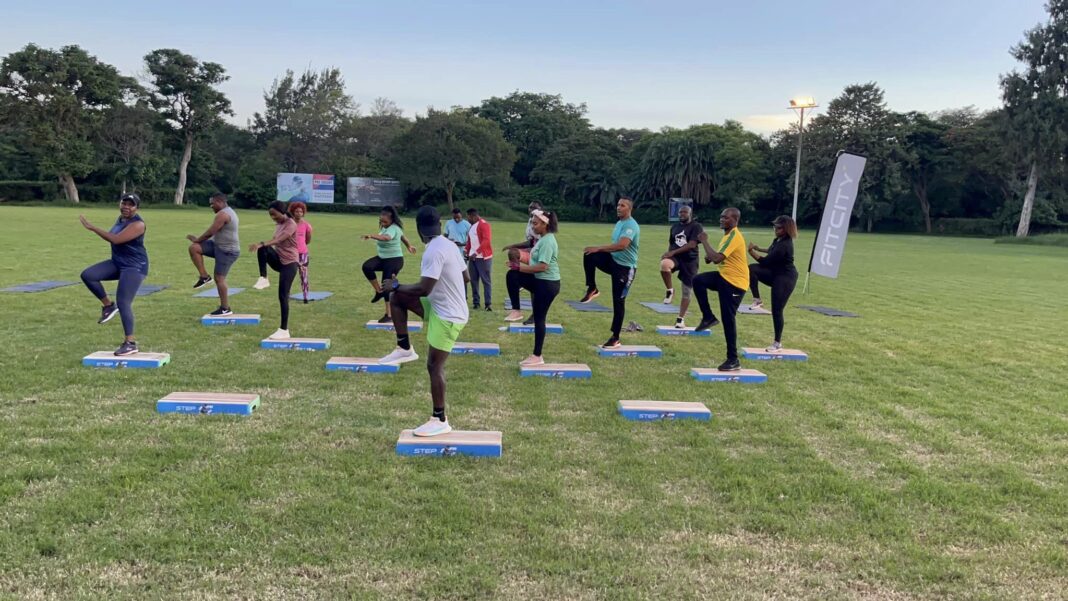
gym and strength-training environments
-
school physical education and recreation
-
community fitness events and fun runs
-
university and amateur competitions
As physical activity becomes central to preventing non-communicable diseases and improving mental wellbeing, unsafe activity environments risk undermining national health progress itself.
Zambia at a turning point
Across many countries, organised sport already requires:
-
trained first-aid personnel on site
-
emergency action planning
-
standardised life-saving equipment
-
regulatory compliance and inspection
Zambia now faces a defining national choice:
Grow participation without guaranteed protection
—or—
Introduce a binding National Sports First Aid Policy to safeguard every participant.
The policy recommendation emerging from the research
Based on the evidence, the study calls for:
-
mandatory certified sports first aiders at organised sport and exercise activities
-
emergency action plans for facilities and events
-
standardised first-aid equipment and Automated External Defibrillator (AED) for for first aid access where feasible
-
compliance linked to licensing of sport and fitness providers
-
integration of sports first aid into coaching and education systems
-
creation of a national sports injury surveillance framework
Researchers emphasise that these are minimum modern safety standards, not optional improvements.
A national question of protection
As the research expands into nationwide Phase II–III data collection across schools, academies, gyms, and community sport, one message is already clear:
-
An active nation must also be a safe nation.
Zambia’s sport and exercise movement holds enormous promise for health, opportunity, and unity.
But without parallel safety systems, preventable injuries could erode public confidence and place lives at unnecessary risk.
The science is now clear.
Public support is unanimous.
The remaining question is simple:
. How quickly will Zambia act to protect every athlete and every citizen who chooses to be active?
About the authors:
Sitali Mayamba is a PhD candidate researching sports governance in Zambia while Owen Mulima Owen Mulima is
currently a visiting fellow at Central China Normal University, Wuhan, China.