By Katoka Mweenda
Political messaging is key to winning elections. Brian Mundubile’s campaign should focus squarely on President Hakainde Hichilema’s record. It is Hichilema—not Mundubile—who must defend his last five years in office. Yet, by trying to outbid the President with his own promises, Mundubile risks letting Hichilema escape accountability. That is a strategic mistake.
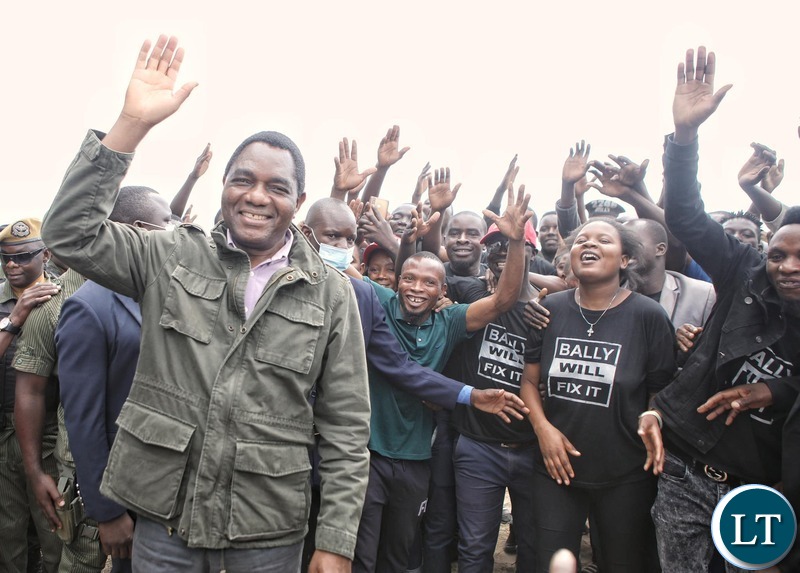
President Hichilema came to power on the promise that “Bally Will Fix It.” This election should be a referendum on one simple question: Did Bally fix it?
This single question should drive every rally, interview, and campaign appearance.
Has Bally fixed youth unemployment? Has he lowered fuel prices? Has he repaired the roads? Has he improved hospitals? Has he reduced the cost of living?
Mundubile does not even need to answer them; voters will answer for themselves. If the answer is “No,” then the campaign message writes itself: “Bally Can’t Fix It.”
This simple contrast puts Hichilema on the defensive. Asking residents of Mongu, or any other community, whether Bally fixed their roads or solved their economic crisis is much more powerful than presenting a laundry list of new promises. Elections are rarely won by competing promises, but by convincing voters that the incumbent failed to deliver.
This is Mundubile’s strongest advantage. Mundubile should always remind voters what “HH” already promised—and failed to deliver. Hichilema promised better roads. Did your province receive them? He promised private-sector jobs for young people. Were they created? He promised medicine in hospitals. Did that happen? He once argued that if people were surviving on tu pamela and could not afford cooking oil, the President should resign. Has he lived by that standard?
No doubt, many voters believed those promises in 2021. Why should they believe another round of false promises in 2026? As the saying goes: fool me once, shame on you; fool me twice, shame on me.
As a lawyer, Mundubile should prosecute Hichilema’s record before the court of public opinion and allow the Zambian people to serve as the jury.
President Hichilema understands this vulnerability. No wonder he challenges Mundubile to produce a manifesto; he wants the debate to shift from his own performance to abstract discussions. Mundubile must resist that trap.
The election should remain focused on one issue: unfulfilled promises. Hichilema’s record is Mundubile’s greatest political asset. Every new promise the President makes should be measured against the commitments he has already broken.
For example, when President Hichilema promised to build an international airport in Western Province and other regions, a single line from Mundubile would have sufficed:
“He knows how to promise, but he does not know how to build.” The question is not whether we need airports, but on Hichilema’s credibility.
If he could not complete a basic road over the last five years, why should voters believe he will suddenly build six international airports and Universities in the next five?
The message across Zambia must remain simple–he promises big things but delivers very little. Mundubile can then present a clear contrast:
“He will promise you anything to win your vote. But promises are meaningless without delivery. Our government will complete what he failed to do.”
Here, the objective is not just to criticize, but to help voters connect today’s promises with yesterday’s failures. If Hichilema promised a hospital in Solwezi that never materialized, voters should remember that before believing promises of new airports. If he promised universities and failed to build them, why should voters believe he will suddenly establish one in every province? Political credibility depends on performance—not speeches.
Mundubile has also emphasized “One Zambia, One Nation” in an effort to broaden his appeal. National unity is a vital message. However, it should not prevent him from confronting concerns about tribalism where they exist. If he believes the President’s appointments reflect tribal favoritism, he should present the evidence and make that case directly rather than avoiding the issue. Likewise, if he believes Hichilema has promoted divisive narratives—such as allegations that Tongas were beaten at Inter-City, or that certain tribes could not find government employment until his presidency—he should challenge them with hard facts. Again, the objective is to force President Hichilema to defend his own record.
Finally, Mundubile must respond swiftly whenever the President attacks his credibility. If Hichilema labels him a liar, the response should be immediate:
“It is remarkable to hear President Hichilema accuse others of lying. Let us examine his own promises.”
From there, Mundubile should list the President’s broken commitments, one after another. If Mundubile allows Hichilema’s accusations to go unanswered, they risk taking root. But if every attack is answered by returning to the President’s record, the focus remains exactly where it belongs–on promises made and promises broken.