
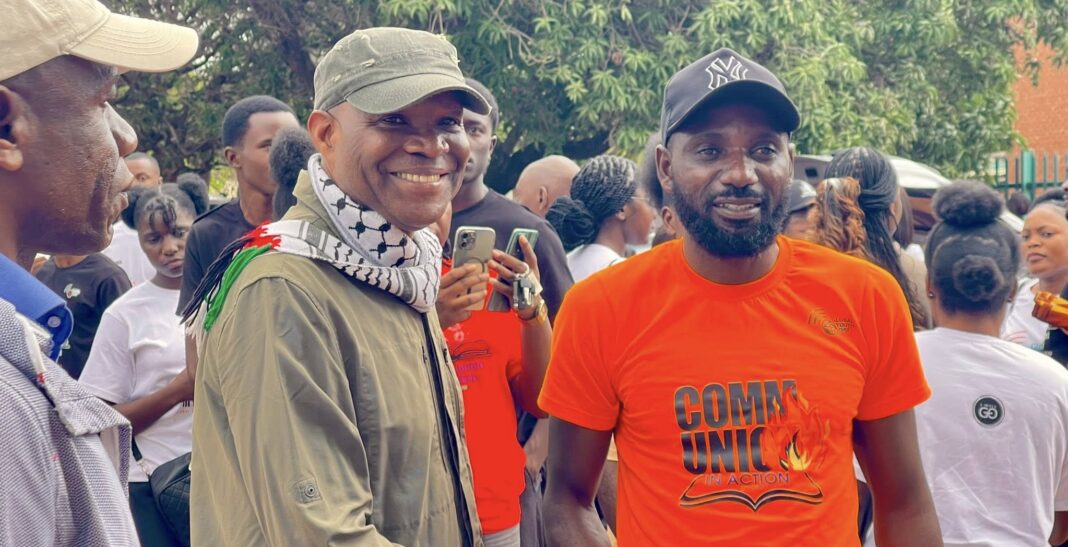
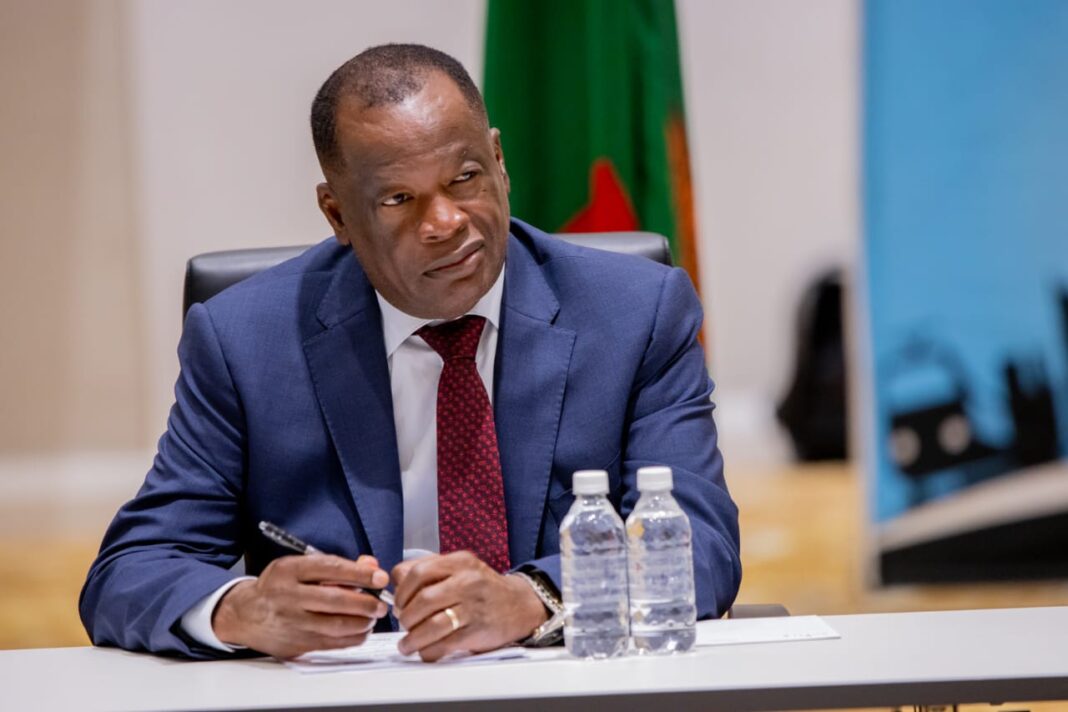
Socialist Party president Fred M’membe says Zambia risks holding a sham election in August, placing the credibility of the entire electoral process under scrutiny months before voting day.
His warning comes as multiple political developments across the country point to rising tension over access to campaign space, enforcement of laws and the administration of electoral reforms.
M’membe says opposition parties are operating on uneven ground, citing repeated difficulties in securing permits for rallies. He states that applications for campaign activity have been rejected multiple times, raising concerns about whether all players will be allowed to compete freely before voters go to the polls.
His position aligns with a broader set of signals emerging across the political landscape. The Electoral Commission of Zambia has already cautioned against premature campaigning in constituencies that have not yet been formally created, warning that legal processes around delimitation must be respected before political mobilisation begins.
At the same time, traditional leaders in Western Province have entered the debate from a different angle, pushing for a constituency allocation model that reflects geography and development needs rather than population alone. Their intervention adds another layer to the question of fairness, shifting it beyond campaign access to representation itself.
These developments are unfolding against a background where political actors are increasingly interpreting administrative decisions through a partisan lens. Actions by state institutions are being read not only as procedural enforcement, but as moves that could shape the competitive balance ahead of the election.
Government has rejected suggestions that the playing field is tilted. Officials maintain that legal frameworks apply equally and that regulatory decisions are grounded in law rather than political preference.
The clash of positions has turned the concept of electoral fairness into the central issue of the season. It is no longer confined to election day mechanics such as vote counting or monitoring, but extends to the months of preparation that define how campaigns are conducted.
The stakes are heightened by the proximity of the poll. With timelines tightening, any perceived imbalance in access, regulation or enforcement carries greater weight because there is limited time to correct or clarify it.
Political messaging is also intensifying. Opposition figures are framing the election as a test of democratic credibility, while the ruling side is presenting the same environment as orderly and lawful. Each narrative seeks to shape public expectations before the campaign reaches its peak.
What emerges is a contest not only for votes, but for the meaning of the process itself. Whether the election is viewed as competitive or constrained may depend less on a single event and more on the accumulation of decisions taken before ballots are cast.



This is Africa
…….
They are already conceding defeat…..
FWD2041
You will regret not allowing a challenger to come forward
Every election in Africa is rigged.