
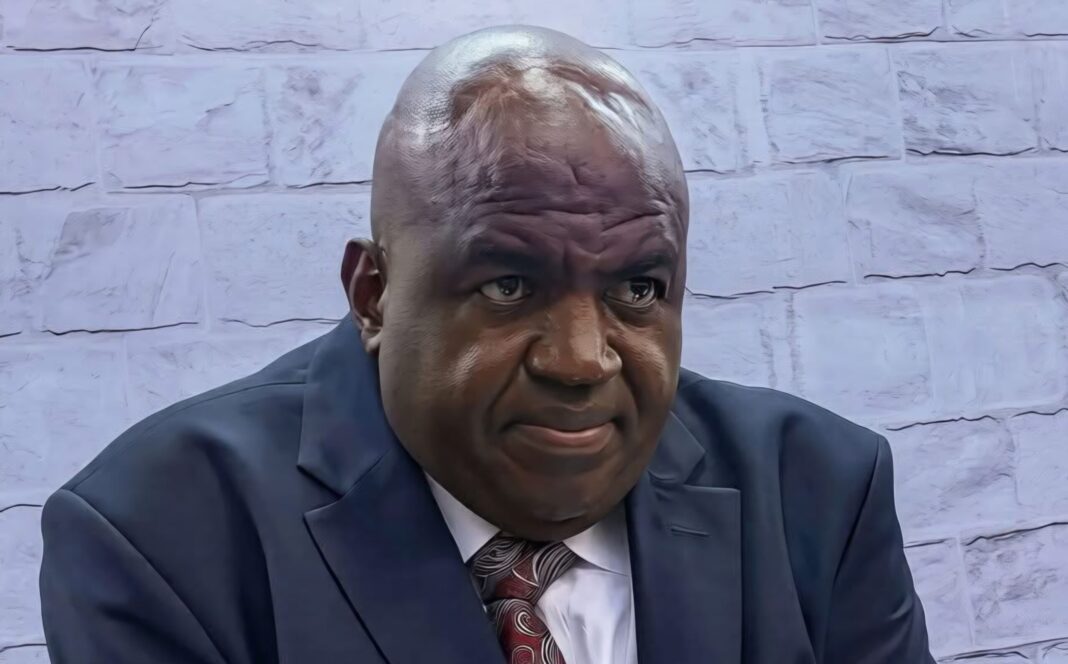
The Electoral Commission’s rejection of the UPPZ leader’s bid — citing bankruptcy allegations and documentary deficiencies — has become the first major institutional flashpoint of Zambia’s 2026 election season, raising questions about the ECZ process.
The Electoral Commission of Zambia (ECZ) rejected the presidential nomination of United Prosperous and Peaceful Zambia (UPPZ) leader Charles Chanda on Monday, citing alleged bankruptcy and documentary irregularities in papers submitted during the formal ECZ nomination process — a ruling that placed the commission under immediate public and political pressure at the opening of one of the country’s most closely watched election seasons in recent years.
ECZ chairperson Mwangala Zaloumis confirmed that Chanda’s nomination papers failed to satisfy constitutional and procedural requirements on two grounds: questions surrounding his bankruptcy status, and deficiencies in his adoption documentation. The commission stated specifically that the adoption certificate submitted carried no proper endorsement from the party’s secretary general, a procedural requirement it said could not be waived. The rejection represents the first major candidate eligibility ruling of the August 13 election cycle and arrives at a moment when nomination procedures, institutional consistency and the credibility of the electoral framework are receiving unusually close public examination.
Within hours of the ruling, Chanda rejected the decision publicly and defended his eligibility in forceful terms. He declared his financial standing secure, placed his personal wealth at K5 billion and maintained that the bankruptcy matter cited by the commission remained before the courts and therefore could not be treated as settled fact. Remarks attributed to Chanda in sections of the press also alleged that individuals connected to State House attempted to discourage him from challenging President Hakainde Hichilema, claims that had not been independently verified through official government channels at the time of publication.
“Excluding opposition candidates could create instability and damage public confidence in the electoral process.”— Dr Chitala, political figure, on the ECZ nomination ruling
The ruling landed inside an opposition field already undergoing rapid restructuring. The withdrawal of the Miles Sampa faction of the Patriotic Front (PF) from the presidential race days earlier redirected attention toward alliance negotiations involving figures such as Brian Mundubile and Makebi Zulu, placing opposition coordination at the centre of campaign calculations before formal launches begin.
Against that backdrop, the Chanda ruling introduced a second institutional pressure point: whether the commission’s application of eligibility thresholds is being carried out with the level of transparency and procedural consistency expected during a competitive national election. Political figure Dr Chitala issued a public warning that blocking presidential aspirants from the ballot carries consequences beyond the individual candidate, arguing that cumulative exclusions risk weakening public confidence in the nomination framework itself.
NOMINATION GROUNDS FOR REJECTION
Bankruptcy status- ECZ cited unresolved bankruptcy proceedings as a constitutional obstacle to eligibility.
Adoption certificate- The document submitted allegedly lacked endorsement from the UPPZ secretary general.
Chanda’s response-Chanda rejected both grounds, declared personal wealth worth K5 billion and maintained that the bankruptcy matter remains before the courts.
Supporters defending the commission’s position held firm. Constitutional standards governing presidential eligibility, they said, exist precisely to be enforced rather than suspended under political pressure or campaign considerations. The adoption certificate requirement in particular was presented as a straightforward procedural standard applicable to all candidates regardless of party affiliation or electoral weight.
Figures aligned with that position warned that introducing exceptions during nominations would weaken the framework governing future elections. Others pushing back against the ruling maintained that decisions involving presidential hopefuls require exceptionally clear public communication because of the wider national implications attached to candidate exclusion during an active campaign season.
President Hichilema separately directed law enforcement agencies to maintain order before and during campaigns while warning that threats to public stability would face the law irrespective of political affiliation. The directive, presented by the administration as institutional reassurance ahead of campaign launches, received sharply different readings across political camps. Government-aligned figures described it as responsible leadership intended to preserve calm during a competitive election period. Critics interpreted the language differently and linked it to wider concerns about institutional conduct during nominations and campaigns.
Election preparations are now unfolding alongside alliance negotiations, leadership wrangles, adoption disputes, ECZ rulings and growing scrutiny of how electoral institutions communicate major procedural decisions. The commission’s handling of presidential nominations is therefore expected to remain under close legal, political and public examination over the coming weeks.
The rejection of Chanda’s nomination now stands as the first major institutional test of Zambia’s election season. With campaigns yet to formally begin and alliance negotiations still evolving across several opposition formations, the commission’s next decisions may shape not only the composition of the ballot but also the level of public confidence carried into the August polls




There is no news here………….
Follow procedures..,,……,
Even if procedure was followed,………
He can’t win even if he was the only candidate
FWD2041
Of course he cant win but it is one vote against
Explain why some policians have a criminal record or served a prison term and allowed to run meaning bankruptcy is more serious ???
Tikki….understand the law. The law is very clear since it was amended to allow former convict having been released for a number of years to stand even in the highest office of the land.
I also personally dont agree with people with a tainted background holding public office. But that is the law of the land.
@Mulenga fair comment
Ba Chanda Beu “awe shuwa bu Sangwapo muleke!”
And look at the pot holes on Chanda’s head, was it HH who tried to do agriculture on Chanda Beu’s gurumutu!? ?
questions surrounding his bankruptcy status,
What are the questions?