
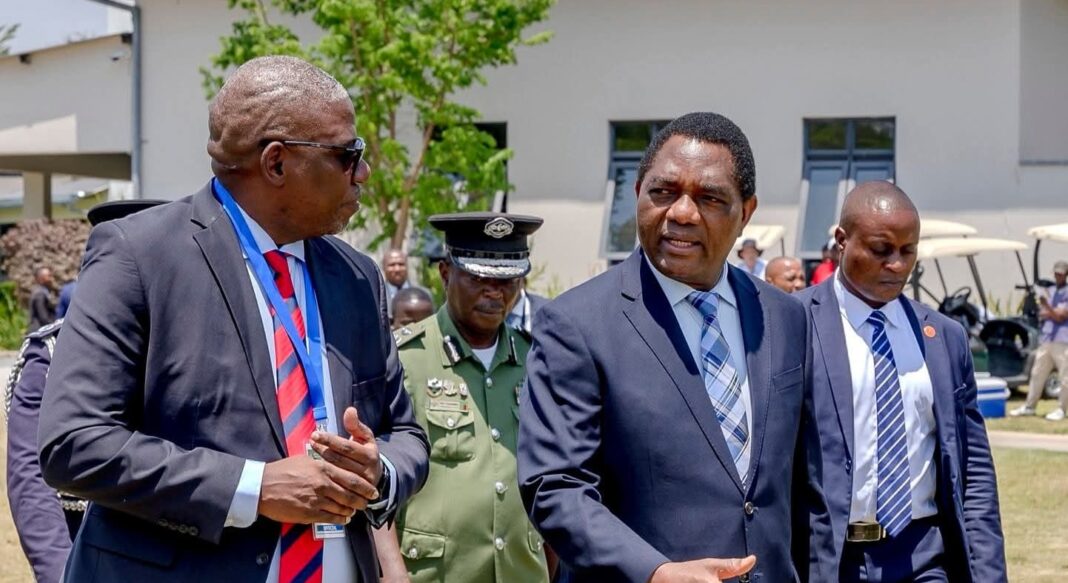
CCJP Tells HH Public Hardship Remains Widespread
The Catholic Commission for Justice and Peace has urged President Hakainde Hichilema to pay close attention to the rising public frustration across communities, warning that living conditions remain difficult despite government assurances of economic stabilisation. CCJP stated that feedback collected from parishes indicates households are struggling with high food prices, limited job opportunities, and increasing pressure on essential services. The organisation emphasised that these concerns require urgent government attention because they reflect the daily realities of citizens across districts.
CCJP explained that parish committees routinely gather information from ordinary residents, including market traders, youths, farmers, teachers, and healthcare workers. According to the Commission, their latest assessments show that most citizens do not feel the benefits of government policies that are frequently presented as progress. The organisation noted that economic indicators alone are not a sufficient reflection of public welfare, adding that the lived experience of many citizens suggests continuing hardship.
The Commission reported that feedback shows families facing significant difficulty in meeting the cost of basic needs such as mealie meal, cooking oil, transport, and school-related expenses. It said many youths continue to express deep frustration over limited employment prospects. According to CCJP, communities want the government to prioritise economic relief that directly affects household budgets instead of relying heavily on macroeconomic gains.
CCJP acknowledged that households appreciate government commitments in areas such as debt restructuring and inflation control but remain concerned that these gains have not translated into lower prices for essential goods and services. It reported that families in rural areas face added challenges due to recurrent dry spells, livestock diseases, and limited access to farming inputs. The Commission said these factors severely affect food security and contribute to widespread anxiety about the coming agricultural season.
The organisation stressed that the concerns raised by communities should not be interpreted as political opposition but as factual realities that demand immediate attention. CCJP said the government must understand that ordinary citizens do not measure national progress by official statements but by what they can afford and how they live from day to day. According to the Commission, communities want the government to acknowledge their concerns and respond with targeted, practical interventions.
CCJP also noted that parish leaders have raised concerns about persistent delays in the distribution of farming inputs. It reported that several farmers have expressed uncertainty regarding the availability and timing of fertiliser delivery. The organisation said farmers worry that these delays will significantly affect agricultural production and further undermine national food security. The Commission highlighted that small-scale farmers depend heavily on timely access to inputs to sustain their livelihoods.
The organisation further pointed to ongoing concerns about water shortages in some communities. It reported that women and children in certain areas are forced to walk long distances to access clean and safe water. CCJP said this situation places considerable stress on households and negatively affects sanitation and hygiene. The Commission reiterated that these issues must be treated as urgent because they directly impact public health and overall community welfare.
CCJP urged the government to adopt a more attentive and responsive approach by engaging with communities more directly and ensuring that relief efforts are tailored to local realities. The organisation argued that meaningful community engagement can significantly improve trust between citizens and state authorities. It emphasised that localised feedback is essential for accurately understanding the depth and nature of public frustration.
The Commission noted that citizens do appreciate development projects such as road construction and school upgrades but believe that daily survival remains the most pressing and immediate issue. It said communities desire leadership that recognises their ongoing struggles and provides tangible relief in critical areas such as food affordability and job creation. CCJP affirmed that civil society organisations play an essential role in presenting accurate, grassroots-level feedback to decision-makers.
The organisation encouraged the President to reflect seriously on the concerns raised and to integrate them into future policy decisions. CCJP said strong and compassionate leadership involves acknowledging challenges openly and working collaboratively with citizens to resolve them. It urged the government to address economic pressures at the household level and ensure that national development strategies incorporate direct, practical support for families.
The Commission reaffirmed its commitment to presenting factual, community-based feedback to authorities. It stated that the wellbeing of citizens must remain the central priority of national leadership. CCJP expressed its hope that the government will respond to these concerns with decisive and effective action that meaningfully improves the daily lives of households across Zambia.



We expect further treasury adjustments to ease the cost of living early in the new year………..
FED2041
Obviously there will be adjustments to favour the low income earners and gifts will as usual flow freely Its the normal election ploy
but will this distract the people from the crippling loadshedding, and the lungu issue
the cry will be Lungu Lungu Lungu I suspect
Good move, but this is being pronounced or said after your boss had dramatized his unspirtual Anger by the Catholic pulpit, dressed in his position attire or regalia. HH is a listening president and leader. I do realize that most of you in that Catholic department, do understand the formulas of reducing socioeconomic challenges. The first one is to provide education to citizens, second is to provide skills training, third , where necessary, is to provide financial empowerment, fourthly, is to attract investors to open up if indigenous citizens are unable, so that empowerment opportunities can be created. As a spiritual man and socioeconomic worker under Catholic, is HH not doing all these speedly+
For an organisation that’s supposed to be a religion and church these Catholics have the propensity to exaggerate and in most instances fabricate (ie. Tell untruths).
The hatred that is shown to HH is not just because of his tribe but also because of his religion. It’s known that Catholic priests has a loathing and hatred for Adventist’s.
So, they will use any chance they get to rubbish whatever he does.
I bet you if PF was in office and were doing exactly the same thing UPND are doing, the report would have been entirely different.