By Venus N Msyani
As we head towards the most important general elections in our history, unverified information, misinformation, disinformation, hate speech, and inflammatory content must be discouraged by all means and in good faith.
Under the United Party for National Development (UPND) leadership a double standard has emerged that needs to be addressed before it is too late. The administration demands accuracy, professionalism, and responsibility from journalists, yet it tolerates, and at times generates disinformation from within its own ranks.
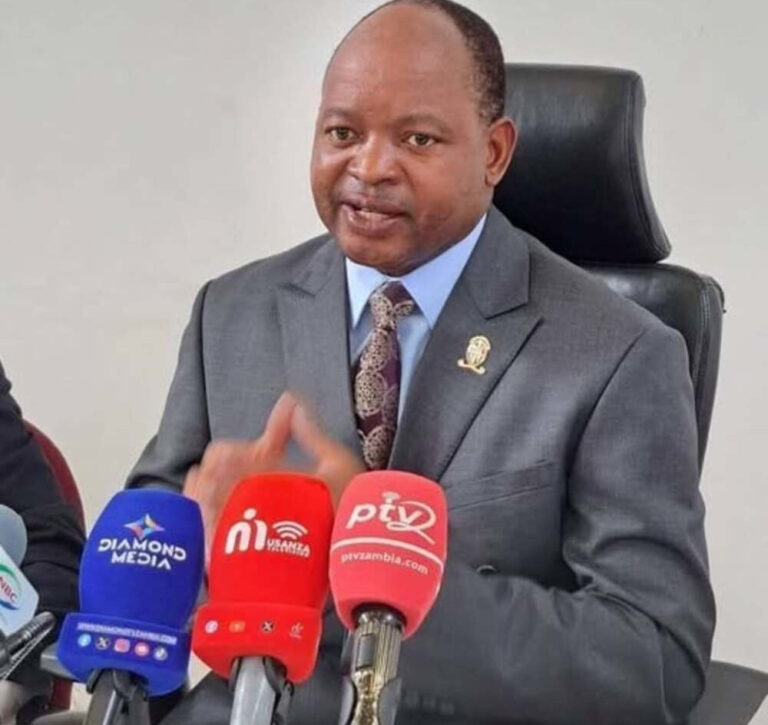
This contradiction was on full display during the Independent Broadcasting Authority (IBA) Media Electoral Reporting Workshop in Choma on March 17, 2026, where Chief Government Spokesperson and Minister of Information and Media, Hon. Cornelius Mweetwa, lectured journalists on the importance of avoiding unverified information, misinformation, disinformation, hate speech, and inflammatory content.
“Your reporting must be accurate, balanced, and thoroughly verifiable,” the Chief Government Spokesperson demanded.
But his own record tells a different story. On December 3rd 2025, while updating the nation on the way forward for Bill 7, Mweetwa incorporated into the update comment on a Zambian American citizen who has been sentenced for 18 months for ‘insulting’ President Hakainde Hichilema.
Mweetwa claimed that “in the last four years, there is no journalist in Zambia who has been arrested and or convicted because of a story that he or she has published, zero,” which is a false claim.
A simple review of documented cases reveals a pattern of arrests, harassment, and intimidation of journalists since the UPND assumed office.
Amnesty International, in a report dated October 18, 2024, explicitly called for the release of journalist Thomas Allan Zyambo, who has been arrested multiple times. The detentions of Rodgers Mwiimba of Millennium TV and Innocent Phiri of KBN TV; both arrested merely for covering an opposition rally, are also matters of public record.
These incidents are not obscure footnotes; they are widely reported across local and international media platforms. The UN Special Rapporteur on freedom of opinion and expression, Irene Khan, also highlighted these concerns in her report on Zambia, underscoring the growing threats to media freedom.
Given the visibility of these cases, it is difficult to believe Mweetwa is unaware of them. The more plausible explanation is that his statement was crafted to manipulate public perception and generate favorable headlines. This is not a harmless oversight; it is deliberate disinformation.
And if Mweetwa insists that his statement was not disinformation, the implication is even more troubling: that the UPND government does not recognize certain journalists as legitimate unless they align with the ruling party.
“So those who have appointed up unto themselves the right to be journalists when in fact they are not, or spokesperson of whom we don’t know who has sent them, they should be ready to be held accountable,” Mweetwa warned.
That, is a direct assault on press freedom and a dangerous precedent for any democracy because fear has never produced responsible journalism.
Equally concerning is UPND administration’s repeated insistence that journalists should highlight government achievements rather than failures. Sounds like a call for balanced and accurate reporting, but also fits an attempt to shape the national narrative to suit the political interests of the New Dawn administration.
The danger becomes real when journalists unknowingly repeat false claim such as Mweetwa’s “in the last four years, there is no journalist in Zambia who has been arrested and or convicted because of a story that he or she has published.”
What begins as deliberate disinformation from a government official becomes misinformation once it is echoed by the media, and tolerated because it benefits those in power. This has the ability to corrode the integrity of the press and mislead the public.
When misinformation is accepted simply because it aligns with the interests of the ruling party, the values of accuracy, responsibility, and truth, the very foundations of journalism, are undermined. And when the government itself becomes a source of disinformation, it becomes nearly impossible for journalists to operate freely and for citizens to make informed decisions.
This behavior must be confronted. It erodes democratic accountability, weakens public institutions, and places journalists at risk.
A government that truly values responsible journalism must begin by practicing it. That means abandoning propaganda, acknowledging documented abuses, respecting the independence of the press, and resisting the temptation to rewrite reality for political gain.
The UPND government cannot continue to preach media responsibility while practicing the opposite.