Friday, June 12, 2026
14.5 C
Lusaka
Home Blog Page 110

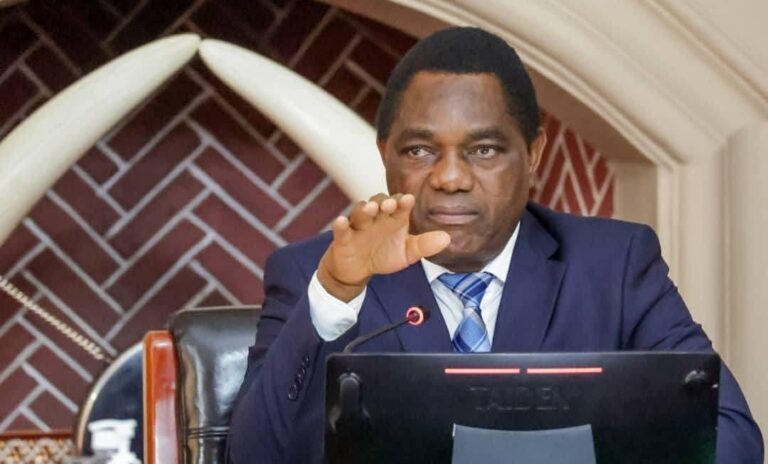
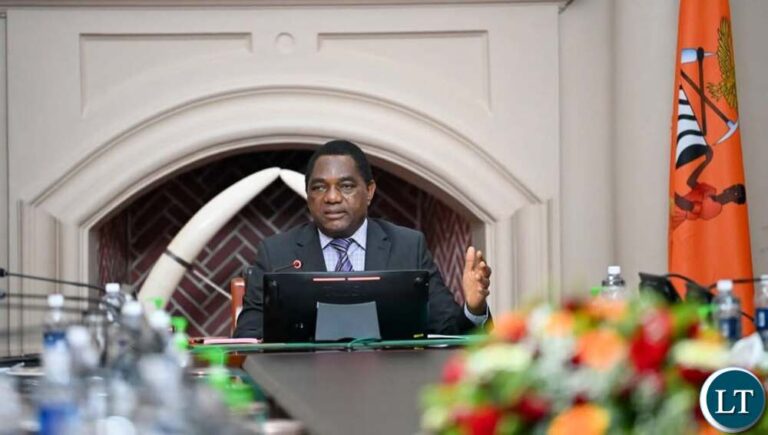
President Hichilema condemns fuel hoarding by some filling stations

2

President Hakainde Hichilema says the hoarding of fuel by some filling stations is unacceptable.

President Hichilema disclosed that some filling stations were hoarding fuel hoping that the fuel price goes up.

He said the government will not accept a situation where fuel is readily available in the country but someone decides to hoard the commodity.

“We won’t accept the situation where fuel is there but someone decides to hoard it, ” he said.

President Hichilema stressed that Zambians cannot accept the hoarding of fuel by some filling stations.

The President said this at State house when he convened a high level meeting with key stakeholders in the petroleum sector.

President Hichilema stated that causing artificial storage of fuel is tantamount to sabotage.

He said Zambians want fuel to be readily available in filling stations at all times.

President Hichilema recalled that prior to the war in the Middle East some filling stations were holding fuel.

He wondered why fuel service providers were hoarding the fuel stocks.

The Head of State has since called for the cleaning of distortions in the petroleum sector.

President Hichilema said the reforms being implemented by the government in the energy and petroleum sector are part of the efforts aimed at cleaning the distortions in the industry.

Speaking earlier, Minister of Energy Makozo Chikote said it was prudent for the government to meet with stakeholders in the petroleum sector to discuss how to cushion the country against the impact of the conflict in the Middle East.

Mr Chikote said it was important to put heads together in coming up with measures to mitigate the effects of global fuel volatility on the economy.

And in giving an update of the current fuel stocks in the country, Mr Chikote disclosed that the country has 60 days diesel stock cover.

He revealed that some of the fuel products are inland while the rest of diesel stocks are in storage tanks in Dar es Salaam Tanzania.

Mr Chikote further disclosed that for petrol the country has 22 days stock cover.

He indicated that the holding of the high level meeting with players in the petroleum sector is meant to ensure that the government and the private sector work as a team in resolving fuel challenges that may rise as a result of the war in the Middle East.

Meanwhile, Mr Chikote pointed out that of late the country has been experiencing disruption in the fuel supply chain.

“It is important that we work together and see how we can improve and uplift the Ndola terminal,” he said.

Mr Chikote emphasised on the need to work together in addressing the fuel challenges caused by the war in the Middle East.

National Oil Marketing Association Vice President Pinchi Simukwai thanked President Hichilema for convening a high- level meeting with stakeholders in the petroleum sector.

Mr Simukwai said the decision to bring together key stakeholders in the petroleum supply chain demonstrates strong leadership and foresight in safeguarding Zambia’s energy security during the period of global uncertainty.

He explained that the conflict in the Middle East has continued exerting pressure on the global energy markets.

Mr Simukwai said Zambia as a nation that relies on imported petroleum products has been affected by the ripple effects of disruptions in international markets.

He said during the high level meeting that the disruptions in the global fuel supply chain is beyond the Zambian government.

Mr Simukwai however, assured President Hichilema that the industry remains committed to maintaining a stable supply of fuel despite the war in the Middle East.

He said the association is ready to collaborate with the government to ensure that the country’s economy continues to function without disruption.

Mr Simukwai has since commended the government for its continued efforts aimed at strengthening fuel supply systems and improving procurement frameworks.

He has also called for stronger collaboration between government and the private sector in resolving challenges affecting the industry.

Mr Simukwai said oil marketing members stand ready to support the government in identifying solutions that will enhance fuel supply security and improve efficiency in the importation and distribution systems.

Fit-again Barbra Banda bounces back with a goal

0

Zambia captain Barbara Banda is elated to kick off the 2026 season in the US with a goal for Orlando Pride after recovering from a lengthy injury.

‎Banda scored a consolation goal when her side Pride lost 2-1 to Seattle Reign on Sunday.

‎This was the Zambian international’s first match since August 16, 2025.

‎”Not the result we wanted but happy to be back on the pitch and getting a goal,” Banda said in her post match comment.

‎”We focus on the next task at hand,” she said.

‎Banda scored the equaliser just six minutes into the second half after Haley McCutcheon fed her down the left wing.

‎This was her 26th goal for the Pride across all competitions, which is second most in Club history. 

‎Meanwhile, the Pride will take on Denver Summit FC this Friday, March 20, at Inter&Co Stadium.

Government reaffirms commitment to strong road infrastructure

0

Government has reaffirmed its commitment to developing a strong and efficient road infrastructure network as a key driver of national development.

Livingstone Mayor Constance Muleabai noted that a good road infrastructure is key to achieving national development.

Ms Muleabai was speaking when she officially opened a Seven days capacity-building workshop for Engineers drawn from Southern and Western Provinces being held at Chrismar hotel in Livingstone.

The Mayor said Government recognised that a well-developed road network was critical to economic growth, as it supports tourism, enhances trade, and promotes industrial development.

Ms Muleyabai noted that investing in road infrastructure not only improves connectivity but also creates opportunities for communities and businesses to thrive.

She added that the ongoing training of engineers was aligned with government’s agenda of ensuring that infrastructure projects were delivered efficiently and on schedule.

Meanwhile, Chief Executive Officer of the National Road Fund Agency, Mr Daniel Mtonga urged engineers attending the workshop to take the training seriously.

Mr Mtonga emphasized that the knowledge and skills to be acquired during the seven-day programme will play a crucial role in improving the maintenance and durability of road infrastructure across the country.

He said enhancing technical capacity among engineers was essential in addressing infrastructure challenges and ensuring that Zambia continued to build a resilient and sustainable road network.

MOH receives aid to boost midwifery training

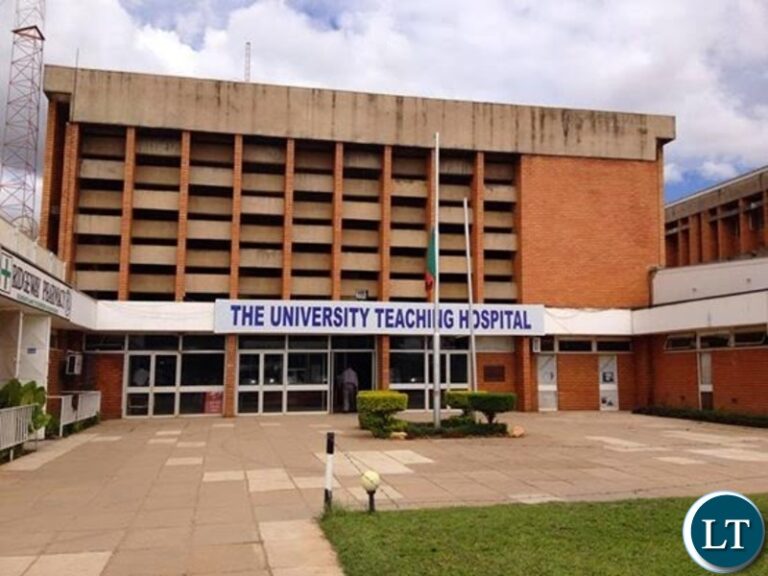
The Lusaka Nursing and Midwifery College at the University Teaching Hospital (UTH), has received delivery equipment valued at over K1.2 million from Seed Global Health, aimed at enhancing maternal and newborn midwifery training in the country.

The donated equipment includes delivery beds, trolleys and delivery sets, which are critical items required for safe and efficient maternal care.

The media  reports that Minister of Health Alex Katakwe says the donation signifies collective commitment to strengthening maternal and newborn health services, while investing in the training and development of the next generation of midwives.

“This support comes at a critical time when the government is prioritising improved maternal and neonatal outcomes”, he said.

He stressed that the equipment will not only enhance service delivery, but also strengthen practical training for student midwives.

Dr Katakwe has added that the essential labour and delivery equipment will be distributed to five level one hospitals, including Chawama and Matero, which serve as key clinical training sites.

He also highlighted that the equipment play a vital role in shaping the competencies of our learners, by equipping them we are ensuring that both students and practicing midwives have access to quality training environments.

He reaffirmed the government’s commitment to strengthening health services for mothers and newborns across the country.

And, Seed Global Health Country Director Chikusela Sikazwe said quality maternal and newborn care requires hands-on practice in well-equipped clinical environments.

“Training cannot be effective without the right tools, this donation is meant to bridge the gap between classroom learning and clinical practice, ensuring that students gain the competence and confidence required in real life settings,” she said.

Mr Sikazwe further assured that Seed Global Health remains committed to supporting Zambia’s health sector, particularly in strengthening human resources for health.

And Lusaka Nursing and Midwifery College Head Angela Mwaba expressed gratitude to government and cooperating partners for their continued support to nursing and midwifery education.

“The investment being made today will translate into better care for mothers and children and will strengthen skills at training level.

She added that the institution remains dedicated to producing competent and skilled midwives capable of responding to the country’s maternal health needs.

Speaking at the same event, a midwifery student Sabrina Makoye says the donation will significantly improve the student’s learning experience.

“With this equipment, we will be able to practice procedures, refine our clinical skills and build confidence before we transition into hospitals and communities”, she said

Zambia Engages US Over Possible Withdrawal of Life-Saving Aid

2

Cornelius Mweetwa says government is using diplomatic channels to address concerns over a possible move by the United States to withhold life-saving assistance to Zambia.

Mr Mweetwa said the two governments are actively engaged on the matter and that the nation will be informed once a final position is reached.

Speaking in an interview with ZNBC News in Choma, Mr Mweetwa said issues surrounding the potential withdrawal of life-saving support, particularly for people living with HIV, are not suitable for public debate through the media.

According to The New York Times, a draft memo prepared for Marco Rubio by staff in the State Department’s Africa Bureau indicates that the administration of Donald Trump is considering significant cuts to assistance as early as May.

The reported move is aimed at increasing pressure on Zambia to enter into an agreement that would grant the United States greater access to the country’s critical mineral resources.

Defence Force officers train to protect women, children on peace missions

0

Twenty-four officers from the Zambia Defence Force have commenced a two-week specialised training programme aimed at strengthening their capacity to protect vulnerable groups during peacekeeping missions.

The Military Gender Advisors training is being held at the Zambia National Service Banquet Hall and has brought together participants from the Zambia Army, Zambia Air Force and Zambia National Service.

The programme is being organised by the United Nations Institute for Training and Research in partnership with the Canadian Department of National Defence through its Military Training and Cooperation Programme.

Opening the training, Ministry of Defence Permanent Secretary Maambo Haamaundu said the initiative is aimed at equipping officers with specialised gender advisory skills for both local and international operations.

Mr Haamaundu said Zambia seeks to deploy officers who will not only represent the country abroad but also safeguard women, men and children in areas affected by conflict.

“Courses such as these help Zambia maintain its reputation as a leading contributor of professional officers for peacekeeping missions,” he said.

He added that Zambia’s stability places a responsibility on the country to contribute to global peace efforts.

“The Ministry of Defence wants officers who will continue protecting women, men and children on peacekeeping missions abroad,” Mr Haamaundu said.

Meanwhile, Janie Desgardins commended the Zambian government for prioritising gender-sensitive training within the defence forces.

Ms Desgardins said the programme will provide both theoretical and practical training to prepare participants for operational challenges, while also equipping them with leadership skills.

Participants are expected to undergo intensive sessions over the next two weeks to prepare them for roles as gender advisors in complex operational environments.

Government Approves 24-Hour Business Operations, Adopts Key Reforms

Government has approved the extension of business and operating hours to 24 hours for business premises, markets and bus stations to stimulate economic growth, create jobs and improve service delivery.

The decision was made during the Third Cabinet Meeting held on March 16, 2026, chaired by Hakainde Hichilema.

Speaking in Lusaka, Cornelius Mweetwa said the move demonstrates government’s commitment to boosting productivity and supporting business expansion.

Mr Mweetwa also announced that Cabinet approved in principle the repeal of the Parliamentary and Ministerial Code of Conduct Act and the National Assembly (Powers and Privileges) Act, which will be replaced with updated legislation aimed at enhancing transparency, accountability and parliamentary integrity.

He further revealed that Cabinet approved key legislative reforms, including the Education (Amendment) Bill of 2026, which seeks to entrench free education from early childhood to secondary level.

In addition, Cabinet approved 38 Bills to amend laws governing appointments to boards and committees, with the aim of increasing private sector participation and promoting gender balance, youth inclusion and representation of persons with disabilities.

Mr Mweetwa said Cabinet also approved the Resettlement Management Bill of 2026, which will provide a legal framework for managing resettlement schemes, compensating affected persons and promoting sustainable development.

Meanwhile, Cabinet resolved to establish public universities in Eastern, Luapula, Northern, Southern and Western Provinces, in addition to North-Western Province, in order to expand access to higher education across the country.

Economist applauds World Bank $45 million Zambia climate program

1

Social Economist, Kelvin Chisanga has applauded the approval of 45 million Dollar by the World Bank under the Second Zambia Climate and Economic Resilience Programmatic Development Policy Financing (DPF).

Mr Chisanga said the move is a strong endorsement of Zambia’s reform agenda, aimed at consolidating the framework.

In a statement made available to the media, he added that the support will strengthen fiscal transparency, particularly in copper revenue management and introduce a credit risk assessment framework for loans and guarantees, safeguarding debt sustainability.

“It will also promote private sector investment through operational PPP funds, new guidelines and the Green Economy and Carbon Market Regulations 2026, unlocking climate-aligned opportunities”,Mr Chisanga said.

“While modest in size, the real value lies in reforms that enhance fiscal discipline, resilience to climate shocks and investment confidence”, he said.

He added that effective implementation will stimulate growth, create jobs and signal Zambia’s commitment to responsible governance and sustainable development.

Bad patients Treatment at Ndola Teaching Hospital

By Valentine Mukuka | Ndola

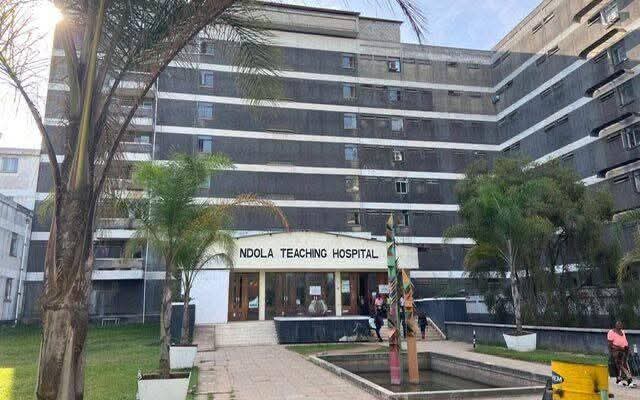
At Ndola Teaching Hospital on the Copperbelt, one of Zambia’s major public referral facilities, patients are routinely directed to private laboratories located just outside its gates—raising questions about whether capacity constraints alone explain the practice, or whether deeper systemic and ethical concerns are at play.

For Chungu Kapema, a Ndola resident, the experience was frustrating.

“You go to a big hospital expecting everything to be done there. But they tell you to go to a private lab. If you don’t have money, your treatment just stops,” Kapema remarked.

Just outside the hospital along Nkana Road, a cluster of private laboratories operates within a short walking distance of the hospital—some only a few metres from the main gate.

This raises questions about why patients are being referred outside for services expected at a public referral hospital.

Patients told Radio Icengelo that these referrals increase medical costs, delay treatment, and in some cases force families to abandon care altogether.

Health workers and officials blame it on capacity constraints, such as shortages of reagents, frequent equipment breakdowns, and a lack of specialised staff.

But insiders say capacity alone does not explain the scale of the problem.

“Yes, sometimes capacity is an issue. But there are cases where equipment is available and still not used. Some referrals raise serious questions,” said one of the workers in the hospital.

Patients and health workers say tests that cost less than fifty kwacha at public facilities can cost four times more at private laboratories.

“I did a test at Ndola Teaching Hospital costing K50 but again I was referred to do the same test at a private facility and it costs K700. I was forced to start searching for a cheaper facility because I didn’t have the K700,” said Maluba Sitali, a patient.

Beyond the financial burden, referrals also create delays, as patients must return to the hospital with results for interpretation, slowing treatment further.

The issue of referrals to private laboratories is not new.

In November 2022, then Minister of Health Sylvia Masebo acknowledged that some public hospitals were referring patients to private labs due to personal interests of health workers.

She directed that private laboratories should not operate within public hospital premises, warning that conflicts of interest were undermining public health services.

Nearly three years later, patients say the practice continues.

Veteran clinician David Mulendema, who worked in various public hospitals in the country for more than 30 years, says conflicts of interest in referrals have long existed.

“Sometimes health workers refer patients to facilities where they work part-time. That is unethical. Public service must benefit patients, not individuals.”

While Radio Icengelo could not independently verify allegations of kickbacks, experts warn that weak oversight and unclear referral systems leave room for abuse.

Ndola Teaching Hospital did not respond to questions on referral protocols, equipment availability, or enforcement of the 2022 directive, at the time of publication.

However, Copperbelt Provincial Health Director Dr. Charles Mwinuna confirmed that Ndola Teaching Hospital refers patients to private laboratories but dismissed claims that the practice has become widespread.

Ministry of Health Permanent Secretary Dr. Kennedy Lishimpi said the government is working to build capacity in public health facilities so they can provide services currently outsourced to private laboratories and pharmacies.

Immediate past Health Minister Dr. Elijah Muchima had warned that it is against ministry of health’s policy for health workers to refer patients to private laboratories or pharmacies when public facilities have the capacity to offer those services.

Health policy experts caution that unchecked referrals to private providers undermine Zambia’s commitment to universal health coverage.

They say when public hospitals fail to deliver essential services, patients pay twice first through taxes, and again through out-of-pocket medical costs.

NOTE : This story was produced by Radio Icengelo and fact-checked by Makanday Centre for Investigative Journalism

DEC Officers Allegedly Break Into Lungu’s Libala Property

3

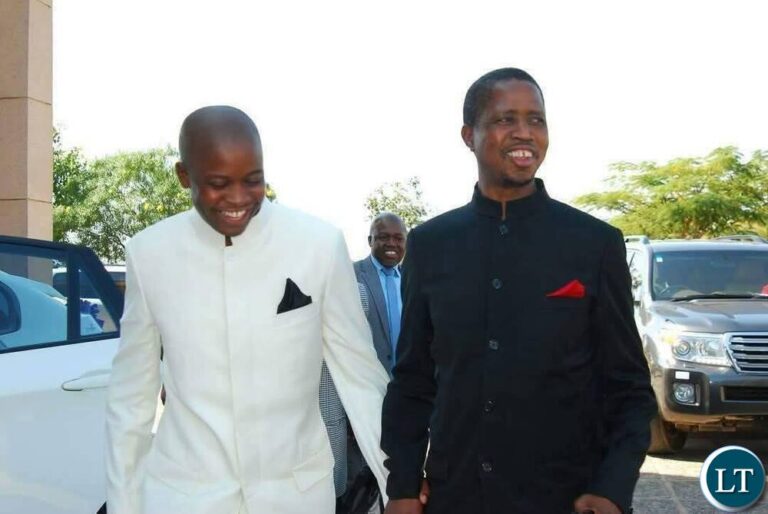
Officers from the Drug Enforcement Commission (Zambia) (DEC) have allegedly broken into a residence belonging to late former President Edgar Lungu in Lusaka’s Libala area.

In an interview with the media, one of the lawyers representing the former President confirmed the development.

The lawyer disclosed that the officers were also collecting vehicles belonging to Mr. Lungu’s son, Dalitso Lungu.

The vehicles were recently forfeited to the State after being deemed tainted by the Economic and Financial Crimes Court (Zambia). However, Dalitso Lungu has since appealed the court’s decision to have the vehicles and other properties forfeited.

The lawyer described the conduct of the officers as “total lawlessness,” alleging that they refused to present a search warrant when requested.

More details are expected to emerge as the situation develops.

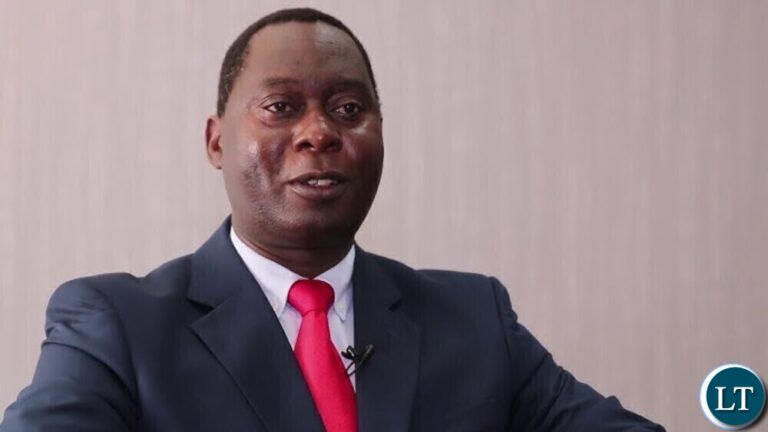
DEC questions Nyasulu over ZAMMSA procurement dealings

The Drug Enforcement Commission has questioned former Zambia Medicines and Medical Supplies Agency director general Victor Nyasulu over alleged abuse of authority linked to procurement processes, bringing renewed attention to a case tied to multiple contracts within the agency.

Nyasulu confirmed that he was summoned by the commission and appeared alongside Nalishebo Siyandi and Chrispin Nchimunya Habbadu, describing the interaction as part of an ongoing inquiry. He said the trio had been warned and cautioned, a procedure typically used by investigators to formally record a suspect’s statement while allowing further inquiries to continue.

The development marks the latest step in a matter that has centred on procurement decisions made during Nyasulu’s tenure at ZAMMSA, where authorities have been examining the awarding of contracts to a number of companies. According to information cited in the report, the case involves transactions linked to 26 companies, placing the spotlight on how contracts were handled within the agency.

Nyasulu raised concern about the timing of the summons, stating that it came shortly after he had joined the Citizens First party. He said the sequence of events appeared unusual to him and suggested that the development could not be separated from his recent political move. His remarks introduce a political dimension into what investigators have presented as a procedural inquiry.

Sources referenced in the report indicated that the matter is still active and that the individuals involved could face further legal action. The same sources said the trio may be required to return to the commission for additional interviews, with the possibility of arrest remaining open depending on the direction of the investigation.

The allegations under review relate to abuse of authority, a charge that typically arises when a public official is accused of using their position to influence decisions in a manner that benefits specific parties. In procurement settings, such cases often involve scrutiny of contract allocation, compliance with tender procedures, and whether due process was followed.

ZAMMSA, as the institution responsible for the procurement and distribution of medicines and medical supplies in Zambia, plays a central role in the country’s health system. Decisions made within the agency carry financial and public health implications, making procurement oversight a critical area for regulators and enforcement agencies.

The reference to contracts awarded to 26 companies suggests that investigators are examining a broad set of transactions rather than a single isolated decision. Such cases typically involve document reviews, interviews with officials and contractors, and assessments of whether procurement guidelines were adhered to during the award process.

Nyasulu’s response reflects a defence anchored on questioning the context of the investigation rather than addressing specific procurement decisions in detail. By linking the summons to his recent political affiliation, he places the issue within a wider national environment where political developments and legal processes often intersect.

At the same time, the commission’s actions follow established investigative procedures, where individuals are called in, warned and cautioned before any formal charges are laid. This stage allows investigators to gather statements and clarify facts before determining whether sufficient grounds exist for prosecution.

The inclusion of Siyandi and Habbadu in the inquiry indicates that the investigation is not limited to a single individual but extends to others who may have been involved in or connected to the procurement processes under scrutiny. Their roles in relation to the contracts are expected to form part of the ongoing examination.

The matter also comes at a time when public scrutiny over procurement practices remains high, particularly in institutions handling essential services such as healthcare. Cases involving public procurement often attract attention due to the scale of resources involved and the potential impact on service delivery.

For now, the case remains at the investigative stage, with no formal charges announced in the report. The next steps will depend on the commission’s assessment of the evidence collected, including the statements obtained during the warning and caution process.

128,000 join Imisepela

BARELY a week after President Hakainde Hichilema launched Imisepela App, over 128,000 young people have registered, and 300 have already accessed loans through the digital platform.

While gracing Youth Day commemoration in Solwezi last Thursday, President Hichilema launched the digital platform aimed at connecting youth to, among others, job opportunities, skills training and partnerships country-wide.

During a meet-and-greet with the team behind Imisepela App yesterday, Smart Zambia Institute national coordinator Percy Chinyama said there is strong early uptake of the Government-backed initiative.

Mr Chinyama is happy with the rapid growth and potential impact the platform has on young people in the country.

He said the app is a transformative digital tool designed to connect young people to different opportunities.

“Look at what is on the app and that will tell you the passion behind what we want to achieve – to allow the youth to use their minds to become better people and to stop the hand-outs mentality,” Mr Chinyama said.

He urged youth to consider careers in information and communication technology because advances in artificial intelligence are reshaping the job market.

Ministry of Labour and Social Security Permanent Secretary Zachariah Luhanga said the platform has already gained significant traction since its launch by the head of State.

Mr Luhanga said Government conducted thorough due diligence before certifying the platform, working with Zambia Statistics Agency to align the initiative with labour market data.

The ministry is also working with employer federations to facilitate about 1,000 internship opportunities in sectors such as tourism and mining.

Ministry of Youth, Sport and Arts Permanent Secretary Kangwa Chileshe encouraged young people across the country to register on the platform and explore the available opportunities.

Mr Chileshe said youth development reports consistently highlight challenges such as limited access to capital, land and information.

“The Imisepela App bridges that gap by giving young people a platform where they can easily access information and engage in programmes that can enhance their lives,” he said.

Imisepela App director-general Violet Chibuye commended government institutions for supporting the initiative.

She thanked Smart Zambia, the Ministry of Labour and Social Security, and the Ministry of Youth, Sport and Arts for their partnership and investment in the platform.

Ms Chibuye also thanked President Hakainde Hichilema for what she described as his genuine commitment to improving the lives of Zambians.

Source: Zambia Daily Mail, Tuesday, March 17, 2026.

Makebi Zulu and the politics of premature ambitio

By Magret Mwanza

Zambia is witnessing a disturbing and deeply polarising political spectacle in which Makebi Zulu has launched a presidential political campaign at a moment that demands national restraint and solemn respect.

The haste with which he is positioning himself for the highest office in the land raises serious questions about judgment, patriotism, and political maturity.

A nation that is still grappling with the emotional weight of laying to rest its former Head of State, and with Makebi Zulu himself having been the poster child of the Edgar Lungu burial negotiator, expects dignity and sobriety from those who once served closely within that leadership circle.

Instead, what Zambians are seeing is an aggressive projection of ambition that many interpret as betrayal rather than courage.

African tradition, which continues to shape our moral compass and political culture, teaches that succession and inheritance of responsibility can only occur after the departed has been accorded proper burial and honour.

This is not merely a ritualistic expectation but a profound symbol of continuity, respect, and spiritual closure.

By launching a presidential political campaign before this sacred national process is completed, Makebi Zulu risks being viewed as undermining both tradition and collective national sentiment.

The presidency is not an emergency vacancy to be filled in haste. It is a responsibility that must be approached with humility, patience, and moral grounding.

There is nothing fearless or principled about political manoeuvres that disregard timing and public sensitivity.

Courage in leadership is demonstrated through restraint, empathy, and an ability to read the emotional pulse of the nation.

Zambia is a country that values loyalty and remembrance. When political actors appear to prioritise personal advancement over honouring the legacy of those they once served, it inevitably creates a perception of opportunism.

Citizens are justified in asking what the rush is. Why can ambition not wait for a more appropriate political season, even if that season is as far as 2031.

True statesmen understand that power gained without moral legitimacy is ultimately fragile.

The growing political noise surrounding Makebi Zulu’s ambitions risks inflaming tensions within an already fragile political environment.

Zambia’s democratic journey requires maturity from aspiring leaders, not theatrics that divide public opinion and erode trust.

Political careers should be built on a foundation of national service and ethical consistency rather than dramatic attempts to dominate headlines.

The perception that influence can be fast-tracked through aggressive positioning only reinforces the fears of citizens who worry that politics has become a contest of ego rather than ideas.

Zambians are yearning for leaders who respect both constitutional processes and cultural values.

They want individuals who understand that national unity must take precedence over individual ambition.

The burial of a former president is not just a ceremonial event. It is a defining moment of reflection for the country.

Those who aspire to lead must demonstrate that they can rise above personal calculations and stand with the nation in its moments of mourning and transition.

Anything less diminishes their claim to moral authority.

In the end, history will not judge leaders by how loudly they declared their ambitions but by how responsibly they conducted themselves when the nation needed sobriety.

If Makebi Zulu wishes to be taken seriously as a future presidential contender, he must recognise that timing is a critical test of leadership character.

Aid, Minerals and Sovereignty: Zambia Must Choose Partnership, Not Pressure

By Farai Ruvanyathi, Kimberley, Northern Cape, SA.

A quiet but consequential shift is emerging in global diplomacy, one that Zambia, and Africa at large, must interpret with clarity and respond to with confidence and dignity.

Development cooperation is no longer confined to humanitarian assistance. Increasingly, health aid, trade, investment, and access to critical minerals are being folded into a single, strategic framework. This evolution presents both opportunity and risk.

For Zambia, endowed with minerals central to the global energy transition, the stakes are particularly high. Its resources position is at the heart of global transformation, but also at the intersection of competing interests.

The question is clear: how does Zambia engage globally without compromising its sovereignty?

First, Zambia must remain anchored in principle. Health cooperation is a global public good, not a bargaining tool. Efforts to link support for HIV/AIDS, malaria, and other health priorities to unrelated concessions risk undermining trust and long-term collaboration.

Second, Zambia must safeguard the governance of its natural resources. Its minerals are the bedrock of future prosperity and will be managed transparently, competitively, and strictly within the framework of the nation’s laws, free from pressure or side arrangements.

Third, strategic diversification is essential. In a multipolar world, no single partner should wield disproportionate influence over its development trajectory. Zambia must continue to engage broadly, ensuring balanced and mutually beneficial partnerships.

Fourth, sovereignty must be underpinned by capability. Strong institutions, skilled negotiators, and sound legal frameworks are indispensable for effective and confident engagement.

Finally, this Southern African nation must define its narrative; That Zambia is not a passive recipient of aid, but a reforming, resilient, and forward-looking nation, open to partnership, but not to coercion.

Under Zambia’s current President, Hakainde Hichilema, the nation has exhibited calm, disciplined leadership. So neither confrontation nor acquiescence will serve this mineral rich country. The appropriate course is principled engagement, firm in substance, measured in tone.

Zambia’s message should be unequivocal: we welcome partnership, but we will not trade our sovereignty.

In navigating this evolving landscape, Zambia has the opportunity not only to safeguard its interests, but to set a standard for fair, transparent, and sustainable engagement between resource-rich nations and global powers.

Its future should not be shaped by pressure, but by decisions grounded in principle, confidence, and strategic clarity.

Government Must Deliver Development to All Areas – Nkandu

0

Elvis Nkandu says government has an obligation to deliver development to all constituencies regardless of whether they produce cabinet ministers.

The Ministry of Youth, Sport and Arts (Zambia) minister said road construction across the country, including in Northern Province, will be guided by the national development plan rather than the presence of senior government officials from particular areas.

Speaking during an interview , Nkandu said government is committed to ensuring equitable development across the country.

“Whether there is no minister who is coming from your constituency, it’s an obligation of government to give development to those people that are there,” he said.

Nkandu dismissed suggestions that Kaputa District should receive priority road infrastructure because some senior government leaders originate from the area.

“I don’t buy those issues where you say, because the minister of sport is coming from Kaputa, the vice president is coming from Kaputa, then we have to do roads. That will be segregation,” he said.

He explained that government has already outlined a long-term infrastructure development blueprint and that roads captured in the plan will eventually be implemented.

“As a responsible government, we have a plan to make sure that those roads are done. If that road is part of the plan, it will definitely be done,” Nkandu said.

The minister attributed delays in implementing some projects to economic challenges the government inherited.

“We found a broken economy. You can imagine, we were growing at negative 2.8 percent. It was very difficult for us to find money to do these roads,” he said.

Nkandu added that government is exploring alternative financing options, including public-private partnerships, to support road construction projects.

“That’s why one of the issues we are talking about is public-private partnerships. Because we know that we don’t have the resources, so even these roads will be done through PPP,” he said.

He urged citizens to remain patient as government works to stabilise the economy and create fiscal space to implement infrastructure projects.

“Obviously, people should give us more time, especially that we are coming from an economy that was so broken. Now we are trying to rebuild, and once the fiscal space is there, the roads will be done,” Nkandu said.