Sunday, June 7, 2026
17.3 C
Lusaka
Home Blog Page 118

CAF postpones 2026 Women’s Africa Cup of Nations to July–August

The Confederation of African Football has postponed the 2026 Women’s Africa Cup of Nations, moving the continental championship from its original March window to a mid-year schedule.

CAF confirmed on Thursday that the tournament will now run from 25 July to 16 August 2026, replacing the earlier dates of 17 March to 3 April. The governing body said the decision was taken after what it described as “unforeseen circumstances”.

The announcement arrived less than two weeks before the opening match was expected to take place in Morocco, forcing teams and organisers to adjust plans for the revised calendar.

Morocco remains the expected host nation for the tournament, which will mark the 14th edition of the Women’s Africa Cup of Nations. CAF indicated that preparations are continuing and did not signal any change of venue.

The North African country has hosted the previous two editions of the competition and is set to stage the finals for the third consecutive time.

The tournament will feature 16 national teams, an expansion from the previous format of 12 sides. The larger field reflects CAF’s efforts to broaden participation in the women’s championship across the continent.

Morocco enters the competition hoping to convert home advantage into a first continental title. The Atlas Lionesses finished runners-up in the previous two tournaments, falling short of lifting the trophy despite strong campaigns on home soil.

Nigeria arrive as the defending champions, having secured their tenth Women’s Africa Cup of Nations title in 2024. The Super Falcons remain the most successful team in the history of the competition and are expected to be among the leading contenders again when the finals begin.

The tournament carries additional significance because it will also determine Africa’s representatives at the 2027 FIFA Women’s World Cup in Brazil.

Under the qualification structure attached to the competition, four African teams will secure direct qualification for the World Cup. Two additional teams will enter the inter-continental playoff round, where they will compete for the remaining places in the global tournament.

With World Cup spots on the line, the competition is expected to attract strong attention from across the continent despite the disruption to the schedule.

Uncertainty had already surrounded the tournament before CAF confirmed the postponement. Reports circulating in recent weeks suggested that Morocco’s hosting status could change, creating anxiety among teams and supporters.

At one stage, comments attributed to officials in South Africa suggested the country might step in as an alternative host. South African Sports Minister Gayton McKenzie later clarified the remarks made by his deputy after the statements triggered speculation about a potential venue change.

CAF’s statement announcing the postponement did not address the speculation about a change of host nation. The organisation said only that preparations for the tournament are continuing.

Before the postponement, CAF had already conducted the group stage draw on 15 January, outlining the match-ups for the expanded 16-team competition. However, the governing body had not yet released the full match schedule for the tournament.

The latest delay has again placed attention on the scheduling challenges surrounding major women’s football competitions in Africa.

The women’s championship experienced a significant disruption earlier in the decade when the 2020 edition was cancelled during the COVID-19 pandemic. That cancellation interrupted the tournament cycle and left teams without continental competition for that period.

The most recent tournament also faced scheduling complications. The 2024 Women’s Africa Cup of Nations, which Nigeria won, was eventually staged in July 2025 after conflicts with other international sporting events, including the Paris Olympic Games.

The postponement of the 2026 edition also follows another recent adjustment within CAF’s competition calendar. The African Nations Championship scheduled for 2025 was postponed shortly before its planned kickoff after organisers said additional time was required to prepare stadium infrastructure and facilities.

That tournament was eventually played later in the year after the delay.

CAF stated that the decision to move the Women’s Africa Cup of Nations was taken to ensure the success of the competition, though the organisation did not provide further details about the circumstances behind the change.

Teams that had been preparing for a March tournament will now redirect their focus to the revised July start, with continental honours and World Cup qualification places waiting at the end of Africa’s flagship women’s football championship.

ZESCO United’s losing run raises pressure on coach Emmanuel Siwale

ZESCO United’s recent form has placed coach Emmanuel Siwale under growing pressure after the club recorded four consecutive defeats, an unusual run for one of Zambia’s most consistent teams.

The Ndola-based side has built a reputation for stability and strong league performances over many seasons. Records stretching back close to two decades show it is difficult to find a similar period where ZESCO United lost four matches in a row.

The current run has therefore raised concern among supporters who are used to seeing the club competing near the top of the table and maintaining steady performances.

Discussion around Siwale’s position has largely centred on results rather than personal criticism. Observers say football remains a results-driven environment, and the team’s current numbers are worrying for a club of ZESCO United’s stature.

The season itself has not been smooth for the former league champions, with inconsistent performances and several decisions during the campaign failing to produce the desired outcomes.

At clubs with high expectations, prolonged losing runs usually trigger questions about direction and leadership within the technical bench.

For now, ZESCO United’s priority will be stopping the slide and regaining momentum before the situation becomes more difficult.

Youths urged to harness rural resources for entrepreneurship

0

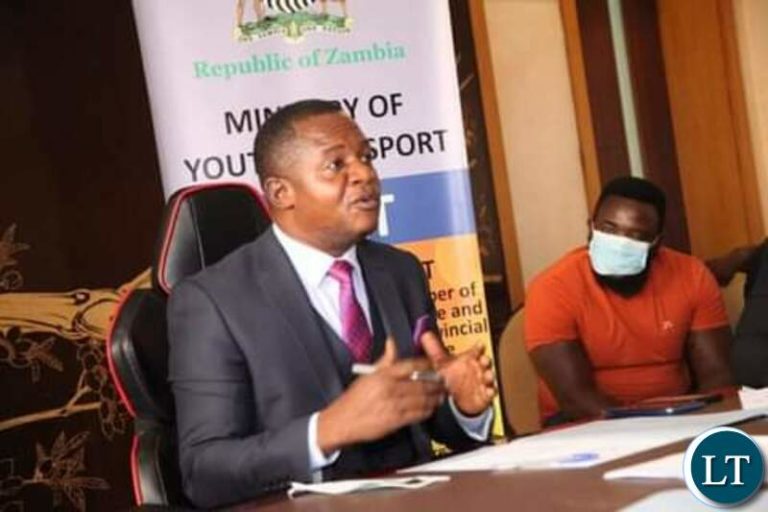
Minister of Youth, Sport and Arts, Elvis Nkandu, has called on young people to explore business opportunities in rural areas by engaging in value addition activities that can transform local resources into marketable products.

Speaking at the official opening of the 2026 Youth Entrepreneurship Fair in Lusaka, Mr Nkandu emphasized that youths have the potential to drive economic growth if they utilize the abundant natural resources in rural communities to establish sustainable enterprises.

Mr Nkandu urged young people to focus on creating businesses that add value to agricultural and other locally available products rather than migrating to urban areas in search of employment.

He noted that value addition not only increases income for youths but also creates employment opportunities within their communities.

He explained that the fair provides a platform for young entrepreneurs to showcase innovations, share ideas and connect with potential investors ahead of Youth Day commemorations on March 12, 2026.

Mr Nkandu reaffirmed government’s commitment to supporting youth-led initiatives through empowerment programmes that promote entrepreneurship and economic participation.

Meanwhile, entrepreneur Annastasia Zulu encouraged youths to start businesses using available resources instead of waiting for large capital.

Ms. Zulu noted that many successful ventures begin with small ideas and limited means, stressing that determination, creativity and innovation are key to success.

Ms. Zulu advised young people to remain focused, hardworking and resilient, noting that challenges are part of the entrepreneurial journey but can be overcome with persistence.

She added that platforms such as entrepreneurship fairs are vital for networking, learning and gaining exposure.

No payments for School Feeding Programme- Govt, Teacher Unions

0

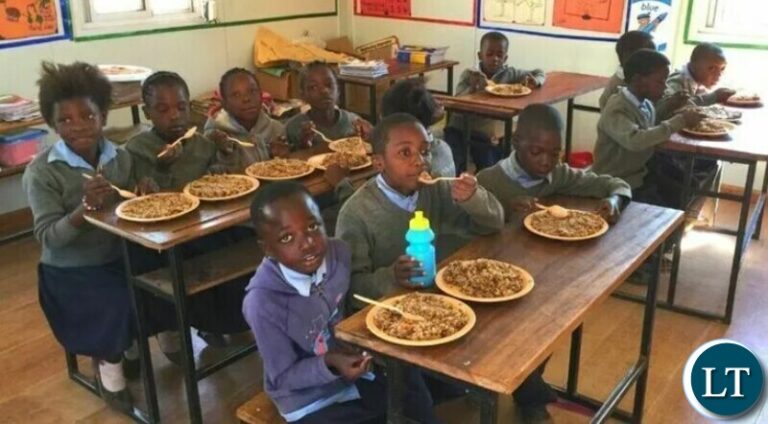
The Ministry of Education and the Teachers Unions have reassured the public that the Government’s School Feeding Programme is free, following claims circulating on social media platforms that pupils are being charged fees to access the service.

In a video shared online, a woman alleged that learners in Kasama District were required to pay K20 to participate in the programme.

Ministry of Education Permanent Secretary for Educational Services, Kelvin Mambwe has since confirmed that the allegations are under investigation and that no learner should pay any fee for services provided under the Government’s Free Education Policy.

Dr Mambwe emphasised that the School Feeding Programme remains a key Government intervention aimed at improving learner nutrition, increasing school attendance, and enhancing academic performance.

“The Ministry wishes to assure parents in Kasama and across the country that the programme is free and accessible to all eligible learners,” he said.

This was contained in a press statement issued to the media by the Ministry of Education Permanent Secretary for Educational Services, Kelvin Mambwe.

Meanwhile, commenting on the matter, Basic Education Teachers Union of Zambia (BETUZ) Director of Public and International Relations Obby Chisala, highlighted that teachers are professionals expected to follow Government policies.

“Any teacher found collecting unauthorised fees will face disciplinary action. The Union will not support such misconduct but will work with authorities to ensure disciplinary procedures are fairly conducted,” he said.

Mr Chisala has urged school administrators to strictly adhere to the Government policy and report any violations immediately.

He also urged members of the public to report schools demanding payment for the School Feeding Programme to their District Education Board Secretary or the Ministry of Education.

The Ministry reiterated that charging fees for services under the Free Education Policy is illegal and undermines equitable access to education.

Govt, private sector engagements cardinal for expanding electricity generation

0

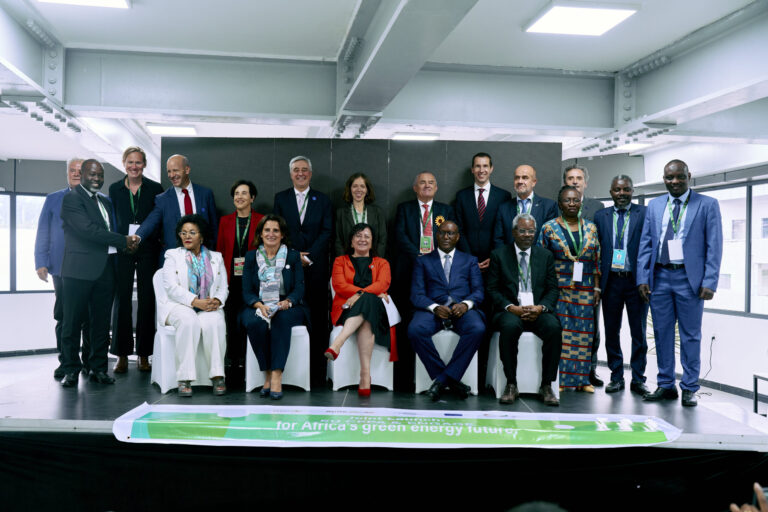
Association of Power Companies in Zambia President Silvester Habajene says continued engagement between government and the private sector is critical to resolving policy bottlenecks and unlocking investment needed to expand electricity generation in the country.

The media reports that speaking on the sidelines of the Public Private Dialogue Forum meeting held in Lusaka today, Mr Habajene said the meeting reviewed progress on a number of long standing issues affecting the energy sector.

Mr Habajene, who also served as Co-Chairperson of the meeting, explained that the Forum allowed both government and industry players to assess concerns previously raised and track progress on matters that have already been resolved.

“We reviewed progress on issues that sector players raised in the past and noted where progress has been made,” he said.

He added that the meeting also brought forward new concerns from industry players and described the government’s response to the issues raised as encouraging, saying stakeholders appreciated the constructive engagement.

Mr Habajene particularly commended the Zambia Revenue Authority for providing clarification on tax related matters affecting investments in electricity generation, transmission and distribution.

He explained that investors bringing equipment into the country for power projects are allowed to import such equipment duty-free, a measure aimed at lowering the cost of developing electricity infrastructure.

“This will ultimately help make electricity more affordable,” he said.

Mr Habajene noted that reducing taxes on critical equipment will ultimately help lower the cost of electricity production and make power more affordable for consumers.

However, he acknowledged that some tax issues remain complex and will require further consultations between the industry and government institutions to reach lasting solutions.

Mr Habajene added that stakeholders have raised operational challenges affecting fuel transporters, including concerns about double charges when transporting fuel into Zambia from Tanzania, where transporters reportedly pay a fee at the border and another at a toll plaza about 20 kilometers inside the country.

Mr Habajene said the matter will be addressed through further discussions involving the National Road Fund Agency, the Zambia Revenue Authority and industry players.

Meanwhile, Western Power Company Managing Director Thomas Younger said policy clarity remains critical for attracting financing to large scale electricity projects.

Mr Younger mentioned that investors and lenders require certainty in laws and taxation before committing funds.

“Lenders need absolute clarity on the tax regime and legal requirements before they can release financing,” he said.

Mr Younger explained that developers must reach what financiers call “financial close” before construction can begin, a stage that requires complete clarity on the legal and tax framework governing a project.

He added that industry players are currently engaging the Zambia Revenue Authority, the Ministry of Finance and National Planning, the Ministry of Commerce, Trade and Industry, the Energy Regulation Board and the Zambia Development Agency to clarify areas where policies appear to conflict.

Bonus Deposit Strategies: How Zambian Players Choose Betting Platforms

Bonus Deposit Strategies: How Zambian Players Choose Betting Platforms

In the modern world of digital entertainment, particularly in Zambia, players are inundated with choices when it comes to selecting the right online betting platforms. The main ones include online sportsbooks (aka bookmakers or sports betting sites), online casinos, dedicated poker sites, and platforms that have more than one of these products all under one roof.

With numerous options available, making informed decisions is vital for users looking to maximise their gaming experience.

One essential strategy Zambian online casino players employ is the careful evaluation of matching deposit bonuses. These offers can significantly enhance a player’s bankroll when they register a new account on their chosen site account, which also extends their gameplay session times and increases chances of winning.

With that said, let’s dive straight in and take a closer look at how Zambian players (and many players across the world) often decide which sites might be worth joining based on the value/generosity of the initial sign-up bonus (aka welcome bonus).

Understanding Matching Deposit Bonuses

Matching deposit bonuses are promotional offers that typically match a player’s initial deposit up to a specified percentage.

For example, if a legally permitted casino site that accepts real cash wagers from Zambian players promises a 100% bonus up to $/€/£100 (or equivalent value in Zambian Kwacha, which is approximately ZMK 2,000,000), it means that a player who decides to max out the bonus and deposit the full $100 (ZMK2M) would receive an additional $100/ZMK2M in bonus funds.

In other words, they are doubling up on their initial investment. These days, Zambian players can also find 50% matching deposit bonuses, aka match bonuses or deposit bonuses, as well as 75%, 125%, 150%, and even 200% or more match bonuses. However, the bigger the percentage doesn’t always mean a more lucrative/valuable bonus.

These bonuses are particularly appealing for new players, as they provide extra funds to explore the casino’s offerings, including a wide range of games developed by top-tier software providers like Leap Gaming, Playson, Pragmatic Play, NetEnt, BGaming, aFAZI, and Onlyplay, to name a few top-tier providers.

Not all matching deposit bonuses are created equal, which is why it’s essential for Zambian players to compare offers across different platforms meticulously.

As mentioned, other important factors, such as the percentage of the match, the maximum bonus amount, and wagering requirements attached to the bonus significantly affect the overall value of the promotion. The lower the wagering requirement is, the quicker you will be able to get them completed.

For example, a 20X wagering requirement (also known as the playthrough, turnover or rollover requirement) attached to a bonus is far better for players than a 50x wagering requirement, and so on.

Factors to Consider When Choosing a Betting Platform

While the allure of matching deposit bonuses is undeniable, Zambian players should consider several aspects when selecting their betting platform:

  1. Wagering Requirements: This refers to the number of times players must wager the bonus amount and often the initial bonus deposit amount on top of the amount of bonus money they receive) before they can withdraw any winnings. Lower wagering requirements are generally more favourable, allowing players to access their funds more quickly
  2. Game Restrictions: Some bonuses may restrict which games can be played with the bonus funds. Players should check if their preferred games are eligible, especially when it comes to popular slots or live dealer games
  3. Bonus Expiry: Bonuses often come with an expiration date. Players should ensure they can meet the wagering requirements within this period to fully benefit from the bonus
  4. Payment Options: The availability of convenient and secure Zambian online payment options is crucial. Players should look for platforms that support local payment methods and currency
  5. Customer Support: Reliable customer support can be a lifesaver when issues arise. Choose sites with responsive customer service available through various methods such as live chat, or phone

Popular Types of Sports Betting and Casino Bonuses

Zambian online casino players often come across various bonuses that can enhance their betting experience. Here’s a list of some popular types of bonuses that players can look for:

Free Sports Bets: These promotions offer players the chance to bet on sports without using their own funds, providing an opportunity to test the platform and potentially win without financial risk.

Matching Deposit Bonuses: As previously discussed, these bonuses can significantly boost a player’s initial deposit, allowing for more gameplay and chances to win.

No Deposit Bonuses: This type of bonus allows players to receive a small sum of bonus funds simply for signing up, without needing to make a deposit. It’s a great way for players to explore a platform before committing their money.

Cashback Offers: Some platforms provide players with a percentage of their losses back, which can soften the blow of a bad betting week.

Free Spins: Available mainly for slot games, free spins allow players to spin the reels without spending their own money, offering a chance to win real money from the complimentary gameplay.

Players can strategise their betting activities and make the most of their individual online betting journeys by exploring these various bonuses.

Final Thoughts

At the end of the day, finding the right iGaming platform as a Zambian player can be rewarding when proper strategies are applied. Players can significantly improve their chances of success simply by focusing on lucrative matching deposit bonuses and understanding the requirements associated with each offer.

Always take time to evaluate and compare different sites, ensuring they offer generous and player-friendly bonuses. Whether engaging in sports betting or casino gaming, leveraging these strategies can lead to a more enjoyable and potentially profitable experience.

Remember to gamble responsibly to ensure you always have a safe and fun time each time you sign in to your chosen Zambian online casino account to play your favourite games with your hard-earned money.

Teacher, Health Worker Drown While Searching for Internet to Submit Reports

0

Two civil servants in Zambezi District have died after attempting to cross a river in search of mobile internet connectivity to submit their monthly reports.

The victims, a teacher and a health worker, drowned on Tuesday afternoon when the dugout canoe they were using capsized on the Lutembwe River.

North-Western Province Police Commanding Officer Brighton Siwale confirmed the incident and identified the deceased as 32-year-old Teddy Sakandula, a class teacher at Nyachikayi Primary School, and 31-year-old Freddy Sapilinya, a health worker at Nyachikayi Health Centre under the Churches Health Association of Zambia (CHAZ).

The incident occurred around 12:00 hours in the Nyachikayi area on the western bank of the Lutembwe River, about 196 kilometres from Zambezi Town.

Police said the two men boarded a dugout canoe in an attempt to cross the river to access mobile network connectivity from the other side so they could submit their reports.

Their attempt ended in tragedy midway through the crossing.

“Unfortunately, while in the middle of the river, the canoe capsized due to strong water current. Both occupants failed to swim and subsequently drowned,” Siwale said.

The bodies were later retrieved from the river and are awaiting transportation to the mortuary at Zambezi District Hospital.

Police have since opened an inquiry into the incident.

NPA to Appeal Khadijah Mingel’s Three-Year Drug Trafficking Sentence

0
The National Prosecution Authority (NPA) has announced its intention to appeal the three-year sentence imposed on Kitwe businesswoman Khadijah Mingel.

The Lusaka Magistrates’ Court yesterday sentenced Mingel to three years’ simple imprisonment for trafficking in 500 grammes of cocaine, with half of the sentence suspended.

However, the prosecution says the penalty handed down does not adequately reflect the seriousness of the offence.

According to the NPA, drug trafficking remains a major concern for law enforcement agencies as illegal narcotics continue to enter communities, contributing to addiction and related criminal activities.

The authority stated that sentences for drug trafficking offences must serve as a strong deterrent to help disrupt the illicit drug trade and protect the public.

For this reason, the State will formally lodge an appeal against the sentence.

The matter will now proceed to the High Court of Zambia, where the appellate court will review the State’s arguments regarding the sentence imposed.

The High Court will determine whether the sentence passed by the trial court was appropriate in the circumstances of the case or whether it should be revised in accordance with the law.

The NPA reaffirmed its commitment to ensuring that offences involving dangerous drugs are prosecuted firmly and that penalties reflect the gravity of such crimes and their impact on society.

Kangwa Returns Home Safely as Government Confirms Sakala, Other Zambians Safe in Middle East

0
Israeli-based Zambian striker Kings Kangwa has safely returned to Zambia as authorities confirm that Fashion Sakala and other Zambian footballers based in the Middle East are unharmed amid escalating tensions in the region.

Foreign Affairs and International Cooperation Minister Mulambo Haimbe told Parliament that government teams have been in constant contact with Zambian players in the Gulf and Israel to ensure their safety as unrest intensifies.

“The teams that have been given the duty of tracking each and every Zambian have equally been in touch with those in Saudi Arabia, and we are keeping a close eye on them. All of them are our national treasures,” Haimbe said.

Kangwa, who plays for Hapoel Be’er Sheva in Israel, reassured fans of his safety in a Facebook post.

“Dear everyone, I would just like to let you know that I have safely arrived back home in Zambia. Thank you to everybody who has been checking on me and sending messages to make sure I am safe. I truly appreciate the support,” he wrote.

The Zambian players currently based in the Middle East include Sakala, who features for Al‑Fayha FC in the Saudi Pro League, as well as Joshua Budo Mutale, Emmanuel Banda and Kennedy Musonda who play in Saudi Arabia’s second-tier league.

Others include Songa Chipyoka and Susan Katongo in Israel, and Enock Sakala who plays for Gulf United FC in the United Arab Emirates.

Haimbe was responding to concerns raised by Miles Sampa, Member of Parliament for Matero, who sought clarification on whether the government had been in contact with Sakala.

The minister assured Parliament that all foreign-based players, including Sakala, remain safe despite the conflict, which has led to heightened military activity and flight disruptions in parts of the Gulf region.

Three juveniles nubbed for murder

Three juveniles in Chifunabuli district have been arrested and formally charged in connection with the murder of their 15-year-old friend.

The juveniles, all boys and aged 13, 12 and 13 years, are alleged to have beaten their friend for losing their hand made ball.

The arrests followed a postmortem conducted on the deceased at Lubwe Mission Hospital which revealed that the boy died from a head injury as he had a fractured skull.

 Chifunabuli District Commissioner, Stanley Mukosa confirmed the arrest of the boys on March 04, 2026 after each one of them was cautioned in the presence of their parents and a Social Welfare Officer.

“All the three young suspects were summoned to Chifunabuli Police Station on March 04, 2026 where each was cautioned in the presence of their mother and a Social Welfare Officer in accordance with section 54 and 55 of the Children’s Code Act No. 12 of 2022,” Mr Mukosa explained.

He said the trio has been jointly charged and arrested for the subject offence of murder which is contrary to Section 200 of the penal code of the Laws of Zambia.

“In consideration of the seriousness of the offense alleged to have been committed by the trio, after formal arrest, they have been detained in Police custody awaiting court date,” Mr Mukosa said.

On March 1st, 2026 a report of suspected murder was reported to Police by a nurse on duty, at Lubwe Mission Hospital, after the body of the deceased boy was Brought in Dead by his uncle.

Man killed walking along Mbala–Mpulungu road

0

A 25-year-old man of Mpulungu District has died in a road traffic accident.

The deceased, identified as Ronald Bwalya of Kasimango Village in Chief Tafuna’s Chiefdom, died after he was hit by a vehicle while walking along the Mbala–Mpulungu Road.

Northern Province Deputy Commanding Officer Charles Mbita confirmed the accident to ZANIS in Kasama today.

He explained that involved was a Toyota Corolla, registration number BCD 9689, driven by Francis Bwalya, aged 39, of Location Compound.

Dr Mbita explained that the accident occurred after the driver allegedly lost control of the vehicle and hit the pedestrian.

“The accident happened on Tuesday around 17:30 hours at Kasimango Village in Chief Tafuna’s Chiefdom, along the Mbala–Mpulungu Road,” he said.

The police reports shows that the driver was reportedly speeding at the time of the accident.

The Police Chief stated that the deceased sustained severe head injuries and was pronounced dead at the scene.

Dr Mbita added that the driver became unconscious after the crash.

Meanwhile, a passenger in the vehicle, identified as Chilufya Mumba, 29, sustained injuries and complained of general body pains.

He was later admitted to Mpulungu District Hospital for further treatment.

Dr Mbita expressed condolences to the bereaved family and cautioned motorists against excessive speed.

“This is a heartbreaking incident, and we extend our deepest sympathies to the family of the deceased. We urge all road users to exercise caution, particularly in areas where pedestrians are present,” he said.

The damaged vehicle remains at the scene, while the body of the deceased has been deposited in Mpulungu District Hospital Mortuary awaiting post-mortem.

Police have since launched investigations into the circumstances surrounding the crash.

Over 12,700 Ngabwe residents cut off from services after pontoon closure.

0

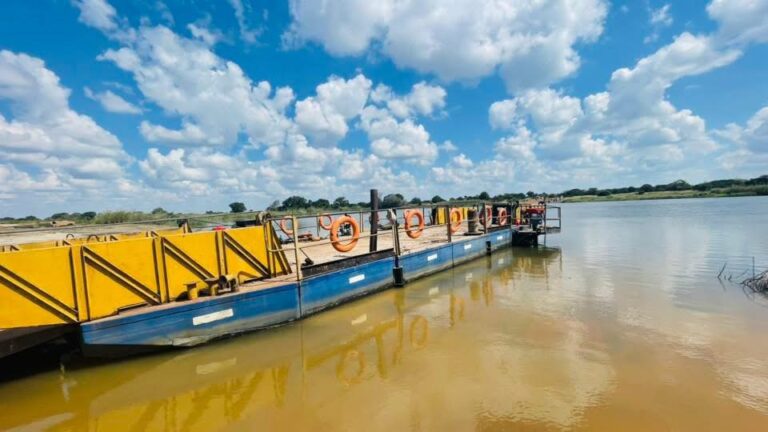
Over 12, 700 people in Ngabwe District of Central Province have been cut off from essential services following the government decision to decommission the pontoon on the Kafue River.

The affected areas are Ngabwe, Luamala and Chisangwa wards that are all in Ngabwe Chiefdom across the Kafue River, the most productive in the district in terms of livestock and agriculture produce.

Ngabwe District Commissioner (DC) Stanley Mwendachabe announced the decommissioning in an interview with ZANIS, citing serious safety concerns that had turned the water crossing into a danger to life.

Mr Mwendachabe said the decision to stop operations of the water ferry was not taken lightly but was necessary to protect residents who depend on it to move goods, especially farm produce between the two sides of the river.

“There are a lot of farmers across the river. People and goods could not go to the other side of the Kafue River,” Mr Mwendachabe said.

He said the decision was arrived at after it became apparent that the operations of the pontoon were no longer sustainable because the seepage of water had become worse.

“The pontoon had become a danger to life. We can’t sacrifice the lives of the people,” He said.

Mr Mwendachabe noted that the suspension of the ferry has already disrupted a number of activities in the district, particularly movement of people and transportation of goods to the other side of the river.

He explained that the situation is especially challenging because communities in Ngabwe Chiefdom, which is across the river, are the most productive in the district, particularly in agriculture and livestock production.

“People and goods cannot easily go to the other side of the river at the moment. Yet the people across the river are very productive in agriculture and livestock. This has affected the movement of farm produce and other economic activities,” he said.

He explained that Ngabwe Town Council had paid for the repair of the pontoon but the rehabilitation process has been delayed due to procurement procedures that must be followed before the works can commence.

 “The council has already paid for the repair works. Unfortunately, the process has taken longer because of procurement procedures that have to be followed,” he said.

Mr Mwendachabe has since appealed to the government to urgently intervene and help expedite the repair works so that the pontoon can be restored and normal activities resume in the district.

“I’m appealing to the government to come to the aid of the people of Ngabwe so that the pontoon can be quickly repaired,” he said.

And Senior Village Headman Mwapwa, Langson Penyanyi has appealed to elective leaders in the area to help fix the pontoon while Chisangwa Ward Councillor Kingstone Musakabantu appealed to the government for a permanent bridge at the crossing point.

“We Are Ready to Fill Prisons”: Lubinda Dares Government

Given Lubinda has declared that opposition leaders are prepared to face arrest if authorities continue detaining critics of government, signalling a firm stance from the former ruling party amid rising political tensions.

Speaking in response to recent arrests involving opposition figures, Lubinda said the threat of imprisonment would not silence political leaders who intend to continue raising national issues.

“We are ready to fill the prisons,” he said.

His remarks came during a period in which several opposition figures have faced police action following statements on national political developments. According to the Patriotic Front acting president, detention will not stop leaders from expressing views they believe reflect the concerns of citizens.

He said political competition requires space for strong criticism and open engagement among competing parties. Without that space, he argued, democratic participation would lose its meaning.

Lubinda maintained that opposition voices represent citizens who expect leaders to question decisions made by those in power. Speaking on the role of political actors in a democracy, he said criticism of government decisions forms part of the responsibility carried by those who serve in public life.

His comments follow a series of developments in which law enforcement agencies have intervened after statements by political leaders were alleged to breach existing legal provisions. Opposition figures have argued that such actions amount to restrictions on criticism of government.

Authorities have maintained that police and investigative agencies apply the law whenever complaints arise or when public statements are believed to violate legal provisions. Government representatives have consistently stated that legal standards apply equally to all citizens regardless of political affiliation.

Lubinda said the opposition would not withdraw from raising issues affecting the country even when doing so leads to legal scrutiny. According to him, leaders who occupy positions within political parties must be prepared to defend democratic space when they believe it is under pressure.

The Patriotic Front, which governed Zambia from 2011 to 2021, has continued rebuilding its political structures following its electoral defeat. Since leaving office, the party has sought to remain visible within national political discussions while preparing for the next election cycle.

Within that process Lubinda has emerged as one of the most prominent voices in the party’s leadership structure. He frequently comments on national developments and often responds to statements or decisions issued by government officials.

Political engagement across Zambia has increased as the country moves closer to another general election. Public meetings, press briefings and online platforms have become active spaces where political actors present positions and critique rival parties.

During such periods of heightened political activity, law enforcement interventions have occasionally followed statements that authorities believe may contravene legal provisions.

Opposition leaders have argued that arrests involving political figures risk narrowing democratic space by discouraging open criticism. Government officials have countered that investigative agencies operate strictly within the law when responding to complaints or potential breaches.

Lubinda said opposition parties will continue to use legal channels to challenge actions they consider restrictive. He said the right to organise, mobilise and communicate with citizens remains fundamental within Zambia’s constitutional framework.

In explaining the position of the opposition, he said political leaders sometimes face personal risk when raising issues they believe affect public interest. Historical experiences in various democracies, he said, show that dissent often carries consequences for those who challenge authority.

Zambia’s legal framework contains provisions relating to public order, defamation and national security. Law enforcement agencies operate within this framework when investigating complaints arising from public statements or actions. When disputes occur over interpretation of those laws, the courts serve as the final authority.

Lubinda said the opposition will continue engaging in political debate while remaining within the legal framework of the country. He added that democratic competition depends on the ability of different political parties to present alternative perspectives on governance and national policy.

Despite the possibility of further arrests, he said political leaders will continue raising issues affecting citizens, including economic conditions, service delivery and accountability in public institutions.

Lubinda said the Patriotic Front intends to maintain its role within Zambia’s political discourse as the country approaches the next electoral cycle. The party will continue participating in parliamentary processes, national consultations and public discussions on governance issues.

His statement placed the opposition’s position clearly on record.

If arrests continue, he said, opposition leaders are prepared to face the consequences while continuing to speak on matters they believe are important to the country.

A Nation Still Waiting: Nine Months Without Edgar Lungu’s Burial

Nine months have now passed since the death of Zambia’s sixth Republican President, Edgar Chagwa Lungu. What should have been a solemn national farewell long ago has instead turned into one of the most uncomfortable and painful episodes in the country’s political life.

Zambia is a country where funerals are handled with urgency, dignity and closure. Communities gather quickly. Families mourn. The deceased are laid to rest. Life then moves forward with memories preserved in respect. That cultural rhythm has been broken in a way few imagined possible.

Today, nearly a year later, say 9 months, the body of a former head of state still lies in a mortuary. This is not simply a political issue. It is a moral one.

Across the country many people quietly ask the same question: how did Zambia reach a point where a former president remains unburied for nine months?

The uncomfortable answer is that many actors carry responsibility. Political mistrust, hardened positions and public accusations have all contributed to the stalemate. Yet speaking plainly, the largest weight still falls on the government because the State assumed the central role the moment the former president died.

Leadership in moments like this requires restraint and emotional intelligence. It requires an ability to step back and recognise that grief cannot be managed through authority. Instead, the process escalated into legal confrontations and political friction that deepened mistrust rather than resolving it.

At the centre of the dispute is the relationship between the State and the Lungu family. Before Edgar Lungu became president, he was a son, a husband and a father. The presidency did not erase those relationships. The office elevated his national stature but it did not convert his life into state property.

That distinction matters deeply in this situation. Government representatives have repeatedly stated that a former president is a national figure whose burial must involve the State. During an interview with journalist Frank Mutubila, Mulilo Kabesha explained that government initially began preparations to bring the body to Zambia for burial because it had been communicated that this was the late president’s wish.

Kabesha also said the government later moved to court in South Africa to stop burial arrangements there while discussions continued, arguing that the State had a responsibility to ensure that a former president receives what he described as an honourable burial.

That explanation, however, leaves out a critical part of the story that shaped the current mistrust. The Lungu family did not simply wake up and decide to bury their relative in South Africa. The shift came after the initial understanding between the family and government reportedly changed during the preparation process. When the agreed procedures were altered, confidence collapsed.

At the same time, the family had made one clear condition known early in the process: that President Hakainde Hichilema should not play a role in the funeral proceedings.

Whether one agrees with that position or not, it became one of the defining fault lines in the negotiations. Once mistrust took hold, the dispute moved beyond quiet diplomacy and entered the courts, turning what should have been a family and national moment into a prolonged legal contest.

Criticism from the opposition has only intensified the political dimension of the dispute. Fred M’membe has been among those questioning how a nation can reach nine months without burying a former president. His remarks capture the emotional frustration felt by many citizens who see the continued delay as unnecessary and deeply unsettling.

Beyond politics lies the human reality. For nine months the Lungu family has lived in suspended mourning. Funerals exist to close a chapter and allow families to begin healing. Without burial, grief remains unresolved and the emotional burden continues indefinitely.

At the same time, the country has already moved forward. National mourning ended long ago. Political campaigns are underway. Government activity continues as usual. Yet the former president’s burial remains unfinished.

This contradiction has become impossible to ignore. Resolving this impasse now requires practical leadership rather than continued argument. The most effective path forward would be for President Hichilema to step away from any direct role in the funeral arrangements and delegate the responsibility to senior government representatives.

Such a step would remove the most sensitive point of contention without stripping the State of its rightful role in honouring a former head of state. The government could still provide full state participation, ceremonial recognition and logistical support befitting the office Lungu once held.

What would change is the tone. By delegating and allowing the family to proceed in the manner they consider respectful, the government would demonstrate that dignity and national unity matter more than protocol or political pride.

At the same time, the Lungu family must also recognise the broader historical dimension of this moment. While there is no law compelling the burial of a former president at Embassy Park, that site has become a place of national remembrance for Zambia’s leaders.

If the central point of contention is removed and the President himself stays away from the proceedings, it would become difficult to justify refusing burial at Embassy Park. Under those circumstances, turning away from a national resting place would appear unnecessary and even self-defeating.

Nine months is already far too long. Zambia deserves closure. The Lungu family deserves peace. The legacy of every past president deserves protection from prolonged political conflict.

A simple act of humility and compromise from both sides would end this painful chapter immediately. Let the family bury their loved one. Let the government honour the office he held. And let Zambia finally lay Edgar Lungu to rest with the dignity that both the man and the nation deserve.

NAPSA Assets Rise to K113.5 Billion as Unpaid Employer Contributions Hit K30 Billion

0

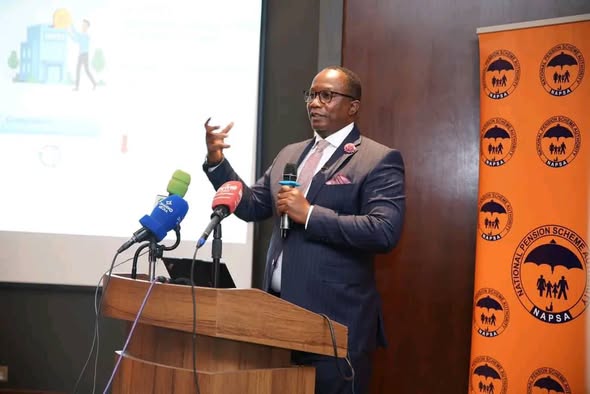
The National Pension Scheme Authority (NAPSA) says its investment portfolio has grown to K113.5 billion in 2025, while benefits payouts reached K2.4 billion during the same period.

However, the Authority has disclosed that employers still owe about K30 billion in outstanding pension contributions.

Director General Muyangwa Muyangwa said during a media engagement that the investment portfolio increased from K95 billion recorded in 2024, keeping the institution on course to reach its 2026 target of K133 billion.

“The steady growth is anchored on a robust investment approach aimed at delivering an average annual return of above 12 percent for the 2022–2026 strategic period,” he said.

Muyangwa added that contribution income also exceeded expectations, with K10.4 billion collected against a target of K10 billion.

At the same time, he revealed that unpaid employer contributions have accumulated penalties amounting to K1.5 billion.

“I encourage employees to engage their employers and ensure that NAPSA obligations are met to avoid challenges when accessing retirement benefits,” he said.

Muyangwa urged employers to take advantage of available penalty waivers to settle their outstanding balances and secure workers’ future benefits.

On payouts, the Authority reported that 32,422 pensioners and beneficiaries received K1.06 billion in monthly pensions, while K643 million was paid as pre-retirement lump sums to 38,560 active members.

Retirement, survivor and invalidity benefits accounted for another K995 million in payments.

“In the same year, NAPSA beat its investment portfolio target of K95 billion to K113.5 billion, in readiness for an additional 10 percent partial withdrawal,” Muyangwa said.

Looking ahead, NAPSA plans to grow its net assets to K133 billion in 2026, increase contributions to K12.5 billion, achieve investment returns above 14 percent and maintain administrative costs within 13.5 percent of total contributions.

The Authority has so far financed investments worth about US$700 million and plans to open parts of its portfolio to allow Zambians to own shares in some of its assets.