Tuesday, June 16, 2026
17.7 C
Lusaka
Home Blog Page 130

NPA to Appeal Khadijah Mingel’s Three-Year Drug Trafficking Sentence

0
The National Prosecution Authority (NPA) has announced its intention to appeal the three-year sentence imposed on Kitwe businesswoman Khadijah Mingel.

The Lusaka Magistrates’ Court yesterday sentenced Mingel to three years’ simple imprisonment for trafficking in 500 grammes of cocaine, with half of the sentence suspended.

However, the prosecution says the penalty handed down does not adequately reflect the seriousness of the offence.

According to the NPA, drug trafficking remains a major concern for law enforcement agencies as illegal narcotics continue to enter communities, contributing to addiction and related criminal activities.

The authority stated that sentences for drug trafficking offences must serve as a strong deterrent to help disrupt the illicit drug trade and protect the public.

For this reason, the State will formally lodge an appeal against the sentence.

The matter will now proceed to the High Court of Zambia, where the appellate court will review the State’s arguments regarding the sentence imposed.

The High Court will determine whether the sentence passed by the trial court was appropriate in the circumstances of the case or whether it should be revised in accordance with the law.

The NPA reaffirmed its commitment to ensuring that offences involving dangerous drugs are prosecuted firmly and that penalties reflect the gravity of such crimes and their impact on society.

Kangwa Returns Home Safely as Government Confirms Sakala, Other Zambians Safe in Middle East

0
Israeli-based Zambian striker Kings Kangwa has safely returned to Zambia as authorities confirm that Fashion Sakala and other Zambian footballers based in the Middle East are unharmed amid escalating tensions in the region.

Foreign Affairs and International Cooperation Minister Mulambo Haimbe told Parliament that government teams have been in constant contact with Zambian players in the Gulf and Israel to ensure their safety as unrest intensifies.

“The teams that have been given the duty of tracking each and every Zambian have equally been in touch with those in Saudi Arabia, and we are keeping a close eye on them. All of them are our national treasures,” Haimbe said.

Kangwa, who plays for Hapoel Be’er Sheva in Israel, reassured fans of his safety in a Facebook post.

“Dear everyone, I would just like to let you know that I have safely arrived back home in Zambia. Thank you to everybody who has been checking on me and sending messages to make sure I am safe. I truly appreciate the support,” he wrote.

The Zambian players currently based in the Middle East include Sakala, who features for Al‑Fayha FC in the Saudi Pro League, as well as Joshua Budo Mutale, Emmanuel Banda and Kennedy Musonda who play in Saudi Arabia’s second-tier league.

Others include Songa Chipyoka and Susan Katongo in Israel, and Enock Sakala who plays for Gulf United FC in the United Arab Emirates.

Haimbe was responding to concerns raised by Miles Sampa, Member of Parliament for Matero, who sought clarification on whether the government had been in contact with Sakala.

The minister assured Parliament that all foreign-based players, including Sakala, remain safe despite the conflict, which has led to heightened military activity and flight disruptions in parts of the Gulf region.

Three juveniles nubbed for murder

Three juveniles in Chifunabuli district have been arrested and formally charged in connection with the murder of their 15-year-old friend.

The juveniles, all boys and aged 13, 12 and 13 years, are alleged to have beaten their friend for losing their hand made ball.

The arrests followed a postmortem conducted on the deceased at Lubwe Mission Hospital which revealed that the boy died from a head injury as he had a fractured skull.

 Chifunabuli District Commissioner, Stanley Mukosa confirmed the arrest of the boys on March 04, 2026 after each one of them was cautioned in the presence of their parents and a Social Welfare Officer.

“All the three young suspects were summoned to Chifunabuli Police Station on March 04, 2026 where each was cautioned in the presence of their mother and a Social Welfare Officer in accordance with section 54 and 55 of the Children’s Code Act No. 12 of 2022,” Mr Mukosa explained.

He said the trio has been jointly charged and arrested for the subject offence of murder which is contrary to Section 200 of the penal code of the Laws of Zambia.

“In consideration of the seriousness of the offense alleged to have been committed by the trio, after formal arrest, they have been detained in Police custody awaiting court date,” Mr Mukosa said.

On March 1st, 2026 a report of suspected murder was reported to Police by a nurse on duty, at Lubwe Mission Hospital, after the body of the deceased boy was Brought in Dead by his uncle.

Man killed walking along Mbala–Mpulungu road

0

A 25-year-old man of Mpulungu District has died in a road traffic accident.

The deceased, identified as Ronald Bwalya of Kasimango Village in Chief Tafuna’s Chiefdom, died after he was hit by a vehicle while walking along the Mbala–Mpulungu Road.

Northern Province Deputy Commanding Officer Charles Mbita confirmed the accident to ZANIS in Kasama today.

He explained that involved was a Toyota Corolla, registration number BCD 9689, driven by Francis Bwalya, aged 39, of Location Compound.

Dr Mbita explained that the accident occurred after the driver allegedly lost control of the vehicle and hit the pedestrian.

“The accident happened on Tuesday around 17:30 hours at Kasimango Village in Chief Tafuna’s Chiefdom, along the Mbala–Mpulungu Road,” he said.

The police reports shows that the driver was reportedly speeding at the time of the accident.

The Police Chief stated that the deceased sustained severe head injuries and was pronounced dead at the scene.

Dr Mbita added that the driver became unconscious after the crash.

Meanwhile, a passenger in the vehicle, identified as Chilufya Mumba, 29, sustained injuries and complained of general body pains.

He was later admitted to Mpulungu District Hospital for further treatment.

Dr Mbita expressed condolences to the bereaved family and cautioned motorists against excessive speed.

“This is a heartbreaking incident, and we extend our deepest sympathies to the family of the deceased. We urge all road users to exercise caution, particularly in areas where pedestrians are present,” he said.

The damaged vehicle remains at the scene, while the body of the deceased has been deposited in Mpulungu District Hospital Mortuary awaiting post-mortem.

Police have since launched investigations into the circumstances surrounding the crash.

Over 12,700 Ngabwe residents cut off from services after pontoon closure.

0

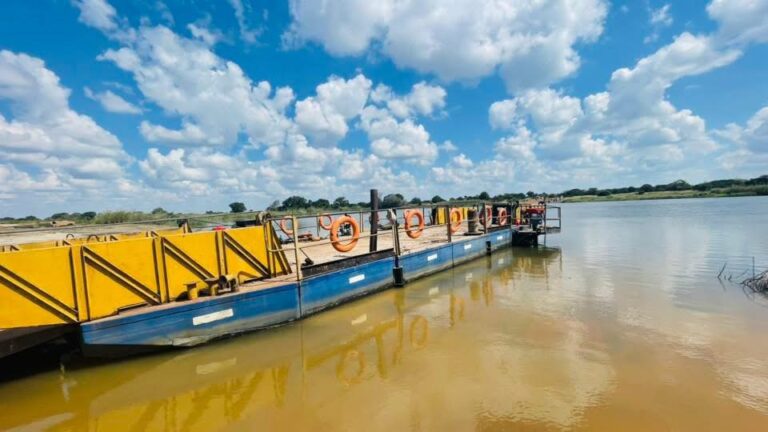
Over 12, 700 people in Ngabwe District of Central Province have been cut off from essential services following the government decision to decommission the pontoon on the Kafue River.

The affected areas are Ngabwe, Luamala and Chisangwa wards that are all in Ngabwe Chiefdom across the Kafue River, the most productive in the district in terms of livestock and agriculture produce.

Ngabwe District Commissioner (DC) Stanley Mwendachabe announced the decommissioning in an interview with ZANIS, citing serious safety concerns that had turned the water crossing into a danger to life.

Mr Mwendachabe said the decision to stop operations of the water ferry was not taken lightly but was necessary to protect residents who depend on it to move goods, especially farm produce between the two sides of the river.

“There are a lot of farmers across the river. People and goods could not go to the other side of the Kafue River,” Mr Mwendachabe said.

He said the decision was arrived at after it became apparent that the operations of the pontoon were no longer sustainable because the seepage of water had become worse.

“The pontoon had become a danger to life. We can’t sacrifice the lives of the people,” He said.

Mr Mwendachabe noted that the suspension of the ferry has already disrupted a number of activities in the district, particularly movement of people and transportation of goods to the other side of the river.

He explained that the situation is especially challenging because communities in Ngabwe Chiefdom, which is across the river, are the most productive in the district, particularly in agriculture and livestock production.

“People and goods cannot easily go to the other side of the river at the moment. Yet the people across the river are very productive in agriculture and livestock. This has affected the movement of farm produce and other economic activities,” he said.

He explained that Ngabwe Town Council had paid for the repair of the pontoon but the rehabilitation process has been delayed due to procurement procedures that must be followed before the works can commence.

 “The council has already paid for the repair works. Unfortunately, the process has taken longer because of procurement procedures that have to be followed,” he said.

Mr Mwendachabe has since appealed to the government to urgently intervene and help expedite the repair works so that the pontoon can be restored and normal activities resume in the district.

“I’m appealing to the government to come to the aid of the people of Ngabwe so that the pontoon can be quickly repaired,” he said.

And Senior Village Headman Mwapwa, Langson Penyanyi has appealed to elective leaders in the area to help fix the pontoon while Chisangwa Ward Councillor Kingstone Musakabantu appealed to the government for a permanent bridge at the crossing point.

“We Are Ready to Fill Prisons”: Lubinda Dares Government

Given Lubinda has declared that opposition leaders are prepared to face arrest if authorities continue detaining critics of government, signalling a firm stance from the former ruling party amid rising political tensions.

Speaking in response to recent arrests involving opposition figures, Lubinda said the threat of imprisonment would not silence political leaders who intend to continue raising national issues.

“We are ready to fill the prisons,” he said.

His remarks came during a period in which several opposition figures have faced police action following statements on national political developments. According to the Patriotic Front acting president, detention will not stop leaders from expressing views they believe reflect the concerns of citizens.

He said political competition requires space for strong criticism and open engagement among competing parties. Without that space, he argued, democratic participation would lose its meaning.

Lubinda maintained that opposition voices represent citizens who expect leaders to question decisions made by those in power. Speaking on the role of political actors in a democracy, he said criticism of government decisions forms part of the responsibility carried by those who serve in public life.

His comments follow a series of developments in which law enforcement agencies have intervened after statements by political leaders were alleged to breach existing legal provisions. Opposition figures have argued that such actions amount to restrictions on criticism of government.

Authorities have maintained that police and investigative agencies apply the law whenever complaints arise or when public statements are believed to violate legal provisions. Government representatives have consistently stated that legal standards apply equally to all citizens regardless of political affiliation.

Lubinda said the opposition would not withdraw from raising issues affecting the country even when doing so leads to legal scrutiny. According to him, leaders who occupy positions within political parties must be prepared to defend democratic space when they believe it is under pressure.

The Patriotic Front, which governed Zambia from 2011 to 2021, has continued rebuilding its political structures following its electoral defeat. Since leaving office, the party has sought to remain visible within national political discussions while preparing for the next election cycle.

Within that process Lubinda has emerged as one of the most prominent voices in the party’s leadership structure. He frequently comments on national developments and often responds to statements or decisions issued by government officials.

Political engagement across Zambia has increased as the country moves closer to another general election. Public meetings, press briefings and online platforms have become active spaces where political actors present positions and critique rival parties.

During such periods of heightened political activity, law enforcement interventions have occasionally followed statements that authorities believe may contravene legal provisions.

Opposition leaders have argued that arrests involving political figures risk narrowing democratic space by discouraging open criticism. Government officials have countered that investigative agencies operate strictly within the law when responding to complaints or potential breaches.

Lubinda said opposition parties will continue to use legal channels to challenge actions they consider restrictive. He said the right to organise, mobilise and communicate with citizens remains fundamental within Zambia’s constitutional framework.

In explaining the position of the opposition, he said political leaders sometimes face personal risk when raising issues they believe affect public interest. Historical experiences in various democracies, he said, show that dissent often carries consequences for those who challenge authority.

Zambia’s legal framework contains provisions relating to public order, defamation and national security. Law enforcement agencies operate within this framework when investigating complaints arising from public statements or actions. When disputes occur over interpretation of those laws, the courts serve as the final authority.

Lubinda said the opposition will continue engaging in political debate while remaining within the legal framework of the country. He added that democratic competition depends on the ability of different political parties to present alternative perspectives on governance and national policy.

Despite the possibility of further arrests, he said political leaders will continue raising issues affecting citizens, including economic conditions, service delivery and accountability in public institutions.

Lubinda said the Patriotic Front intends to maintain its role within Zambia’s political discourse as the country approaches the next electoral cycle. The party will continue participating in parliamentary processes, national consultations and public discussions on governance issues.

His statement placed the opposition’s position clearly on record.

If arrests continue, he said, opposition leaders are prepared to face the consequences while continuing to speak on matters they believe are important to the country.

A Nation Still Waiting: Nine Months Without Edgar Lungu’s Burial

Nine months have now passed since the death of Zambia’s sixth Republican President, Edgar Chagwa Lungu. What should have been a solemn national farewell long ago has instead turned into one of the most uncomfortable and painful episodes in the country’s political life.

Zambia is a country where funerals are handled with urgency, dignity and closure. Communities gather quickly. Families mourn. The deceased are laid to rest. Life then moves forward with memories preserved in respect. That cultural rhythm has been broken in a way few imagined possible.

Today, nearly a year later, say 9 months, the body of a former head of state still lies in a mortuary. This is not simply a political issue. It is a moral one.

Across the country many people quietly ask the same question: how did Zambia reach a point where a former president remains unburied for nine months?

The uncomfortable answer is that many actors carry responsibility. Political mistrust, hardened positions and public accusations have all contributed to the stalemate. Yet speaking plainly, the largest weight still falls on the government because the State assumed the central role the moment the former president died.

Leadership in moments like this requires restraint and emotional intelligence. It requires an ability to step back and recognise that grief cannot be managed through authority. Instead, the process escalated into legal confrontations and political friction that deepened mistrust rather than resolving it.

At the centre of the dispute is the relationship between the State and the Lungu family. Before Edgar Lungu became president, he was a son, a husband and a father. The presidency did not erase those relationships. The office elevated his national stature but it did not convert his life into state property.

That distinction matters deeply in this situation. Government representatives have repeatedly stated that a former president is a national figure whose burial must involve the State. During an interview with journalist Frank Mutubila, Mulilo Kabesha explained that government initially began preparations to bring the body to Zambia for burial because it had been communicated that this was the late president’s wish.

Kabesha also said the government later moved to court in South Africa to stop burial arrangements there while discussions continued, arguing that the State had a responsibility to ensure that a former president receives what he described as an honourable burial.

That explanation, however, leaves out a critical part of the story that shaped the current mistrust. The Lungu family did not simply wake up and decide to bury their relative in South Africa. The shift came after the initial understanding between the family and government reportedly changed during the preparation process. When the agreed procedures were altered, confidence collapsed.

At the same time, the family had made one clear condition known early in the process: that President Hakainde Hichilema should not play a role in the funeral proceedings.

Whether one agrees with that position or not, it became one of the defining fault lines in the negotiations. Once mistrust took hold, the dispute moved beyond quiet diplomacy and entered the courts, turning what should have been a family and national moment into a prolonged legal contest.

Criticism from the opposition has only intensified the political dimension of the dispute. Fred M’membe has been among those questioning how a nation can reach nine months without burying a former president. His remarks capture the emotional frustration felt by many citizens who see the continued delay as unnecessary and deeply unsettling.

Beyond politics lies the human reality. For nine months the Lungu family has lived in suspended mourning. Funerals exist to close a chapter and allow families to begin healing. Without burial, grief remains unresolved and the emotional burden continues indefinitely.

At the same time, the country has already moved forward. National mourning ended long ago. Political campaigns are underway. Government activity continues as usual. Yet the former president’s burial remains unfinished.

This contradiction has become impossible to ignore. Resolving this impasse now requires practical leadership rather than continued argument. The most effective path forward would be for President Hichilema to step away from any direct role in the funeral arrangements and delegate the responsibility to senior government representatives.

Such a step would remove the most sensitive point of contention without stripping the State of its rightful role in honouring a former head of state. The government could still provide full state participation, ceremonial recognition and logistical support befitting the office Lungu once held.

What would change is the tone. By delegating and allowing the family to proceed in the manner they consider respectful, the government would demonstrate that dignity and national unity matter more than protocol or political pride.

At the same time, the Lungu family must also recognise the broader historical dimension of this moment. While there is no law compelling the burial of a former president at Embassy Park, that site has become a place of national remembrance for Zambia’s leaders.

If the central point of contention is removed and the President himself stays away from the proceedings, it would become difficult to justify refusing burial at Embassy Park. Under those circumstances, turning away from a national resting place would appear unnecessary and even self-defeating.

Nine months is already far too long. Zambia deserves closure. The Lungu family deserves peace. The legacy of every past president deserves protection from prolonged political conflict.

A simple act of humility and compromise from both sides would end this painful chapter immediately. Let the family bury their loved one. Let the government honour the office he held. And let Zambia finally lay Edgar Lungu to rest with the dignity that both the man and the nation deserve.

NAPSA Assets Rise to K113.5 Billion as Unpaid Employer Contributions Hit K30 Billion

0

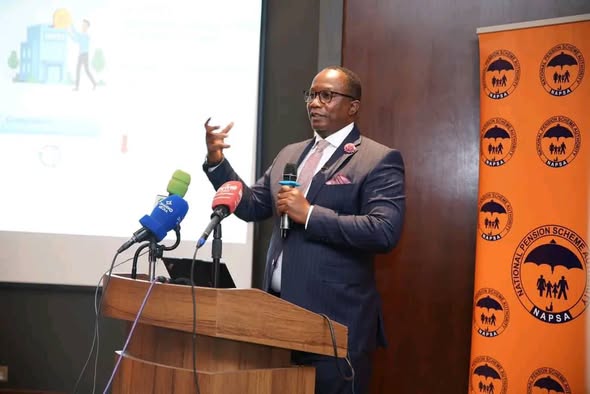
The National Pension Scheme Authority (NAPSA) says its investment portfolio has grown to K113.5 billion in 2025, while benefits payouts reached K2.4 billion during the same period.

However, the Authority has disclosed that employers still owe about K30 billion in outstanding pension contributions.

Director General Muyangwa Muyangwa said during a media engagement that the investment portfolio increased from K95 billion recorded in 2024, keeping the institution on course to reach its 2026 target of K133 billion.

“The steady growth is anchored on a robust investment approach aimed at delivering an average annual return of above 12 percent for the 2022–2026 strategic period,” he said.

Muyangwa added that contribution income also exceeded expectations, with K10.4 billion collected against a target of K10 billion.

At the same time, he revealed that unpaid employer contributions have accumulated penalties amounting to K1.5 billion.

“I encourage employees to engage their employers and ensure that NAPSA obligations are met to avoid challenges when accessing retirement benefits,” he said.

Muyangwa urged employers to take advantage of available penalty waivers to settle their outstanding balances and secure workers’ future benefits.

On payouts, the Authority reported that 32,422 pensioners and beneficiaries received K1.06 billion in monthly pensions, while K643 million was paid as pre-retirement lump sums to 38,560 active members.

Retirement, survivor and invalidity benefits accounted for another K995 million in payments.

“In the same year, NAPSA beat its investment portfolio target of K95 billion to K113.5 billion, in readiness for an additional 10 percent partial withdrawal,” Muyangwa said.

Looking ahead, NAPSA plans to grow its net assets to K133 billion in 2026, increase contributions to K12.5 billion, achieve investment returns above 14 percent and maintain administrative costs within 13.5 percent of total contributions.

The Authority has so far financed investments worth about US$700 million and plans to open parts of its portfolio to allow Zambians to own shares in some of its assets.

Government Moves to Evacuate Zambian Family in Iraq, Traces Citizen in Iran

4

The Zambian government has initiated plans to evacuate a family of five living in the Kurdistan Region of Iraq as authorities work to secure their safety amid escalating tensions in the Middle East.

Delivering a ministerial statement in Parliament, Foreign Affairs and International Cooperation Minister Mulambo Haimbe said government was handling an urgent case involving the family as the security situation in the region continues to deteriorate.

Haimbe said emergency arrangements had already been activated through Zambia’s diplomatic mission in Cairo to facilitate the family’s evacuation from the semi-autonomous Kurdistan Region.

“Through coordinated engagement between our Missions in Cairo and Ankara, preparations are underway to facilitate safe transit through the nearest viable corridor, subject to prevailing security assessments,” Haimbe told Parliament.

The minister also disclosed that government is working to establish the whereabouts and safety of another Zambian believed to be living in Iran, where tensions remain high.

According to Haimbe, Zambia’s diplomatic missions in Cairo and Ankara are coordinating efforts to trace the individual and prepare a possible evacuation route should the security situation worsen.

Meanwhile, the minister assured the nation that no Zambian has been reported injured or killed in the ongoing hostilities across the Middle East based on updates from Zambian missions in several countries.

He further stated that the government of the United Arab Emirates has provided temporary accommodation and assistance to travellers, including Zambians, who have been stranded due to flight disruptions caused by the conflict.

Government has since advised Zambians living in the region to remain vigilant, avoid areas near military installations and maintain regular contact with the nearest Zambian diplomatic mission as authorities continue monitoring the situation.

Speaker Urges Political Parties to Adopt 30% Women Candidates

Nelly Mutti has called on political parties to adopt at least 30 percent women candidates ahead of the 2026 General Election, warning that Zambia’s democracy will not thrive without the full inclusion of women.

Speaking during the opening of the two-day Women’s Participation in Politics Conference at the Mulungushi International Conference Centre, the Speaker said the continued exclusion of women during candidate adoption had become a concerning trend since the advent of multiparty democracy.

“Please, as the representatives of political parties, endeavor to at least adopt 30 percent of the women in your political parties as candidates,” Mutti said.

She stressed that meaningful participation of women in politics is essential for strengthening democratic governance and ensuring balanced national development.

Gender Division Permanent Secretary Mainga Kabika echoed the call and commended women who attended the conference for sponsoring themselves to participate.

“In proving that they are committed, they sponsored themselves to come here. Government didn’t sponsor them, civil society didn’t sponsor them, but they said it’s our time to rise and we will do it,” Kabika said.

Kabika noted that Zambia’s democracy would only reach its full potential when women participate fully, effectively and equally in shaping the country’s political, economic and social agenda.

“Zambia’s democracy can only attain its full potential when women participate fully, effectively and equally in shaping the political, economic and social destiny of our country,” she said.

Meanwhile, Beauty Katebe, chairperson of the NGO Coordinating Council, challenged claims that there are not enough women ready to contest elective positions, pointing to the strong turnout at the conference.

“When I walked in this room I was actually amazed with the number of women that I’m seeing, and there is on the ground the notion that there are no women to be adopted,” Katebe said.

She also urged the media to play a more active role in changing perceptions around women’s participation in politics.

“Ba media, you should report that women are there and they want to stand,” she said.

The conference comes amid renewed calls for increased female representation in elective positions as political parties prepare for the August 13, 2026 general elections.

NWEC Plans LuSE Listing to Raise Capital for Expansion

0

North Western Energy Corporation (NWEC) has announced plans to list on the Lusaka Securities Exchange (LuSE) as it seeks to raise fresh capital to support its diversification programme and allow Zambians and other investors to acquire shares in the company.

NWEC Managing Director Andrew Kamanga said the planned listing would help the company strengthen its financial base while opening ownership to the public.

Kamanga said recent government efforts to stabilise macroeconomic fundamentals and implement energy sector reforms have placed Zambia in a better position to avoid power shortages similar to those experienced last year.

NWEC, the country’s largest independent power distributor, has operated for 17 years in key districts of North-Western Province, including Solwezi, Kalumbila and Lumwana.

The company is planning to develop solar photovoltaic (PV) power plants in Solwezi and coal-fired thermal plants in Southern Province as part of its expansion strategy.

Kamanga said, in addition to supporting ongoing expansions in North-Western Province, NWEC intends to raise capital to supply electricity to planned housing developments of about 5,000 units each in Lusaka and Eastern Province.

“We are at a point where we believe bringing in new investors and new capital is going to strengthen the company and this listing gives an opportunity to the rest of the Zambians to participate in being a shareholder in North Western Energy Corporation,” Kamanga said in an interview from the Africa’s Energy Conference in South Africa, where NWEC is among the sponsors.

“We’re now moving from being a private company to partially being a public listed company and we think our presence here will help to create rapport with possible investors targeting the Zambian market because we have quite a number of equity investors at the conference who are on the lookout for opportunities and so this gives us that head start as we plan our listing,” he added.

Kamanga said the company’s diversification plans would require a significant injection of new capital. He added that NWEC is in advanced discussions with various developers for partnerships as Engineering, Procurement and Construction (EPC) contractors.

He said the improving economic environment, combined with ongoing energy reforms such as the gradual move toward cost-reflective electricity tariffs, is expected to encourage investment in new power generation projects and help avoid a repeat of the 2025 power crisis that saw rolling blackouts lasting up to 20 hours.

Kamanga also expressed support for government plans to increase copper production to three million metric tonnes by 2033 and raise national power generation capacity to about 10,000 megawatts (MW) from the current 3,909 MW over the same period.

“GDP is up this year, inflation is in single digits now and with the exchange rate equally performing well; these parameters are a good base to prepare for the future and of course we still think the government targets in terms of copper production and the 10,000 megawatts is achievable,” he said.

Kamanga further revealed that NWEC has applied for membership in the Southern African Power Pool (SAPP) as it seeks to join other private power traders in the region.

He added that the company is also holding discussions with regional power developers to construct additional transmission lines across Southern Africa to strengthen existing ageing transmission infrastructure.

12 Injured After Vehicle Carrying Bodies of Mother and Children Overturns

1
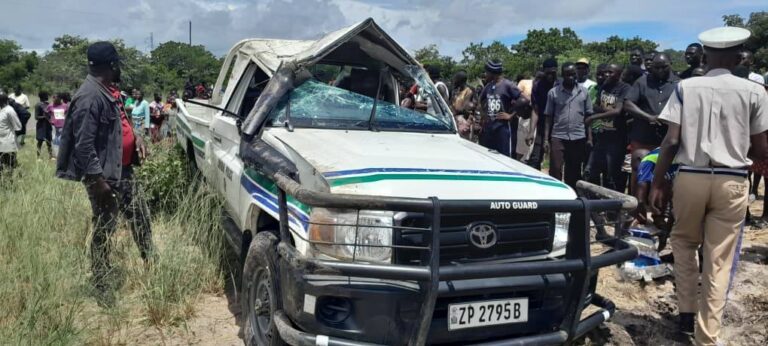
Twelve mourners were injured yesterday afternoon after a vehicle transporting the bodies of a mother and her two children overturned along the Mongu–Senanga Road.

The accident occurred around 13:30 hours in the Nambwata area as the group was travelling to Nalolo District for burial.

Police said a Toyota Land Cruiser, registration number ZP 2795 B, belonging to the police service and funded through the Constituency Development Fund (CDF), was carrying 12 passengers and three coffins containing the bodies of a woman and her two children who had drowned on February 28, 2026.

The vehicle was being driven by Sergeant Waluka Muyambango, 32, of Muoyo area in Nalolo District.

Western Division Police Commissioner Rae Hamoonga said the vehicle was travelling from Mongu towards the south when the driver allegedly lost control while attempting to avoid a cow that was crossing the road.

“The vehicle careered off the road and overturned,” Hamoonga said.

All the injured occupants were rushed to Lewanika General Hospital where they are receiving treatment.

Police said the vehicle was extensively damaged in the accident and investigations into the incident have since been instituted.

“The Zambia Police Service wishes the injured persons a quick recovery and urges motorists to exercise caution,” Hamoonga stated.

The Nonapeptide Oxytocin – Beyond Reproduction into Research Innovation

The Nonapeptide Oxytocin – Beyond Reproduction into Research Innovation
The nonapeptide Oxytocin is a cyclic nine-amino‐acid peptide that has long been studied for its possible roles in reproduction and neuroendocrine signaling. What has become increasingly appreciated in recent decades is its multifaceted nature: the peptide is believed to serve as a signaling molecule of broad scope across neural, metabolic, immune, and social domains.

In this article, we review the structural and functional characteristics of Oxytocin and explore the diverse research domains in which the peptide may hold promise, strictly with reference to cell – and system-level research models.

Structural and Receptor Basis
Oxytocin is a nonapeptide composed of the amino-acid sequence Cys–Tyr–Ile–Gln–Asn–Cys–Pro–Leu–Gly (amide). It features a disulfide bridge between the two cysteine residues, which forms a cyclic ring of six residues plus a three-residue tail. The peptide is derived from a larger precursor (prepro-oxytocin + neurophysin) that is processed via enzymatic cleavage and carrier proteins.

Its cognate receptor, the oxytocin receptor (OXTR), is a G-protein-coupled receptor (GPCR) of class I, which couples to heterotrimeric G proteins and triggers intracellular cascades including calcium signaling, MAP-kinase activation, and receptor internalization.

The receptor system is noted for being regulated by steroid hormones (gonadal and adrenal) and for exhibiting tissue-specific expression patterns that are dynamically modulated. More recently, the crystal structure of the oxytocin receptor has been resolved, offering a molecular blueprint of ligand-binding and receptor conformational changes.

Thus, from a structural viewpoint, the peptide-receptor system is well characterized and is thought to offer a robust platform for research probes (analogs, selective receptor ligands, structural biology) and for exploring downstream signaling networks.

Functional Versatility: Theoretical and Empirical Dimensions

  1. Social and affiliation signaling
    One prominent research direction investigates Oxytocin as a putative modulator of social cognition, social bonding, attachment, and affiliative behavior. Researchers have hypothesized that the peptide may act as a “social neuromodulator” in the central nervous system. Mechanistically, oxytocin neurons in the hypothalamus are known to project to limbic and forebrain sites (e.g., amygdala, hippocampus) and may support circuits underlying social perception and memory. However, critical reviews caution that while the literature is large, the data for a general prosocial ‘oxytocin impact’ is weaker than often assumed; the modulation likely depends on context, receptor expression, and individual differences.

From a research usage standpoint, experiments investigating how oxytocin receptor signaling might modulate neural synchronization, social decision-making, facial-emotion recognition, or group dynamics are of particular interest. For example, a network modeling of brain synchrony indicated that Oxytocin might increase variability in coupling strength in default-mode versus frontoparietal networks, suggesting a role in network flexibility.

  1. Metabolic and energetic research
    Another strand of investigation posits that Oxytocin may support metabolic homeostasis, food intake regulation, lipid metabolism, and energy balance. For instance, one article describes how long-acting and selective Oxytocin peptide analogs may have improved glycaemic control and lipid profiles in research models of diet-induced obesity. A review by the peptide manufacturer suggests that Oxytocin appears to potentially support caloric intake, satiety, and hunger hormone-related reward circuits linked to carbohydrate craving.These observations suggest that beyond classic neuroendocrine roles, Oxytocin signaling may cross-link with metabolic pathways, potentially via central regulation of hypothalamic centers or peripheral tissue receptor expression.
  2. Immune, inflammatory, and organ-system implications

A more emerging domain concerns the potential anti-inflammatory and immunomodulatory attributes of Oxytocin signaling. A recent review reports that Oxytocin and related peptides appear to possess broader and more potent anti-inflammatory properties than the paralogous vasopressin peptides, with potential implications in limiting organ damage during systemic inflammation or sepsis in experimental models. Although still at the pre-experimental/ mechanistic level, this suggests that Oxytocin may prove to be a relevant tool in research exploring how neuropeptides mediate cross-talk between the nervous system, immune system, and peripheral organ systems.

Neuroendocrine and stress-system interaction
The Oxytocin system is also speculated to be implicated in the modulation of the cellular response to stress-related signaling pathways. Reviews indicate that Oxytocin may support the hypothalamic–pituitary–adrenal (HPA) axis, playing a modulatory role in cortisol response, autonomic regulation (e.g., vagal tone), and emotional reactivity.

Possible Research Implications and Novel Investigative Domains

  1. Receptor-selective analog development and pharmacodynamic

The development of long-acting or receptor-selective analogs of Oxytocin seems to offer research value. For instance, a glycine-substituted analog of Oxytocin (OXT^Gly) was reported to have improved selectivity for OXTR over vasopressin receptors, reducing off-target activation and permitting delineated metabolic outcomes in research models. Relevant implications of such analogs is hypothesized to allow experimental parsing of OXTR-mediated pathways, evaluate receptor subtype specificity, binding kinetics, downstream gene-expression footprints, and tissue distribution of receptor signaling.

  1. Network neuroscience of oxytocin modulation
    The potential of Oxytocin to support large-scale brain network dynamics suggests a domain of investigation in network neuroscience. For example, how does OXTR activation modulate functional connectivity patterns, synchronization of neural ensembles, or neuroplasticity in social-behavioral circuits? The model-based study using brain-network modeling of Oxytocin’s relevance in laboratory settings is an example. Such work opens opportunities to integrate neuroimaging, network modeling, receptor genetics, and neuromodulator dynamics.
  2. Metabolic–neuropeptide cross-systems research
    Given speculation that the Oxytocin system may support metabolic phenotypes (weight, glucose, and lipid regulation) in research models, further investigation might explore how neuropeptide signaling integrates with hypothalamic metabolic centers, peripheral metabolic tissues, and reward systems.

The question: how does OXTR activation or modulation translate into transcriptional, proteomic, and metabolomic shifts in tissues? Also, research might compare endogenous peptides versus analogs, receptor selectivity, and dose-response in research models of metabolic stress.

  1. Inflammation and organ-system cross-talk
    The suggestion that Oxytocin signaling may regulate inflammatory responses and organ damage (for example, in sepsis-associated models) opens a rich domain: exploring how a “neuropeptide” typically associated with neural and reproductive functions may act in immune-organ system cross-dialogue.

Research may examine OXTR expression in immune cells, modulation of cytokine cascades by the peptide, links between autonomic regulation (vagal tone) and inflammatory state, and how analogs or receptor modulators may support organ-specific injury or repair.

Conclusion

In sum, the nonapeptide Oxytocin presents as a structurally well-defined peptide with a receptor system that is widely distributed, dynamically regulated, and functionally versatile. While its classical roles in reproduction remain foundational, research indicates that it may support metabolic regulation, immune-organ system cross-talk, neural network dynamics in social cognition, and cell-level stress and adaptation responses.

For scientific investigation, the peptide (and its analogs) is speculated to serve as powerful probes into how neuromodulatory peptides integrate across systems, how receptor modulation yields specific phenotypes, and how multi-system regulation emerges from molecular signaling. Visit https://www.corepeptides.com/peptides/oxytocin-10mg/ for the best research compounds.

References
[i] Waltenspühl, Y., Schöppe, J., Ehrenmann, J., Kummer, L., & Plückthun, A. (2020). Crystal structure of the human oxytocin receptor.Science Advances, 6(29), eabb5419. https://doi.org/10.1126/sciadv.abb5419

[ii] Lee, H. J., Macbeth, A. H., Pagani, J. H., & Young, W. S. III. (2009). Oxytocin: The great facilitator of life.Progress in Neurobiology, 88(2), 127–151. https://doi.org/10.1016/j.pneurobio.2009.04.001

[iii] Lawson, E. A., Miller, K. K., Blum, J. I., Meenaghan, E., Misra, M., & Klibanski, A. (2014). Oxytocin secretion is related to measures of energy homeostasis in young amenorrheic athletes. The Journal of Clinical Endocrinology & Metabolism, 99(5), E881–E889. https://doi.org/10.1210/jc.2013-3903

[iv] Li, X., Wang, Z., & Jiang, C. (2020). Oxytocin reduces adipose tissue inflammation in obese mice. Lipids in Health and Disease, 19, 188. https://doi.org/10.1186/s12944-020-01364-x

[v] Quintana, D. S., & Guastella, A. J. (2020). An allostatic theory of oxytocin. Trends in Cognitive Sciences, 24(7), 515–528. https://doi.org/10.1016/j.tics.2020.03.008


“I Will Not Be Intimidated”: M’membe Responds After Detention

Socialist Party president Fred M’membe says pressure from state institutions will not silence him following his recent arrest.

Speaking after his release from police custody, M’membe said he would continue addressing national issues despite the legal action taken against him. He delivered the remarks in response to his detention over comments he made regarding the burial of former president Edgar Lungu.

HH won’t break me,” M’membe said, referring to President Hakainde Hichilema.

The opposition leader was detained after making statements about the prolonged burial arrangements of the late former head of state, a matter that has generated intense public discussion across the country.

His arrest immediately drew attention from political figures and the public, placing M’membe once again at the centre of Zambia’s highly charged political conversation.

Following his release, the Socialist Party leader insisted that the experience would not discourage him from speaking on matters he considers important to the country’s political direction.

M’membe has been among the most outspoken critics of the current administration. In recent years he has frequently commented on governance issues, economic policy and political developments. His remarks concerning Edgar Lungu’s burial brought renewed scrutiny from authorities and resulted in his detention and questioning by police.

After regaining his freedom, M’membe framed the episode as part of a wider contest involving political authority and freedom of expression. He maintained that his role as a political leader requires him to continue raising national issues even when those views attract strong reactions.

The burial of Edgar Lungu has remained a sensitive topic in the country’s political environment. The passage of time since the former president’s death has prompted debate among political actors and members of the public about the circumstances surrounding the delay.

M’membe’s comments therefore placed him directly within an already delicate national discussion. Supporters of the Socialist Party leader interpret the arrest as pressure on opposition figures who speak critically about government actions.

Government authorities have repeatedly stated that law enforcement institutions operate within legal frameworks when responding to statements believed to breach the law.

The contrasting interpretations illustrate the sharp political competition shaping Zambia’s current political atmosphere.

M’membe has remained a central figure within that environment. Before entering party politics, he spent decades as a newspaper editor and publisher, becoming one of the country’s most recognisable commentators on national affairs.

His transition into politics came with the formation of the Socialist Party, which positions itself as an alternative voice within Zambia’s multiparty political system.

Since establishing the party, M’membe has continued to engage actively in public debate, addressing issues related to governance, constitutional order and political accountability.

His comments following the arrest suggest the latest confrontation will not reduce his involvement in national political discussions.

Instead, the statement appears to reinforce his determination to remain vocal on matters affecting the country. The episode also highlights the increasingly intense nature of Zambia’s political discourse as parties strengthen their positions ahead of the next election period.

Public exchanges between opposition leaders and government representatives have become more frequent, often drawing widespread national attention.

In that environment, statements made by prominent political figures quickly become part of the broader political narrative.

M’membe’s declaration following his release therefore adds another moment to Zambia’s evolving political conversation.

For the Socialist Party leader, the message was direct: pressure will not silence him.

Middle East war affects Copper Queens preps

1

The heightened Middle East war involving Israel and Iran has negatively affected the anticipated early arrival of foreign based players as the Copper Queens begin preliminary preparations for the upcoming Women Africa Cup of Nations (WAFCON).

The WAFCON bound Copper Queens have entered camp in Lusaka with Coach Nora Häuptle naming 29 players.

‎Fit again Captain Barbra Banda is in the squad after an injury layoff while Malta based Misozi Zulu bounces back to the Copper Queens set-up after missing out at the last WAFCON.

‎‎”Copper Queens Coach Nora Häuptle is hopeful that the foreign based players that are unable to make it on time for camp due to travel complications will be available for the final stage of preparations for the Morocco 2026 Women Africa Cup of Nations (WAFCON),” FAZ said in a statement.

‎ Zambia is preparing for the WAFCON and the FIFA Series Tournament in Brazil, which takes place from April 11-18.

‎”Among those doubtful are Evarine Katongo (Ra’anan WFC-Israel), Ireene Lungu (Sichuan Jiangsu-China), Xiomara Mapepa (Altaraji Club-China), Hellen Chanda (Eastern Flames-Saudi Arabia), Ruth Mukoma (Shanghai WFC-China) and Rachael Kundananji (Bay FC) whose travel is tied to precautionary security measures.”

The 2026 WAFCON will serve as a qualifier for the Brazil 2027 FIFA Women World Cup with top four teams grabbing their tickets to the biggest women football showpiece.

‎At the WAFCON, Zambia is in Group C alongside defending champions Nigeria, Malawi and Egypt.

The WAFCON is scheduled to take place in Morocco from March 17-April 3.

This continental competition will serve as a qualifier for the Brazil 2027 FIFA Women World Cup with top four teams grabbing their tickets to the biggest women football showpiece.

‎PROVISIONAL SQUAD

‎(GOALKEEPERS)

‎Mufunte Chishala (Green Buffaloes), Catherine Musonda (Red Arrows), Hazel Nali (Zesco Ndola Girls)

‎(DEFENDERS)

‎Magaret Belemu (Red Arrows), Margaret Gondwe, Agness Musesa, Rachael Nachula, Memory Nthala, Esther Siamfuko (all Green Buffaloes), Maluba Blessings (Nchanga Queens), Saliya Mwanza (Elite Ladies), Judith Soko (Zesco Ndola Girls), Martha Tembo, Lushomo Mweemba (Hakkarigücü-Turkey)

‎(MIDFIELDERS)

‎Susan Banda (Cekmekoy BilgiDoga Spor-Turkey), Rhodah Chileshe (Indeni Roses), Avell Chitundu (Zesco Ndola Girls), Sampa Chisanga, Natasha Witika (Konkola Blades), Grace Chanda (Club Querétaro-Mexico), Misozi Zulu (Hibernians-Malta)

‎(STRIKERS)

‎Barbra Banda (Orlando Pride-USA), Regina Chanda (Zanaco Ladies), Maweta Chilenga, Agness Phiri (both Green Buffaloes), Mercy Chipasula (Kamfinsa Police), Kabanghe Mupopo (Henan WFC-China), Eneless Phiri (Zesco Ndola Girls), Prisca Chilufya (Angel City FC-USA)