Thursday, June 11, 2026
24.7 C
Lusaka
Home Blog Page 135

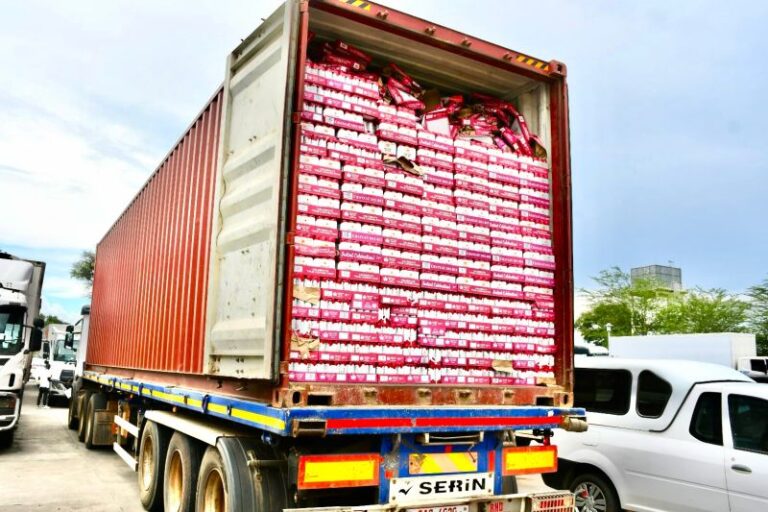
ZRA seizes 4,700 cases smuggled assorted alcohol

1

The Zambia Revenue Authority (ZRA) has seized over 4,700 cases of assorted smuggled alcoholic beverages with a revenue loss of over K4.1 million.

According to a statement issued to the media by the Zambia Revenue Authority (ZRA) Corporate Communications Manager Oliver Nzala, the seizure was conducted on February 22, 2026, in Kazungula district.

Mr Nzala explained that the attempted smuggling of the beverages by Five (5) importers was made with forged documents for another Customs Accredited Clients Program (CACP).

The ZRA Corporate Communications Manager further stated that the goods seized include Glenmorange, Four Cousins, Gordon’s Gin, Fat Bastard, Jameson, Malibu and Tequilas.

“The Zambia Revenue Authority would like to remind importers and transporters involved in similar schemes that they risk having their goods and trucks seized and forfeited to the state as well as face prosecution in the Courts of Law. By taking decisive action against these fraudulent activities, the Authority aims to promote legitimate trade. All importers are encouraged to make correct declarations of goods being imported,” he said.

Mr Nzala encouraged the general public and transporters to report any potential cases of smuggling to the nearest Zambia Revenue Authority offices.

DMMU starts distribution of relief food Chilanga flood victims

0

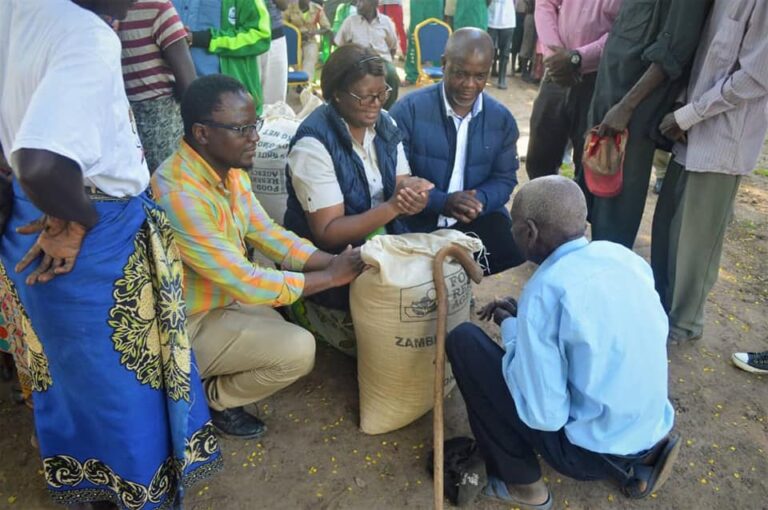
The Disaster Management and Mitigation Unit (DMMU) has begun distributing rice to 160 – flood – affected households across three wards in Chilanga District.

Acting Chilanga District Commissioner, Maureen Chilende said the district received 500 by 50 Kilogramme bags of rice for distribution.

She explained that the exercise is meant to cushion the negative impact of floods that damaged houses and destroyed crop fields.

Ms Chilende was speaking during the flagging off exercise at Munyeu Cooperative in Mwembeshi Ward, where 60 families will benefit from the rice.

Chilanga Member of Parliament, Sipho Hlazo commended the government for the quick intervention.

And Mr Hlazo noted the development in Mwembeshi Ward over the past four years, including a health post at the correction facility and classroom blocks.

“Let us continue working together with the government to foster development and change the lives of our communities which we live in by giving the UPND another five years mandate to do even more developments,’’ he emphasised.

Meanwhile, Mwembeshi Area Councillor, Arnold Dube thanked the government and urged the local leaders to consider providing roof sheets to affected families as the area continued to experience more rainfall.

DMMU Chilanga District Coordinator, Hakham Himaanga explained that the number of households to benefit in the first phase include 80 in Namalombwe Ward, 20 households in Mondengwa Ward and 60 households in Mwembeshi Ward.

Speaker urges stronger Parliamentary role in Health Systems

1

Speaker of the National Assembly, Nelly Mutti, has urged African parliamentarians to take a leading role in strengthening health systems across the continent.

Ms. Mutti stressed that resilient and equitable healthcare is vital for sustainable development.

Ms. Mutti emphasized that lawmakers, as custodians of the public interest, hold legislative authority and oversight powers that must be leveraged to ensure emergency preparedness, equity in service delivery, system resilience and sustainable financing remain central to national policies.

She made the call while officiating at the 17th Meeting of the Network of African Parliamentary Committees on Health (NEAPACOH), held from February 25 to 27 at Mulungushi International Conference Centre.

Speaking at the same event, NEAPACOH Chairperson Mokhothu Makhalanyane urged legislators to take stronger leadership in financing and safeguarding health systems, warning that overreliance on external support threatens millions of lives.

Mr Makhalanyane highlighted the need for parliaments to provide robust oversight, particularly in agreements involving funding and data sharing, and described donor dependence for HIV treatment as “unacceptable” for a resource-rich continent.

He further noted that corruption, weak governance and poor accountability continue to undermine progress, resulting in preventable deaths, especially among women and children.

He stressed that universal health coverage must be treated as a political and financial commitment, requiring prioritization of primary healthcare, skilled birth attendance, emergency services and stronger medical supply chains.

Meanwhile, Population and Development Executive Director, Joseph Adelegan, called on African parliamentarians to enact laws that advance reproductive health and empower women and girls.

Six-year-old boy killed in Mambwe hit-and-run

0

A Six-year-old boy of Jumbe Chiefdom in Mambwe District of Eastern Province, has died on the spot following a hit and run motorbike accident.

According Eastern Province Police Commanding Officer Robertson Mweemba, juvenile sustained fatal head injuries and died on the spot.

Mr Mweemba said the accident that occurred yesterday, involved a motorbike that was being driven by a 22-year-old man identified as Thomas Banda, of Simukanda Village, Jumbe Chiefdom.

He was riding a Gatoma motorbike registration number ARC8021.

“The accident occurred when the rider, who is said to be inexperienced, failed to control the motorbike and hit the pedestrian who was walking along the road,” Mr Mweemba disclosed.

“The accident occurred along Lugomo gravel road near Bauleni village, at around 07:30 on February 24, 2026,” he added.

Mr Mweemba said the rider who is believed to have sustained unknown injuries fled the accident scene.

He said the  body of the deceased was later deposited into Kamoto Mission hospital Mortuary, awaiting a postmortem examination.

Mr Mweemba said that a manhunt for the rider had been launched.

“We have cast our net wide and are looking for the motorbike rider who fled after causing the accident that resulted in the death of the six-year-old boy,” he said.

Copper Queens to face Namibia in COSAFA Semis

0

The Copper Queens will face Namibia in the semifinals of the COSAFA Women’s Championship on Friday in South Africa.

‎Zambia and Namibia will clash in the first semifinal match at New Peter Mokaba Stadium before hosts South Africa battle with Zimbabwe at the same venue in the second semifinal match.

‎The Queens advanced to the semifinals of the regional championship after winning Group B which had Zimbabwe, Botswana and Eswatini.

‎Namibia on Wednesday completed the semi-final line-up at the COSAFA Women’s Championship thanks to Mozambique’s 2-0 win over Madagascar in the final Group C match at the Old Peter Mokaba Stadium in Polokwane.

‎Madagascar came into Wednesday’s encounter needing a draw to progress from the group as leaders, but were well beaten.

‎Mozambique’s victory left all three sides in the pool on three points after two matches, which helped Namibia (+1) advance via a superior goal difference
‎compared to Mozambique (+0) and Madagascar (-1).

‎Zambia are the defending champions.

Zambia’s Debt Trap: How Civil Servants and Workers Are Crushed by Payroll Loans and Kaloba

8

By Fred M’membe

Good leaders must be interested in the welfare of those in distress.

We expect them to feel the distress of many who are trapped in debt. This is a difficult problem for any government to face, but to solve it, we need public-spirited leaders with courage, professional competence, and moral integrity who defend the truth and demand justice for those in distress.

Today, payday is a very sad day for many of our civil servants and other workers due to debts or kaloba that are dealt with through their employers’ payroll. Many of them remain with nothing or very little money after payroll loan deductions. This goes on ceaselessly month after month, month to month. They are trapped. They are in a debt trap.

A debt trap for workers occurs when continuous, often uncontrollable borrowing is required to pay off existing debts, leading to a cycle where the debt spirals beyond their capacity to pay. This situation is driven by a combination of low wages, high living costs, and predatory financial products.

Many workers face a gap between income and expenses, as wages fail to keep pace with the rising costs of food, energy, transport, housing, utilities, healthcare, and education, and so on and so forth.

Workers in low-quality jobs often have fluctuating hours, making it difficult to manage cash flow and leading to reliance on credit for daily needs.

Sudden, unforseen events—such as funerals and medical emergencies – force workers to rely on high-interest loans. Without a financial buffer, any unexpected cost leads to immediately to debt.

Relying on credit with high interest rates of usually more 50 % or payday loans and predatory lenders (“shylocks”) with unmanageable terms has made it extremely difficult for many workers to break away from debt.

Taking on multiple loans at once, or using new, high-interest loans to pay off old ones, keeps the borrower trapped.

This is compounded by lack of financial literacy. Inadequate understanding of interest, loan terms, and financial planning can make workers vulnerable to risky borrowing.
Workers that are trapped in a cycle of debt—where income is insufficient to cover both living expenses and debt repayments, forcing further borrowing—experience severe consequences that span physical health, psychological well-being, job performance, and long-term financial stability.

Debt traps lead to extreme stress, anxiety, and depression. The chronic stress of over-indebtedness causes physical issues, including lack of quality sleep, headaches, high blood pressure, and ulcers. Borrowers often experience feelings of guilt, worthlessness, and social stigma. Employees in debt traps often lose focus, as they are preoccupied with financial worries, sometimes wasting many working hours on personal financial issues.

High stress leads to higher absenteeism, tardiness, and lower morale, which can result in termination.

Creditors, including employers, in some cases, may seize personal assets like furniture, vehicles, land, or livestock.

Workers are forced to spend any excess cash on debt servicing rather than building emergency savings or investing in the future.

Over-indebtedness often causes strain, conflict, and divorce within marriages.

Workers may damage relationships with family and friends when they cannot repay loans. Borrowers may face threats or harassment from collectors, impacting their sense of safety.

We have to a solution to this problem.

For the civil servants, the government owes them a lot of money in leave days and accrued benefits. Therefore, the government can do a debt swap. The government can pay off their loans to both government and lending institutions and set off against what they are owed by the government on the payroll. Some civil servants, for example, have as many as 800 leave days, which can be commuted and set off against their loans. There are also a number of accrued benefits that the government has not paid them, such as re-location allowances, hardship allowances, etc, which can be set off. On top of that, the government should implement a strict rule that civil servants can only borrow up to a maximum of, say, 60% of their take-home pay to protect them from over borrowing. Lending institutions should also adhere to this rule when lending to civil servants. Where lending institutions extend credit beyond the 60% threshold, they should be forced to write off excesses at their own costs. Micro finance companies breach this threshold regularly, which constitutes reckless lending without any consequences.

Clearly, there are a number of measures that the government can take to protect and save the lives of workers from the consequences of debt trap.

The Author is President of the Socialist Party and People’s Pact 2026 Presidential Candidate

 Ministry of Health Zambia Shares Findings on Oral Cholera Vaccine Temperature Study

0
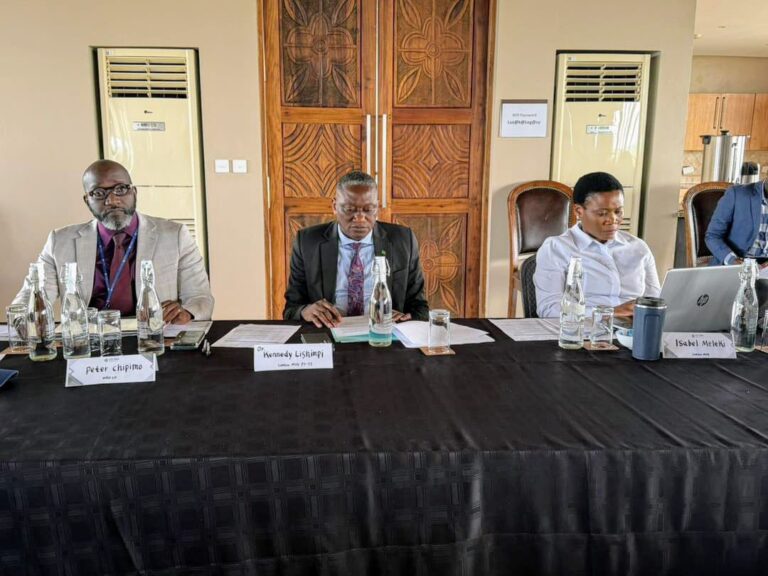
The Ministry of Health Zambia has held a dissemination and close-out meeting for the Implementation Research on the Controlled Temperature Chain (CTC) study for Oral Cholera Vaccination in Zambia.

Speaking during the meeting, Permanent Secretary – Technical Services, Kennedy Lishimpi described the study as a significant milestone in strengthening Zambia’s cholera response and advancing innovative vaccine delivery methods.

The research was conducted through a partnership between the Ministry of Health and the International Vaccine Institute, with support from Gavi, the Vaccine Alliance. It examined the use of Oral Cholera Vaccines under Controlled Temperature Chain conditions.

The CTC approach allows certain vaccines to be stored safely outside traditional cold chain temperatures for a limited and carefully monitored period. This method is particularly relevant for Zambia, where hard-to-reach communities, unreliable electricity supply, seasonal flooding and poor road networks can delay vaccine distribution.

Dr. Lishimpi said that although Government has invested significantly in strengthening cold chain systems, challenges remain, particularly in remote areas. He noted that the CTC model offers an opportunity to address last-mile delivery gaps, increase immunisation coverage and promote equitable access to vaccines without compromising safety or effectiveness.

The Ministry stated that findings from the study will inform national policy, guide operational procedures and support the integration of CTC-labelled Oral Cholera Vaccines into Zambia’s National Cholera Response Framework.

The Ministry reaffirmed its commitment to turning research evidence into practical action and strengthening partnerships that ensure scientific innovations benefit communities across the country.

Silvia Mutaba Sentenced to 15 Years for Husband’s Death

1
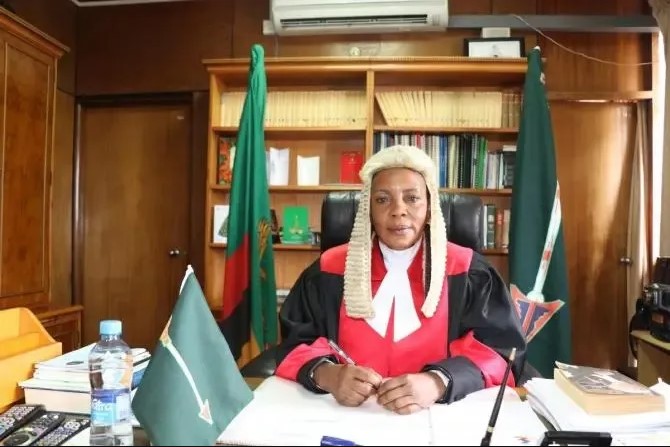
The Lusaka High Court has sentenced Silvia Mutaba to 15 years imprisonment for causing the death of her husband, whose remains were discovered in skeletal form in 2025.

The court heard that the deceased’s body was found in a decomposed state, reduced to a skeleton, after his brother raised concern over his sudden disappearance. Investigations were launched, leading to the discovery of the remains.

Following the recovery of the skeletal remains, forensic examinations were conducted to confirm the identity of the deceased and establish the circumstances surrounding his death.

After considering the evidence presented, the Lusaka High Court convicted Mutaba of causing the death of her husband and handed down a 15-year custodial sentence.

Three Killed in Luanshya–Masangano Road Crash

0

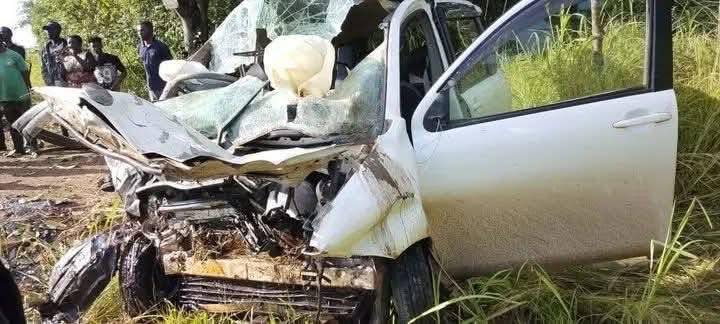
Three people have died following a road traffic accident in Luanshya’s Kapesa area after a speeding vehicle lost control, overturned and veered off the Luanshya–Masangano Road.

The accident occurred around 07:23 hours when a white Toyota Sienta, registration number ATC 414, reportedly lost control before overturning and striking two pedestrians. One of the pedestrians died on the spot.

The Luanshya Municipal Council Fire and Rescue Brigade rushed to the scene along the busy stretch of road to conduct rescue operations.

According to Luanshya Municipal Council Chief Fire Officer Happy Sichali, the rescue team found five people trapped inside the mang

Lillian Siyuni Summoned Over Uninsured Vehicle Still Registered Under GRZ

3
Police in Mongu have summoned former Director of Public Prosecutions Lillian Siyuni for questioning after her motor vehicle was impounded for traffic-related offences.

According to police, the vehicle was seized after it was found operating without a valid insurance certificate and still registered under government ownership.

The vehicle was intercepted on February 23 when traffic officers stopped four vehicles travelling in a convoy linked to Brian Mundubile along Limulunga Road. The convoy allegedly failed to comply with instructions to stop at a random traffic inspection point.

Officers pursued the vehicles and later intercepted them along the Mongu–Lusaka Road before escorting the drivers to Mongu Central Police Station, where various offences under the Road Traffic Act No. 11 of 2002 were recorded.

Among the vehicles impounded was a Toyota Land Cruiser registration number BAF 9051, driven by Dickson Tembo of Lusaka and later identified as belonging to Siyuni.

Western Province Commanding Officer Rae Hamoonga said inspections revealed that the vehicle remained registered under the Ministry of Works and Supply despite having been sold to the former DPP.

Police confirmed that Siyuni will be required to answer for failure to change ownership and failure to insure the motor vehicle. “A docket has since been opened,” Hamoonga said.

Meanwhile, the driver was charged with failure to obey a traffic signal, expired road tax, expired insurance certificate and an expired fitness certificate.

Other vehicles travelling in the convoy were also charged with traffic offences but were later cleared after drivers paid admission-of-guilt fines.

A Toyota Land Cruiser registration number BAE 1228, driven by Ricky Chambawilo of Lusaka, was fined for failure to obey a traffic signal and failure to display registration plates.

Another vehicle, Toyota Land Cruiser registration number BAL 4232 belonging to the National Assembly and driven by Chibanga Lukwesa, was charged with failure to obey a traffic signal before being cleared upon payment of fines.

A fourth vehicle, registration number BAE 6548, also belonging to the National Assembly and driven by Simukoko Gershom, was charged with failure to obey a traffic signal, expired road tax and an expired fitness certificate.

Hamoonga urged motorists to comply with traffic regulations and cooperate with traffic officers at all times.

“The Zambia Police Service wishes to reiterate that all motorists, regardless of status or position, are subject to the laws of the Republic of Zambia,” he said.

 Zambia Gaming Association Raises Alarm Over Rising Gambling Addiction

2
The Zambia Gaming Association has warned that failure to urgently address increasing levels of gambling addiction could result in serious social consequences for communities across the country.

The association expressed concern over the surge in gambling activities, noting that the trend has prompted it to initiate nationwide inspections of betting and gaming companies.

Association president Noah Malungila said Zambia is witnessing troubling patterns, with gambling addiction steadily rising and exposing families — particularly young people — to long-term harm.

Malungila explained that the inspections are intended to ensure that all betting operators comply with the law and to curb illegal gambling operations.

“While the betting industry has grown rapidly, some operators are failing to meet legal requirements. They are not fully following the law. Enforcement agencies such as the Drug Enforcement Commission (DEC), the Immigration Department, and local councils will be involved in the exercise,” he said.

He added that any illegal gaming machines discovered during the operation will be confiscated and stored in designated warehouses agreed upon with local councils.

Meanwhile, association secretary general Darius Sinkamba confirmed that enforcement teams will begin operations immediately.

“Our teams will be on the ground starting today, and any operator found breaking the law will face action,” Sinkamba said.

The decision follows a meeting between the association and officials from the Ministry of Local Government and Rural Development.

 Binwell Mpundu Opts Out of Nkana Race, Shifts Focus to National Campaign

17
With less than 200 days before the general elections, Nkana Member of Parliament Binwell Mpundu has announced that he will not recontest his seat, stating that he is now focused on playing a broader national role.

Speaking through a TV interview, Mpundu said he has completed his work in Nkana and will instead dedicate his efforts to supporting the Tonse Alliance and its presidential candidate Brian Mundubile across the country.

“I am now part of the bigger picture or the bigger plan. I am not going into Nkana. I have done my part. I wish the people of Nkana can now pick a better person than me,” Mpundu said.

He added that his tenure in Nkana had prepared him for a wider responsibility.

“I have done my homework. I have done what I promised I would do. I think that now there’s a calling that I must step up and help at a bigger platform. So I will be helping galvanise support for the Tonse Alliance across the country,” he said.

“So I will be a freelancer. I’m not available for Nkana now,” he added.

When asked about the Tonse Alliance’s position on key policies such as free education, the Constituency Development Fund (CDF), partial pension withdrawals and the school feeding programme, Mpundu said the focus would be on improving existing initiatives rather than scrapping them.

“First of all, I don’t think that it will be of help to the people if we took away free education. What I believe is that free education is a good thing, except it must be made better. Now, free education needs to be supported by infrastructure,” he said.

Mpundu cited overcrowded classrooms as a major concern, stating that the situation is affecting the quality of education.

“We need to supplement what UPND has been able to do by way of extending the free education to tertiary institutions,” he added.

He said many pupils who qualify for tertiary education fail to proceed due to financial constraints, particularly those from low-income families.

“So the true meaning and benefit of free education must be to extend free education all the way to tertiary institutions,” Mpundu said.

He further stated that tertiary sponsorship should not be limited to public institutions but extended to all institutions, arguing that every child deserves access to education supported by government.

Zambia records K4 billion trade surplus in January

10

Zambia has recorded a trade surplus of over 4 billion Kwacha in international merchandise trade last month, compared to a surplus of 1 billion kwacha recorded in December last year.

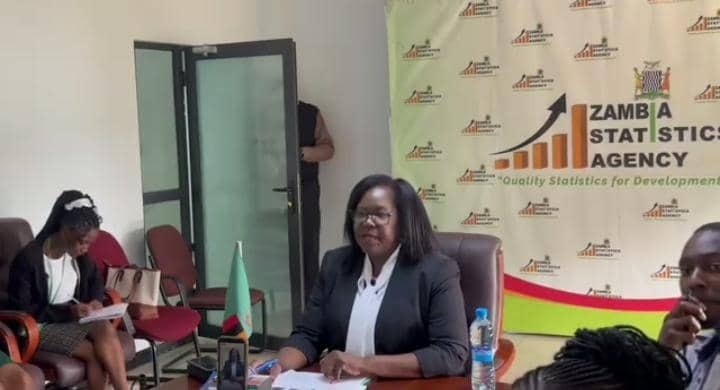
Speaking during the dissemination of the monthly statistics bulletin, ZamStats Acting Statistician General, Sheila Mudenda, says that export earnings are attributed to an increase in traditional exports and decrease in non-traditional exports.

“The volume of refined copper exports for the period January 2026 was 78.1 thousand Mt while that of 2025 for the same period was 74.1 thousand Mt representing a 7.3 percent increase,” she said.

Ms. Mudenda attributed this development to continuously changing prices in both food and non-food items.

She also said that the annual inflation for this month was recorded at 7.5 percent from 9.4 percent recorded last month.

She however noted that prices of non-food items remained unchanged during the same period, with inflation rate recorded at 0.0 percent, in comparison to -0.3 percent in January last year.

Meanwhile, Zamstats Acting Director-Economic Statistics, Joseph Tembo added that this development will provide some relief for consumers, as effects become more noticeable over time.

Mr Tembo urged members of the public to understand that effects of inflation are not immediate, as they are dependent on the market response.

Govt. rolls out dissemination of 2026 simplified citizens’ budget

0

Luapula Province Permanent Secretary, Prudence Chinama, says the government remains committed to transparency and citizen involvement in national development as demonstrated by its rolling out of the dissemination exercise of the 2026 simplified citizens’ budget in the province.

Addressing a forum consisting of stakeholders from the private sector and civil society, organised by the Ministry of Finance and National Planning in Mansa, Ms Chinama, in a speech read on her behalf by Luapula Deputy Permanent Secretary, Evans Sikabbubba, stressed that the initiative is meant to strengthen collaboration with both state and non-state actors.

‎”Ladies and gentlemen, the need to simplify the national budget for easy understanding by everyone cannot be overemphasised. As a government, we are hopeful that this meeting will not only help to bridge the information gap but also serve as a forum to engage various economic actors on how the government allocates resources,” she said.

‎She said the 2026 National Budget themed “Consolidating Economic and Social Gains towards a Prosperous, Resilient and Equitable Zambia,” is meant to build a resilient Zambia, able to withstand climate shocks and global economic uncertainties while ensuring development is inclusive across all regions.

The Luapula Province Permanent Secretary further appealed to the public to provide feedback, stating that such input is critical not only for the implementation of the current budget but also for the formulation of the next one.

‎Ministry of Finance Senior Budget Analyst, Lenard Mumba, representing the budget dissemination team to Luapula, explained that the Citizens’ Budget exists to help bridge the information gap between the government and the people.

‎Mr Mumba said the government has officially rolled out the initiative designed to simplify the national budget so that ordinary Zambians can understand the major policy changes and taxes that will affect them in the coming fiscal year.

‎He disclosed that the Ministry of Finance has broadened outreach and representation of all levels of society’s input, hence, the production of brail and local language simplified budget literature.

‎Mr Mumba further stated that the budget sensitization exercise is being held in all the 10 provinces of the country.

Presidents Hichilema, Samia commended for strong bilateral ties

1

Minister of Foreign Affairs and International Cooperation Mulambo Haimbe and his counterpart, Mahmoud Kombo, Minister for Foreign Affairs and East African Cooperation of the United Republic of Tanzania, have praised Hakainde Hichilema and Samia Suluhu Hassan for fostering strong and cordial bilateral relations between their two countries.

The two Ministers emphasised on the need to further strengthen and deepen cooperation for mutual benefit of the two countries.

In a communique made available to the media  this afternoon, the two Ministers have recognised the deep historical and brotherly relations and strong friendship that have long existed between the United Republic of Tanzania and the Republic of Zambia.

They said the exemplary leadership of the two Heads of States and guidance in advancing bilateral, regional cooperation and Multilateral Cooperation cannot be emphasised.

The Honourable Ministers who held a bilateral meeting in Tunduma, Tanzania, underscored the importance of adhering to regional and international trade frameworks in conducting bilateral cooperation that are anchored on harmonisation of standards and the principle of reciprocity.

The Ministers also commended the Ministries responsible for Trade in both countries for convening several successful Joint Trade Committee (JTC) Meetings since 2023 which have made steady progress in resolving issues that continue to hamper trade and economic ties between the two countries.

“Through this mechanism, the two sides have endeavored to resolve trade barriers such as 14 out of 24 reported trade barriers which have been resolved, including the consolidation of council levies, and clarification of employment regulations,” they said.

They added that the two Countries Zambia and Tanzania agreed to establish a functional Non-Tariff Barrier (NTB) Monitoring System by end of August, 2026.

The Ministers commended both sides for organising the second Joint Steering (JSC) Committee on Simplified Trade Regime (STR) held in December 2025, which consolidate the list of STR products from 22 to 48 products to enhance small-scale cross border traders between the two countries.

The two leaders commended the Ministries of trade from both sides for the conclusion of the addendum of the Simplified Trade Regime Agreement of 2017, as a legal framework to promote the Small-Scale Traders around the Nakonde/Tunduma Border.

They reaffirmed their commitment to fully operationalise the Tunduma/Nakonde OSBP in accordance with the 2017 Operational Manual through the co-location of customs, immigration, and health officials of both countries in a single facility.

The Ministers further directed experts from Tanzania and Zambia to set up a bilateral mechanism that will monitor, in real time, implementation of trade agreements under the World Trade Organisation, AfCFTA and SADC and report progress to the Ministers on a monthly basis.

And the two leaders reaffirmed the important role that digitalisation played in facilitating safe and efficient trade to enable real-time verification of documents and eliminate duplication in customs processes.

“In this regard the Ministers directed the two Countries to collaborate in implementing advanced electronic cargo tracking system which Tanzania is already implementing with other Trading Partners,” they stated.

They further reaffirmed their commitment to implementing strategic projects along the TANZAM Corridor, including, Revitalisation of the TAZARA Railway, construction of a new TAZAMA petroleum pipeline, Development of a natural gas pipeline, Expansion and modernisation of the Tunduma/Nakonde OSBP and other mutually agreed infrastructure and trade facilitation initiatives.

The two Ministers resolved 5 additional outstanding issues affecting trade between the two countries which includes completion of Packing yard on the Zambian Side, expeditious delivery and utilization of the donated mobile scanner by the Government of United Republic of Tanzania to Nakonde border.

Others are Integration of Tanzania Electronic Single Window System (TESWS) into the TPA’s Terminal Operating System (TOS) to simplify the Port logistic chain by end of February 2026, to which Zambia has committed to start working 24/7 at Nakonde border and on Tanzanian side with the assurance of completing works on the by-pass road in the next six months.

 Further, both Ministers have expressed their commitment to implementing the outcomes of the Joint Visit for the mutual benefit of the people. Of the Republic of Zambia and the United Republic of Tanzania.