Thursday, June 11, 2026
13.9 C
Lusaka
Home Blog Page 134

Dalitso Lungu Appeals Forfeiture of 79 Vehicles, 25 Properties

20

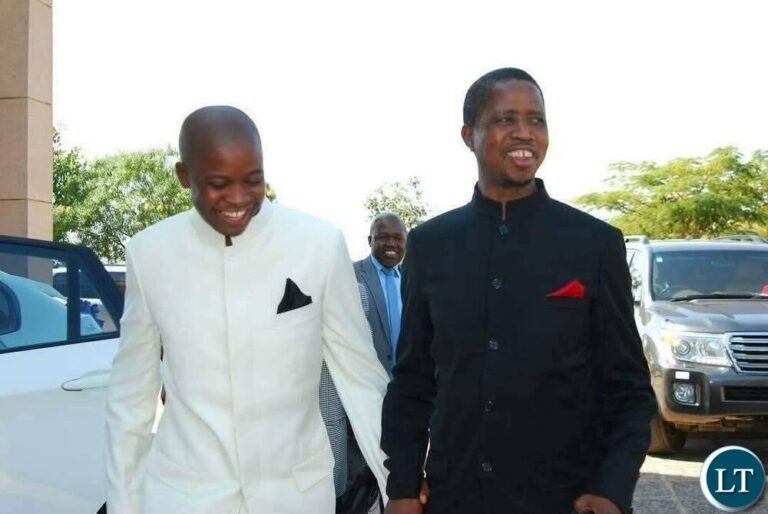
Dalitso Lungu, son of former President Edgar Lungu, has filed an appeal seeking to recover 79 motor vehicles and 25 properties forfeited to the State by the Economic and Financial Crimes Court (EFCC).

Through his lawyers, Messrs Malisa and Partners, Dalitso and his company, Saloid Traders Limited, have lodged a Notice of Intention to Appeal together with a Memorandum of Appeal challenging the February 9, 2026 judgment of the EFCC.

In that ruling, the lower court ordered the forfeiture of a fleet of vehicles valued at more than K24 million and multiple pieces of land across the country. The court found that the assets were tainted and reasonably suspected to be proceeds of crime under the Non-Conviction Based Forfeiture framework.

The State, acting through the Director of Public Prosecutions under the National Prosecution Authority, had applied for forfeiture on grounds that investigations revealed unexplained wealth allegedly running into tens of millions of kwacha. The prosecution argued that the assets held by Dalitso and Saloid Traders Limited far exceeded their declared income.

Investigations cited by the court reportedly included inquiries at the Zambia Revenue Authority and other institutions. The EFCC concluded that neither Dalitso nor his company had the financial capacity to acquire the vehicles and properties in the manner and at the rate they did.

The seized assets include 69 vehicles valued at over K24 million and 25 pieces of land located in Chongwe, Chibombo, Chisamba, Solwezi, Ndola, Chilanga, Petauke and Nakonde.

In his appeal, Dalitso argues that the High Court judges erred in law and in fact by concluding that the properties were proceeds of crime without identifying any specific serious offence allegedly committed. He contends that the court wrongly shifted the burden of proof onto him after the State established what it termed “reasonable grounds to suspect” that the properties were tainted.

He submits that this approach contravened Sections 31 and 34 of the Forfeiture of Proceeds of Crime Act and effectively reversed the statutory burden of proof.

Dalitso further argues that the court misdirected itself by basing the Non-Conviction Based Forfeiture Order on Section 71 of the Act instead of limiting itself to Sections 29 and 31. He cites the case of Sydney Mwansa v The Director of Public Prosecutions, decided on June 11, 2024, as binding authority on the interpretation of non-conviction based forfeiture provisions.

Among other grounds, he claims the court rejected his unchallenged affidavit evidence that his late father financed the purchase of some of the properties. At the same time, he argues, the court accepted what he describes as hearsay evidence from the State.

He also disputes the valuation of the motor vehicles at over K23 million, arguing that the figure was not supported by independent or credible valuation evidence.

The appeal further challenges the order condemning him in costs.

In its February 9 judgment, the EFCC questioned claims that some properties were financed through business profits and commercial farming. The court noted that Dalitso allegedly failed to provide details of crops grown, livestock reared or buyers of farm produce to substantiate the farming income claims.

The appeal now places the matter before the appellate court, where judges will review whether the EFCC correctly applied the law and properly assessed the evidence before issuing the forfeiture order.

At stake is not only the fleet of vehicles and the 25 properties, but also the interpretation of the Non-Conviction Based Forfeiture regime. The appellate court will determine whether the evidentiary threshold was met and whether statutory provisions were correctly applied.

The case is now pending determination before the higher court.
Mundubile in talks with Makebi ahead of August election

7

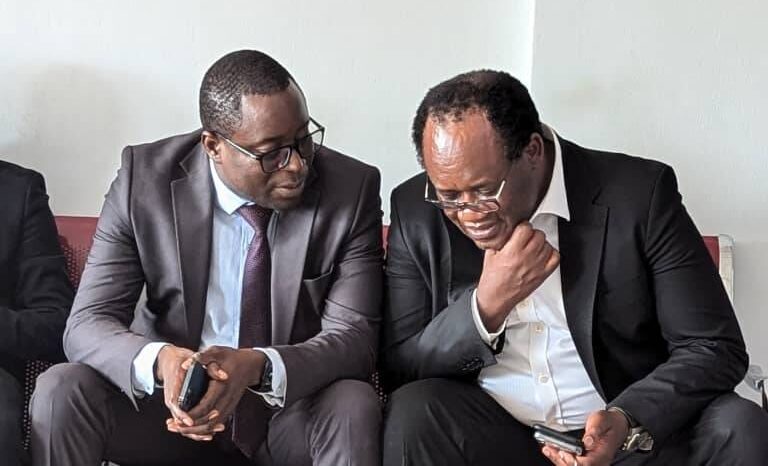
Brian Mundubile has confirmed that he is engaged in discussions with Makebi Zulu regarding possible cooperation ahead of Zambia’s August 13 general election.

Mundubile acknowledged the talks while addressing questions about opposition positioning and coordination. He described the engagement as discussions centred on working together, though he stopped short of announcing a formal alliance or structured coalition arrangement.

The confirmation places the Patriotic Front (PF) at the centre of renewed opposition dialogue as political formations prepare for the presidential, parliamentary and local government elections scheduled for later this year.

Mundubile has been acting in a leadership role within the PF during a period marked by internal reorganisation and legal processes affecting the party’s leadership structure. With the elective convention expected to determine the party’s presidential candidate, the question of cooperation with other political actors has gained prominence.

He did not disclose specific terms under discussion with Makebi Zulu, nor did he outline whether the talks involve electoral pacts, campaign coordination or broader political strategy. The emphasis remained on dialogue.

Makebi Zulu has been an influential figure in opposition politics and has previously taken positions critical of the ruling administration. Engagement between the two signals recognition that opposition fragmentation can weaken competitiveness in a presidential race conducted under a first-past-the-post system.

Political cooperation discussions are not new in Zambia’s electoral history. Alliances, informal arrangements and strategic withdrawals have shaped past outcomes. However, the viability of any collaboration depends on agreement over leadership, campaign messaging and constituency-level coordination.

Within the PF, internal consolidation remains an immediate priority. The party’s elective convention is expected to formalise leadership and confirm its presidential candidate. The timing of that process intersects directly with any potential opposition engagement.

Mundubile’s statement signals openness but does not confirm convergence. Dialogue at this stage may serve as groundwork for later decisions once internal party matters are settled.

The August 13 election date sets a firm timeline. Parties must finalise candidates, structure campaign operations and secure national presence. Opposition actors face the strategic calculation of whether to compete independently or coordinate to consolidate votes.

Mundubile did not indicate whether additional opposition figures are involved in the discussions. He confined his remarks to engagement with Makebi.

No joint statement has been issued. No memorandum of understanding has been announced. No framework agreement has been presented publicly.

The confirmed position remains that talks are ongoing.

Whether those discussions result in structured cooperation will depend on subsequent negotiations and internal party resolutions.

The election calendar remains fixed. Political actors continue shaping their strategies within that framework.

Mundubile’s acknowledgement establishes that opposition dialogue channels are active. The next development will depend on decisions taken within party structures and the outcome of further engagement between the two figures.

Speaker tells Matero MP: only appellants can withdraw the matter holding up burial

17

A heated exchange in the National Assembly over the delayed burial of former president Edgar Lungu has shifted attention from the legal dispute itself to the conduct of the Speaker, whose remarks during the session have drawn criticism for appearing partial and dismissive.

Matero Member of Parliament Miles Sampa used his allotted time to question why the former head of state had not been buried eight months after his death. Framing the matter as cultural and moral, Sampa described the delay as “unchristian” and against societal values, before appealing directly to the executive to withdraw a case in a South African court so burial arrangements could proceed.

“May I conclude by appealing to government, especially the Minister of Justice and the Vice President. May they withdraw the case in the South African court so that we can bury President Edgar Ongo, so that this country can move on,” Sampa said.

Instead of limiting her intervention to maintaining order and guiding procedure, the Speaker entered the substance of the dispute. She rebuked Sampa, suggested he was trivialising the matter, and redirected responsibility to what she described as the appellants, identified as the former president’s family.

“If there’s anyone who can withdraw the matter, it’s the appellants, the Edgar Lungu family who can withdraw. They are the ones who have gone to court,” she said. She further challenged Sampa’s appeal to the Vice President and the Minister of Foreign Affairs, stating they could not withdraw a matter they did not initiate. “Get your facts right,” she added.

The tone and content of the intervention have prompted concern about the Speaker’s constitutional role. In Zambia’s parliamentary system, the Speaker is expected to act as an impartial referee, facilitating discussion and ensuring adherence to procedure. The office is not designed to defend executive decisions or advance a particular narrative on contested political questions.

Critics argue that the Speaker’s remarks went beyond managing time and decorum. By asserting that only the appellants could withdraw the matter and by publicly correcting the opposition MP on factual grounds, she effectively advanced the executive’s position in an ongoing and sensitive dispute.

The controversy is sharpened by the broader context. The burial impasse did not arise in isolation. It followed a breakdown in arrangements between the government and the family regarding the handling of the former president’s remains. The matter escalated to litigation in South Africa, after which both sides entrenched their positions. Sampa’s appeal in Parliament was directed at de-escalation through executive withdrawal of the case.

Against that background, the Speaker’s insistence that responsibility lay squarely with the appellants has been described as one-sided. While it is accurate that litigants may withdraw proceedings, it is equally true that disputes often involve cross-actions and that governments retain discretion in how far to pursue legal battles, particularly in matters touching on national reconciliation and the dignity of a former head of state.

The Speaker’s remarks also raised procedural questions. By telling Sampa that he had a “bigger role to play” in bringing the body so it could be buried, she appeared to assign political responsibility to a member of the opposition rather than confining herself to procedural guidance. That framing suggested alignment with the executive’s stance rather than neutrality between competing positions.

Parliament is intended to be a forum where elected representatives question the executive without fear of being dismissed or corrected in a manner that appears partisan. When the presiding officer adopts language that mirrors the government’s defence, it risks eroding confidence in the neutrality of the chair.

The burial of a former president carries constitutional weight and symbolic importance. It is not merely a family matter nor solely a legal dispute. It is a national issue involving the state, the family, and public sentiment. In such circumstances, the Speaker’s role is to protect space for scrutiny and ensure balanced treatment of all sides.

By intervening substantively and sharply rebuking the opposition MP, the Speaker placed herself at the centre of the controversy rather than above it. The perception that she spoke on behalf of the government, instead of leaving executive answers to the Vice President or the relevant minister, has intensified scrutiny of her conduct.

The exchange in the chamber did not resolve the burial impasse. What it did expose was a widening concern over whether the neutrality of the presiding office is being preserved in moments of political sensitivity. The question raised in the House remains unanswered: when and how the former president will be buried. What now stands equally exposed is a dispute over whether the Speaker maintained the distance and fairness her office demands.

Decline appointments if you disagree with our policy direction, HH tells officials

10

President Hakainde Hichilema has told individuals offered public appointments to decline positions if they are unwilling to align with his administration’s policy direction.

Speaking during a swearing-in ceremony , the President emphasised that public service requires shared purpose and disciplined execution of government programmes. He stated that accepting office while resisting policy direction undermines service delivery and national development objectives.

The President’s remarks were delivered during the administration of oaths for newly appointed officials, including diplomatic appointees. He stressed that government positions are not ceremonial but carry responsibility to implement agreed policy frameworks.

“If you cannot align with our vision, decline the appointment,” the President said, underscoring that cohesion within the executive branch is critical.

He warned against what he described as internal resistance that slows implementation of government priorities. The President indicated that appointments are extended to individuals expected to contribute positively toward national transformation goals under the New Dawn administration.

The statement comes at a time when Zambia is approaching the August 13 general elections. Political activity has intensified across parties, and public messaging has sharpened as election timelines draw closer.

President Hichilema framed alignment not as personal loyalty, but as commitment to the broader national development agenda adopted by his government. He emphasised performance, delivery and accountability within public institutions.

The President also criticised what he described as complacency in certain public offices, stating that government representation, particularly in foreign missions, must reflect professionalism and measurable results. He signalled that diplomatic and administrative roles should advance Zambia’s economic and governance interests rather than operate in isolation from central policy direction.

The remarks appear to reinforce earlier messaging from the executive regarding performance management and restructuring within public service institutions. Cabinet reshuffles and reassignments in recent months have been accompanied by repeated calls for discipline and implementation consistency.

The President’s directive places responsibility on appointees to self-assess their willingness to execute government programmes before accepting office. According to the report, the administration expects full adherence to policy direction once appointments are made.

Zambia’s general elections will determine leadership at presidential, parliamentary and local government levels. Political observers note that internal cohesion within governing structures becomes increasingly important during election periods, when administrative effectiveness is closely scrutinised.

By publicly stating that individuals should decline appointments if they cannot align, the President signals a tightening of executive expectations around loyalty to policy direction and delivery benchmarks.

The message also functions as guidance to prospective appointees amid ongoing administrative changes. It reinforces the principle that acceptance of office implies commitment to implementing government priorities without reservation.

Zambia will hold general elections on August 13, 2026, covering presidential, parliamentary and local government positions. The President’s directive to appointees comes within that broader political calendar.

His position, as stated during the swearing-in ceremony, is that acceptance of office requires full commitment to implementing government policy. Individuals unwilling to align with that direction, he said, should decline appointments.

PF presses ahead with convention as High Court adjourns consent judgement

8

The Patriotic Front says it will proceed with its elective convention despite the Lusaka High Court adjourning a consent judgement linked to the party’s internal leadership process until March 27, 2026.

The matter, which had been expected to bring clarity to aspects of the PF’s internal reorganisation, was deferred, extending a period of legal uncertainty that has shaped the former ruling party’s decision-making in recent months. The court is handling proceedings tied to internal disputes and consent arrangements affecting the party’s leadership structure.

In comments reported on the front page of Friday’s Daily Nation, Given Mukandila stated that the PF remains determined to hold its convention and elect a leader who will stand as its presidential candidate in the August 13 general election. He indicated that the adjournment would not prevent the party from moving ahead with preparations.

The High Court’s postponement means that final clarity on the consent judgement will only emerge at the March 27 sitting. That development raised immediate questions about whether the PF would delay its planned convention to await the court’s position. Mukandila’s remarks suggest the party believes it has sufficient grounds to continue with its internal timetable.

The PF governed Zambia from 2011 to 2021. Since leaving office, it has faced internal disputes over leadership authority, party structures and organisational direction. Court actions involving senior figures and competing claims have influenced how and when key decisions are taken.

The elective convention carries significant weight. It is expected to determine the party’s presidential candidate for the August 13 polls, which will include presidential, parliamentary and local government elections. Political activity across parties has intensified as timelines narrow and alliances take shape.

Within the PF, questions of unity remain central. Given Lubinda has been associated with the preservation of the party’s original structures, a position that continues to resonate among members who view institutional continuity as critical. At the same time, others have explored alternative strategic paths amid prolonged litigation.

The adjournment has not settled those internal differences. Instead, it extends the period in which competing interpretations of legitimacy coexist. The party now faces a dual track: pursuing legal resolution in court while advancing political preparations on the ground.

There is also the practical matter of ballot participation. With the general election set for August 13, timelines for candidate endorsement and nomination will tighten in the coming months. Any delay in producing a recognised leader could complicate the party’s electoral posture. Mukandila’s statement signals that, from the PF’s perspective, waiting for the March ruling is not an option.

For members aligned to the historic PF identity, including Lubinda, the challenge is balancing loyalty to established structures with the realities imposed by court processes. If the legal path remains protracted, political actors within the party will be required to decide whether unity can be forged within the existing framework or whether alternative arrangements will emerge.

The High Court’s March 27 sitting is expected to address the consent judgement affecting internal proceedings. Its outcome may shape the formal standing of certain processes. In the meantime, the PF leadership has indicated that organisational preparations will continue.

Calls for cohesion are likely to intensify as the convention approaches. The party’s capacity to present a single candidate and a unified structure will determine how effectively it competes in August.

With the adjournment confirmed and the convention timetable unchanged, the PF enters a decisive phase in which courtroom developments and political strategy move in parallel.

ZPL launches probe after crowd violence mars Red Arrows, Power Dynamos clash

3
The Zambian Premier League has launched an investigation following crowd disturbances at the MTN Super League match between Red Arrows Football Club and Power Dynamos Football Club held at Nkholoma Stadium.

The game ended 0-0, but disorder erupted shortly after the final whistle, forcing spectators to flee as clashes broke out among fans. Witnesses reported fans climbing perimeter fences while security personnel escorted match officials and players to safety. Several supporters were reportedly injured during the incident.

In a statement, ZPL head of communications Kunda Zulu condemned the violence, emphasizing that football venues must remain safe for all attendees. “Football is a unifying sport…there is absolutely no place for violence, hooliganism, or any misconduct before, during, or after the match,” Zulu said.

League CEO Joseph Chimpampwe called the behavior at Nkholoma Stadium unacceptable and warned that disciplinary action would be taken against those responsible. He noted that the league is collaborating with match officials and relevant authorities to determine the causes of the unrest.

The ZPL has urged supporters to maintain order during matches and uphold the integrity of the sport, stressing that stadia must remain safe spaces and that any acts of violence will face firm consequences. “We urge fans to support their teams passionately but responsibly,” Chimpampwe added.

Mutotwe Kafwaya Challenges ‘One People’ Addition to National Motto, Nelly Mutti Responds

5
Lunte Member of Parliament Mutotwe Kafwaya has objected to the inclusion of President Hakainde Hichilema’s phrase “One People” alongside Zambia’s national motto, “One Zambia, One Nation.”

The matter arose in Parliament during debate on the President’s address on national values, where Mr Kafwaya questioned government references to “One Zambia, One Nation and One People.”

Mr Kafwaya argued that Zambia officially recognises only the slogan coined by founding President Kenneth Kaunda, warning that expanding it risks undermining its historical significance.

“The coat of arms carries ‘One Zambia, One Nation.’ Adding ‘One People’ dilutes the legacy of Dr Kaunda,” Mr Kafwaya told the House.

President Hichilema has consistently used the phrase “One People” to emphasise unity in diversity, describing it as reinforcing national cohesion.

However, Speaker of the National Assembly Nelly Mutti dismissed concerns that the inclusion departs from Dr Kaunda’s vision, stating that national ideals are not static and can evolve over time.

“So if Kaunda’s legacy was ‘One Zambia, One Nation,’ does that mean we cannot improve on it? We can improve on the legacy,” Ms Mutti said.

She added that leadership requires innovation in responding to changing national circumstances.

In remarks that drew laughter in the House, Ms Mutti likened national development to adjusting footwear to suit different conditions.

“We cannot keep doing things the same way forever. We can’t keep wearing the same shoes whether they are big or small and continue walking in them. If the shoes are too tight, put Vaseline. If the shoes are too big, put toilet tissue or a cloth,” she said.

Sinazongwe DC Confirms Re-Arrest of Suspected Murderers After Riot

0

Nchimunya Siakole, the Sinazongwe District Commissioner, has confirmed that two suspects previously released by police in connection with a suspected murder case have been re-arrested following violent unrest in the district.

Speaking through an interview, Mr Siakole said police were instructed to immediately trace and re-arrest the suspects after an angry mob threatened to continue rioting until the individuals were taken back into custody.

The riot erupted earlier in the afternoon when residents stormed a local police post, stoned property and burnt tyres in protest against the alleged release of the suspects.

Mr Siakole said he engaged the crowd and managed to calm the situation after assuring them that action would be taken.

Police have not yet issued a detailed official statement on the matter.

Body of Six-Year-Old Retrieved from Ngwerere River

0

The Zambia Police Service has confirmed that the body of one of the two children allegedly thrown into the Ngwerere River has been retrieved.

In a statement, police said the body of the six-year-old child was recovered following continued search efforts. The retrieval operation was conducted by the Fire Brigade in collaboration with officers from the Zambia Police Service.

Search operations for the second child, aged two years, are still ongoing, with efforts intensified to locate and recover the body.

Police further confirmed that Mary Kachilika, 26, of Meanwood Kwamwena Phase 4, remains in police custody in connection with the alleged incident. Investigations into the matter are continuing.

The Zambia Police Service has assured members of the public that every effort is being made to ensure justice is served and that further updates will be provided as the investigation progresses.

Government Cannot Withdraw Lungu Burial Case Before South African Court – Speaker Mutti

1

Speaker of the National Assembly, Nelly Mutti, has stated that the Zambian Government cannot withdraw the burial case of former President Edgar Lungu currently before South Africa’s top court, but that his family has the authority to do so.

Ms Mutti said the appellants in the matter are members of the Lungu family, who initiated the legal challenge against the repatriation of the former president’s remains to Zambia. She explained that as the parties who appealed the matter, the family holds the power to withdraw the case, not the Government of Zambia.

The Speaker described the situation as serious and advised Matero Member of Parliament, Miles Sampa, to help facilitate the return of Mr Lungu’s body to Zambia for burial.

Ms Mutti was responding to Mr Sampa’s question in Parliament regarding when the former president would be buried. Mr Sampa described the eight-month delay as unchristian and raised the matter while debating President Hakainde Hichilema’s State of the Nation Address on National Values and Principles.

During his submission, Mr Sampa appealed to Vice President Mutale Nalumango and Minister of Justice Princess Kasune to urge Attorney General Kabesha to withdraw the case to allow for the burial of the former president.

Mr Lungu died on June 5, 2025, and has not yet been buried due to an ongoing legal dispute between his family and the Zambian Government over his final resting place.

The family appealed a judgment by the High Court of South Africa, which ruled in favour of the Zambian Government that the former president should be buried in Zambia.

Crowds Jostle for Glimpse of Paramount Chief Mpezeni IV Ahead of Nc’wala

2

There was excitement and moments of disorder in Chipata yesterday as crowds gathered to catch a glimpse of Ngoni Paramount Chief, Mpezeni IV, during a traditional procession from Ephendukeni Palace to Laweni in Mtenguleni Village.

The commotion began at Ephendukeni Palace as regiments of Ngoni warriors, popularly known as impis, escorted Gogo Madzimawe who presented the first harvest to the Chief — a symbolic act that marks the beginning of the annual Nc’wala Ceremony.

As the ceremony drew large numbers of Ngoni subjects and cultural enthusiasts, many struggled to move closer to the Paramount Chief, resulting in pushing and jostling among sections of the crowd. Traditional elders were also present to oversee proceedings and ensure order was maintained around the Nkosi yamakhosi.

During the procession from Ephendukeni Palace to Laweni, Mtenguleni Village, some motorists were seen scrambling for position along the route as the Chief’s convoy made its way through cheering spectators.

The roads leading to Mtenguleni were lined with thousands of people waving and chanting praises as they awaited the royal motorcade. The atmosphere reflected the deep cultural pride and anticipation that characterise the annual event, drawing not only locals but visitors and content creators eager to capture the spectacle.

Impis clad in traditional attire flanked the Chief’s Mercedes-Benz GLS, armed with spears and shields, adding to the majestic display associated with the ceremony.

The Ncwala Ceremony is celebrated annually by the Ngoni people as a thanksgiving for the first fruits, a tribute to ancestral spirits, and a commemoration of their historic migration from Southern Africa.

The main ceremony is scheduled to take place tomorrow, Saturday, February 28, with Hakainde Hichilema expected to attend.

A key highlight of the ceremony is the traditional slaughtering of a cow, during which the Paramount Chief symbolically partakes in the ritual as part of the cultural observance.

 Chilufya Tayali Says President Hakainde Hichilema Deserves Continuity, Calls Term Limits a Setback

6
Economic and Equity Party (EEP) leader Chilufya Tayali has spoken out against presidential term limits, describing them as a hindrance to national development and political stability.

In a video posted on his Facebook page, Tayali expressed support for continued leadership under President Hakainde Hichilema, arguing that limiting the number of terms a president can serve destabilises countries by forcing frequent changes in leadership.

Tayali clarified that he was speaking in his personal capacity and not on behalf of any government institution.

“I’m against that presidential limit and this is me. I’m not in government. I’m not anywhere,” he said.

He proposed maintaining five-year electoral cycles but removing constitutional term limits, stating that voters — not legal restrictions — should determine whether a leader remains in office.

“We should maintain five-year elections but remove term limits. If a leader performs poorly, we can vote them out, just as we did with Edgar Lungu. But if a leader performs well, we should not restrict ourselves from re-electing them,” Tayali said.

He further argued that Zambia should not “blindly imitate” countries such as the United States, but instead adopt governance systems that suit its own context.

According to Tayali, constant leadership changes can reverse development gains and undermine investor confidence.

“Presidential limits are changing leaders now and then. It takes our country backwards. That is why I am supporting Hakainde Hichilema today,” he said.

He added that the President has laid foundations that are beginning to yield results, particularly in attracting investment.

“Investor confidence does not come when there’s instability. Investor confidence does not come in an environment where leaders are always changing. It doesn’t,” Tayali said.

Diaspora urged to invest in Zambia’s mining sector

0

Zambians living in the diaspora have been urged to invest back home and take advantage of the country’s investor-friendly policies.

Kopano Mineral Resources Limited Founding Director and Chief Executive Officer, Nkandu Nshindamo, attributed this call to the progressive policies implemented by the Government.

Ms. Nshindamo emphasized that Zambians abroad have a vital role to play in national development across sectors such as mining, transport, construction, agriculture and energy.

Ms. Nshindamo, who is based in Australia, noted that Zambia’s peace, rule of law and political stability  make the country one of the most attractive investment destinations in Southern Africa.

 She explained that foreign direct investment (FDI) contributes to expanding the tax base and transferring foreign capital into the country.

She also highlighted that Kopano Mineral Resources Ltd, a wholly owned Zambian subsidiary of Beltz Mining headquartered in Perth, Australia, is investing in high-grade copper and cobalt deposits on the Copperbelt.

“For us coming from the diaspora to invest in Zambia, we will always follow policies. Where there’s a good policy, money follows. The current mining sector policies are encouraging us to invest,” she said.

Ms. Nshindamo commended the strong relations between Zambia and Australia, noting that skill transfer and job creation opportunities are being realized.

She added that Zambia’s targeted three million tonnes of copper production by 2030 could be achieved earlier if good policies, peace, hard work and patriotism continue among the people.

Government warns early pregnancies threaten girls’ wellbeing

0

Acting Chilanga District Commissioner, Maureen Chilende says government recognises early pregnancies and forced marriages as serious threats to children’s well-being, especially girls.

Ms Chilende said the vices impact families and national development.

She was speaking during a community engagement organised by Mothers Without Borders to discuss causes of early pregnancies and forced marriages affecting the girl child in the community and identify solutions.

“Government has put in place measures and polices aimed at protecting and promoting the rights of the girl child which includes enforcing laws against child marriage, supporting re-entry policies that allow young mothers to return to school and expanding access to youth friendly health services just to mention a few,” Ms Chilende explained.

She also pointed out that in collaboration with schools, health facilities, community development offices, law enforcement and traditional leaders, government was ensuring cases of abuse, defilement and forced marriages were reported and dealt with promptly.

Mothers Without Borders Country Director, Josephine Mulenga said the meeting provides a platform for girls and parents to identify causes like peer pressure, envy for luxuries, poverty and lack of parental guidance on premarital sex consequences, while stressing every community member’s role in protecting children.

Mothers Without Borders has run the “Be That Girl” programme since 2008, sponsoring and mentoring 500 vulnerable girls for education.

Procurement delays slowing national development- Kangwa

0

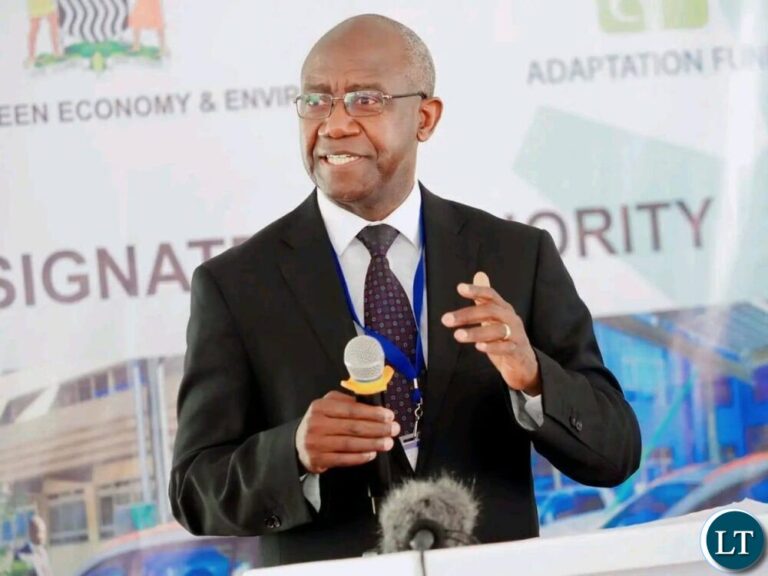
Secretary to the Cabinet Patrick Kangwa has called for faster and more accountable procurement decision-making across government institutions and the private sector.

Mr Kangwa said prolonged delays are slowing down national development, noting that the country cannot afford bureaucratic bottlenecks that stall infrastructure projects, delay service delivery and increase costs for both the government and communities.

In a speech read on his behalf by Permanent Secretary for Special Duties at Cabinet office, Wisdom Bwalya, Mr Kangwa noted that compliance and transparency remain essential, but emphasised that they should not result in what he described as paralysis through indecision.

Mr Kangwa said during the Second Annual Procurement Committee Training Workshop delayed procurement processes because contractors increased prices, weakened institutional credibility and postponed development outcomes.

He stressed that procurement committees and boards must reposition themselves as strategic decision-makers rather than mere administrative checkpoints.

Mr Kangwa added that procurement is ultimately a leadership function that requires clarity, accountability and timely action.

Mr Kangwa challenged controlling officers, chief executives and procurement heads to identify and eliminate approval layers that do not add value but instead prolong processes.

Speaking at the same event, Zambia Institute of Purchasing and Supply, President Daniel Kabamba said the country is making significant progress in strengthening procurement oversight and promoting professional excellence across public and private institutions.

Mr Kabamba, who was represented by ZIPS Vice President Polite Hamaleka, emphasised that strengthening procurement governance and improving decision-making speed across institutions is essential for accelerating national development.