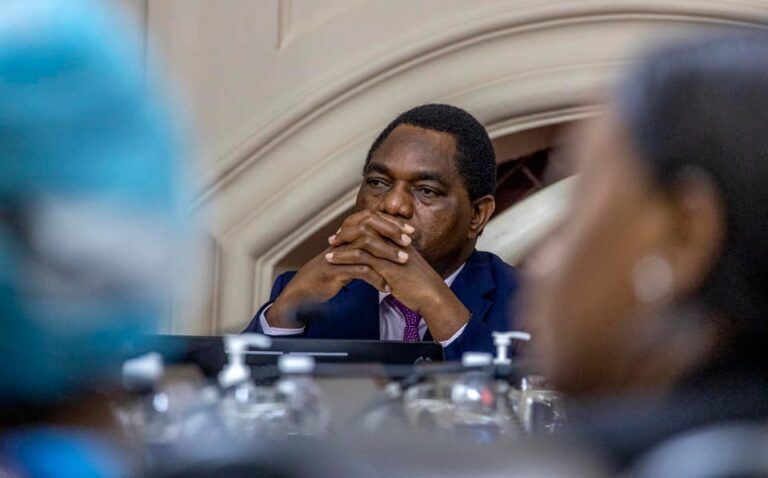
President Hakainde Hichilema has declined to assent to the Closed Circuit Television (CCTV) Bill, describing the proposed law as intrusive and raising concerns about its potential impact on the private lives of citizens. The decision has resulted in the Bill being returned to the National Assembly for further consideration.
According to information published by News Diggers, President Hichilema said the Bill, in its current form, posed a risk of intrusion into the private lives of citizens. He stated that the legislation required broader consultation and refinement before it could be enacted into law.
The CCTV Bill had previously passed through Parliament, paving the way for the expansion and regulation of surveillance systems in public spaces. However, concerns emerged regarding the scope of surveillance powers and the safeguards available to protect citizens’ rights.
President Hichilema said laws that touch on surveillance and personal privacy must be approached with caution, stressing the importance of balancing security objectives with constitutional protections. He noted that legislation of such nature should not undermine civil liberties or create room for abuse.
By returning the Bill to Parliament, the President effectively reopened debate on the framework governing CCTV surveillance. Government sources indicated that further consultations would be undertaken to address the issues raised, including the extent of monitoring powers and mechanisms for accountability.
The decision follows public debate and commentary around the proposed law, with concerns focusing on how CCTV footage would be accessed, stored, and used. Questions were also raised about oversight and whether sufficient safeguards existed to prevent misuse.
From the executive perspective, the return of the Bill signals a preference for inclusive legislative processes, particularly on matters that affect fundamental rights. The President’s stance places emphasis on ensuring that laws align with constitutional principles and public expectations.
The development also places the matter back before Members of Parliament, who will now be required to revisit the Bill, consider amendments, and determine whether additional stakeholder input is necessary. The National Assembly is expected to deliberate on the concerns highlighted by the President when the Bill is reintroduced.
The CCTV Bill forms part of broader efforts to modernise security infrastructure and enhance crime prevention. However, the President’s intervention highlights the complexities involved in legislating surveillance tools in a democratic society.
As Parliament prepares to reconsider the Bill, attention is expected to focus on how to strike a balance between enhancing public safety and safeguarding individual freedoms. The outcome of the renewed deliberations will determine whether the Bill is amended, withdrawn, or reintroduced in a revised form.