Monday, June 8, 2026
14.8 C
Lusaka
Home Blog Page 169

DEC reaffirms commitment to its operations

0

The Drug Enforcement Commission (DEC) has reaffirmed its commitment to preventing and controlling illicit cultivation, production, trafficking, abuse of narcotic drugs and psychotropic substances in the country.

DEC Public Relations Manager, Allan Tamba, says the commission also has a mandate to combat money laundering activities under national law, adding that its operations are guided by the Narcotic Drugs and Psychotropic Substances Act Number 35 of 2021 and the Prohibition and Prevention of Money Laundering Act Number 14 of 2001, as amended by Act Number 44 of 2010.

Speaking in an interview with the media in Lusaka, Mr Tamba explained that DEC’s mandate is centered on three main focus areas which are drug supply reduction, drug demand reduction, and money laundering prevention.

Mr Tamba explained that drug supply reduction activities include investigations and prosecutions aimed at disrupting drug trafficking networks and apprehending offenders.

He said the agency’s drug demand reduction initiatives focus on prevention, education, and counselling for individuals at risk of drug abuse.

Money laundering prevention, he added, is another key aspect of DEC’s work, ensuring that financial crimes associated with narcotics and other illicit activities are detected and prosecuted.

And, Mr Tamba noted that DEC collaborates closely with both local and international agencies to tackle transnational crimes, particularly along common borders.

He said recent operations have recorded significant seizures of illegal drugs and arrests linked to transnational trafficking, stating that the results are attributed to strengthened intelligence networks and inter-agency partnerships.

Mr Tamba further said the commission has intensified drug awareness and prevention activities along border areas to protect communities from the dangers associated with narcotics.

Mr Tamba urged the public to remain vigilant and to report any suspicious activities related to drug trafficking or money laundering.

“Crime does not pay, the law enforcement agencies are working around the globe to ensure that perpetrators are arrested and prosecuted accordingly.

“We won’t relent in our mandate and will ensure that we promote public safety, national security and development in order to ensure that future generations are insulated against the negative effects committed,” Mr Tamba stressed.

He encouraged members of the public to report suspicious activities directly to DEC or any other law enforcement agency operating in the country.

Mr Tamba noted that through collaboration between law enforcement agencies and the public, Zambia can effectively prevent, detect, and combat criminal activities related to drugs and financial crimes.

Russia Pushes for Non-Dollar Trade in Zambia Relations

Russia has proposed the use of the Kwacha and the Ruble in bilateral trade with Zambia, a move that could signal a potential shift in currency strategy as both countries explore ways to strengthen economic cooperation and reduce reliance on third-party currencies.

The proposal comes at a time when global trade patterns are adjusting in response to shifting geopolitical dynamics, currency volatility, and renewed interest among some nations in settling transactions using local currencies. For Zambia, the suggestion presents both opportunities and policy considerations tied to exchange-rate stability, trade balance, and financial risk management.

Diplomatic and economic engagements between Zambia and Russia have expanded in recent years across sectors such as mining, energy, agriculture, and infrastructure. The latest proposal seeks to deepen commercial ties by facilitating trade transactions in domestic currencies rather than predominantly using the United States dollar or other major reserve currencies.

Supporters of the initiative within business and government circles view local currency trade as a potential pathway to reducing foreign exchange pressure and transaction costs. They say settling trade in Kwacha and Ruble could ease demand for hard currency, particularly in periods of external financial strain or limited dollar liquidity.

However, financial institutions and economic policy stakeholders have urged caution, noting that currency-based trade arrangements require robust financial infrastructure, stable exchange-rate mechanisms, and clear settlement frameworks. They warn that without adequate safeguards, exposure to currency volatility could introduce new financial risks for importers, exporters, and financial intermediaries.

Meanwhile, Zambia continues to navigate broader economic reforms aimed at stabilising public finances, managing debt obligations, and restoring investor confidence. The country’s engagement with international financial partners and multilateral lenders remains a central feature of its economic recovery efforts, influencing policy choices around trade, currency, and foreign investment.

Russia’s proposal also reflects a broader global trend in which some nations are seeking alternatives to dollar-dominated trade systems. Advocates of local currency settlements argue that such arrangements can enhance financial sovereignty and reduce vulnerability to external economic shocks.

On the other hand, trade experts emphasise that Zambia’s export profile, dominated by copper and other commodities priced on global markets, remains closely tied to dollar-based pricing mechanisms. They caution that shifting settlement currencies may require careful alignment with existing commodity-trading structures to avoid inefficiencies or pricing complications.

Within the private sector, exporters and importers are assessing how a Kwacha–Ruble framework could affect pricing, contract terms, and foreign exchange exposure. Some businesses have expressed interest in diversified settlement options, while others remain concerned about liquidity, hedging tools, and the practicality of large-scale local currency transactions.

Government officials have indicated that any decision to pursue local currency trade arrangements would be guided by economic prudence, regulatory preparedness, and consultation with financial institutions. Authorities have stressed that maintaining macroeconomic stability, protecting foreign reserves, and supporting trade competitiveness remain core policy priorities.

The proposal has also raised questions about Zambia’s broader foreign-policy positioning, as the country balances relationships with traditional Western partners, emerging global powers, and regional allies. Observers note that trade-currency choices can carry both economic and symbolic implications within international diplomacy.

At the same time, Zambia continues efforts to diversify its economy beyond copper, with initiatives targeting agriculture, manufacturing, and value addition. Expanding trade partnerships and exploring alternative settlement models form part of a wider strategy to broaden economic resilience and market access.

As discussions progress, policymakers face the challenge of weighing potential benefits of local currency trade — such as reduced dependence on external currencies — against operational, financial, and market-related complexities. The outcome may shape Zambia’s trade architecture and currency policy in the years ahead.

Mundubile moves, others panic: When action exposes political paralysis

8

Mundubile moves, others panic: When action exposes political paralysis
By Dr Mwelwa
Rebuttal to Michael Zephaniah Phiri, Political Activist

Dreaming, Mr. Phiri, is not a crime. Fortunately, Zambia no longer imprisons citizens for imagination. Your recent commentary reads less like political reasoning and more like an anxious reaction to Brian Mundubile’s decision to act in a political environment long immobilised by indecision.

Attempting to cloak fear in constitutional language does not transform it into principle. Alliances are political instruments, not metaphysical puzzles. Suggesting that Zambians cannot comprehend coalition politics insults public intelligence while disguising discomfort behind elaborate legal phrasing.

Mundubile’s so-called “floating leadership” is simply leadership in motion. It represents movement in a system that has normalised postponement. Leadership does not disappear because it refuses to wait endlessly in a holding pattern labelled “convention coming soon.”

Since 2022, PF members have been promised a convention with ritual certainty. Each cycle follows a familiar script: mobilisation, preparation, expectation, then last-minute postponement. Repeated deferrals weaken confidence. At some point, loyalty yields to practicality, and patience demands an alternative direction.

Claiming Mundubile has betrayed trust assumes that trust in the existing process remains intact. In reality, he is responding to a vacuum created by prolonged indecision. Vacuums do not stay empty for long. Politics fills them quickly, often without sympathy.

The suggestion that his actions are designed to undermine Given Lubinda exaggerates Lubinda’s political authority. Leaders who lead cannot be sidelined. Leaders who delay, hesitate, and avoid decisive action often sideline themselves through inaction.

What you describe as calculated choreography, others recognise as momentum. Competition unsettles only those accustomed to uncontested dominance. When new options emerge, those who postponed decisions often react by alleging ambush rather than confronting their own inertia.

Your sudden concern about alliances is curious. Zambia’s political history is built on mergers, coalitions, realignments, and pragmatic partnerships. Discovering political purity only when one figure gains traction appears less like principle and more like panic.

Across the country, PF members are not confused. They are energised. They are responding to visible movement in a landscape previously dominated by circular statements, postponed resolutions, and prolonged stagnation. Action inspires confidence where hesitation breeds fatigue.

Mundubile has not insulted Lubinda, expelled members, or dismantled structures. His perceived transgression appears to be refusing to wait indefinitely. That restraint, not recklessness, explains why his move resonates beyond Lusaka’s commentary circles.

History rarely punishes those who act. It forgets those who procrastinate. Political extinction seldom results from boldness; it more often follows delay, denial, and the illusion that tomorrow will always be more convenient than today.

This response follows recent commentary published under the headline “Mundubile Faces Political Extinction” and the opinion piece “Tonse Alliance or Political Ambush? The Calculated Plot to Sideline Given Lubinda and Deceive Zambians” by Michael Zephaniah Phiri. Readers may find value in revisiting those claims alongside this counterview when forming their own conclusions.


MUNDUBILE FACES POLITICAL EXTINCTION

“…those who betray trust and play games with the people’s trust eventually face political extinction…”

TONSE ALLIANCE OR POLITICAL AMBUSH? THE CALCULATED PLOT TO SIDELINE GIVEN LUBINDA AND DECEIVE ZAMBIANS

By Michael Zephaniah Phiri, Political Activist

Zambians are not blind, and neither are they forgetful. What is unfolding under the banner of the so-called Tonse Alliance is not unity of purpose, but a carefully engineered political ambush whose objective appears to be the marginalisation of legitimate leadership and the manipulation of public hope.

At the centre of this controversy lies a question its architects have carefully avoided: which political party does Hon. Brian Mundubile represent within the Tonse Alliance? In a constitutional democracy, leadership cannot exist in political limbo. It must be anchored in a political organisation with a clear mandate. Yet citizens are being asked to embrace a presidential project with no transparent political ownership.

This raises an even more troubling concern: can a person be elected President of the Republic under the vague identity of “Tonse Alliance” without a defined party structure or constitutional grounding? Persisting with such an arrangement signals either political recklessness or calculated deception.

Equally concerning is the determination by certain alliance members to impose leadership whose credibility to unite the nation remains contested. Unity cannot flourish where legitimacy is uncertain, and democracy weakens where ambition overrides procedure.

The public has also taken note of the sudden alignment of individuals who were previously outspoken critics of PF President Given Lubinda. These figures now appear to have regrouped not to heal divisions, but to execute a plan aimed at erasing him from Zambia’s political equation. The question remains: are principles being traded for personal advancement?

The involvement of State Counsel Chifumu Banda and President Danny Pule has deepened suspicion. Their association with a process widely viewed as flawed has raised concerns about whether experienced political figures are being used as instruments in a predetermined strategy.

Signs of orchestration appear evident in the alliance’s internal structuring. Dr. Chifumu Banda’s acceptance of the position of Second Vice President has effectively neutralised Danny Pule as a viable contender, reinforcing perceptions that the pathway has already been cleared for Hon. Brian Mundubile. This resembles choreography rather than genuine competition.

Instead of building a transparent and inclusive opposition movement, the alliance appears preoccupied with sidelining President Given Lubinda, a leader who, alongside Hon. Chishimba Kambwili and Hon. Miles Sampa, resisted UPND pressure when others hesitated. Today, some of those same figures stand accused of political double-dealing and historical revisionism.

Attempts to portray President Lubinda as irrelevant are not only misleading; they underestimate the memory and intelligence of Zambians. Politics stripped of integrity inevitably collapses under its own contradictions.

Zambia deserves principled leadership, not political traps.
Unity built on deception is not unity.
And history shows that those who gamble with the people’s trust eventually face political extinction.


Illegal Mining Crisis Forces Hard Choices on Law Enforcement

5

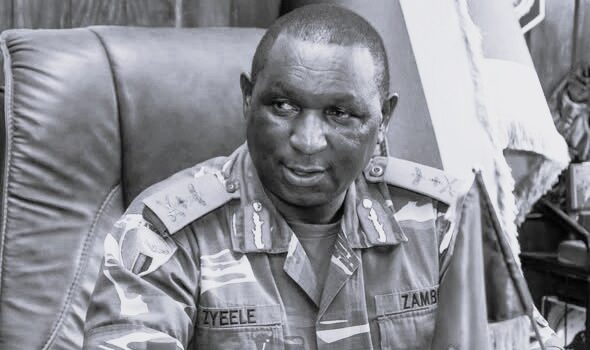
The government’s response to illegal gold mining has come under renewed public attention following remarks linked to Zambia Army Commander Lieutenant General Geoffrey Zyeele, intensifying scrutiny over the role of the military in domestic security operations.

Concerns emerged after language attributed to the Army Commander suggested a hard-line posture toward illegal miners, prompting reactions from political leaders, legal institutions, and civic voices who questioned whether such messaging aligns with constitutional principles governing the use of military force in civilian contexts.

New Heritage Party president Chishala Kateka publicly cautioned that the military’s constitutional mandate is primarily external defense rather than internal law enforcement, warning that expanding its role in civilian matters risks weakening legal safeguards and exposing communities to potential rights violations.

The Law Association of Zambia also weighed in, urging that all security operations remain firmly anchored in constitutional provisions and statutory law. Its leadership emphasised that state authority must be exercised within clearly defined legal limits, especially when enforcement actions affect vulnerable populations.

Illegal mining has long been identified by government authorities as a major economic, environmental, and public-safety concern. Officials maintain that unregulated mining activities result in revenue losses, environmental degradation, unsafe working conditions, and criminal exploitation of mineral resources.

Government representatives have defended firm action against illegal mining, stating that the practice threatens national economic stability and undermines lawful investment in the mining sector. They argue that strong enforcement is necessary to dismantle organised networks that profit from unlicensed mineral extraction.

However, social and community advocates have urged policymakers to recognise the economic pressures that push many individuals into illegal mining. They contend that unemployment, poverty, and limited access to formal economic opportunities drive participation in unregulated mining, calling for a response that pairs enforcement with inclusive economic measures.

Public reaction has reflected this tension. Some citizens have supported decisive action to curb environmental damage and restore order in mining regions, while others have expressed concern that aggressive enforcement could escalate conflict and deepen mistrust between communities and security agencies.

The controversy has also intersected with broader political messaging. Opposition figures have criticised the tone of official statements on illegal mining, while government-aligned leaders have accused critics of undermining state authority and downplaying the economic harm caused by unregulated mineral extraction.

Officials within the administration have reiterated that enforcement operations are intended to protect national resources and public safety rather than target vulnerable individuals. They have pointed to ongoing initiatives aimed at job creation, skills development, and formalisation of artisanal mining as part of a longer-term strategy to address the root causes of illegal mining.

Within governance circles, policymakers acknowledge that illegal mining presents a multi-layered challenge that requires coordination across security, economic planning, environmental regulation, and social welfare. They stress that sustainable solutions must balance lawful enforcement with economic inclusion and regulatory reform.

The episode has also reignited discussion about leadership communication in sensitive security matters, with observers noting that public language by officials can shape perceptions of state intent and influence national stability.

As enforcement efforts continue, stakeholders across the political and civic spectrum have called for clearer policy direction outlining the respective roles of the police, military, and regulatory agencies. Many argue that consistent legal framing and transparent communication will be critical in maintaining public confidence while addressing illegal mining effectively.

Critics Misjudged Free Education Policy – Hakainde Hichilema

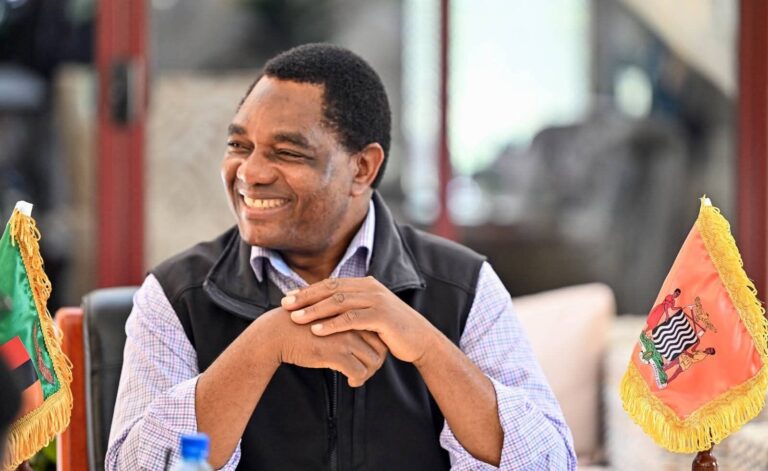
President Hakainde Hichilema has challenged critics of the Free Education Policy following improved pass rates in the latest national examination results, asserting that the performance of pupils has validated the government’s decision to expand access to education.

Speaking during an engagement with teachers in Lusaka District, the President said the results demonstrated that sceptics who doubted the effectiveness of Free Education had been proven wrong. He described the improved outcomes as evidence that the policy was yielding measurable academic progress, particularly among learners who previously faced barriers to accessing schooling.

Mr Hichilema stated that the Free Education initiative was designed to remove financial obstacles that had historically limited opportunities for children from low-income households. He said the policy was not only about expanding enrolment but also about improving overall educational quality and learner outcomes.

He cited the number of pupils who sat for examinations as an indication that more children were remaining in school, adding that increased participation suggested a growing culture of retention within the education system. The President said the results reflected the resilience of learners and the dedication of teachers working within a rapidly expanding education framework.

Meanwhile, the Ministry of Education has maintained that the policy has widened access while placing pressure on infrastructure, staffing levels, and classroom space. Education authorities have acknowledged challenges associated with overcrowding, resource shortages, and the rapid growth in enrolment since the policy was introduced.

On the other hand, some education stakeholders have continued to question whether expansion has been matched by adequate investment in learning materials, teacher recruitment, and school facilities. They have argued that while access has improved, long-term sustainability depends on continued funding and strategic planning.

The government has responded by outlining ongoing investments in classroom construction, teacher deployment, and curriculum support, stating that efforts are underway to strengthen the system as participation continues to rise. Officials have indicated that additional recruitment and infrastructure development remain part of broader education sector reforms.

In parallel, the issue of education quality has also featured in national debate following reports of teachers and civil-society groups calling for consistent policy implementation and improved monitoring of learning standards. Some educators have highlighted the need for further training, curriculum adjustments, and strengthened oversight to ensure that academic gains are sustained.

However, the administration has insisted that the Free Education Policy represents a long-term national investment rather than a short-term political project. Government representatives have framed the improved results as a foundation for broader social and economic benefits, arguing that a more educated population contributes to national productivity and social mobility.

The President reiterated that the policy was intended to serve future generations, stating that expanding education access would create opportunities beyond the classroom by strengthening the country’s human capital base. He called on education stakeholders to support ongoing reforms and maintain a shared commitment to improving learning outcomes.

Education analysts have noted that examination performance can serve as one of several indicators of system effectiveness but cautioned that continued tracking of literacy, numeracy, and completion rates will be critical to assessing long-term impact. They have also pointed to the importance of balancing enrolment growth with sustained quality improvements.

The discussion surrounding Free Education has become part of a broader national conversation on public policy delivery, government accountability, and the measurable impact of social programmes. As debate continues, the government has positioned improved examination results as a central argument in defending the policy’s trajectory.

President Hichilema returns to Lusaka, confers with teachers

1

President Hakainde Hichilema has thanked teachers and learners for achieving a 70 percent pass rate in the 2025 grade 12 examinations.

President Hichilema says achieving the 70 percent pass rate is not a minor achievement.

He has attributed the landmark achievement to prudent reforms being implemented by the government in the education sector, coupled with dedication from the teachers and learners.

The media reports that the Head of State said this at Community House when teachers drawn from different schools in Lusaka Province paid a courtesy call on him shortly after returning from his Choma ranch where he has concluded his working holiday.

He further indicated that the 70 percent pass rate attained is as a result of gradual work implemented by the government and its cooperating partners.

President Hichilema stressed that a lot of work, planning, organising and strategising was done by the government to ensure that the quality of education improves in the country.

The President cited teachers and officials from the Ministry of Education as some of the people who have worked hard in implementing the vision of the government.

He said government is grateful to everybody who played a part in achieving the 70 percent historical landmark grade 12 pass rate.

Meanwhile, President Hichilema has called for more investment in the education sector which he said outweighs other sectors.

The Head of State also noted that investment in the education sector is the foundation of any thriving government.

And speaking earlier, Ministry of Education Permanent Secretary for Technical Services, Kelvin Mambwe, praised President Hichilema for the interventions his government has implemented in the education sector.

Dr Mambwe said the interventions implemented by the government have significantly contributed to recording the 70 percent landmark grade 12 results.

He pointed out that the good performance achieved by the Ministry of Education is not accidental but as a result of prudent policy implementation.

Examinations Council of Zambia Chief Executive Officer, Michael Chilala, informed the President that the Council has put in place measures to curb exam leakages.

Dr Chilala said ECZ ensured that no examination papers were leaked prior to the writing of the grade 12 examinations.

He assured the Head of State that the council has introduced measures that enable it to trace the source of any examination leakage.

Kondanani Miti, a teacher from Matero Boys Secondary School, commended President Hichilema for recruiting more teachers, noting that the development has resulted in reduced teacher- pupil ratio.

Mr Miti said the massive teacher recruitment played a pivotal role in the attainment of the 70 percent landmark grade 12 examination results.

People’s Pact Ready to Deliver New Leadership

9

People’s Pact Ready to Deliver New Leadership
Fred M’membe, President of the Socialist Party Zambia and leader of the People’s Pact coalition, has declared his movement ready to assume national leadership ahead of Zambia’s 2026 general elections. In a statement outlining his vision for the country, M’membe positioned the People’s Pact as the only political force capable of delivering transformative, values-driven governance that prioritises ordinary citizens over elite interests.

Speaking with conviction, M’membe grounded his leadership philosophy in personal upbringing and communal responsibility. He stressed that true leadership must embody decency, fairness, hard work, and foresight qualities he argued are absent in the current administration. “When one of us falls down, we must help to lift them back up,” he said, framing social solidarity as both a moral imperative and a policy foundation.

M’membe directly challenged the record of President Hakainde Hichilema and the United Party for National Development (UPND), asserting that after nearly four years and five months in office, the government has lost touch with the poor and working class. He accused the UPND of abandoning core principles of justice, equity, and peace, and claimed its policies remain tethered to outdated frameworks that fail to address contemporary challenges.

Central to the People’s Pact platform is a sweeping education revolution. M’membe described education as “the engine room of equity and the economy,” arguing that Zambia risks falling further behind global competitors unless it makes radical investments in learning infrastructure, teacher quality, and research capacity. He called for a fully socialised, free, and high-quality education system from primary through tertiary levels, insisting that universities must be empowered to attract and retain top scientists, innovators, and researchers.

The proposal extends beyond education. M’membe also advocated for a complete overhaul of the public health system, demanding free and socialised healthcare accessible to all Zambians. He linked both reforms to a broader vision of nation-building rooted in the ideals of Zambia’s independence struggle ideals he believes have been eroded by recent governance failures.

Highlighting what he termed reckless land allocation practices, M’membe warned that national resources are being “dished out anyhow,” without transparency or regard for public interest. He insisted that future leaders must demonstrate honesty, humility, and solidarity, and govern with a clear ethical compass anchored in justice and respect for citizens.

The August 2026 election, according to M’membe, represents a stark choice between clinging to the past or embracing a progressive future. He framed the People’s Pact not merely as a political alternative but as a moral corrective a movement committed to restoring dignity, planning responsibly, and placing Zambians first in every policy decision.

He reaffirmed his party’s readiness to lead, stating that the Socialist Party offers not just criticism but a concrete plan for systemic transformation. “Nation building requires vision,” he said. “And our vision begins with an education revolution that will produce an innovative, skilled, and well-trained workforce capable of driving a knowledge-based economy.”

Kasempa Angry Mob Kills Elderly Man Over Witchcraft Accusation

3

A 64-year-old man has been beaten to death by an angry mob in Kasempa District of North-Western Province after being accused of bewitching his younger brother.

The development was confirmed by North-Western Province Police Commissioner Brighton Siwale, who identified the deceased as Frank Kamalondo of Kamalondo village in Kasempa District.

“Kasempa Police Station recorded a case of murder in which a 64-year-old man of Kamalondo village was allegedly beaten to death by an angry mob after being suspected of bewitching his younger brother,” Mr Siwale said.

He explained that the mob attack followed the sudden death of the deceased’s younger brother, Dasken Kamalondo, aged 59, who collapsed while on his way to the market in Kangombe area earlier the same day.

“The deceased’s younger brother collapsed around 11:00 hours and was rushed to Mukinge Mission Hospital, where he was pronounced dead upon arrival,” He added.

Mr Siwale said a funeral was later held at Kamalondo village, where the deceased went to mourn his brother but was confronted by mourners who accused him of being responsible for the death.

“Upon his arrival at the funeral, mourners descended on him and accused him of being the cause of his brother’s death. His son managed to rescue him and took him to his farmhouse at Kamalundu,” He added.

Mr Siwale stated that the situation later escalated when an angry mob followed the deceased to his farmhouse.

“Around 20:00 hours, an angry mob followed him to the farmhouse and assaulted him using sticks, stones, bricks and slashers, resulting in his death,” He added.

Mr Siwale further disclosed that the deceased’s 23-year-old son, Lewis Kamalondo, discovered his father’s body in the early hours of January 22, 2026.

“The body was discovered around 02:00 hours lying about 50 metres from the farmhouse, after which the matter was reported to police,” he said.

Mr Siwale said police officers rushed to the scene and observed multiple injuries on the body.

“Upon physical inspection, the left eye was found perforated, with multiple deep cuts on the neck, a suspected fractured jaw, cuts on the face, and bruises on both legs and hands,” he said.

Mr Siwale added that the body was deposited at Mukinge Mission Hospital mortuary, pending postmortem examination and that the crime scene was thoroughly processed.

“A docket of murder has been opened and three suspects have since been apprehended to assist with investigations,” He added.

Justin Chinama Leaves FC Leopards, Sunday Sichimata Steps In

0

FC Leopards has parted ways with Head Coach Justin Chinama and has appointed Sunday Sichimata as Interim Coach.

FC Leopards Communications Manager Alex Njovu says the super league side has mutually agreed to part ways with the veteran coach.

In a statement accessed by the media in Kabwe, Mr Njovu disclosed that others that have left the correctional boys club are Assistant Coach Donwell Yobe and Goalkeeper Trainer Lameck Nyangu.

Meanwhile, Zambia Correctional Service Sports and Culture Affairs Director Divino Kifita expressed gratitude to the trio for their services and commitment to the club.

“I would like to confirm that we have mutually agreed to separate with Head Coach Justin Chinama, his assistant Mr Donwell Yobe, and Goalkeeper Trainer Lameck Nyangu. We sincerely thank them for the contribution they made to the club,” Mr Kafita said

He announced that Sunday Sichimata has been appointed interim Head Coach and will take charge of the team with immediate effect.

“A new and permanent coach will be announced soon, but in the interim we have asked Chief Inspector Sunday Sichimata to help the team,” he said

Mr Kafita called on the Leopards to rally behind Sichimata and continue supporting the team.

And Mr Sichimata expressed gratitude and humility on his appointment, urging players to give their all and fight for the badge.

“I am humbled to have been given this rare opportunity to help the team. With teamwork, a lot can be achieved,” he said

12-year-old Girl abducted and defiled in Sinda

0

A 12-year-old girl of Sinda District in Eastern Province was abducted and defiled multiple times for at least 10 consecutive days.

The juvenile was concurrently molested from 9th to 19 January 2026 in Sinda in Zibweleka Village of Kawaza Chiefdom.

It is reported that the survivor only broke free from being captive after the door to the house she was kept in was accidentally left open as the perpetrator forgot to lock it, leading to the girl breaking free and run away.

The  media reports that the perpetrator who is only known as Patrick was on the run.

Eastern Province Police Commanding Officer Robertson Mweemba confirmed the incident saying a manhunt for the perpetrator has been launched.

Brief facts on the case are that, on 07th January 2026, the survivor left home without informing anyone and only went back on 08th January 2026 at around 06:00hours.

The mother to the survivor let her child sleeping until the next day on 09th January 2026 at around 18:00hours, when the mother confronted her child and asked where she had slept the previous day.

The survivor did not respond and decided to ran away and only went back home on 19th January 2026.

The mother decided to take the child to the police for counselling where she disclosed that she was abducted by Patrick and had carnal knowledge of her repeatedly until 19th January 2026.

This prompted the Police to act swiftly and issued a Police Medical Report form to the survivor who went to seek medical attention.

The findings were consistent to the claims that she was sexually molested.

Mr Mweemba says a docket of defilement has since been opened while police continue with a manhunt.

Seven-Year-Old burnt By Mother Over Stolen Money

1

 A 31-year-old woman from Chipata District has been arrested for burning her 7-year-old son with hot water.

 Amelia Namonje, 31, of Mchini Compound in Chipata, Eastern Province, reportedly assaulted her child after he stole K10, which he later used to play Bonanza, a type of coin-operated gambling machine popular in Zambia.

 In a fit of anger, Namonje poured hot water on the boy, who sustained serious burns.

The boy was firstly attended to at Mchini clinic before he was referred to Chipata Central Hospital.

Brief facts on the matter are that on 22nd January 2026, the 7-year-old boy did steal a K10 from his mother and instead of going to school, he went to play Bonanza within the area.

At around 09:00, the boy went back home where he met the mother who questioned him over the K10.

The perpetrator started beating the child and as he fail down, she got a pot of hot water which was on the brazier and poured it on the victim.

Upon seeing that she had burnt her son, she personally quickly rushed him to Mchini Clinic where he started receiving care.

Whilst at the clinic, members of the public who witnessed the act informed the police on what transpired prompting the police to apprehend her whilst at the clinic.

Regional Police Commanding Officer Robertson Mweemba confirmed the incident, saying the victim was referred to seek medical attention at Chipata Central Hospital.

Mr Mweemba described the condition of the boy as unstable

ZANEC Commends ECZ for Introducing facial recognition technology

0

Zambia National Education Coalition (ZANEC) Board Chairperson Henry Kabwe has commended the Examination Council of Zambia (ECZ) for its innovation and continuous improvement to the education sector.

Mr Kabwe said  the introduction of the facial recognition technology by ECZ will help prevent cheating during examinations.

He said the system will also ensure verification and issuance of certificates to deserving candidates.

Speaking to the media in an interview, Mr Kabwe explained that the new technology will enhance public confidence and credibility in the education system both locally and internationally.

” We would like to commend ECZ for introducing this technology, this is a welcome move as it will bring trust and credibility in the institution and confidence in the certificates obtained by candidates, “Mr Kabwe said.

He added that linking learners’ faces to registration details will help ensure only pupils who actually sat for examinations claim the results on written examinations.

” We have heard in the past of cases of people trying to write examinations on behalf of others, with this technology, it will be a thing of the past,” Mr Kabwe said.

Mr Kabwe appealed to ECZ to find a way of reducing on candidates entering to write their examinations in rural areas adding that it was a breeding ground for cheating.

Mwata Kazembe Encourages Councils to Broaden Revenue Sources

‎Mwata Kazembe of the Lunda people in Luapula Province has urged Councils to diversify and broaden their sources of revenue to reduce their over-dependence on the central government.

‎Mwata Kazembe noted that previously councils in Luapula Province generated substantial revenue from fish levies but lamented that their income streams have significantly reduced following the depletion of fish stocks in the local water bodies.

The media  reports that the Mwata observed that the reduced revenue base from the fishing sector has led to Councils’ overdependence on grants and direct support from the central government.

‎“Councils used to collect a lot of money from fish levies, but now that fish stocks have declined, there is a need to identify alternative sources of revenue to broaden the revenue base,” Mwata Kazembe said.

The Mwata stated that ensuring self-reliance in revenue would enable Councils finance development efforts in their jurisdictions.

‎The Mwata said this when Nchelenge Town Council Secretary, Benson Malama and Council Chairperson Godfrey Monta paid a courtesy call on him at his palace.‎

‎Meanwhile, the traditional leader urged Mr Malama and the council leadership to diligently work towards the development of the district.

‎He emphasised that meaningful development could only be achieved if workers at all levels remained  committed and dedicated to their duties.

‎“The task ahead of you is huge, especially with all the devolved ministries under your charge. Work with the available resources to ensure that you develop your district,” The Mwata said.

And Nchelenge Council Chairperson Godfrey Monta assured the traditional leader that the Local Authority will continue working to improve service delivery in the district.

North-western youth laments low grade 12 examination rankings

0

A North-Western Province based Youth Henry Banda has expressed concern over the continued low ranking of the province in the grade 12 school examination results.

In an interview with the media today Mr Banda said there was need for all concerned stakeholders to work together to identify the gaps and find possible lasting solutions.

“North Western Province’s poor performance at Grade 12 level is a concern that needs serious attention,” Mr Banda said.

He said there was need to develop aggressive strategies to address the problem at hand as the traditional methods did seem to be helping anymore.

“We need to strengthen the role of Education Standards Officers in monitoring and evaluating school performances, providing feedback, and supporting improvement plans,” Mr Banda said.

Mr Banda called on the Ministry of Education to develop a deliberate policy, which supports teachers from well-performing Provinces to exchange notes with those who were not doing so well.

“We appeal to the Ministry of Education to create a teacher’s network for teachers to share best practices, resources, and support,” Mr Banda stated.

Additionally, Mr Banda called for increased Peer-to-Peer Learning in schools which encourage stronger students to mentor their peers.

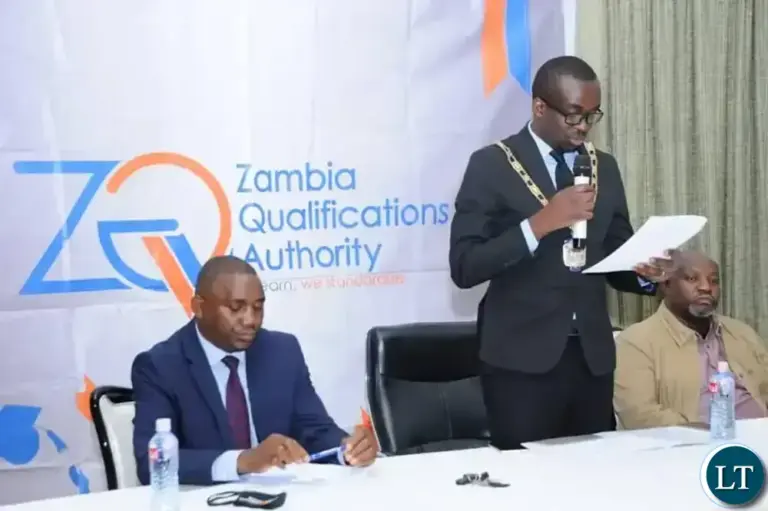
ZAQA Qualifications Certification Key to Fair Labour Market

1

A business expert in Solwezi District says the work of The Zambia Qualifications Authority (ZAQA) of certifying people’s qualifications will help bring about fair competition on the job market.

Amos Mpenge told the media in an interview that for years people secured employment with fake qualifications, disadvantaging qualified people.

He explained that with the mushrooming of illegal colleges and universities the certification of qualifications will sieve out masqueraders in different professions.

“It is not fair for people with invalid qualifications to be getting jobs while those with valid qualifications struggle to get employed,” Mr Mpenge said.

He has called on members of the public to support the initiative adding that it will help bring sanity to the country.

Mr Mpenge added that ZAQA was a government institution that aims to protect learners and employers by ensuring that people being employed meet National and international standards.

He has called on ZAQA to conduct country wide sensitisation programs to educate members of the public on its role and consider opening offices in all the provinces to help people access their services.