Thursday, June 11, 2026
12.6 C
Lusaka
Home Blog Page 179

RPP Reports Miles Sampa to Police Over ‘Ghost Polling Station’ Claims

2

The Republican Progressive Party (RPP) has reported Patriotic Front (PF) faction leader Miles Sampa to the police over his claims that a “ghost polling station” was used during the Chawama parliamentary by-election.

RPP National Youth Chairperson Constantino Mubita said the party was concerned about statements it said had the potential to mislead the public and discredit the Electoral Commission of Zambia (ECZ) following the recently concluded by-election.

Mr Mubita said Zambia’s democratic institutions had continued to demonstrate independence, citing several by-elections in which both ruling party and opposition candidates had emerged victorious. He referred to the Chawama by-election, which was won by the opposition Forum for Democracy and Development (FDD), as an example.

He said allegations of ghost polling stations and electoral malpractice, if made without evidence, could undermine public confidence and threaten national stability.

The RPP also referenced guidance from the Constitutional Court on the constitutional amendment process, which was implemented through Parliament, stating that it demonstrated the functioning of the separation of powers. Mr Mubita said the ECZ, Judiciary, Legislature and Executive continued to operate independently and that no individual or institution was above the law.

He said the decision to report Mr Sampa to the police was intended to establish the motive behind the statements and to determine whether they constituted any criminal offence.

The party commended the ECZ for demanding an apology from Mr Sampa and welcomed State House’s call for allegations to be supported by verifiable evidence.

Meanwhile, the RPP has urged the ECZ and the Anti-Corruption Commission (ACC) to investigate allegations circulating on social media linking Mr Sampa to vote-buying during the Chawama by-election. Mr Mubita said failure to address such allegations could affect public confidence in the electoral process.

On Tuesday, Mr Sampa formally apologised to the ECZ for falsely alleging that a fake polling station had been set up along Lilayi Road during the Chawama parliamentary by-election.

Kasama Chiefs Commend President Hichilema for Development Initiatives

2

Chiefs from Lukashya Constituency in Kasama District of Northern Province have commended President Hakainde Hichilema for development programmes being implemented across the country.

The traditional leaders acknowledged what they described as continued delivery of development in various parts of Zambia without regional exclusion.

According to Northern Province Principal Public Relations Officer Sandra Mulenga, the chiefs cited government initiatives such as the increased Constituency Development Fund (CDF), the social cash transfer programme, and the provision of free education as some of the policies contributing to development at community level.

Ms Mulenga said the traditional leaders noted that all provinces were benefiting from government development programmes currently being implemented.

“They also appealed to councillors and Members of Parliament in their areas to effectively translate government policies into tangible development within their constituencies,” she said.

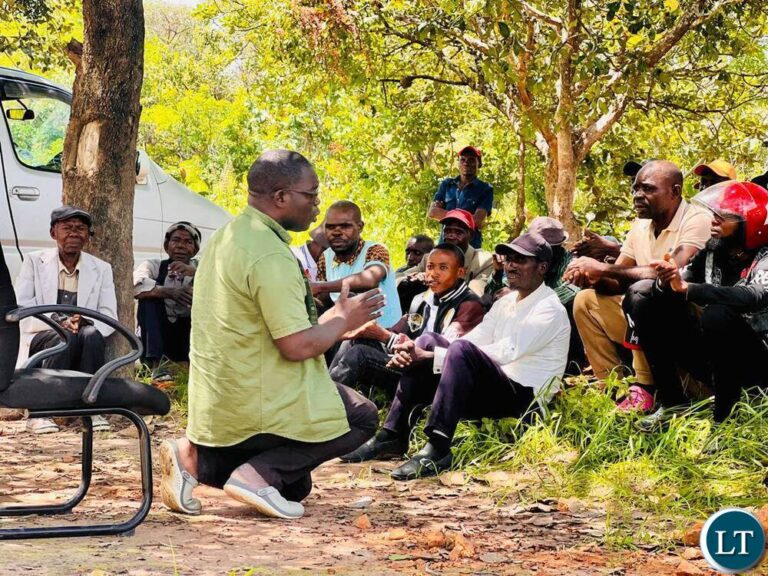
The chiefs made the remarks during a meeting held by Minister of Commerce, Trade and Industry Chipoka Mulenga with traditional leaders from Lukashya Constituency.

Mr Mulenga said government remained focused on empowering communities through sustainable economic activities, job creation, and prudent use of public resources.

He urged traditional leaders to continue supporting government programmes by working closely with local leadership to ensure development initiatives reach households across their communities.

Three die, seven injured in road traffic accidents in Lusaka

0
Zambia Police Service has recorded three fatalities and seven serious injuries from separate road traffic accidents that occurred  across Lusaka and Chilanga districts.
The fatal accidents involved both pedestrians and passengers. Including a 1-year-8-month-old child, Monica Banda, who was killed in George Compound, Sililo area.
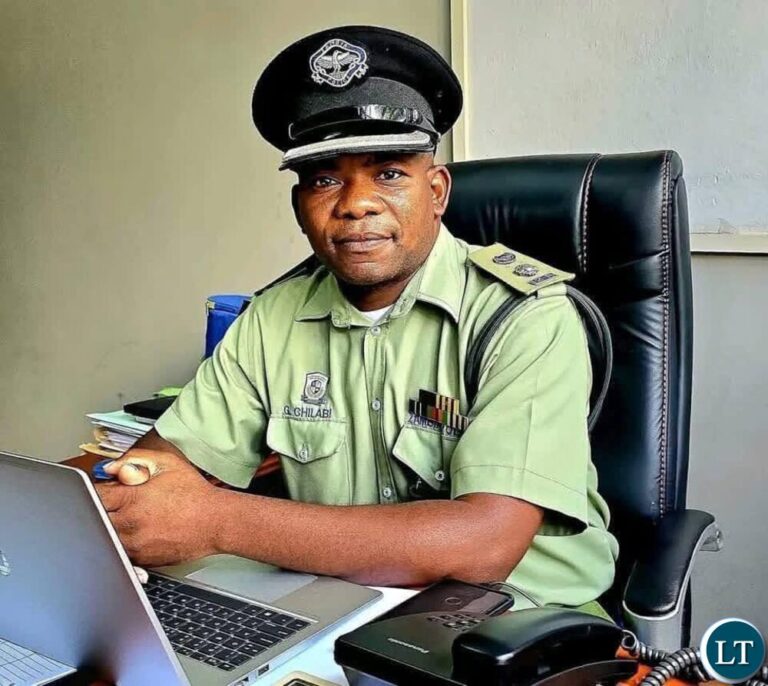
Police Spokesperson, Godfrey Chilabi, says another pedestrian, Mathias Sakala (47), lost his life along Garden Road near Fred Joe Limited.
Mr. Chilabi added that a male passenger, Sililo Munalula (49), died following a collision between a Toyota Noah and a Mitsubishi Canter along Kafue Road near the Chilanga District Council junction in Chilanga.
“The bodies of the deceased have been deposited at the University Teaching Hospital mortuary, pending post-mortem examinations,” said Mr. Chilabi in a statement issued to RCV News in Lusaka today.
Additionally, several serious accidents occurred at other locations, involving pedestrians Given Otare (49), Eric Ilunga, and Javes Banda (35) were injured at the Kutwa and Musonda Ngosa Road junction, while Abraham Kalaluka (38) sustained injuries on Ben Bella Road.
Mr. Chilabi further added that Siyanga Mulemwa (35) was injured near Mumbwa Road at Mbasela Junction; Violet Tembo (37), along Great North Road by the Lake Petroleum Filling Station; and Mercy Zulu (34), on Garden Road.
He has urged all road users to exercise extra caution, obey traffic rules, avoid speeding, and refrain from driving under the influence of alcohol.

GRANDFATHER DIES IN A HEROIC CIRCUMSTANCE

0

A 53 years old man of Solwezi District has died in a heroic circumstance upon rescuing his grandson aged three who fell into a two meters soakaway.

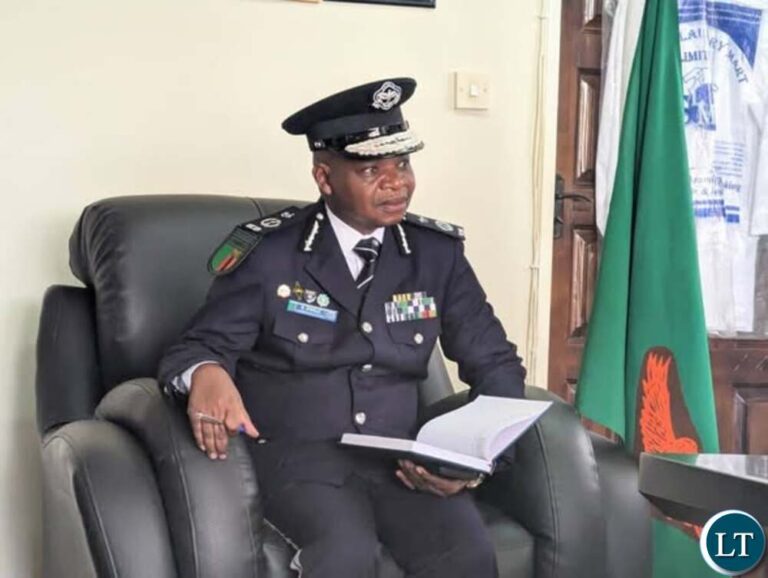
North-Western Province Police Commissioner Brighton Siwale confirmed the incident to the media in Solwezi which is believed to have happened on 15th January, 2026 around 14:00 hours.

Mr Siwale said the case was reported on 15th January, 2026 around 16:30 hours by a female aged 28 of Urban area, who reported that her father aged 53 of Urban area died upon rescuing his grandson aged three who fell into a soakaway.

He said the brief facts of the matter are that the deceased found his grandson had fallen in a soakaway within the yard, which had collapsed due to heavy rains and in the process of rescuing the victim, the deceased opted to get in and managed to rescue him.

‎Mr Siwale further stated that after the successful rescue, unfortunately the grandfather now deceased failed to get out of a two sockaway which was full of water as a result of the rains.

However, he said his wife went to rescue him by providing a wooden ladder with the help of other neighbours who managed to get him out and rushed him to Solwezi Urban Clinic where he was pronounced dead upon arrival.

‎Mr Siwale said that the body was later deposited at Solwezi General Hospital mortuary.

Lessons from Chawama; costly blunders for UPND to avoid as we approach 2026 general elections

2

By now, we are pretty sure Bright Nundwe, the newly elected MP for Chawama is done dusting his closet and itching to storm exclusive boutiques to replenish it with new designer suits and fancy shoes before laughing all the way to Manda Hill to sign up for a brand new ‘icipaso’ straight from the showroom!

Tough luck to all the losers….. including chancers such as Binwell Mpundu!

Anyway, this treatise seeks to encapsulate lessons, particularly the ruling party can learn from Chawama to avoid landing in the same ditch as we fast approach the 2026 general elections.

First things first: did the National Secretariat or party strategists take the trouble to interrogate and understand the history or indeed the dynamics of Chawama constituency post 2001 before putting the boots on the ground?

We deliberately choose to mention the said year because this is the period the country witnessed significant political developments in recent times which would greatly influence the direction our country would take, henceforth.

When President Chiluba attempted to adulterate the constitution to accommodate his insatiable appetite to run for a third term in the same year, a number of his cabinet colleagues, including his very own vice president, Gen. Christon Tembo, who also served as Chawama Member of Parliament, defied all the odds and emphatically said, “NO!” to the third term.

When this seemingly landed on deaf ears, Gen. Tembo along with 20 other MMD parliamentarians, including key cabinet ministers, resigned to form or join breakaway political parties. Gen. Tembo found a new home in the recently launched Forum for Development and Democracy (FDD).

Geoffrey Samukonga was adopted as the FDD’s torch bearer in the ensuing by-elections to fill up the occasioned vacancy in Chawama constituency.

As it were, FDD was seen to pose a serious threat to MMD’s hold on power. Since 2001 was an election year, a win for the infant opposition political party could’ve easily been interpreted as an endorsement for the opposition. And MMD wasn’t, of course, ready to see power easily slip off its fingers….. therefore, Chawama had to be defended at all costs; including the loss of blood!

Once the ruling party realised the odds favoured the opposition, it unleashed marauding political thugs in the area under the tutelage of one Michael Sata, a senior cabinet minister who would go on to become President.

Overnight, Chawama turned into a war zone! Violent party cadres armed with axes, spears and pangas and catapults went on rampage ruthlessly attacking people as well as torching vehicles!

According to eye witnesses, violence escalated when Minister-without-portfolio, Michael Sata led a gang of unruly ruling party supporters armed with machetes and stones on a tour of the 34 polling stations.

“The violence was engineered by the ruling party, and Michael Sata in particular, to create confusion and so enable MMD to tamper with the ballot boxes,” Ngande Mwanajiti, executive director of the Inter African Network for Human Rights and Development (Afronet) told the media. “MMD is responsible for all the political violence we have seen in recent weeks”.

FDD’s Samukonga went ahead to claim victory, of course.

By the time the 2006 general elections came calling, Sata’s Patriotic Front (PF) had already established itself as a formidable opposition political party in urban set ups. Sata had hastily formed his own political party after being ignored by President Chiluba as his successor. His party’s candidate in Chawama, Violet Sampa-Bredt would’ve little trouble sailing home to victory, effectively establishing the constituency as one of the party’s strongholds in the capital city.

And by the time the electorates trooped back to the polls during the 2011 general elections, another PF candidate, Edgar Lungu, would be thrust into the limelight as area MP!

When Lungu’s political fortunes suddenly changed for the better and he was catapulted into State House following the demise of the ailing President Sata in 2015,
Lawrence Sichalwe would find himself as MP on the PF ticket. He would cling on to the seat until he was arm twisted to pass on the mantle to Lungu’s daughter, Tasila prior to the 2021 general elections.

As fate would have it, Lungu would transition to the land of the dead while undergoing treatment in South Africa a few years later. Unfortunately, his family opted not to cooperate with the New Dawn Administration to have a state funeral for the former late President as so mandated by the law. This would of course result in contentious and prolonged court battles as either party sought one injunction after another.

In the long run, Tasila would end up losing her Parliamentary seat due to prolonged absence from the August house contrary to what the law stipulates, resulting in the recent by-election. And the rest is now history, as they say.

Anyhow, what’s our take away from the Chawama loss?

Without attempting to mince our words or sugar-coat anything, Chawama was handled haphazardly both before and during the elections:

1. Rolling-out the red carpet for Innocent Kalimanshi

As Innocent Kalimanshi was rejoining the ruling party, a red carpet was rolled-out for him with the UPND top brass, led by the Secretary General, Batuke Imenda, in attendance. Was that necessary?

One of the reasons the electorates flashed PF the ‘red card’ was caderism! Kalimanshi was the very epitome of caderism. He injured a lot of people not only in Chawama but Lusaka as a whole. Have the electorates forgiven him? What influence does Kalimanshi have in the area apart from amongst his fellow goons? Does Kalimanshi have what it takes to influence the youth or women in Chawama to vote for UPND? What message was he going to deliver to the people, if anything?

2. Exaggerated defectors
Before the Chawama by-election, UPND leaders addressed a number of rallies during which they always declared “thousands” had defected from the opposition to join the ruling party. Who physically took the trouble to take stock of the defectors? Would anyone be willing to avail such evidence? If indeed we had such record numbers joining the party at such a crucial moment, how come the opposition carried the day? We’ve seen that our leaders continue to make such ludicrous pronouncements the recent being in the Copperbelt!

3. Rewarding new comers
There were strong rumours circulating on social media that Kalimanshi was enticed and rewarded with an SUV before he could join. We’ve no means of verifying the authenticity of this suggestion. What we however know for a fact is that UPND has a tendency of neglecting old members but rather rewarding new ones! This can be very demotivating!

4. Pocketing campaign funds
It was rather embarrassing to learn that certain officials were pocketing campaign funds. To add salt to injury, there are also reports of someone diverting part of the carcass meant for the foot soldiers to their homes and 100 people sharing 2 chickens! Imwe, how do you dispatch foot soldiers in hostile enemy territory on empty stomachs and expect to win?

5. Eliminating formidable opponents
It’s now becoming fashionable in UPND to eliminate potential competitors from the race.

First and foremost, the adoption process in Chawama was quite shambolic! Initially, Potiphar Tembo who could have easily scooped the seat was somehow sent into foreign missions. A Katenga was then adopted but dropped shortly before roping in Morgan Muunda!

It seems this is becoming part of the game in UPND – eliminating potential formidable competitors! For instance, in Ndola Central, the DC m, a Mr. Phiri who could have easily been a better candidate was transferred to Kalulushi so as to pave way for a sitting MP….a cabinet minister! Equally surprising, the Kalulushi DC, Kelly Jibinga, who was curving a good name for himself by initiating numerous development projects was shunted to Chililabombwe to prevent him from standing! And in Kawambwa, Luapula province, local businessman and the people’s favourite, Wiza has just been sent to Angola as a diplomat so that he doesn’t pose a threat to the current MP.

Honestly, how can UPND expect to win the elections with such chicanery?

As we prepare for this year’s elections, we expect serious action! Heads must roll at the National Secretariat and the whip must equally be cracked in the provinces. The President and his political advisor MUST take charge of the party adoptions forthwith before we find ourselves in mwamoneni!

We rest our case.

Prince Bill M. Kaping’a
Political/Social Analyst
Zambezi

People’s Pact Petitions Court to Halt Delimitation Process

4

The opposition People’s Pact has petitioned the Constitutional Court, seeking an order to halt the implementation of the country’s constituency delimitation process scheduled for April this year, arguing that the exercise is illegal and unconstitutional.

In its application, the pact has named the Electoral Commission of Zambia and the Mulilo Kabesha, requesting a stay of the 2025–2026 delimitation exercise and an injunction to prevent certification of the final voters’ register, which is scheduled for 30 April 2026.

The pact contends that the sequence of operations undertaken by the ECZ contravenes constitutional provisions governing boundary delimitation and voter registration.

People’s Pact Vice President for Strategy Peter Sinkamba submitted that voter registration data were captured before the legal finalisation of new constituency boundaries and before the dissolution of Parliament and local councils. He argues that this amounts to a breach of Article 58(6) and Article 57(6) of the Constitution.

Mr Sinkamba further alleges that certifying the voters’ register on 30 April would create what he described as an irreversible legal position under the Electoral Process Act, potentially resulting in mass disenfranchisement. He argues that voter cards issued under the current framework of 156 constituencies could later be mapped to a revised total of 211 constituencies, creating uncertainty over voter placement.

The petition also raises concern over the provisional voters’ register inspection period scheduled to run from 9 to 23 February 2026. According to the pact, voters currently lack the constitutional certainty required to verify their registration details against boundaries that have not yet been legally finalised.

In addition, the petition contends that the ECZ has not demonstrated compliance with the population quota requirement set out in Article 58(5) of the Constitution. It further questions which delimitation report the commission intends to rely on, citing uncertainty over whether a 2019 report or one informed by the post-2022 census will form the basis of the exercise.

The People’s Pact has asked the court to maintain the status quo of 156 constituencies pending judicial determination of the matter. It argues that this would represent the balance of convenience and protect the credibility of the general election scheduled for 13 August 2026.

The Constitutional Court has yet to indicate when it will hear the matter.

Why UPND Enters 2026 as the Party to Beat

The road to the 2026 general elections is increasingly being defined by a clear contrast between governance delivery and opposition disarray. The peaceful conduct of the Chawama parliamentary by-election, coupled with measurable policy outcomes under the United Party for National Development (UPND), has reinforced the ruling party’s structural advantage, even in moments where it has not emerged victorious at the ballot.

President Hakainde Hichilema openly commended political parties and independent candidates for maintaining calm and orderly campaigns in Chawama and other wards. He observed that the atmosphere stood in sharp contrast to past elections marked by violence, intimidation, and restricted political interaction. While on a working vacation attending to farming activities in Southern Province, the President continued to receive daily briefings and expressed satisfaction that political actors were able to engage freely and respectfully throughout the campaign period.

Following the by-election, State House challenged opposition figures who had alleged rigging and the existence of ghost polling stations to present evidence now that the process had concluded. At the same time, the President congratulated the winning candidate and praised the Electoral Commission of Zambia, law-enforcement agencies, and voters for conducting a peaceful and credible poll. The message was deliberate: democracy must be respected whether outcomes favour the ruling party or not.

Chawama is therefore instructive. UPND lost the seat, but gained something more consequential for 2026: proof that elections under its administration can be competitive, peaceful, and accepted without coercion or violence. The President’s response reflected institutional maturity, reinforcing confidence in democratic processes rather than undermining them. That posture matters to a growing segment of voters who value stability and order as much as political change.

Beyond elections, UPND’s position going into 2026 is anchored in delivery across key sectors. In education, free primary and secondary schooling has been restored nationwide and entrenched in law, bringing nearly 2.3 million children back into classrooms. More than 45,000 teachers have been recruited, student meal allowances at public universities reinstated, and hundreds of thousands of desks distributed to address long-standing shortages. Skills bursaries and student loan support have widened access to higher education.

In health, over 14,000 health workers have been recruited to address staffing gaps, while increased allocations for medicines and supplies have improved availability. Using expanded Constituency Development Fund (CDF) resources, councils have constructed more than 1,000 health posts, bringing services closer to communities.

CDF itself has become one of the most visible governance shifts.K40 million per constituency, translating to over K6.2 billion nationally. This decentralisation has funded classrooms, health facilities, community roads, equipment, and empowerment loans, changing how development is experienced at local level.

On the economy, Zambia’s debt restructuring has restored macro-economic credibility and eased long-term pressure on public finances. Investor confidence has followed, with announced commitments including a US$1.25 billion expansion at Kansanshi Mine and a US$2 billion investment in the Mingomba copper deposit. These developments have been reinforced by sovereign credit rating upgrades in late 2025, signalling international confidence in Zambia’s reform trajectory.

Equally significant has been the stabilisation of the kwacha. Historically, the festive season brought predictable currency weakness as demand for foreign exchange surged. This pattern was broken in late 2025, when the kwacha held firm and strengthened. Strong copper performance played a role, but policy choices mattered more. The Bank of Zambia’s directive requiring domestic transactions to be conducted in kwacha curtailed dollarisation, triggering conversions that lifted the currency to its strongest levels in over two years.

Structural reforms have also reduced pressure on foreign exchange. Zambia has moved from spending about US$600 million annually importing fertiliser to becoming a net exporter to the region. Cabinet approval to export surplus maize, exceeding 500,000 tonnes, has further turned agriculture from a forex drain into a source of earnings. These shifts reflect a broader move toward export diversification and import substitution grounded in domestic production.

Governance reforms have reinforced institutional order. Political interference in markets and bus stations has been curtailed, the death penalty abolished, laws criminalising defamation of the president repealed, and the Access to Information Act enacted. Media space has widened, and the rule of law has been emphasised as a cornerstone of stability.

Cost-of-living pressures remain a challenge for many households, a reality the government has acknowledged. Yet, taken together, the record shows a governing party focused on stabilisation, reform, and delivery while maintaining democratic openness.

Set against this is an opposition landscape marked by fragmentation across parties, alliances, and factions. Disputes over authority and leadership have dominated headlines, diverting attention from coherent policy alternatives. In a first-past-the-post system, such fragmentation dilutes votes and weakens mobilisation.

The lesson from Chawama is not rejection, but affirmation. Peaceful competition, credible administration, and acceptance of outcomes strengthen democracy. Those gains, combined with delivery across education, health, decentralisation, and economic stabilisation, explain why UPND enters the 2026 horizon from a position of strength. Unless the opposition undertakes a holistic reset that goes beyond individual parties or alliances, the structural balance continues to favour the ruling party.

Mundubile Caught Between Party Loyalty and Alliance Momentum

4

Mundubile Caught Between Party Loyalty and Alliance Momentum
Brian Mundubile finds himself at a pivotal moment in his political career, positioned at the intersection of Patriotic Front internal disputes and the Tonse Alliance’s struggle for operational clarity. His recent participation in a contested alliance meeting has elevated him from peripheral observer to central actor in a debate that extends beyond procedure into the future direction of opposition politics.

As leader of PF Members of Parliament and a declared presidential aspirant, Mundubile commands significant institutional influence. His standing among MPs provides him with leverage unmatched by many of his contemporaries. However, that influence also places expectations upon him to provide direction at a time when PF’s legitimacy is under sustained challenge.

Mundubile’s attendance at the Tonse meeting has been interpreted through competing lenses. For some, it signals willingness to engage with alliance structures seeking to move beyond PF’s courtroom battles. For others, it raises concerns about bypassing established party authority and exacerbating internal divisions.

The dilemma reflects a broader strategic tension. Remaining anchored exclusively to PF’s traditional structures risks tying leadership ambitions to a party still navigating legal uncertainty. Aligning openly with Tonse’s reformist impulses carries the risk of alienating loyalists who view alliance autonomy as displacement rather than renewal.

Recent by-election outcomes have demonstrated that voter behaviour is increasingly shaped by identity, legacy, and coalition appeal rather than procedural disputes. This reality places pressure on opposition leaders to prioritise broad-based mobilisation over internal gatekeeping.

For Mundubile, the challenge is not merely personal positioning but the demonstration of unifying capacity. Leadership in a fragmented environment demands decisions that reduce uncertainty rather than compound it. Delay or ambiguity risks leaving him influential yet constrained, a scenario that ultimately advantages incumbency.

As 2026 approaches, Mundubile’s choices will signal whether he intends to serve as a bridge between fractured structures or emerge as another figure defined by unresolved disputes. The stakes extend beyond individual ambition, shaping the opposition’s ability to present a credible alternative to voters seeking change.


Opposition Infighting Reduces Pressure on Incumbency

Opposition Infighting Reduces Pressure on Incumbency

The unfolding dispute within the Tonse Alliance has underscored a recurring challenge in Zambia’s opposition politics: the difficulty of resolving leadership and legitimacy questions before they erupt into public confrontation. While the disagreement is framed in procedural terms, its broader political impact is already shaping the landscape ahead of the 2026 general elections.

Central to this current impasse is a disagreement over authority, with rival factions advancing competing claims about who possesses the mandate to convene meetings, set nomination fees, and define alliance membership. The absence of a decisive judicial intervention has allowed political interpretation to dominate, transforming internal governance issues into public political spectacle.

This dynamic has significant implications. Electoral history suggests that opposition movements gain momentum when they present clarity, discipline, and a coherent alternative programme. Conversely, sustained internal disputes tend to erode voter confidence, particularly among undecided voters who prioritise stability and administrative competence.

The Tonse Alliance crisis has also revealed the extent to which unresolved Patriotic Front leadership disputes continue to influence broader opposition coordination. Rather than serving as a stabilising anchor, PF’s internal fragmentation has become a source of uncertainty for alliance partners, complicating efforts to project unity.

From the perspective of the ruling UPND, this environment reduces immediate political pressure. Even where dissatisfaction exists over economic conditions, inflation, or public services, opposition actors are spending political capital addressing internal disagreements rather than articulating a single national message.

Fragmentation further dilutes the protest vote. In a first-past-the-post system, divided opposition parties can collectively command significant support while still failing to translate that support into electoral victory. This mathematical reality places a premium on unity, something the Tonse dispute currently undermines.

The leadership question also affects succession dynamics. Without a clearly consolidated opposition figure, potential challengers remain vulnerable to internal contestation. This delays the emergence of a single focal point around which discontent can coalesce, granting incumbents valuable time.

As the election cycle progresses, the strategic cost of unresolved disputes will increase. Mobilisation, fundraising, and nationwide coordination cannot be improvised at short notice. The longer uncertainty persists, the more structural advantage accrues to an incumbent party that, regardless of popularity, retains organisational cohesion.


Tonse Alliance Rift Exposes Opposition Fault Lines Before 2026

2

Tonse Alliance Rift Exposes Opposition Fault Lines Before 2026
The Tonse Alliance has been plunged into renewed internal discord following contradictory positions taken by senior political figures over the legitimacy of a recent alliance meeting and subsequent administrative decisions, a development that is increasingly being viewed as advantageous to the ruling United Party for National Development as the 2026 general elections approach.

The dispute centres on a meeting convened by a faction associated with Dr Dan Pule and Zumani Zimba, during which resolutions were adopted affecting the Patriotic Front’s standing within the Tonse Alliance. Following the meeting, the faction announced that aspiring candidates would be required to pay K50,000 as a nomination fee, a move interpreted by critics as an assertion of operational authority.

However, Given Lubinda, acting as Patriotic Front Acting President and Acting Chairperson of the Tonse Alliance, rejected the meeting’s outcomes. Lubinda stated that the gathering had been irregularly convened and lacked his authority, calling instead for a Council of Leaders meeting to be held after the conclusion of ongoing by-elections.

The disagreement has drawn heightened attention because Brian Mundubile, a PF Member of Parliament and declared presidential aspirant, attended the contested meeting. His presence has been interpreted differently by rival camps, with some describing it as participation in an unauthorised process, while others argue it reflects engagement within alliance structures at a time when Tonse is attempting to assert independence from PF’s internal legal disputes.

No court order has been publicly produced to either validate or restrain the actions taken by either faction, leaving the matter suspended in political contention rather than judicial determination.

Beyond the immediate disagreement, the dispute has exposed deeper structural weaknesses within the opposition landscape. While recent by-elections have demonstrated voter dissatisfaction with economic conditions and governance challenges, opposition parties remain divided along organisational and leadership lines. These divisions have repeatedly shifted public attention away from policy alternatives and toward internal authority disputes.

For the ruling United Party for National Development, the fragmentation presents a strategic opening. Political analysts note that incumbents often benefit when opposition forces fail to consolidate messaging, leadership, and mobilisation structures. In such environments, electoral outcomes can be shaped less by popularity and more by organisational coherence.

The Tonse Alliance dispute also complicates fundraising, candidate deployment, and coordination of polling agents, all of which are critical components of a national campaign. Without a clearly recognised command structure, alliance partners risk operating at cross purposes, weakening their collective capacity to challenge incumbency.

As the 2026 election cycle draws nearer, the unresolved nature of the Tonse–PF relationship raises questions about whether opposition actors can move beyond internal disputes and present a unified alternative. Until such clarity emerges, the ruling party remains insulated from sustained, coordinated pressure, not by its own strength alone, but by the visible divisions among those seeking to replace it.

A chat with a politician – a must read for Political Lahead of the 2026 General Elections

2

A chat with a politician – a must read for Political Lahead of the 2026 General Elections

By Brian Matambo | Lusaka, Zambia

This was a private conversation with a political heavyweight in Zambia. I will not name the person. What matters is the substance of what we talked about, because it captures with unsettling clarity the crossroads at which the opposition now stands as the country approaches the 2026 general elections.

In the wake of the Chawama by-election won by the Tonse Alliance on the FDD ticket, the conversation revolved around one central warning: the opposition risks collective failure, not because the ruling party is invincible, but because ego, celebrity politics, and selfish calculation at the top are blocking strategic clarity.

My counterpart began by drawing a sharp and uncomfortable distinction between ordinary citizens and political leaders. The ordinary people, they argued, are far more alert to the real danger facing the country than the elites who claim to lead them. The failure is not at the base. It is at the top. Leaders are too busy protecting their positions, their visibility, and their personal relevance to confront the existential stakes of this moment. If leaders do not first grasp the danger, the message cannot filter down to the people who actually carry the vote.

I then introduced what I believe is the psychological core of the problem. Many contemporary politicians are not driven by ideology, policy, or national duty. They are driven by the desire for celebrityhood. Politics has become a shortcut to recognition. Artists, musicians, and actors work for years before applause finds them. Politicians, by contrast, want to step straight onto the red carpet. Titles, motorcades, and the intoxicating repetition of “Honourable” become addictive.

This produces a specific fear. It is not primarily the fear of losing state power, because many of these politicians privately know they are unlikely to win it anyway. The deeper fear is losing relevance, losing the limelight, losing the sense of being somebody. That is why stepping aside for a stronger candidate becomes psychologically impossible, even when it is strategically obvious.

This, more than ideology, explains why weak candidates insist on running, why fragmentation persists, and why unity talks repeatedly collapse. It also explains why, as I bluntly put it in the conversation, useless people enter politics. Politics has become an identity crutch rather than a service platform.

We then turned to the by-elections in Chawama and Petauke. We agreed that these were not isolated contests. They were protest votes against the ruling party. The ruling party was deeply unwanted in those constituencies, particularly because of their symbolic association with the late Dr. Edgar Chagwa Lungu. The electorate’s message was not subtle. Whoever best represented opposition sentiment stood to benefit.

I insisted these elections should have been used as a temperature check by opposition leaders. Instead, some leaders spun third-place finishes as victories, or worse, as proof of relevance. A distant third, especially where the gap between second and third is wide, is not competitive. It is relegation. Dressing it up as success is self-deception.

I openly ridiculed the logic that merely participating among “over 200 registered political parties” is a win. In a high-stakes national moment, participation without impact is political noise, not leadership.

Our discussion then shifted to data, because politics without data is guesswork masquerading as strategy. I shared findings from my own data-driven analysis. Southern Province is structurally difficult terrain for opposition forces, particularly since the emergence of UPND. Historical voting patterns from 1996 onward show deeply entrenched behaviour. Since UPND began contesting seriously in 2001, it has consistently posted above-average results in Southern Province, starting around 72 percent and climbing to over 90 percent support. Parliamentary dominance followed naturally.

By contrast, PF’s performance in Southern Province has historically been marginal, at times falling below one percent, with humiliating vote gaps in certain by-elections. The conclusion is unavoidable. Southern Province is not where elections are won for the opposition. Pretending otherwise is strategic fantasy.

The analysis then broadened to Lusaka and the Copperbelt, where trends are more fluid and therefore more decisive. Here, the data tells a different story. PF once dominated Lusaka, but its support declined as UPND rose, effectively swapping places. Similar patterns appear on the Copperbelt. Unlike Southern Province, these regions respond to performance, economics, and lived experience.

At this point, my counterpart quoted New Heritage Party President Madam Chishala Kateka who once said that UPND was an attractive opposition, but it is not an attractive incumbent. In power, the party has failed to generate goodwill, tangible improvement, or a season of favour. Unlike previous governments that at least enjoyed a honeymoon period, UPND never truly secured one. Discontent has been present almost from day one.

This is reinforced by contrasting UPND with MMD and PF. Both MMD and PF experienced periods where citizens felt progress or optimism, even if those periods later collapsed. UPND never crossed that threshold of broad public satisfaction.

I added that economic messaging alone is insufficient. Macro indicators, international praise, and flattering foreign headlines mean little to voters whose daily reality is defined by grocery prices, transport costs, and shrinking disposable income. Voters do not live in The Guardian’s economy. They live in Pick n Pay, Choopies, Shoprite, Mtendere Market, in real life on the ground.

I then raised what I believe is one of the most strategically underestimated forces in Zambian politics: the Catholic Church. With millions of adherents, it is a massive moral and electoral constituency. I warned that pastoral messaging focused on injustice, abuse of widows, persecution, and moral authority could decisively shape voter sentiment in the final weeks of a campaign. I noted how quickly even individuals previously aligned with UPND reacted when Archbishop Alick Banda was targeted. Loyalties shift fast when moral lines are crossed.

Eventually, the conversation then returned to opposition fragmentation, betrayal, and manipulation. My counterpart was blunt. Ruling parties fund confusion in the opposition. Some small parties are not meant to win. And I added that their function is to destabilise, delay, withdraw at critical moments, and weaken collective strength. Politicians linger, posture, and wait for inducements. They do not defect early because the best price is paid late.

Judas figures will always exist. Some betray out of malice. Others out of convenience. Others simply because money appeared on the way home. My counterpart lamented that trust, therefore, cannot be assumed. Systems must be built that anticipate betrayal rather than being shocked by it.

Egypt vs Nigeria: fire up the AFCON 2025 bronze final with 1xBet!

0

The battle for the title of Africa’s strongest football nation is nearing its conclusion – it’s time to grab a front-row ticket to the exciting show. Follow the link to the best sports betting site and bet on the Egypt vs Nigeria match. 1xBet,the official sponsor of AFCON 2025, has many interesting markets and detailed statistics to help you make informed and responsible decisions. The big football tournament is in full swing: the teams will fight for a consolation prize in the form of bronze medals and a chance to end the competition on a high note.

Egypt’s broken dreams

The 7-time African champions were left without a trophy once again. In the AFCON 2021 final remake, Mohamed Salah and his teammates failed to tame the Senegal national team’s spirit and will to win. At the end of the match, Sadio Mané’s crazy long shot caught Mohamed El Shenawy off guard and sent the Lions of Teranga to the final.

Despite the efforts of star attacking duo Mohamed Salah and Omar Marmoush,Egypt struggled to create scoring opportunities throughout the tournament. This was also the case in the match against Senegal: the Pharaohs only managed to take one shot on target, with their xG amounting to just 0.12.To snatch the bronze medals from Victor Osimhen and Ademola Lookman,
Egypt need to improve their counterattacking play. The rapid runs of Salah and Marmoush could force Nigeria to capitulate.

Luck turned its back on Nigeria

The Super Eagles won fans’ hearts with their spectacular and entertaining play,becoming the highest-scoring team in the tournament with 14 goals in 6 games.However, in the semi-finals, Morocco managed to stifle their attacking momentum. The Atlas Lions simply didn’t let their opponents get going and took the match to a penalty shootout.

The fate of the ticket to the final was decided by Yassine Bounou, who showed miraculous reflexes. Nigeria once again stopped one step away from the trophy and will try to redeem themselves in the battle for third place.The Super Eagles had arrived in high spirits for their match against Morocco,throwing a carnival-like party in the players’ tunnel with singing and dancing.

In the game against Egypt, they’ll need more concentration and composure to convert their scoring opportunities and finish the tournament with medals for the second time in a row.

Who will win the bronze medals?

Considering the teams’ current form and rosters, Nigeria are considered the favorites. Their H2H history points to equal chances — in their last 5 encounters, the Super Eagles and the Pharaohs have each won twice, with another match ending in a draw.

Odds: W1 – 3.565, X – 3.155, W2 – 2.363

The best sports betting site 1xBet will bring more excitement to the game:
follow the link and pick your favorites for the AFCON 2025 third-place playoff.
Make your predictions based on facts and statistics. Remember: responsible gambling is your key to success!

Hichilema’s Chawama Defeat: An August Reckoning?

6

By Kapya Kaoma

President Hakainde Hichilema self-inflicted embarrassment in Chawama confirms the Bemba saying, “umwana ekalisha elyo anya.”

One wonders why he forced a by-election in Chawama so close to the general election–it was just poor politics. Now everyone knows how weak he is–he has lost to the most disorganized opposition. Indeed, pride comes after the fall. Even attempts to rig didn’t work.

HH holds power, but today, he knows that the myth that Zambia has no opposition was shattered in Chawama. What the president faces is no longer a political party—it is the Zambian people themselves. It is time he confronted that reality. His much-celebrated Bill 7 may yet haunt him. Zambians are not stupid.

I am not among those who believe a Southern Province vote will save this presidency. It won’t. Hichilema’s political capital is exhausted. His presidency is already history.

I said the same about President Edgar Lungu, but the comparison matters. Lungu, for all his failures, governed with visible outcomes. Roads were built. New state of the art Airports expanded. Hospitals opened. Cities changed. I condemned him for unleashing cadres and tolerating abuse, but development happened under his watch. There was something tangible to point to. What, then, does President Hichilema point to? Nada!

He arrived branding himself “Mr. Clean.” Five years later, Zambia is drowning in corruption allegations, patronage politics, and selective justice. Opposition leaders have been absorbed, institutions compromised, and watchdogs neutralized.

The Anti-Corruption Commission and the Drug Enforcement Commission operate under his authority, yet scandals multiply while investigations target only those linked to the previous administration. The man who promised to declare his assets has ruled for five years without doing so.

Zambians still do not know what he owns, who his business partners are, or how many companies doing business with the state are linked to him. Transparency was promised; secrecy delivered. This is not reform. It is the new dawn of corruption. Even the law is applied selectively.

Hate speech is tolerated when it is spoken in Choma, but criminalized when uttered in the Northern Province. Tribalism, it seems, only exists outside Southern Province. Patriotic Zambians are told who to vote for—or face consequences. Had such language been directed at Bembas, arrests would have followed. We remember what happened to Kambwili.

These contradictions have destroyed the president’s credibility. Hichilema lied his way into office and forgot that lies have consequences. Instead of confronting the truth, he treated Zambians as though they had no memory.

But people remember. Promises were made and broken. Lives grew harder. Suffering deepened. While citizens endured economic pain, the president expanded his comforts, occupying multiple State Houses and insisting conditions were better than before.

Zambians know otherwise. They are living the reality. Chawama is not an accident. It is a warning. But it is only the beginning.

No amount of money will erase memory. On August 13, President Hichilema will learn what President Lungu learned before him: regional loyalty is not enough. Just as the Eastern vote could not save Lungu, the Southern vote will not save Hichilema.

Power fades. The people remain. UPND will be crying too! As with PF, Kapya Kaoma will be blamed for its demise.

ZAMBIA, DRC STRENGTHEN SECURITY MEASURES FOR TRUCKERS

0

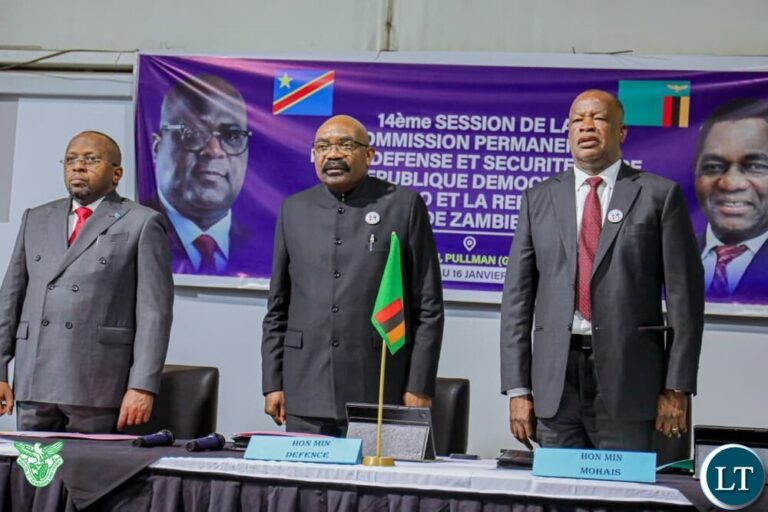
Zambia and the Democratic Republic of Congo have resolved to strengthen security measures along high-risk trucking roads in both countries to guarantee safety for cross-border truck drivers.

This was revealed in a Communique issued and signed by Minister of Defence Ambrose Lufuma, alongside his DRC counterpart, Deputy Prime Minister and Minister of Interior, Security, Decentralisation and Traditional Affairs, Jacquemain Shabani Lukoo at the just ended 14th JPC on Defence and Security in DRC.

The media reports that the move by the Commission aims to ensure the safety of cross-border truck drivers operating in the region, against attacks, and in line with the international norms and regional protocols.

Regarding the facilitation of commerce and trade, the Commission took note of security challenges that the truck drivers face as they transit through the DRC while transporting goods.

The 14th JPC on Defence and Security also noted with concern the continued insecurity in the eastern DRC, reaffirming its support for interventions aimed at resolving the insecurity.

Zambia and the DRC further underscored the need for international trade not to be affected by attacks on truck drivers.

Meanwhile, truck drivers have welcomed the resolution on the safety of truckers, citing the attacks faced when transporting goods in that country.

A Tanzanian truck driver Ali Yousuf expressed sadness at the way foreign truck drivers have been treated as they transit, stressing that it would be a positive move if the agreed enhancement of security is implemented.

While, Nkumbu Sikalangwe, a Zambian truck driver, welcomed the move, noting that it should be adhered to as resolved by the two nations.

Business Without a Business Plan: How Modern Zambian Entrepreneurs Start by Doing, Not Planning

1

By Dr Sidney Kawimbe

In Zambia’s dynamic economic landscape, a new breed of entrepreneurs is emerging, young innovators and small-scale business owners who are building ventures based on action, experimentation, and adapting to real-world demand rather than on elaborate business plans. For decades, the traditional narrative of entrepreneurship emphasised detailed business plans, lengthy documents with projections, market analysis, and financial forecasts. Today, many Zambian entrepreneurs are proving that you do not need a formal business plan to begin creating value and earning income; instead, they are learning in real time, refining their ideas through direct engagement with customers.

Real Markets, Real Learning

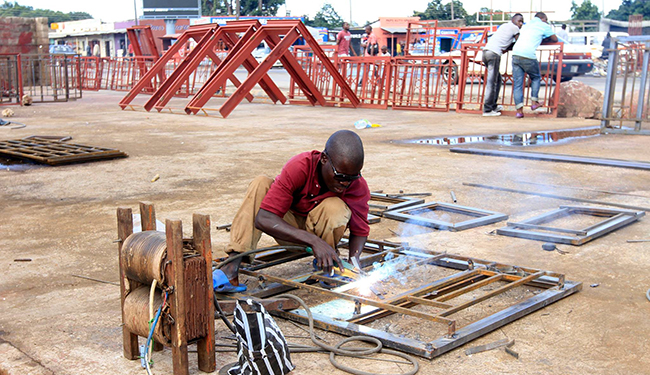
Across Lusaka, Kitwe, Ndola and beyond, numerous small enterprises, from mobile social-media services to agricultural trading, are taking off as founders “learn by doing,” a phrase that reminds the author of his time at Technical and Vocational Teachers’ College Centre (TVTC) during the Tech 61 teaching course, where practical, hands-on learning was strongly emphasized. Many entrepreneurs start with what they have: a skill, a tool, a phone and an Instagram or WhatsApp account. They try selling a service or product, gauge customer response, adjust pricing, and gradually build trust and revenue without a formal plan drafted on paper. This approach mirrors global shifts toward lean entrepreneurship, where the emphasis is on testing a concept, responding to feedback, and refining a product often in iterative, short cycles. Instead of forecasting five years ahead, founders ask: What can we learn this month? Such grounded action is especially relevant in Zambia, where mobile penetration and digital platforms have expanded opportunity for informal and online commerce. Mobile apps and social media, for example, are increasingly used to connect buyers and sellers, facilitate transactions, and promote services, reducing the need for traditional offline setups.

From Informal Hustles to Scalable Ventures

This “start first, plan later” mindset has particular resonance among Zambia’s youth, many of whom face structural barriers to formal business registration and financing. While the government and private sector have made progress in empowering small businesses with initiatives to formalise and support micro, small and medium enterprises (MSMEs) access to finance and market linkages remains a challenge for many without formal documentation. Nevertheless, entrepreneurship is increasingly seen as a viable pathway to employment and income generation. Government figures and experts alike have called on youths to engage in business and agriculture as means of self-employment and job creation, highlighting the potential of local enterprise to drive economic participation.

For many grassroots entrepreneurs, a detailed business plan may come later when they have initial traction, revenue, and a clearer picture of customer demand. Early efforts focus instead on building networks, finding customers, and demonstrating value. Practical experience, rather than hypothetical plans, becomes the foundation for future growth.

Benefits of Starting with Action

There are several advantages to beginning without a formal business plan:
• Lower costs and faster start-up: Without months spent on planning, founders can begin earning sooner.
• Adaptability: Real customer interactions provide immediate feedback that can shape products and services.
• Learning through doing: Entrepreneurs develop practical skills in marketing, pricing, negotiation and customer service simply by engaging in the market.

This model has broadened access to entrepreneurship for segments of the population who may not have formal training or business education but possess strong motivation and creativity.

Balancing Planning and Action

Experts, however, caution that while starting without a business plan can be effective, some level of planning and record-keeping becomes essential as enterprises grow. Managing finances, tracking expenses and planning for sustainability are key skills that can help ventures evolve from informal hustles into mature small businesses that contribute more fully to the economy.

Indeed, Zambia’s broader development agenda recognises the importance of supporting SMEs with training, financing and market access bridging the gap between early action and structured growth.

A Practical Path Forward

In Zambia’s entrepreneurial ecosystem, the story of business without a business plan is not about recklessness. It is about pragmatism: starting with what you have, learning directly from the market, and using real experiences to inform future decisions. By embracing this approach, many Zambians are discovering that entrepreneurship is not an abstract blueprint on paper, but a lived journey shaped by customers, opportunity, and resilience, proving that action can indeed be the first step toward sustainable business success.

The Author is a Senior Lecturer in Business at ZCAS University