Monday, June 15, 2026
22.7 C
Lusaka
Home Blog Page 186

ECZ Demands Apology from Miles Sampa Over Alleged False Claims

2

The Electoral Commission of Zambia (ECZ) has demanded an apology from Matero Member of Parliament Miles Sampa over what it has described as false allegations, warning that failure to do so will result in legal action.

This follows claims circulating on social media and attributed to Mr Sampa, alleging that the Commission had set up a fake polling station along Lilayi Road for the Chawama parliamentary by-election. Mr Sampa is also alleged to have reported the matter to Chilanga Police Station.

However, ECZ Chief Electoral Officer Brown Kasaro has dismissed the allegations as false, misleading, and unfounded.

In a statement, Mr Kasaro clarified that there are 111 gazetted polling stations in Chawama Constituency, two of which are located at Mutason Shopping Centre along Lilayi Road and are operating in tents.

“Members of the public may also wish to know that all the 111 gazetted polling stations opened at 06:00 hours and will close at the official time of 18:00 hours,” Mr Kasaro said.

He added that the Commission found it concerning that such serious allegations could be made by a serving Member of Parliament without verification.

“These allegations were disseminated publicly in a manner that may cause unnecessary alarm, confusion and mistrust among voters and stakeholders,” Mr Kasaro said.

Hauptle Says Copper Queens Face Tough Group at 2026 WAfCON

0
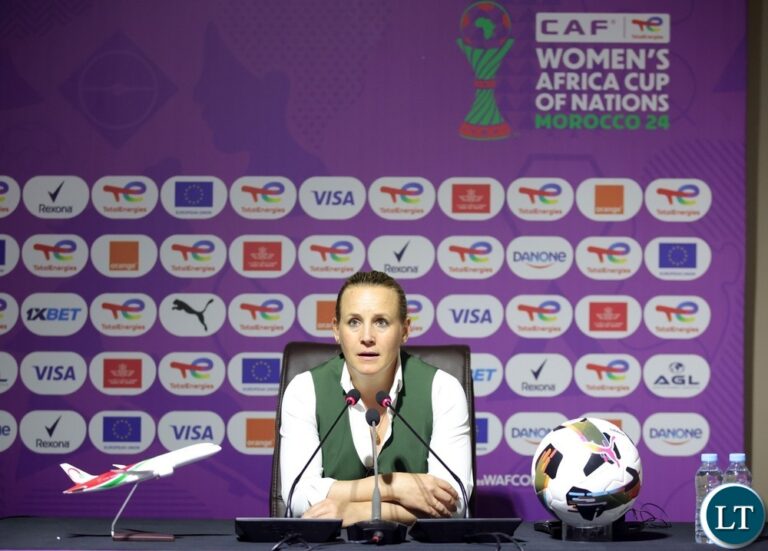
Copper Queens head coach Nora Hauptle has acknowledged that Zambia has been drawn into a difficult group for the 2026 Women’s Africa Cup of Nations (WAfCON), scheduled to kick off in March in Morocco.

Zambia were eliminated at the quarterfinal stage of the previous WAfCON after suffering a 5–0 defeat to Nigeria, a team they are set to face again in the group stage of the upcoming tournament.

Following the draw conducted in Morocco, Zambia were placed in Group C alongside defending champions Nigeria, Egypt, and COSAFA rivals Malawi.

Speaking after witnessing the draw, Hauptle cautioned against underestimating Malawi and described Nigeria as a major challenge due to their status as reigning champions.

“We have a very tough group with Nigeria, the current champion, and we have Malawi also. Don’t underestimate Malawi. I think when we succeed in this group, then we’re going to get very strong in the knockouts,” Hauptle said.

The Swiss coach, who missed Zambia’s last two international friendly matches in Malawi, is expected to return in time to oversee preparations for the continental tournament.

Reflecting on Zambia’s previous encounter with Nigeria, Hauptle said facing the champions earlier in the competition presents a different challenge.

“Last time we lost against Nigeria, the current champions; this time we face them in the group stage. I am happy that we face them a bit earlier. I think it’s to find a good tactical key, and I think when we really survive this strong group, we’re going to get very confident in the knockout stage,” she said.

In Group A, hosts Morocco will compete against Algeria, Senegal, and Kenya. Group B features former champions South Africa, Burkina Faso, Tanzania, and Uganda. Group D includes Ghana, Cameroon, Mali, and Cape Verde.

Public schools urged not to force parents to buy uniforms from schools

1

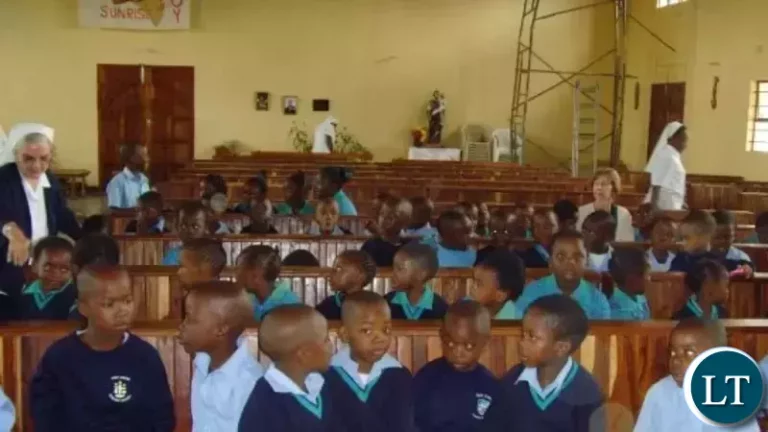
The Ministry of Education has called on all public schools across the country not to force parents to buy uniforms from schools for their children.

Ministry of Education Assistant Director and Head of Communications, Kunda Mando, says the free education policy aims to remove burdens like school fees and other requisites to ensure more access education.

In a statement to the media, Ms Mando stressed that the free education policy ensures that there are no fees, including, examination, feeding or user fees to be charged to parents or pupils, stating that frustrating the policy is detrimental to the government’s vision.

“Ministry of Education gives grants to schools every term to ensure that schools are running sustainably and therefore, government does not expect any teacher, Headteacher or school administration to charge for uniforms or any other school requirements,” she emphasised.

She says school authorities should allow parents to buy uniforms for the children from places where they can afford provided, they follow the correct color and design of the school uniform for that particular school.

Ms Mando has underscored that government’s vision is to see that every child in Zambia has access to free education without any hindrance from school authorities or anyone in society.

Government committed to restore peace in the SADC region

0

Government has reaffirmed its commitment to regional and International efforts in restoring peace and security in the Southern African Development Community-SADC as well as the Great Lakes Region, citing dialogue as a key tool in these efforts.

Minister of Defence Ambrose Lufuma and his Democratic Republic of Congo counterpart, Minister of the Interior, Security, Decentralisation, and Customary Affairs, Jacquemin Shabani Lukoo jointly officially opened the 14th Session of the DRC and Zambia Joint Permanent Commission (JPC) on Defence and Security Ministerial Meeting being held in Lubumbashi.

ZANIS reports that Mr Lufuma noted that it is important that resolutions made by Zambia and the Democratic Republic of Congo following the Joint Permanent Commission Meeting, should be responsive to the security needs of the two nations and the region.

He expressed the need for peace and stability noting that it cannot be over emphasised especially with the growing economic activities between the two countries.

The Minister added that it is important that the two Defence forces from the bilateral nations intensify Joint security operations to neutralise common threats.

Mr Lufuma however emphasised the critical role of the JPC in curbing threats that undermine security in the two countries and beyond.

He further added that both countries should effectively explore various strategies that will positively contribute to the security as well as economic welfare of the two people.

“Our meetings should not be taken as a mere routine but a platform to support meaningful dialogue. We owe this much to our heads of state who have entrusted us with a huge responsibility to safeguard our countries, “he said.

Democratic Republic of Congo, Minister of the Interior, Security, Decentralisation, and Customary Affairs, Jacquemin Shabani Lukoo also highlighted that the DRC and Zambia share a relationship beyond the shared borders, emphasising that the two nations share a common history that binds them together.

Mr Lukoo noted that the JPC meeting will allow for the two countries to put in place security strategic measures in order to address common challenges.

He further paid tribute to the two heads of state of the two countries, President Hakainde Hichilema and his Congolese counterpart, Felix Tshisekedi for their commitment in fostering peace and enhancing bilateral relations.

Ndola High court frees four anti robbery police officers

0

The Ndola High court has acquitted four anti robbery police officers from Mufulira Central Police station who were accused of killing a fellow anti robbery officer.

The four officers, Detective Sergeant Jameson Lundu, Detective Sergeant, Waluka Chilombe, Detective Sergeant Ben Siakalundu and Detective Sergeant Marvin Manda, were accused of killing Nason Simbeye, a police officer who was found dead in his house with bullet wounds and an AK 47 rifle in his hand on 23rd October, 2020 at Sikalangwe Police Camp in Mufulira District on the Copperbelt Province.

The media reports that the four officers were arrested and charged with murder following an inquest into Constable Simbeye’s death in the Mufulira Magistrate’s Court that ruled that the police officer did not die of suicide but was murdered.

But following trial for murder in the Ndola High Court, HigH Court Judge Winnie Mwenda, found the four officers innocent of the charge, citing insufficient evidence that linked them to the crime.

In her judgment yesterday, Justice Mwenda stated that while it was clear that Nason Simbeye was murdered, the prosecution had failed to prove beyond reasonable doubt that it was the four officers who killed him.

She further noted that no fingerprints were taken by police at the crime scene, which weakened the prosecution’s evidence.

Justice Mwenda added that no witness had seen the officers enter the deceased’s house prior to the body being discovered.

She stated that the prosecution had also failed to present proof of the call between Detective Sergeant Lundu and a taxi driver were the officer was alleged to have mentioned that Simbeye had committed suicide before the body was discovered.

Justice Mwenda stated that the evidence presented by the prosecution was circumstantial and witnesses presented before the court relied on hearsay as no recordings and call logs linking the officers to the crime were presented.

She stated that the burden of proof lies on the prosecution, which she said had failed to convince the court beyond reasonable doubt that the four officers killed Simbeye, hence acquitted all four of the charge.

Chitangala calls on women to contest in 2026 general elections

0

Lusaka Mayor, Chilando Chitangala has called on women to take up leadership and contest in the 2026 general elections, in order to have a country where the women’s voices are heard and shape national identity.

Speaking during the national networking event for female civic leaders, Lusaka Mayor, Chilando Chitangala says that women are architects of change, who are responsible for building a future of inclusive governance that inspires young people.

“Leadership is not about titles, it is about impact, it is about leaving a legacy that echoes beyond our tenure,” she said.

The media reports that Ms Chitangala urged the women to utilise the networking event to empower, inspire and equip themselves to drive meaningful change in their communities.

Canadian High Commission, Head of Office, Corry Van Gaal said that women prioritise education, health, and social protection that bring empathy, collaboration, and a deep sense of responsibility to governance.

“In Parliament, women hold 14.9% of seats, these numbers are not just statistics, they represent voices missing from the table, decisions made without the full perspective of society, and opportunities lost for progress,” she said.

Ms Gaal added that her country is proud to partner with Zambia in supporting women in politics, through the Federation of Canadian Municipalities (FCM), that focuses on gender equality and inclusive local governance.

The engagement was organised under the Partnerships for Municipal Innovation – Women in Local Leadership project (PMI-WILL) through the Local Government Association of Zambia (LGAZ).

Mark Simuuwe,Upnd, wake up and smell the coffee

Mark Simuuwe,Upnd, wake up and smell the coffee

By Moses Hakulipa Haalwiindi- UPND

Chawama did not merely elect a Member of Parliament. It exposed, with uncomfortable clarity, where Zambian politics now stand and where they must go.

It is therefore deeply disappointing to see senior UPND figures respond to this moment with triumphal language that borders on arrogance and political amnesia. Mark Sumuuwe’s message — “Congratulations Hon. Bright Nundwe for winning the Chawama Constituency by-election. Congratulations FDD!” — mirrors the tone of the President’s official statement: polite, polished, and strategically dismissive of the real political forces that shaped the result.

The President’s message congratulates FDD and its candidate, applauds UPND, thanks institutions, and speaks broadly about democracy and peace. On the surface, it reads statesmanlike. Politically, it sends a troubling signal. It downplays the Tonse Alliance dynamic and continues to promote the illusion that the Patriotic Front has been politically neutralised.

Truth be told, without PF’s influence, mobilisation, and organisational muscle, the Chawama seat would not have been won by FDD. That is not an insult to FDD. It is political reality. Bright Nundwe is a PF product. His candidature under the FDD ticket was a tactical response to legal obstruction, not a conversion of political identity. Voters understood this clearly. Pretending otherwise insults their intelligence.

PF did not contest this by-election on its own ticket not because it is dead, but because the courts have been turned into political playgrounds. Any PF candidate would have been dragged into endless litigation. So PF adapted, as living political movements always do, and supported a candidate under a different banner. Zambians understood exactly what that meant. They were not voting for a logo. They were voting for a political movement that refuses to disappear simply because documents are contested at the Registrar of Societies.

A political party is not ink on paper. It is people in wards, polling districts, compounds, markets, and churches. In Chawama, PF did not merely survive. It asserted continued relevance.

For UPND figures to posture as if this result represents the burial of PF is therefore reckless. The ruling party has actively meddled in PF internal affairs and extended that interference across the broader opposition space. To now suggest political extinction is to tell Zambians, straight to their faces, that PF is finished. That narrative may comfort party strategists, but it does not align with reality on the ground.

Even the repeated celebration of “peaceful campaigns” demands honesty. The relative calm in Chawama was not the product of superior leadership or a transformed political culture. It was restraint. History shows that during the PF era, UPND often positioned itself as the aggressor, initiating confrontations it could not sustain, frequently to paint PF as violent. From exaggerated gassing claims to amplified narratives of chaos, mudslinging has long been part of the strategy. That approach did not work in Chawama. The response now appears to be denial rather than reflection.

UPND also poured money into this election. Votes were openly courted with gifts. That is a reality of Zambian politics. People accepted those gifts. But when the ballot was cast, arithmetic delivered its verdict. Money was not enough. Those bought were not enough. Even against a fragmented opposition, UPND still lost. Just to Borrow from my Opposition Collegue Brian Matambos write up

That fact alone should trouble anyone who believes political dominance can be purchased.

The deeper story is unavoidable. FDD, backed by PF, secured 8,085 votes. CF obtained 1,534. Independent candidates collectively garnered 894. NCP recorded 319. EPPP had 239. LM secured 100. NDC posted 93. Combined, opposition candidates amassed 11,264 votes. UPND managed 6,542.

This means a fragmented, uncoordinated opposition defeated UPND by 4,722 votes. In percentage terms, over sixty-two percent of participating voters voted against the ruling party. Had the opposition rallied behind a single candidate, this would not have been competitive. It would have been a landslide. Fragmentation did not cost the opposition Chawama. It saved UPND from embarrassment.

Yet even in defeat, another warning emerges. Out of 93,124 registered voters, only 18,096 turned out. More than eighty percent stayed away. That is not apathy. It is political withdrawal. A silent referendum on the circumstances under which this by-election was forced upon the country.

The seat was declared vacant while the Lungu family was still in mourning and while litigation initiated by the Zambian government in South Africa remained unresolved. Many citizens did not view this by-election as a democratic necessity. They saw it as political pursuit. Staying away became protest.

When the ballot box feels partisan, democracy loses participation.

Chawama has therefore delivered more than a result. It has delivered a warning. UPND has lost a seat. More dangerously, it has lost moral ground in an urban constituency. FDD has won a seat, but within a protest environment that speaks more about resistance than celebration.

Now comes the 2026 reality check. UPND enters the election cycle with Southern Province effectively secured a head start of over one million votes. That is not speculation. It is arithmetic. The opposition begins already trailing.

Such a deficit is not overcome with pride. Not with parallel egos. Not with multiple candidates. It is overcome with unity.

Chawama has shown the formula. A fragmented opposition still defeated UPND. A united opposition would have crushed it.

This is why the roles played by Given Lubinda, Miles Sampa, Lawrence Sichalwe, and Chishimba Kambwili matter. They did not lead with slogans. They led with organisation. They went into the ground. They understood the voter. And they delivered a result. Once again, PF demonstrated it still possesses political heavyweights who know how to win elections, not debates.

Their leadership was not symbolic. It was effective. That reality must now force a national conversation — not about who is bigger, not about entitlement, but about what Zambia needs.

Chawama has made one thing painfully clear: UPND cannot defeat the opposition. Only the opposition can defeat itself. If it continues to do so, 2026 will belong to UPND by default not because UPND is invincible, but because its opponents refused to unite.

But if the lesson of Chawama is taken seriously, if egos are subordinated to strategy and ambition disciplined by purpose, then 2026 is not a dream. It is achievable.

Chawama has written the opening paragraph.
The rest is now up to us.

A message from the home of Edgar Chagwa Lungu in Chawama

3

A message from the home of Edgar Chagwa Lungu in Chawama

By Brian Matambo | Chawama, Lusaka

Chawama did not just elect a Member of Parliament. It exposed, with uncomfortable clarity, where Zambian politics now stand and where they must go.

To start with, the Patriotic Front did not contest this by-election on its own ticket not because PF is dead, but because the courts have been turned into political playground. Any PF candidate would have been dragged into court endlessly. So, PF did what living political movements have always done in history. It adapted and supported a candidate on the FDD ticket. And the voters understood exactly what that meant. They were not voting for a logo. They were voting for a political movement that refuses to disappear simply because documents are contested at the Registrar of Societies.

A political party is not ink on paper. It is people in wards, polling districts, compounds, markets and churches. PF did not only survive in Chawama, but it has asserted its continued relevance.

UPND poured money into this election. They tried to buy votes. But the people in Chawama remembered the song by the Great Dandy Crazy, MHSRIEP, Donchi Kubeba. So people accepted the gifts. That is the reality of politics in our nation. But when the ballot was finally cast, the arithmetic delivered its verdict. The money was not enough. Those who were bought were not enough. Even against a fragmented opposition, UPND still lost.

That alone should trouble anyone who believes political dominance can be purchased.

The results make the deeper story unavoidable. FDD, backed by PF, obtained 8,085 votes. CF secured 1,534. Independent candidates together collected 894. NCP added 319. EPPP contributed 239. LM had 100. NDC recorded 93. When these opposition votes are placed together, they total 11,264. UPND managed 6,542.

This means the opposition, fragmented and uncoordinated, defeated UPND by 4,722 votes. In percentage terms, more than sixty-two percent of the participating electorate voted against UPND. If the opposition had worked together behind one candidate, this would not have been a competitive election. It would have been a landslide. The margin would not have been symbolic. It would have been humiliating.

Fragmentation did not cost the opposition this seat. It saved UPND from embarrassment.

And yet, even in victory, the numbers are sobering. Out of 93,124 registered voters, only 18,096 participated. More than 80% of registered voters stayed away. That is not indifference. That is political withdrawal. It is a silent referendum on the circumstances under which this by-election was forced upon the nation.

This seat was declared vacant while the Lungu family was still in mourning, and while litigation initiated by the Zambian government in South Africa remained unresolved. Many citizens did not see this by-election as a democratic necessity. They saw it as a continuation of political pursuit. Staying away became, for many, a form of protest.

The ballot box did not feel neutral. And democracy, when it feels partisan, loses participation.

What Chawama has therefore delivered is not just a result, but a warning. UPND has lost a seat. But more dangerously, it has lost moral ground in an urban constituency. FDD has won a seat, but inside a protest environment that speaks more about resistance than celebration.

And now we must face the 2026 question honestly. UPND enters 2026 with Southern Province effectively secured. That is a starting advantage of over one million votes. That is not a theory. It is arithmetic. The opposition begins the race already trailing.

You do not defeat such a headstart with pride. You do not defeat it with parallel egos. You do not defeat it with multiple candidates. You defeat it with unity.

Chawama has shown us the formula. A fragmented opposition still defeated UPND. A united opposition would have crushed it.

This is why the roles played by Given Lubinda, Miles Sampa, Lawrence Sichalwe and Chishimba Kambwili in Chawama matter. These men did not lead with speeches. They led with organisation. They went into the ground. They understood the voter. And they delivered a result. Once again, they demonstrated that PF still possesses political heavyweights who know how to win elections, not debates.

Their leadership in Chawama was not symbolic. It was effective. That reality should now force a national conversation among opposition leaders, supporters and strategists. Not about who is bigger. Not about who deserves what. But about what Zambia needs.

Chawama has made something painfully clear. UPND cannot beat the opposition. Only the opposition can beat itself. And if it continues to do so, 2026 will belong to UPND by default. Not because UPND is invincible, but because its opponents refused to unite.

But if the lesson of Chawama is taken seriously, if egos are subordinated to strategy, if ambition is disciplined by purpose, then 2026 is not a dream. It is a reachable outcome.

Chawama has already written the opening paragraph of that story. The rest is now up to us.
Arts industry vital for economic diversification

1

Ministry of Youth, Sport and Arts Director Arts, Esther Ng’ambi, says the arts sector can effectively diversify the economy.

Ms Ng’ambi adds that Zambia can leverage arts as an alternative to traditional economic sectors like manufacturing, agriculture and mining.

In an interview with the media in Lusaka, Ms Ng’ambi noted that in line with the Eighth National Development Plan which stresses the diversification of the country, arts can generate vital revenue for the country.

She further indicated that the creative nature of arts, if well nurtured, can contribute significantly to the Gross Domestic Product (GDP).

Ms Ng’ambi stated that the Ministry has been very intentional with its strategy including interventions such as the creation of a National Arts Policy.

She also observed that the establishment of the policy has ushered the way for legislation to be reviewed namely the National Arts Council (NAC) Act and the Theatres and Cinematograph Exhibition Act, which the government has concluded drafting.

And, Ms Ng’ambi cited the creation of Provincial Development Arts Offices in the country, as one of the strategies the ministry has come up with to help the arts sector contribute significantly to the economy.

She said the improvement of the welfare of artists is one of the ways that can contribute to improving artistry in the country, adding that Provincial Development Arts Offices will play a critical role in pushing the agenda.

“It is very important for us to create the provincial offices so that all the activities within the provinces should be able to be coordinated in terms of capacity building, skills development, access to social security and micro credit which then ensures that the welfare of the artist is well taken care of,” Ms Ng’ambi said.

Litunga Opens HealthNest Medical Centre in Mongu

0

His Majesty the Litunga, through his representative the Right Honourable Ngambela, has officially opened HealthNest Medical Centre in Mongu, marking a significant step in expanding access to healthcare services in Western Province.

The official opening ceremony was attended by Western Province Minister Hon. Kapelwa Mbangweta, MP, Deputy Permanent Secretary Richard Mulwanda, senior government officials, traditional leaders, and other invited guests.

Speaking on behalf of the Litunga, the Right Honourable Ngambela said the Barotse Royal Establishment (BRE) supports initiatives aimed at bringing quality healthcare closer to the people. He described the establishment of HealthNest Medical Centre as a timely investment that is expected to improve the wellbeing of communities across Western Province. He emphasized that access to healthcare is essential to the dignity, productivity, and prosperity of both the Province and the country.

In his welcoming remarks, Hon. Mbangweta described the new facility as a symbol of hope, progress, and renewed commitment to improving healthcare delivery in the Province. He reaffirmed Government’s dedication to strengthening the national health system, expanding access to quality and affordable healthcare, and improving health outcomes for all citizens, including those in rural and hard-to-reach areas.

The Minister said the New Dawn Administration under President Hakainde Hichilema believes that good health is a fundamental right and not a privilege. He noted that Government alone cannot meet all healthcare demands, underscoring the importance of strong public-private partnerships.

Hon. Mbangweta commended the private sector, particularly HealthNest Medical Centre, for complementing public health services, easing pressure on government hospitals, and increasing access to quality healthcare.

HealthNest Medical Centre Director Dr. Herbert Chipoya expressed gratitude to Government and traditional leadership for their support, stating that the facility is committed to providing affordable, quality, and patient-centred healthcare services to the people of Western Province. The centre has created more than 40 direct and indirect jobs in the Province.

President Hichilema Congratulates FDD on Chawama By-Election Victory

10

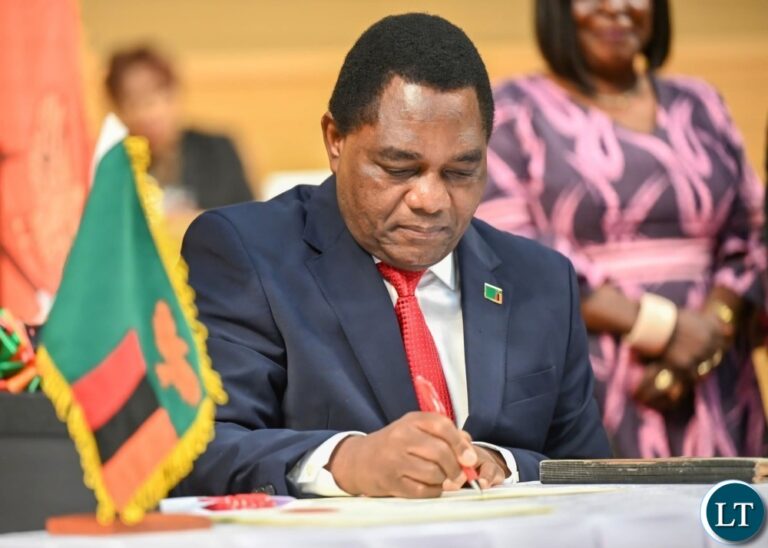
President Hakainde Hichilema has congratulated the Forum for Democracy and Development and its candidate Bright Nundwe following his victory in the Chawama Constituency parliamentary by-election, describing the poll as a reaffirmation of democratic practice and peaceful political competition.

In a statement released after the declaration of results, President Hichilema said the closely contested election had produced a single winner, as required in any democracy, while serving a broader purpose of reinforcing harmony, peace, and unity among citizens. He commended all participating political parties and candidates, including the ruling United Party for National Development, and paid tribute to voters in Chawama Constituency for their role in ensuring an orderly and credible electoral process.

“The collective commitment of the people of Chawama ensured that the democratic process functioned as it should,” the President stated. He also praised the Electoral Commission of Zambia and law enforcement agencies for conducting what he described as a transparent, orderly, and secure election, noting that their conduct created conditions in which the will of the electorate could be freely expressed.

While the official message focused on acceptance of the outcome and national cohesion, the by-election has also generated political debate following the absence of President Hichilema and Vice-President Mutale Nalumango from campaign activities in the constituency. Commentators and political activists have questioned whether the decision to stay away reflected internal assessments of voter sentiment in Chawama.

Some critics have linked the mood of the electorate to unresolved national controversies involving the family of the late former president Edgar Lungu, including the continued non-burial of his remains, legal proceedings involving his widow, and the declaration of the parliamentary seat previously held by his daughter as vacant while funeral matters were still pending. These issues have been cited by commentators as sources of anger among sections of the Chawama community.

Calls have also been made by some political figures for the government to reconsider ongoing court cases involving the former first family, with appeals framed around reconciliation and respect for cultural practices. Government officials have not issued a response to these demands in the context of the by-election.

The Chawama result confirms Bright Nundwe as the duly elected Member of Parliament under the FDD, marking a notable political outcome in the constituency. As reactions continue to unfold, the President’s statement remains the only official position from State House on the vote, emphasizing institutional credibility, peaceful participation, and unity after the polls.

Where Are the 3,000 Defectors Now as the Ballot Exposes the Lie

2

Where Are the 3,000 Defectors Now as the Ballot Exposes the Lie

By Dr. Mwelwa

Chawama has delivered a result that deserves respect, not spin. It is not merely a victory for Bright Nundwe. It stands as a blunt rebuke to the illusion that political loyalty can be bought, borrowed, or brokered like a commodity.

For months, Zambia’s political airwaves crackled with triumphant claims of mass defections. We were told, repeatedly and loudly, that 3,000 supporters had abandoned their former allegiances to join the ruling fold. Headlines paraded these shifts as proof of inevitable dominance. Photographs showed handshakes, staged rallies, and smiling faces draped in new party regalia. Social media filled with self-appointed “ground generals” declaring Chawama already conquered.

When the ballot boxes opened, the noise fell silent. The much-vaunted army of defectors did not materialise at the polls. Where was Innocent Kalimanshi, the celebrated “born-again” political convert, when votes were cast? Where were the vocal campaigners who promised to deliver the township like a packaged gift? Their absence on election day spoke louder than any rally ever could.

Chawama has laid bare a fundamental truth: movement is not mandate. You can orchestrate a defection, but you cannot engineer conviction. A crowd can be hired for an afternoon, but a conscience walks alone into the voting booth. The voter’s heart is not a transactional receipt. It is a ledger of memory, pain, and trust earned over time, not purchased in moments of desperation or inducement.

This outcome carries another sobering message. It happened without the machinery of big-name kingmakers. Hon. Given Lubinda’s well-oiled political apparatus was not the decisive force here. Instead, ordinary residents, quiet, watchful, and weary of empty theatrics, stepped forward and spoke through their ballots. Their choice was not swayed by celebrity endorsements or viral hashtags, but by who listened, who showed up consistently, and who understood that politics is not performance, it is presence.

The opposition’s song, many had declared, was fading. In Chawama, it found a new chorus, not of politicians, but of people. That distinction matters. When citizens decide, they do not consult trending topics. They consult their lived reality. In that reality, promises unkept weigh heavier than slogans shouted from podiums.

The UPND would do well to internalise this lesson. Defections are not votes. A rally is not a referendum. A photo opportunity is not a mandate. Zambia is not a passive audience awaiting direction. It is a nation of discerning citizens who reserve the final say for the privacy of the polling station.

There is an old African saying: a goat may follow you for salt, but it returns home for grass. Many switch parties not out of belief, but because of pressure, hunger, fear, or short-term gain. When alone behind the screen, they remember who stood with them during hardship, and who only appeared when victory seemed assured.

Chawama reminds us that politics, at its core, is spiritual. It is about belief. Belief cannot be bought like fertiliser or rented like sound systems. It is cultivated through humility, consistency, and truth.

Those who celebrate too early often weep in silence later. Governments can recruit faces, but only the people can give a heart. No amount of orchestrated defections can substitute for the quiet, unshakeable loyalty that comes when leaders earn, rather than extract, trust.

The ballot has spoken. The lie has been exposed. The question now is whether those in power will listen, or keep counting ghosts.

Bright Nundwe Scoops Chawama Seat in High-Stakes By-Election

Bright Nundwe Scoops Chawama Seat in High-Stakes By-Election

Forum for Democracy and Development (FDD) candidate Bright Nundwe, a former Patriotic Front official who once served as Copperbelt Provincial Secretary, has scooped the Chawama parliamentary seat after securing a clear victory in the January 15, 2026 by-election, according to official results declared by the Electoral Commission of Zambia.

Nundwe contested the election under the FDD banner, which is part of the Tonse Alliance led by Given Lubinda, a faction that remains separate from and unrecognised by the rival Tonse grouping associated with Danny Pule. The configuration gave the race added political meaning beyond party labels.

Nundwe polled 8,085 votes, defeating his closest rival, ruling party candidate Morgan Muunda, who obtained 6,542 votes, in a contest that attracted national attention due to the constituency’s political symbolism and history. The 1,543-vote margin confirmed a decisive outcome in one of Lusaka’s most closely watched parliamentary races.

The Chawama seat became vacant after Speaker of the National Assembly Nelly Mutti declared it open following the prolonged absence of then area Member of Parliament Tasila Lungu, who was mourning her late father, former president Edgar Lungu. The by-election drew interest far beyond the constituency not only because of Chawama’s historical association with the former head of state, but also due to the circumstances under which the vacancy arose. The seat was declared vacant while funeral arrangements and burial issues relating to Edgar Lungu remained unresolved, a period during which Tasila Lungu was absent from Parliament under conditions many regarded as exceptional rather than willful. The declaration followed earlier indications by the Speaker that Tasila would be permitted to resume parliamentary duties a few days after the burial and funeral proceedings. The subsequent reversal of that position, culminating in the vacancy declaration, was received with unease in some quarters and generated public debate, with critics questioning the consistency and impartiality of the decision. That broader controversy continues to attract scrutiny and remains a subject for separate examination.

A total of nine candidates successfully filed nominations and appeared on the ballot. These included Bright Nundwe of the FDD, Morgan Muunda of the ruling party, Davison Mulenga of Citizens First, Ntazana Musukuma of the Leadership Movement, Mohammad Mutete of the New Congress Party, and James Phiri of the National Democratic Congress. Independent candidates Alfred Mageza, George Mwenya, and Elijah Siatwaambo also contested the seat, contributing to a competitive and fragmented race.

Official results show that Davison Mulenga placed third with 1,534 votes, followed by independent candidate George Mwenya with 466 votes and Elijah Siatwaambo with 428 votes. Mohammad Mutete of the New Congress Party received 319 votes, Alfred Ndiweni of the Exodus Party for Peace and Prosperity polled 239 votes, Ntazana Musukuma obtained 100 votes, while James Phiri of the National Democratic Congress received 93 votes.

The Electoral Commission recorded a total of 18,096 valid votes cast, with 290 ballot papers rejected as invalid.

Polling day passed in a generally calm and orderly manner across the constituency. Voting proceeded without major reports of violence, injuries, or disruptions, marking a departure from earlier by-elections in Chawama that had been characterised by clashes and instability. Electoral officials and security personnel maintained order at polling stations, allowing voters to cast their ballots without interruption.

Campaign activity in the weeks leading up to polling day was vigorous. Parties held meetings, roadshows, and door-to-door mobilisation efforts, with the ruling party mounting a visible campaign across the constituency. Opposition actors framed the race as an opportunity for voters to assert independence and influence broader political calculations ahead of the general elections.

Vote counting showed Nundwe building a consistent lead across several polling stations, a pattern that held through the final tally. His performance in key parts of the constituency proved sufficient to secure victory in a field where votes were spread across multiple parties and independent candidates.

Reports of campaign inducements and heavy mobilisation circulated during the campaign period. The official results, however, indicated that such factors did not guarantee electoral success. The final tally suggested that voters exercised independent judgment inside the polling booth, separating campaign conduct from electoral choice.

The result has renewed attention on the role of opposition-aligned candidates in urban constituencies. Chawama’s outcome demonstrated that competitive results remain possible even where ruling party visibility is strong and political symbolism runs deep.

The Electoral Commission of Zambia was credited for administering the poll without major incident. Security agencies maintained order without reports of excessive force or interference. While broader debates around political space continue, the by-election itself concluded in an orderly and controlled manner.

With the seat now decided, the Chawama result is expected to influence political strategy ahead of the August general elections, particularly in Lusaka constituencies where turnout, voter engagement, and candidate appeal remain decisive.

Concerns were also raised during the polling period over the conduct of some ruling party cadres, with complaints that incidents of intimidation and disorder were recorded in parts of the constituency. The conduct prompted questions among sections of the electorate about whether attempts were made to influence the outcome through pressure rather than persuasion. Another notable aspect of the by-election was voter turnout, which appeared subdued in some areas. Some residents attributed this to fear and anxiety linked to the tense political environment in parts of Chawama, despite the generally peaceful conduct of polling day itself.

The result has been described by some as a reminder that the will of the people can still prevail even in conditions viewed as uneven, where opposition parties operate under limitations and are not fully independent. The outcome presents food for thought for the ruling party, demonstrating that electoral outcomes remain subject to voter choice regardless of resource advantage or political pressure.

On the opposition side, the Chawama outcome has reignited calls for unity of purpose. Official results show that while the ruling party candidate polled 6,542 votes, the combined total of votes cast for opposition parties and independent candidates stood at 11,264 votes. These included 8,085 votes for Bright Nundwe (FDD), 1,534 for Davison Mulenga (Citizens First), 466 for George Mwenya (Independent), 428 for Elijah Siatwaambo (Independent), 319 for Mohammad Mutete (New Congress Party), 239 for Alfred Ndiweni (EPPP), 100 for Ntazana Musukuma (Leadership Movement), and 93 for James Phiri (NDC). The figures have strengthened arguments that, if embraced and consolidated behind a single opposition vehicle, future electoral contests, including the 2026 general elections, could present a markedly different outcome.

BREAKING: FDD MAINTAINS EARLY LEAD IN CHAWAMA AS COUNTING CONTINUES AMID TENSION

5

BREAKING: FDD MAINTAINS EARLY LEAD IN CHAWAMA AS COUNTING CONTINUES AMID TENSION

Preliminary consolidated results from 30 polling stations in the Chawama parliamentary by-election show a tight and evolving contest, with the Forum for Democracy and Development (FDD) holding an early lead as vote counting proceeds.

Figures available so far place the FDD at 1,942 votes, followed by the United Party for National Development (UPND) with 1,507 votes. Citizens First (CF) has recorded 364 votes. Independent candidates have so far polled modest numbers, with George on 133 votes and Elijah Siatwambo on 93 votes. The Exodus Party for Peace and Prosperity (EPPP) has 91 votes, the New Congress Party (NCP) 75 votes, the Leadership Movement (LM) 21 votes, and the National Democratic Congress (NDC) 17 votes.

A total of 75 ballots have been rejected, bringing the total votes cast so far to 4,318.

Meanwhile, unconfirmed reports emerging from Chawama suggest heightened tension at the tallying centre. According to accounts circulating among monitors and party supporters, electricity supply was allegedly interrupted, reportedly involving ZESCO, while police officers were said to have used teargas to disperse members of the public and some party agents who were monitoring the counting process.

The same unverified reports allege that people were forced to leave the tallying area, with accusations being levelled by some observers that the developments were intended to influence the outcome of the vote. These claims have not been independently confirmed, and no official statement had been issued by either Zambia Police Service or electoral authorities at the time of reporting.

Election officials have maintained that the results announced so far remain preliminary and subject to change as more polling stations submit their official returns and verification is completed. Observers continue to monitor the situation closely as counting continues, with further details expected as events unfold.

Government Releases K760 Million for term one school grants

0

Government has released K760 million to all public and grant-aided schools to support the implementation of the free education policy for Term One of 2026.

According to a statement issued to the media

by Ministry of Education Principal Public Relations Officer, Clive Kalunga says that the funds will be directed towards the supporting of classrooms, teaching and learning resources, and equitable access to quality education, particularly for disadvantaged communities.

Mr Kalunga added that the Ministry will maintain vigilant oversight to ensure efficient, transparent and accountable use of resources, tracking expenditure to sustain improved learning conditions.

He stated that the release demonstrates the government’s commitment to strengthen education financing and ensure uninterrupted education services under President Hakainde Hichilema’s leadership.

“This commitment aligns with our national priority of delivering a high-quality education and empowering every child to reach their full potential,” Mr Kalunga said.

He reaffirmed the Ministry’s dedication to delivering the free education policy, sustaining learning outcomes and promoting equitable access.