Thursday, June 11, 2026
23.5 C
Lusaka
Home Blog Page 187

Mutati says President Hichilema deserves second term

1

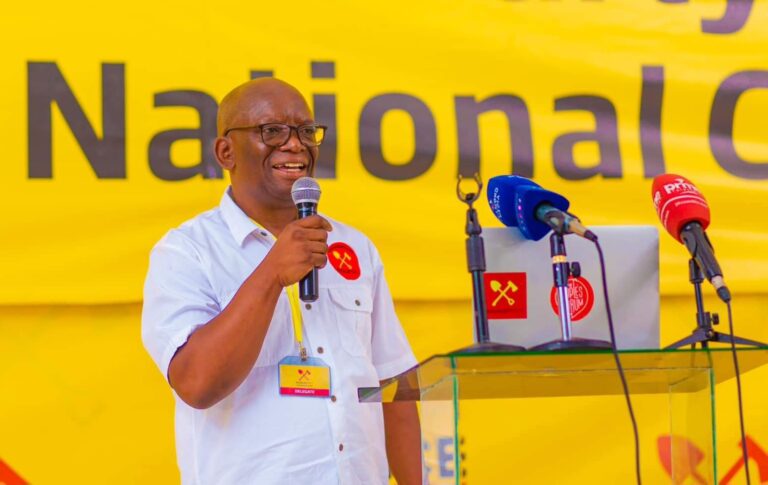
United Party for National Development (UPND) Alliance Council of Presidents member Felix Mutati says President Hakainde Hichilema deserves a second term in office.

“The entire international community is commending President Hakainde Hichilema for stabilising Zambia’s economy. Are you sure you can remove such a man doing so much work for the country?” Mr Mutati said.

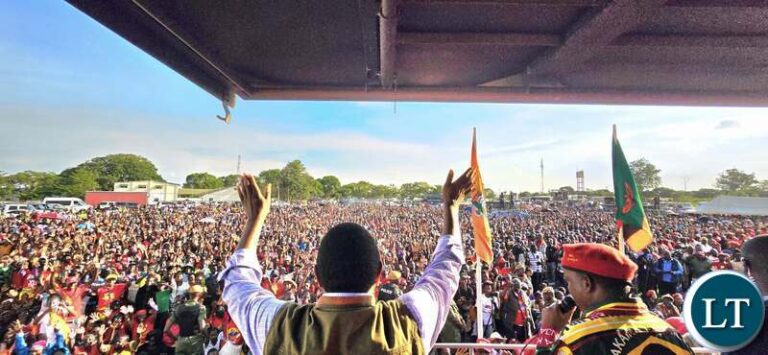
He was speaking yesterday when he led alliance members, including the Party of National Unity and Progress (PNUP) and the Republican Progressive Party (RPP), to campaign for UPND Chawama parliamentary candidate Morgan Muunda ahead of Thursday’s by-election.

Mr Mutati, who is also Movement for Democratic Change (MDC) president, urged Chawama residents to vote for Mr Muunda, stating that this would help ensure development in the constituency.

He further disclosed that four communication towers will be installed in the area before the end of the year to improve network connectivity.

Meanwhile, PNUP president Highvie Hamududu expressed confidence that President Hichilema would win the 2026 general elections. He urged Zambians to support the UPND, saying the country should not reverse the progress made so far.

Four die in road accident on Chirundu–Kafue road

0

FOUR people have died in a road traffic accident that occurred on January 11, 2026, along the Chirundu–Kafue road in the Kapiringozi area.

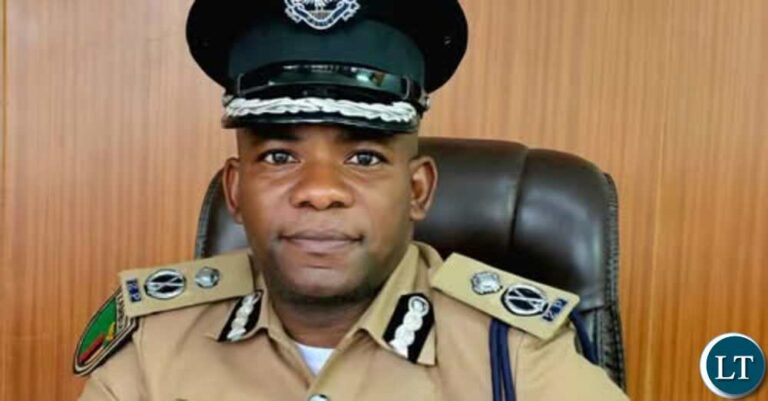
Police spokesperson Godfrey Chilabi said the accident involved an Iveco truck, registration number AJC 386, which was transporting building materials and was travelling towards Chirundu. The vehicle was being driven by Emmanuel Shanyinde, aged 45, of Chipata Compound in Lusaka.

Mr Chilabi said the driver had three male passengers on board. One of the passengers has been identified as Emmanuel Kasweka, aged 43, of the SOS area in Lusaka, while the other two passengers are yet to be identified but are believed to be aged between 28 and 35.

According to police, the accident occurred after the driver failed to negotiate a curve due to excessive speed, causing the vehicle to leave the road, enter a ditch and overturn.

“The driver and all three passengers sustained fatal injuries and died on the spot,” Mr Chilabi said.

He said the bodies of the deceased have been deposited at Mtendere Mission Hospital mortuary for identification and post-mortem examinations.

Mr Chilabi added that investigations into the accident are ongoing and urged motorists to observe road traffic regulations, particularly speed limits, to prevent road accidents.

Former PF member Innocent Kalimanshi joins UPND

4

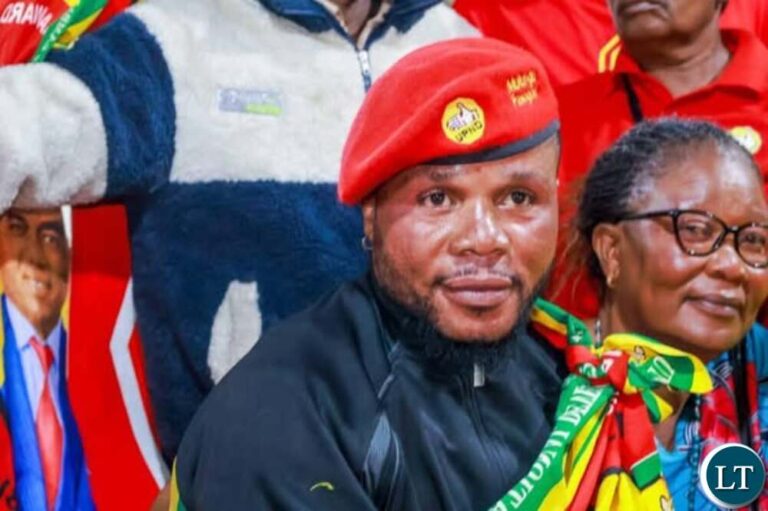
Former Patriotic Front (PF) member Innocent Kalimanshi, also known as AMA Amelicans, has defected from the opposition PF to the ruling United Party for National Development (UPND).

Kalimanshi has previously been associated with political mobilisation activities within the PF, including involvement during the party’s 2014 extraordinary conference that led to the adoption of Edgar Lungu as PF president.

Speaking after being received into the UPND, Kalimanshi told party officials, including Secretary General Batuke Imenda and National Youth Chairperson Gilbert Liswaniso, that more PF members were expected to join the ruling party. He stated that some members would remain in the PF, while others would defect in due course.

Kalimanshi also apologised for what he described as having misled citizens during the period the PF was in government. He further called on young people to support President Hakainde Hichilema, citing employment opportunities ahead of the August 13 general election.

Meanwhile, the UPND announced that about 3,000 opposition members have defected to the party in preparation for the forthcoming Chawama parliamentary by-election.

Socialist Party cites People’s Pact option if Tonse alliance falters

5

Socialist Party cites People’s Pact option if Tonse alliance falters

The Socialist Party has stated that the People’s Pact remains a viable political option should the Tonse Alliance fail to resolve its internal leadership and organisational difficulties, signalling continued uncertainty within Zambia’s opposition landscape ahead of the 2026 general elections.

Socialist Party general secretary Dr Cosmas Musumali said the People’s Pact was established to provide an organised platform for cooperation among opposition parties and would remain available if existing alliance arrangements continued to face instability. He said prolonged internal disputes within major opposition formations risked weakening collective efforts to provide a credible alternative to the ruling party.

The comments come against the backdrop of persistent leadership challenges within the Patriotic Front and broader strains inside the Tonse Alliance, which was formed as a coalition of opposition parties seeking to coordinate electoral strategy. While the alliance played a central role in recent political cycles, it has faced structural and organisational pressures following changes in leadership dynamics.

Dr Musumali said the Socialist Party had previously engaged with Tonse Alliance partners in the interest of opposition cooperation, but warned that unity could not be sustained indefinitely without clarity, discipline, and functional structures. He said alliances that remain preoccupied with internal disputes risk losing relevance and momentum.

According to Dr Musumali, the People’s Pact was conceived as a pragmatic arrangement designed to accommodate parties committed to cooperation based on shared principles rather than personalities. He said the framework allowed participating parties to retain their identities while working toward common objectives, particularly during elections.

He said continued uncertainty within Tonse had raised questions about whether the alliance could effectively reposition itself as a cohesive force. Dr Musumali noted that opposition supporters were increasingly expressing frustration with what they viewed as stagnation caused by unresolved leadership issues.

The Socialist Party official said the opposition’s challenge was not simply to oppose the ruling party but to demonstrate organisational maturity and readiness to govern. He said this required consistent messaging, policy clarity, and internal stability across opposition platforms.

Dr Musumali also reflected on the historical context surrounding opposition alliances in Zambia, noting that coalitions often struggle when they rely heavily on individual figures rather than institutions. He said alliances needed clear rules and predictable processes to survive leadership transitions.

He said the People’s Pact was not being promoted as a rival project but as a contingency mechanism designed to ensure that opposition cooperation does not collapse entirely if Tonse fails to regain stability. He said such arrangements were necessary to avoid fragmentation of the opposition vote.

Dr Musumali emphasised that the Socialist Party remained open to cooperation with other political formations, provided such cooperation was grounded in transparency and mutual respect. He said alliances should serve the interests of voters rather than internal power struggles.

The statement also highlights wider concerns about opposition preparedness as the 2026 elections draw closer. Analysts have pointed to the risk that prolonged internal disagreements could erode public confidence in opposition parties’ ability to offer effective governance alternatives.

While the ruling party continues to consolidate its position, opposition formations face pressure to demonstrate unity and organisational coherence. Dr Musumali said failure to address internal weaknesses would leave opposition parties vulnerable, regardless of popular dissatisfaction with government performance.

He said the Socialist Party’s position was guided by the need to maintain political relevance and to provide voters with clear choices. He said uncertainty within major alliances required smaller parties to assess their strategic options carefully.

The People’s Pact, he said, remained available as one such option, should circumstances require a shift in opposition cooperation arrangements.

Bally’s Choma remarks taken out of context; looking at the bigger picture……

12

During his mammoth rally in Choma the other week as he winded-up his end of year vacation at one of his ranches, President Hichilema reminded the people of Southern province how they used to be victims of physical and verbal abuse at the hands of PF thugs every time they arrived at the Intercity Bus Terminals in the nation’s capital.

It seems this message hasn’t settled down well with certain sections of our society. They’ve since weighed in with their own versions and interpretations of what the President really meant. After carefully dissecting and examining the same with the precision of a Surgeon’s knife, of course, we can safely conclude the head of state was quoted out of context.

For instance, seasoned broadcaster, Frank Mutubila, observes that the President’s remarks regarding Southern Province and claims of victimization were quite concerning.

“Southern Province is a rich mosaic of diverse ethnic groups, and the suggestion of a systematic and targeted approach to identifying and harming individuals based on provincial affiliation is both questionable and deeply divisive,” states Mutubila.

On the other hand, avid social media commentator, Laura Miti encourages Tongas to consider urging politicians to stop dragging them into their battles while a few others are accusing the President of making divisive remarks contrary to the spirit of our One Zambia, One Nation motto.

What do we make of this?

We are at pains to fathom the reasoning of some of our senior citizens such as Mitubila; perhaps his lofty position as Zambia’s Ambassador to Italy which the PF administration had rewarded him with totally blinded folded him from the reality on the ground. Belonging to the opposition during the days of PF was a risky undertaking – retired in national interest if you were a civil servant, hounded out of trading spaces and bus stations, hunted down for belonging to the opposition and denied development and government jobs!

To put it into the words of prolific writer Farai Ruvanyathi, “few honest observers can deny that Intercity Bus Station degenerated into a veritable war zone during the Patriotic Front era. That violence did not remain confined to Intercity; it metastasised into markets, other bus stations, churches, radio stations and, in some cases, even graveyards!”

For instance, our attention has just been drawn to an old video currently making the rounds on social media. A woman is seen being violently extracted from her office by masked PF thugs led by one Charles Kakula, a notorious criminal running away from justice by hibernating in Europe. She’s hauled before a befuddled senior government official in the then Ministry of Works and Supply, demanding that she’s fired immediately!

They label her a UPND cadre and accuse her of frustrating the work of government. She vehemently denies belonging to any political party in her Tonga accent but to no avail.

“Madam Shane is a UPND cadre hellbent on frustrating the work of government,” the PF thugs declare. “We shall ensure that we douse her in petrol and burn her to ashes should we find her anywhere near the government offices!”

This is a perfect example of what the President was referring to! What the opposition, and particularly the people of Southern province went through was quite traumatic and horrific; no one in their right frame of mind should dare deny the same!

To put it in a proper context, supporters of UPND…..or anyone seen cladding whatever red apparel (including Arsenal and Manchester United jerseys or Airtel brand T.shirts) were pursued vigorously, undressed and in most cases beaten to pulp! Worse still, if a person was heard speaking Tonga and even committed a grave mistake of putting on red attire – official colours of UPND, they were handed double punishment!

At Intercity for instance, an elderly woman arrived from Mongu in UPND regalia before the 2021 general elections…..she was ruthlessly stripped and left in her birthday suit save for some Good Samaritans who covered her up in sarongs! Such occurrences are in the public domain and we shall soon be documenting them for posterity’s sake.

As opposed to choosing to sticking our heads in the skies above and deliberately seeking to misinterpret or contort facts, we should be doing an introspection as a nation and ensuring that such evil practices don’t ever rear up their ugly heads again in this so-called Christian nation where double standards seem to be the norm!

Mulekutika?

Prince Bill M. Kaping’a
National Coordinator
HH Mpaka 2031!

Nkana overcomes Zesco Utd

0

Nkana FCNkana edged Zesco United 2-1 at home in Kitwe on Sunday to jump out of the Super League bottom four. 

‎It was a perfect New Year present Kalampa gifted the passionate supporters at Nkana Stadium in their first match of 2026. 

‎Zesco gave up an early lead in Wusakile to end on the losing side as rainfall failed to disturb the round 15 match of the top league season 2025/26. 

‎Ex-Nkana star Kelvin Kampamba had handed Zesco an 11th-minute lead with a stunning long-range effort that left keeper Patrick Chooma stranded in goal.

‎Zesco thought they were heading to the break with a lead when Nkana striker Idris Mbombo equalized via the last kick of stoppage time. 

‎Nkana dominated the second half and scored the winning goal through forward Jacob Ngulube from inside the box after 82 minutes. 

‎The Kitwe team’s second victory so far in the season saw them rise to 14th with 13 points in 15 matches. 

‎Nkana are now unbeaten in five straight matches. 

‎Meanwhile, Zesco stayed eighth on the table with 19 points in 15 matches played. 

‎This was Zesco’s sixth loss of the season. 

‎(Picture by Nkana FC Media)

SA Group Appeals to Lungu Family to Withdraw Burial Case

A pressure group based in South Africa has appealed to the family of the late former Zambian president Edgar Chagwa Lungu to withdraw a court case relating to his burial arrangements, stating that continued litigation risks delaying closure for the family, supporters, and the wider public.

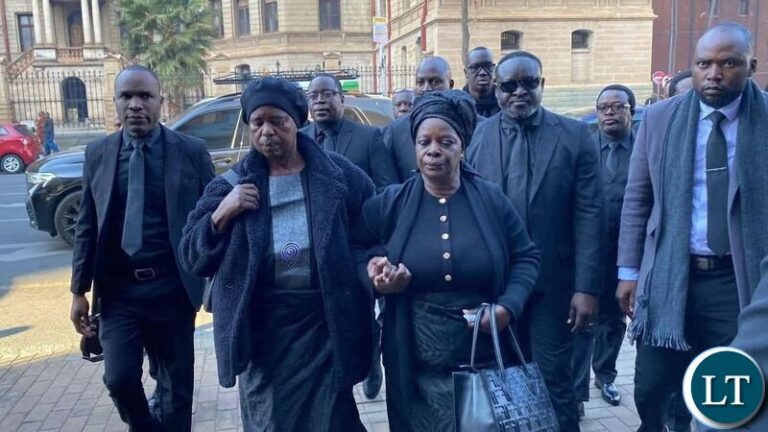
The appeal follows ongoing legal proceedings in South Africa concerning the burial of Lungu, who died while receiving medical attention outside Zambia. The case has attracted public attention in both Zambia and South Africa, given Lungu’s status as a former head of state and the sensitivities surrounding burial rites, family wishes, and national considerations.

In a statement, the pressure group said it was calling on the Lungu family to reconsider the legal route and explore alternative ways of resolving the matter. The group stated that prolonged court action could complicate an already emotional situation and extend uncertainty around burial arrangements.

The group emphasised that burial matters are deeply personal and cultural, but noted that disputes involving cross-border legal processes often take time to resolve due to jurisdictional and procedural requirements. It said this could result in extended delays before a final decision is reached.

According to the group, the ongoing legal proceedings risk diverting attention from mourning and remembrance, while also creating uncertainty for those wishing to pay their respects. The group said withdrawal of the case would allow space for dialogue and resolution outside the courtroom.

The burial dispute is currently before South African courts, with the Lungu family pursuing legal action to assert its position on burial arrangements. Legal representatives for the family have maintained that the matter requires judicial determination, citing concerns they believe warrant court intervention.

The South African pressure group stated that it was not seeking to undermine the family’s rights, but was instead urging consideration of the broader implications of prolonged litigation. It said burial disputes involving prominent figures often benefit from mediation or negotiated settlement rather than extended court processes.

Legal experts note that burial disputes can raise complex questions involving family law, customary practices, and jurisdiction, particularly when death occurs outside the deceased’s home country. In such cases, courts are often asked to balance family wishes with legal frameworks governing burial and repatriation.

The group stated that its appeal was motivated by a desire for closure and respect for the deceased. It said that continued litigation could deepen divisions and prolong uncertainty, while a negotiated resolution could allow burial arrangements to proceed without further delay.

In Zambia, the burial of former presidents carries national significance, often involving state participation and public ceremonies. The dispute has therefore attracted attention beyond the immediate family, with many Zambians closely following developments.

The pressure group did not indicate whether it had engaged directly with the Lungu family or their legal representatives, but said it hoped its appeal would encourage reflection on the consequences of continued court action.

The family has not publicly responded to the appeal. Legal proceedings remain ongoing, and no ruling has yet been delivered by the South African courts.

Observers note that the outcome of the case will determine the next steps in the burial process, including whether arrangements can proceed in accordance with the family’s wishes or whether alternative approaches will be adopted following judicial guidance.

NHP Questions ECZ Data Ahead of 2026 Elections

6

NHP Questions ECZ Data Ahead of 2026 Elections

The New Heritage Party has raised concerns over the credibility of Zambia’s electoral process, citing what it describes as a significant discrepancy in voter registration figures released by the Electoral Commission of Zambia.

In a statement, party president Chishala Kateka stated that her party believes the ECZ is compromised and may not be able to deliver transparent, credible, free, and fair elections if unresolved issues surrounding voter data persist.

Kateka said the NHP has, since the last general election, repeatedly raised concerns regarding the composition and conduct of the ECZ. She stated that these concerns were communicated through multiple channels, including public statements, correspondence with the Zambia Centre for Inter Party Dialogue, engagements with the Minister of Justice, and a direct meeting with ECZ officials. According to Kateka, none of these engagements produced corrective action.

She said the party’s latest concerns stem from inconsistencies between voter registration figures announced publicly by the ECZ and figures later published in official ECZ documentation.

Kateka referred to a speech titled Update on Final Statistics of the Mass Registration of Voters, delivered by ECZ Chief Executive Officer Brown Kasaro. She stated that provisional figures presented on page six of that speech indicated that Zambia had 8,861,918 registered voters.

According to Kateka, this figure has since been used by opposition political parties, analysts, and members of the public for electoral projections and broader assessments of the electoral landscape ahead of the 2026 General Elections.

She said that a separate document published on the ECZ website, titled Registered Voters per Polling Station, reflects a substantially lower figure of 7,073,513 registered voters nationwide.

Kateka stated that the difference between the two figures amounts to 1,788,405 voters, representing a 25.28 percent variance. She said that even allowing for the provisional nature of the earlier figure, the size of the discrepancy is significant and warrants explanation.

She questioned why such a substantial variance had not been publicly addressed by ECZ leadership and why no clarification or correction had been issued following the publication of the detailed polling station data.

Among the issues raised by the NHP are requests for an explanation of how the discrepancy arose, why the ECZ chief executive officer has not publicly accounted for the difference, and whether the commission intended to reconcile or correct the figures without external prompting.

Kateka further questioned how the ECZ would have handled the discrepancy had opposition parties not identified it. She suggested that unexplained voter figure differences of that magnitude could influence electoral outcomes if left unresolved.

In her statement, Kateka called on opposition political parties to shift focus toward what she described as systemic risks to Zambia’s democratic process. She urged opposition parties to pool resources, maintain vigilance, and coordinate efforts aimed at safeguarding the integrity of the vote.

She warned that electoral outcomes could be influenced long before polling day through administrative and statistical processes, stating that elections could be effectively decided prior to the casting of ballots if such issues remain unchecked.

Kateka questionined how opposition parties would be expected to compete fairly if a discrepancy of more than 1.7 million voters were embedded within official electoral data.

Export Earnings and Policy Measures Lift Kwacha

3

Government and financial authorities have provided explanations for the recent performance of the Kwacha, pointing to a combination of foreign exchange inflows, export earnings, and coordinated macroeconomic management measures.

Officials from the Bank of Zambia stated that the exchange rate reflects prevailing market conditions, particularly demand and supply dynamics within the foreign exchange market. They noted that increased availability of foreign currency has supported the local unit in recent weeks.

According to the central bank, one of the key contributors has been higher export receipts, especially from the mining sector. Zambia’s mineral exports continue to account for a significant share of foreign exchange inflows, with earnings entering the domestic market through formal banking channels.

Authorities also referenced improved compliance with foreign exchange regulations, which they said has enhanced the flow of export proceeds into the local market. The Bank of Zambia has previously emphasised the importance of ensuring that export earnings are repatriated in line with statutory requirements.

In addition to export receipts, officials cited external financing inflows and budgetary support as contributing factors. These inflows, they said, have increased foreign currency liquidity and reduced pressure on the Kwacha.

Government representatives stated that fiscal discipline has also played a role. They said expenditure controls and coordination between fiscal and monetary authorities have helped stabilise market expectations. Officials indicated that reduced uncertainty in public finance management has supported confidence among market participants.

The Bank of Zambia noted that monetary policy measures aimed at managing liquidity have contributed to moderating inflationary pressures. By maintaining a tight policy stance where necessary, the central bank said it has worked to contain excess liquidity that could otherwise fuel exchange rate volatility.

Economists have observed that currency movements are influenced by both domestic and global factors. Global commodity prices, interest rate developments in major economies, and investor sentiment all affect exchange rates, including the Kwacha. Authorities cautioned that external shocks can alter conditions rapidly.

Officials also highlighted seasonal factors, noting that periods of strong export activity often coincide with improved exchange rate performance. They stated that such trends are common in commodity-dependent economies.

While acknowledging recent gains, authorities cautioned against interpreting short-term movements as permanent shifts. They stated that sustained currency stability requires consistent policy implementation, continued export performance, and prudent fiscal management.

The central bank reiterated that it does not target a fixed exchange rate, but instead allows the Kwacha to be determined by market forces within a managed framework. Intervention, when undertaken, is aimed at smoothing excessive volatility rather than setting a specific rate.

Authorities further stated that the public should view currency movements in the context of broader economic fundamentals rather than daily fluctuations. They said the focus remains on maintaining price stability, supporting economic activity, and safeguarding financial system stability.

As Zambia continues to implement economic reforms and engage with international partners, officials said maintaining policy consistency remains essential to preserving confidence in the currency and the wider economy.

Lubinda Should Abandon Presidential Ambitions, Remain Kingmaker – Jay Banda

7

Fugitive former Petauke Member of Parliament Emmanuel Jay Banda has called on PF faction leader Given Lubinda to immediately withdraw his presidential ambitions, warning that remaining in the race would amount to a betrayal of late former president Edgar Lungu.

Banda accused Lubinda of abandoning the kingmaker role he was entrusted with by Lungu in order to pursue the party presidency. He claimed that Lubinda was not meant to seek the top position but was instead positioned to stabilise and unite the Patriotic Front during a difficult period.

The former Petauke Central lawmaker said that while Lungu was receiving medical treatment in South Africa, he left Lubinda as acting party president because he believed the veteran politician would not contest the presidency but would act as a neutral unifier.

Speaking in a recent interview on EMTV, Banda stated that Lubinda’s decision to seek the PF presidency now represents a breach of trust, describing it as a betrayal of the understanding he had with Lungu. He added that Lubinda had previously declined to pay the K200,000 nomination fee for aspiring candidates, citing an agreement to remain a kingmaker.

“Because he sat down with ECL and agreed to be a kingmaker,” Banda said. “But today, in the absence of ECL, Lubinda wants to abandon that agreement.”

Banda urged senior PF members and individuals close to Lubinda to engage him and remind him of the responsibility entrusted to him by Lungu. He maintained that Lubinda should withdraw from the race and retain the kingmaker role, cautioning that the move could have lasting consequences for the party.

Zambia Army lays peacekeeper Banda to rest in Ndola

3

THE nation is mourning the death of Staff Sergeant Alick Banda, who died on December 29, 2025, after a short illness while serving under the United Nations Multidimensional Integrated Stabilisation Mission in the Central African Republic (MINUSCA).

Born on May 25, 1990, in Ndola, Ssgt Banda attended Kalewa Primary School, Chifubu Secondary School and Kansenshi Secondary School, where he completed his senior secondary education in 2009.

He joined the Zambia Army on July 1, 2012, and undertook basic military training at the Lukanga Recruit Training Centre. During his service, he progressed through the ranks of Private and Lance Corporal in 2013, Corporal in 2018, Sergeant in 2019, and was promoted to Staff Sergeant in 2024. He served in the Corps of Armour.

Zambia Army Commander Lieutenant General Geoffrey Zyeele described Ssgt Banda as a dedicated and professional soldier.

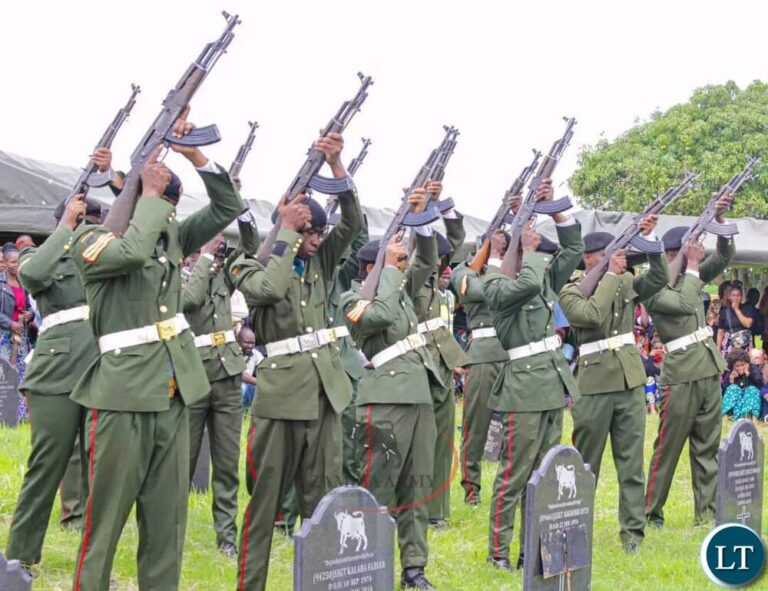
A sombre atmosphere prevailed yesterday at Kawama Last Post burial site as family members, fellow soldiers and members of the public gathered for the burial ceremony. The casket was lowered as a bugle was sounded, followed by a three-volley salute.

The army stated that his widow, Megan Banda, described her late husband as a source of strength to the family. Lieutenant General Zyeele, who was represented by Colonel Harry Ngulube, later presented the late soldier’s medals to his daughter during the ceremony.

THE nation is mourning the death of Staff Sergeant Alick Banda, who died on December 29, 2025, after a short illness while serving under the United Nations Multidimensional Integrated Stabilisation Mission in the Central African Republic (MINUSCA).

Born on May 25, 1990, in Ndola, Ssgt Banda attended Kalewa Primary School, Chifubu Secondary School and Kansenshi Secondary School, where he completed his senior secondary education in 2009.

He joined the Zambia Army on July 1, 2012, and undertook basic military training at the Lukanga Recruit Training Centre. During his service, he progressed through the ranks of Private and Lance Corporal in 2013, Corporal in 2018, Sergeant in 2019, and was promoted to Staff Sergeant in 2024. He served in the Corps of Armour.

Zambia Army Commander Lieutenant General Geoffrey Zyeele described Ssgt Banda as a dedicated and professional soldier.

A sombre atmosphere prevailed  at Kawama Last Post burial site as family members, fellow soldiers and members of the public gathered for the burial ceremony. The casket was lowered as a bugle was sounded, followed by a three-volley salute.

The army stated that his widow, Megan Banda, described her late husband as a source of strength to the family. Lieutenant General Zyeele, who was represented by Colonel Harry Ngulube, later presented the late soldier’s medals to his daughter during the ceremony.

Access Bank Disburses K3bn to 311,000 Farmers Nationwide

4

Access Bank Zambia has confirmed the disbursement of more than K3 billion to 311,000 farmers under the Government’s Farmer Input Support Programme payment framework administered through the Food Reserve Agency.

The bank stated that the payments were processed across its branch network following coordination with the FRA and relevant government authorities to ensure timely settlement to beneficiaries. According to the bank, extended operating hours were implemented to manage volumes and reduce congestion during the peak payment period.

Access Bank said it adjusted weekday and weekend hours at selected branches to accommodate farmers, particularly in high-traffic agricultural regions. The bank added that payment schedules were aligned with lists provided by the FRA to ensure that farmers who delivered maize received funds within agreed timelines.

Officials indicated that internal systems were reinforced to handle transaction volumes efficiently while maintaining audit controls and reconciliation standards. The bank stated that verification processes were applied to confirm beneficiary identities and payment accuracy.

The FRA has relied on commercial banks to process payments following maize purchases, with the objective of supporting liquidity for small-scale and commercial farmers. Access Bank said the payment programme formed part of its broader participation in government-supported agricultural financing and service delivery.

Farmers in several districts reported receipt of funds through Access Bank branches, with some indicating that extended hours reduced waiting times. The bank said it continued to engage local authorities and farmer representatives to address operational challenges as they arose.

Access Bank reiterated its commitment to transparency, stating that payment records are subject to internal and external review in line with banking regulations. The bank added that it remains available to address queries from farmers regarding payment status through branch channels.

Kapyanga Defends Mundubile Amid PF Leadership Dispute

4

Kapyanga Defends Mundubile Amid PF Leadership Dispute

Member of Parliament for Mpika Constituency Francis Robert Kapyanga has issued a detailed public statement defending Brian Mundubile and rejecting assertions that the late former president Edgar Chagwa Lungu bears responsibility for the ongoing leadership turmoil within the Patriotic Front.

In the statement, Kapyanga responds to claims circulating within party discourse that Lungu failed to designate a successor before stepping back from active leadership, a situation some party figures have cited as contributing to current divisions. Kapyanga describes that position as inaccurate and unfair, stating that Lungu had expressed a clear preference for party unity and had taken steps to guide leadership succession following the 2021 General Elections.

According to Kapyanga, internal tensions within the PF began well before the loss of power in 2021. He states that during Lungu’s final term in office, certain senior figures openly challenged his authority, undermined his leadership, and publicly opposed him, actions that he says weakened internal cohesion and contributed to electoral defeat.

After the election loss, Kapyanga recounts that criticism of Lungu intensified, with some party members attributing the outcome directly to him. He states that this environment led Lungu to step down as PF president and retire from active politics, despite resistance from members of the party’s Central Committee. During that transitional period, Lungu appointed individuals to act in leadership positions while the party sought to stabilise.

Kapyanga provides a specific account of events in early 2022, stating that while Parliament was in session, Mundubile received a call from Lungu inviting him to a meeting at his government-rented retirement residence in Ibex. During that meeting, Kapyanga says Lungu instructed Mundubile to contest the PF presidency, citing their working relationship and Mundubile’s commitment to the party.

He states that Mundubile did not immediately disclose the instruction and had not previously expressed ambitions to lead the party or to contest the presidency of the Republic. At the time, according to Kapyanga, Mundubile’s focus remained on his parliamentary responsibilities and eventual retirement from politics.

Kapyanga further states that Lungu subsequently contacted several trusted party members, including himself, and directed them to support Mundubile’s bid for the PF presidency. He says efforts were then made to mobilise support, assemble campaign structures, and prepare for an internal contest.

However, Kapyanga states that resistance emerged from individuals he describes as having previously opposed Lungu while he was in office. He alleges that these figures conveyed false information to Lungu, including claims that Mundubile was secretly engaging with President Hakainde Hichilema through family connections, funding attacks against Lungu, and pursuing other undisclosed agendas. Kapyanga states that Mundubile did not respond publicly to these allegations.

According to Kapyanga, when these claims failed to gain traction, attention shifted toward encouraging Lungu to return to active politics. He links this development to events surrounding Miles Sampa, whose assumption of control within the PF followed the cancellation of a conference and his suspension by an acting party president. Kapyanga states that this period marked a significant compromise of party structures.

Kapyanga recounts that when Lungu later engaged in broader opposition cooperation through the United Kwacha Alliance, some of the same individuals opposed the initiative and subjected Lungu to public attacks. He says this led to Lungu’s withdrawal from the alliance and the subsequent formation of the Tonse Alliance.

Throughout these developments, Kapyanga maintains that accusations against Mundubile continued, including allegations related to judicial interference in Lungu’s eligibility case and associations with political activist Chilufya Tayali. He rejects those claims and states that Lungu himself instructed party members to assist Tayali during legal difficulties.

Kapyanga states that following Lungu’s return to active politics, Mundubile halted his own activities and instructed his supporters to mobilise in support of Lungu. He says this was done in line with Lungu’s authority and wishes at the time.

With Lungu’s death, Kapyanga states that continued references to his name in internal disputes are inappropriate. He calls on party leaders to take responsibility for current decisions and to pursue unity through established constitutional processes, including convening a party conference to elect new leadership.

Injunction Bars PF Convention as Disciplinary Letters Continue

Injunction Bars PF Convention as Disciplinary Letters Continue

A legal dispute within the Patriotic Front has intensified following the continued issuance of internal party correspondence despite a court injunction that has been cited to block the holding of a party convention.

The injunction, which has been repeatedly referenced by certain party officials, is presented as binding and restrictive, with warnings issued to party members against organising or participating in convention-related activities. Party leaders invoking the order have insisted that all constitutional processes connected to the convention remain suspended until further direction from the courts.

At the same time, official party letters bearing formal letterheads and signatures have continued to circulate. These letters include disciplinary notices, references to party regulations, and timelines linked to alleged breaches of party rules. The parallel actions have drawn attention from party members and legal observers, who question how internal disciplinary steps are proceeding while a court order is being relied upon to halt other constitutional activities.

Central to the controversy is Celestine Mukandila, who has been identified in party communications as acting in a leadership capacity. In public statements, he has dismissed claims that disciplinary action has already been decided against senior party officials. He has described reports of imminent expulsions as inaccurate and misleading.

However, documents issued under his authority outline allegations, cite specific party provisions, and propose procedural steps associated with disciplinary action. The letters set out structured processes that, according to critics within the party, resemble preparatory steps toward sanctions, including possible expulsion.

Among those named in public discussion is Brian Mundubile, whose position within the party has been the subject of speculation following the circulation of disciplinary correspondence. While formal confirmation of any sanction has not been issued, the existence of detailed notices has heightened tensions and uncertainty within party ranks.

Legal practitioners observing the situation note that injunctions typically preserve the status quo pending further judicial determination. In such circumstances, actions that materially alter internal governance structures may attract scrutiny, particularly where those actions appear inconsistent with the stated effect of the court order.

Party officials defending the continued issuance of correspondence argue that administrative functions must continue and that not all internal communication falls within the scope of the injunction. They maintain that the court order applies specifically to the holding of a convention and does not extinguish broader organisational authority.

Others within the party reject that interpretation. They argue that if the injunction is relied upon to halt constitutional gatherings, then any formal steps that could influence party leadership structures should also be paused to avoid prejudicing the outcome of the court process. According to this view, selective application of the injunction risks undermining internal legitimacy and exposing the party to further legal challenge.

The dispute has unfolded through a series of public statements, counter-statements, and leaked correspondence, reflecting deepening factional divisions. Observers note that the use of official letterheads and regulatory citations carries legal and political weight, particularly when issued during a period of active litigation.

The matter has also raised broader questions about internal party governance and the boundaries between legal compliance and political strategy. As the injunction remains in force, the absence of a unified interpretation has resulted in parallel processes that appear to pull the organisation in opposing directions.

Court proceedings connected to the injunction are ongoing, and no definitive ruling has yet been issued clarifying the full extent of permissible internal action. Until such guidance is provided, the party continues to operate in a contested legal environment where authority, process, and compliance are actively disputed.

The situation has attracted national attention as it unfolds in full public view, with legal documents, party statements, and internal notices becoming part of the broader political discourse. The outcome of the court process is expected to determine whether the actions taken during the injunction period are upheld or challenged in subsequent proceedings.

Politics is Simply chess, not noise.

Politics is Simply chess, not noise.

Politics is often mistaken for a contest of volume. The loudest voices are assumed to be the most powerful, and constant public confrontation is confused with momentum. This misreading has shaped how much of the opposition interprets the conduct of the governing party, frequently describing it as slow, disorganised, or surviving on chance. That interpretation overlooks the method that is quietly shaping Zambia’s political terrain.

The ruling movement is not loud, but it is deliberate. It does not rush to respond to every headline, insult, or provocation. While opposition actors spend time on reactive press conferences and social media skirmishes, the focus remains on appointments, institutional alignment, and long-term political positioning. That difference is not accidental. It reflects an understanding that durable power is built away from public noise.

Real political control is rarely achieved through constant confrontation. It is consolidated through discipline, message restraint, and familiarity with state systems. Controlled communication reduces contradictions. Internal cohesion limits fractures. Institutional command secures continuity. What is often dismissed as silence is, in practice, a strategic choice to act without exposure.

The opposition, by contrast, frequently mistakes anger for a plan. Public frustration attracts attention, but attention alone does not secure electoral outcomes. Without unity, structured leadership, and sustained organisation, emotional mobilisation fades quickly, leaving little behind once the moment passes.

UPND also operates with a longer electoral horizon. Elections are not won during campaign season alone. They are decided years earlier. By the time campaigns begin, alliances have already formed or collapsed, narratives have already settled, and grassroots structures are either functioning or broken. Campaigns reveal preparation; they do not replace it.

Rather than confronting opponents directly, UPND often allows internal divisions, leadership disputes, and repeated miscalculations to weaken them from within. This approach does not depend on confrontation. It depends on patience. Over time, fragmentation erodes coordination, confuses supporters, and exhausts organisational capacity. That process unfolds quietly, but its impact compounds.

You do not have to support UPND to recognise this reality. Calm execution, careful calculation, and political maturity remain visible, and as long as silence continues to be mistaken for weakness, the strategic imbalance will persist.

In Zambia’s political landscape, strategy outweighs noise, and those who ignore that lesson do so at their own cost.

Richard Makwembo II
Political Commentary