Sunday, June 14, 2026
24.3 C
Lusaka
Home Blog Page 188

Davies Mwila Orders Lubinda to Withdraw Exculpatory Letters to Mundubile.

3

Former Patriotic Front (PF) secretary general Davies Mwila has directed Given Lubinda to withdraw exculpatory letters issued to presidential hopeful Brian Mundubile and other party members.

On Saturday, the Lubinda-led faction charged Mundubile with gross indiscipline, alleging that he had breached the PF constitution and party regulations. Mundubile was directed to exculpate himself within seven days or face disciplinary action.

However, Mwila said Lubinda’s actions were illegal, arguing that the PF constitution does not allow for suspensions at a time when a general conference is imminent. He stated that the party requires unity rather than actions that could deepen divisions.

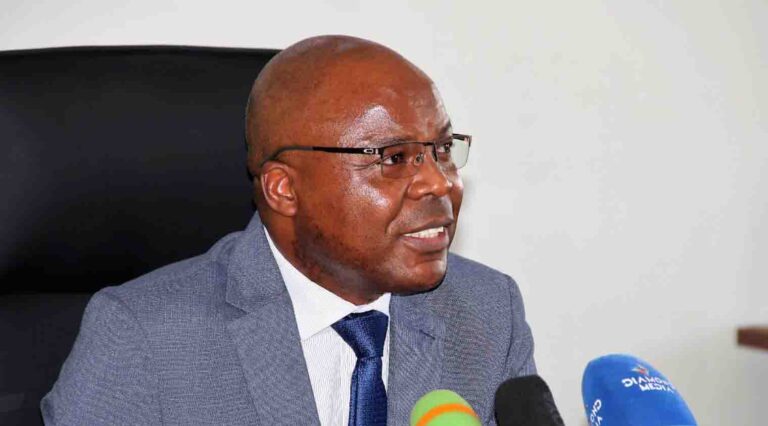
Speaking during a recorded press conference, Mwila said that when there is a vacancy in the party presidency, the PF constitution provides for the matter to be resolved through a general conference, during which all suspensions are lifted to allow members to participate in the electoral process.

“In PF, when there is a vacancy in the presidency, we go to a general conference, and during that period all suspensions are lifted to allow everyone to participate in the elections,” Mwila said.

He described the ongoing disciplinary actions within the party as unconstitutional, saying members were being removed from positions outside the provisions of the party constitution.

Mwila further said the PF should focus on unity ahead of the general elections, noting that there are six months remaining. He called for the withdrawal of all letters issued to suspended members and urged party members to support whoever will be elected at the forthcoming general conference.

Kalimanshi Says Zambia Should Not Return to Leadership by ‘Thieves’

3

Former self-proclaimed PF commander Innocent Kalimanshi has urged Zambians not to allow what he described as “thieves” to lead the country again.

Kalimanshi, who previously headed the military-styled group known as the “Amelican” troops during the Patriotic Front (PF) administration, made the remarks on Sunday when he defected to the ruling party. During the same event, he apologised for acts of violence committed against political opponents during the PF era, saying the country should not return to such a period.

He stated that the former ruling party thrived on division and called for unity among citizens. Addressing party officials and supporters, Kalimanshi said PF members who were defecting should be welcomed.

“Ba SG mwisule ichibi, ba PF bachili baleisa (secretary general, open the door, more PF members are coming). When we come here, please welcome us. We are your children, sisters and brothers. Welcome us, we are still coming,” he said.

Kalimanshi also asked for forgiveness from those who were assaulted during the PF era, urging citizens to prioritise national interests. He warned that allowing the PF back into government would result in divisions among the people while leaders benefited.

“Those we beat during the PF, forgive us. Let us put the country forward. If we let PF thieves form government, they will just turn us into enemies while they enjoy alone. They will make us fight and yet, they are eating alone,” he said.

Siavonga Pupil Dies After Crocodile Attack

0

A 10-year-old pupil of Manchanhwa Lakeshore Primary School in Siavonga has died after being attacked by a crocodile in Lake Kariba.

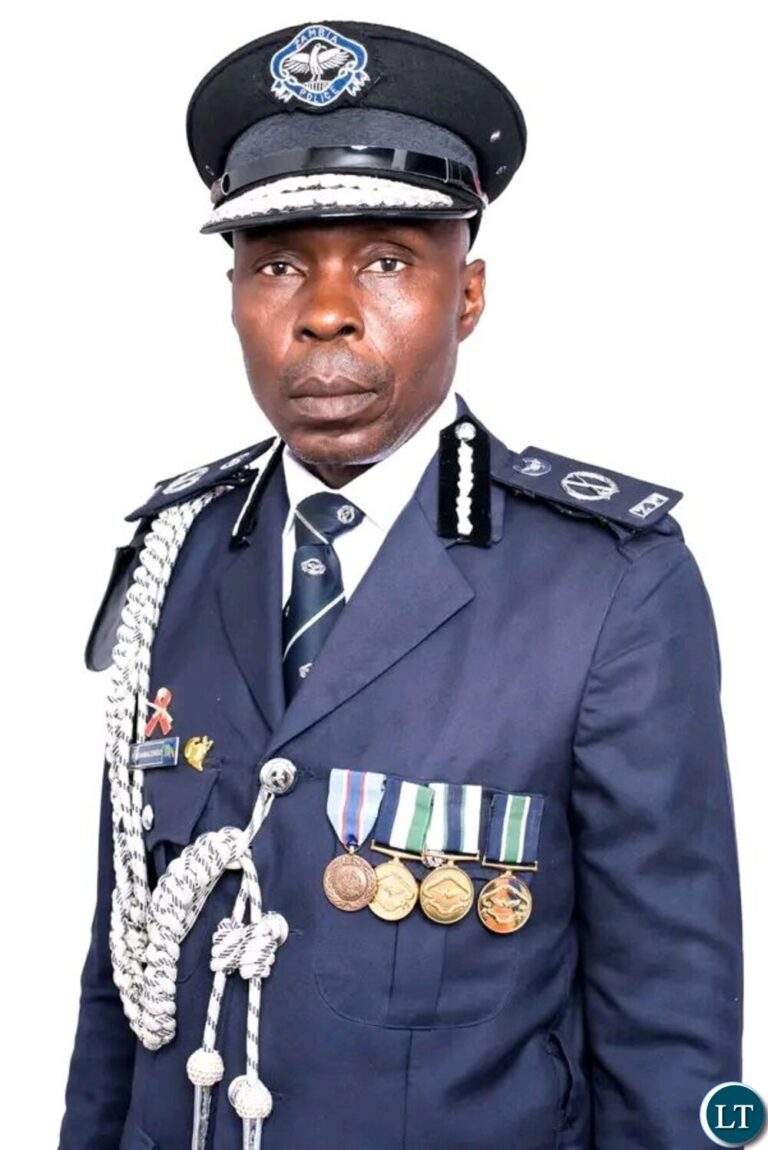
Southern Province Police Commanding Officer Moono Namalongo said the deceased, identified as Vinock Kabbaya, a Grade Four pupil, went to bath in the lake early in the morning while preparing for school.

Mr Namalongo stated that while bathing, the boy was attacked by a crocodile which dragged him into deeper water.

He said members of the public immediately launched a search, and after about three hours, the body was recovered approximately 200 metres into the lake.

Upon retrieval, the body was found with injuries consistent with a crocodile attack, including bite wounds to the abdomen, left leg and right hand.

Mr Namalongo has urged the public to avoid bathing, swimming or drawing water from water bodies known to be inhabited by crocodiles.

He further appealed to parents and guardians to ensure children do not go near such areas unsupervised and encouraged communities to use safer alternative water sources where possible.

Attorney General Urges ADR in Criminal Matters

0

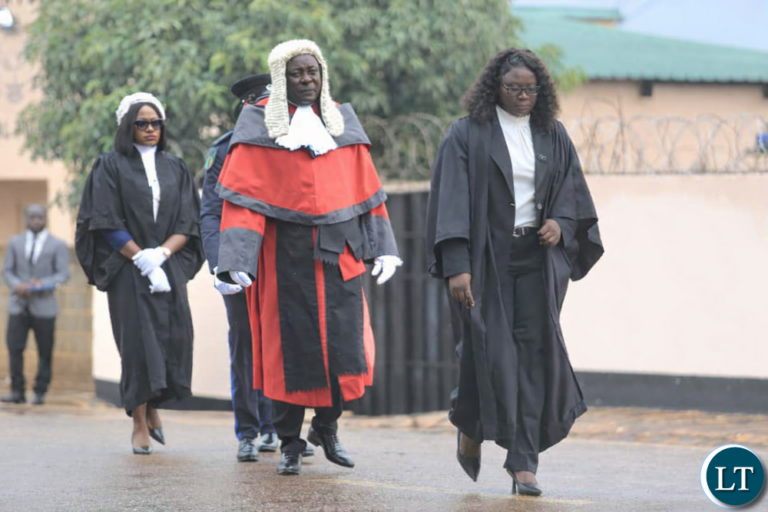
The Solwezi High Court in North-Western Province has officially opened its 2026 criminal session, with Attorney General Mulilo Kabesha urging the Judiciary to consider the use of Alternative Dispute Resolution (ADR) mechanisms in criminal cases, particularly through plea bargaining.

Mr Kabesha said the use of ADR mechanisms in criminal disputes was cost-effective and provided for under the Zambian law.

Mr Kabesha who graced the event, emphasised the importance of embracing Alternative Dispute Resolution mechanisms in criminal matters as a way of enhancing efficiency in the justice system.

He said this year’s theme: “Consolidating the call to action for proper use of Alternative Dispute Resolution mechanisms through bargaining to optimize access to justice, “was timely.

North Western High Court Judge-in-Charge Obister Musukwa highlighted several challenges facing the Judiciary largely driven by increased economic activities in the province.

He shared that last year the court recorded 6,369 criminal cases calling on all stakeholders to rise to the occasion in helping to reduce the cases.

Judge Musukwa also highlighted successes achieved by the court describing the just ended 2025 as successful saying 80 percent of the cases were disposed off .

He further appealed to government to consider constructing subordinate courts in Kalumbila Chavuma, Mufumbwe,  Ikelenge and Mushindamo districts to enhance the justice system.

Meanwhile, North-Western Province Minister Robert Lihefu responded to some of the challenges raised by the Judge-in-Charge assuring the court of government support.

Lawyers and senior government officials gathered in Solwezi District for the annual ceremony, a tradition that sets the tone for justice delivery in the year ahead.

The opening of the criminal session is not merely ceremonial, it is a key moment during which the Judiciary outlines its priorities and reaffirms its commitment to delivering justice to the public.

Govt signs contract to upgrade Livingstone roads

3

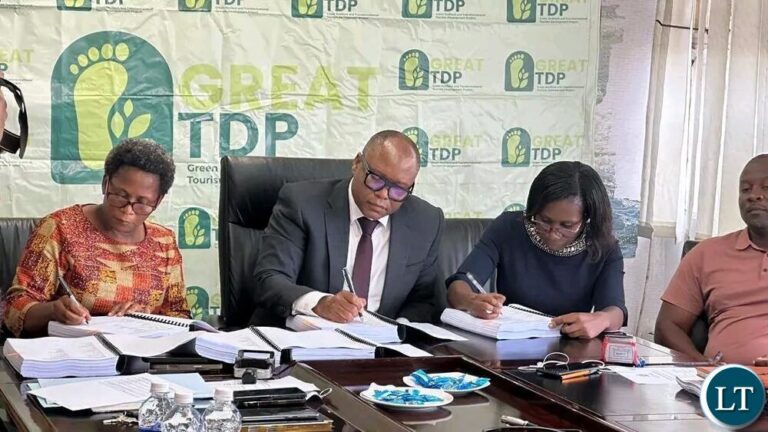
Government has signed a contract worth over One Hundred and Thirty-Two Million Kwacha with Kailjee Construction Zambia Limited for the rehabilitation and upgrade of approximately 8.31 kilometers of selected roads in Livingstone to bituminous standard.

The media reports that Ministry of Tourism Permanent Secretary Evans Muhanga disclosed that the project is being implemented under the Zambia Green, Resilient, and Transformational Tourism Development Project (GREAT-TDP) with the 100 Million United States Dollar Loan Financing Facility from the World Bank.

Mr Muhanga said the primary objective of the project is to improve access to resilient infrastructure in selected tourism development areas of Livingstone so as to enhance economic opportunities in the tourist capital.

He described the project as critical, noting that it will contribute to the improvement of the tourist capital and enhance the city’s infrastructure, improve mobility and access to tourism facilities for visitors.

Mr Muhanga said the government remains committed to providing high-quality infrastructure that facilitates economic growth, employment opportunities and improved service delivery.

The Permanent Secretary has since implored the contractor Kailjee Construction Zambia to strictly adhere to the contract specifications and to exhibit the highest quality of workmanship.

Meanwhile, Kailjee Construction Zambia Limited Project Engineer Tanaka Charumbira assured the Ministry of Tourism that the company will deliver to the expectations of the government.

He said the company was excited to be awarded the contract, adding that it will endeavor to complete the project within the stipulated time frame.

Kabwe Man Pleads Guilty to Drug Trafficking

0

A-38-Year-old man of Kasavasa area in Kabwe District of Central Province has pleaded guilty to two counts of drug trafficking.

Kalumbuwe Mulambya stood charged for trafficking 8.3 kilograms of Marijuana and for being in possession of 1.01 kilograms of Marijuana Seeds without lawful authority.

The offences are contrary to Section 15 and 18 of the Narcotic Drugs and Psychotropic Substances Act Number 35 of 2021 as read with Statutory Instrument No.119 of 1995 of the Laws of Zambia.

Particulars of the offences are that, Mulambya on December 27, 2025 in Kabwe District did traffic in Psychotropic Substances namely 8.3 Kilograms of Marijuana and was also found in possession of 1.01 Kilograms of Marijuana seeds without lawful authority.

When the matter came up for plea before Kabwe Principal Resident Magistrate Mubita Kalaluka, Mulambya pleaded guilty to all the offences.

“At your own admission to the charges, the court records the plea of guilty on both charges,” said Magistrate Kalaluka.

Mulambya in admission told the court that he had purchased the contraband from a named farmer at the value of K500.

Magistrate Kalaluka told the accused that he had no lawful authority to buy or possess both the seeds and the Marijuana.

The court has since adjourned the matter to today, January 13, 2026 for written facts as Mulambya remains in police custody.

Zambia’s Prison Population Surpasses Official Holding Capacity

0

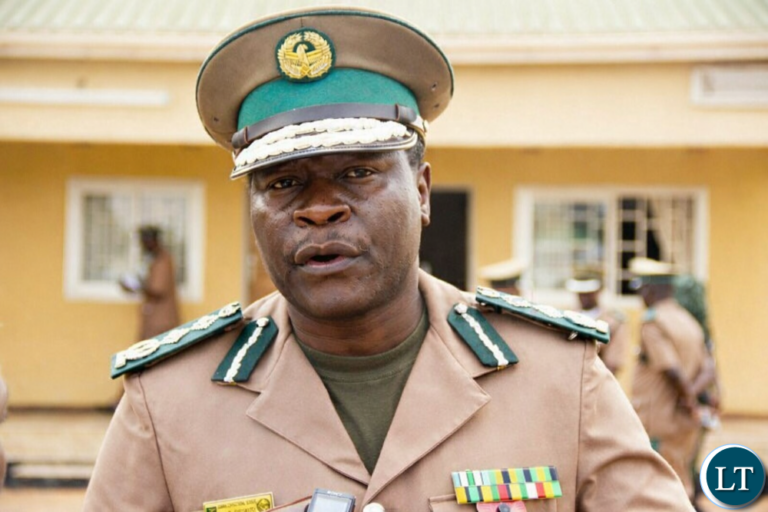
Zambia Correctional Service Commissioner General, Fredrick Chilukutu, has disclosed that the country’s inmate population has exceeded 28,000, far surpassing the facilities’ holding capacity of 12,000.

Mr Chilukutu said of the current inmate population across the Country, 5,035 are males while 251 are females with their cases at different stages.

He added that the Correctional Service has in its care 455 children with 144 were ordered whereas 311 were remand children in conflict with the law and their cases were at different trial stages.

Mr Chilukutu said this in a Speech read on his behalf by Zambia Correctional Service Deputy Commissioner General Bwalya Kuyomba during the official opening of the 2026 Chinsali High Court Criminal Session held at Chinsali Magistrate Court in Muchinga Province.

The Commissioner General stated that in an effort to reduce overcrowding and to see to it that inmates were kept in a conducive environment, Government has started building and rehabilitating old correctional facilities.

He cited the recently constructed correctional facility in Mwembeshi with holding capacity of 1,800 done through the Public Private Partnership (PPP) and the Nansanga Correctional facility in Serenje with holding capacity of 1, 600 inmates as some of the interventions to reduce congestion in prison and correctional facilities among others.

“I wish to reaffirm the Zambia Correctional Service’s commitment to ensuring the humane custody of inmates, their effective rehabilitation, and proper reintegration,” Mr Chilukutu said.

Mr Chilukutu added that the service will continue to work in collaboration with the Judiciary to ensure that justice was continuously served to inmates.

Chinsali High Court Judge in-Charge Willie Sinyangwe highlighted that the criminal cases handled during the High Court in Chinsali District in 2025 included murder, manslaughter, vandalism and aggreviated robbery among other cases.

Justice Sinyangwe said murder cases emanated from accusing persons to be witches and wizards, adding that there was need to enhance community sensitization on the dangers of taking law into their hands.

He called on the Provincial Administration, the media and other stakeholders to intensify on community sensitization and help people understand the severity of the punishment for murder so they can desist from taking law in their hands.

Justice Sinyangwe revealed that in the year 2025 the High Court had 261 criminal cases with 89 criminal cases brought forward from the year 2024 and 172 new cases out of which 205 were disposed off, adding that 56 have been carried forward into 2026.

“Under the Civic Jusrisdiction of the Subordinate Courts,112 cases were brought forward from the year 2024 and received 647 in 2025 making a total of 759 cases out of which 669 were disposed off with 90 carried forward into 2026,” he said.

Justice Sinyangwe further revealed that the Local Courts in the Province had brought forward 412 civil cases from 2024 and recorded 4,074 new cases in 2025 totaling to 4, 486 out of which 4,320 were disposed off and 166 have been brought forward into 2026.

He further said the local court had 15 criminal cases brought forward from the year 2024 and received 357 cases totaling to 372 of which 363 have been disposed off.

Chinsali High Court Judge also bemoaned the shortage of space in the correctional facilities in Muchinga Province.

Justice Sinyangwe said Isoka Correctional facility was the most congested facility of the 4 facilities in the province as it catered for Nakonde and Mafinga Districts.

He has called on Government to consider building new facilities and rehabilitating existing ones.

Meanwhile, Muchinga Province Permanent Secretary Reverend Mathews Chilekwa said Provincial Administration was committed to addressing challenges faced by the Judiciary in the Province.

Rev Chilekwa stated that the mandate of the Provincial Administration was to coordinate the implementation of government programs and policies, saying the mandate cuts across areas of governance including the Judiciary.

“In this vein, as Provincial Administration we will endeavor to collaborate with various line ministries and agencies to address the number of challenges faced by the Judiciary,” he said.

Rev Chilekwa however charged that Government through the Provincial Administration will not tolerate any lawlessness of whatever form before, during and after elections.

“I am confident that the judiciary and all security wings are equal to the task to ensure that the rule of law is upheld and to remain patriotic so that we continue to enjoy the peace we attained 62 years ago,”he said.

ECZ says it is ready to begin constituency delimitation exercise

1

The Electoral Commission of Zambia has announced that it is in the final stages of preparations to begin the delimitation exercise, signalling readiness to undertake the review of constituency boundaries in line with its mandate.

The Commission said preparatory work for the exercise had reached an advanced stage, with internal processes largely completed. ECZ officials said the delimitation exercise is a critical component of electoral administration and is undertaken to ensure that constituencies are aligned with population changes and other relevant considerations.

According to the Commission, the exercise will be conducted within the legal framework governing electoral processes. ECZ stated that the delimitation programme is guided by constitutional and statutory provisions that outline how constituency boundaries may be reviewed and adjusted.

The Commission explained that the delimitation exercise involves a structured process that includes technical assessments and consultations. ECZ said its teams have been engaged in preparatory activities aimed at ensuring the process is conducted professionally and transparently.

ECZ further stated that it would engage stakeholders at various stages of the exercise. The Commission said consultations are important to ensure that the process is understood and that stakeholders are informed about the methodology and timelines involved.

The Commission said it had taken steps to ensure that logistical and technical requirements were in place ahead of the exercise. These preparations include internal planning, resource allocation, and coordination among relevant departments within the Commission.

ECZ emphasised that the delimitation exercise is not conducted arbitrarily, but follows established criteria. The Commission said factors considered in delimitation include population distribution, geographical features, and administrative boundaries, as provided for under the law.

The Commission said public awareness would be a key aspect of the exercise, adding that it intends to communicate with stakeholders and the general public throughout the process. ECZ stated that transparency and openness are essential to maintaining public confidence in electoral processes.

Officials said the Commission remains committed to conducting the delimitation exercise in a manner that upholds the principles of fairness and credibility. ECZ said it recognises the significance of the exercise and its potential impact on future elections.

The Commission noted that delimitation is a normal electoral process that is undertaken periodically. It said the exercise is intended to reflect demographic changes and ensure equitable representation across constituencies.

ECZ further explained that the exercise would be carried out independently, in keeping with the Commission’s constitutional mandate. It said the process would be free from political interference and would be guided strictly by the law.

The Commission said it would provide updates as the exercise progresses and encouraged stakeholders to engage constructively. ECZ reiterated that its role is to administer electoral processes impartially and professionally.

The announcement comes as Zambia prepares for future electoral activities, with delimitation forming part of the broader electoral framework. ECZ said readiness for the exercise reflects its ongoing commitment to strengthening electoral administration.

The Commission concluded by assuring stakeholders that the delimitation process would be conducted with due regard to legal requirements and best practices.

Munali MP Mposha tells PF to end confusion ahead of August polls

3

Munali UPND Member of Parliament Mike Mposha has urged opposition political parties, including the Patriotic Front, to address internal divisions, saying the ruling party wants to face a strong opposition in the August elections.

Mposha said failure by opposition groupings to resolve their differences shows an inability to handle national challenges if they were to be given another mandate. He said opposition parties must demonstrate leadership capacity by first putting their own houses in order.

He was reacting to remarks by Socialist Party leader Dr Fred M’membe, who said the UPND were only relying on opposition disunity to win elections. Mposha rejected that view, describing the ruling party as democratic and stating that, while political competitors can criticise the UPND, they should also acknowledge political realities, including the experience the party’s leader has accumulated over time.

“UPND is a very democratic party, but also you must give us the accolades,” Mposha said, adding that the party’s history in opposition provided experience that should not be dismissed. He said the President spent many years contesting elections and losing before eventually winning, and that the period shaped the party’s approach to political leadership and problem-solving.

Mposha said opposition leaders, including M’membe, should focus on political organisation and leadership rather than internal confusion. He said the ruling party prefers competition against strong rivals, because weaker opposition does not help expose challenges that need to be addressed.

He said the opposition’s inability to sort out internal problems points to deeper limitations. According to Mposha, a party that fails to manage its own internal disputes cannot reasonably be expected to manage the country’s challenges.

The UPND lawmaker said the opposition lacks capacity to provide leadership. He attributed this, in part, to constraints such as people and funding, saying these shortcomings affect how opposition parties operate and organise. He said when parties cannot resolve disputes within their own structures, it raises questions about how they would perform if entrusted with governance responsibilities.

Mposha said the ruling party’s preference is to compete against opponents “of their calibre,” and not against weakened formations. He said the health of a democratic system depends on meaningful competition, but that requires rival parties that are organised, focused, and capable of presenting voters with coherent choices.

He said leadership requires being visionary and communicating a convincing message to the electorate. He said those seeking to lead must be able to set out a direction that voters can understand and evaluate, rather than remaining caught in internal disputes.

In his remarks, Mposha also spoke about governance and economic direction, saying the country had experienced difficult conditions when the UPND took office but that the situation had turned around. He said this improvement was visible and linked it to the government’s focus on production and reducing reliance on imports.

He gave the example of fertiliser production, saying there was now movement towards producing fertiliser locally. He said import dependence in areas such as fertiliser had previously created space for middlemen and the diversion of money. He said increasing local production would reduce the need for imports and limit opportunities linked to import processes.

Mposha also referenced ongoing challenges such as load shedding and its effects, including on mining, as he outlined the kinds of issues government says it is working to address. He said the economy had been in a low state, but that changes were taking place, and he presented these as part of the governing party’s record going into the election period.

He maintained that political competition should be grounded in parties presenting credible leadership and the ability to organise, communicate, and manage problems. He said opposition parties should focus on resolving their confusion, because the ruling party wants to face a strong opposition in the elections.

People’s Pact urges Chawama voters to punish UPND over Lungu burial dispute

People’s Pact urges Chawama voters to punish UPND over Lungu burial dispute
The People’s Pact Movement (PPM) has urged voters in Chawama Constituency to use the January 16 parliamentary by-election to punish the United Party for National Development (UPND), framing the poll as a response to the treatment of the family of late former president Edgar Lungu.

PPM vice president Peter Sinkamba made the appeal in Lusaka, calling on residents to vote for opposition candidate Bright Numdwe as an expression of dissatisfaction with the conduct of the current administration. He argued that the by-election presented an opportunity for voters to register disapproval over what he described as cruelty shown to the Lungu family following the former president’s death.

Sinkamba linked the appeal directly to the ongoing legal dispute surrounding Lungu’s burial, which has remained unresolved months after his death in Johannesburg on June 5 last year. He said the decision by the State to pursue court action in South Africa over the burial arrangements had politicised the matter and prolonged the family’s grief.

He accused the government of lacking moral authority in its handling of the issue, stating that the responsibility for resolving the impasse rested with President Hakainde Hichilema. Sinkamba called on the Head of State to withdraw the South African court case and allow the family to conclude burial arrangements without further State involvement.

According to Sinkamba, the continued legal battle has transformed a private family matter into a national controversy, undermining Zambia’s cultural and traditional values. He said it was wrong for a former head of State’s remains to remain unburied due to legal disagreements involving the government.

He further alleged that the Chawama by-election had previously been influenced by what he described as harsh political tactics, citing the circumstances surrounding the last poll in which Tasila Lungu, the late president’s daughter, was a candidate. Sinkamba claimed that the manner in which the seat was won reflected insensitivity towards a grieving family.

The People’s Pact leader urged residents to turn out in large numbers and cast their ballots as a peaceful expression of dissatisfaction with governance under the UPND. He described the vote as a moral judgment rather than a routine political contest, saying it would send a clear message about public expectations of leadership conduct.

Sinkamba warned that failure to resolve the burial dispute risked creating lasting national embarrassment, both locally and internationally. He suggested that the matter could enter history as an unprecedented case of a former head of State remaining unburied for an extended period due to government involvement.

He said the party’s appeal was grounded in respect for cultural norms and family autonomy, insisting that closure should be determined by relatives rather than dictated through legal processes initiated by the State.

Chawama residents are expected to vote on Thursday to elect a new member of Parliament, with the contest attracting heightened political attention due to its symbolic significance amid broader national tensions.

99% farmer payments completed, says Food Reserve Agency

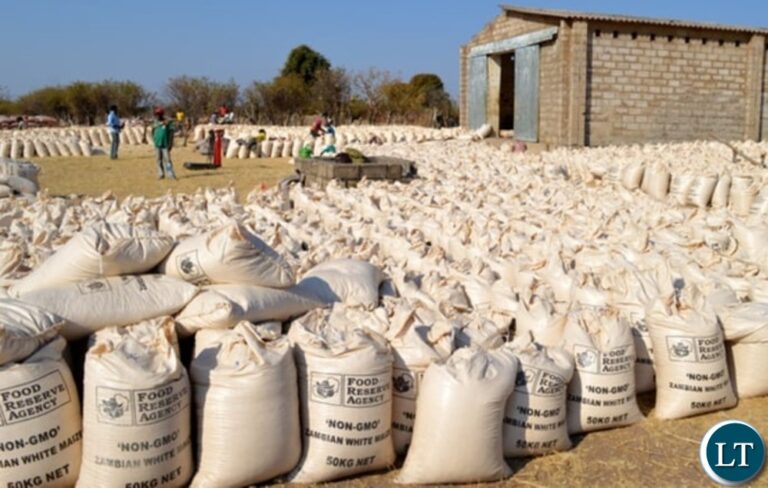
The Food Reserve Agency has announced that it has paid 99 percent of farmers who supplied maize to the agency, assuring stakeholders that the remaining outstanding payments are being addressed and will be concluded once verification processes are completed.

FRA officials said the payment exercise had largely been successful, with most farmers receiving their money through mobile money platforms. The agency explained that delays affecting a small number of farmers were linked to data verification issues rather than a lack of funds.

According to the agency, the verification process is necessary to ensure that payments are made to the correct beneficiaries and that records align with delivery documentation. FRA stated that some payments could not be processed immediately because of discrepancies in farmer details submitted during the delivery process.

The agency said issues such as mismatched names, incorrect mobile numbers, and incomplete registration details had contributed to the delays. It said these matters required correction before funds could be released, to prevent errors and safeguard public resources.

FRA emphasised that the outstanding cases represent a small fraction of the total number of farmers who delivered maize. The agency maintained that the 99 percent payment figure demonstrates government’s commitment to meeting its obligations to farmers within the agreed framework.

The agency further explained that the use of mobile money platforms was intended to improve efficiency, transparency, and speed in the payment process. It said the system allows farmers to receive payments directly without the need for physical cash handling, reducing delays and administrative challenges.

Government officials supporting the FRA position said the payment process was closely monitored to ensure accountability. They reiterated that funds for maize purchases had been made available and that payment delays were not caused by budgetary constraints.

The officials said farmers whose payments were still pending had been encouraged to engage with FRA offices to resolve verification issues. They said once discrepancies are corrected, payments would be processed without further delay.

FRA also urged farmers to ensure that their registration details are accurate and consistent across all documentation. The agency said proper documentation is critical to ensuring smooth processing of payments and avoiding future delays.

The agency said it remains committed to completing the payment exercise in full and assured farmers that no one who delivered maize would be excluded. Officials stated that all valid deliveries would be honoured once verification is finalised.

Government representatives said the payment of farmers is a priority because of the role agriculture plays in national food security and rural livelihoods. They said timely payments help farmers prepare for subsequent farming seasons and meet their financial obligations.

The officials further explained that challenges encountered during the payment process have provided lessons that will be applied in future procurement exercises. They said improvements would be made to registration and data capture processes to minimise verification problems.

FRA said it continues to engage farmers and stakeholders to address concerns and provide updates on the payment process. The agency maintained that transparency and communication are essential in maintaining trust with farmers.

The payment exercise forms part of government’s broader agricultural support framework, with the FRA playing a central role in managing strategic grain reserves and ensuring that farmers are paid for their produce.

Officials reiterated that the remaining payments would be completed once all verification issues are resolved, and they urged farmers affected by delays to remain patient as the process is finalised.

Credit/Source: News Diggers, Tuesday January 13, 2026

Tribalism cannot defeat economic progress, which is why Zambians must protect the UPND development trajectory.


By Hon. Ponde C. Mecha

Former Member of Parliament – Chifunabuli Constituency

Since ascending to the presidency, Hakainde Hichilema has continued to carry a label that has little to do with reality: that of being a “tribalist.” This label has been recycled so often by his critics that it has almost become a lazy substitute for policy debate. Yet when one examines the conduct, decisions and development footprint of the UPND government, that accusation collapses under the weight of facts.

The most visible expression of this reality is the Constituency Development Fund (CDF). For the first time in Zambia’s history, development resources are being distributed to all constituencies using a uniform, non-discriminatory formula. No tribe, no region, no political affiliation is being favoured. Whether one lives in Southern, Northern, Eastern, Western or Luapula Province, the CDF envelope is the same. Schools, clinics, roads, youth and women empowerment projects are springing up across the country without reference to tribe or political colour.

President Hichilema himself has reinforced this message through action, not rhetoric. He has traversed all corners of Zambia, attending traditional ceremonies, engaging chiefs, meeting farmers, fishermen, miners and traders alike. His Cabinet is visibly balanced in terms of regional and tribal representation. These are not the actions of a tribalist; they are the marks of a unifier deliberately stitching together a fractured nation.

Sadly, the opposition has failed to respond to these realities with ideas. Their manifestos have been archived and are shy to share their practical ideas on economic recovery, energy security, debt restructuring, industrialisation or job creation. They have not only effectively abandoned policy but have replaced it with a weaponised tribal narrative. Unable to provide meaningful checks and balances, they would rather pull the country back into the governance confusion that has rocked their own alliances.

Luapula Province provides a practical illustration of why this narrative will not succeed.

For decades, Luapula was described as remote, marginal and economically unviable. Under President Hichilema, that thinking has been overturned. The installation of the Mabumba 50MW Solar Power Plant is not just an energy project; it is a strategic signal that Luapula is now central to Zambia’s localisation of industrialisation. Energy is the prerequisite for processing fish, cassava, timber, honey and other natural endowments that have long been exported in raw form. By securing power, government is laying the foundation for factories, cold rooms, agro-processing hubs and SME growth right in the heart of Luapula.

This is economic inclusion in practice.

It is therefore inconceivable that the people of Luapula, and indeed Zambians everywhere, can be persuaded to abandon such a trajectory in favour of cheap tribal slogans. CDF-financed classrooms, solar plants, rural health posts, roads, markets and youth enterprises do not speak the language of tribe. They speak the language of opportunity.

The opposition has chosen to turn a blind eye to this progress because it cannot compete with it. Having failed to organise themselves, they now seek to drag the country into the same paralysis they are experiencing internally. But Zambians are wiser. They know that national development cannot be reversed every five years because of wounded egos and empty alliances.

The real contest in 2026 is therefore not between tribes. It is between continuity and regression, between systems and slogans, between economic recovery and political mischief.

Zambia has entered a phase where reforms are beginning to bear fruit. Debt restructuring, fiscal discipline, expanded CDF, investment in energy, agriculture and decentralisation are all parts of a single recovery architecture. To abandon this path now would be to repeat the historical mistake of uprooting reform just when it starts to work.

Tribalism cannot defeat economic progress. Only Zambians themselves can, if they choose to believe those who have nothing to offer beyond division.

And I am confident they will not.

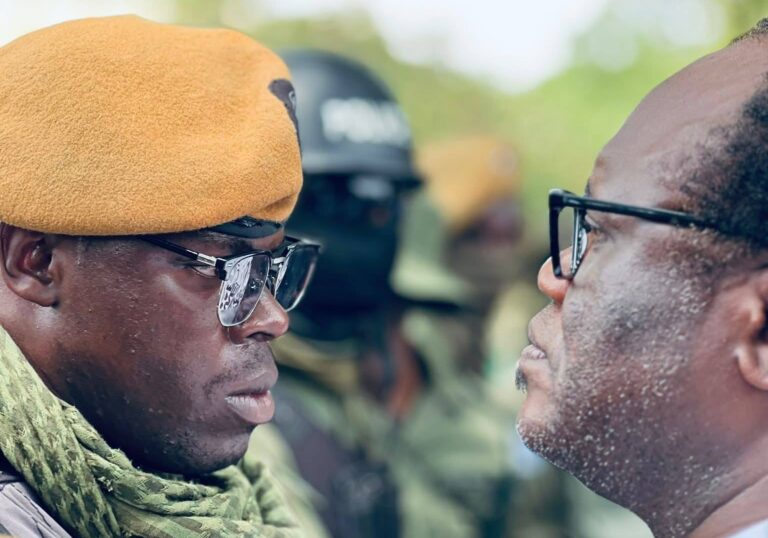
Mundubile Declares He Will Not Step Aside in PF Leadership Race

5

Mundubile Declares He Will Not Step Aside in PF Leadership Race

Brian Mundubile has declared that he will not back down from his campaign for the presidency of the Patriotic Front, insisting that the time has come for new leadership within the party.

Speaking in the context of ongoing internal developments, Mundubile stated that he remains committed to contesting the party’s top position and will continue engaging party structures and supporters as part of his campaign. He said stepping aside was not an option, maintaining that his bid was driven by a belief that the party requires a clear change in direction.

Mundubile indicated that his decision to remain in the race comes amid what he described as growing expectations from party members who want to see leadership renewal. He told supporters that his campaign is grounded in the need to restore confidence within the party and reposition it ahead of future political contests.

He rejected suggestions that his continued participation in the leadership contest was destabilising the party, stating that leadership competition should not be viewed as an act of defiance but as part of internal democratic processes. Mundubile said he was prepared to face the contest openly and allow party members to determine the outcome.

Addressing concerns about divisions within the party, Mundubile said differences of opinion should not be treated as hostility. He maintained that the Patriotic Front remains larger than any individual and that leadership contests should strengthen, not weaken, the organisation.

He further stated that his campaign has focused on engaging grassroots structures and listening to concerns raised by members across the country. According to Mundubile, these engagements have reinforced his resolve to continue seeking the party presidency.

Mundubile also dismissed assertions that he was acting in isolation, stating that he has continued to consult widely within the party. He said those consultations had encouraged him to remain in the race and articulate his vision for the party’s future leadership.

He reiterated that his objective was not personal advancement but what he described as the collective interest of the Patriotic Front. Mundubile said the party must be led by individuals who are prepared to make difficult decisions and provide firm leadership.

Mundubile said he remains confident that the leadership contest will ultimately produce a stronger and more united organisation. He said that his campaign would proceed until party processes are concluded.

UPND Media Director Pays Courtesy Call on Zambia’s High Commissioner to Namibia

3

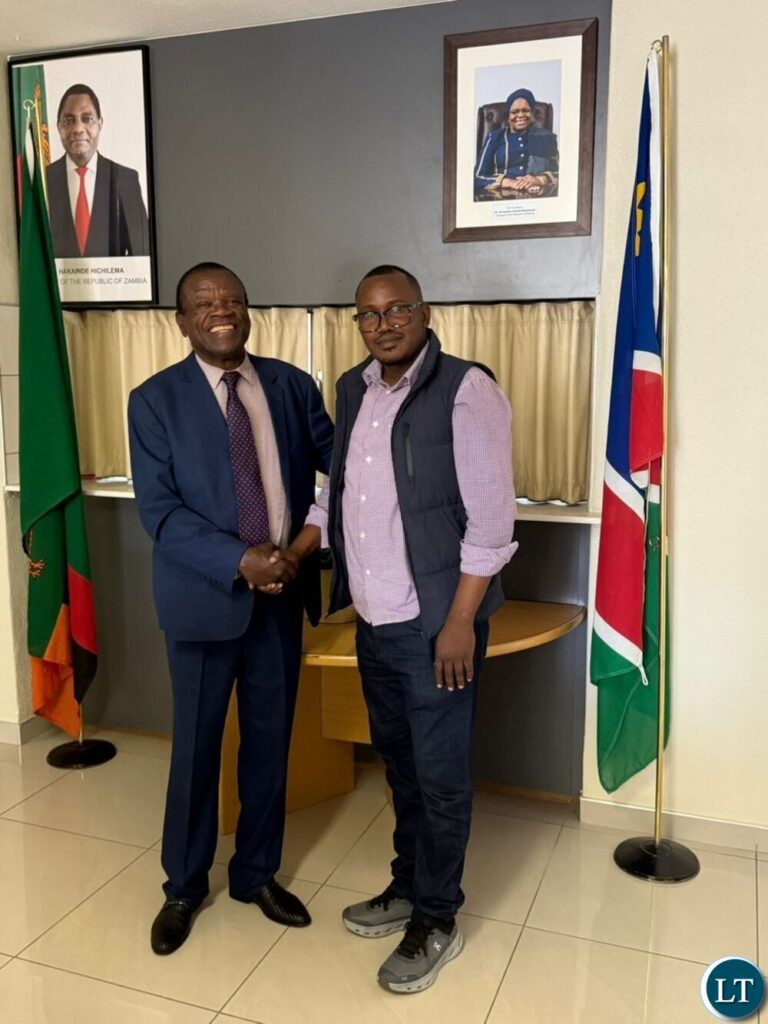
UPND Media Director Mark Simuuwe has paid a courtesy call on Zambia’s High Commissioner to Namibia, His Excellency Stephen Katuka, during which they discussed matters relating to governance, party mobilisation, and national development.

During the meeting, Mr. Simuuwe briefed the High Commissioner on the progress recorded by the UPND administration since assuming office, outlining developments achieved over the four-year period under President Hakainde Hichilema’s leadership.

He also informed the High Commissioner that the UPND has begun reinforcing its mobilisation and recruitment programmes nationwide as part of preparations for the 2026 General Elections. Mr. Simuuwe said the party intends to intensify engagement with citizens and expand its membership base.

Mr. Simuuwe further stated that the party is focused on strengthening its grassroots structures and ensuring that information on its policies and development programmes is effectively communicated to the public.

In response, High Commissioner Katuka encouraged the UPND to continue highlighting development achievements when engaging with the public.

He also advised the party to enhance coordination with Members of Parliament, noting that alongside developments delivered through local authorities and the Constituency Development Fund (CDF), Members of Parliament play a key role in explaining and outlining development activities taking place in their constituencies.

We will pay all NRC officers, Government assures

1

Government has assured officers who participated in last year’s nationwide mobile National Registration Card (NRC) issuance exercise that all outstanding allowances will be fully paid.

Several officers who took part in the exercise raised concerns that they had not received their allowances more than six months after the programme ended.

The Ministry of Home Affairs and Internal Security said the payment of allowances is ongoing and is being processed through established Government systems.

In a statement issued yesterday, principal public relations officer Mwala Kalaluka explained that the mobile NRC registration exercise, which ran from April to November last year, was conducted to ensure that all eligible Zambians obtained legal identification ahead of the 2026 General Election.

According to the Ministry, the exercise targeted more than 3.5 million eligible citizens across all 156 constituencies nationwide and was aimed at strengthening the country’s democratic and electoral preparedness.

To carry out the programme, Government deployed officers from across the civil service, who worked in both urban and rural areas under varying field conditions to register and issue NRCs.

Kalaluka said Government remains committed to meeting its obligations to officers who participated in what it described as a critical national exercise.

He stated that allowance payments are being processed through the Integrated Financial Management Information System (IFMIS) by the Department of National Registration, Passport and Citizenship, working in collaboration with the Ministry of Finance and National Planning.

Government acknowledged that some officers experienced delays in receiving their allowances, particularly during Phase Two of the exercise.

The delays were attributed to logistical and technical challenges, including the shift from cash-based payments to the IFMIS platform, incorrect banking details, the need to open bank accounts for officers not on the regular Government payroll, and other verification processes aimed at safeguarding public funds.

The Ministry has since assured officers that all outstanding allowances will be paid in full, adding that the funds allocated for the payments remain secure.