Wednesday, June 10, 2026
25.9 C
Lusaka
Home Blog Page 194

Deliver us from evil ….

0
Deliver us from evil

The phrase “deliver us from evil” carries weight precisely because it is invoked at moments when restraint feels fragile and power appears tempted by excess. It is a plea not only against wrongdoing, but against the gradual erosion of conscience that often precedes it. In periods of heightened political tension, that plea takes on renewed relevance.

Public life tests character most severely when pressure mounts. Institutions are stretched, loyalties are tested, and the line between authority and overreach can blur. At such moments, evil rarely announces itself dramatically. More often, it arrives quietly, justified as necessity, defended as procedure, or excused as temporary. It advances not through sudden collapse, but through small concessions made in the name of order, control, or expedience.

The danger lies in normalisation. What once felt unacceptable becomes routine. Actions once questioned are repeated with confidence. Language hardens, empathy thins, and the space for dissent narrows. Evil, in this sense, is not merely criminal conduct. It is the corrosion of restraint, the silencing of doubt, and the comfort found in power unchecked by accountability.

Faith traditions have long warned against this drift. The call to be delivered from evil is not passive. It demands vigilance, self-examination, and humility, especially from those entrusted with authority. Power without reflection invites abuse. Power without restraint erodes legitimacy. Power without accountability ultimately consumes itself.

In times of political strain, fear becomes a powerful tool. Fear of disorder, fear of instability, fear of losing control. When fear dominates decision-making, it can justify actions that would otherwise be rejected. The challenge for institutions is to act firmly without becoming cruel, decisively without becoming unjust, and lawfully without becoming oppressive.

Public confidence depends not only on outcomes, but on process. Citizens judge institutions not just by what they do, but by how they do it. Transparency, proportionality, and respect for rights are not luxuries reserved for calm periods. They are most essential when tensions are high. It is in difficult moments that principles are tested, and it is there that moral failure carries the highest cost.

The invocation of “deliver us from evil” is therefore a reminder of limits. It reminds leaders that authority is borrowed, not owned. It reminds institutions that legitimacy rests on trust, not fear. And it reminds society that silence in the face of excess is not neutrality, but complicity.

Moral appeals do not replace law, nor should they. But law divorced from conscience becomes mechanical, and conscience divorced from law becomes chaotic. The balance between the two sustains democratic life. When either is ignored, the result is instability disguised as order.

For citizens, the call is equally demanding. It requires engagement without hatred, criticism without dehumanisation, and resistance without violence. Evil thrives where polarisation hardens hearts and reduces complex human beings to enemies. A society that abandons empathy in favour of triumph may win arguments, but it loses itself.

Deliverance from evil, then, is not a single event. It is a continuous effort to choose restraint over excess, dialogue over domination, and principle over convenience. It is a discipline that must be practiced daily by those who govern and those who are governed.

History shows that societies rarely collapse overnight. They unravel when moral fatigue sets in, when standards slip, and when power learns it can act without consequence. The plea to be delivered from evil is a warning against that fatigue. It is a call to pause, to reflect, and to remember that authority without conscience is not strength, but danger.

In uncertain times, restraint becomes a form of courage. Choosing not to abuse power, not to intimidate, not to silence, requires strength. Deliverance from evil begins there, not in slogans or sermons, but in decisions made when no one is watching and restraint would be easiest to abandon.
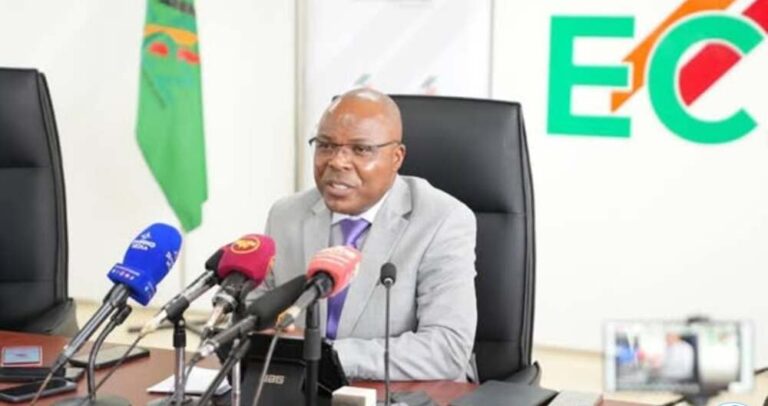
ECZ warns of cadres in Chawama and Kasama to destabilise campaigns

ECZ warns of cadres in Chawama and Kasama to destabilise campaigns

The Electoral Commission of Zambia has warned that some political parties are planning to deploy cadres in Chawama and Kasama with the intention of disrupting campaign activities, raising concerns about electoral integrity and public safety ahead of intensified political engagement.

The Commission said intelligence reports indicate coordinated efforts to interfere with campaign programmes through intimidation, provocation, and the disruption of rival party events. The areas identified have previously experienced heightened political tension, prompting the electoral body to increase vigilance.

ECZ officials stated that the use of cadres to destabilise campaigns undermines the democratic process and violates the Electoral Code of Conduct. The Commission emphasised that political competition must be conducted through lawful and peaceful means, without threats or coercion directed at candidates, supporters, or the general public.

The warning comes as political parties prepare to ramp up campaign activities, with rallies, door-to-door outreach, and public meetings expected to increase in frequency. ECZ noted that such periods often attract heightened risk where partisan groups seek to assert dominance through force rather than persuasion.

The Commission said it has engaged security agencies to monitor identified hotspots and respond swiftly to any incidents that threaten public order. Officials stressed that enforcement will not target lawful campaigning, but will focus on preventing violence, intimidation, and unlawful assembly.

Political parties were reminded of their responsibility to control their supporters and ensure compliance with electoral regulations. ECZ warned that failure to do so could result in sanctions, including suspension of campaign activities in affected areas.

Community leaders in Chawama and Kasama have been urged to promote dialogue and restraint, with ECZ emphasising that peaceful participation by citizens is essential to credible elections. The Commission said voters should be allowed to engage freely with candidates without fear of harassment.

The warning also highlighted broader concerns about the role of cadres in past elections, where their involvement has been linked to clashes, destruction of property, and voter intimidation. ECZ reiterated that such practices have no place in a democratic process.

As preparations continue, the Commission said it remains committed to working with all stakeholders to ensure a secure environment for campaigning. It urged political parties to focus on policy messages rather than confrontation, and appealed to supporters to reject calls for violence.

ECZ said further warnings or enforcement actions will be issued where necessary, and stressed that maintaining peace during campaigns is a shared responsibility among political actors, security agencies, and the public.

Sensio blasts NGOs over ‘tribal promotion’

Sensio blasts NGOs over ‘tribal promotion’

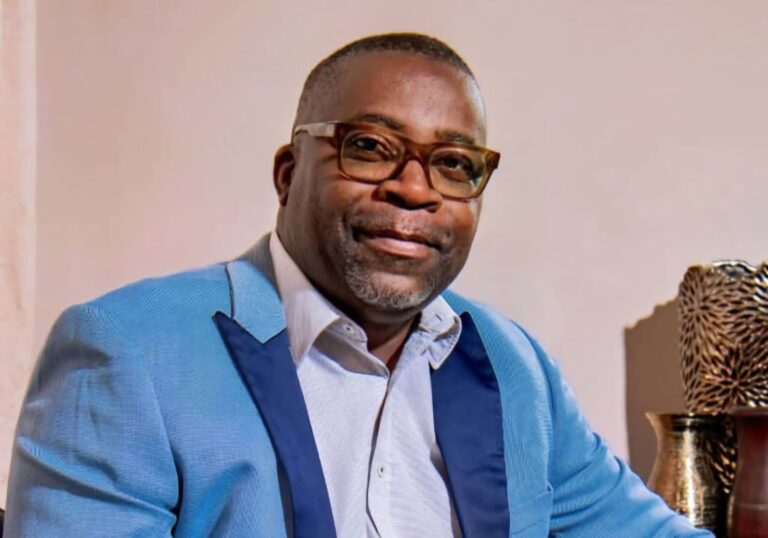
Political commentator and activist Sensio has criticised some non-governmental organisations, accusing them of promoting tribal narratives that risk deepening divisions within society. He said civil society groups must exercise caution and responsibility in how they frame political and governance issues.

Sensio argued that NGOs hold significant influence in shaping public discourse, particularly through reports, statements, and advocacy campaigns. When that influence is used in ways that emphasise ethnic identity, he said, it undermines national unity and distracts from substantive policy debates.

He said concerns arise when governance issues are framed through a tribal lens rather than assessed on the basis of law, accountability, and institutional performance. According to Sensio, such framing fuels suspicion and polarisation, making it harder for citizens to engage constructively with national issues.

The activist questioned the neutrality of organisations that, in his view, selectively highlight issues in ways that align with ethnic narratives. He warned that civil society risks losing credibility when advocacy appears politically or tribally skewed.

Sensio stressed that Zambia’s strength lies in its diversity and history of relative social cohesion. He said NGOs should contribute to strengthening that cohesion by promoting inclusive narratives and focusing on shared national challenges rather than emphasising differences.

He also cautioned that tribal framing can be exploited by political actors seeking to mobilise support through identity rather than policy. In such contexts, civil society, he argued, should act as a stabilising force rather than an amplifier of division.

Representatives of civil society organisations have previously maintained that their work is guided by principles of human rights, accountability, and transparency. They have argued that highlighting issues affecting specific communities does not amount to promoting tribalism, but rather reflects lived realities.

The exchange highlights ongoing tension between activists and NGOs over the role of civil society in political debates. As Zambia navigates an increasingly charged political environment, questions about neutrality, responsibility, and impact remain central.

Sensio called for greater introspection within the NGO sector, urging organisations to reflect on how their messaging is perceived and whether it contributes to unity or division. He said accountability should apply to all actors involved in public discourse.

Police Receive Praise for Handling of Archbishop’s Procession to DEC

0

The Zambia Police Service has garnered online praise for its conduct during a procession of sympathizers accompanying Lusaka Archbishop Alick Banda to an appointment with law enforcement officials on Tuesday.

Archbishop Banda was summoned to appear at the Drug Enforcement Commission (DEC) offices on Government Road for questioning. The summons is linked to allegations concerning the receipt of a Toyota Hilux vehicle allegedly improperly disposed of by the Zambia Revenue Authority.

On Sunday, Minister of Home Affairs and Internal Security, Jack Mwiimbu, stated that no crowd procession would be permitted to accompany Archbishop Banda, emphasizing that the summons applied only to the individual.

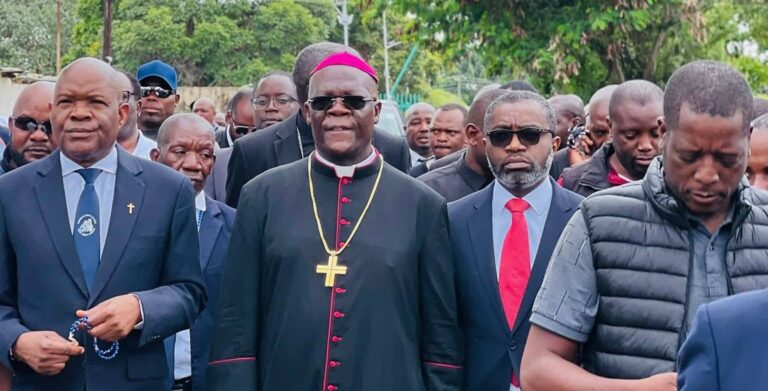
Despite this guidance, the Archbishop walked from the Cathedral of the Child Jesus to the DEC offices yesterday, accompanied by his lawyers, priests, members of the Catholic Men’s League, and a large group of sympathizers. Some in the crowd carried rosaries and recited prayers.

The procession proceeded until near the Zamcom Institute, close to the DEC offices, where police established a barricade. Only Archbishop Banda, his lawyers, and a few clergymen were permitted to proceed past this point to the DEC offices.

Law enforcement officers maintained the barricade as some in the crowd attempted to push forward. Among those not allowed to proceed further were Patriotic Front faction president Given Lubinda and former Minister of Finance Bwalya Ng’andu. Socialist Party president Fred M’membe was also prevented from entering, with video footage capturing him asserting his status as a lawyer to officers.

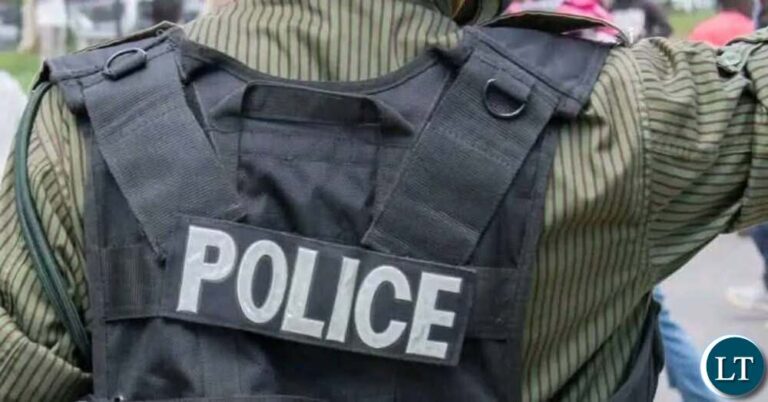
Police officers were seen engaging with the crowd, including speaking with a nun who appeared to be addressing them. Throughout the event, officers maintained order without resorting to the use of tear gas or other forceful dispersals common in past political demonstrations.

The police’s approach drew commendation from several netizens. Lawyer and politician Simon Mwila posted on Facebook, “What stood out today was the posture of the Zambia Police. They were present. They were firm. They were visible. But most importantly, they were restrained.”

In the comments on that post, Chilufya Bwalya noted, “It’s a win for both. I think the crowd was peaceful, they didn’t provoke each other.”

However, a commenter named Becky Zulu suggested a different perspective, writing, “So, you didn’t hear when he (a police deputy commanding officer) asked for teargas and his juniors refused to give him?”

The police service has not issued an official statement regarding the public feedback on their handling of the event.

Police Hunt Armed Gang After Copper Truck Hijacking in Pemba

0
Police have launched a manhunt for eight individuals following the hijacking of a truck carrying over 34 tonnes of copper cathode on Sunday night.

The incident occurred between Muzoka Trading Centre and Nachibanga Area around 20:00 hours on January 4, 2026. The targeted vehicle, a Zamlands Logistics truck with registration BCH 2801, was en route from Ndola to South Africa via the Kazungula Border.


Southern Province Police Commissioner Moono Namalongo confirmed the details. According to a statement from Commissioner Namalongo, the truck’s security guard, Pathias Chanda, reported that the vehicle was confronted by a group including three men and one woman who forced it to stop.


“According to Mr. Chanda, he saw three men and one woman attempting to stop the truck. Shortly thereafter, the truck stopped, prompting him to alight to check what had happened,” Commissioner Namalongo stated. “He was immediately apprehended by the three male persons, while the driver, Mabvuto Munthali, ran away from the scene, leaving the truck behind.”


The driver, 44-year-old Mabvuto Munthali of Kabwe Town, had departed from Ndola. The truck had spent the previous night at the Kafue weighbridge before resuming its journey south at approximately 05:00 hours on January 4.


After being apprehended, Chanda was forced into an unregistered taxi with three male occupants. He was tied with a rope and driven along Maamba Road before being dumped approximately 15 kilometres from Batoka Township. He later managed to free himself and walked to Batoka to report the incident at the local police post.


The hijacked truck was later found abandoned between Batoka Area, Chief Hamaundu, in Pemba District and the Daniel Munkombwe Tollgate at Gumba Area. The cargo of 34.760 metric tonnes of copper cathode plates was not on the vehicle.


Commissioner Namalongo stated that the whereabouts of driver Mabvuto Munthali remain unknown. Police have opened a docket of aggravated robbery to facilitate investigations.


“The Zambia Police Service appeals to members of the public with information that may lead to the arrest of the suspects or recovery of the stolen copper cathodes to report to the nearest police station,” Commissioner Namalongo said.

Mwale to defend WBC title against Tanzanian opponent

3

Oriental Quarries Boxing Promotions Manager, Christopher Malunga, has confirmed that preparations have advanced ahead of the World Boxing Council (WBC) international title fight scheduled for January 31, 2026, at the Government Complex in Lusaka.

Speaking during an interview with  the media , Malunga revealed that Zambia’s boxing star David “Sniper” Mwale will defend his WBC International Bantamweight Champion title against Ramadan Milonzi of Tanzania, who is now the officially approved challenger by the WBC.

Malunga explained that the fight was initially set for December 17, 2025, but plans had to change after the original opponent sustained an injury, while a replacement from South Africa was later considered but could not meet the timelines, prompting the World Boxing Council to approve Milonzi as the new challenger.

Malunga disclosed that the promotion initially announced a budget of K1.2 million, but due to the change of opponent, the budget has since been revised downward to K900, 000 and so far K500, 000 has been raised, leaving a balance of K400, 000.

He confirmed that the WBC title bout will be supported by a strong undercard featuring eight international supporting fights, bringing the total number of bouts on the night to nine.

And Malunga has commended the government for its inclusive sports policy and open door approach, acknowledging the Minister of Youth, Sport and Art for his continued backing, however appealing for increased investment in sports infrastructure.

Forensic DNA lab handles 450 cases in 2025

1

Ministry of Home Affairs and Internal Security, says Forensic Deoxyribonucleic Acid (DNA) Laboratory handled over 400 cases in 2025, with sexual offences accounting for 88 percent of criminal matters.

Principal Public Relations Officer Mwala Kalaluka said of the 400 cases, 303 cases were criminal, while 147 were non-criminal.

Speaking in an exclusive interview with ZANIS, Mr Kalaluka stressed that the laboratory successfully analysed 299 cases, representing 66.4 percent of all cases, resulting in the generation of 1,463 DNA samples.

He explained that 167 criminal cases out of the 303 were analysed while 136 remain pending mainly due to delays in submitting reference samples for DNA comparison.

For non-criminal cases, 132 out of 147 cases were analysed, comprising 9 humanitarian cases.

Mr Kalaluka said all completed DNA profiles are uploaded into the Combined DNA Index System (CODIS) to support investigations.

He noted that despite challenges such as delayed sample submissions, limited technical staff and storage capacity, the laboratory maintained a strong output.

Mr Kalaluka added that measures to improve the handling of Sexual and Gender-Based Violence (SGBV) cases included providing transport for law enforcement, distributing 1,261 sexual assault kits nationwide and training medical officers in proper evidence handling.

DEC cautions Archbishop Banda

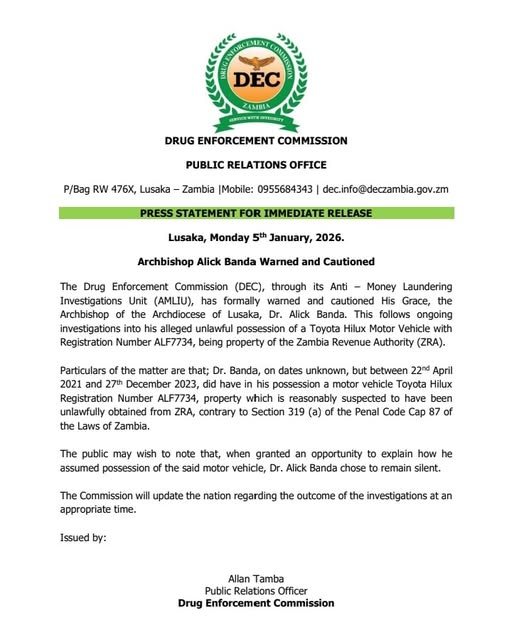
The Drug Enforcement Commission (DEC) through its Anti-Money Laundering Investigation Unit (AMLIU,) has formally warned and cautioned Lusaka Diocese Archbishop, Alick Banda.

This is in relation to allegations that Dr Banda was found in possession of a Toyota Hilux registration number ALF7734 property which is reasonably suspected to have been unlawfully obtained from the Zambia Revenue Authority (ZRA), contrary to section 319 (a) of the penal code cap 87 of the laws of Zambia.

DEC Public Relations Officer, Allan Tamba confirmed this to the media, shortly after Archbishop Banda appeared at the DEC offices in Lusaka.

Mr Tamba disclosed that when granted an opportunity to explain how he assumed possession of the motor vehicle, Dr Banda chose to remain silent.

“The Commission will update the nation regarding the outcome of the investigations at an appropriate time,” Mr Tamba said.

Over 1,000 passports processed online

1

Over 1,000 passport applications have been recorded and processed on the Online Passport Application and Payment System, since its launch late last year.

Ministry of Home Affairs and Internal Security, Director E-Government, Milner Makuni also said that his ministry is still conducting the old manual passport acquisition process in order to allow for a smooth transition process.

“It does not need to take so long, we have provided a tracking system where you will know when you are called for interviews, where the passport is and when you are told to come and collect it,” he said.

He added that his ministry is leveraging a blockchain to enhance data protection, while at the same time ultilising the digital footprint, which is left behind as files move from person to person.

He added that the process will also cut down government costs and eliminate passport agents by providing all the necessary information in relation to the process and cost of the document.

Mr Makuni, who was speaking during an interview, said that his ministry is looking at a future where passports will be couriered to the receiver’s closest pickup point, in order to enhance convenience and promote productivity.

The government launched the Online Passport Application and Payment System on December 17, of last year, following a public outcry on the time-consuming manual application process that sparked the debate for the need to be aligned with international standards.

Archbishop Alick Banda warned and cautioned over alleged ZRA vehicle

Archbishop Alick Banda warned and cautioned over alleged ZRA vehicle

The Drug Enforcement Commission has confirmed that it has warned and cautioned Archbishop Alick Banda as part of ongoing investigations into his alleged possession of a Toyota Hilux motor vehicle linked to the Zambia Revenue Authority.

In a statement issued through its Public Relations Office, the Commission said the matter is being handled by its Anti Money Laundering Investigations Unit and relates to a motor vehicle bearing registration number ALF 7734, which investigators reasonably suspect may have been unlawfully obtained. The investigation covers a period between April 2021 and December 2023.

According to the Commission, the investigation is anchored on Section 319(a) of the Penal Code, which deals with possession of property reasonably suspected to be proceeds of crime. The Commission stated that the warn and caution procedure was conducted to formally inform the Archbishop of his rights and to give him an opportunity to explain how he came into possession of the vehicle.

The Commission further disclosed that when given an opportunity to explain how he assumed possession of the Toyota Hilux, Archbishop Banda chose to remain silent. DEC said investigations remain ongoing and that the public will be updated regarding the outcome at an appropriate time.

Earlier in the day, Archbishop Banda appeared at DEC offices in Lusaka after concluding mass at the Cathedral of the Child Jesus. He arrived at around 10:20 hours in the company of his lawyers, opposition political leaders, and Catholic faithful who had gathered to accompany him.

The interrogation reportedly lasted about two hours, after which Archbishop Banda returned to the Cathedral of the Child Jesus together with his legal team. His lawyers did not disclose athe outcome of the interview to the media.

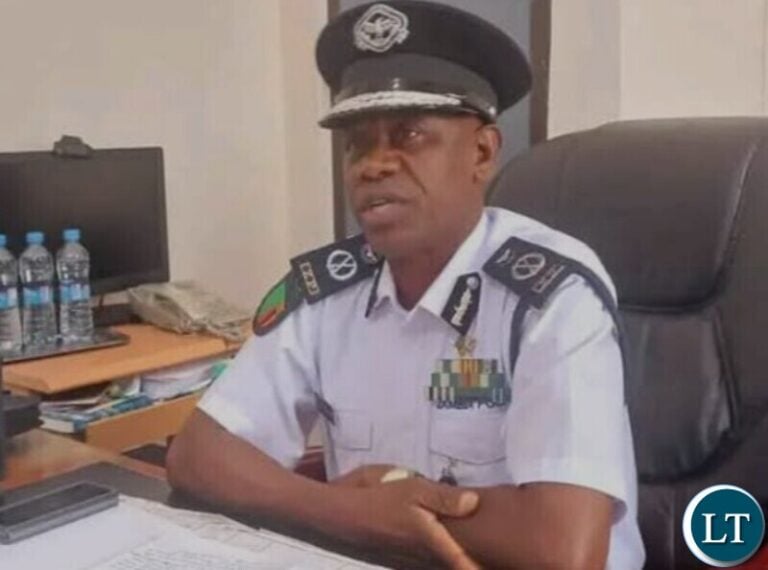
During the procession to DEC offices, police officers led by Lusaka Province Deputy Police Commanding Officer Ronald Zambo described the gathering as illegal and urged sympathisers to disperse. Police maintained a visible presence as the group moved through parts of the city.

Earlier, a mass service was held at the Cathedral of the Child Jesus at Pope Square to show solidarity with the Archbishop. The service was attended by scores of Lusaka residents, including several opposition political leaders. Among those present were Socialist Party President Fred M’membe, United Liberal Party President Sakwiba Sikota, National Democratic Congress President Saboi Imboela, and Patriotic Front presidential hopefuls.

In his homily during the mass, Archbishop Banda spoke about persecution in religious service, stating that those who suffer for their service to God will be reunited and find joy in Jesus Christ. His remarks were delivered before he proceeded to DEC offices.

DEC has since clarified that recording a warn and caution statement is a standard legal procedure used during investigations. In legal terms, a warn and caution means a person is formally informed of their rights and warned that anything they say may be recorded and used as evidence. The procedure does not amount to a finding of guilt but allows investigators to document a person’s account of events.

The Commission emphasised that the process marks an early stage in investigations and that conclusions can only be reached once inquiries are completed. DEC said the investigation remains active and that updates will be provided once appropriate.

Police Disperse Church Sympathisers as Mundubile Questions Use of Force

By Lusaka Times Reporter

We briefly caught up with Brian Mundubile as police officers moved in to disperse church sympathisers who had gathered near the Drug Enforcement Commission following the appearance of Archbishop of Lusaka Dr Alick Banda.

At the time of reporting, police were surrounding the roundabout near the High Court and issuing fresh instructions to push the crowd further away from the area. Mundubile was seen moving quickly as officers advanced, before getting into his vehicle and leaving the scene.

Speaking moments before his departure, Mundubile described the developments as unfortunate, stating that the gathering was peaceful and not political in nature.

He said the group largely comprised priests, nuns, and other church members who had escorted the Archbishop earlier in the day.

“This is a very peaceful crowd, predominantly of priests, nuns and other church members who may have escorted a bishop to D.E.C,” Mundubile said. “For the police to deploy this amount of force, where are our freedoms? We have freedom of movement and freedom to associate.”

According to Mundubile, the group had walked peacefully from the cathedral to the commission offices and was already dispersing when police began intervening.

“The parishioners, nuns and other priests were on their way back, but the police are now harassing them,” he said. “So when we say there is an attack on the church, this is exactly what we mean.”

As police continued to move the crowd further away from the roundabout near the High Court, Mundubile questioned the necessity of the operation, maintaining that the gathering posed no threat to public order.

“This is not a political crowd,” he said. “It is a very peaceful crowd.”

When asked how he hoped the situation would unfold, Mundubile said he expected the government to handle the matter with objectivity and maturity as questioning of the Archbishop continued.

He said he hoped President Hakainde Hichilema and his administration would exercise restraint, warning that continued confrontations involving the church could have broader implications for the country.

“If there is continued action perceived as an attack on the church, that is not good for the country,” Mundubile said.

At the time of reporting, police had not issued a public explanation for the decision to disperse the gathering. No incidents of violence or arrests were observed.

The developments unfolded as Archbishop Banda was being questioned by the Drug Enforcement Commission, amid heightened national attention over public order, freedom of assembly, and church-state relations.

Luanshya illegal miner drowns

1

A 22 year old alleged illegal miner in Luanshya has drowned after jumping into Luanshya dam, while attempting to evade arrest by security officers at Luanshya Copper Mines.

The deceased, identified as Malenga of Buteko Avenue in Luanshya, died after he allegedly plunged into the dam on January 3, 2026, as officers moved in to apprehend suspected illegal miners operating within the mine premises.

The incident was reported to New Town Police Post on January 3, 2026, around 16:20 hours, and had occurred earlier at about 15:40 hours at Luanshya dam within Luanshya Copper Mine premises.

Mine Police Officer Miyamba Tukolele, aged 44, of Ndeke Extension in Luanshya, reported the matter on behalf of Luanshya Copper mines.

Mr Tukolele who was on duty received information at about 16:09 hours from Panorama Security guards manning the pipeline area that suspected illegal miners had criminally trespassed into the mine with intent to commit a felony.

Mr Tukolele, accompanied by his colleague Bernard Phiri, aged 32 and Zambia Police Mobile Unit officers deployed at the mine, rushed to the scene.

Upon noticing the patrol team, the suspected illegal miners fled in different directions, with one of them jumping into Luanshya Dam and failing to resurface.

Immediate search efforts by mine police and mobile unit officers proved futile, prompting the matter to be formally reported to the police.

However another joint search operation of a combined team of police and luanshya municipal Council Fire Brigade was conducted at around 10:00 hours and the  body was later retrieved at around 11:45 hours.

The deceased was positively identified by his father, Kumoyo Malenga, aged 50, of Chifubu Secondary School area in Ndola.

A physical inspection of the body revealed injuries to the lips and eyelids, suspected to have been caused by water species.

The body has since been deposited at St. Anne’s Tontozo Funeral Parlour in Luanshya, awaiting postmortem examination and burial.

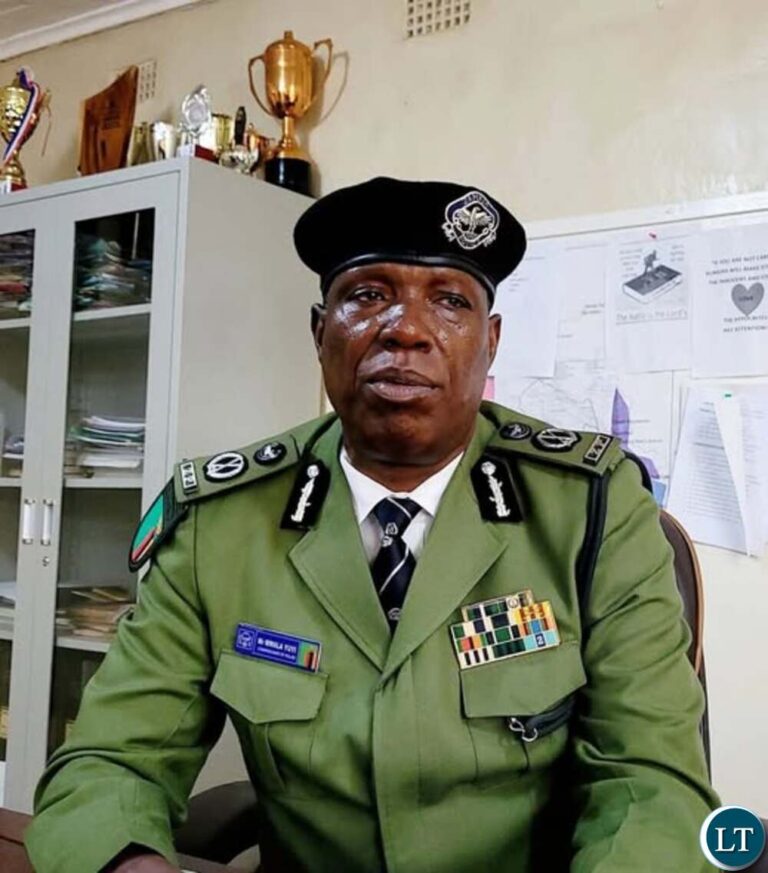
This was contained in a statement made available to the media by Copperbelt Police Commanding Officer Mwala Yuyi.

Maternity annex eases pressure on Kawambwa hospital

0

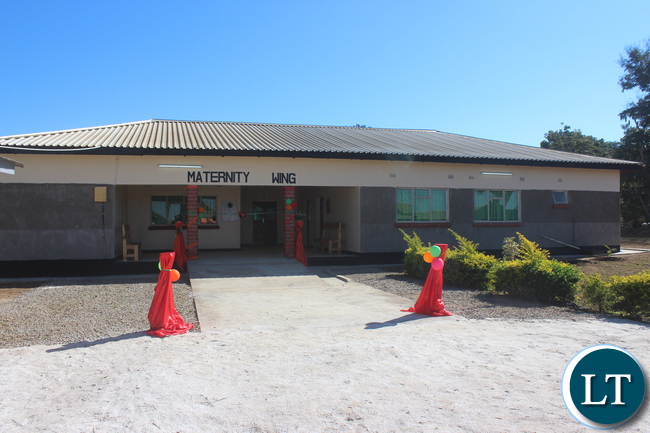
A Kawambwa based health practitioner says the completion of a new maternity annex at Munkanta Rural Health Centre under the Constituency Development Funds (CDF), has significantly reduced congestion and eased the referral strain on Kawambwa District Hospital from the rural facility.

In an interview, Munkanta Rural Health Centre In-charge Jacob Banda said the CDF funded new maternity annex has transformed maternal healthcare access at the community level.

Mr Banda says the facility now allows more expectant mothers from the catchment area to deliver safely, closer to home, rather than being referred to the often-overstretched district hospital.

“Before the completion of this maternity annex, most expectant mothers from this area were referred to Kawambwa District Hospital, which increased congestion and overstretched the available facilities,” Mr Banda explained.

“The annex has helped decentralise maternal services and decongest the district hospital,” he said.

He added that the wing has improved access to crucial antenatal and postnatal care, while cutting down the distance pregnant women must travel for services.

“Women can now access maternity services closer to their homes. This has reduced delays in seeking care and contributed to improved maternal and neonatal health outcomes,” Mr Banda said.

Kawambwa District Administration Officer James Nsama commended the strategic use of CDF to address critical health sector challenges.

“This project is a clear demonstration of how CDF is improving the lives of our people. Strengthening health facilities at community level helps reduce pressure on the district hospital and improves service delivery,” Mr Nsama stated.

Mr Nsama said the Munkanta Maternity Annex is among several health infrastructure projects being undertaken in Kawambwa District under the CDF, aimed at improving access to quality healthcare and supporting national efforts to reduce maternal and neonatal mortality.

Boy, 12, dies in RTA

2

A 12 year old boy of Sinda district in Eastern Province has died after being hit by a vehicle.

The juvenile was hit as he was running while crossing the road.

Given Banda, sustained fatal head injuries and died on the spot.

Eastern Province Police Commanding Officer Robertson Mweemba says the accident happened yesterday, Sunday, January 4th, at around 18:00 hours.

“Be informed that Sinda Traffic Officers have recorded a fatal road traffic accident which occurred yesterday, Sunday, January 4th, 2026, at around 18:40 hours at Bwindi area along great east road,” he said.

He said involved was a Hino ranger motor vehicle, registration number CAE 1968, and driven by Stanley Sibanda, 51, of Lusaka’s Makeni compound.

The driver who escaped unhurt, has since been arrested.

“The vehicle in question had a depressed right fender and damaged right corner lamp,” Mr Mweemba noted.

The body of the deceased has been deposited into Kalindawalo General Hospital Mortuary awaiting postmortem examination results.

Meanwhile, the driver is detained in police custody to assist with investigations.

Mweetwa reaffirms importance of family ties

3

Minister of Information and Media Cornelius Mweetwa has reaffirmed President Hakainde Hichilema’s stance on strong family units as a foundation of a stable society.

Mr Mweetwa says that through strong family units, society is able to raise children that become responsible citizens and contribute to national development.

The Minister said this at a wedding ceremony of Bernard Chomba, son to senior Chief Puta of Chiengi District and the bride, Mulenga Mwenda, last night in Lusaka.

He also acknowledged that through the nuptials, there is promotion of national unity as the couple hails from different regions of the country.

Mr Mweetwa noted that this is important for the government as it shows that Zambians are one people and must live as such.

And the Minister delivered a message of a successful happy family life for the newlyweds, while urging them to continue learning because marriage is an institution ordained by God.

“I have just come to put a stamp of authority on a successful marriage. It is the wish of the President that this marriage will endure the challenges of life,” the Minister said.

He thanked both the Chomba and Mwenda families for training their children well by ensuring that Bernard and Mulenga enter their holy matrimony in a dignified manner.

And senior Chief Puta of Chiengi District urged the couple to be each other’s keeper stating that each shall play their role accordingly to build a strong union.

Senior Chief Puta further appreciated all those who contributed towards the successful marriage ceremony.

Meanwhile, the traditional leader used the opportunity to urge politicians not to be advocates of division and confusion in the country by bringing issues of tribes and regions, which affect the general citizenry.

To seal the marriage, President Hichilema through his representative, Mr Mweetwa gifted the couple five heifers, while the Minister also gifted the couple K20, 000 and two heifers.