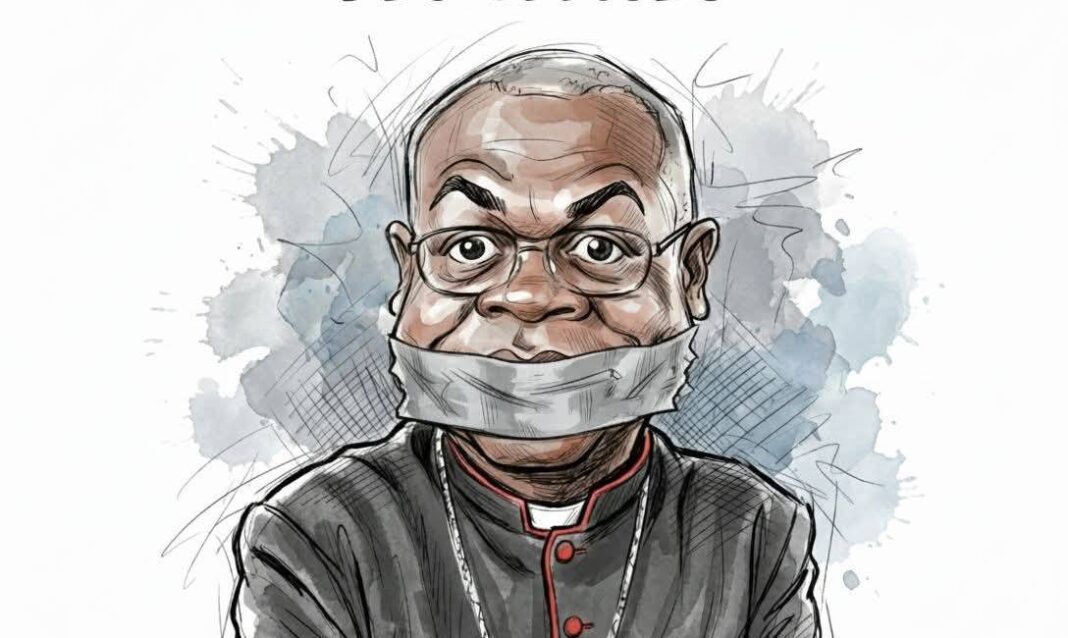
Deliver us from evil
The phrase “deliver us from evil” carries weight precisely because it is invoked at moments when restraint feels fragile and power appears tempted by excess. It is a plea not only against wrongdoing, but against the gradual erosion of conscience that often precedes it. In periods of heightened political tension, that plea takes on renewed relevance.
Public life tests character most severely when pressure mounts. Institutions are stretched, loyalties are tested, and the line between authority and overreach can blur. At such moments, evil rarely announces itself dramatically. More often, it arrives quietly, justified as necessity, defended as procedure, or excused as temporary. It advances not through sudden collapse, but through small concessions made in the name of order, control, or expedience.
The danger lies in normalisation. What once felt unacceptable becomes routine. Actions once questioned are repeated with confidence. Language hardens, empathy thins, and the space for dissent narrows. Evil, in this sense, is not merely criminal conduct. It is the corrosion of restraint, the silencing of doubt, and the comfort found in power unchecked by accountability.
Faith traditions have long warned against this drift. The call to be delivered from evil is not passive. It demands vigilance, self-examination, and humility, especially from those entrusted with authority. Power without reflection invites abuse. Power without restraint erodes legitimacy. Power without accountability ultimately consumes itself.
In times of political strain, fear becomes a powerful tool. Fear of disorder, fear of instability, fear of losing control. When fear dominates decision-making, it can justify actions that would otherwise be rejected. The challenge for institutions is to act firmly without becoming cruel, decisively without becoming unjust, and lawfully without becoming oppressive.
Public confidence depends not only on outcomes, but on process. Citizens judge institutions not just by what they do, but by how they do it. Transparency, proportionality, and respect for rights are not luxuries reserved for calm periods. They are most essential when tensions are high. It is in difficult moments that principles are tested, and it is there that moral failure carries the highest cost.
The invocation of “deliver us from evil” is therefore a reminder of limits. It reminds leaders that authority is borrowed, not owned. It reminds institutions that legitimacy rests on trust, not fear. And it reminds society that silence in the face of excess is not neutrality, but complicity.
Moral appeals do not replace law, nor should they. But law divorced from conscience becomes mechanical, and conscience divorced from law becomes chaotic. The balance between the two sustains democratic life. When either is ignored, the result is instability disguised as order.
For citizens, the call is equally demanding. It requires engagement without hatred, criticism without dehumanisation, and resistance without violence. Evil thrives where polarisation hardens hearts and reduces complex human beings to enemies. A society that abandons empathy in favour of triumph may win arguments, but it loses itself.
Deliverance from evil, then, is not a single event. It is a continuous effort to choose restraint over excess, dialogue over domination, and principle over convenience. It is a discipline that must be practiced daily by those who govern and those who are governed.
History shows that societies rarely collapse overnight. They unravel when moral fatigue sets in, when standards slip, and when power learns it can act without consequence. The plea to be delivered from evil is a warning against that fatigue. It is a call to pause, to reflect, and to remember that authority without conscience is not strength, but danger.
In uncertain times, restraint becomes a form of courage. Choosing not to abuse power, not to intimidate, not to silence, requires strength. Deliverance from evil begins there, not in slogans or sermons, but in decisions made when no one is watching and restraint would be easiest to abandon.