Wednesday, June 17, 2026
18.1 C
Lusaka
Home Blog Page 199

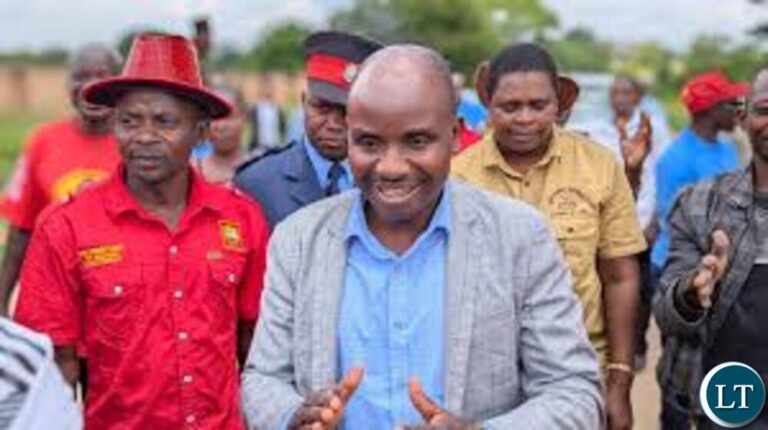
North-Western Minister Pays Tribute to Late UPND Member Mbambiko

0

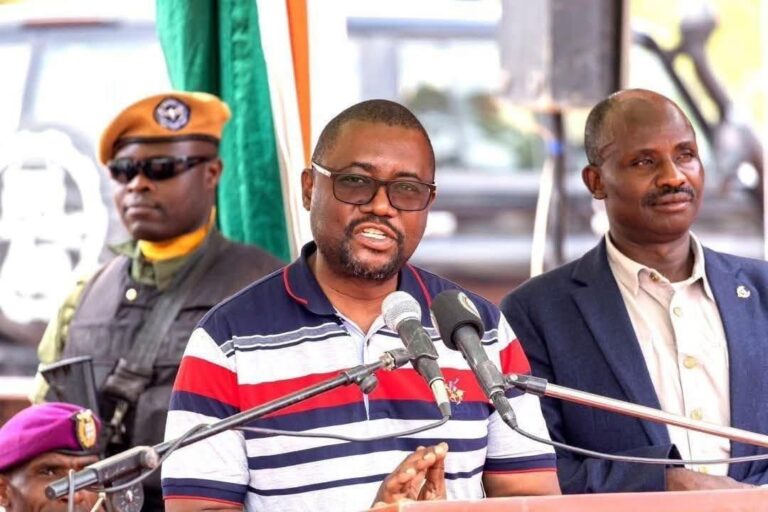
 North-Western Province Minister Robert Lihefu has described the late Bertha Mbambiko as a selfless person who advocated for development in the province.

Speaking during her memorial service held at Kimasala Evangelical Church in Solwezi District, Mr Lihefu said Ms Mbambiko was a kind-hearted woman who was appreciated by her family and the community at large.

“We need to celebrate the life of this great woman for the life she lived as a unifier,” Mr Lihefu noted.

He said Ms Mbambiko was a committed member of the United Party for National Development (UPND) who sacrificed and contributed to the growth of the party through her hard work and dedication.

He cited her commitment to expanding the lifespan of the mines in the Province and advocating for various policies that the UPND was currently implementing such as free education, which has benefited many people in Manyinga and the Province at large.

He said the party will always appreciate the commitment of Ms Mbambiko for her unwavering support to the UPND.

And in his sermon Rev Kingson Kilelemba of Kimasala Evangelical Church urged the family to continue praying for Bertha Mbambiko to rest in the Lord.

He encouraged the family to continue trusting in God and to live in peace.

“As a party, we will always remember and appreciate her works,” he said.

And speaking on behalf of the family Margret Mbambiko described the late Bertha as a family pillar.

She encouraged other family members to continue loving one another and to uphold the legacy of Ms Mbambiko

Kasempa Detective Found Dead at Home

0

A police criminal Investigations officer in Kasempa District of North-Western Province has been found dead at his residence in a suspected murder case.

The development was confirmed by North-Western Province Police Commissioner Brighton Siwale, who identified the deceased as Friday Mulauzi aged 38.

Mr Siwale confirmed the incident in a statement to the Zambia News and Information Service (ZANIS) in Kasempa District today.

He said the Kasempa Police Station recorded a case of murder, which was believed to have occurred between January 6, 2026 around 21:00 hours and January 7, 2026 around 05:00 hours.

“The matter was reported on January 7, 2026 around 05:30 hours by Mr Emmanuel Koloko aged 25, a neighbour to the deceased of Small-Mayard area, who reported that his neighbour was found lying unconscious and lifeless on the corridor of his house,” Mr Siwale added.

He explained that the deceased was until his death serving as a Criminal Investigations Officer at Kasempa Police Station.

Mr Siwale disclosed that brief facts indicated that on January 6, 2026 around 21:00 hours, the deceased was drinking at Breaking-Point Night Club in Kasempa Boma with his colleagues before returning home.

He added that on January 7, 2026 around 06:00 hours, an unknown woman who was passing by the deceased’s house noticed him lying unconscious on the ground and later alerted the deceased’s landlord’s son, who subsequently reported the matter to police.

Mr Siwale further disclosed that police officers rushed to the scene and found the body facing upwards in a pool of blood about a metre away from the door to the house, with the keys to the house lying on the ground.

“Upon physical inspection of the body, a deep cut was observed on the left upper side of the chest with intestines protruding, and it is suspected that an unknown sharp object was used in the act,” he said.

Mr Siwale further disclosed that the deceased’s motor vehicle was found parked beside his house, while the car keys were discovered in the right pocket of his coat.

He added that the body was later retrieved from the scene and deposited at Mukinge Mission Hospital Mortuary, where it was being kept awaiting postmortem examination.

Mr Siwale said a docket of murder had been opened and investigations had since been instituted, adding that no arrests had been made so far.

He appealed to members of the public with information that may lead to the arrest of the perpetrators to come forward and assist the police.

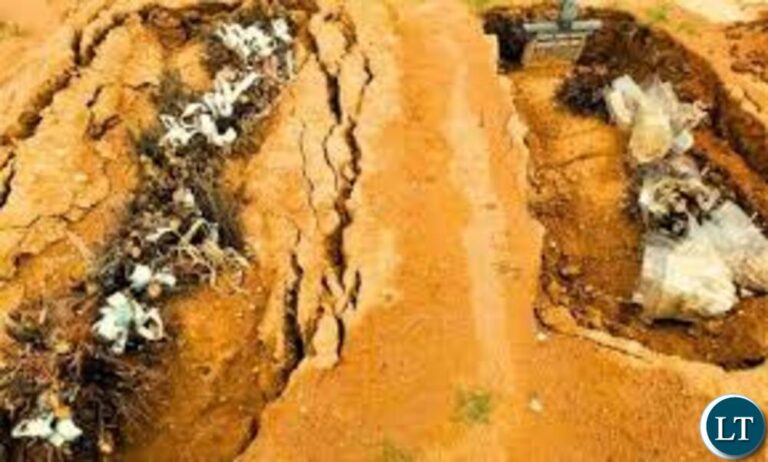
Over 200 Graves Collapse After Heavy Rains in Solwezi

 Over 200 graves have collapsed at Kimiteto Cemetery in Solwezi District of the North-Western Province following heavy rains experienced in the area.

Acting Town Clerk Castro Chisanga revealed that 220 graves in the low-cost section and 35 in the high-cost section have sunk as a result of soil saturation caused by the prolonged rainfall.

Mr Chisanga is calling on members of the public who recently buried their loved ones to take time to visit the graves to assess the condition of the sites.

He said affected graves will require refilling and reinforcements and the council was on hand to render support through provision of gravel.

He has revealed that the council officers are   on the ground to assist the families with gravel to ensure that the sinking gravels are worked on.

” Our officers are on the ground to closely monitor the situation at the grave yard those who are affected can visit our offices,” Mr Chisanga stated.

He has assured members of the public that the local authority will continue providing guidance to ensure that there was dignity, safety and proper maintenance of the cemetery.

Central Province Councils Told to Fix Feeder Roads

0

Central Province Minister Mwabashike Nkulukusa has directed Councils in the province to start working on feeder roads following the procurement of earth moving equipment using the Constituency Development Fund (CDF).

Mr Nkulukusa expressed sadness that most of the Councils were not working on feeder roads despite being equipped with earth moving equipment and fuel for their operations.

He said the provincial administration will not entertain further excuses from the Local Authorities for failing to work on feeder roads in their respective districts.

Mr Nkulukusa, who made a directive when he featured on KNC’s One-on-One Radio programme, said government spent a lot of money to procure the earth moving equipment for all the 11 Councils.

He stated that government went further to provide money for fuel for the machines under the CDF component.

“The yellow machines should start working on the feeder roads in all the 11 districts. Government has done its part by providing the Councils with fuel,” Mr Nkulukusa said.

He emphasized that government will this year work towards improving the road network to meet the aspirations of the people.

Meanwhile, Mr Nkulukusa assured the people of Central Province that government remains committed to upgrading some of township roads to bituminous standard.

He disclosed that the road upgrade project will start with Kabwe, Chibombo, Chisamba and Kapiri Mposhi Districts.

He said 40 kilometres of roads in Kabwe will be upgraded to bituminous standard with Kapiri Mposhi allocated 20 kilometres while Chibombo and Chisamba have been allocated 15 kilometres and 10 kilometres respectively.

Milenge Husband Allegedly Beats Wife to Death

0

A 25-year-old woman in Milenge District in Luapula Province has allegedly been beaten to death by her husband.

The deceased identified as Alice Lungu of Talayi Village in Chief Sokontwe’s Chiefdom allegedly died from a suspected case of Gender-Based Violence (GBV).

Attending the funeral of the deceased, Milenge District Commissioner Kayula Mulenga called on the community to report cases of GBV and cautioned against dismissing abuse as a family or cultural matter.

The media reports that Mr Mulenga urged victims not be discouraged from speaking out under the pretext of protecting family image.

“When victims come out to report, they should not be reprimanded or told that they are embarrassing the family, let’s not encourage GBV,” Mr Mulenga said.

Mr Mulenga stressed that all forms of GBV must be reported to relevant authorities, warning that violence has far-reaching consequences, especially for children who are left to suffer when one parent is killed and the other is arrested.

And Chief Sokontwe has advised women to stop keeping quiet when they are being abused in their homes.

Speaking through his representative, Headman Orlando, Chief Sokontwe also advised men to reduce alcohol consumption, which he described as a major contributor to GBV incidents.

The traditional leader called for prompt reporting of GBV cases to police or One-Stop Centres, adding that early reporting can prevent loss of life.

Meanwhile, a community member close to the family of the deceased, Winfredah Kunda, said the circumstances surrounding the alleged assault remained unclear, adding that the family was still struggling to come to terms with the sudden loss.

Ms. Kunda disclosed that postmortem results revealed that the deceased sustained severe internal injuries

Ministry of Finance Consults Muchinga Stakeholders on INPF

0

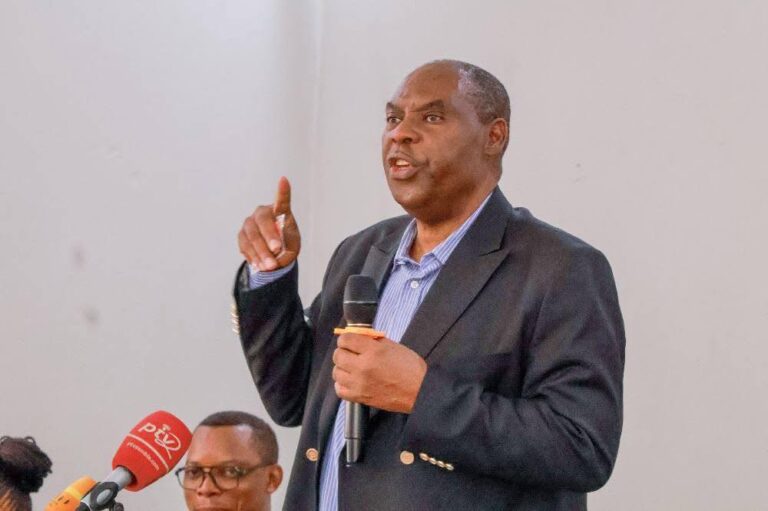
Ministry of Finance and National Planning is consulting with various stakeholders in Muchinga Province on the formulation of the Integrated National Planning Framework (INPF) that seeks to align the country’s long strategic plans, medium plans and annual operating budgets.

The consultative meeting was officially opened by Muchinga Province Deputy Permanent Secretary Brian Sichande highlighted the importance of INPF for Zambia.

Mr Sichande said currently the country lacks a clear and comprehensive long-term plan that speaks to the strategic objectives and developmental goals upon which both the medium- and short-term plans can strive on.

Mr Sichande said it was against this background that the Ministry of Finance through the Planning unit was working on formulating an INPF that seeks to serve as a tool to facilitate, guide and harmonise the country’s long- and medium-term development planning efforts.

He said the INPF outlines the processes by which plans generated by various sectors.

The DPS highlighted that the INPF also defines clearly the roles and responsibilities of stakeholders at different levels of the national development planning process, planning horizons, cycles and expected outcome.

Mr Sichande said the Integrated National Planning Framework drive transformative change and sustainable growth by making adjustments to political, social and the economy of the country.

“This will be achieved through strengthening the linkages between the long term, medium term and short-term development planning,” Mr Sichande said.

He said in line with the National Planning and Budgeting Act, government has commended the process of formulating the 9th National Development Plan (9NDP) making it the last national planning plan before the expiration of the vision 2030.

Mr Sichande therefore, highlighted that the engagements that are on course in the province served as critical input and basis for the future and success of the national development plan.

And Ministry of Finance representative, Madalitso Mwanza highlighted some of the objective of the INPF as synchronising national planning with budgeting process and cycles and create a framework that will harmonise the national planning with planning at the sector and government levels among others.

Mr Mwanza said government was  making significant strides in ensuring that the country graduates from the Least Developed Countries (LDC) category by meeting the criteria through addressing shortfall aspects that Zambia failed to meet.

“In 2024 the country met the requirements to graduate from LDC category but over the years the nation failed short of the criteria required which made the nation not to graduate,” he stated.

Mr Mwanza added that in order for the nation to meet criteria of the graduation process, government has put up several measures aimed at meeting the set criteria adding that the INPF is one of the strategies being put in place.

” Government is committed to achieve this goal for the betterment of the nation,” he said.

And Consultant engaged for the development of INPF Michael Soko said INPF will facilitate a structured way of organizing thoughts, setting goals and management of resources.

Mr Soko also added that the framework will examine economic, social, political and environmental impacts.

The two days consultative meetings have been attended by Councilors, Ward Development Committees, Chamber of Commerce and Industry and Government departments including Civil Society Organisations.

Mpika Council Begins Restaurant Hygiene Inspections

0

Mpika Town Council Senior Health Inspector Francis Kapila says the local authority has commenced conducting restaurant compliance inspection on the hygiene practice around Mpika town.

Mr. Kapika said that the local authority was inspecting all food handlers across the district in order to prevent the outbreak of cholera and other waterborne diseases during the rainy season.

He was speaking when he visited the restaurants located at Mpika bus station.

Mr Kapila stated that the restaurants that were not adhering with hygiene practice will cease operations.

He said that during the rainy season the local authority intensifies inspections compared to their daily routine inspections.

‘’As health inspectors we collaborate with the council police in order to carry out these activities around the entire district, as this activity is not only meant for the Central Business District,” he said.

Mr Kapila stated that out of the 20 restaurants inspected at least 7 were closed down for non-compliance with required hygiene practices.

‘’We are not only looking at the surroundings but also if their restaurants have adequate water, hand washing liquid and also personal hygiene is vital in their area of work as they are dealing with so many customers,’’ he said.

He further disclosed that in 2025 the local authority organised a food handler training which was successful adding that most of the trained restaurant owners complied.

And Emma Chali one of the restaurant owner said keeping the surroundings clean was very vital as it helped prevent diseases like cholera, diarrhea, typhoid and dysentery.

Ms. Chali said that restaurant workers must always cover their heads with hair nets and also dress appropriately during working hours as a way to protect their customers from consuming dirty food.

‘’We should also dispose off our bins so that we avoid flies and maggots wash our aprons and provide our customers with hand wash to keep a clean environment,” she said.

And another restaurant owner Flevia Mutale said that food handlers must handle food with a lot of care as customers may fall sick due to dirty environment.

Ms. Mutale appealed to her counterparts to always keep their surroundings tidy at all times.

Meanwhile, Mpika District Commissioner David Siame commended the local authority for the on-going health inspection in the district.

Mr. Siame said the objective of the inspection was to make sure that public health standards were maintained adding that the act was in accordance with the public health act.

He said that food handlers must adhere to public health regulations as a way to avoid the outbreak of different diarrhea diseases.

‘’This is not only for restaurant owners but also butcheries and other food handlers because we do not want a situation where hospitals are packed with sick people,’’ he said.

He further said that especially that Mpika was one of fastest growing population, the local authority must conduct the inspections regularly adding that Mpika residents must also keep their homes clean at all times.

ECZ calls for discipline among Chawama Poll Staff

Electoral Commission of Zambia (ECZ), has urged polling officials, including presiding officers, polling assistants and support staff, set for the Chawama Parliamentary by-election to work with integrity and professionalism.

ECZ Chairperson Mwangala Zaloumis stressed that poll staff will play a key role in determining the credibility of the election, scheduled for January 15th, 2026.

She stated that the officers are central to the conduct of the election and their actions will directly affect public confidence in the outcome of the poll.

She was speaking in Lusaka during a meeting and training session with polling officials ahead of the by-election.

The media reports that Ms Zaloumis explained that the training programme will run for five days and is meant to equip polling officials with the necessary knowledge, skills and confidence to manage polling, vote counting and the overall electoral process effectively.

She stressed that all polling officials must remain neutral, strictly follow electoral procedures and treat every voter fairly and without bias.

The ECZ Chairperson also urged officers to remain calm during vote counting, which will be conducted in the presence of polling agents, election agents, monitors and observers.

She further encouraged polling officials to use the knowledge gained from the training to share correct information in their communities and help counter misinformation about the electoral process.

Tonse leadership crisis deepens after Lubinda rebuke

LUSAKA — Patriotic Front Vice President and Acting President Given Lubinda has issued a firm rejection of the Tonse Alliance’s January 2026 decision to demote the Patriotic Front from its position as the coalition’s primary political vehicle, describing the move as illegitimate, unconstitutional, and a betrayal of former president Edgar Chagwa Lungu’s democratic legacy.

In a detailed statement reported across multiple media platforms, Lubinda said the Patriotic Front remains the only legally registered and nationally structured political organisation capable of representing Lungu’s political vision and the millions of Zambians who supported it.

Lubinda dismissed assertions by Tonse Alliance acting chairperson Professor Dan Pule that an unregistered entity referred to as the “ECL PF Political Movement” constitutes an alternative or contingency platform for the coalition. He said no such arrangement exists in any Patriotic Front central committee resolution, party constitution, or formal public communication issued by Lungu before his death.

“The Patriotic Front is not a personal project that can be replaced at will,” Lubinda said, arguing that the party’s registration with the Electoral Commission of Zambia, nationwide constituency structures, and established membership distinguish it from informal political movements.

He recalled that in 2023, the PF central committee passed a binding resolution endorsing Edgar Lungu as the Tonse Alliance’s presidential candidate, a decision ratified by party delegates across the country. According to Lubinda, that resolution established PF as the anchor party of the alliance rather than a temporary participant.

Lubinda argued that dissolving PF’s role without a comparable democratic process undermines the principles the coalition claims to uphold. He said unity imposed through exclusion amounts to erasure rather than reform.

Reports in the Times of Zambia indicate that Tonse Alliance insiders have justified the decision by pointing to persistent internal divisions within PF following Lungu’s death. These include parallel leadership claims, court disputes over party symbols, and disagreements over candidate selection, which they say have weakened the party’s operational effectiveness.

Supporters of the shift argue that the ECL PF Political Movement, composed of former PF ministers, Members of Parliament, and senior officials loyal to Lungu, offers a more cohesive platform for the 2026 elections.

Lubinda rejected that view, warning that replacing a registered political party with an unregistered structure risks disenfranchising PF’s extensive grassroots base. He said the ECL PF Political Movement has no ECZ registration, no internal elections, and no official candidate lists, raising serious questions about its capacity to contest elections nationally.

He urged PF members to reject what he described as elite-driven political realignment and instead remain committed to the party’s constitutional processes, including planned internal elections.

Lubinda also criticised the Tonse council’s decision to remove a clause that had designated Lungu as the coalition’s 2026 flagbearer, describing the move as a posthumous slight. He maintained that leadership decisions must emerge from PF structures, not from an alliance that now excludes the party.

“If the Patriotic Front has challenges, they must be resolved internally,” Lubinda said. “Abandoning the party and calling it progress is neither democratic nor principled.”

He concluded by asserting that PF’s historical role in national development and opposition politics cannot be transferred to informal movements, insisting that only the registered Patriotic Front can legitimately carry forward Lungu’s political legacy.


Economist Sees Continued Economic Growth, but Warns Relief Is Lagging

Economist Sees Continued Economic Growth, but Warns Relief Is Lagging

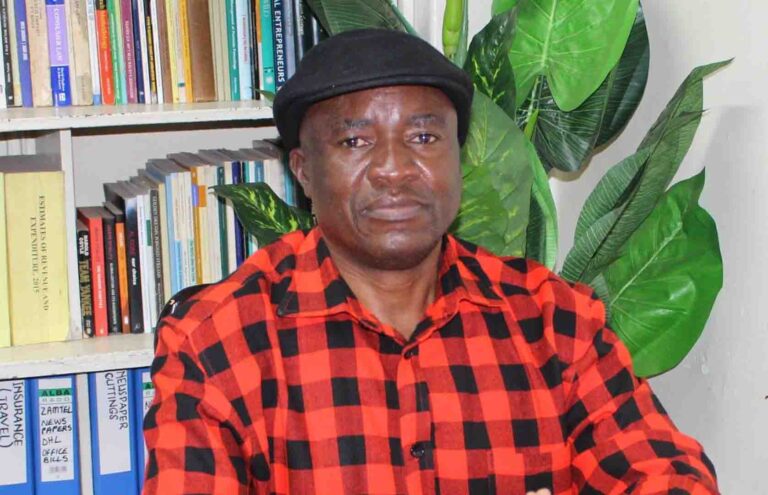
Economist Dr. Mwamba Simbao says Zambia’s economic recovery is no longer fragile and is likely to remain on a steady growth path through 2026, but cautions that the benefits of that recovery are yet to be fully felt by ordinary households.

From his assessment of current macroeconomic indicators, Dr. Simbao projects that real GDP growth will remain within the range of 4.2 to 4.8 percent this year, a level he considers sustainable under prevailing conditions. He grounds this outlook in what he describes as measurable improvements in fiscal discipline, exchange-rate stability, and external confidence.

According to Dr. Simbao, fiscal consolidation has been a central pillar of the recovery. Reduced budget deficits have eased pressure on domestic borrowing, while the successful restructuring of Zambia’s external debt under the G20 Common Framework has restored predictability to the country’s fiscal outlook. That predictability, he notes, is critical for rebuilding investor confidence.

“The exchange rate has stabilised, inflation is trending downward from double-digit levels, and foreign reserves are rebuilding,” Dr. Simbao explains, adding that these developments create a more conducive environment for both domestic and foreign investment. In his view, credibility in policy execution now matters as much as incentives.

Copper remains a key anchor of the recovery. Dr. Simbao points to stable prices, consistent output, and improved transparency in royalty administration as factors that have strengthened public revenue without discouraging exploration or expansion in the mining sector. He argues that this balance has helped restore confidence in Zambia’s economic management.

However, Dr. Simbao is careful to separate macroeconomic progress from lived economic reality. He acknowledges a persistent disconnect between national indicators and household experience. While headline inflation has eased, food inflation remains elevated, driven by climate-related disruptions to maize production, global fertiliser costs, and supply pressures.

“Macroeconomic stability does not automatically translate into microeconomic relief,” he notes. Incomes have not risen fast enough to offset price pressures on essentials, and as a result, many households experience recovery as an abstract concept rather than a tangible improvement.

This gap, Dr. Simbao argues, explains growing public scepticism. People are told the economy is improving, yet they buy less than before. That contradiction, he says, is not emotional but structural. Economic repair begins at the top of the system and takes time to filter down.

He also warns of concentration risk. While copper has stabilised the economy, overreliance on a single commodity leaves Zambia exposed to external shocks. Price volatility or climate disruption could quickly reverse gains built over several seasons. Diversification into agriculture, manufacturing, and value-added processing is therefore not optional, but necessary.

Dr. Simbao places particular emphasis on job creation. Youth unemployment remains high, and he argues that no recovery can be considered durable if it fails to absorb new entrants into the labour market. Growth without employment, he cautions, produces statistics rather than stability.

Looking ahead to the 2026 election period, Dr. Simbao expresses confidence that Zambia’s economic momentum can be sustained, provided fiscal discipline is not sacrificed for short-term political convenience. Reversing reforms or loosening controls prematurely, he warns, would quickly undo recent progress.

His assessment is neither celebratory nor dismissive. Zambia, he says, is no longer in economic free fall, and that alone is significant. But recovery confined to balance sheets will always face scepticism.

“The foundation is firmer,” Dr. Simbao observes. “The challenge now is to ensure that what is built on it is broad enough to shelter everyone.”

PF condemns Mung’andu for “desperate lies” as former MP stands by claims

PF condemns Mung’andu for “desperate lies” as former MP stands by claims

LUSAKA — The Patriotic Front (PF) has launched a fierce rebuttal against its former Chama South member of Parliament, Davison Mung’andu, accusing him of spreading what it termed “wild and unbelievable falsehoods” in an attempt to ingratiate himself with President Hakainde Hichilema.

The dispute follows remarks made by Mung’andu during a rally addressed by President Hichilema at Choma Sports Club on Wednesday, January 7, 2026, where the former lawmaker alleged that the PF deliberately sabotaged Zambia’s economy ahead of the 2021 general elections to frustrate the incoming United Party for National Development (UPND) administration.

In a strongly worded statement issued on Thursday, PF Central Committee member Ambassador Emmanuel Mwamba dismissed the claims as reckless and malicious. He accused Mung’andu of fabricating allegations to rewrite history and deflect responsibility for what the party described as the current government’s economic failures.

Among the most serious accusations raised by Mung’andu was a claim that a senior PF official transported $9 million in cash out of the country just one week before President Hichilema’s swearing-in on August 24, 2021. The PF described the allegation as baseless and politically motivated.

“It is ridiculous to blame President Hichilema’s monumental failures on the Patriotic Front,” Mwamba stated, attributing Zambia’s economic challenges to what he characterised as incompetence, inexperience, and policy decisions that favour foreign multinationals and a small group of beneficiaries.

The PF challenged Mung’andu to submit any evidence supporting his claims to law enforcement agencies, questioning why he had not reported the matter to the Drug Enforcement Commission or the Anti-Corruption Commission if the allegations were credible. The party said the absence of formal complaints undermined the authenticity of the accusations.

Mung’andu, however, has stood by his assertions. Addressing supporters in Choma, he maintained that PF’s final months in office were marked by economic mismanagement, including artificial shortages, manipulation of inflation data, and concealment of unsustainable debt levels. He accused the former administration of leaving the treasury depleted and the economy on the brink of collapse.

He further claimed that the alleged $9 million transfer was part of a broader pattern of last-minute asset stripping by outgoing officials, arguing that the economic difficulties inherited by the UPND were not accidental but deliberate.

In its response, the PF defended its development record, citing what it described as measurable achievements during its time in power. The party said national electricity generation capacity increased from about 1,600 megawatts in 2011 to 3,500 megawatts by 2021. It also pointed to the construction of more than 3,200 schools, 830 health facilities, 121 bridges, and approximately 14,000 kilometres of roads.

The PF further highlighted major infrastructure projects including the Solwezi–Chingola Dual Carriageway, Simon Mwansa Kapwepwe International Airport, and the Itezhi-Tezhi Hydropower Station, arguing that these developments contradict claims of deliberate economic sabotage.

Mung’andu countered that many of the projects were overbudget, underutilised, or financed through undisclosed borrowing. He referenced the 2021 debt disclosures that showed Zambia’s obligations had risen to more than $17 billion, much of it not previously presented to Parliament, a situation he said supported his claims of fiscal mismanagement.

The PF reminded the public that Mung’andu himself was elected to Parliament in 2021 on the PF ticket and benefited directly from the party’s political machinery and development record. The party accused him of abandoning his mandate for personal advancement, alleging that he had commercialised his political position.

Mung’andu rejected that characterisation, describing his political shift as a matter of conscience. He told supporters that had PF retained power after 2021, load-shedding would have worsened and inflation would have reached 50 percent, claims he said had been disproved by subsequent events.

The PF dismissed the remarks as theatrical and opportunistic, warning that such political defections undermine national unity as the country moves toward the 2026 general elections.

ZRA accused of internal collusion in Hilux sale to Archbishop Banda

ZRA accused of internal collusion in Hilux sale to Archbishop Banda

LUSAKA — The Green Party (GP) has warned that the Zambia Revenue Authority risks triggering a nationwide tax boycott unless the government halts what it describes as a politically driven campaign against Lusaka Archbishop Dr Alick Banda and permits an independent investigation into allegations of internal fraud within the revenue agency.

GP president Peter Sinkamba said the state’s recent claims that official receipts connected to a disposed ZRA motor vehicle were falsified have gravely damaged public confidence in the tax authority and could destabilise Zambia’s entire revenue collection system.

Sinkamba expressed concern over reports involving former ZRA employee Mulopa Kaunda, who is alleged to be under pressure to state that official receipts were fabricated in his name to facilitate what authorities are now portraying as an unlawful sale or “gifting” of a Toyota Hilux to Archbishop Banda.

He described the situation as deeply troubling, particularly because the transaction in question had never been cited as irregular in any Auditor General’s report since 2021. Sinkamba questioned why allegations of falsification are emerging only now, suggesting either serious flaws in ZRA’s audit systems or deliberate timing for political purposes.

According to the GP leader, documentation surrounding the disposal of the vehicle indicates a legitimate transaction, yet the introduction of a falsified receipts narrative points to possible widespread internal collusion within ZRA. He warned that if such claims are accurate, they would signal unchecked abuse and systematic siphoning of public assets within one of the country’s most critical institutions.

Sinkamba said failure to independently verify or conclusively dismiss the allegations would leave taxpayers with little confidence in the integrity of the authority responsible for collecting public funds. In such circumstances, he argued, citizens would be justified in withholding tax payments until a comprehensive and transparent audit is conducted.

He cautioned that a tax boycott would have immediate and severe consequences, including a liquidity crisis that could disrupt essential public services such as healthcare, education, and security. Beyond domestic effects, he warned that a breakdown in revenue collection would undermine Zambia’s ability to service its national debt and could trigger negative responses from international credit rating agencies.

Sinkamba directly linked the unfolding situation to the government’s handling of Archbishop Banda’s case, arguing that the pursuit of the cleric has created economic risks far beyond the original allegations. He warned that continued escalation could result in widespread economic instability and long-term damage to public trust in state institutions.

He called on President Hakainde Hichilema to abandon what he described as an excessive focus on prosecuting Archbishop Banda, arguing that the political and economic costs now outweigh any perceived benefit. Sinkamba said ZRA’s credibility, once central to fiscal discipline, is now under threat.

Without immediate corrective action, including suspending politically charged investigations and appointing an impartial audit team, he warned that Zambia risks entering an economic spiral that could take years to reverse.

“PF Left Economy in Ruins—$9 Million Was Smuggled Out” – Davison Mung’andu

CHOMA — Chama South Member of Parliament Davison Mung’andu has reiterated his claims that the Patriotic Front deliberately destabilised Zambia’s economy in the final days of its rule, insisting that the country inherited by the United Party for National Development in 2021 was intentionally weakened ahead of the transition.

Mung’andu, who remains the sitting MP for Chama South, made the remarks while addressing supporters at a rally headlined by President Hakainde Hichilema at Choma Sports Club on Wednesday, January 7, 2026. He accused his former party leadership of engineering economic chaos after realising it would lose the 2021 general election.

He alleged that PF officials inflated public debt, depleted strategic reserves, and created artificial shortages of fuel and foreign exchange to undermine the incoming administration. According to Mung’andu, the actions were calculated to ensure the UPND government began its term under immediate economic strain.

Mung’andu also repeated his claim that a senior PF figure transported $9 million in cash out of the country one week before President Hichilema’s swearing-in on August 24, 2021. He said the alleged transfer was part of a broader effort to move funds offshore as the party exited State House.

“This was not accidental,” Mung’andu told the rally. “It was a deliberate effort to leave the country in ruins.”

The MP did not name the individual involved but called on investigative agencies to examine financial transactions conducted in the final quarter of 2021, arguing that records and banking trails exist and should be scrutinised.

Mung’andu also revisited Zambia’s power challenges during 2020 and 2021, claiming that PF’s management of the energy sector left the grid vulnerable despite publicised generation projects. He said load-shedding would have intensified had PF retained power.

His remarks come amid heightened political controversy surrounding his alignment with the ruling party. Mung’andu was among Members of Parliament who voted in favour of Constitution Amendment Bill No. 7, a vote that has drawn sharp criticism from the Patriotic Front and sections of the opposition.

Unproven allegations have circulated within political circles and on social platforms suggesting that some PF MPs who supported the Bill 7 vote were financially induced. No court, investigative agency, or official process has established evidence supporting those claims, and no formal charges have been brought against Mung’andu in that regard.

Nevertheless, the PF has used the allegations to question his political motives, portraying him as having crossed the aisle for personal benefit. The ruling party, by contrast, has treated Mung’andu as a key ally, with his appearances alongside President Hichilema reinforcing perceptions of his growing proximity to the UPND.

In response to his Choma remarks, the Patriotic Front dismissed Mung’andu’s claims as fabricated and politically driven. PF officials have challenged him to present evidence to law enforcement agencies, arguing that public allegations without formal complaints undermine credibility.

Mung’andu has defended his position, saying his loyalty lies with the country rather than any political organisation. He insists that speaking out is a matter of conscience and accountability, not opportunism.

As the political temperature rises ahead of the 2026 general elections, Mung’andu’s statements have placed him at the centre of an intensifying debate over responsibility for Zambia’s economic crisis and the ethics of political realignment.

Imenda’s “Lucifer” slur must face court, insists opposition leader

LUSAKA — New Heritage Party (NHP) president Chishala Kateka has called for the immediate revival of a dormant criminal prosecution file against United Party for National Development (UPND) secretary general Batuke Imenda, accusing the state of enforcing the law selectively and shielding ruling party officials from accountability.

Kateka was responding to Imenda’s public statement made during a press briefing on May 28, 2023, in which he referred to Lusaka Archbishop Dr Alick Banda as the “Lucifer of Zambia.” The remark was recorded, widely circulated across multiple media platforms, and was never withdrawn or apologised for.

Despite the public nature of the statement, the matter failed to proceed after the Director of Public Prosecutions declined to grant consent for prosecution when the case came before Magistrate Chanda on March 4, 2024. The DPP cited insufficient evidence, a decision that effectively stalled the matter. Since then, no further legal action has been taken.

Kateka described the inaction as a stark illustration of double standards in the administration of justice, arguing that speech by ruling party officials is treated with leniency while critics of government are subjected to aggressive prosecution.

She said the contrast became more pronounced following the recent summons of Archbishop Banda by the Drug Enforcement Commission over a donated Toyota Hilux vehicle. In her view, the swift mobilisation of investigative machinery against the cleric stood in sharp opposition to the reluctance shown in pursuing a hate speech complaint against a senior ruling party figure.

According to Kateka, the imbalance sends a dangerous signal to the public that the law is applied based on political alignment rather than principle. She maintained that criticism of government attracts punitive responses, while derogatory language directed at religious leaders by those aligned to power is effectively tolerated.

The NHP leader argued that Imenda’s remarks went beyond mere insult and crossed into hate speech, given the position held by Archbishop Banda and the broader social role of the church in national discourse. She said the language used was deliberately dehumanising and intended to discredit a moral authority that has consistently spoken on governance, social justice, and economic accountability.

Kateka further noted that in other politically sensitive cases, courts and prosecutors have shown decisiveness, particularly where opposition figures are concerned. She said comparable or even lesser speech-related offences have resulted in arrests, prolonged court processes, and custodial sentences when the accused are outside the ruling party.

She accused the prosecutorial decision-making process of reflecting what she termed institutional capture, where constitutionally independent bodies operate in ways that appear aligned with executive interests. She extended this criticism to law enforcement agencies, arguing that their enforcement patterns demonstrate selective enthusiasm, acting swiftly against perceived critics while exercising restraint when allies are implicated.

“The matter is not dormant because there is no evidence,” Kateka said. “It is dormant because of political convenience.”

She warned that when the law ceases to operate uniformly, it loses legitimacy and becomes an instrument of power rather than justice. In such circumstances, she said, public confidence in democratic institutions is steadily eroded, creating long-term risks for civic trust and constitutional governance.

Kateka said the continued failure to act on the Imenda case reinforces perceptions that statutes exist in form rather than substance, applied rigorously against some citizens and ignored when politically exposed individuals are involved.

She called on the Director of Public Prosecutions to reopen the file and subject the matter to judicial scrutiny, insisting that equality before the law must be demonstrated, not merely proclaimed.

At the centre of the controversy, she said, are three interconnected developments: the stalled prosecution over Imenda’s remarks, the active deployment of investigative agencies against Archbishop Banda, and the broader pattern of selective application of criminal justice mechanisms.

Her demand, she stressed, was straightforward: revive the case, apply the law evenly, and restore public confidence in the rule of law.

Hichilema Reclaims the Political Stage

4

By Francine Lilu & Ollus R. Ndomu

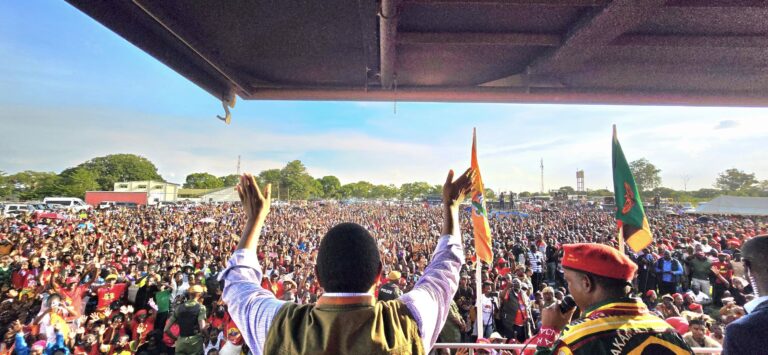
The first major public engagement of Zambia’s 2026 election year did not begin in Lusaka. It began in Choma, deep in Southern Province, where politics is not merely contested but inherited. At the Choma Cricket Club grounds on Wednesday, a sea of supporters drawn from all 15 districts gathered to receive a President returning from deliberate political quiet into full view.

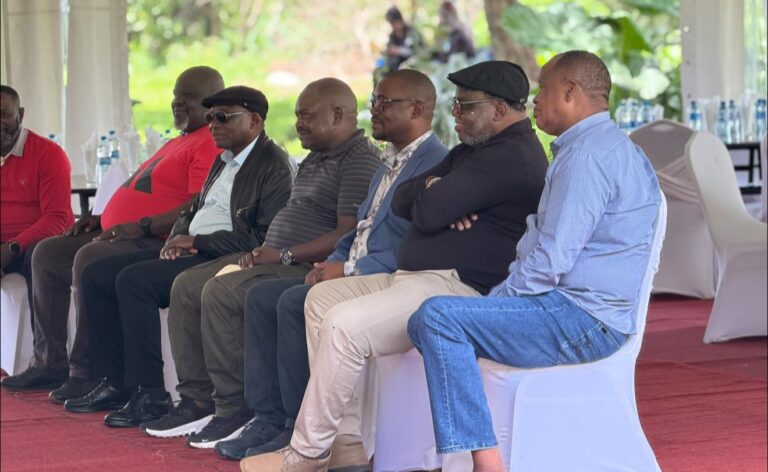
Cabinet Ministers, ruling party lawmakers, opposition figures, independents, civic leaders and traditional authorities stood shoulder to shoulder as Hakainde Hichilema made his first major electoral-era appearance of the year.

Security was visibly heightened, not as spectacle, but necessity. The crowd was large, expectant, and unmistakably at home.

The President arrived to traditional drums and dances heavy with ancestral symbolism. Dancers waved wooden spears and cow tails, invoking cattle wealth and heritage. The address that followed was delivered predominantly in Tonga, the dominant local language, reinforcing both cultural proximity and political ownership of the space. It was not accidental.

It was calibrated.

Hichilema spoke with confidence, framing his first term as a period of repair after what he described as one of the most severe economic depreciations in Zambia’s recent history. He pointed to stabilising macroeconomic indicators, including the strengthening of the Kwacha against major currencies, revived mining operations, and reforms in agriculture and energy.

Free education featured prominently, presented not as policy rhetoric but as an irreversible social investment.

On mining, the President said reforms were now “trickling down” to ordinary citizens, linking sector recovery to household-level impact. Mines and Minerals Development Minister Paul Kabuswe echoed this, citing the training of over 1,000 small-scale miners on the Copperbelt in safe and legal practices as part of a broader effort to formalise the sector and stimulate local economies.

The political undertone sharpened as the rally progressed. Southern Province Members of Parliament collectively endorsed Hichilema as the sole presidential candidate of the UPND for August 2026, presenting a unified front from a region that has been the party’s strongest base since the era of Anderson Mazoka. The President reminded the crowd that the province holds close to 1.2 million registered voters and urged turnout discipline, warning against what he described as the return of cadreism, political violence, and tribal mobilisation under a divided opposition.

What distinguished this rally was not only message but mood. Hichilema appeared hyper, animated, even dancing on the platform, evoking memories of the 2021 campaign trail. The difference now is status. He enters this cycle as an incumbent, with state authority, institutional reach, and a party that has governed its way through crisis into relative stability.

Behind the scenes, aides describe the President’s recent low profile as intentional. While public discourse has been consumed by church–state tensions and opposition mobilisation around symbolic issues, UPND operatives have been active in less visible terrain.

Northern Province, long considered PF heartland since the days of Michael Sata, has become a strategic focus. Political adviser Levy Ngoma has been camped in the region, quietly consolidating support, engaging local leadership, and testing the durability of green strongholds.

With Parliament now expanded to 226 constituencies under the amended framework, the 2026 contest is shifting from noise to arithmetic. Multiple sources familiar with ruling party strategy say UPND believes it can secure upward of 140 parliamentary seats if current opposition fragmentation persists. The objective, they say, is not domination through rhetoric but accumulation through structure.

As dusk settled in Choma, the message from the ground was unmistakable. The President had not been absent. He had been preparing. Southern Province provided the safest place to re-enter the arena, but the campaign logic extends far beyond home ground.

The contest ahead will not be fought only on timelines or pulpits, but ward by ward, language by language, and number by number.
The storm is no longer forming. It has begun to move.