Thursday, June 18, 2026
13.6 C
Lusaka
Home Blog Page 200

PF condemns Mung’andu for “desperate lies” as former MP stands by claims

PF condemns Mung’andu for “desperate lies” as former MP stands by claims

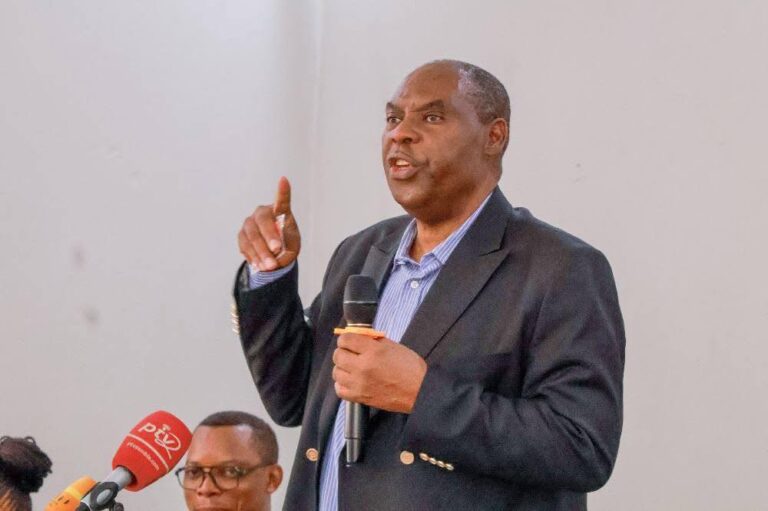
LUSAKA — The Patriotic Front (PF) has launched a fierce rebuttal against its former Chama South member of Parliament, Davison Mung’andu, accusing him of spreading what it termed “wild and unbelievable falsehoods” in an attempt to ingratiate himself with President Hakainde Hichilema.

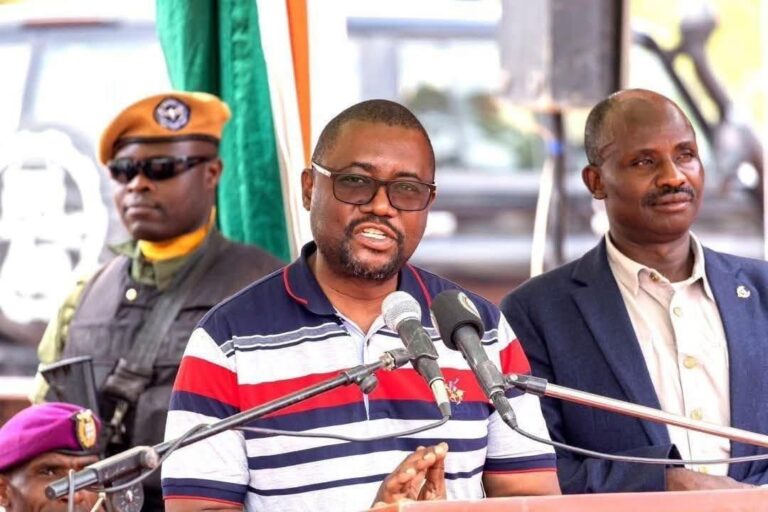
The dispute follows remarks made by Mung’andu during a rally addressed by President Hichilema at Choma Sports Club on Wednesday, January 7, 2026, where the former lawmaker alleged that the PF deliberately sabotaged Zambia’s economy ahead of the 2021 general elections to frustrate the incoming United Party for National Development (UPND) administration.

In a strongly worded statement issued on Thursday, PF Central Committee member Ambassador Emmanuel Mwamba dismissed the claims as reckless and malicious. He accused Mung’andu of fabricating allegations to rewrite history and deflect responsibility for what the party described as the current government’s economic failures.

Among the most serious accusations raised by Mung’andu was a claim that a senior PF official transported $9 million in cash out of the country just one week before President Hichilema’s swearing-in on August 24, 2021. The PF described the allegation as baseless and politically motivated.

“It is ridiculous to blame President Hichilema’s monumental failures on the Patriotic Front,” Mwamba stated, attributing Zambia’s economic challenges to what he characterised as incompetence, inexperience, and policy decisions that favour foreign multinationals and a small group of beneficiaries.

The PF challenged Mung’andu to submit any evidence supporting his claims to law enforcement agencies, questioning why he had not reported the matter to the Drug Enforcement Commission or the Anti-Corruption Commission if the allegations were credible. The party said the absence of formal complaints undermined the authenticity of the accusations.

Mung’andu, however, has stood by his assertions. Addressing supporters in Choma, he maintained that PF’s final months in office were marked by economic mismanagement, including artificial shortages, manipulation of inflation data, and concealment of unsustainable debt levels. He accused the former administration of leaving the treasury depleted and the economy on the brink of collapse.

He further claimed that the alleged $9 million transfer was part of a broader pattern of last-minute asset stripping by outgoing officials, arguing that the economic difficulties inherited by the UPND were not accidental but deliberate.

In its response, the PF defended its development record, citing what it described as measurable achievements during its time in power. The party said national electricity generation capacity increased from about 1,600 megawatts in 2011 to 3,500 megawatts by 2021. It also pointed to the construction of more than 3,200 schools, 830 health facilities, 121 bridges, and approximately 14,000 kilometres of roads.

The PF further highlighted major infrastructure projects including the Solwezi–Chingola Dual Carriageway, Simon Mwansa Kapwepwe International Airport, and the Itezhi-Tezhi Hydropower Station, arguing that these developments contradict claims of deliberate economic sabotage.

Mung’andu countered that many of the projects were overbudget, underutilised, or financed through undisclosed borrowing. He referenced the 2021 debt disclosures that showed Zambia’s obligations had risen to more than $17 billion, much of it not previously presented to Parliament, a situation he said supported his claims of fiscal mismanagement.

The PF reminded the public that Mung’andu himself was elected to Parliament in 2021 on the PF ticket and benefited directly from the party’s political machinery and development record. The party accused him of abandoning his mandate for personal advancement, alleging that he had commercialised his political position.

Mung’andu rejected that characterisation, describing his political shift as a matter of conscience. He told supporters that had PF retained power after 2021, load-shedding would have worsened and inflation would have reached 50 percent, claims he said had been disproved by subsequent events.

The PF dismissed the remarks as theatrical and opportunistic, warning that such political defections undermine national unity as the country moves toward the 2026 general elections.
ZRA accused of internal collusion in Hilux sale to Archbishop Banda

ZRA accused of internal collusion in Hilux sale to Archbishop Banda

LUSAKA — The Green Party (GP) has warned that the Zambia Revenue Authority risks triggering a nationwide tax boycott unless the government halts what it describes as a politically driven campaign against Lusaka Archbishop Dr Alick Banda and permits an independent investigation into allegations of internal fraud within the revenue agency.

GP president Peter Sinkamba said the state’s recent claims that official receipts connected to a disposed ZRA motor vehicle were falsified have gravely damaged public confidence in the tax authority and could destabilise Zambia’s entire revenue collection system.

Sinkamba expressed concern over reports involving former ZRA employee Mulopa Kaunda, who is alleged to be under pressure to state that official receipts were fabricated in his name to facilitate what authorities are now portraying as an unlawful sale or “gifting” of a Toyota Hilux to Archbishop Banda.

He described the situation as deeply troubling, particularly because the transaction in question had never been cited as irregular in any Auditor General’s report since 2021. Sinkamba questioned why allegations of falsification are emerging only now, suggesting either serious flaws in ZRA’s audit systems or deliberate timing for political purposes.

According to the GP leader, documentation surrounding the disposal of the vehicle indicates a legitimate transaction, yet the introduction of a falsified receipts narrative points to possible widespread internal collusion within ZRA. He warned that if such claims are accurate, they would signal unchecked abuse and systematic siphoning of public assets within one of the country’s most critical institutions.

Sinkamba said failure to independently verify or conclusively dismiss the allegations would leave taxpayers with little confidence in the integrity of the authority responsible for collecting public funds. In such circumstances, he argued, citizens would be justified in withholding tax payments until a comprehensive and transparent audit is conducted.

He cautioned that a tax boycott would have immediate and severe consequences, including a liquidity crisis that could disrupt essential public services such as healthcare, education, and security. Beyond domestic effects, he warned that a breakdown in revenue collection would undermine Zambia’s ability to service its national debt and could trigger negative responses from international credit rating agencies.

Sinkamba directly linked the unfolding situation to the government’s handling of Archbishop Banda’s case, arguing that the pursuit of the cleric has created economic risks far beyond the original allegations. He warned that continued escalation could result in widespread economic instability and long-term damage to public trust in state institutions.

He called on President Hakainde Hichilema to abandon what he described as an excessive focus on prosecuting Archbishop Banda, arguing that the political and economic costs now outweigh any perceived benefit. Sinkamba said ZRA’s credibility, once central to fiscal discipline, is now under threat.

Without immediate corrective action, including suspending politically charged investigations and appointing an impartial audit team, he warned that Zambia risks entering an economic spiral that could take years to reverse.

“PF Left Economy in Ruins—$9 Million Was Smuggled Out” – Davison Mung’andu

CHOMA — Chama South Member of Parliament Davison Mung’andu has reiterated his claims that the Patriotic Front deliberately destabilised Zambia’s economy in the final days of its rule, insisting that the country inherited by the United Party for National Development in 2021 was intentionally weakened ahead of the transition.

Mung’andu, who remains the sitting MP for Chama South, made the remarks while addressing supporters at a rally headlined by President Hakainde Hichilema at Choma Sports Club on Wednesday, January 7, 2026. He accused his former party leadership of engineering economic chaos after realising it would lose the 2021 general election.

He alleged that PF officials inflated public debt, depleted strategic reserves, and created artificial shortages of fuel and foreign exchange to undermine the incoming administration. According to Mung’andu, the actions were calculated to ensure the UPND government began its term under immediate economic strain.

Mung’andu also repeated his claim that a senior PF figure transported $9 million in cash out of the country one week before President Hichilema’s swearing-in on August 24, 2021. He said the alleged transfer was part of a broader effort to move funds offshore as the party exited State House.

“This was not accidental,” Mung’andu told the rally. “It was a deliberate effort to leave the country in ruins.”

The MP did not name the individual involved but called on investigative agencies to examine financial transactions conducted in the final quarter of 2021, arguing that records and banking trails exist and should be scrutinised.

Mung’andu also revisited Zambia’s power challenges during 2020 and 2021, claiming that PF’s management of the energy sector left the grid vulnerable despite publicised generation projects. He said load-shedding would have intensified had PF retained power.

His remarks come amid heightened political controversy surrounding his alignment with the ruling party. Mung’andu was among Members of Parliament who voted in favour of Constitution Amendment Bill No. 7, a vote that has drawn sharp criticism from the Patriotic Front and sections of the opposition.

Unproven allegations have circulated within political circles and on social platforms suggesting that some PF MPs who supported the Bill 7 vote were financially induced. No court, investigative agency, or official process has established evidence supporting those claims, and no formal charges have been brought against Mung’andu in that regard.

Nevertheless, the PF has used the allegations to question his political motives, portraying him as having crossed the aisle for personal benefit. The ruling party, by contrast, has treated Mung’andu as a key ally, with his appearances alongside President Hichilema reinforcing perceptions of his growing proximity to the UPND.

In response to his Choma remarks, the Patriotic Front dismissed Mung’andu’s claims as fabricated and politically driven. PF officials have challenged him to present evidence to law enforcement agencies, arguing that public allegations without formal complaints undermine credibility.

Mung’andu has defended his position, saying his loyalty lies with the country rather than any political organisation. He insists that speaking out is a matter of conscience and accountability, not opportunism.

As the political temperature rises ahead of the 2026 general elections, Mung’andu’s statements have placed him at the centre of an intensifying debate over responsibility for Zambia’s economic crisis and the ethics of political realignment.

Imenda’s “Lucifer” slur must face court, insists opposition leader

LUSAKA — New Heritage Party (NHP) president Chishala Kateka has called for the immediate revival of a dormant criminal prosecution file against United Party for National Development (UPND) secretary general Batuke Imenda, accusing the state of enforcing the law selectively and shielding ruling party officials from accountability.

Kateka was responding to Imenda’s public statement made during a press briefing on May 28, 2023, in which he referred to Lusaka Archbishop Dr Alick Banda as the “Lucifer of Zambia.” The remark was recorded, widely circulated across multiple media platforms, and was never withdrawn or apologised for.

Despite the public nature of the statement, the matter failed to proceed after the Director of Public Prosecutions declined to grant consent for prosecution when the case came before Magistrate Chanda on March 4, 2024. The DPP cited insufficient evidence, a decision that effectively stalled the matter. Since then, no further legal action has been taken.

Kateka described the inaction as a stark illustration of double standards in the administration of justice, arguing that speech by ruling party officials is treated with leniency while critics of government are subjected to aggressive prosecution.

She said the contrast became more pronounced following the recent summons of Archbishop Banda by the Drug Enforcement Commission over a donated Toyota Hilux vehicle. In her view, the swift mobilisation of investigative machinery against the cleric stood in sharp opposition to the reluctance shown in pursuing a hate speech complaint against a senior ruling party figure.

According to Kateka, the imbalance sends a dangerous signal to the public that the law is applied based on political alignment rather than principle. She maintained that criticism of government attracts punitive responses, while derogatory language directed at religious leaders by those aligned to power is effectively tolerated.

The NHP leader argued that Imenda’s remarks went beyond mere insult and crossed into hate speech, given the position held by Archbishop Banda and the broader social role of the church in national discourse. She said the language used was deliberately dehumanising and intended to discredit a moral authority that has consistently spoken on governance, social justice, and economic accountability.

Kateka further noted that in other politically sensitive cases, courts and prosecutors have shown decisiveness, particularly where opposition figures are concerned. She said comparable or even lesser speech-related offences have resulted in arrests, prolonged court processes, and custodial sentences when the accused are outside the ruling party.

She accused the prosecutorial decision-making process of reflecting what she termed institutional capture, where constitutionally independent bodies operate in ways that appear aligned with executive interests. She extended this criticism to law enforcement agencies, arguing that their enforcement patterns demonstrate selective enthusiasm, acting swiftly against perceived critics while exercising restraint when allies are implicated.

“The matter is not dormant because there is no evidence,” Kateka said. “It is dormant because of political convenience.”

She warned that when the law ceases to operate uniformly, it loses legitimacy and becomes an instrument of power rather than justice. In such circumstances, she said, public confidence in democratic institutions is steadily eroded, creating long-term risks for civic trust and constitutional governance.

Kateka said the continued failure to act on the Imenda case reinforces perceptions that statutes exist in form rather than substance, applied rigorously against some citizens and ignored when politically exposed individuals are involved.

She called on the Director of Public Prosecutions to reopen the file and subject the matter to judicial scrutiny, insisting that equality before the law must be demonstrated, not merely proclaimed.

At the centre of the controversy, she said, are three interconnected developments: the stalled prosecution over Imenda’s remarks, the active deployment of investigative agencies against Archbishop Banda, and the broader pattern of selective application of criminal justice mechanisms.

Her demand, she stressed, was straightforward: revive the case, apply the law evenly, and restore public confidence in the rule of law.

Hichilema Reclaims the Political Stage

4

By Francine Lilu & Ollus R. Ndomu

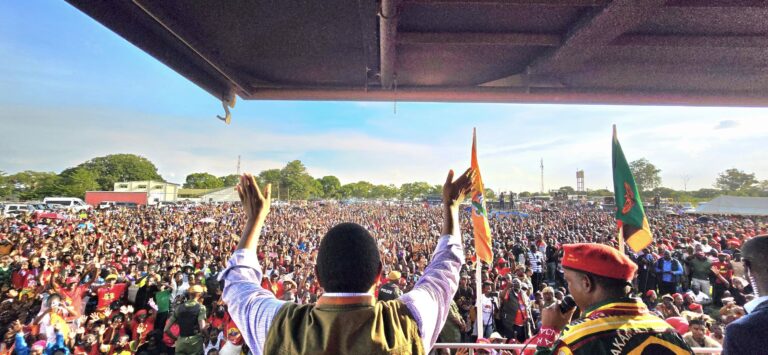
The first major public engagement of Zambia’s 2026 election year did not begin in Lusaka. It began in Choma, deep in Southern Province, where politics is not merely contested but inherited. At the Choma Cricket Club grounds on Wednesday, a sea of supporters drawn from all 15 districts gathered to receive a President returning from deliberate political quiet into full view.

Cabinet Ministers, ruling party lawmakers, opposition figures, independents, civic leaders and traditional authorities stood shoulder to shoulder as Hakainde Hichilema made his first major electoral-era appearance of the year.

Security was visibly heightened, not as spectacle, but necessity. The crowd was large, expectant, and unmistakably at home.

The President arrived to traditional drums and dances heavy with ancestral symbolism. Dancers waved wooden spears and cow tails, invoking cattle wealth and heritage. The address that followed was delivered predominantly in Tonga, the dominant local language, reinforcing both cultural proximity and political ownership of the space. It was not accidental.

It was calibrated.

Hichilema spoke with confidence, framing his first term as a period of repair after what he described as one of the most severe economic depreciations in Zambia’s recent history. He pointed to stabilising macroeconomic indicators, including the strengthening of the Kwacha against major currencies, revived mining operations, and reforms in agriculture and energy.

Free education featured prominently, presented not as policy rhetoric but as an irreversible social investment.

On mining, the President said reforms were now “trickling down” to ordinary citizens, linking sector recovery to household-level impact. Mines and Minerals Development Minister Paul Kabuswe echoed this, citing the training of over 1,000 small-scale miners on the Copperbelt in safe and legal practices as part of a broader effort to formalise the sector and stimulate local economies.

The political undertone sharpened as the rally progressed. Southern Province Members of Parliament collectively endorsed Hichilema as the sole presidential candidate of the UPND for August 2026, presenting a unified front from a region that has been the party’s strongest base since the era of Anderson Mazoka. The President reminded the crowd that the province holds close to 1.2 million registered voters and urged turnout discipline, warning against what he described as the return of cadreism, political violence, and tribal mobilisation under a divided opposition.

What distinguished this rally was not only message but mood. Hichilema appeared hyper, animated, even dancing on the platform, evoking memories of the 2021 campaign trail. The difference now is status. He enters this cycle as an incumbent, with state authority, institutional reach, and a party that has governed its way through crisis into relative stability.

Behind the scenes, aides describe the President’s recent low profile as intentional. While public discourse has been consumed by church–state tensions and opposition mobilisation around symbolic issues, UPND operatives have been active in less visible terrain.

Northern Province, long considered PF heartland since the days of Michael Sata, has become a strategic focus. Political adviser Levy Ngoma has been camped in the region, quietly consolidating support, engaging local leadership, and testing the durability of green strongholds.

With Parliament now expanded to 226 constituencies under the amended framework, the 2026 contest is shifting from noise to arithmetic. Multiple sources familiar with ruling party strategy say UPND believes it can secure upward of 140 parliamentary seats if current opposition fragmentation persists. The objective, they say, is not domination through rhetoric but accumulation through structure.

As dusk settled in Choma, the message from the ground was unmistakable. The President had not been absent. He had been preparing. Southern Province provided the safest place to re-enter the arena, but the campaign logic extends far beyond home ground.

The contest ahead will not be fought only on timelines or pulpits, but ward by ward, language by language, and number by number.
The storm is no longer forming. It has begun to move.

President Hichilema confident of winning 2026 polls

President Hakainde Hichilema has expressed optimism that he will win the 2026 general elections slated for August.

Thew media reports that President Hichilema is basing his confidence on the numerous development achievements scored by his administration in the past four years it has been in power.

Speaking in Choma during a public engagement held at the Choma Sports Club grounds, the President said he will demonstrate his love and care for Zambians through increased development, job creation, support for the agriculture sector, and expansion of solar energy projects among other efforts.

“I am committed to delivering development and opportunities for all Zambians while addressing challenges like energy shortages,” he said.

He asked Zambians to bear with his administration for load-shedding the country has experienced, assuring the nation that the government is working to increase energy production through coal and solar power generation.

President Hichilema further reiterated his government’s dedication to sustained economic growth through the enhanced Constituency Development Fund (CDF), revitalising the mines and debt restructuring initiatives among other things.

The President has since urged citizens to protect the gains achieved so far by turning out in large numbers to vote for him and members of his party, the United Party for National Development (UPND),  on 13 August 2026.

“This year presents a significant opportunity for the UPND to continue implementing policies and development projects that benefit every Zambian.”

“Zambians must vote to ensure continuity of free education, meal allowances, and other critical programmes,” he said.

Meanwhile, senior UPND members in Southern Province have officially endorsed President Hichilema as the sole candidate for the upcoming general elections.

Minister of Home Affairs and Internal Security, who is also Monze Central Member of Parliament, Jack Mwiimbu, said all parliamentarians in Southern Province have endorsed the incumbent President’s candidature.

“Parliamentarians were able to defeat Bill Ten and pass Bill Seven because of President Hichilema’s stewardship,” Mr Mwiimbu said.

And Infrastructure, Housing and Urban Development Minister,  Charles Milupi, recollected that President Hichilema inherited a country that had witnessed gassing, burning of markets, and a declining economy when he ascended to power in 2021.

“Under his leadership, the economy is projected to reach K36 billion this year. Government is also tarring Monze-Niko, Monze-Mazabuka, and Rusangu roads, and plans to construct bypass roads in Monze and Choma,” Mr Milupi explained.

Minister of Mines and Minerals Development, Paul Kabuswe, said the economy is now growing at five percent after declining under the previous regime.

“Over one thousand artisanal miners have been trained in safe mining and legal trading on the Copperbelt, and this programme will soon expand to other provinces,” Mr Kabuswe said.

Further, Independent MP for Chasefu Constituency in Eastern Province, Misheck Nyambose, described President Hichilema as a blessing to Zambia.

“I have never seen a leader with such a good heart, inclusive in governance. CDF has increased to K40 million per constituency in 2026, and Chasefu alone has received 156 million since 2021,” Mr Nyambose said.

Hundreds of people today turned up to attend the public engagement and listen to what the President had for them.

Makebi Zulu pledges unity and economic stewardship during courtesy call

Makebi Zulu pledges unity and economic stewardship during courtesy call

Zambia’s Aspiring presidential candidate Makebi Zulu has pledged to prioritise national unity, economic recovery, and responsible leadership, saying the next generation of leaders must build on existing foundations rather than dismantle them.

Speaking during a courtesy call at the residence of elder statesman Nason Msoni, Makebi Zulu expressed gratitude for the encouragement and support extended to him, describing it as both an honour and a responsibility.

Mr. Msoni welcomed Makebi Zulu and praised his decision to step forward at a time when the country is facing what he described as a leadership deficit, noting that many capable young leaders have retreated from public service.

“We are grappling with a deficit of leadership in our country because many promising young men are shunning roles of leadership,” Mr. Msoni said. “That is why we are happy, absolutely happy, to see that you have put yourself forward for the office of President.”

He encouraged Makebi Zulu to remain steadfast, stating that Zambia needed patriots willing to serve, and expressed confidence that voters would make their choice at the appropriate time.

Mr. Msoni further invoked faith in his remarks, wishing Makebi Zulu well and praying that what may appear impossible would be made possible through perseverance and divine guidance.

In his response, Makebi Zulu acknowledged the role played by senior leaders in shaping the country’s political foundation and said the obligation of the current generation was to deliver results that meet and exceed the expectations of the people.

“Our obligation is to deliver according to the expectations of our elders, and even more, in appreciation of the great work that has been done in the past in setting the foundation,” Makebi Zulu said. “Our duty is to build on those foundations and not break them.”

He emphasised that economic challenges facing the country required trust, discipline, and competence, assuring Zambians that his leadership would focus on safeguarding livelihoods and restoring confidence.

“We need to prove that we can be trusted to take care of the people,” he said. “You can trust us to take care of agriculture, to address the energy situation, and to deal with all other national challenges.”

Makebi Zulu also underscored the importance of unity, warning against divisions rooted in tribe or region and reaffirming his commitment to inclusivity.

“We must unite everyone and bring everyone together,” he said. “We have one Zambia and one nation.”

One killed in Mpika Road Traffic Accident

2

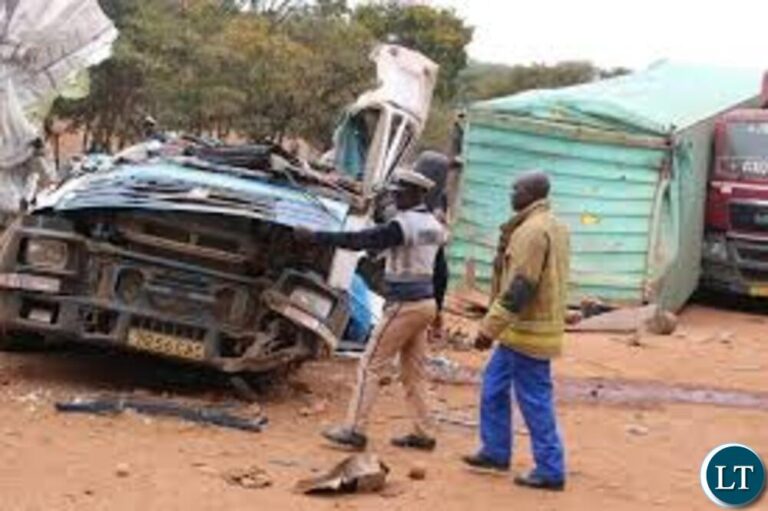
One person has died in a Fatal Road Traffic Accident involving a Volvo Trucks and unregistered Kinglion Motorbike in Mpika District of Muchinga Province.

Muchinga Province Police Commissioner Dennis Moola disclosed the development to the media in Mpika today.

Mr Moola said the accident happened around 08:00 hours along Mpika-Kasama Road near the MAFF-site area about 4 kilometers west of Mpika town.

He disclosed that the accident happened when the driver of the Volvo Truck registration number AJF 5721ZM was overtaking improperly and in the process the trailer of the truck hit the motorbike.

Mr Moola further disclosed that the Volvo Truck which was loaded with 740 by 50 kilograms bags of maize belonging to Integrity Lwamba Limited of Kasama District in Northern Province.

“The 740 bags of maize in the Volvo truck were destined to Lusaka from Kasama,” he said.

The Police Commissioner has since identified the driver of the Volvo Truck as Stephan Sipanje aged 30 of Kasama District who escaped unhurt.

He disclosed that an unregistered Kinglion motorbike which had a damaged right part of the handle bar and broken right side view mirror was being ridden from west to eastern direction by Joseph Chibesa aged 24 of Zampalm area in Kopa Chiefdom of Kanchibiya District.

The Police Chief pointed out that the rider of the motorbike sustained a cut on the right side of the face, bruised right hand and is admitted at Michael Chilufya Sata Hospital in Mpika.

He further disclosed that also involved was the passenger of the motorbike Felix Kabungo aged 23 of MAFF-site area who sustained fatal head and body injuries and was pronounced dead upon arrival at Mpika Urban Clinic.

The body of the deceased person has since been deposited at Mpika Urban mortuary awaiting postmortem examination.

The motor vehicle and the motorbike have since been impounded at Mpika Police Station awaiting examination.

Meanwhile, Mpika District Commissioner David Siame has expressed sadness at the untimely death of the passenger of the motorbike.

Mr Siame has since urged motorists to exercise patience and observe road traffic rules.

” My office is sending a message of condolences to the affected family,” he said.

Zambia Police enhance media collaborations

2

Zambia Police Service has called for enhanced collaboration with the media, in order to provide an environment that supports the duo to conduct their operations professionally, as the country heads to the polls, in August this year.

Zambia Police Public Relations Officer, Godfrey Chilabi says that the police have put in place measures aimed at ensuring that media personnel are protected and guided as they cover various events nationwide.

He said that his institution is ready to create programmes that are aimed at enhancing the understanding of police operations, for journalists that report on crime, public order and other related matters.

Mr Chilabi said that the police consider the media as key stakeholders, and has since called on them to enhance their identity, in order to avoid being inconvenienced as they cover state related events.

“In our deployment orders, we will be making sure that we have officers that are specifically taking care of the media,” he said.

He also stressed on the need for the media to specialize in fields such as crime reporting in order to promote in-depth understanding of the field and reporter safety.

Meanwhile, Lusaka Press Club President, Edward Makayi, commended the police on their recent conduct at the Drug Enforcement Commission offices where they faced confrontation from the public.

Mr Makayi said that his organisation is committed to putting up programmes that will empower journalists with best practices, while supporting their health.

He called on the police to consider employing practicing journalists during their recruitment process, in order to ensure continuity of professionalism in the police service.

‘PF’ removed from Tonse Alliance

The Tonse Alliance has with immediate effect removed the Given Lubinda-led Patriotic Front faction from the coalition.

Tonse Alliance Caretaker Chairman, Danny Pule, disclosed the development at the press briefing in Lusaka today.

Professor Pule, who was flanked by Alliance Vice Chairman, Chifumu Banda, said the decision to remove the Lubinda-led PF was arrived at by the Alliance Council of Leaders during a meeting yesterday.

Prof. Pule, who is also Christian Democratic Party president, announced that the Alliance will recognise the ECL PF Political Movement.

“PF has been removed from the Tonse Alliance and the Alliance will only embrace and work with the ECL PF Political Movement in order to honour the wishes of late Dr Lungu.

The Tonse Alliance shall henceforth not entertain any association with the PF party,” he stated.

He further announced that the alliance will also not recognise the Robert Chabinga-led PF faction as it allegedly has had a leadership crisis, court wrangles, factionalism, divisions, rivalry and chaotic politics for many months especially after the death of the former President, Edgar Lungu.

“The Council of Leaders unanimously agreed that the Tonse Alliance has done away with anything to do with the Chabinga-led PF party faction that had a leadership crisis, court battles, divisions, rivalry and chaotic politics and delayed to make progress,” he said.

He also revealed that the alliance’s constitution has been amended in order to allow all members to contest any positions ahead of the August presidential and general elections.

Meanwhile, the Tonse Alliance Caretaker Chairman explained that as part of the reforms, the alliance resolved to convene a General Congress this month to elect a new chairman, presidential candidate and other key office bearers, acknowledging that failure to elect a successor after Dr Lungu’s death, had plunged it into a ‘crisis.’

“We shall through the General Congress, the highest decision making organ of Tonse Alliance, hold democratic elections this month of January to prepare ourselves for August polls,” he said.

In its amended reforms, the Tonse Alliance Council of Leaders appointed Zumani Zimba as ECL PF Political Movement Chairman.

Other appointments include Forum for Democracy and Development (FDD) Acting president, Chifumu Banda, who was appointed as Acting First Vice Chairman while Zambia Must Prosper leader, Kelvin Fube, was appointed Acting Second Vice Chairman.

“Based on the petition from our four member organisations, the Alliance Council of Leaders discussed nine key constitutional amendments and made resolutions that are intended to stabilise the Alliance, restore internal democracy and reposition it for electoral competitiveness in 2026,” Mr Banda stated.

NCS recognises competence based education in education advancement

0

The National Science Centre says has recognized and appreciated the inclusion of Competence Based Education in advancing the education system in the country.

National Science Centre, Director, Benson Banda says since the Ministry of Education changed the country’s school curriculum, the programme is now yielding good results with regards to building critical thinkers for the betterment of the society and the industry as a whole.

Professor Banda was speaking during the NSC assessment tour in Lusaka, meant to track the impact of the new Competence Based Curriculum on learner output, citing that though it is a long term process, progress has been shown.

“For the country to go somewhere, the type of education used is what drives economic growth. The best resource we have is the environment where the learners are conducting hands-on work,” he said.

He explained that the learners are being supported at school, as well as at home, stating that it is one of the ways to inculcate independent thinking in the learners.

The tracking mission, involved about five learners from David Kaunda National STEM Secondary School, to check the impact of the Competence Based Curriculum in a practical sense.

The competence based curriculum is largely focused on the learner’s progress, particularly proving their competence based on their speed, pace as well as depth of the curriculum.

Learners that have so far benefited from the new curriculum, praised the curriculum, dubbing it as a hands-on system that has assisted them in being independent thinkers.

13 year old, David Kaunda National STEM Secondary School, a form two pupil, Dewin Sichilima has hailed the competence based curriculum, citing that it keeps one to develop critical thinking, while another 13 year old, Gael Kalombo, from the same school expressed the process as a builder of future alternatives in economic growth.

Earlier, speaking to the Media, David Kaunda National STEM Secondary School Head Teacher, Maureen Tonga said the new curriculum has yielded visible positive results.

Mrs Tonga noted that the programme has inculcated an independent culture in the learners, noting that they are able to go back in the community and apply what they learn at school.

Meanwhile, parents to the learners have also hailed the government for its progressive decision to introduce the Competence Based Curriculum.

John Banda, a parent from Obama, noted that the new curriculum looks at posterity as it prepares learners to take over the country well, while another parent from Lilayi, Kalombo Kalombo, expressed happiness for the significant growth he has seen in his son who has a backyard garden at home.

“At this pace, within three years, our educational system will progress for the better,” Dr Kalombo noted.

Copperbelt PS says Mine Resuscitation has Boosted Economic Growth

1

Copperbelt Province Permanent Secretary Lawrence Mwanza has said that the resuscitation of Mines has contributed to the country’s economic growth.

‎Speaking when he featured on a tv programme,  Mr Mwanza stated that under the new management Mopani has pledged to produce 10 per cent of country’s target of 3 million metric tones copper by 2023 which will help boost the economy and improve people’s livelihood.

‎He said the government, through President Hakainde Hichilema, brought in a team to look into Mopani mine which was on the verge of collapsing.

‎”New management was put in place and brought in enough funds to help pay up debts and past employees,” Mr Mwanza said

‎Mr Mwanza added that taxes are being collected from the mines, which was helping to improve the economy.

‎”The economy from 2021 was 0.28 per cent, but now it is at 4.5 percent meaning the country’s economy is slowly being stabilised,” he said.

‎ He noted that increased production and favourable copper prices on the international market were also helping to stabilise the Kwacha.

He added that the revival of Shaft 28 in Luanshya has restored hope and optimism among the people of the Copperbelt.

‎The PS   said young people were undertaking mining courses for them to have employment opportunities.

‎Mr Mwanza stated that the mine was abandoned years back, but the new Chinese investor has managed to pump out water to pave the way for full mining in August this year.

‎The Permanent Secretary said the mine will create about 3000 jobs when production resumes in Luanshya town.

‎He said no accident was recorded during the de-watering of the mines, which showed that the mine is safe for operation.

‎ “Revamping Luanshya mine will also economically boost the country’s wealth,” he said.

‎He further said that the Mingomba mine in the Chililabombwe district is also progressing well and will soon be visible for locals to benefit.

Govt. reaffirms support to TAZARA revitalisation project

0

Government has pledged support to the TAZARA revitalisation project, aligning it with the country’s Eighth National Development Plan focused on industrialisation, economic transformation and job creation.

Deputy Secretary to the Cabinet Siazongo Siakalenge in charge of Finance and Economic Development says the investment plans submitted by China Railway Construction Corporation (CRCC) and China Civil Engineering Construction Corporation (CCECC) are fully aligned with Zambia’s development priorities.

The media reports that Mr Siakalenge explained that preliminary assessments and stakeholder consultations are already underway to ensure the project fits national objectives and the broader Economic Prosperity Belt vision.

He noted that the government will introduce policy reforms which will ensure that local communities benefit directly from the TAZARA Prosperity Corridor through job creation and skills‑development programmes.

He was speaking when the Chinese delegation from China Railway Construction Company (CRCC) and China Civil Engineering Construction Corporation (CCECC) called on him at his office.

Mr Siakalenge added that environmental sustainability is also a priority with green technologies to be integrated into waste management and energy efficiency measures along the corridor.

“Additional investments will target telecommunications infrastructure to spur digital economy growth and business operations while monitoring and evaluation frameworks will be established to track progress and ensure transparency in resource management,” he said

He also added that the key focus areas of the initiative include education and training for emerging industries, health and social services improvements, tourism development, and innovation hubs to attract research and development investments.

“The project aims to position the TAZARA corridor as a model for sustainable regional development and economic integration in Southern Africa,” Mr Siakalenge explained.

He also indicated that financing arrangements and technical workshops with CRCC are being scheduled to fast track implementation and maximise job creation for Zambian youth

“The President’s technical team is coordinating with Chinese counterparts to incorporate advanced railway technologies and sustainable practices into the upgrade,” he added

Meanwhile, China Railway Construction Company (CRCC) Chief Economist, Sun Gongxi  said that they have plans to rehabilitate the 140-kilometer railway section from Kapiri-Mposhi to Ndola in Zambia and extend it to Sakania in the Democratic Republic of Congo.

The rehabilitation and extension aim to improve overall logistics efficiency by creating a joint line between Zambia and Congo and the project intends to develop Kapiri into a transportation hub and enhance connectivity between TAZARA and Zambia’s railway system.

He affirmed that CRCC will uphold the consensus reached by the leaders, fully leveraging the company’s professional capabilities to transform the TAZARA railway into an integrated resource that advances freedom, harmony, prosperity, sustainability, and greater economic and social development for the country.

He expressed hope that the follow up work on the TAZARA Prosperity Belt will benefit from guidance, support, and assistance, thanking Zambian authorities for their warm hospitality during the current study tour and the initiative.

Chisamba Court Fines Man K1,000 for Assault

The Chisamba Magistrate Court has fined a 35-year-old man K1,000 or, in default, nine months simple imprisonment, for assault occasioning actual bodily harm.

Resident Magistrate Susan Magalashi convicted Kenneth Phiri of Mwomboshi area of Chisamba and fined him after he admitted the charge.

The incident occurred on December 27 of last year, when the accused, Phiri, willfully and unlawfully assaulted Chrispin Kabwe, thereby causing him actual bodily harm.

Facts are that on the day in question, the complainant, Chrispin Kabwe, was at approximately 15:00 hours playing pool at a certain shop when the accused suddenly approached him, and without provocation, grabbed a pool stick and struck him resulting in a deep cut and bleeding.

“It was on 27th December, 2025 at 15:00 hours when the complainant Chrispin Kabwe was playing pool at a shop when Kenneth Phiri, now the accused, suddenly came. Without excusing himself, he grabbed a pool stick and hit the complainant on the head,” facts read in part.

The court heard that the complainant, who was bleeding from an injury, ran away and was met by a woman on his way who tended to his wound.

Following a report by the complainant, the accused was arrested and cautioned by police at Chisamba Police Station, where a medical report was also issued.

After a caution and warning statement was administered to the accused in Nyanja, the language he best understood, he admitted the charge.

Following the accused’s guilty plea and his admission that the statement of facts was true and correct, Magistrate Magalashi found him guilty of the subject offence, contrary to Section 248 of the Penal Code, and convicted him accordingly.

Phiri pleaded for leniency, stating that he has four dependant children and a mother, all of whom would be without a caretaker if imprisoned.

“I have heard your mitigation and I have taken into account that you are a first offender who has readily admitted the charge. Having that said, the offence of assault you committed carries a maximum sentence of five years or a fine because it is a misdemeanor, ” Magistrate Magalashi said.

Magistrate Magalashi sentenced him to a fine of K1,000 on or before January 13, 2026, in default, he will serve nine months’ simple imprisonment.

The accused is currently in lawful custody.

Zambia’s economy has shown signs of renewed stability – Musokotwane

Zambia’s economy has shown signs of renewed stability following periods of volatility, particularly in the exchange rate and inflation, Finance and National Planning Minister Situmbeko Musokotwane has said, while acknowledging that the cost of living continues to place pressure on households.

Addressing journalists during a media briefing in Lusaka, Musokotwane said recent economic performance pointed to improved stability after difficult years marked by sharp fluctuations. He said the developments had brought some relief to businesses, consumers, and investors, even as government remained cautious about underlying vulnerabilities.

He said the administration was focused on managing the exchange rate in a balanced manner that takes into account the needs of importers who rely on foreign currency and exporters who earn in dollars. Both groups, he said, were central to sustained economic growth, and policy had to ensure neither side was disproportionately affected.

At the same briefing, Bank of Zambia Governor Denny Kalyalya reaffirmed that all domestic transactions in Zambia would continue to be conducted in the local currency, the kwacha. He said the position remained unchanged and formed a core pillar of the country’s monetary policy framework.

Kalyalya explained that allowing the widespread use of foreign currencies for domestic trade weakened the effectiveness of monetary policy and increased pressure on foreign exchange demand. He said foreign currency was intended for external transactions such as imports, and not for the buying and selling of goods and services within the country.

The government’s position on currency management has come under renewed public scrutiny following its decision to accept the Chinese yuan, also known as the renminbi, for the payment of a limited portion of mining taxes and royalties. The Ministry of Finance has since clarified that the arrangement is narrowly defined and applies only to a small share of tax obligations.

Musokotwane said settlements in Chinese currency were currently applicable to four Chinese-owned mines and were designed to help Zambia minimise conversion costs when servicing debt obligations to China. He said the majority of Zambia’s external debt was owed to China, making it prudent to build yuan reserves for smoother and more cost-effective transactions.

He said the measure was driven by fiscal prudence rather than geopolitical alignment, adding that any savings realised through reduced conversion costs could be redirected toward public priorities such as health, education, and student support. He said the approach reflected the administration’s emphasis on saving resources in order to serve citizens more effectively.

The Ministry of Finance further clarified that only about 15 percent of total mining tax obligations would be paid in Chinese currency. Musokotwane said the cap was deliberate and formed part of a measured strategy to manage currency exposure while preserving stability in public finances.

He said the bulk of mining taxes would continue to be paid in established currencies used for budgeting and expenditure planning, with safeguards in place to ensure predictability in government revenue. The use of yuan, he said, was targeted rather than a wholesale shift in tax policy.

Musokotwane said the decision followed discussions on how to manage transactions involving Chinese firms and suppliers within the mining value chain. He said many mining companies transact with a range of suppliers and financiers linked to China, and the limited acceptance of Chinese currency would help streamline certain transactions without undermining the integrity of the tax system.

He dismissed concerns that the policy amounted to a broader move toward collecting taxes predominantly in Chinese currency, saying the framework clearly restricted the scope of such payments. He said the Treasury had assessed risks related to currency volatility and designed the policy to avoid undue exposure by keeping the proportion relatively small.

Separately, Musokotwane acknowledged that despite signs of macroeconomic stabilisation, the cost of living remained a significant concern for many Zambian households. Reflecting on the 2026 national budget themed “Consolidating Economic and Social Gains Towards a Prosperous Resilient and Equitable Zambia,” he said government was approaching the issue with humility and honesty.

He said lingering effects of climate shocks had contributed to electricity shortages, disrupting domestic life and business operations and constraining production. He added that many micro and small enterprises continued to struggle to access affordable financing, while a significant number of young people were still seeking stable and meaningful employment.