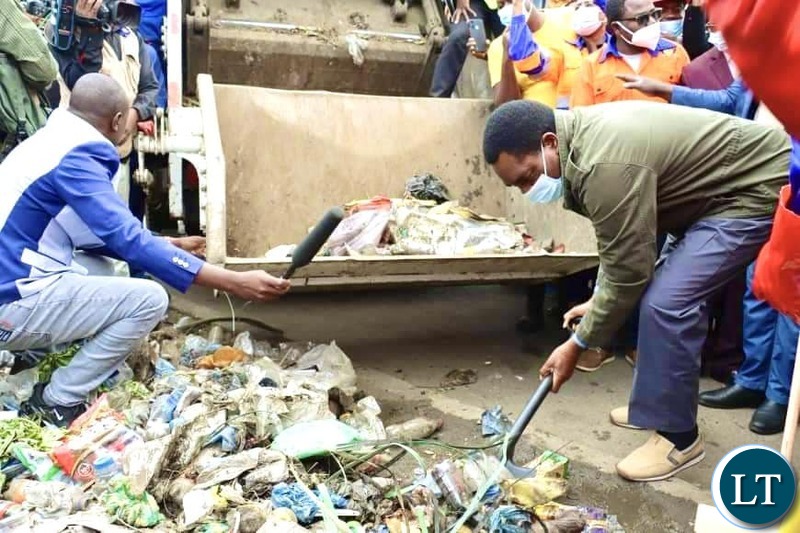
Lusaka like many fast-growing African cities is struggling to manage its growing waste. Lusaka generates about 1 million tons of solid waste per year but only half is collected and reaches the designated Chunga dumpsite. The City waste management
assessment and officials have acknowledge that formal waste collection services only cover a small fraction of the waste generated each day. As one Lusaka Times columnist observed heaps of garbage are ubiquitous on every side of the road or street corner highlighting the persistent waste management challenges in cities poorer townships and markets. This growing waste poses both environmental and health hazards across Lusaka.
Much of the unattended waste comes from industry and health care, which produce dangerous by-products. About 10-15% of hospital and clinic waste is hazardous and consists of infectious fluids, used needles, chemical disinfectants, etc.and Zambia’s health facilities generate thousands of tons of this annually. However,many local hospitals lack even basic disposal equipment. An assessment of several general hospitals in Lusaka found that their infectious-waste systems had fallen short of the World Health Organization recommended standards. Workers often go without proper protective gear, and hospitals commonly run out of colorcoded bins and liners.
The consequences are dire: unmanaged sharps and bio-waste can spread HIV,hepatitis and other diseases, while chemical and pharmaceutical residues can leach into soil and water. Even incinerating medical waste the wrong way is dangerous WHO warns that open burning or low-tech incineration of hospital waste can emit dioxins,furans and fine particulates, all of which are toxic.
Industrial waste adds further risks. Mining, manufacturing and chemical plants in Zambia produce acidic sludges, solvents and heavy-metal residues. If these are dumped or untreated, they contaminate rivers and farmland. Some industrial organics
and infectious byproducts can be neutralized through incineration, but only with the right equipment.Fortunately, modern incinerators offer powerful solutions when properly used.State-of-the-art systems burn waste at very high temperatures and trap pollutants,unlike open fires or rudimentary kilns. A modern incinerator can reduce the volume of waste by up to 90%. These units are also fitted with advanced scrubbers and filters that reduce emissions to within regulatory limits. In practice this means nearly all pathogens and harmful organics are destroyed in the fire, and the clean emissions meet strict air-quality standards.
Many designs even capture the heat: the combustion chamber’s energy is turned into steam to generate electricity or heat buildings. In effect, waste becomes a local power source. By substantially shrinking what is left, incineration also
shrinks landfill needs studies note that with incineration there will only be ash left. In short, a well-run incinerator can transform hazardous hospital and factory waste into sterile ash and usable heat, rather than leaving toxins in the environment.
Key benefits of advanced incineration:
- Bulk reduction: Waste volume and weight can drop by roughly 90% and 75%, easing storage and transport.
- Toxin control: Exhaust gases are passed through emission-control systems that capture dioxins, furans and particulates and reduce emissions to regulated limits.
- Energy recovery: Heat from combustion is used to drive turbines or boilers,generating electricity or steam onsite.
- Reduced pressure on landfill: Most waste converted to inert ash and volume of waste is reduced drastically. Burden on dumpsites is greatly reduced.
Many countries now pair incinerators with strong regulations and training and this can be critical for Zambia. Incinerator operators must be trained properly and supervised with basic emergency shut-offs and temperature monitors to prevent
accidents. Awareness about waste segregation is critical especially in Hospitals and factories. The waste should be segregated at the source, so only truly infectious or chemical waste does not mix with common waste and goes for proper disposal such as
incinerator. Studies from Lusaka has highlighted few gaps in requirement of regular staff training and adequate supplies of waste bins and protective kits. In short, modern waste treatment facility should be matched by good procedures and regulatory enforcement.
Progress is beginning on the policy side with in Zambia. The Zambia Environmental Management Agency (ZEMA) has launched a three-year partnership with the UN Environment Programme to manage hazardous waste. The country has signed international treaties including Basel, Stockholm, Minamata and continues to update its laws to improve regulations across the country.
Notably, the new waste-management strategy explicitly calls for more private sector involvement. This creates an opening for experienced suppliers to help Zambia close the gap. Established engineering firms abroad already market solutions for
developing nations. These incinerators would be engineered for safety, efficiency and environmental compliance and designed specifically the waste type. Working with a company of this kind could help Zambian hospitals and industries leapfrog to modern
waste treatment without reinventing the wheel.
Key steps forward:
1. Regulation: Government and city councils must strengthen waste laws and budgets.
2. Infrastructure Upgrade: Invest in waste disposal facility such as incineration plants with waste flue gas treatment and heat-recovery option.
3. Partner with experts: Engage private waste-management firms with experience that can make systems suited to Africa’s needs.
4. Educate communities. Public awareness campaigns and staff training from school children to healthcare workers so waste is sorted and handled safely at every step.
Zambia’s waste crisis is serious but not unsolvable. With combined efforts of regulatory policies, adoption of modern technology, and community involvement in Lusaka and other regions can significantly cut health risks and pollution. While
Incineration is not a widely adopted method here, when done right can become a pillar of a safer, more sustainable waste-management system for Zambia.
Author
Asiya Muhammed Kochuveettil is associated with Mc Clelland Engineers Pvt Ltd., a leading manufacturerof engineered incineration systems for hazardous waste. With a background in research and a commitment to sustainable industrial practices, she brings a cross-functional perspective to compliance,environmental safety, and operational infrastructure.