Monday, June 15, 2026
13.3 C
Lusaka
Home Blog Page 200

Power Dynamos FC joins Africa’s elite Association

1

Power Dynamos Football Club has become the first Zambian Club to be admitted into the African Club Association (ACA), an association that brings together some of Africa’s most prestigious and successful football clubs.

Power Dynamos Football Club President Bennie Simukoko says the inclusion of the Zambian Premier League defending Champions club in ACA places the Zambian giants among an elite group of clubs that have committed to shaping the future of the game on the continent.

In a statement, Simukoko believes that the association will promote unity and prove that African clubs are stronger when they work together by sharing experiences and advocating for the growth and professionalisation of the sport.

Simukoko added that the club’s membership in the ACA is expected to enhance its continental profile and provide opportunities for greater engagement with leading clubs across Africa.

The clubs that have so far joined the ACA include African Stars of Namibia; Al Hilal Sports Club of Sudan, AS Maniema Union and Saint Éloi Lupopo of the Democratic Republic of Congo, Atlético Petróleos de Luanda of Angola, Azam Sport Club and Young Africans of Tanzania.

Others include Gaborone United of Botswana, South African powerhouses Kaizer Chiefs and Mamelodi Sundowns and Wydad Athletic Club of Morocco among others.

Meanwhile, Women Super League and the Men’s National League will resume action on Saturday, 10th, January, 2026 after the leagues went on recess.

The Zambia Premier League (ZPL) says Women’s National League and the MTN Super League are set to kick off a week later, on Saturday, 17th of January, 2026.

ZPL however, says ZESCO United and Power Dynamos will return to competitive action earlier than other MTN Super League teams due to their CAF commitments.

The two clubs will play their Week 15 fixtures on Saturday, the 10th of January, followed by Week 16 matches on Saturday, the 17th of January, 2026.

The Zambian Premier League has since urged all clubs to ensure they complete their preparations ahead of their respective resumption dates as the league gears up for an exciting continuation of the season.

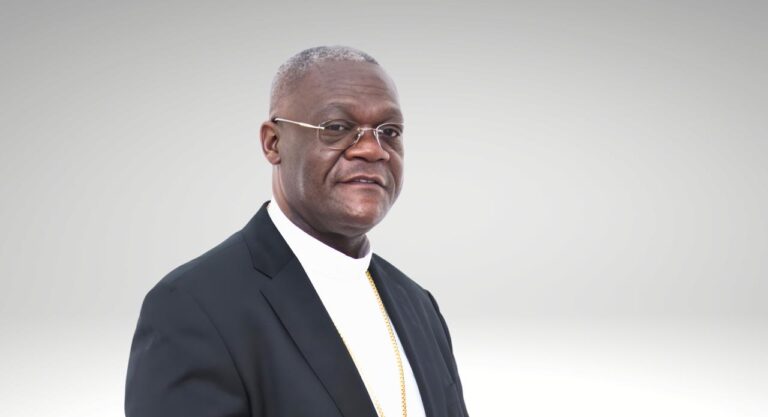
Archbishop Alick Banda is not just another man; he is an institution.

10

ARCHBISHOP ALICK BANDA IS NOT JUST ANOTHER MAN. HE IS AN INSTITUTION.

 by Brian Matambo | 3rd January 2026

There are moments in a nation’s life when clarity is demanded, not diplomacy. This moment that Zambia finds herself in is one of them.

To suggest that Archbishop Alick Banda is an “ordinary man” is not merely an error of judgment. It is a failure to understand history, vocation, and the moral architecture of Zambia’s democracy. The archbishop is not a freelance commentator. He is a custodian of conscience. He does not speak for himself. He speaks from an altar built by sacrifice, prayer, and centuries of moral witness.

That is precisely what the Zambia Conference of Catholic Bishops made unequivocally clear in its Statement of Solidarity. The statement is not emotional theatre or spiritual poetry. It is institutional doctrine meeting democratic responsibility head-on. It affirms that Archbishop Banda’s summons is viewed as an attempt to suppress a prophetic voice and weaponise state machinery against pastoral oversight. Those are not casual words. They are carefully chosen because the Church understands power. It has buried empires that thought themselves eternal.

Could someone please sit Mark Simuwe, and the UPND, down and educate them on the following. The Church in Zambia is not an NGO. It is not an opposition party. It is not a pressure group auditioning for relevance. It is a foundational pillar of this Christian nation and this unitary republic. Long before slogans, long before party colours, the Church educated, healed, buried, reconciled, and spoke when silence was fashionable. To pretend otherwise is to argue with the past, AND THE PAST ALWAYS WINS.

Let it also be said, plainly and without apology: while faithful Catholics have vowed to stand with their Shepherd, they do not stand alone. We Pentecostals stand with Archbishop Alick Banda too. This is not a denominational quarrel. It is a matter of civic duty. When one Church is threatened for speaking about the cost of living, governance, justice, and human dignity, every pulpit should feel the tremor, that of the seventh day Adventist church included.

Pastors, bishops, and archbishops are called to a life of self-sacrifice. Their calling is not comfort. It is burden. They are expected to absorb blows so that society does not fracture. To reduce such a calling to “just another citizen who can be arrested like any other” is to deliberately miss the point. Yes, they are citizens. But they are also sentinels. And when sentinels are targeted, the gate is already under attack.

The comments attributed to Mark Simuwe spread dangerous confusion. To label moral critique as “misbehaviour”, to suggest that preaching about economic hardship turns clergy into politicians, is to demand a Church that baptises silence and sanctifies suffering. That is not Christianity. That would be a theology convenience.

Now, what I personally find disturbing is how they justify verbal assaults under the guise of metaphor. Invoking Lucifer, fallen glory, and satanic imagery to describe a serving archbishop is not intellectual debate. Awe bane! Tulekwatako umuchinshi! That is sheer provocation masquerading as analysis. No wonder in the ZCCB press statement the Church is right to condemn name-calling, intimidation, and persecution as wounds to the Body of Christ and as threats to national unity.

The ZCCB statement is clear and I quote, “the Church’s voice must remain free TO SPEAK TRUTH TO POWER, to comfort the afflicted, and to guide Zambia toward peace, unity, and justice”. Dialogue and MUTUAL RESPECT, not intimidation, are the lawful currency of a democracy. Anything else is a drift towards darkness, however well-lit the podium may appear.

Archbishop Alick Banda does not need political defence. Institutions do not beg for relevance. They endure. And that is why this moment matters. Not because of one man, but because of what happens to a nation that forgets the difference between noise and conscience.

On this matter, the line has been drawn. And many more are standing on it than some imagine. To be honest, this is a defining moment, for every Zambian. I hope you the reader knows this. I submit.

Fear no police, no guns, Changala tells citizens backing Archbishop Banda

Fear no police, no guns, Changala tells citizens backing Archbishop Banda

Governance activist Brebner Changala has urged Zambians not to be intimidated by police presence or firearms and to demonstrate peaceful public solidarity with Archbishop Alick Banda ahead of his appearance at the Drug Enforcement Commission (DEC), describing the moment as a defining test of constitutional freedoms and civic participation.

Changala said the summoning of the Archbishop had generated widespread concern among citizens, churches, civil society organisations, and opposition political parties, arguing that the situation goes beyond an individual matter and touches on the broader state of civic space in the country.

He called on church mother bodies, civil society organisations, opposition parties, and their supporters to escort Archbishop Banda to the DEC offices, stressing that such an act would be lawful, peaceful, and constitutionally protected. Changala emphasised that public solidarity should not be misinterpreted as confrontation or disorder.

According to Changala, the presence of armed officers or police vehicles should not discourage citizens from exercising their rights. He argued that constitutional freedoms lose practical meaning when fear prevents lawful civic action.

Changala said the church has historically played a central role in Zambia’s democratic development, often acting as a moral voice during periods of political tension and national debate. He warned that actions perceived as intimidating religious leaders risk undermining public confidence and narrowing civic space.

He stressed that his appeal was not a call for chaos, provocation, or resistance to law enforcement. Instead, he urged citizens to remain calm, disciplined, and respectful of the law while showing solidarity.

Changala noted that peaceful escorting of public figures has precedent in democratic societies and serves as a visible expression of public concern rather than interference with legal processes. He also warned against silence, arguing that failure to respond to perceived intimidation can gradually normalise the misuse of state institutions.

He urged all participants to avoid inflammatory language or actions, emphasising that solidarity must reinforce, not undermine, public order. Changala further appealed to political leaders and security agencies to act with restraint, transparency, and professionalism, warning that public trust is fragile and easily eroded when actions are perceived as heavy-handed.

Changala said the outcome of the moment would shape public confidence in democratic institutions and civic freedoms, maintaining that peaceful engagement reassures citizens that constitutional rights remain intact.

Meanwhile, several opposition political parties have announced plans to conduct a peaceful solidarity walk in support of Archbishop Banda ahead of his DEC appearance, framing the action as a lawful expression of constitutional rights and public concern.

Opposition leaders said the planned walk is intended to demonstrate unity with the Archbishop and to reaffirm the right of citizens and organisations to express solidarity without fear or intimidation. They stressed that the action would be peaceful, orderly, and respectful of public institutions.

According to opposition figures, the decision to organise the walk followed public debate surrounding the DEC summons, which they said raised concerns among citizens, church groups, and civil society organisations about the treatment of religious leaders and the broader state of civic space.

Opposition representatives emphasised that the walk is not aimed at interfering with the work of law enforcement agencies or obstructing legal processes. Instead, they described it as a symbolic act of support for a religious leader who has spoken publicly on national issues.

They noted that Archbishop Banda is appearing before the DEC in his personal capacity and said the solidarity walk is meant to affirm his right, and the right of others, to engage in public discourse without intimidation.

Opposition leaders pointed to constitutional guarantees of freedom of expression, assembly, and association, arguing that peaceful demonstrations remain a legitimate form of civic participation. They said visible solidarity helps protect these freedoms by demonstrating public engagement.

They urged supporters to remain disciplined and calm during the walk, warning against any conduct that could lead to disorder or confrontation. Organisers said marshals would be deployed to ensure order and cooperation with law enforcement officers.

Opposition figures also cited the church’s historical role in Zambia’s public life, noting its contribution to dialogue on governance, social justice, and national values. They argued that engagement between religious leaders and the state should occur without actions that could be perceived as intimidation.

They added that the solidarity walk should not be interpreted as hostility toward government institutions but as an exercise of democratic rights, stating that public trust in institutions is strengthened when citizens feel free to express support and concern openly.

The announcement has drawn national attention, with calls from various quarters for restraint, dialogue, and respect for constitutional principles. Opposition leaders said they remain committed to ensuring the action proceeds peacefully and lawfully, urging citizens to uphold calm and respect for the law, and stressing that the objective is solidarity, not confrontation.


Govt accused of sabotaging petroleum sector through fuel import controls

0
Govt accused of sabotaging petroleum sector through fuel import controls

Former Oil Marketing Companies Association of Zambia (OMCAZ) president Dr Kafula Mubanga has accused the government of deliberately weakening Zambia’s petroleum sector by restricting fuel importation to a small number of companies, despite issuing hundreds of import licences to market participants.

Dr Mubanga said the current fuel import arrangement has undermined competition, distorted the market, and exposed the country to supply risks. He alleged that although more than 500 fuel import licences have been issued by authorities, only three companies are actively importing fuel into the country.

According to Dr Mubanga, this situation is not accidental but the result of structural and administrative barriers that prevent most licensed oil marketing companies from participating meaningfully in fuel importation.

He identified access to the TAZAMA Pipeline as the central constraint in the fuel supply chain. The pipeline, which transports petroleum products from Dar es Salaam into Zambia, offers significantly lower transportation costs compared to road haulage. Dr Mubanga said companies that are excluded from accessing TAZAMA are effectively locked out of the fuel import market due to the high cost of alternative logistics.

Dr Mubanga alleged that access to TAZAMA has been monopolised through selective fuel supply contracts, which he said favour a small group of companies. He argued that this has turned what should be a competitive, open-access infrastructure into a gatekeeping mechanism that determines who can import fuel.

He said the petroleum sector previously operated under a more competitive framework, where licensed oil marketing companies independently sourced fuel, arranged transportation, and supplied the domestic market. Under that system, he said, competition helped stabilise supply and pricing while reducing dependence on a few dominant players.

Dr Mubanga warned that the concentration of fuel importation in the hands of a small number of firms exposes Zambia to significant supply vulnerabilities. He said any logistical disruption, financial difficulty, or operational failure affecting one of the dominant importers could have immediate nationwide consequences.

He also questioned the credibility of the fuel licensing system, arguing that issuing hundreds of licences while structurally preventing licensees from importing fuel creates a false impression of market openness. According to Dr Mubanga, many companies have invested in compliance and licensing requirements only to find that they cannot access fuel import infrastructure.

Dr Mubanga further criticised what he described as politically influenced fuel procurement arrangements, arguing that the petroleum sector should be governed by transparent, predictable rules rather than discretionary allocation of opportunities.

He said investor confidence in the energy sector depends on fair access to infrastructure, consistency in policy implementation, and the absence of preferential treatment.

Dr Mubanga called for urgent reforms to restore competition in fuel importation, including transparent access to the TAZAMA Pipeline, equal treatment of licensed oil marketing companies, and a review of fuel supply contracting practices.

He said without such reforms, the petroleum sector risks continued market distortion, weakened competition, and long-term supply instability.

Mudolo accuses Hichilema of delivering poverty instead of promised prosperity

Mudolo accuses Hichilema of delivering poverty instead of promised prosperity

Opposition political figure Elias Mudolo has accused President Hakainde Hichilema of failing to deliver the prosperity he promised Zambians during the 2021 election campaign, arguing that economic conditions have worsened for ordinary citizens.

Mudolo said the administration’s economic messaging does not reflect the lived reality of many households, citing rising costs of basic goods and persistent financial pressure on families. He argued that the promise of improved living standards has not materialised for the majority of citizens.

He stated that while government officials frequently highlight macroeconomic indicators and reform efforts, these have not translated into tangible relief at household level. Mudolo said Zambians continue to struggle with the cost of food, fuel, and essential services.

Mudolo criticised what he described as selective presentation of economic progress, saying the focus on long-term projections has overshadowed immediate hardship faced by citizens. He said the electorate was promised prosperity that would be felt directly and promptly.

He further argued that employment opportunities have not expanded at the pace required to absorb job seekers, particularly young people entering the labour market. According to Mudolo, economic recovery claims must be measured against job creation and purchasing power.

Mudolo also questioned government communication on economic reforms, saying explanations have failed to convince citizens who feel their financial situation has deteriorated.

He said accountability is necessary when campaign commitments are not met, stressing that political leaders must be measured against the promises made to voters.

Mudolo urged government leaders to acknowledge public frustration and engage honestly with concerns over living standards.

Hichilema Elevates Zambia Army Officers to Higher Ranks

1
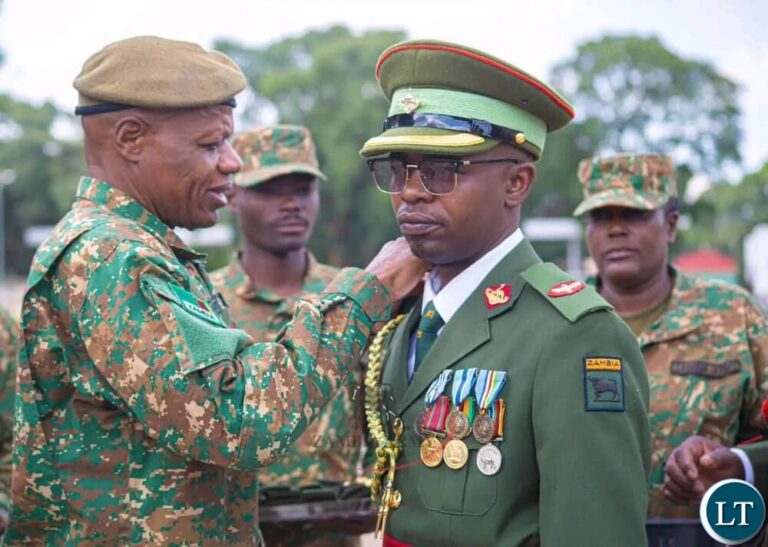
President Hakainde Hichilema, in his capacity as Commander-in-Chief of the Armed Forces, has promoted a number of Zambia Army Officers and Warrant Officers Class Two (WOII) to higher ranks.

The promotions were officially announced during a rank insignia pinning-on ceremony held at Army Headquarters. Zambia Army Commander Lieutenant General Geoffrey Zyeele conveyed the President’s congratulatory message to the newly promoted general grade officers.


Addressing the officers, Lt Gen Zyeele urged them to remain steadfast in their loyalty to the system and the government, while upholding the highest standards of military professionalism. He also challenged both male and female officers to demonstrate competence and discipline in line with their elevated responsibilities.


According to a Zambia Army report, the newly promoted general grade officers marched before Lt Gen Zyeele and Deputy Army Commander and Chief of Staff, Major General Luswepo Sinyinza, who formally pinned the rank insignia upon their shoulders.


Notable among the promoted are four female officers, with one elevated to the rank of brigadier general and three others promoted to colonel.


Adjutant General Brigadier General Ben Banda described the promotions as well deserved, attributing them to the officers’ hard work, dedication, and consistent service. He reminded the newly promoted officers to continue upholding the values of professionalism and discipline that define the Zambia Army.


In a related development, a parade was conducted at Arakan Barracks parade square, where officers from the rank of lieutenant to lieutenant colonel, along with warrant officers class one, were formally decorated with their new ranks.


Brigadier General (Dr) Golden Ng’andwe, who attended the parade, congratulated the officers and encouraged them to discharge their duties with diligence and renewed commitment to service. He stated that promotion comes with responsibility and that it is expected of them to live up to the expectation of the appointing authority.

Chisamba man jailed 1 year for assaulting campmate

3

The Chisamba Magistrate Court has sentenced a 35-year-old man to twelve months imprisonment with hard labour for assaulting his campmate at Kapungula Gold Mine.

Magistrate Litungi Litungi convicted and sentenced Jeff Londe of Kapalamoto village in chief Chamuka’s area after the accused pleaded guilty to one count of assault, contrary to Section 248 of the Penal Code Chapter 87 of the laws of Zambia.

The particulars of the offence are that on December 19, 2025, Londe unlawfully assaulted Charles Manda of the Luano area in Chisamba, thereby occasioning actual bodily harm.

On the material day at approximately 22:00 hours, Manda was allegedly hit in the face with a piece of wood by his campmate at Kapungula Gold Mine in Chisamba district during a dispute over the scattering of the victim’s personal belongings.

“On the 19th of December 2025 at about 22: 00 hours, the complainant came home and found Jeff Londe, now the accused, a known person. After he noticed his belongings were thrown all over the place, he inquired from the accused who did not give a satisfying reply,” facts read in part.

Earlier, following an inquiry, Londe allegedly attempted to hit the complainant with punches and a wooden handle but missed, causing the complainant to flee but he allegedly pursued him and assaulted him in the process.

The accused fled after realising he had injured the complainant but was apprehended by the Community Crime Prevention Unit (CCPU).

The court heard that the complainant, who sustained bruises on the nose and on the left forehead, reported the matter at the Chipembi Police Post and was issued with a medical report.

When a warn and caution statement was administered to the accused in Tonga, a language he better understood, he admitted the charge.

Magistrate Litungi found Londe guilty as charged and convicted him accordingly, based on his guilty plea and admission of facts.

During his plea for leniency, Londe expressed remorse for his offense and pledged not to commit the offence of assault again.

“The punishment for assault is imprisonment for five years. However, I have taken into account that the now convict is a first offender who has readily admitted the charge,” Magistrate Litungi said as he sentenced Londe to one-year imprisonment with hard labour, effective December 30, 2025.

DMMU Evacuates 54 flood Victims in Lumezi District

0

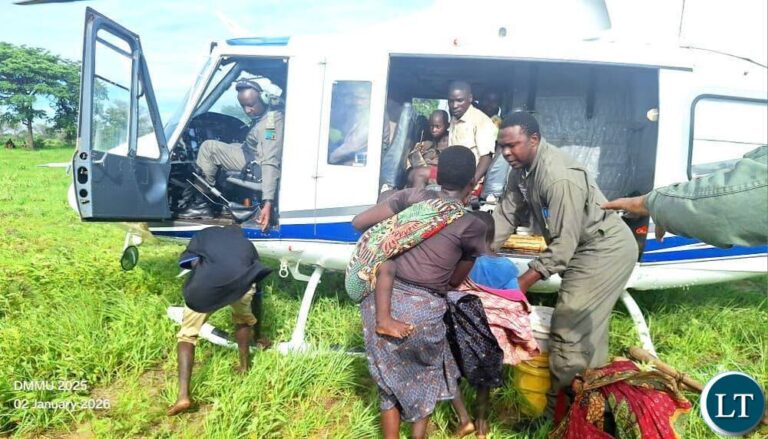
The Disaster Management and Mitigation Unit (DMMU) has evacuated 54 flood victims from Kamwala area in Lumezi District, Eastern Province, following flooding of the Lundazi River which occurred five days ago.

The affected individuals had been stranded across the river where they were conducting agricultural activities and could not cross back to their permanent homes due to high water levels.

The evacuation exercise was conducted with the support of the Zambia Air Force, whose aircraft made four sorties to ferry the victims and their personal belongings to Chiweza area in Kazembe Ward.

Confirming the development, DMMU Senior Communications Officer Mathews Musukwa said the operation was undertaken to protect lives.

“The affected people were marooned by rising water levels of the Lundazi River, making it unsafe for them to cross back to their homes,” Mr Musukwa said.

Meanwhile, floods have left 127 households homeless after their houses collapsed due to continuous heavy rainfall experienced in the area.

The displaced households are currently camped at Kazembe Primary School where DMMU, in collaboration with cooperating partners, is providing food and non-food relief items. Other affected families in villages such as Chimalilo, Saili and Bodola are being accommodated in temporary shelters within their respective communities.

Mr Musukwa said DMMU has commenced the distribution of relief supplies to the affected families.

“We have started distributing food and essential non-food items as part of the government’s immediate response, while further assessments are ongoing,” he said.

He further disclosed that a local businessman from Lundazi District, Mr Aliboo, has donated 100 by 25-kilogramme bags of mealie meal towards relief efforts for flood victims in Lumezi District.

Preliminary assessments indicate that the flooding originated upstream in Lundazi District where some critical infrastructure has been damaged.

Downstream, the floods have resulted in the collapse of houses, destruction of crop fields and heavy siltation, with some farmlands buried under sand.

DMMU says it continues to monitor the situation and is working closely with line ministries, the Zambia Air Force and cooperating partners to ensure the safety and welfare of affected communities.

Kashimoto Digests Chipolopolo AFCON Outing

5

Frederick Kashimoto with his son Frederick Junior at Shinde Stadium
Zambia and Mighty Mufulira Wanderers legend Frederick Kashimoto has branded Chipolopolo’sperformance at the 2025 Africa Cup of Nations
Frederick Kashimoto with is son Frederick Junior at Shinde Stadium
in Morocco as very bad.

Zambia suffered an early Africa Cup exit after recording two draws and a 3-0 loss to hosts Morocco, to amass two points from the possible nine points.

Speakingto Radio Icengelo Sports from Mufulira, Kashimoto said Zambia played uncoordinated football in Morocco.

“Their performance was very bad.”

“In goal we were ok, the defence was not ok, and the midfield tried but in front no goal on target. How did we expect to win without shooting on target?” Kashimoto said.

“We tried against Mali but against Morocco we had a lot of breakdowns. Morocco pressed us too much,” said the former Mighty, City of Lusaka and Prison Leopards coach.

Kashimoto said Zambia needs a huge pool of national team players that will give the coaches more options when picking players.“Let’s go back to the grassroots. We need to have a stream of three national teams.  We need to expose more players at national level in order to improve our football. We need a strong necessary,” he said.

Kashimoto played football for Wanderers between 1973 and 1993while featuring for the National Team famously known as KK 11 from 1980 to 1988.

ZAAA intensifies preps for 2026 international tournaments

2

The Zambia Amateur Athletics Association (ZAAA) has disclosed that Zambian athletes have intensified preparations for major international competitions scheduled for 2026.

In an exclusive interview with The media, ZAAA General Secretary, Teddy Shimishi confirmed that athletes, including star sprinter Muzala Samukonga, have already resumed training ahead of the Diamond League in Doha, Qatar in April.

Shimishi cited the historic World Athletics Relay Championships, set to take place in Gaborone, Botswana, from May 2 to 3, and the 24th African Senior Athletics Championships in Accra, Ghana, scheduled for May 12 to 18, 2026.

He described the 2026 athletics calendar as busy, noting that it covers local, regional, continental and global competitions.

However, Shimishi said limited infrastructure and funding remain major challenges, adding that Zambia currently lacks a World Athletics certified facility required for athlete qualification.

As a result, he explained that athletes are forced to travel outside the country to qualify, significantly increasing costs.

The media reports that Shimishi appealed to the government, sponsors and key stakeholders, including the Ministry of Youth, Sport and Arts and the National Sports Council of Zambia, to support resource mobilisation.

He stressed that adequate funding is critical for athlete preparation and international representation, adding that with proper logistical and financial support, Zambia has the potential to compete strongly and raise its profile on the global athletics stage.

Shimishi also said that ZAAA has placed strong emphasis on its talent identification programme, with more than 60 young athletes selected through competitions held at Kafubule Ranch and the Olympic Youth Development Centre (OYDC).

He explained that most of the identified athletes are school-based and form the core of Zambia’s future athletics pipeline.

Protected: Sponsored : Mundubile address to Nation

This content is password-protected. To view it, please enter the password below.

Ministry of Education set for reopening of Schools

1

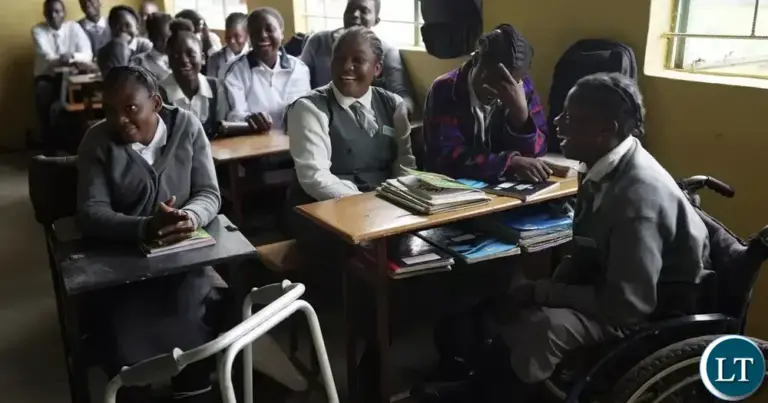
The Ministry of Education has assured the nation that it is fully prepared for the reopening of schools on January 12, as learners return for the 2026 academic year under an expanding new curriculum framework.

Speaking in an interview , Assistant Director, Head of communication at the Ministry of Education, Kunda Mando, said the ministry is excited to welcome learners back to school and has put comprehensive measures in place to ensure a smooth and productive start of the term.

ZANIS reports that Ms Mando revealed that schools will observe a “zero week” from January 5 to January 9, a critical preparation period during which teachers will develop lesson plans and schemes of work, while head teachers will hold planning meetings with management teams and heads of departments.

Ms Mando stated that schools across the country have already been cleaned and prepared ahead of learners’ return, a practice made possible through school grants that allow head teachers to employ gardeners and cleaners.

She explained that the ministry has continued its phased implementation of the new curriculum, which began in 2025 with Early Childhood Education (ECE), Grade One, and Form One, these learners will now progress to ECE Level Two, Grade Two, and Form Two, while new entrants at ECE Level One, Grade One, and Form One will also join under the revised curriculum.

“This gradual phase-in and phase-out of the curriculum is an internationally accepted approach, it allows learners to transition smoothly while ensuring consistency and quality in education delivery.” she said

Ms Mando emphasised that the new curriculum places strong focus on practical learning, critical thinking, and creativity, enabling learners to go beyond memorization and actively engage with knowledge.

“We want learners who can think outside the box, innovate, and become self-reliant citizens capable of creating jobs, not just seeking employment,” she said.

Ms Mando reiterated that by 2028, Zambia will witness the final Grade Seven and Grade Twelve examinations under the old curriculum, alongside the first Grade Six and Form Four examinations under the new system.

She encouraged the public to remain informed and supportive as the education sector continues to evolve.

Kaputa man faces fish ban charge

2

A 32-year-old man of Katai village in Chief Kaputa’s Chiefdom in Kaputa District has appeared in court for being in possession of fish during the annual fish ban.

Moses Kalembwe was found with 172 kilograms of salted fish during the fish ban.

Kalembwe, who appeared before Kaputa Magistrate Emmanuel Mukoma, is facing one count of unlawful possession of fish during the fishing ban.

The offence is contrary to sections 14(1)(a) and 3 as read with sections 57(a), (b), and (c) of the Fisheries Act number 22 of 2021, SI number 24 of 2012 of the laws of Zambia.

He has since pleaded guilty to the offence.

The particulars are that Kalembwe was arrested on December 15, 2025, in Katai village by officers from the Fisheries Department.

When Magistrate Mukoma asked if the accused had any lawful justification to be in possession of fish in a prohibited period, he said no.

The court adjourned the matter, and it will come up for presentations of fact.

The accused is remanded in custody at Kaputa police station

DEC Boss Crosses the Line

5
DEC Boss Crosses the Line

By Thandiwe Ketiš Ngoma

The statement issued by Drug Enforcement Commission Director General Nason Banda regarding the summoning of Archbishop Alick Banda is troubling not because of what it claims, but because of what it reveals.

Mr. Banda insists the matter is “nothing political.” Yet his conduct points in the opposite direction. He chose to speak publicly about a summons that, by his own admission, is a private legal instrument. He issued warnings instead of limiting himself to procedural clarity. He went further by prescribing how an Archbishop should present himself at DEC offices. Neutral law enforcement does not behave this way.

If the matter were routine, it would have remained routine. There would have been no press engagement, no public cautioning, and no attempt to manage public optics. The decision to step into the media space transformed a legal process into a political spectacle. That choice rests squarely with the DEC Director General.

The most revealing moment came when Mr. Banda warned the Archbishop not to come “with cadres.” This was not a careless word. It was a political label, loaded with Zambia’s partisan history and routinely used to delegitimise public support by casting it as disorderly or threatening.

Archbishop Alick Banda is not a politician. He does not command cadres. He leads a church. His followers are congregants, clergy, and citizens exercising conscience, not party militants mobilised for confrontation. By invoking the language of cadres, Mr. Banda projected a political mindset onto a religious figure who does not operate in that space.

Equally inappropriate was the Director General’s effort to reference his personal Catholic faith as a shield against criticism. Personal belief is not an institutional defence. Public confidence in law enforcement is not earned through declarations of faith, but through restraint, professionalism, and adherence to due process.

More concerning is the tone adopted throughout the statement. Warnings replaced invitations. Commentary replaced procedure. The language suggested suspicion rather than inquiry. In any justice system worthy of trust, the presumption of innocence is non-negotiable. Public officials do not speak as though conclusions have already been reached.

If the Archbishop’s name arose in court proceedings, the correct response was simple and lawful: a summons issued quietly, followed by questioning conducted without theatre. Anything beyond that creates the impression of intimidation, particularly when directed at a church leader who has previously spoken on matters of governance and public morality.

The Catholic Church has long occupied the role of national conscience. Attempts, perceived or real, to pressure or frame its leadership through state institutions inevitably provoke public resistance. History has taught Zambians to be alert when power appears eager to discipline moral voices.

Mr. Banda may insist that nothing political is at play. His language, posture, and public warnings suggest otherwise.

Law enforcement exists to investigate, not to sermonise. It is meant to apply the law, not to manage narratives. It must treat every citizen, bishops included, with procedural dignity and without insinuation.

Power exercised without restraint erodes trust. Justice applied without neutrality ceases to be justice.

Why is President Hakainde Hichilema going after Archbishop Alick Banda?

6

Why is President Hakainde Hichilema going after Archbishop Alick Banda?

By Brian Matambo | Lusaka, Zambia

In a nation that proclaims itself Christian, there are moments when law, power, and conscience collide so loudly that silence becomes impossible. Zambia is standing in such a moment.

The summoning of Lusaka Archbishop Dr. Alick Banda by the Drug Enforcement Commission has triggered questions that no procedural statement can dismiss. The issue is no longer whether the State has the legal authority to summon a citizen. It is whether the State understands the moral, historical, and political weight of the citizen it has chosen to summon, and the moment it has chosen to do so.

The question Zambians are now asking is simple, unsettling, and unavoidable. Why Archbishop Alick Banda?

Is it because he officiated at the funeral service of late former President Edgar Chagwa Lungu, offering dignity where the State had offered hostility? Is it because the Lungu family, in their moment of deepest grief, chose Archbishop Banda as their representative in mediation talks, while government appointed Bishop Joshua Banda to sit on the opposite side? Is it because Archbishop Banda has emerged, quietly but firmly, as a voice of reason in a season where reason itself has become inconvenient?

Or is it because this regime finds moral clarity acutely discomforting?

The State insists the matter is purely legal. That a motor vehicle once belonging to the Zambia Revenue Authority found its way to the Archbishop, and that questions must therefore be asked. Yet even within the factual record now circulating publicly, the narrative is far less sensational than the accusations suggest. Investigations into the disposal of ZRA vehicles were conducted by a Joint Investigations Team comprising multiple agencies. That process resulted in the arrest and prosecution of two former ZRA officials, Kingsley Chanda and Callistus Kaoma, for failure to follow procedure in the disposal of 22 vehicles.

What is conspicuously absent from the court record is any finding that Archbishop Alick Banda stole, solicited, or unlawfully acquired a motor vehicle. Evidence presented in court shows that when the Archbishop learned that the Toyota Hilux associated with him was under investigation, he surrendered it voluntarily to the Joint Investigations Team. The vehicle was not recovered from him. It was handed over by him. It was later produced in court as an exhibit in the case against the ZRA officials. No charge was laid against the Archbishop. No offence was attributed to him. If there had been evidence of criminality, the prosecution would have had every opportunity to add his name to the charge sheet. It did not.

This is why the current summons feels less like due process and more like insistence. As if the State is determined to extract something that has already been examined, testified to, and judicially concluded. As if explanation itself is now the offence.

Context matters. History matters. Memory matters.

Not long ago, a senior official of the ruling party publicly labelled Archbishop Banda “the Lucifer of Zambia”. It was a statement so incendiary, so reckless, that it should have attracted immediate condemnation and discipline from the highest office in the land. Instead, the response was silence. Worse still, the silence felt like approval. When private citizens attempted to pursue legal redress for hate speech and criminal defamation, the process was swiftly halted. The insult stood. The wound festered.

Zambians did not forget.

They also did not forget that when civil society and the Oasis Forum sought to oppose the controversial Bill 7, the Catholic Church was deliberately isolated and vilified, its clergy paraded as political villains, its bishops reduced to unnamed enemies of the State. Ministers were deployed to disparage the Church. It felt, to many observers, like a forced ultimatum. Choose the President, or choose your faith.

Now add to this a record that troubles the conscience of the nation. A government that sued a widow on the very day she was meant to bury her husband, because the President insisted that he alone should preside over the burial of his political nemesis. A government whose leader once dismissed the National Day of Prayer and Reconciliation as irrelevant, while his own ministers derided it as a gathering of wilful sinners. A government that has held the former first family in mourning for seven months, not out of necessity, but out of ego and control.

These are not the actions of humility. They are the habits of power unrestrained by reverence.

It is therefore deeply ironic that those who defend this posture dare to accuse a Catholic Archbishop of Luciferian tendencies. If the term has any meaning at all, it describes pride that exalts itself above all else. It describes power that refuses accountability. It describes authority that weaponises institutions to silence moral resistance.

In Christian theology, those who suffer for speaking truth do not wear the mark of evil. They carry the cost of the Gospel.

Archbishop Alick Banda has not called for insurrection. He has not mobilised violence. He has not abused office. He has spoken, presided, mediated, and prayed. If that makes him a threat, then the problem is not the Bishop. It is the State.

Zambia’s democracy was never meant to be a courtroom without conscience. It was meant to be a covenant between law, reason, and faith. When any one of these is crushed under the weight of ego, the nation begins to fracture.

This moment demands restraint. It demands wisdom. It demands that power remember it is temporary, while faith endures.

A Christian nation is not measured by how loudly leaders invoke God at commemorations, but by how carefully they treat His servants when those servants become inconvenient.

Zambia must choose reason over vendetta, democracy over intimidation, and faith over fear.