Thursday, June 11, 2026
13.1 C
Lusaka
Home Blog Page 209

Two Teens Die After Eating Cassava Leaves in Senga District

2

Two teenagers have died in Senga District, Northern Province, after consuming cassava leaves, locally known as katapa.

The victims, 16-year-old Steven Siame and 15-year-old Abigail Nayame, fell ill after eating nshima and katapa prepared by their 35-year-old mother, Memory Mukuka.

According to police spokesperson Godfrey Chilabi, the family was taken to Nondo Rural Health Centre, where the two teenagers’ conditions deteriorated, and they were later pronounced dead.

Chilabi said the mother and two other children were treated and discharged after their conditions were found to be stable.

The bodies of the deceased have been taken to Senga District Hospital Mortuary, where post-mortem examinations will be conducted.

The Zambia Police Service has launched an investigation into the suspected food poisoning incident, which is believed to have occurred between December 17 and 19, 2025.

Chitangala implores Secretaries to uphold professionalism

2

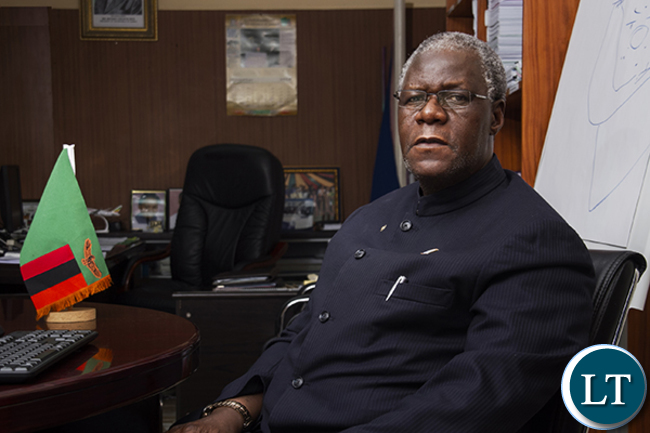
Lusaka Mayor, Chilando Chitangala has implored Secretaries to uphold professionalism in their practice of secretarial work.

Ms Chitangala stressed that Secretaries play an important role in the delivery of services in various institutions hence the call to remain professional.

Speaking last evening during the Zambia Institute of Secretaries (ZIS) night gala held at Government complex, Ms Chitangala said professional secretaries are the backbone of administrative excellence.

She further urged secretaries to continue learning and upgrading their qualifications.

The media reports that Ms Chitangala also encouraged secretaries to embrace the use of technology as they discharge their duties.

And speaking earlier, ZIS President, Josephine Mupeta expressed happiness with the number of secretaries that have registered with the institute.

Ms Mupeta indicated that the number of registered professional secretaries with the institute has overwhelmingly increased from 300 to 630.

She expressed confidence that the number of registered professional secretaries will continue to rise as the institute gains more recognition.

Ms Mupeta urged unregistered secretaries to register with the institute.

Eastern Province records over 100 cases of defilement

0

Zambia Police Service Eastern Province Commanding Officer, Robertson Mweemba says more than 100 defilement cases have been recorded in Eastern Province from January to December, 2025.

Mr Mweemba says a total of 178 defilement cases have been recorded in the Province with the highest of 47 coming from Chipata district.

Speaking through  an interview, the Eastern Province Police Chief said Lundazi district is occupying second position with a total of 22 cases while in third place is Sinda district with 15.

He said Petauke recorded 11 cases with Nyimba and Katete occupying fourth and fifth slots with 10 defilement cases each.

Mr Mweemba said Chasefu recorded nine cases of minors being sexually abused while Vubwi and Mambwe districts recorded seven and six cases respectively.

He said Kasenengwa district recorded four defilement cases, Lumezi had four with Chadiza and Chipangali recording three cases each.

Govt Sneaked Changes Into Bill 7 – Laura Miti

8

Human rights activist Laura Miti has accused government of introducing key changes to Constitution Amendment Bill No. 7 without subjecting them to public scrutiny, warning that the manner in which the amendments were handled has lasting implications for democratic governance.

In a statement seen in today’s The Mast, Miti said alterations to provisions on proportional representation were not presented to citizens for interrogation, despite their far-reaching impact on the composition of Parliament and the balance of power between the Executive and the legislature.

She noted that the changes did not originate from either the Christopher Mushabati-led Technical Committee or the Parliamentary Committee that reviewed the Bill, raising questions about how and when the amendments were introduced into the final legislative framework.

According to Miti, the absence of transparency surrounding the changes undermined the credibility of the constitutional amendment process. Constitutional reform, she argued, demands openness and broad public participation, particularly where alterations affect the structure and authority of elected institutions.

She expressed concern that the revised provisions place expanded power in the hands of future Presidents, regardless of whether such authority is exercised responsibly. In her view, constitutions should be designed to restrain power rather than simplify its concentration.

Miti warned that easing the path to a two-thirds parliamentary majority carries serious consequences, given the authority such a threshold confers on the Executive. She maintained that such power should arise only from the explicit will of voters, not from structural advantages embedded within the Constitution.

Of particular concern, she said, was the linkage of proportional representation seats to presidential election outcomes. That arrangement, she argued, effectively grants ruling parties a substantial head start toward achieving a two-thirds majority before parliamentary voting even begins.

She pointed out that under the amended framework, dozens of parliamentary seats are effectively pre-allocated based on presidential results, reducing the electorate’s ability to shape a balanced and independent Parliament.

Miti also took issue with the public framing of the changes as measures intended to promote inclusion for women, youths and persons with disabilities. While inclusion remains important, she argued that the practical effect of the amendments is to strengthen Executive dominance rather than enhance representative diversity.

She drew parallels with past constitutional processes, cautioning that lightly handled amendments have previously laid the groundwork for institutional instability. Constitutional design, she stressed, should prioritise the protection of citizens, democratic institutions and future generations.

Miti maintained that the manner in which the Bill 7 changes were introduced has altered the democratic equation and narrowed the space for meaningful parliamentary oversight. She said citizens deserved full disclosure and participation in decisions of such magnitude.


Credit  Source: The Mast, Sunday, December 21, 2025

Keep Your Aid. Zambia Is Not for Sale.

17

“America has now said the quiet part out loud: comply with our mining interests, or your people will suffer. This is not aid. It is coercion. Zambia must reject it without apology.”

By Daimone Siulapwa

With the bluntness captured on the News Diggers front page, the American envoy to Zambia has confirmed what many Africans have long understood but were discouraged from saying publicly: aid is conditionalobedience.

According to the envoy’s remarks, the United States will not give aid to Zambia while the country “fails to do business” with America as Chinese mines allegedly poison citizens.

This is not a misunderstanding. It is not a slip of the tongue. It is a declaration of policy. The message is simple and brutal. Align your mining sector with American interests, or your people will pay the price. That price includes the withdrawal of aid that sustains health systems, supports clinics, and underpins life-saving programmes.That is not partnership or diplomacy, it is blackmail.

The headline “Those Days Are Over” is revealing. What days, exactly, are over? The days when aid was dressed up as humanitarian concern while serving strategic interests quietly? If so, then at least there is honesty now.The quiet part has been said out loud, America has finally dropped the pretence.

Zambia is being informed that its health, welfare, and international standing are now bargaining chips in a widening geopolitical war between the United States and China. Our country is not being engaged as a sovereign state with its own priorities, laws, and future. It is being treated as contested ground, a pawn in a struggle for control of copper, cobalt, lithium and strategic influence.

Yes, environmental pollution is real. Yes, any mining company, Chinese or otherwise, that poisons water sources and destroys livelihoods must be held fully accountable. Sino Metals and others must face the full force of Zambian law if investigations confirm wrongdoing. Environmental justice is not negotiable.

But environmental concern can not be selectively weaponised.
If pollution were truly the central issue, the response would be consistent, legal, and grounded in Zambia’s regulatory institutions. Instead, pollution is being invoked as moral cover for economic pressure. It is being used to justify withholding aid until Zambia tilts its mining sector in a preferred geopolitical direction.

That is not environmental justice.
That is strategic manipulation.
What makes this moment even more dangerous is the precedent it sets. Aid is no longer presented as support for human life, but as a reward for alignment.

It is now clear that health funding is no longer a humanitarian commitment, but leverage in commercial and geopolitical negotiations. Zambian citizens are being reduced to pressure points and this is an extraordinary ethical failure.

Mining concessions are not short-term arrangements. They bind generations. They shape industrialisation, revenue, land use, and national capacity for decades. To attach such concessions to health funding is to mortgage the future under duress. It is to tell a nation that its children’s tomorrow must be surrendered to secure medicine today.

Zambia has already paid too high a price for externally imposed dependency. Debt restructuring, IMF conditionalities, and austerity have shifted unbearable burdens onto future generations. Now, on top of that, we are being told to trade the very minerals that could liberate those generations in exchange for conditional mercy.

My position to President Hakainde Hichilema and the UPND government is direct and unapologetic: reject this coercion. Do not allow Zambia’s health sector to be weaponised. Do not allow mining policy to be dictated through threats. Do not allow foreign powers, whether American or Chinese, to define Zambia’s sovereignty.

If the United States believes that withholding aid is an acceptable tool of persuasion, then Zambia must respond with clarity and dignity.
They can keep their aid.
Zambia is not a client state. We are not a colony in waiting. We are not owned by Washington, Beijing, or anyone else.

Yes, rejecting this pressure will be difficult. The strain will be real. But hardship endured with integrity is not defeat. What is defeat is surrendering sovereignty while applauding ourselves for avoiding short-term discomfort. A nation that trades its minerals for medicine today will never be free tomorrow.

This moment is bigger than Zambia. It is a test for Africa. If Zambia submits, the lesson to the continent will be unmistakable: defy great power interests and your people will be punished. That is not global leadership. It is imperial discipline.
If “those days are over,” then let it be the end of dependency politics altogether.

Let it be the day Zambia declares that its environment will be protected by its own laws, its resources governed by its own people, and its future decided without blackmail. Our children deserve more than a country that chose comfort over courage, and the future is not for sale, not for aid, not for minerals, and not for anyone.

Daimone Siulapwa is a seasoned Political Analyst and Consultant, as well as a dedicated governance and social activist. He is also a strong advocate for citizens’ empowerment and tribal unity. Comments, [email protected]

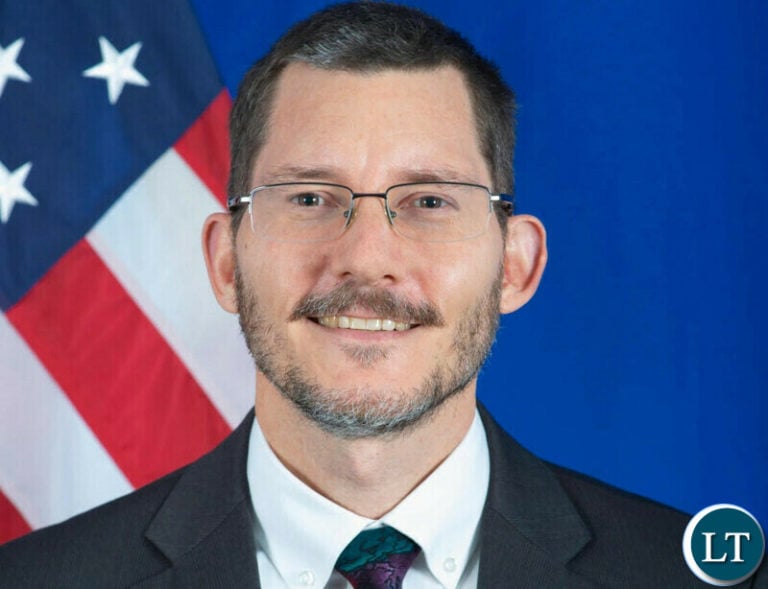
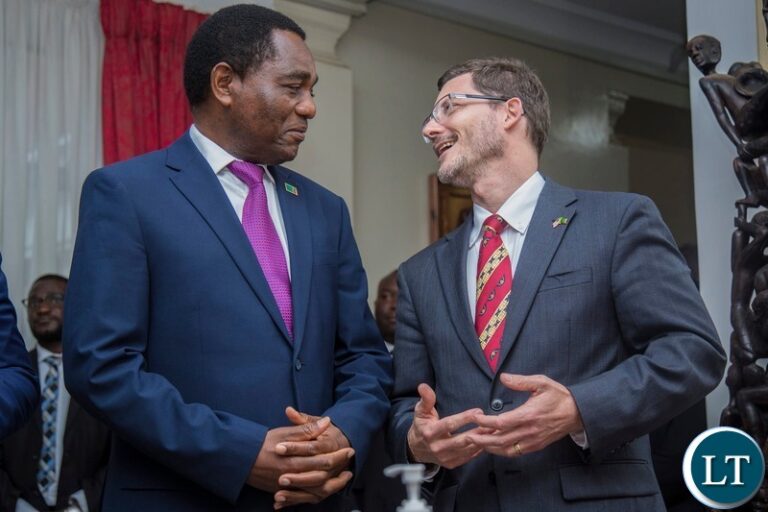
US Envoy Signals Shift in Relations With Zambia

19

The United States has signalled a shift in its engagement with Zambia, with a senior American envoy declaring that the era of unconditional support and business-as-usual relations has come to an end.

Speaking in Zambia, the US envoy said Washington’s approach to cooperation and assistance would now be guided by clearer expectations, accountability, and conduct, marking a departure from past practices where support was extended without firm conditions.

The envoy said the United States was reassessing how it engaged with partner countries, emphasising that aid and cooperation could no longer be treated as automatic or detached from broader governance and institutional standards.

According to the envoy, the message was not intended as a threat but as a reflection of evolving priorities in US foreign policy, where relationships were increasingly shaped by mutual responsibility rather than one-sided support.

The envoy said Zambia remained an important partner, but stressed that the nature of that partnership was changing. Cooperation, the envoy noted, would be informed by shared values, transparency, and adherence to agreed norms.

The statement came amid wider discussions on international aid, governance, and resource management, areas in which the United States has increasingly tied assistance to performance and accountability benchmarks.

The envoy said Washington expected partner governments to demonstrate commitment to responsible governance, rule-based decision-making, and the protection of institutions that underpin democratic systems.

He indicated that the United States would continue to engage with Zambia across multiple sectors, but said expectations around conduct and outcomes were now more explicit than in the past.

The remarks reflect a broader recalibration of US engagement across the region, where diplomatic language has increasingly emphasised responsibility, sustainability, and reciprocal obligation rather than open-ended support.

The envoy said the change in tone was consistent with a global review of how US assistance was delivered, adding that countries receiving support were expected to meet clearly defined standards.

He said the United States remained open to cooperation that was grounded in mutual respect and accountability, but reiterated that the period of unconditional engagement had passed.

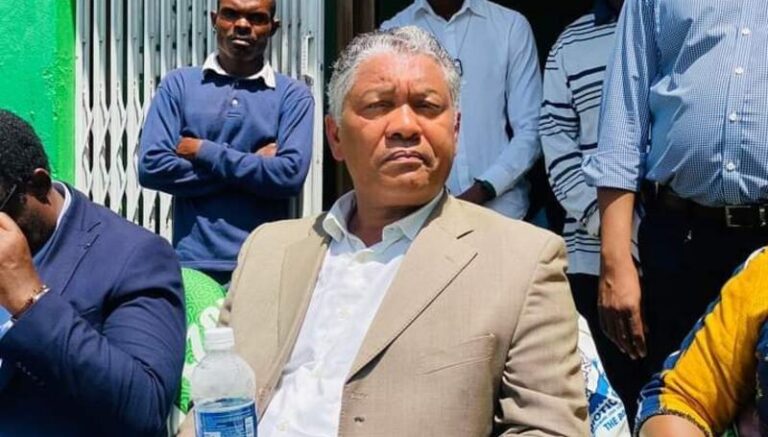
Lubinda Accuses Government of Hijacking PF Through Registrar

Patriotic Front acting president Given Lubinda has said government has no authority to involve itself in the internal affairs of the opposition party, insisting that matters relating to discipline and leadership within PF fall outside the mandate of the State.

He maintained that recent public statements by government officials on PF disciplinary actions amounted to political interference and risked misleading the public on the constitutional separation between party affairs and state authority.

Political parties, Lubinda noted, are voluntary associations governed by their own constitutions and internal rules. Decisions taken within those structures, he argued, cannot be overridden, validated, or dismissed through government pronouncements or public commentary.

From that standpoint, he rejected any suggestion that government officials had a legal basis to comment on or arbitrate internal PF decisions, including those involving Members of Parliament whose conduct may conflict with party resolutions.

Lubinda warned that attempts by government representatives to present themselves as referees in PF matters undermined constitutional principles that guarantee political parties the right to manage their internal affairs without state interference.

The PF constitution, he said, clearly outlines disciplinary procedures and leadership structures, adding that disputes arising within the party must be addressed through established internal mechanisms rather than external commentary from the executive.

He further pointed to what he described as a persistent blurring of the distinction between party membership and parliamentary office. While Members of Parliament enjoy constitutional protection in the execution of their legislative duties, party membership, he emphasised, remains subject to party rules and discipline.

From PF’s perspective, party discipline cannot be dictated by external actors, including the executive arm of government. Allowing such involvement, Lubinda cautioned, would establish a precedent capable of being used against any political organisation.

In his view, government’s role is limited to upholding the law and protecting constitutional order. Intervention in political party disputes, he argued, exceeds that mandate and erodes institutional boundaries.

Lubinda linked the current controversy to what he described as an earlier “hijacking” of PF leadership through administrative action by the Registrar of Societies. According to his account, a rogue party president was allowed to hold PF documents that did not reflect the truth or the party’s constitutional position.

He alleged that Chabinga was recognised as PF president through the Registrar of Societies without any PF constitutional process, including the holding of a convention or endorsement by the party’s governing organs. That recognition, he said, amounted to leadership being imposed from outside the party.

Such actions, Lubinda argued, would one day be tested in court, maintaining that the Registrar of Societies had exceeded its administrative mandate by interfering in matters that were strictly internal to the party.

He contrasted the current situation with the conduct of a previous Registrar of Societies, whom he credited for refusing to bend to political pressure. That resistance, he said, prevented manipulative attempts to weaken PF or bar it from contesting elections, a trend he claimed had since taken root.

PF, Lubinda stated, remains committed to resolving its internal matters in accordance with its constitution, regardless of public speculation or commentary by government officials.

Respect for institutional boundaries, he added, is essential for political competition in a multiparty democracy. Failure to uphold those boundaries weakens democratic practice and creates confusion among citizens.

On that basis, PF expects government to focus on governance and service delivery rather than commentary on opposition party affairs, while the party continues to assert its independence and resist what it describes as political overreach.

MPs Told to Prioritise National Interest Over Party Loyalty

Members of Parliament have been urged to place the interests of citizens ahead of political party considerations when dealing with national matters, amid growing criticism of what has been described as excessive party-driven conduct in the National Assembly.

Academic and politician Professor Naison Prof Ngoma said the current parliamentary system was failing to adequately serve citizens because it was being operated primarily on political party positions rather than on principled debate and independent judgment.

Speaking in an interview with The Mast, Prof Ngoma said Zambia’s parliamentary system had become distorted, arguing that legislators were increasingly compelled to reflect party directives instead of openly advancing positions that represented the needs and interests of the electorate.

He said Parliament should not function as an extension of political party machinery, particularly when addressing issues that had a direct impact on citizens’ lives. Prof Ngoma said matters brought before the House ought to be guided by national interest rather than partisan advantage.

Prof Ngoma expressed concern over what he described as a lack of discipline among MPs when handling critical national issues. He said the conduct of some legislators suggested a prioritisation of political survival and party loyalty over accountability to voters.

He acknowledged that proposals aimed at increasing representation of youths, women and persons with disabilities in Parliament carried potential benefits. However, Prof Ngoma said such reforms should have been implemented in a manner consistent with the judgement of the Constitutional Court.

According to Prof Ngoma, the manner in which some constitutional matters had been handled raised questions about the motivations and discipline of MPs, particularly within the opposition. He said reports suggesting that some legislators may have been influenced by personal considerations rather than constituency interests were troubling.

He said MPs had an obligation to exhaust internal party processes before taking positions that contradicted party resolutions. Prof Ngoma said legislators who disagreed with party positions should have demonstrated principled engagement within their political organisations before adopting alternative stances in Parliament.

Prof Ngoma contrasted the conduct of opposition MPs with what he described as greater discipline among Members of Parliament from the ruling United Party for National Development. He said MPs were expected to demonstrate consistency and integrity when representing both their parties and constituents.

He further stated that the conduct of MPs during the passage of contentious legislation had eroded public confidence in Parliament as an institution. Prof Ngoma said citizens expected legislators to act as representatives of the people rather than as agents of political parties.

Looking ahead to the 2026 general elections, Prof Ngoma said voters should critically assess the performance and conduct of sitting MPs. He argued that legislators who had failed to uphold national interest and ethical standards should not be returned to Parliament.

Prof Ngoma said restoring credibility to Parliament would require a renewed commitment to discipline, transparency and principled leadership. He said MPs must demonstrate that their primary responsibility was to serve citizens and protect national interests rather than advance partisan objectives.

CEC Targets Over 300MW Solar Capacity by 2027

The Copperbelt Energy Corporation says it remains on track to exceed 300 megawatts of solar energy generation by the end of 2027, citing ongoing investments and projects at various stages of development that are expected to come on stream beginning next year.

CEC chief financial officer Mutale Mukuka said the company had continued to expand its renewable energy portfolio through both operational assets and new developments, with a focus on strengthening energy security and supporting sustainable operations.

Mukuka said CEC had already commissioned two solar power plants that were contributing to its current generation capacity. These include the 60 megawatt Itimpi Solar Photovoltaic Power Station in Garneton, Kitwe, which was commissioned in 2024, and the 34 megawatt Riverside Solar Plant, both of which are fully operational.

He said the two facilities were financed through CEC Renewables, a subsidiary of the utility, using proceeds from a US$200 million green bond. Mukuka said the bond had enabled the company to make progress in scaling renewable energy projects while aligning with sustainability objectives.

According to Mukuka, CEC currently has 94 megawatts of solar capacity in operation and a further 173 megawatts under development. He said the largest component of the projects under development was the expansion of the Itimpi Solar Project, which is expected to add approximately 136 megawatts to the grid in 2026.

In addition to the Itimpi expansion, Mukuka said the company had a 25 megawatt solar project nearing financial close and a further 12.5 megawatt project already under construction. He said these projects were also scheduled for commissioning in early 2026.

Mukuka said that once the projects under development were combined with existing operational assets, CEC’s solar portfolio would reach close to 270 megawatts, placing the company within reach of its 300 megawatt target. He said further project announcements were expected in 2026 to push the company beyond the target threshold.

He described the year 2025 as challenging from a business perspective, noting that the company had operated in an environment characterised by limited energy availability. Mukuka said despite these constraints, CEC had continued to supply customers and navigate operational challenges associated with power shortages.

Mukuka said CEC viewed itself as a sustainability partner to its customers and had set strategic objectives aimed at long-term energy reliability. He said renewable energy, particularly solar photovoltaic generation and battery storage technologies, would remain central to the company’s future investments.

CEC Renewables, the group’s renewable energy arm, is focused on advancing solar photovoltaic projects alongside battery storage solutions to support grid stability and enhance power availability during peak demand periods.

Mukuka said the company’s continued investment in solar energy reflected its commitment to addressing energy supply challenges and positioning itself to meet future demand. He said further details on upcoming projects would be announced as development milestones were reached.


Government Begins Works on 100MW Chisamba Solar Facility

Works have begun on the remaining 100 megawatt phase of the Chisamba Solar Photovoltaic power plant, marking a key step toward completing the project’s initial 200MW capacity intended to begin supplying solar-generated electricity to the national grid.

The second phase of the Chisamba Solar project is expected to cost approximately US$76 million. Once completed, the development is projected to contribute to addressing the electricity deficit the country has experienced in recent years, particularly during periods of reduced hydropower generation.

Speaking at the official launch of the construction works, Minister of Energy Makozo Chikote said the commencement of the phase two project reflected government’s commitment to stabilising electricity supply and expanding the use of renewable energy sources. He described the start of construction as a signal of progress in efforts to diversify the country’s energy mix.

Chikote called on the local community to play an active role in safeguarding the project during and after construction, noting that community participation was necessary for timely completion and long-term sustainability. He said public cooperation would be critical in protecting infrastructure once the power plant becomes operational.

The Energy Minister further stated that the Chisamba Solar project would benefit citizens across the country, with particular emphasis on employment opportunities for residents of the surrounding area. He said directives had been issued to ensure that people from Chisamba District would be prioritised for jobs created during the construction phase.

According to Chikote, renewable energy projects such as Chisamba were part of a broader programme aimed at strengthening electricity supply and supporting economic activity. He encouraged citizens to embrace the solar developments being implemented as part of the country’s energy transition.

ZESCO Limited managing director Justin Loongo said the power utility was confident the second phase of the Chisamba Solar project would be completed within the planned timeframe. He said ZESCO was committed to ensuring that the project progressed smoothly in order to deliver the expected capacity additions to the grid.

Loongo expressed optimism that the completion of the project would support national development efforts by improving energy availability. He said the project would contribute to job creation and support local communities through economic activity linked to construction and operation of the facility.

PowerChina project manager Tian Hongjun said the contractor would work within Zambian laws and regulations to ensure the successful delivery of the project. He assured government and stakeholders that the company was committed to compliance and cooperation throughout the construction process.

Tian stated that the project would remain open to employment opportunities for local residents and that the contractor would engage with communities in line with agreed standards. He said PowerChina recognised the importance of working closely with ZESCO and government institutions to achieve project objectives.

The Chisamba Solar project forms part of a wider portfolio of energy developments being implemented by ZESCO Limited to address electricity shortages. The power utility has indicated that several projects are underway across the country as part of efforts to expand generation capacity and improve supply reliability.

Once completed, the second phase is expected to bring the total installed capacity at Chisamba to 200MW, positioning the facility as one of the country’s major solar power installations and a contributor to ongoing efforts to reduce dependence on hydropower during periods of low water levels.

Government launches construction of phase two solar plant in Chisamba

6

Minister of Energy Makozo Chikote has launched the construction of the phase two 100 megawatts Solar Power Plant in Chisamba District in Central Province at a cost of US$70 million.

The media reports that Mr Chikote says the project, which is being undertaken by ZESCO Limited in partnership with Power China, marks another significant milestone in increasing the country’s power generation capacity and cushioning the deficit.

Speaking during the ground breaking ceremony for phase two of the Solar Power project which is part of a broader initiative to end load shedding in the country, Mr Chikote said the expansion project is a clear demonstration of the government’s unwavering commitment towards transforming Zambia’s energy sector.

“We are advancing a strategic agenda that places energy as a key driver of the country’s economic development. We have over the years depended on hydropower but because of climate change, we have decided to come up with solar energy to address electricity challenges the country has been facing,” he said.

Mr Chikote said the project is part of the policies the government has put in place to transform Zambia into a net exporter of electricity in the country.

He said the investments have nothing to do with the 2026 general elections but are part of the government’s robust programme to end load shedding and boost the country’s power generation capacity.

He said the government will continue investing in other alternative sources of energy such as solar, coal and wind to increase the country’s power generation capacity.

“Energy is a critical enabler of economic development. ZESCO and Power China should prioritise local human resources by employing the people of Chisamba,” Mr Chikote said.

He further urged the media to effectively report on all projects being undertaken across the country to ensure citizens are fully aware of what is being done towards ending load shedding.

“I wish to call for more Public Private Partnership in the implementation of developmental projects. The Chisamba phase two solar project stands as a strong symbol of progress,” he said.

Central Province Permanent Secretary, Milner Mwanakampwe said the Chisamba power project is a strategic and timely investment aimed at making load shedding a thing of the past.

Power China Project Manager, Song Mingi said the US$70 million investment into the second phase of the project is an indication that the company is happy with Zambia’s investment environment.

Chisamba Member of Parliament, Chushi Kasanda urged the people of Chisamba to continue supporting government programmes.

Chief Chamuka of the Lenje people of Chisamba District, delivering the vote of thanks, commended the government for its sound energy policies.

The commencement of the phase two project comes barely four months after the commissioning of phase one of the 100 megawatts solar project by President Hakainde Hichilema.

The 200 megawatts Chisamba solar project is in line with the government’s policy on the promotion of clean energy aimed at reducing over-reliance on hydro power due to climate-change challenges.

Malunga calls on Government to construct OYDCs in all Provinces

5

Oriental quarries boxing promotions (OQBP) Manager, Christopher Malunga has called for the government to construct Olympic Youth Development Centers (OYDCs) in all provincial centers.

Malunga stressed on the need to extend sports development centers beyond the railway-line, noting that this will help in sports talent identification.

Malunga who featured on a  TV programme everything sports observed that there is a lot of talent among the youths in rural areas which is untapped.

“We recently signed a boy from Kaputa, in Luapula Province through our Talent identification program (TIP), the boy has the heart of a lion,” Malunga said.

At the same Tv programme, Malunga gave an update on the preparation of the upcoming international boxing bout, set for December 27, 2025 at government complex.

The bout will see Zambia’s World Boxing Council (WBC) Champion, David Sniper Mwale defend his title against Lusizo Manzana of South Africa for the first time since winning the title back in may this year.

Broadleaf Urban Properties launches digital Application

1

Government has commended Broadleaf Urban Properties for launching a digital Application (App) for listing properties.

Speaking last night during the launch of the Broadleaf Home APP, Minister of Local Government and Rural Development, Gift Sialubalo said the launch of the App is timely as it will enable people to easily access properties for rent.

Mr Sialubalo said the innovation enhances transparency, traceability, and accountability within the housing market.

He stressed that the Broadleaf Home App complements the objectives of the national decentralisation that aims to bring services closer to the people.

And Minister of Technology and Science, Felix Mutati praised Broadleaf Urban Properties for using digital technology to bring sanity to the housing market space.

The media reports that Mr Mutati said the government will continue to expand and invest in digital infrastructure on which technology rides on to encourage more innovations, such as the Broadleaf Home Application.

Meanwhile, Broadleaf Urban Properties Board Chairman, Sobrick Sakala bemoaned that access to prosperity in Zambia is fragmented, hence the decision to launch the Broadleaf Home Application.

Mr Sakala charged that many people have experienced losses and frustration due to the informal system of searching for properties for rent using unregistered agents.

YLP distributes food items to Chama’s disaster victims

0

Youth Life Project (YLP) has distributed food items to disaster victims in Chama District in Eastern Province, directly benefiting up to 40 households.

Acting Chama District Commissioner, Andrew Mkandawire has appreciated the gesture, saying the government will always embrace partnerships with the private sector in strengthening disaster‑response efforts.

The media reports that Mr Mkandawire said the partnership with YLP demonstrates the government’s commitment to creating an environment that allows civil society and private sector actors to support citizens.

“Collaborations like these are essential in ensuring timely assistance to disaster victims and building resilience in vulnerable communities,” he said.

Meanwhile, Youth Life Project District Coordinator, Lyson Mkandawire says the distribution of food to affected households is a clear demonstration of the project’s unwavering commitment to ensuring help is rendered to citizens who find themselves in troubled situations.

“We express gratitude to government and partner organisations such as CoLaborers International, CoLaborers Zambia and the intervention from SPAII Project in partnership with ActionAid Zambia, for making this distribution of assorted food items a reality,” he noted.

Meanwhile, beneficiaries of donation have expressed appreciation to the government and Youth Life Projects for their support.

The residents say the assistance will help address household hunger.

President Hichilema Announces Reduction in Official Travel Entourage to Curb Costs

9

LUSAKA — President Hakainde Hichilema has announced that the size of his official traveling delegation has been reduced from approximately 120 people under the previous administration to about 25 individuals at present, as part of efforts to conserve public resources.

Speaking at the Basic Education Teachers Union of Zambia (BETUZ) Silver Jubilee celebration, President Hichilema stated that his administration has also shortened the duration of foreign trips to ensure prudent use of government funds.

“Before our time in government, every time there was a UN General Assembly, over 100 to 120 public servants travelled to New York. Now, if the President travels, it’s 25 people,” he said.

The President also reaffirmed his government’s commitment to education, describing it not merely as a social sector but as an economic one, and pledged to continue channeling more funds into it.

During the same event, BETUZ reported that its membership has more than doubled, a development it attributes to the extensive teacher recruitment undertaken by the New Dawn government.

The Silver Jubilee celebration, held under the theme “Celebrating 25 years of unity, innovation and resilient growth,” attracted over 2,500 teachers, provincial education officers, deans of DEBS, and head teachers from all 10 provinces.