Monday, June 8, 2026
14 C
Lusaka
Home Blog Page 210

When Allies Defect and Leaders Pay: Bill 7, Perception, and the Politics of Guilt

2

When Allies Defect and Leaders Pay: Bill 7, Perception, and the Politics of Guilt
By Dr Mwelwa

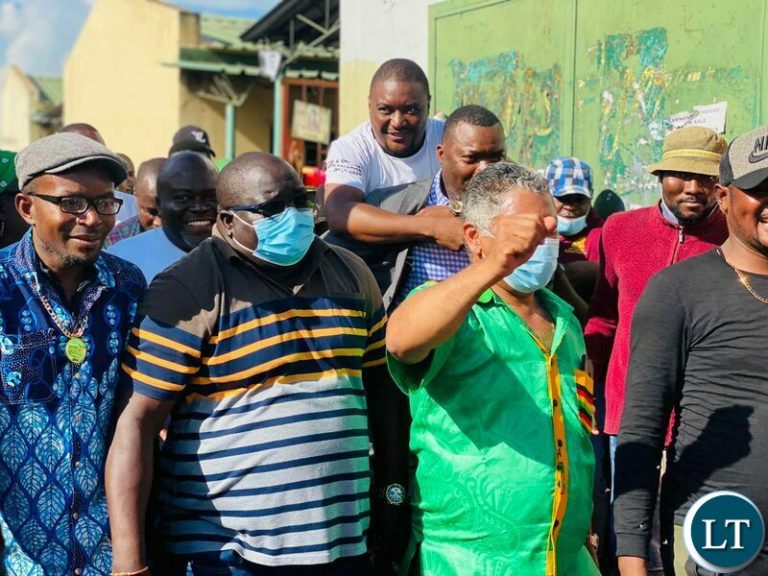
What happened yesterday around Bill 7 has created a political fog so thick that even truth now struggles to breathe. In that fog, perceptions are already hardening, judgments are being rushed, and reputations are being quietly rewritten. Unfortunately, Hon. Brian Mundubile finds himself at the centre of this storm not because of what he did, but because of what others chose to do in his political vicinity.

The fact that a number of MPs widely perceived as Mundubile loyalists voted YES to Bill 7 has created a powerful but misleading narrative. In politics, perception often travels faster than fact, and by the time facts catch up, damage is already done. For many Zambians watching yesterday’s proceedings, the conclusion feels simple: if those close to Mundubile voted yes, then Mundubile must have sanctioned it. That conclusion, however convenient, is profoundly unfair.

Those who understand parliamentary politics know a harder truth. A party leader does not vote by remote control. MPs are not automatons. They respond to pressure, inducement, fear, calculation, and survival instincts—often in ways that even their closest allies cannot predict or restrain. To assume that Mundubile exercised command over each conscience in that chamber is to misunderstand both the limits of leadership and the realities of a Parliament operating under extraordinary pressure.

Ironically, this moment may say less about Mundubile’s integrity and more about the character of political loyalty in Zambia today. Loyalty, it seems, has become conditional—anchored not in shared principle, but in perceived proximity to power. When MPs sense that the ruling party remains strong, some recalibrate overnight. Yesterday’s vote exposed this uncomfortable truth: many politicians are not loyal to leaders or ideals, but to momentum.

This is precisely why Zambians may struggle to trust Mundubile in the aftermath of Bill 7, even though those closest to the matter know he had no hand in directing those votes. Politics is rarely kind to nuance. Guilt by association becomes easier than honest analysis. Yet history teaches that leaders are often betrayed not by enemies, but by allies who defect quietly when the stakes rise.

What makes this moment particularly painful is that Mundubile’s public record does not align with the accusation now forming around him. He has consistently articulated concerns about constitutional overreach, process, and legitimacy. He has spoken, argued, and stood in ways that place him on the side of constitutional caution rather than convenience. If yesterday’s vote were truly orchestrated by him, his own political posture would make little sense.

The deeper issue, then, is not Mundubile’s credibility, but the fragility of opposition cohesion under sustained pressure. Bill 7 did not advance because arguments suddenly became persuasive. It advanced because fear, fatigue, inducement, and fragmentation did their quiet work. That fragmentation now threatens to consume leaders who, in truth, were victims of it rather than architects.

For Zambians, the challenge is understandable. Trust once broken is not easily repaired. Seeing familiar opposition figures vote yes creates a sense of collective betrayal, and in moments like these, the public looks for a face to attach blame to. Mundubile, by virtue of his prominence, becomes that face. Yet leadership should not be judged solely by the failures of others to withstand pressure.

If anything, yesterday’s events should force a more sobering national conversation about the nature of political courage. Courage is not only tested in speeches or press statements, but in isolation when inducements are whispered, threats implied, and survival placed on the table. Some MPs failed that test. That failure should rest where it belongs: on individual conscience.

There is also a warning here for Mundubile himself. Politics is as much about managing perception as articulating principle. Even when blameless, a leader must reckon with the political cost of association. Yesterday’s vote signals the need for sharper internal discipline, clearer lines of accountability, and perhaps a painful reassessment of who truly stands for Zambia and who merely stands near power.

In time, history will likely be kinder than the present moment. It will distinguish between those who orchestrated constitutional shifts and those who were undermined by defections they neither encouraged nor controlled. But politics does not wait for history; it punishes in real time.

For now, what happened yesterday has undoubtedly complicated Mundubile’s political standing. Trust will be harder to command, suspicion harder to dispel. Yet it would be a grave mistake for Zambians to confuse betrayal by proximity with betrayal by intent. Leaders should be judged by their words, their record, and their consistency—not by the moral collapse of those who chose expediency over principle.

Bill 7 has passed a vote, but it has also passed a verdict on the state of political loyalty in Zambia. In that verdict, many stand indicted. Brian Mundubile, despite the fog of suspicion, should not be one of them.

Chanda Defends Vote for Bill 7, Cites Kanchibiya Delimitation

10

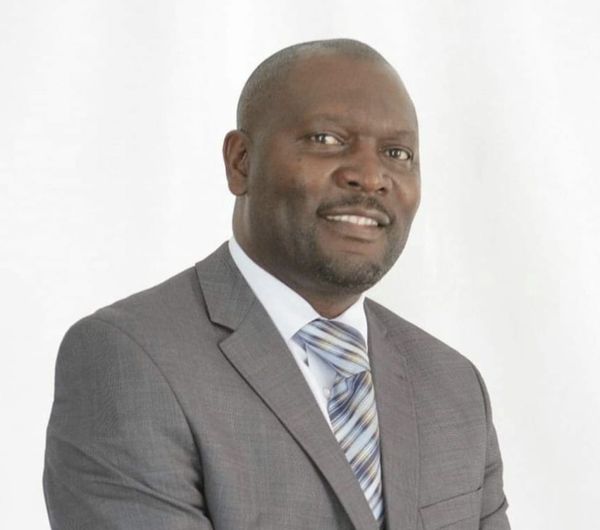
Lusaka, Zambia — Kanchibiya Member of Parliament Sunday Chanda has explained his decision to vote in support of Constitution Amendment Bill No. 7, saying his position was guided by the interests of his constituents and the practical realities of representing a vast rural constituency. Chanda emphasized the importance of thoughtful representation in this process.

In a public statement issued after the vote, Chanda said he undertook a detailed review of the Bill before Parliament, studying it line by line and making his analysis publicly available in the interest of transparency. He said he also followed the proceedings of the Parliamentary Select Committee, examined the technical committee report, and reviewed government amendments made in response to concerns raised by stakeholders, which highlighted Chanda’s commitment to accountability.

Chanda said he devoted significant time to understanding the contents and implications of the Bill, including over a full weekend, before reaching his decision. His thorough approach reflects Chanda’s dedication to informed legislative action.

He stated that his vote was guided by what he described as an overriding principle, the interests of the people of Kanchibiya and the people of Zambia.

Kanchibiya Constituency, which Chanda represents, covers more than 8,800 square kilometres and is largely rural, with communities spread across long distances. He said this has made access to leadership, basic services, and development opportunities a persistent challenge.

According to Chanda, the size and rural nature of the constituency make it difficult for a single Member of Parliament to consistently reach all wards, engage every community, and effectively oversee development projects. He cited long and often difficult road networks, scattered schools and health facilities, and communities that have historically felt underserved.

He said his support for Bill 7 was influenced by the proposed delimitation of Kanchibiya into two constituencies. Chanda said this would allow for closer representation, improved service delivery, increased development resources, and greater participation by youth and women in governance and decision making.

Chanda said his decision was not about altering boundaries for their own sake but about improving equity, efficiency, and ensuring that residents of Kanchibiya are better represented.

He said he respects colleagues who voted differently and stated that he does not regret his decision to support the Bill.

Bill 7 Exposes the Patriotic Front’s Internal Fractures

2

BILL 7 AND THE COST OF DISUNITY: LESSONS THE PATRIOTIC FRONT MUST CONFRONT
By Michael Zephaniah Phiri, Political Activist

The handling of Constitution Amendment Bill No. 7 by the Patriotic Front revealed more than a dispute over constitutional procedure. It exposed the internal condition of a party that entered a national legislative contest while struggling to manage its own cohesion. The outcome of that moment was shaped as much by internal dynamics as by external parliamentary arithmetic.

At the centre of the difficulty was a fractured parliamentary caucus. Members of Parliament who belonged to the same political organisation approached the Bill 7 debate without a shared position, a unified command structure, or consistent messaging. Some MPs publicly distanced themselves from the party presidency under Hon. Given Lubinda. Others openly aligned themselves with preferred future presidential contenders despite the absence of an elective process. These actions signalled an erosion of internal discipline at a time when the party required coordinated effort.

In parliamentary politics, numerical strength is activated through organisation rather than mere headcount. A party’s ability to mobilise votes depends on internal trust, clarity of leadership, and respect for established structures. During the Bill 7 process, the Patriotic Front struggled on each of these fronts. The lack of a single authoritative centre complicated efforts to hold MPs to a collective position. The absence of consensus weakened negotiations and reduced the party’s ability to project firmness in opposition to the proposed constitutional changes.

The Patriotic Front constitution provides for leadership continuity and recognises the authority of the sitting party president until an elective conference is held. During the Bill 7 period, this provision was tested. Instead of closing ranks around the recognised leadership to confront a national constitutional issue, competing ambitions surfaced. Internal disagreements that might have been manageable in ordinary times became destabilising under the pressure of a high-stakes parliamentary process.

Political history and leadership traditions offer many examples of how internal order shapes outcomes. Stability within an organisation allows disagreements to be managed without undermining collective objectives. When structures are respected, internal debate strengthens strategy rather than paralysing it. During the Bill 7 episode, the Patriotic Front failed to achieve this balance. Disputes that should have remained internal spilled into the public arena, creating uncertainty among supporters and confusion among allies.

The consequences were visible in Parliament. Messaging lacked coherence. Attendance and voting discipline became uncertain. The party’s posture appeared reactive rather than deliberate. These factors reduced the effectiveness of opposition efforts against Bill 7, regardless of the substantive legal and constitutional arguments raised.

Within this environment, individual leadership styles became more pronounced. One figure whose conduct attracted attention was Hon. Makebi Zulu. His approach emphasised consultation and outreach rather than factional positioning. He engaged senior party officials, communicated with colleagues holding divergent views, and extended contact to leaders of other opposition parties. These actions demonstrated an effort to stabilise relationships and preserve channels of cooperation during a period of strain.

This form of leadership placed emphasis on process rather than personal assertion. Engagement across internal and external lines reflected an understanding that opposition politics, particularly on constitutional matters, requires coordination beyond individual ambition. The Bill 7 experience illustrated that the effectiveness of opposition is closely tied to its capacity to operate as a collective entity.

The Patriotic Front’s experience during the Bill 7 process underlined a fundamental principle of political organisation. Discipline, clarity of leadership, and internal loyalty shape outcomes more decisively than rhetoric alone. Titles and informal followings do not substitute for structured unity when legislative decisions are made through recorded votes.

For the party, the Bill 7 episode stands as a reference point. It demonstrated how internal divisions can dilute parliamentary strength and reduce political leverage. It also highlighted the need for adherence to constitutional order within the party itself when confronting constitutional questions at the national level.

Future engagements on major legislative or constitutional issues will demand lessons drawn from this experience. Internal cohesion, respect for established leadership structures, and collective discipline remain central to any effective parliamentary strategy. The Bill 7 process provided a clear illustration of the costs incurred when these elements are absent.

Water Aid concerned with vandalism

0

Water Aid Zambia says vandalism of Water, Sanitation and Hygiene (WASH) infrastructure is greatly affecting service delivery by commercial utilities.

Water Aid Zambia, Head of Policy, Eddy Chikuta says commercial utilities struggle to replace damaged infrastructure, owing to financial constraints, making it difficult for the firms to provide quality service to consumers.

Speaking in an interview with the media, Mr Chikuta said commercial utilities already struggle with old infrastructure, hence vandalism worsens the situation.

ZANIS reports that Mr Chikuta said vandalism of infrastructure is also a danger to public health.

“This infrastructure is very critical in supporting public health. As they get more water in the communities, we actually do away with waterborne disease, but also the quality of service will be enhanced,” Mr Chikuta noted.

Speaking in a separate interview, National Water Supply and Sanitation Council (NWASCO) Chief Inspector, Peter Mutale said strengthening enforcement of the law will deter would be offenders from vandalising facilities owned by commercial utilities.

Mr Mutale said the Water Supply and Sanitation Act is in the process of being revised, stating that NWASCO is eager to make the penalties stiffer for offenders.

He said vandalism affects the quality of the water that reaches consumers, hence those guilty of perpetrating the vice deserve to face stiffer penalties.

“One of the aspects being considered is pushing up fines of vandalism so that all those who vandalise going forward, will go to prison and they will pay quite a lot so, we will have a lot of that happening once we have this law revised,” He said.

Kasama Magistrate Court jails 42 year old man for Stock theft

1

The Kasama Magistrate Court has sentenced a 42 year old man of Malitino Village in Chief Chitimukulu’s Chiefdom in Mungwi District to three years imprisonment with hard labour for stock theft.

Before Magistrate Chapson Silwimba, was Freeman Kapambwe who was facing one count of stock theft contrary to section 282B (1) (a) of the Laws of Zambia.

This is a matter that came up for sentencing before the courts.

Facts before the courts were that on November 5, 2025, Kapembwa did steal four goats valued at about K10, 500 the property of Goma Khumbo.

Presenting the facts before the court, Senior Public Prosecutor, Daniel Mkandawire told the court that the convict on 5th November stole four goats valued at K10, 500, the property of Goma Khumbo.

Mr Mkandawire explained that on the same day, Mr Khumbo received a phone call from Elizabeth Goma, who informed him that the accused, who was entrusted with the care of the goats, had stolen them.

He added that Mr Khumalo later went to the farm, where he discovered that four of his goats were missing, leading to the apprehension of the accused.

In mitigation, Kapambwe pleaded for maximum leniency, stating that he had worked at the same farm for five years.

He further asked the court to give him time to compensate the Plaintiff.

The convict told the court that he was the breadwinner of the family and that his children would suffer if he was imprisoned.

In passing sentence, Magistrate Chapson Silwimba said he had considered the accused’s mitigation and noted that he was a first offender.

 Magistrate Silwimba however, stated that the offence was serious and a felony, warranting a custodial sentence.

He stated that stock theft cases had become rampant in the area and that the sentence would serve as a deterrent to others.

He further warned members of the public against stealing from people who have entrusted them with their property

Eco Bank commended for enhanced service delivery

0

Minister of Education Douglas Syakalima has commended Ecobank Zambia for coming up with a payment solution that seeks to enhance service delivery in the education sector.

Speaking during the launch of the Education Banking (Edu-Banking) ecosystem payment solutions, Mr Syakalima said the payment system will address long-standing challenges of transparency, revenue leakages and inefficiency.

Mr Syakalima explained that the payment solution will allow parents and guardians to make school fee payments easily, using a mobile phone at their own convenience.

The Minister said schools stand to benefit from the Edu-Banking payment solution as they will be able to monitor transactions in real time, thereby enhancing accountability.

Mr Syakalima expressed confidence that the Edu‑Banking solution will help schools improve their fee collection.

He stressed that the banking solution is key in curbing revenue leakages, reducing fraud risks and delaying accounts reconciliations.

The Minister said this in a speech read for him by the Ministry of Education Permanent Secretary for Educational Services, Kelvin Mambwe.

And speaking earlier, Eco Bank Zambia Managing Director Aina Moore stressed that the Edu-Banking solution is part of the efforts by the bank to contribute to improved service delivery in the education sector.

Ms Moore said that through the cashless collection solution, parents can make school fee payments easily, using a mobile phone.

Ms Moore said this in a speech read for her by Eco Bank Zambia Head Public Sector Banking Darlington Chiluba.

And Poplar School Director Chola Chabala urged parents to fully utilise the Edu-Banking payment solutions.

Mr Chabala said parents and guardians will only appreciate the benefits of Edu-Banking payment solutions if they utilise it.

Govt assures of speedy completion of sports infrastructure rehab

1

Government says the stitching machine and seeds meant for the rehabilitation works on the playing turf at Lusaka’s Heroes Stadium have already arrived in the country.

Minister of Youth, Sports and Arts, Elvis Nkandu, says works are on course, attributing the delay in the rehabilitation works to logistical challenges.

In an interview with ZANIS, Mr Nkandu also said the imported seeds for the turf had to undergo inspection, causing further delays, but assured the nation that everything is now ready and planting will begin soon.

“We have been maintaining Heroes Stadium and so far so good, although the works have taken longer than expected. We thought the work would finish in September, but we had logistical challenges,” he said.

Mr Nkandu further assured the country that the works will be completed by the end of January next year, adding that soccer fans should expect to watch international matches at the stadium once again.

The ongoing rehabilitation works at the stadium are being undertaken at a cost of 1.4 million dollars.

Meanwhile, Mr Nkandu announced that the government has plans to host major competitions in the future, but emphasised that maintaining sporting infrastructure remains an important ingredient.

“Many sports struggle because they lack proper facilities. We focus too much on football infrastructure, but we also need tennis courts, volleyball courts and facilities for other sports,” he said.

“That is why we appealed to Members of Parliament to allocate part of the Constituency Development Funds (CDF) to sports facilities. All other ministries benefit from CDF; the Ministry of Youth, Sport and Arts does not.” He explained.

Mr Nkandu said the ministry has been encouraging MPs to invest in multi-sport infrastructure in their respective constituencies through CDF.

“Next year, for example in Kaputa, we will build multi-sport facilities including a football pitch, futsal pitches and multi-purpose courts for basketball, volleyball and netball. If every constituency had such facilities, talent development would change completely,” he added.

He further said that with proper sports facilities, sports management and talent identification will improve drastically, enabling talent to be nurtured effectively.

Government unveils Pension reforms

1

Minister of Labour and Social Security, Brenda Tambatamba has unveiled pension reforms aimed at improving the efficiency, effectiveness, and long-term sustainability of Zambia’s retirement system.


Speaking during the National symposium on pension reforms today, Ms Tambatamba said the government is working with public social security schemes to introduce pension reforms to cater for both the immediate and future needs of workers.


“These pressing issues impact the lives of citizens, which is why the government is working towards it,’’ she said.


The media reports that Ms Tambatamba said measures are being put in place to emphasise on timely benefit payments, harmonising pension schemes, strengthening governance and transparency.


She added that coverage is being extended for previously excluded workers, to help reform the legal framework to build a more inclusive and citizen-centered pension system.


Meanwhile, Zambia’s trade Unions Secretary General, Joy Beene said the unions have taken a firm stance on the ongoing pension reforms, insisting that changes should not simply ease the burden on the national treasury.


Mr Beene however noted that the reforms must prioritise restoring dignity, financial security, and hope for both current and future pensioners.


Mr Beene emphasised that any reform must follow the principle of non-regression, ensuring that no worker is left out as a result of the changes.


And Zambia Federation of Employers President, Myra Ngoma urged the government to make sure the reforms address the role of government in social security.


In June 2025, the Government deepened pension reforms through nationwide stakeholder consultations, including a national symposium, to build consensus on changes to three public pension schemes.


The process resulted in the drafting of three reform bills, the National Pension Scheme Bill, 2025, the Public Service Pensions Fund Bill, 2025, and the Local Authorities Superannuation Fund Bill, 2025-aimed at improving governance, sustainability and service delivery within the pension system.


The formal nationwide stakeholder consultations on pension reforms in Zambia began after extensive engagements across the country in June 2025, when the Ministry of Labour and Social Security and other social security institutions held sessions in all 10 provinces to gather input for draft pension reform bills.

ECZ opens Chawama Parliamentary by-election nomination centre

1

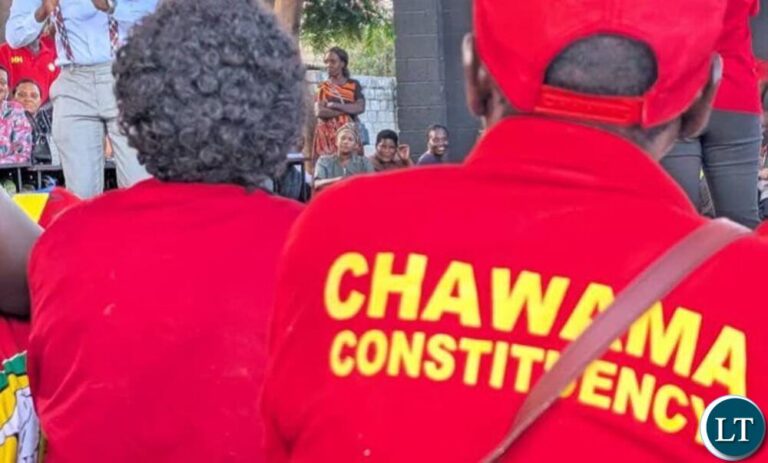
Electoral Commission of Zambia (ECZ) has officially opened the Chawama Parliamentary by-election nomination centre, at Chawama Primary School nomination centre, in Chawama Constituency, Lusaka District.

Sixteen candidates are expected to file their nominations between 09:00 to 15:00 hours today, Tuesday, December 16, 2025.

Speaking on the sidelines of the nominations, ECZ Commissioner Vincent Mukanda described the peaceful and calm mood at the nomination centre so far, and expressed hope that it will remain that way.

Major General (rtd) Mukanda disclosed that two candidates have since filed their nominations this far, citing that there is still time for the other candidates.

He has since assured that the process will be managed with professionalism until all candidates file their nominations within the stipulated time frame.

The media reports that earlier, despite the weather ECZ, Chawama Constituency Returning Officer, Lewis Lupando, officially opened the Chawama Parliamentary by-election nomination centre at exactly 09:00 hours.

Mr Lupando disclosed to the first candidate who he officially invited to the Civic Centre tomorrow to attend the campaign calendar roadmap meeting.

The two candidates who have successfully filed in their nominations are, 34 year old ICHABAICHE Independent Candidate, George Mwenya and Exodus Party for Peace and Prosperity (EPPP), Alfred Ndiweni.

Others expected to file nominations are Forum for Democracy and Development (FDD), Movement for Change and Equality (MCE), New Congress Party (NCP), and the United Party for National Development (UPND).

Govt engages youth in Lusaka

0

Minister of Youth, Sport and Arts Elvis Nkandu has assured that the selection of athletes to represent Zambia across various sporting disciplines will be conducted in a fair and transparent manner, ensuring equal opportunities for all athletes nationwide.

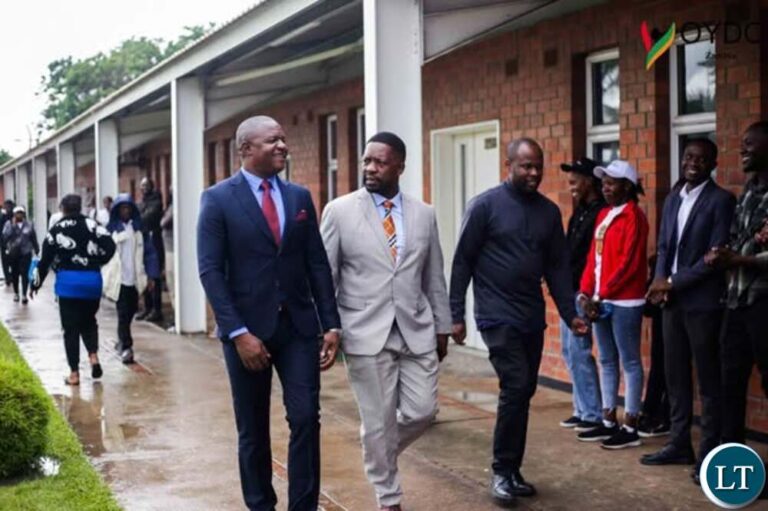
Speaking during the launch of the National Youth Games, during a town hall meeting with youths in Lusaka, held at the Olympic Youth Development Centre (OYDC), Mr Nkandu said leaders selecting athletes going to represent the country should select on merit as their talents need to be supported into a meaningful future for their sustainability.

The media reports that the Minister stated that the youth games serve as an opportunity for the young people to showcase their talents and stand a chance to participate at international level.

“We have a lot of opportunities that the government is trying to unveil to you the young people, therefore, it is up to you to work very hard”, he said.

He indicated that sports activities help youths channel their focus from substance abuse, therefore making them productive in society.

He further added that the upcoming youth games will help expand the mind-set of youths for economic empowerment, mental health and civic engagement.

The Minister also stressed that sporting excellence, while powerful, must be combined with long term planning, personal development and empowerment.

Meanwhile, the National Youth Development Secretary Waana Kapina said the meeting was meant to sensitise the young athletes on various empowerment opportunities to prepare them for life after sport.

Mr Kapina said most young athletes do not prepare for life after sports, which is meant to help them secure a better future.

She highlighted that the meeting was meant to sensitise the youths on issues affecting their wellbeing such as mental health, alcohol and substance abuse.

She therefore urged the youths to make the most of the opportunity to learn and be inspired for the opportunities that lie ahead.

The town hall meeting was held in Lusaka yesterday at the Olympic Youth Development Centre (OYDC) in preparation for the 2025 Lusaka Youth games under the theme from talent to enterprise securing your future beyond sports.

Changala Says Bill 7 Vote Signals Collapse of Democratic Order

15

Changala Says Bill 7 Vote Signals Collapse of Democratic Order

Governance and human rights activist Brebner Changala has accused Members of Parliament of enabling the collapse of Zambia’s democratic order following the passage of the Constitution of Zambia Amendment Bill No. 7 of 2025, describing the vote as a decisive moment that has paved the way for authoritarian rule. Changala emphasized the importance of safeguarding democracy in Zambia.

The implications of the Constitution of Zambia Amendment Bill No. 7 of 2025 reach far beyond the immediate political landscape. This amendment, which has been met with both support and fierce opposition, reflects the ongoing struggle for power within Zambian politics. Many citizens express concerns that the bill has the potential to undermine the very fabric of democracy and civil liberties that have been fought for over the years. It is crucial to examine how similar legislative changes in other countries have led to authoritarian regimes, serving as a cautionary tale for Zambia.

Changala said Parliament, by approving the controversial bill, had allowed what he described as the birth of dictatorship in Zambia, arguing that the decision was taken in disregard of the interests and wishes of the majority of citizens. He said the vote marked a betrayal of the electorate and a turning point in the country’s constitutional history, highlighting the role of Changala in advocating for democratic principles.

To understand the depth of Changala’s concerns, one can look at historical parallels in Africa and beyond. For instance, in countries where governance has shifted towards authoritarianism, the initial steps often included amendments to existing laws that seemed innocuous at first. This trajectory highlights the importance of vigilance and active participation from the electorate to prevent a similar fate for Zambia.

Understanding Changala’s Concerns

Speaking in an interview with The Mast, Changala said Zambians were closely watching the actions of their elected representatives and would hold them accountable at the ballot box in the 2026 general elections. He said Members of Parliament who supported the bill would be required to explain their actions to voters, reinforcing the message of Changala regarding civic responsibility.

Furthermore, civil society organizations play a pivotal role in shaping public opinion and holding leaders accountable. The aftermath of the bill’s passage emphasizes the need for these entities to ramp up their engagement with the public. Educational campaigns that inform citizens about their rights and the implications of such legislative changes could galvanize a more informed electorate, ready to challenge undemocratic moves in the future.

“This is now the birth of dictatorship in Zambia. We allowed it without the use of force. The MPs themselves led the way,” Changala said, adding that the current Parliament had failed to live up to its responsibility to safeguard democratic principles.

Moreover, the reaction from international observers should not be underestimated. Global perspectives on Zambia’s political climate can influence foreign relations, aid, and investment in the country. The more Zambia is perceived as drifting towards autocracy, the greater the risk of strained relationships with international partners who advocate for democratic governance and human rights.

He said the passage of Bill 7 demonstrated that many Members of Parliament were driven by personal and political interests rather than the mandate given to them by citizens. Changala accused lawmakers of prioritising financial and political gain over national interest and constitutional integrity.

As Changala pointed out, the motivations behind the MPs’ decisions are crucial to dissect. Analyzing their affiliations, past political stands, and any potential conflicts of interest can provide insight into the broader implications of their actions. This level of scrutiny is essential for voters as they prepare for the upcoming elections. Informed voting is the cornerstone of a functioning democracy.

Changala said the vote had revealed what he described as a culture of betrayal within Parliament, warning that the consequences of the decision would shape Zambia’s political future for years to come. He said the electorate would respond with greater scrutiny and resolve during the next elections.

The discourse surrounding Bill 7 also highlights the division among political parties in Zambia. The debate showcased a spectrum of ideology and strategy, as various factions aligned themselves either for or against the bill. Understanding these dynamics can help voters navigate the political landscape and make decisions that align with their values and vision for Zambia’s future.

Meanwhile, President Hakainde Hichilema has defended the passage of Bill 7, saying the people of Zambia had spoken through their duly elected representatives. In a message posted on his official Facebook page, the President said the outcome of the parliamentary process reflected democratic participation and should be respected.

In response to Changala’s statements, several political analysts have echoed similar sentiments, warning that the ramifications of Bill 7 could be long-lasting. They argue that democratic backsliding can occur gradually, often disguised as necessary reforms. This insight serves as a reminder to citizens that vigilance is critical in protecting their rights and freedoms.

Hichilema said the passage of the bill followed extensive debate and lobbying from different sides and that disagreement was part of democratic engagement. He said the outcome represented the collective resolve of the nation as expressed through Parliament.

Furthermore, there is a need to foster dialogue between opposing political factions. Bridging the gap between differing viewpoints can lead to a more cohesive and representative governance model. Changala’s call for accountability should resonate with all political players, urging them to prioritize the collective good over partisanship.

“The greatest winners in this process are the people of Zambia and our democracy itself,” President Hichilema said, adding that the time had come for the country to refocus on national development.

As discussions continue, the role of media in shaping narratives cannot be overlooked. Journalists and media outlets have the power to inform the public and hold leaders accountable. Their work can either reinforce or challenge prevailing narratives about democracy and governance. Supporting independent journalism in Zambia is vital for ensuring a free and fair exchange of ideas.

The President called on Zambians to move forward together, urging government, the opposition, civil society and citizens to remain united under the principle of One Zambia, One Nation. He said the debate around Bill 7 had tested the country’s democratic strength and unity.

The call for unity from President Hakainde Hichilema has sparked discussions about national identity and collective action. Citizens are encouraged to reflect on what it means to be part of a democratic society. Engaging in community dialogues and discussions can enhance understanding and foster a shared vision for the nation’s future.

However, Changala maintained that the bill represented a dangerous consolidation of power, warning that future consequences would confirm the seriousness of the decision taken by Parliament. He said the responsibility for the outcome would rest squarely with those who supported the bill.

Additionally, the implications of Bill 7 extend to future governance frameworks. As Zambia prepares for the 2026 elections, the importance of a robust electoral process that reflects the will of the people becomes even more pronounced. Ensuring transparent and accountable electoral practices will be crucial in restoring faith in democracy.

The passage of Bill 7 has continued to attract strong reactions from civil society actors, political commentators and citizens, underscoring deep divisions over constitutional reform and governance in Zambia as the country moves closer to the 2026 elections.

The actions taken by Parliament regarding Bill 7 will undoubtedly shape Zambia’s political landscape for years to come. The voices of activists like Changala are essential in mobilizing citizens to engage and advocate for their rights and freedoms. As the nation moves forward, the collective responsibility of the electorate becomes paramount in safeguarding democracy and ensuring that the government remains accountable to the people.

UPND Sets Nationwide Campaign Strategy for Presidential Race

The United Party for National Development has announced plans to embark on an aggressive and coordinated campaign drive as it positions itself for the 2026 general elections, with party leadership urging structures at all levels to intensify mobilisation and outreach activities.

UPND National Chairperson for Mobilisation Gift Sialubalo said the party was rolling out a structured campaign programme designed to consolidate support for President Hakainde Hichilema and ensure a strong performance in the next elections. He said the campaign drive would focus on strengthening party presence on the ground while communicating the government’s development agenda to the electorate.

Mr Sialubalo said the party’s campaign efforts would be guided by the New Dawn administration’s record in office, including economic stabilisation measures and investments in social and infrastructure development. He said party structures were expected to actively engage communities and articulate the government’s achievements and policy direction.

Speaking in Kazungula District, Mr Sialubalo urged party officials to campaign confidently and consistently, noting that visible development projects and policy reforms provided a strong foundation for mobilising voter support. He said UPND had no reason to shy away from engaging citizens, as the government’s performance could be defended on the basis of tangible outcomes.

He said the campaign drive would involve coordinated messaging across provinces, districts, and wards to ensure coherence and discipline within the party. According to Mr Sialubalo, this approach was intended to avoid fragmented communication and ensure that party officials conveyed a unified message to the electorate.

The UPND official said the party would prioritise grassroots engagement, with emphasis on direct interaction with citizens to understand their concerns and expectations. He said feedback from communities would inform both campaign messaging and ongoing policy implementation by the government.

Mr Sialubalo also encouraged party members to register voters and promote participation in the electoral process, stating that high voter turnout was critical to sustaining democratic legitimacy. He said mobilising eligible voters was a key component of the party’s campaign strategy.

The campaign drive comes as political parties begin positioning themselves ahead of the 2026 elections, with early mobilisation viewed as a means of building momentum and organisational readiness. UPND leaders have maintained that early preparation allows the party to consolidate its support base and respond effectively to political competition.

Party officials said the campaign strategy would be rolled out in phases, beginning with internal mobilisation and capacity building before expanding into broader public engagement. Structures at provincial and district levels were expected to play a central role in coordinating activities and ensuring compliance with party guidelines.

The UPND leadership has consistently emphasised discipline and unity within the party, urging members to avoid internal divisions that could undermine campaign efforts. Mr Sialubalo said a cohesive approach was essential for delivering a convincing message to voters.

As the ruling party prepares to intensify its campaign activities, attention is likely to focus on how effectively it translates government programmes and policies into electoral support, as well as how it manages competition in a politically charged environment ahead of the 2026 polls.

National Assembly Passes Constitution Amendment Bill 7, Expanding Constituencies and Introducing Proportional Representation

4

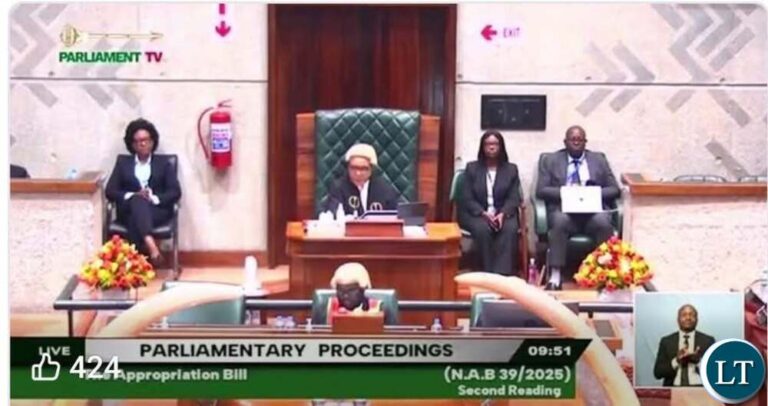
LUSAKA – The National Assembly has passed the Constitution of Zambia (Amendment) Bill No. 7 of 2025, a landmark legislation that paves the way for a significant expansion of the country’s parliamentary constituencies. The Bill now proceeds to the President for assent to become law.

A key objective of the Bill is to increase the number of constituencies from the current 156 to 211. The legislation also introduces several other substantial changes to the nation’s governance framework.

From its original 13 proposed clauses, two particularly contentious provisions were withdrawn during the legislative process. These were the proposal to dissolve Parliament on the eve of a general election and the requirement for independent candidates to resign from their political parties two months prior to filing nominations.

Among the pivotal changes enacted is the establishment of a Mixed Member Proportional Representation (MMPR) Electoral System. This system is designed to guarantee enhanced representation for women, youth, and persons with disabilities in Parliament.

Other notable amendments include reducing the professional qualification requirement for the Secretary to the Cabinet from ten years to five years and removing the two-term limit for mayors and council chairpersons. The Bill also provides continuity for the Attorney-General and the Solicitor-General, allowing them to remain in office after a general election until new appointees are named. Additionally, it revises the composition of councils to include Members of Parliament who hold constituency-based seats.

The Bill secured overwhelming support in the House. During the second reading, 131 MPs voted in favor, with two opposed. At the crucial third reading, all 135 members present voted to endorse the Bill, with no votes against or abstentions.

Concluding the debate, Minister of Justice Princess Kasune stated that Bill 7 transcends being merely a legal document. She described it as “a covenant with the Zambian people aimed at inclusion, fairness, representation and strengthening democracy.” The Minister emphasized that the legislation is grounded in national consultation, informed by constitutional review processes, the Electoral Technical Committee Report of 2025, and international best practices.

Picture caption: Minister of Justice Princess Kasune (right) with her Permanent Secretary Mwenya Bwalya (left) shortly after the Constitution of Zambia Amendment Bill 7 vote at Parliament yesterday.

ECZ Anticipates Crowded Field as Chawama By-Election Nominations Open

1

LUSAKA – The Electoral Commission of Zambia (ECZ) anticipates a highly competitive race, with more than 15 prospective candidates expected to file nominations today for the Chawama parliamentary by-election set for January 15, 2026.

The nomination process officially begins the contest to replace former Chawama Member of Parliament Tasila Lungu, whose seat was declared vacant by Speaker of the National Assembly Nelly Mutti on November 28, 2025. The declaration was made under Article 72(2)(c) of the Constitution, following Ms. Lungu’s prolonged absence from parliamentary duties after the death of her father, former President Edgar Lungu, on June 5.

Several political parties and independent aspirants have confirmed their participation. Among them is Namakau Silumesi, standing on the FDD-Tonse Alliance ticket, and independent candidate Elijah Siatwambo. The independent field is particularly active, with at least four candidates, including George Mwenya from Binwell Mpundu’s Ichabaice political grouping.

A diverse array of political parties has also entered the fray, including the Socialist Party, Movement for Change and Equality, Leadership Movement, and Citizens First—which will be represented by Clint Mulenga. Other contenders are the Exodus Party for Peace and Prosperity, New Congress Party, and the Resolute Party, which has fielded Alex Katepu.

The vacancy arose after former MP Tasila Lungu, who had remained outside Zambia following her father’s passing, failed to resume her parliamentary duties. Despite being granted compassionate leave and subsequently written to by Parliament, she did not return. Her request to participate in parliamentary sittings virtually was rejected by the Speaker, who ruled that online representation would not adequately serve the constituents of Chawama.

“It is of particular concern that Miss Lungu has not rendered representation to the people of Chawama since June 2025,” Speaker Mutti stated before the National Assembly voted to declare the seat vacant.

With nominations now open, political focus shifts to Chawama as candidates begin the process of seeking to convince voters they are the right choice to represent the constituency in Parliament.

Nkana MP Expresses Betrayal and Frustration Following Passage of Bill 7

1

LUSAKA – Nkana Member of Parliament Binwell Mpundu took to social media yesterday to voice profound frustration and a sense of personal betrayal following the successful passage of Constitution Amendment Bill 7 in Parliament.

The Bill passed both its Second and Third Readings decisively, securing the required two-thirds majority. The final vote saw all 135 MPs present voting in favor.

In a Facebook post, Mpundu, who had been a vocal and consistent opponent of the legislation, expressed deep personal anguish. “There’s nothing as painful as betrayal. I have never felt this much pain. If this was all UPND, it would have been understandable, not abantu tulya nabo (not the people we eat with),” the lawmaker wrote.

His remarks underscore a significant political rift, suggesting that the bill’s passage was enabled not only by the ruling United Party for National Development (UPND) but also by support from within opposition ranks. Throughout the legislative process, Mpundu had publicly and vehemently contested the bill’s legitimacy.

The MP’s reaction highlights the tense and divisive political climate surrounding the constitutional amendments, marking a moment of significant political recalibration as the bill now moves to await the President’s assent.