Monday, June 8, 2026
17 C
Lusaka
Home Blog Page 211

UPND Sets Nationwide Campaign Strategy for Presidential Race

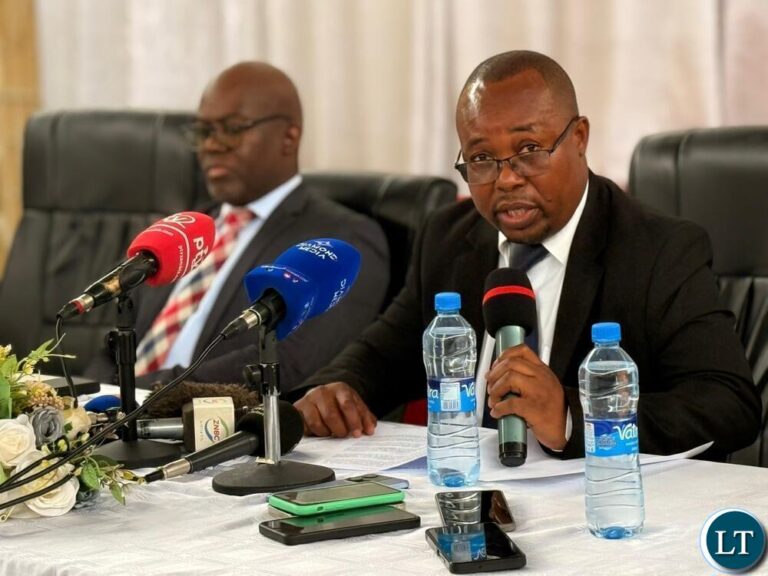
The United Party for National Development has announced plans to embark on an aggressive and coordinated campaign drive as it positions itself for the 2026 general elections, with party leadership urging structures at all levels to intensify mobilisation and outreach activities.

UPND National Chairperson for Mobilisation Gift Sialubalo said the party was rolling out a structured campaign programme designed to consolidate support for President Hakainde Hichilema and ensure a strong performance in the next elections. He said the campaign drive would focus on strengthening party presence on the ground while communicating the government’s development agenda to the electorate.

Mr Sialubalo said the party’s campaign efforts would be guided by the New Dawn administration’s record in office, including economic stabilisation measures and investments in social and infrastructure development. He said party structures were expected to actively engage communities and articulate the government’s achievements and policy direction.

Speaking in Kazungula District, Mr Sialubalo urged party officials to campaign confidently and consistently, noting that visible development projects and policy reforms provided a strong foundation for mobilising voter support. He said UPND had no reason to shy away from engaging citizens, as the government’s performance could be defended on the basis of tangible outcomes.

He said the campaign drive would involve coordinated messaging across provinces, districts, and wards to ensure coherence and discipline within the party. According to Mr Sialubalo, this approach was intended to avoid fragmented communication and ensure that party officials conveyed a unified message to the electorate.

The UPND official said the party would prioritise grassroots engagement, with emphasis on direct interaction with citizens to understand their concerns and expectations. He said feedback from communities would inform both campaign messaging and ongoing policy implementation by the government.

Mr Sialubalo also encouraged party members to register voters and promote participation in the electoral process, stating that high voter turnout was critical to sustaining democratic legitimacy. He said mobilising eligible voters was a key component of the party’s campaign strategy.

The campaign drive comes as political parties begin positioning themselves ahead of the 2026 elections, with early mobilisation viewed as a means of building momentum and organisational readiness. UPND leaders have maintained that early preparation allows the party to consolidate its support base and respond effectively to political competition.

Party officials said the campaign strategy would be rolled out in phases, beginning with internal mobilisation and capacity building before expanding into broader public engagement. Structures at provincial and district levels were expected to play a central role in coordinating activities and ensuring compliance with party guidelines.

The UPND leadership has consistently emphasised discipline and unity within the party, urging members to avoid internal divisions that could undermine campaign efforts. Mr Sialubalo said a cohesive approach was essential for delivering a convincing message to voters.

As the ruling party prepares to intensify its campaign activities, attention is likely to focus on how effectively it translates government programmes and policies into electoral support, as well as how it manages competition in a politically charged environment ahead of the 2026 polls.
National Assembly Passes Constitution Amendment Bill 7, Expanding Constituencies and Introducing Proportional Representation

4

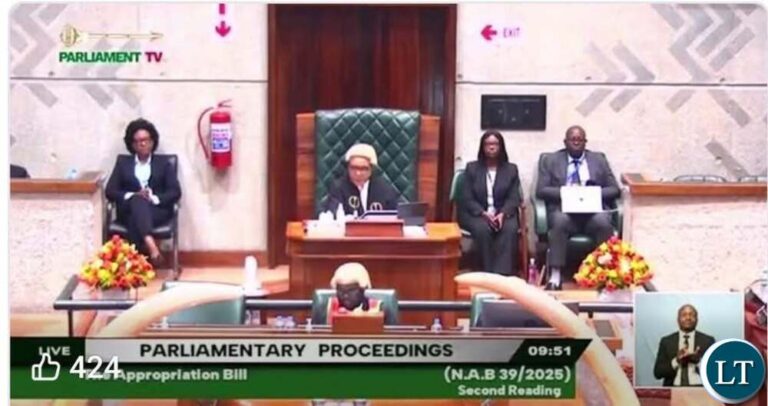
LUSAKA – The National Assembly has passed the Constitution of Zambia (Amendment) Bill No. 7 of 2025, a landmark legislation that paves the way for a significant expansion of the country’s parliamentary constituencies. The Bill now proceeds to the President for assent to become law.

A key objective of the Bill is to increase the number of constituencies from the current 156 to 211. The legislation also introduces several other substantial changes to the nation’s governance framework.

From its original 13 proposed clauses, two particularly contentious provisions were withdrawn during the legislative process. These were the proposal to dissolve Parliament on the eve of a general election and the requirement for independent candidates to resign from their political parties two months prior to filing nominations.

Among the pivotal changes enacted is the establishment of a Mixed Member Proportional Representation (MMPR) Electoral System. This system is designed to guarantee enhanced representation for women, youth, and persons with disabilities in Parliament.

Other notable amendments include reducing the professional qualification requirement for the Secretary to the Cabinet from ten years to five years and removing the two-term limit for mayors and council chairpersons. The Bill also provides continuity for the Attorney-General and the Solicitor-General, allowing them to remain in office after a general election until new appointees are named. Additionally, it revises the composition of councils to include Members of Parliament who hold constituency-based seats.

The Bill secured overwhelming support in the House. During the second reading, 131 MPs voted in favor, with two opposed. At the crucial third reading, all 135 members present voted to endorse the Bill, with no votes against or abstentions.

Concluding the debate, Minister of Justice Princess Kasune stated that Bill 7 transcends being merely a legal document. She described it as “a covenant with the Zambian people aimed at inclusion, fairness, representation and strengthening democracy.” The Minister emphasized that the legislation is grounded in national consultation, informed by constitutional review processes, the Electoral Technical Committee Report of 2025, and international best practices.

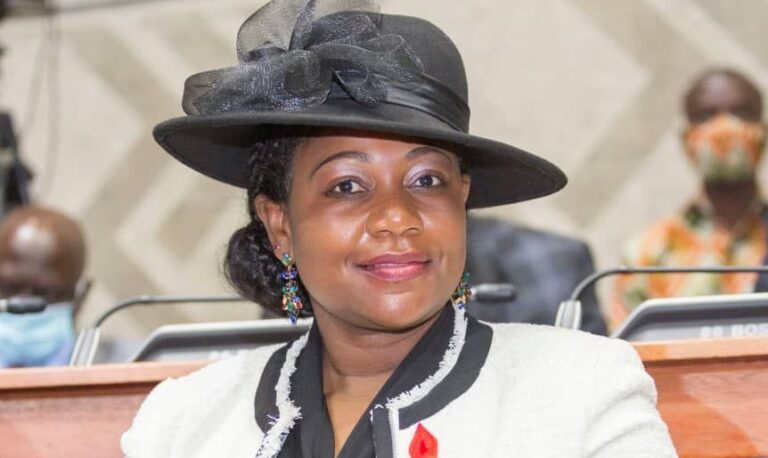
Picture caption: Minister of Justice Princess Kasune (right) with her Permanent Secretary Mwenya Bwalya (left) shortly after the Constitution of Zambia Amendment Bill 7 vote at Parliament yesterday.

ECZ Anticipates Crowded Field as Chawama By-Election Nominations Open

1

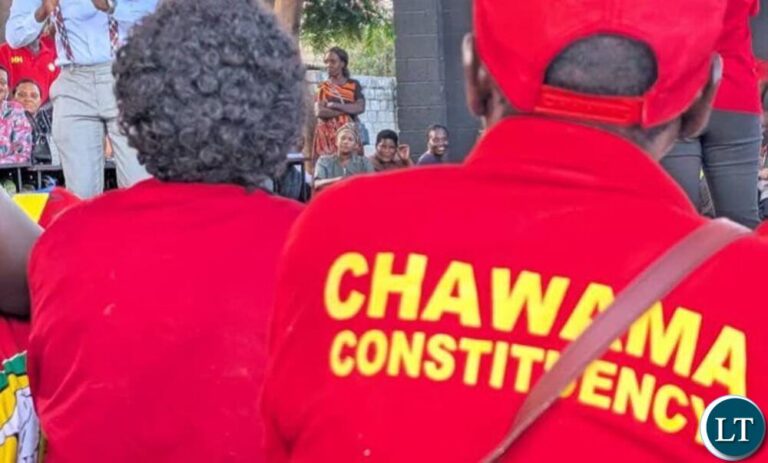
LUSAKA – The Electoral Commission of Zambia (ECZ) anticipates a highly competitive race, with more than 15 prospective candidates expected to file nominations today for the Chawama parliamentary by-election set for January 15, 2026.

The nomination process officially begins the contest to replace former Chawama Member of Parliament Tasila Lungu, whose seat was declared vacant by Speaker of the National Assembly Nelly Mutti on November 28, 2025. The declaration was made under Article 72(2)(c) of the Constitution, following Ms. Lungu’s prolonged absence from parliamentary duties after the death of her father, former President Edgar Lungu, on June 5.

Several political parties and independent aspirants have confirmed their participation. Among them is Namakau Silumesi, standing on the FDD-Tonse Alliance ticket, and independent candidate Elijah Siatwambo. The independent field is particularly active, with at least four candidates, including George Mwenya from Binwell Mpundu’s Ichabaice political grouping.

A diverse array of political parties has also entered the fray, including the Socialist Party, Movement for Change and Equality, Leadership Movement, and Citizens First—which will be represented by Clint Mulenga. Other contenders are the Exodus Party for Peace and Prosperity, New Congress Party, and the Resolute Party, which has fielded Alex Katepu.

The vacancy arose after former MP Tasila Lungu, who had remained outside Zambia following her father’s passing, failed to resume her parliamentary duties. Despite being granted compassionate leave and subsequently written to by Parliament, she did not return. Her request to participate in parliamentary sittings virtually was rejected by the Speaker, who ruled that online representation would not adequately serve the constituents of Chawama.

“It is of particular concern that Miss Lungu has not rendered representation to the people of Chawama since June 2025,” Speaker Mutti stated before the National Assembly voted to declare the seat vacant.

With nominations now open, political focus shifts to Chawama as candidates begin the process of seeking to convince voters they are the right choice to represent the constituency in Parliament.

Nkana MP Expresses Betrayal and Frustration Following Passage of Bill 7

1

LUSAKA – Nkana Member of Parliament Binwell Mpundu took to social media yesterday to voice profound frustration and a sense of personal betrayal following the successful passage of Constitution Amendment Bill 7 in Parliament.

The Bill passed both its Second and Third Readings decisively, securing the required two-thirds majority. The final vote saw all 135 MPs present voting in favor.

In a Facebook post, Mpundu, who had been a vocal and consistent opponent of the legislation, expressed deep personal anguish. “There’s nothing as painful as betrayal. I have never felt this much pain. If this was all UPND, it would have been understandable, not abantu tulya nabo (not the people we eat with),” the lawmaker wrote.

His remarks underscore a significant political rift, suggesting that the bill’s passage was enabled not only by the ruling United Party for National Development (UPND) but also by support from within opposition ranks. Throughout the legislative process, Mpundu had publicly and vehemently contested the bill’s legitimacy.

The MP’s reaction highlights the tense and divisive political climate surrounding the constitutional amendments, marking a moment of significant political recalibration as the bill now moves to await the President’s assent.

NDC Leader Praises Proportional Representation in Bill 7, Criticizes Legislative Process

0

LUSAKA – National Democratic Congress (NDC) leader Saboi Imboela has expressed support for the progressive changes within the recently passed Constitution Amendment Bill 7, specifically highlighting the inclusion of a proportional representation system. She stated this system has the potential to make Parliament more inclusive.

In an interview with Kalemba, Imboela noted she has always supported proportional representation, asserting that if properly implemented, it could increase participation in national decision-making by women, young people, and persons with disabilities.

However, Imboela strongly criticized the manner in which the bill was passed, describing the process as “unfair and disrespectful to Zambians.” She clarified that her primary concern was not the content of the bill, but the legislative process that bypassed adequate public involvement.

She referenced a prior Constitutional Court ruling that flagged insufficient public consultation on the bill. While the government subsequently appointed a technical committee to collect views nationwide, Imboela argued that the exercise failed to meaningfully influence the final legislation.

“When you want to amend the constitution, you must go to the people, you collect their views and allow them to say what they want changed. After going around the country, we still ended up with the original Bill,” Imboela said. She contended that using the committee’s report would have required revising the bill, a step the government avoided due to time constraints.

“The Bill was pushed through instead of being shaped by the people,” she stated.

Despite these reservations, Imboela maintained that Bill 7 is not entirely negative, stressing that proportional representation remains a significant gain. She cautioned the government against backtracking on the system once implemented.

“Government should not bring in proportional representation and later start changing their minds. It must be implemented properly and taken seriously,” she added.

Imboela concluded by warning that constitutional amendments have long-term consequences for all citizens, including those who initially support them.

Minister Disputes Characterization of Church Opposition to Bill 7

0

LUSAKA – Small and Medium Enterprise Development Minister Elias Mubanga has asserted that the characterization of the Catholic Church, and other churches, as being against Constitution Amendment Bill 7 is incorrect. He contends that opposition to the proposed law came from selected individuals, not the institutions themselves.

Speaking shortly after the bill’s passage in the National Assembly yesterday, Mubanga stated that the Catholic Church should not be “dragged in the mud.” He argued that the views of those who spoke against the bill did not represent the entire church.

“We have some individuals from the Catholic Church who spoke against the Bill, people from the Pentecostal Church, they spoke against the Bill. It’s individual members. The issue of saying the church said no to Bill 7 is wrong. It’s just few members of the church that said no and that should not be married with the church,” Mubanga said.

He extended this point to pastors and bishops from various churches who voiced concerns, stating they did so in their personal capacities and their views did not officially represent their congregations.

The minister’s comments followed the successful parliamentary vote on the legislation. Bill 7 passed both the Second and Third Readings yesterday, meeting the constitutional two-thirds threshold each time. At the Third Reading, all 135 Members of Parliament present voted in favor. Earlier, the Second Reading passed with 131 votes in support, two against, and no abstentions. The bill now awaits the President’s assent to become law.

Mubanga concluded that the passing of Bill 7 demonstrates to Zambians that, despite vocal public debate, it is Parliament that holds the constitutional mandate to make laws after consultations.

Minister Calls on MPs to Fulfill Resignation Pledge After Bill 7 Passage

0

LUSAKA – Water Development and Sanitation Minister Collins Nzovu has called on members of parliament from the Patriotic Front (PF) who vowed to resign if Constitution Amendment Bill 7 passed to honor that pledge immediately.

This follows the bill’s successful passage through both its Second and Third Readings in Parliament yesterday, where it secured the required two-thirds majority on both occasions.

“To those who promised to resign when Bill 7 passed the second reading stage, we encourage you to honour your pledge and quickly resign, demonstrating integrity and accountability to the people,” Nzovu stated.

The minister, who is also Nangoma MP, delivered his remarks in a statement issued shortly after the parliamentary vote. He encouraged what he termed “heartbroken MPs” to heal and move forward by working with the government to represent their constituents effectively.

The final vote at the Third Reading stage saw all 135 MPs present voting in favour of the bill. Earlier, during the Second Reading, the bill received 131 votes in support, two against, and no abstentions. The legislation now awaits the President’s assent to become law.

Nzovu described the process as a demonstration of democracy, stating that yesterday’s vote “showcased the will of the majority,” noting that some opposition members had also voted in favor.

“We, as MPs, are mandated to make laws, serving the people’s interests. By rising above politics, we have taken a significant step towards effective service delivery through delimitation. Our actions will be vindicated by time,” he said.

He accused opponents of the bill of attempting to scare the public with “obnoxious clauses that aren’t even in the Bill,” asserting that “the people saw through it, and they have spoken overwhelmingly.”

While acknowledging that the views of critical groups like the Oasis Forum are still respected, Nzovu said the parliamentary vote demonstrated the people’s will. He urged those who opposed the bill to accept the outcome and focus on national service.

The minister concluded by thanking opposition MPs who supported the bill for “rising above politics.”

Parliament Approves K253.1 Billion 2026 National Budget

2
Parliament Approves K253.1 Billion 2026 National Budget

Parliament has passed the K253.1 billion 2026 National Budget, bringing to a close the budget approval process for the coming financial year and clearing the way for implementation of government spending plans aimed at stabilising the economy and sustaining development momentum.

The approval followed debate in the National Assembly in Lusaka, where Members of Parliament considered the budget presented by Minister of Finance and National Planning Situmbeko Musokotwane. The House adopted the budget after voting, confirming Parliament’s consent to the government’s proposed expenditure framework for 2026.

Presenting the budget earlier, Mr Musokotwane told lawmakers that the 2026 spending plan was designed to consolidate economic gains achieved under the New Dawn administration while addressing persistent structural challenges. He stated that the budget prioritised macroeconomic stability, debt management, social protection, and investment in key productive sectors.

According to highlights outlined during the debate, the 2026 budget places emphasis on education, health, infrastructure development, and enhanced Constituency Development Fund allocations. The government indicated that increased resources would be directed toward service delivery at local level, with the aim of improving livelihoods and supporting inclusive growth.

During the sitting at which the budget was approved, Speaker of the National Assembly Nelly Mutti presided over proceedings as Members of Parliament from both sides of the House contributed to the debate. Lawmakers raised issues relating to fiscal discipline, debt sustainability, revenue mobilisation, and the effectiveness of public expenditure.

Supporters of the budget argued that the proposed allocations reflected the government’s commitment to economic recovery and long-term development. They maintained that continued investment in education, health, agriculture, and infrastructure would help create jobs, strengthen human capital, and improve living standards.

Several Members of Parliament also welcomed the emphasis on social protection programmes, noting that vulnerable households continued to face pressure from the cost of living. They said targeted interventions were necessary to cushion citizens while broader economic reforms take effect.

On the other hand, some lawmakers expressed reservations about the budget, raising concerns over revenue projections and the capacity of institutions to implement planned programmes efficiently. Questions were also raised about borrowing levels and the need to ensure that public funds are utilised prudently.

In responding to issues raised during the debate, the Minister of Finance and National Planning assured Parliament that the government remained committed to fiscal discipline and transparency. He said the budget had been crafted within a framework that sought to balance expenditure needs with realistic revenue expectations, while continuing engagement with creditors and cooperating partners.

The approval of the 2026 National Budget comes at a time when Zambia is seeking to strengthen economic stability following years of fiscal strain. The government has stated that prudent budget execution, combined with structural reforms, is expected to support growth and rebuild confidence in the economy.

Following Parliament’s approval, the budget will be operationalised at the start of the 2026 financial year, with ministries, provinces, and other spending agencies expected to align their programmes with the allocations approved by the House. Oversight committees of Parliament are also expected to monitor implementation to ensure accountability and value for money.

The passage of the budget marks a key milestone in the legislative calendar and provides the financial framework within which government policies and programmes will be implemented in 2026. As the focus shifts from approval to execution, attention is likely to centre on whether the planned spending translates into tangible improvements in public services and economic outcomes.

Bill 7 Is Zambia’s Success Story of True Democracy

Bill 7 Is Zambia’s Success Story of True Democracy

By Magret Mwanza

The passage of Bill 7 stands as one of the clearest demonstrations of democratic maturity Zambia has witnessed in recent years.

In a political environment often poisoned by suspicion, rigid partisanship, and performative outrage, Members of Parliament rose above political comfort zones and chose cooperation over chaos.

The overwhelming vote in favour of Bill 7 was not accidental, nor was it coercive. It was the product of teamwork, dialogue, and a shared recognition that national interest must sometimes override narrow political calculations.

At its core, democracy is not about noise, protests, or who shouts the loudest on social media. Democracy is about institutions functioning as designed.

It is about elected representatives debating, disagreeing, consulting, correcting, and ultimately deciding through constitutional procedures. That is precisely what happened with Bill 7. Parliament debated. The courts intervened earlier when due process was questioned.

Adjustments were made. Consultations were refined. Parliament returned to the matter and resolved it decisively. That sequence alone is proof that Zambia’s democracy worked, not failed.

The decisive parliamentary vote in support of Bill 7 sends a powerful message that collaboration across party lines is still possible in Zambia.

MPs from different political formations recognised that the proposed constitutional amendments were not about rewarding one party or punishing another.

They were about fixing structural gaps in representation, governance efficiency, and constitutional clarity. That level of consensus is rare in modern politics and should not be trivialised.

What makes this moment even more significant is that Bill 7 deals with the Constitution, the supreme law of the land.

Constitutional amendments demand the highest level of responsibility, sobriety, and national thinking. They require MPs to think beyond the next election and focus on the long-term stability of the Republic.

By meeting the two-thirds threshold with such a commanding margin, Parliament demonstrated discipline, seriousness, and respect for constitutional order.

The importance of teamwork cannot be overstated. No single MP, party, or institution could have carried Bill 7 alone. It required coordination between parliamentary committees, legal experts, the executive, and lawmakers themselves.

It required MPs to listen to arguments they might not fully agree with, to compromise where necessary, and to place Zambia above political egos. This is exactly how mature democracies function.

Critics of Bill 7 are entitled to their views. Dissent is not a crime in a democracy. However, what cannot be disputed is that the final outcome was achieved through lawful, constitutional, and transparent parliamentary procedures.

Those who claim that democracy was undermined must explain how a supermajority vote in Parliament, after judicial oversight and structured debate, amounts to dictatorship. The facts simply do not support that narrative.

Bill 7 also represents progress in strengthening representation and governance structures. Constitutional refinement is not an act of betrayal but an act of responsibility.

No constitution is perfect or sacred beyond improvement. Nations that refuse to amend their constitutions when gaps are evident eventually pay the price through institutional paralysis and governance crises. Zambia chose reform over stagnation.

More importantly, this moment restores some faith in Parliament as a national institution. For too long, MPs have been accused of being rubber stamps or political mercenaries.

The handling of Bill 7 proves that Parliament can still rise to the occasion when confronted with serious national questions. It proves that MPs are capable of independent thought, collective decision-making, and constitutional fidelity.

Bill 7 should therefore be remembered not just for its content, but for the process that delivered it. It is a reminder that democracy is strengthened when institutions are respected, when teamwork is prioritised, and when political leaders understand that history judges courage more kindly than convenience.

Zambia has not weakened its democracy through Bill 7. It has exercised it. Calmly, legally, and decisively.That is the true success story here.

The Law Never Forgets Who Abused It

7

The Law Never Forgets Who Abused It

By Amb Emmanuel Mwamba

The passage of Constitution Amendment Bill No. 7 will be remembered not only for what it changed in law, but for how it was carried through Parliament and the signals that moment sent to the nation.

At third reading, the Bill secured 135 votes, the exact two thirds majority required by the Constitution. In formal terms, the arithmetic was impeccable. In democratic terms, the aftermath exposed a deeper fracture between legality and legitimacy that numbers alone cannot repair.

What unsettled the country most was not simply the vote, but the conduct surrounding it. Images and accounts circulated of the Speaker appearing to celebrate the Bill’s passage. That moment, brief as it was, has assumed outsized significance. In parliamentary democracies, the presiding officer is the referee, not a player. Neutrality is not ceremonial, it is foundational. A referee who celebrates a goal destroys confidence in the match itself.

There are few, if any, comparable scenes in established parliamentary systems worldwide. Speakers do not cheer outcomes. They announce them, record them, and move on. Celebration from the chair collapses the wall between arbiter and participant. Once that wall falls, trust in process falls with it.

A satirical post by Nkana Member of Parliament Binwell Mpundu captured this sentiment with uncomfortable precision. His analogy of a referee celebrating a goal resonated because it spoke to something widely felt but rarely articulated so bluntly: that institutional restraint is slipping, and with it the balance that sustains constitutional order.

Bill 7 did not arrive in a vacuum. From the outset, it attracted warnings from civil society, including the Oasis Forum, that its substance and timing raised serious governance concerns. Opposition parties, often fragmented, closed ranks in rejection. Public discourse, from formal statements to informal conversations, reflected suspicion rather than confidence.

Ahead of the vote, opposition presidential hopeful Brian Mundubile spoke of “speculation abounding” around the process. The phrase was careful, but the underlying concern was not. Allegations of inducement and pressure circulated widely, particularly as unexpected voting patterns emerged. No proof was tabled in Parliament, but neither were the doubts convincingly addressed. Silence, in such moments, is not neutral. It feeds mistrust.

The deeper issue is structural. Bill 7 has been defended as reform, yet critics argue it enables consolidation. A Parliament whose size and composition can be adjusted to secure outcomes risks becoming an extension of executive will rather than a check upon it. When numbers are engineered to guarantee passage, debate becomes performance, not persuasion.

This is where today’s celebration may become tomorrow’s reckoning. Legal observers are already noting that actions taken in open defiance of Constitutional Court guidance, or in ways that undermine institutional independence, do not vanish with time. They accumulate. The same legal frameworks now being promoted as tools of reform, including delimitation processes, may one day operate in reverse. Immunity is not permanent. What shields authority today can later strip it.

History across Africa offers a cautionary record. Power is rarely seized in one dramatic moment. It is gathered incrementally, amendment by amendment, vote by vote, under assurances that nothing fundamental will change. By the time consequences arrive, the architects often insist they acted lawfully. Lawful, perhaps. But lawfulness does not erase accountability.

When leaders declare that the people have spoken, the essential question follows naturally: through which institutions, under what conditions, and with what safeguards? Democracy is not sustained by tallies alone. It rests on restraint, neutrality, and respect for limits, especially by those who preside over the process.

Zambia now stands at a difficult junction. One path preserves democratic language while hollowing out democratic substance. The other insists that institutions matter, that referees remain referees, and that power submits to law rather than bending it.

The law has a long memory. It tolerates abuse in silence, sometimes for years. But when it returns, it does so without celebration.

Those who applaud today would do well to remember that tomorrow, the same law they stretched may be waiting to answer back.

Over 2,000 metrics tons of maize procured in Central Province

1

Central Province Permanent Secretary, Milner Mwanakampwe says the Government has procured 242,000 metric tonnes of maize in the region against the targeted 80, 000 metric tonnes.

Dr Mwanakampwe says the 2024/2025 farming season bumper harvest speaks to the good policies such as the Farmer Input Support Program (FISP) that the government is implementing in the agriculture sector that is aimed at making inputs accessible.

Speaking during a phone -in program, Dr Mwanakampwe said the Government is working round the clock to ensure all the farmers get their dues.

He said 65 percent of the farmers in the province have been paid, adding that funds are being sourced from the banks and countries that are looking for maize grain like Malawi and the Democratic Republic of Congo.

Dr Mwanakampwe has assured that all farmers will soon receive their money to avoid disrupting their farming cycle.

Lusaka Traders commend Government for rehabilitation of Soweto Market

0

Traders in Lusaka district have commended the Government on the ongoing rehabilitation works at New Soweto Market.

New Soweto Market Manager, Majory Mulamfu, says that the rehabilitation works are aimed at improving accessibility of the market and general hygiene.

The media reports that Mrs Mulamfu also disclosed that the peaceful trading environment within the facility has promoted business, thereby increasing revenue collection for the local authorities.

She was speaking in Lusaka district’s New Soweto Market in an exclusive interview with ZANIS.

She also called on those trading from the streets to come on board and ultilise the readily available trading spaces within the market.

“The Soweto market which used to have a lot of mud to the point that people had difficulties accessing it, will now be a thing of the past,” added Ms Mulamfu.

Market Spokesperson, Prince Chiyangaya, said that the market will soon be accessing 24 hours of electricity supply, with solar lights that have been purchased already and waiting to be installed.

He said that traders are trading peacefully without anyone harassing them, which has promoted market ultilisation.

Mr Chiyangaya also thanked President Hakainde Hichilema for the Constituency Development Fund (CDF) initiative that has given hope for the overall outlook of the market.

Meanwhile, A trader within the market, Ceasar Ngulube, commended the government for putting up a clinic within the facility, which acts as the first contact place for the traders, which he said promotes continued trading.

Government Commend on Online Passport Application System

1

Information and Technology (IT) firm, Zambian Cloud Programmers has described the launch of the online passport application system as a major and commendable milestone, demonstrating the government’s clear commitment to embracing digital governance.

The media reports that Cloud Programmers Chief Executive Officer, Clement Kamanda, says the initiative will enhance transparency and modernise the delivery of public services to citizens.

Speaking in an interview with Mr Kamanda said the digital passport application system will significantly reduce bureaucracy and align Zambia with global best practices in service delivery.

He explained that the system will enhance efficiency, reduce long queues at passport offices, and promote transparency and fairness in passport issuance.

Mr Kamanda added that the platform will also shorten processing times and ensure equal access to services for all citizens.

He noted that the platform will even benefit citizens in rural areas, provided they have access to the internet.

He has described the initiative as a progressive step towards inclusive and efficient public service delivery through technology.

Government reaffirms commitment to local investment benefits

0

North-Western Province Deputy Permanent Secretary Luckson Mulumbi has reaffirmed Government’s commitment to ensuring that local people benefit from the investment opportunities available in the country.

Mr Mulumbi said this when he officiated at the Kansanshi Dinner Gala and North-Western Chamber of Commerce Awards Ceremony.

He noted that the signing of Statutory Instrument (SI) No. 68 on Local Content was a strategic move aimed at empowering local businesses.

“Government is committed to creating an enabling environment that empowers local enterprises,” Mr Mulumbi said.

He added that the mining sector should directly benefit local communities, stressing that Government was putting in place strategic frameworks to promote skills transfer and enhance local procurement.

Mr Mulumbi further reaffirmed Government’s commitment to Small and Medium Enterprises (SMEs), citing the establishment of a dedicated Ministry to oversee their welfare as evidence of this resolve.

Meanwhile, Zambia Chamber of Commerce and Industry President Anthony Kabaghe challenged mining firms to go beyond procurement when awarding contracts to local contractors.

Mr Kabaghe said the Chamber stands ready to collaborate with mining companies to ensure mutual prosperity.

And FQM Kansanshi Mine Corporate Affairs superintendent Ryan Ellis said the company has already been implementing local content principles even before the signing of SI 68.

Mr Ellis said the Mining Company was working towards ensuring that contracts were awarded in line with the guidelines provided under the statutory instrument.

“First Quantum Minerals has spent over $700 million with Zambian citizen owned businesses, with hundreds of Zambian businesses already holding contracts with Kansanshi and Trident mines.”” Mr Ellis said.

ECZ assures stakeholders of peaceful Chawama by-election

0

The Electoral Commission of Zambia (ECZ) has assured stakeholders of a peaceful and credible Chawama by-election, scheduled to take place on January 15, 2026.

Speaking at a stakeholders meeting, Lusaka Assistant District Electoral Officer Victor Kagoli, emphasised the commission’s readiness to conduct a free and fair election.

Mr Kagoli highlighted the importance of the by-election, stating that it is a reaffirmation of citizen’s right to choose their representatives, a fundamental aspect of Zambia’s democracy.

He commended stakeholders, including the media, election agents, monitors, observers and security personnel, for their commitment to upholding democratic principles.

The media reports that Mr Kagoli further added that robust measures are in place to safeguard polling stations, ballot papers, and electoral personnel, with staff trained to ensure professionalism and efficiency.

“The Zambia Police Service is commended for maintaining law and order, guaranteeing a safe voting environment,” he said.

Mr Kagoli urged the media to continue informing the public accurately and responsibly, and encouraged citizens to turn out peacefully to exercise their democratic rights.

He called on all stakeholders to work together to ensure a peaceful and credible election, showcasing Zambia’s democratic maturity.