Saturday, June 13, 2026
24.9 C
Lusaka
Home Blog Page 216

AAC raises concern over Auditor General Report

0

The Alliance against Corruption (AAC) Executive Director, Noel Chisebe has expressed concern about the Auditor General’s report on accounts of local authorities for the financial year ended 31 December 2024.

Dr Chisebe says widespread financial mismanagement, systemic failures in revenue collection, and accountability deficiency highlighted in the report raises a serious concern on the capacities of local authorities.

Speaking in an interview  in Kabwe, Dr Chisebe said the findings of uncollected fees, unaccounted for funds, misapplication of funds, and over-employment of staff were unacceptable and demanded for immediate remedy.

He observed that the report was a stark reminder of the prevalent corruption and lack of transparency associated with the local authorities in the country.

He charged that these irregularities are a clear indication of corruption, which must be addressed with utmost seriousness and urgency.

Dr Chisebe appealed to the Minister of Local Government and Rural Development (MLGRD) to take swift and decisive action to address the shortcomings and also to implement the Auditor General’s recommendations

He urged the government to strengthen governance structures by improving financial monitoring mechanisms to ensure public resources are utilized for the benefit of the citizens.

Northern PS Reaffirms Government Commitment to Children

0

Northern Province Permanent Secretary Bernard Mpundu has reiterated Government’s commitment to creating an enabling environment where every child can grow, learn and thrive.

Mr Mpundu said government recognises that policies alone cannot transform the lives of children unless they were matched with effective implementation, adequate resources and strong, sustained partnerships.

He noted that the future of Zambia’s children depended on the strength of public commitment to protecting and promoting their rights.

Mr Mpundu disclosed that children defined as individuals below the age of 18 remained central to the nation’s development agenda, accounting for approximately 51.8 percent of the country’s population.

He was speaking in a speech read on his behalf by Northern Province Assistant Secretary Jordan Mwenya during the provincial and district level stakeholders’ consultative meeting for the review of the 2015 National Child Policy, held in Kasama District.

The Permanent Secretary observed that the 2015 National Child Policy laid a vital foundation for advancing the rights and wellbeing of children across the country.

“This engagement is a clear testament to the Ministry’s unwavering commitment to ensuring that the revised child policy is informed by the voices and experiences of all stakeholders, especially those at community level,” he said.

Mr Mpundu further noted that the social and economic landscape of the country has shifted significantly over the years, posing new challenges on children such as rising child poverty, child marriages, child labour, online safety threats and mental health concerns hence the need to review the policy.

He observed that the revised national policy must be responsive to current realities and forward looking in addressing challenges that will affect children in the future.

“This stakeholders’ engagement on the policy review is timely and imperative, a lot has changed over the years, we have seen new challenges come in affecting children among them online threats and increased poverty, these should be addressed in the policy which should also be forward looking,” he said.

CHABINGA DEFENDS BILL 7, DISMISSES BRIBERY CLAIMS

1

Leader of the Opposition, Robert Chabinga, has defended the passage of Constitution Amendment Bill Number 7, describing it as the result of extensive dialogue, consensus-building, and stakeholder engagement.

Speaking through an interview , Chabinga stated that the scrutiny of the Bill focused on clauses that had raised concerns among Members of Parliament and stakeholders, leading to the repeal or adjustment of some provisions following consultations.

He praised the executive for listening to divergent views and choosing dialogue over confrontation, calling this approach a mark of responsible leadership.

Chabinga welcomed what he termed progressive elements of the Bill, including the introduction of proportional representation and the expansion of political inclusion through reserved seats. The Mafinga Member of Parliament stated that proportional representation would strengthen democracy by giving smaller political parties a fair chance to enter Parliament based on their share of the national vote.

He rejected claims that the constitutional amendment process lacked integrity, explaining that Zambia’s Constitution can be lawfully amended through a private member’s Bill, a citizen petition, or an executive-sponsored Bill. Chabinga questioned why the process is only challenged when reforms are initiated by the Executive.

The Leader of the Opposition also dismissed allegations that Members of Parliament were bribed to support the Bill, stating that no MP received money and describing the claims as misleading and irresponsible.

Chabinga further highlighted that the proposed delimitation of large constituencies would promote equitable development, improve representation, and reduce local tensions linked to geography and population diversity.

NAKACINDA SENTENCED TO SIX MONTHS FOR HATE SPEECH

2

Patriotic Front (PF) faction Secretary General Raphael Nakacinda has been sentenced to six months imprisonment with hard labour after being found guilty of hate speech.

Lusaka Resident Magistrate Ida Phiri delivered the judgement on Tuesday, convicting Nakacinda for expressing hatred, ridicule, and contempt against a person based on race, colour, tribe, and place of origin. The offence stemmed from remarks concerning President Hakainde Hichilema’s election in 2021.

In her ruling, Magistrate Phiri stated the prosecution had proved its case beyond reasonable doubt. She emphasized that a custodial sentence was necessary to deter other potential offenders.

Following mitigation by the defence, the magistrate ordered the six-month sentence to run concurrently with sentences Nakacinda is already serving in other concluded matters.

Magistrate Phiri warned that politics driven by hate speech fosters division and polarisation. She also expressed concern over a growing tendency among politicians across the political spectrum to engage in such language.

president Hichilema to Participate in Virtual SADC Extraordinary Summit

2

President Hakainde Hichilema is scheduled to participate in a Virtual Extraordinary Summit of the Southern African Development Community (SADC) Heads of State and Government today, December 17.

According to a statement issued by Minister of Foreign Affairs and International Cooperation Mulambo Haimbe, the summit will be chaired by South African President Cyril Ramaphosa in his capacity as the Interim Chairperson of SADC.

The ministerial statement outlined that the summit will be preceded by meetings of the Extraordinary Committee of Senior Officials and the Extraordinary Council of Ministers. These meetings are tasked with preparing and consolidating reports for consideration by the Heads of State and Government.

A key agenda item for the summit is the consideration of the report of the SADC fact-finding mission on the political situation in the Republic of Madagascar.

In the statement, Mr. Haimbe reaffirmed Zambia’s commitment to regional cooperation and integration through established SADC frameworks. “Zambia reaffirms its commitment to regional cooperation, integration and collective efforts through established SADC frameworks aimed at advancing regional peace, security and stability, as well as the shared aspiration for sustainable development in the SADC region,” he said.

Mambwe Records 41 Percent School Enrolment Increase

0

Mambwe District in Eastern Province has recorded a 41 percent increase in school enrolments following the implementation of the free education policy.

The district has seen an increase of up to 13,278 pupils from 2021 to date.

Mambwe District Education Board Secretary (DEBS) Rodgers Champemba revealed that in 2020, the district’s school enrolment stood at 32,376.

Mr. Champemba said that current enrolment figures now total 45,656, reflecting a 41 percent growth.

He said that of the 41 percent, 6,483 pupils were boys while 6, 795 pupils were girls bringing the total to 13,278.

The DEBS said that with the rolling out of the free education policy, many learners who had previously dropped out of school had returned.

Mr. Champemba said that communities were also happy with the free education policy so much that some community members were visiting his office to request that they construct community schools as many children were eager to go to school.

He added that despite the overwhelming increase in the rate of pupil enrolment, the teachers were able to handle the various challenges that come with free education as their aim was to educate everyone.

“Our education system is made in a way that there is a provision for some teachers to teach double classes in schools that may not have enough teachers and there is a double class allowance attached to that,” he said.

East PS urges Petauke civil servants professionalism

0

 Eastern Province Permanent Secretary, Paul Thole, has urged civil servants in Petauke District to uphold high professional standards as they administer their duties to the public.

Mr Thole who was represented by Assistant Secretary, Clement Chilembo at a meeting with Heads of Government Departments (HODs) in Petauke, said professionalism will make members of the public have confidence in the civil service.

He said government was doing everything possible to ensure that the service was conducive for both the internal and external audience.

“As civil servant, professionalism is key to the success of government. When there are misunderstandings, make sure to use proper channels of resolving them,” he said.

Mr Thole urged those in the civil service to refrain from being involved into active politics.

He noted that being involved in partisan politics as a civil servant reduced the credibility of the service.

“Let us focus on working with the government of the day and not involve ourselves in active politics,” the PS noted.

Meanwhile, Mr. Thole urged HODs to ensure employees under their supervision were confirmed after three months upon their first appointment into the Civil Service.

He said every employee who has proven him/herself within the three months of probation, should be confirmed.

“Ensure that employees on probation are confirmed on first appointment as the service states,” Mr Thole said.

Mambwe Education Board to Build Storage Facility

0

The Mambwe District Education Board Office is set to begin construction of a storage facility to securely house confidential materials, including examination documents.

Mambwe District Education Board Secretary (DEBS) Rodgers Champemba explained that the surge in student enrolments following the reintroduction of the free education policy has left the district with insufficient storage space for exam materials.

Mr. Champemba said that previously, the district could accommodate exam materials, however in recent times following the rolling out of the free education policy, enough space was needed.

“The free education policy has given rise to the introduction of new schools, meaning more pupils and material,” he said.

Mr. Champemba said that with this development, his office was lobbying for funds under the Constituency Development Fund (CDF) and from other supporting partners in order to address the storage space challenge.

He said that the planned construction of the storage infrastructure will be in accordance with the government standard description of a concrete reinforced building.

“The building will be 20.7 meters long by 7.2 meters wide with a height of 4.66,” he specified.

Chinsali stakeholders elated with Passage of Bill 7

5

Scores of residents who include the church, Persons with Disabilities and Senior Citizens in Chinsali District in Muchinga Province have expressed delight at the passing through of Bill 7.

This follows the successful voting of the bill by all Members of Parliament yesterday when the bill was presented for third reading in Parliament.

Chairperson for Pastor’s fellowship Provincial Organising Committee Reverend Mutale Ndoki said the bill was not politically inclined in any way hence should be embraced by all.

Rev. Ndoki said bill 7 will greatly help the people of Zambia especially those in rural areas through equitable representation.

He said with the passing through of the bill, it now gives confidence to the people that large constituencies will be delimitated which will promote equitable resources and development.

Rev. Ndoki further said the delimitation of constitutional boundaries will help to foster development, adding that currently MPs with larger constituencies are failing to develop their areas due their vastness.

“Like in Muchinga Province all the eight districts made submissions to have Constituencies delimitated due to the vastness of the districts,” he said.

He echoed that the church was looking forward to the commencement of the delimitation process as soon as the President ascents on the bill.

Rev. Ndoki called for Unity in the country and particularly in Chinsali saying this was not a time for finger pointing of who was in support and who was against Bill No. 7.

” I want to urge the President and the people of Zambia to focus on the issues contained in the Bill and not to be finger pointing at who was against or for the Bill, because without unity all the efforts will be in vein, this is the time to work together ,” he said.

He said without unity of purpose all the efforts made to ensure that the bill goes through in Parliament will be water under the bridge as it will defeat the purpose of implementing the amendment process of the Zambian constitution.

He further called for unit in the country now that the Bill has been voted for.

Meanwhile, a Senior Citizen Felix Nongo has commended Members of Parliament for not politicising Bill 7 during yesterday’s voting session.

He further congratulated President Hakainde Hichilema and his administration for the initiative of Bill 7.

“I want to say kudos to the people of Zambia, MPs and the UPND government who include the Head of state Mr Hakainde Hichilema for making the right decision on behalf of the people they represent,” he said.

Mr Nongo said the wider consultation countrywide to get the views and input from the people of Zambia has contributed to positive response on Bill 7.

He said the bill will not only benefit this generation but future generations to come through various services which will be attainable through the progressive Bill.

And Muchinga Province Disabilities Association Executive Chairperson Godwin Mubanga says Persons with Disabilities in the province were elated with the outcome of bill No. 7.

Mr Mubanga said the bill was of great importance to people with disabilities as voices of the marginalised will be heard through the increased presentation.

He said it  was the first of its kind since independence to have a constitution that support the inclusion of marginalized persons such as persons with disabilities ,youths and women through proportion representation.

“We are so proud of this government for upholding and championing the rights of persons with disabilities through this Bill,” He echoed.

He said for a long time persons with disabilities have not been well represented at all levels including Parliament as the number has been low.

Mr Mubanga has also appreciated the Government for acknowledging and considering the rights of the marginalised in the Country for fair representation.

He further said the passing of Bill 7 was inevitable.

And Rhoda Namutenda has called for more sensitization on Bill 7 despite the Bill passing in Parliament.

Ms Namutenda charged that the content of Bill 7 will be meaningful to Zambians among them women in rural areas if they are sensitized fully on the Bill.

She said the Bill was progressive in its nature and to those that understand it unlike those who do not have knowledge on its content hence the need to continue with awareness.

“The Bill has been surrounded with so many critics as some people were being misled due to lack of information on the Bill particularly for women in remote and rural areas,” she added.

Yesterday Bill 7 received massive support and votes when it was presented to Parliament.

Kitumba Sino Mine Minerals Limited hailed for job creation

1

Government has lauded Kitumba Sino Mine Minerals Limited for creating close to 3,000 jobs and investing $690 million in the Kitumba district, with half of the investment already committed.

Deputy Secretary to the Cabinet Siazongo Siakalenge made the remarks during a tour of the mine, expressing excitement about the project’s progress.

He noted that the mine is using state of the art technology and introducing new skills to Zambians, contributing to the country’s economic growth.

He added that the mine is expected to commence copper production by June next year, targeting 50,000 metric tonnes and contributing to President Hakainde Hichilema’s goal of producing 3 million tonnes of copper.

The media reports that Mr Siakalenge further said that the mine has also started producing 40 megawatts of solar power, although injection into the national grid is pending completion of a transmission line by the off-taker.

“ The government expects the project to be connected to the grid by January next year,” he said

Mr Siakalenge  praised the mine’s efforts, stating that  government will continue supporting their work and is happy to see tangible results from President Hichilema’s promises to create jobs and attract investments.

Kitumba Sino Mine Minerals Limited, Frank Wang said he is excited about the progress made at mine .

“Our team has worked tirelessly to ensure that we are on track to meet our production targets, and we are confident that we will deliver on our promise to contribute to Zambia’s economic growth and development.

“We have created close to 3,000 jobs and invested $690 million in this project,” he said

President Hichilema to attend SADC virtual meeting

0

President Hakainde Hichilema, is today scheduled to participate in the Virtual Extraordinary Summit of Southern African Development Community (SADC) Heads of State and Government.

The Extraordinary Summit, is set to be Chaired by President of South Africa, Cyril Ramaphosa, who is Interim Chairperson of SADC.

This was made known through a statement issued to the media by the Minister of Foreign Affairs and International Cooperation, Mulambo Haimbe.

Mr Haimbe highlighted that this meeting will be preceded by meetings of the Extraordinary Committee of Senior Officials as well as the Extraordinary Council of Ministers.

He noted that Heads of State and Government will, among other matters, consider the report of the fact-finding mission on the political situation in the Republic of Madagascar.

Mr Haimbe adds that Zambia reaffirms its commitment to regional cooperation, integration and collective efforts through established SADC frameworks, which foster regional peace, security and stability for sustainable development.

Constitutional Court Throws Out LAZ Appeal on Bill 7

10

Constitutional Court Throws Out LAZ Appeal on Bill 7

The Constitutional Court has dismissed an appeal by the Law Association of Zambia seeking to halt the enactment of the Constitution of Zambia (Amendment) Bill No. 7 of 2025, bringing to an end one of the final legal challenges to the controversial legislation.

In its ruling, the court found that the appeal did not meet the legal threshold required to justify the intervention sought by the applicants. The judges held that the matter before them did not warrant the issuance of orders that would stop the legislative process that had already progressed in Parliament.

The Law Association of Zambia had approached the court after Parliament passed Bill 7, arguing that the process leading to its passage was flawed and inconsistent with constitutional requirements. LAZ sought an order to restrain further action on the bill, citing concerns over public participation, procedural compliance, and the broader constitutional implications of the amendments.

However, the Constitutional Court ruled that the issues raised by LAZ were not properly anchored in law to justify the relief sought at that stage. The court stated that its jurisdiction could not be invoked to interfere with parliamentary processes without clear and compelling legal grounds.

In dismissing the appeal, the judges noted that Parliament had already exercised its legislative authority in accordance with the procedures provided under the Constitution. The court emphasised that it could not substitute its judgment for that of Parliament in matters where the Constitution expressly grants legislative power to elected representatives.

The ruling means that Bill 7 remains validly passed by Parliament and may proceed to the next stages required for it to take effect. The decision effectively closes the door on immediate judicial intervention aimed at reversing or suspending the bill through the courts.

The dismissal comes amid heightened public debate over Bill 7, which has attracted criticism from civil society organisations, opposition political parties, and sections of the legal fraternity. Critics have maintained that the amendments undermine constitutional safeguards and weaken democratic checks and balances.

Supporters of the bill, on the other hand, have argued that the changes are necessary to improve governance, enhance efficiency in public administration, and align constitutional provisions with contemporary governance needs.

The Constitutional Court’s decision underscores the limits of judicial intervention in legislative processes, particularly where Parliament has followed the formal steps required under the Constitution. The court reiterated that constitutional challenges must be grounded in clear violations of the law rather than political or policy disagreements.

With the appeal dismissed, attention now shifts to the implementation phase of Bill 7 and the broader political consequences of its passage, including its impact on public confidence in constitutional reform processes and institutional accountability.


Auditor General Flags 72 Councils Over Revenue Failures

2

The Auditor General has cited 72 local authorities across the country for failing to adequately collect revenue from various local taxes, fees, charges, licences, levies and permits, raising concerns over the management of public resources at council level.

According to the Auditor General’s 2024 report on the accounts of local authorities, the under-collection of revenue has continued to affect service delivery and financial stability in councils, with significant amounts of expected income either not billed, not collected, or not remitted to the appropriate accounts.

The report states that the 72 councils were identified following an audit of local authorities nationwide, which revealed weaknesses in revenue administration systems, poor enforcement of payment mechanisms, and inadequate monitoring of collections. The Auditor General noted that these failures have contributed to financial constraints that undermine councils’ ability to meet operational obligations and provide essential services to residents.

The audit findings show that revenue sources affected include property rates, market levies, bus station fees, trade licences, parking fees and other statutory charges that councils are mandated to collect under the law. In several cases, councils failed to issue bills on time, while in others, billed amounts were not followed up, resulting in arrears accumulating over extended periods.

The report further indicates that some councils lacked comprehensive revenue registers, making it difficult to track amounts due, amounts collected, and outstanding balances. In other instances, councils did not reconcile revenue records regularly, increasing the risk of revenue leakages and misappropriation.

The Auditor General observed that weak internal controls continued to expose councils to financial losses, noting that cash collections were still prevalent in some local authorities despite policy guidance encouraging electronic and traceable payment methods. The continued use of manual systems was cited as a contributing factor to revenue losses and accountability challenges.

In addition, the report highlights cases where councils failed to enforce penalties on defaulters, allowing businesses and individuals to continue operating without settling outstanding obligations. This, the Auditor General warned, has the effect of discouraging compliance and weakening the revenue base of local authorities.

The Auditor General stated that the under-collection of revenue by councils not only affects service delivery but also increases reliance on central government transfers, placing additional pressure on the national treasury. The report notes that improved revenue performance at local authority level is critical to enhancing fiscal decentralisation and promoting self-sustaining local governance.

The report further points out that some councils recorded revenue shortfalls despite having significant economic activities within their jurisdictions, suggesting inefficiencies in revenue mobilisation rather than a lack of revenue potential. In such cases, councils were advised to review their revenue strategies and strengthen enforcement measures.

To address the challenges, the Auditor General recommended that councils strengthen internal controls, update and maintain accurate revenue registers, and ensure timely billing and follow-up on outstanding amounts. The report also called for increased supervision by council management and the adoption of electronic revenue collection systems to reduce cash handling and improve transparency.

The Auditor General urged the Ministry of Local Government and Rural Development to enhance oversight of councils’ financial management practices and to ensure that corrective measures are implemented where weaknesses are identified. The report emphasised the need for capacity building in financial management and revenue administration at local authority level.

The findings are part of the broader Auditor General’s 2024 report, which examines the use and management of public resources across government institutions and local authorities, with the aim of promoting accountability, efficiency and value for money in public administration.

UPND Switches Chawama Candidate Hours After Nomination Over Voter Roll Issue

2

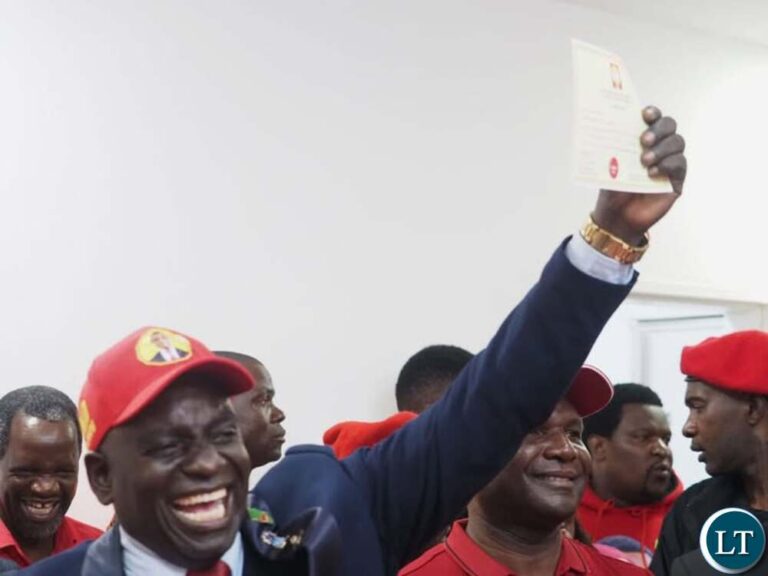
LUSAKA – The United Party for National Development (UPND) has replaced its Chawama parliamentary candidate less than 24 hours after his announcement, following the discovery that he did not meet a key electoral requirement.

Timothy Kantenga, announced on Friday, has been withdrawn and replaced by Morgan Muunda after verification revealed a technical disqualification. Party officials stated that Kantenga, while a registered voter, was only registered last year and his name does not appear on the current Chawama voters’ roll used for the upcoming by-election.

UPND Chairperson for Elections and Campaigns, Gary Nkombo, explained that the party acted swiftly to avoid potential procedural challenges with the Electoral Commission of Zambia (ECZ). He said the decision was made in the party’s best interest and to ensure strict compliance with electoral rules.

“We have all just been going through the voter registration, and after the pronouncement and upon verification of documents, we then discovered that he is indeed a voter but was only registered…last year, which means his name is not contained in the current voters’ roll, presenting a disqualification,” Nkombo stated.

He apologized for the oversight to the public and acknowledged Kantenga’s cooperation. “We spoke with the candidate and he graciously bowed down, which is why he is here this afternoon to offer solidarity to the next person we have settled for. Allow me to officially announce the variation we have made as UPND: the party will use Morgan Muunda as the one to carry the UPND flag in this competition,” Nkombo said.

Nkombo clarified that, according to ECZ regulations, only individuals registered in Chawama, whose names appear on the current voters’ roll, and who participated in the 2021 General Elections in the constituency, are qualified to contest.

Timothy Kantenga publicly endorsed his replacement, urging party unity. “As you heard yesterday in my acceptance speech, I did say that we are disciples of our President and as a party, we are not void or devoid of leaders. It is for this reason that I endorse Muunda as incoming MP for Chawama constituency,” he said.

Accepting the nomination, Morgan Muunda thanked the party for its confidence. He outlined his campaign priorities, stating, “My priorities will include improving access to clean water and sanitation, and ensuring the effective utilisation of the K40 million Constituency Development Fund (CDF) to improve the livelihoods of the people.”

Nationwide Recruitment for 2,000 Health Sector Jobs Commences

2

LUSAKA – The Civil Service Commission (CSC) has officially launched a nationwide recruitment exercise for 2025, aiming to fill 2,000 new positions in Zambia’s health sector.

Acting CSC Chairperson Louis Siandyabantu announced that the recruitment will be conducted in two phases, beginning with the promotion of serving officers, followed by first-time appointments. He stated that the process will be concluded swiftly and will not involve public advertisements, as selections will be made from an existing database managed by Human Resource Management Committees at district and provincial levels.

Siandyabantu spoke in Lusaka today during the swearing-in of the steering committee tasked with overseeing the recruitment process.

“Today marks the official commencement of the recruitment exercise, which will be undertaken in two phases: the promotion of in-service officers and first appointments,” he said. “This recruitment will be undertaken through the existing human resource management structures. There will be no advertisements.”

He highlighted that the government has recruited 18,000 health workers over the past four years. The addition of 2,000 more in 2025 will bring the total to 20,000, a milestone he described as unprecedented.

Inclusivity was emphasized as a central tenet of the exercise, with a directive that 10 percent of the positions be reserved for persons with disabilities. “We shall ensure that 10 percent is reserved for persons with disabilities so that inclusivity is actualised,” Siandyabantu stressed.

Addressing the newly sworn-in steering committee, he urged members to uphold the highest standards of professionalism, integrity, and confidentiality. “The credibility of this recruitment process and public confidence in the civil service rests significantly on your conduct. Let merit, fairness, and equity guide all your decisions,” he said.

The acting chairperson also issued a warning to the public to be vigilant against fraudsters and individuals falsely claiming to represent the Commission. “I strongly urge members of the public to avoid misinformation and report any unscrupulous individuals purporting to represent the Commission to law enforcement agencies,” he stated.

He further called on the media and other stakeholders to support the process by disseminating accurate information, noting that the recruitment is critical to delivering essential health services across the country.