Saturday, June 6, 2026
16.1 C
Lusaka
Home Blog Page 217

US, Zambia Outline New Economic and Mining Reform Framework

8

US, Zambia Outline New Economic and Mining Reform Framework
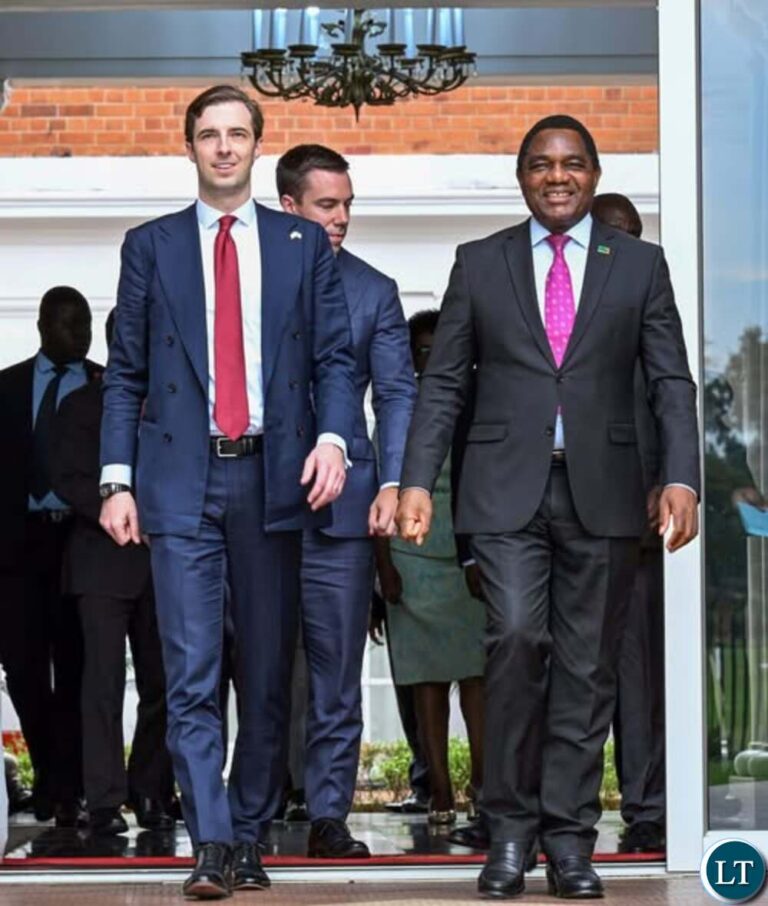
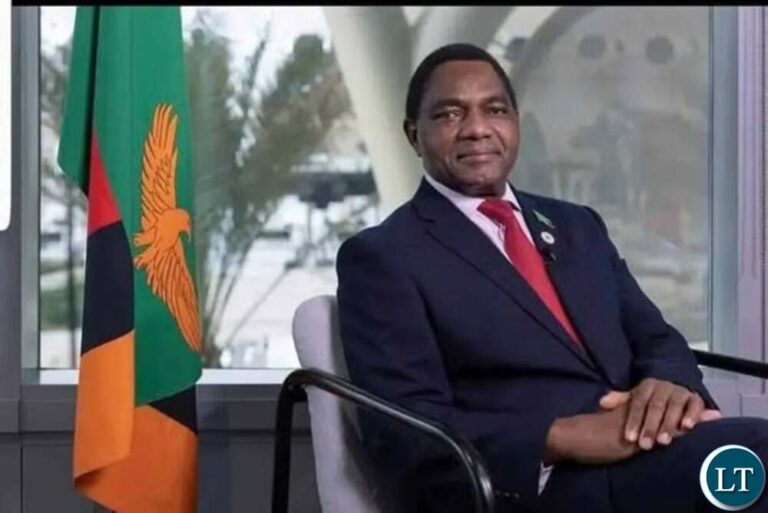
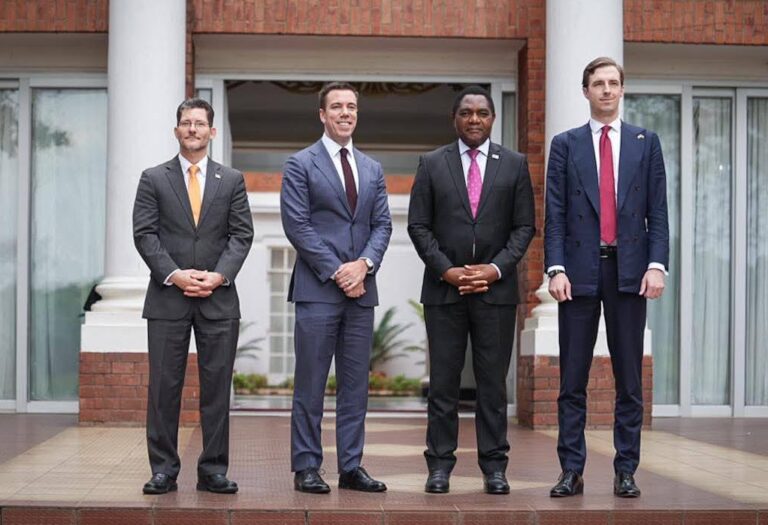
President Hakainde Hichilema and visiting U.S. Assistant Secretary of State for Economic, Energy, and Business Affairs Caleb Orr have agreed on a framework that seeks to reshape bilateral cooperation through a reform-driven support programme. Both the U.S. Embassy in Zambia and State House confirmed the engagement, noting that no specific financial figure was announced publicly. This engagement signifies a pivotal moment in Zambia’s economic journey, emphasizing the importance of transparent governance and sustainable practices in the mining sector. By aligning their interests, both nations aim to foster a climate conducive to investment, thereby enhancing Zambia’s position as a key player in the global mining industry.

According to official communication, the discussions centred on unlocking a substantial grant package tied to Zambia’s willingness to implement targeted reforms in the mining industry and the broader business environment. The proposed support would work alongside a restructured Millennium Challenge Corporation Compact and a five-year collaboration on public health. These reforms are anticipated to lead to more efficient mining operations and improved environmental management, which would not only benefit local communities but also enhance Zambia’s attractiveness to foreign investors who prioritize corporate responsibility and sustainability in their operations.

Assistant Secretary Orr said the United States aims to support Zambia’s economic potential through improvements in regulatory efficiency and transparency. He noted that American firms view Zambia as a market capable of attracting increased investment once predictable rules and streamlined procedures are established. He added that the reform programme is intended to expand opportunities that strengthen supply chains relevant to U.S. strategic interests while contributing to job creation in Zambia. By enhancing the regulatory framework, Zambia can ensure that both local and foreign investors feel secure in their investments, leading to sustainable economic growth and development.

The meeting was held as the Trump Administration repositions its foreign assistance priorities toward partnerships linked to measurable progress. U.S. officials described the evolving framework as an opportunity for Zambia to take a lead role in shaping a new phase of cooperation. They indicated that final terms will depend on the country’s advancement on agreed economic and governance benchmarks. This includes commitments to improve infrastructure development and foster innovation within the country, which are essential for attracting diverse investments beyond the mining sector.

The U.S. delegation included Ambassador Michael Gonzales, Deputy Assistant Secretary for Southern African Affairs and African Foreign Assistance Nick Checker, and senior State Department staff. After the State House engagement, the team began a series of follow-up meetings with senior officials in the Ministries of Finance, Mines and Mineral Development, Commerce, Trade and Industry, Technology and Science, and Agriculture. These dialogues are crucial as they aim to establish a shared vision for Zambia’s economic future, focusing on sustainable development practices that can create jobs and stimulate local economies.

Assistant Secretary Orr is also scheduled to meet representatives from the mining sector and U.S. private sector actors, including KoBold Metals. The delegation will travel to Kansanshi Mine in North-Western Province to observe operations at First Quantum Minerals’ copper facility. These activities form part of efforts to understand the investment landscape and identify areas where cooperation could support reforms in Zambia’s extractive sector and commercial environment. Such site visits will provide valuable insights into the operational challenges faced by mining companies and help formulate strategies that can facilitate a more conducive environment for business.

No timeline has yet been announced for concluding the discussions. Both governments stated that technical teams will continue negotiating as progress is made on sector-specific reforms. Continuous dialogue is essential to ensure that the outcomes of these discussions translate into effective policies that will not only benefit investors but also improve the livelihoods of Zambians by creating jobs and enhancing economic opportunities across the country.

LAZ Faces Internal Pressure as Members Petition for Emergency Meeting

1
LAZ Faces Internal Pressure as Members Petition for Emergency Meeting

A group of members of the Law Association of Zambia has formally petitioned the association’s council, calling for an Extraordinary General Meeting to address concerns about the organisation’s perceived involvement in partisan political matters. The petition, delivered to the LAZ Honorary Secretary, asks the council to urgently convene the meeting and allow members to debate the association’s public posture during ongoing national discussions around constitutional reform and the activities of the Oasis Forum.

The petitioners noted that LAZ, by law and tradition, is expected to maintain strict professional neutrality and avoid taking positions that may be interpreted as aligning with political actors. They argued that the association’s recent engagement with the Oasis Forum, a civil society alliance that has been vocal on matters concerning Bill 7, has raised questions among members about whether the association continues to operate within the limits of its mandate.

Signatories to the petition stated that the issue was not the Oasis Forum’s right to advocate on constitutional matters, but whether LAZ’s visible association with the grouping could be misunderstood as institutional endorsement of a specific political position. They said this perception risked weakening public confidence in the association’s independence at a time when constitutional reform is under heightened scrutiny.

The petitioners asked the LAZ council to clarify the association’s official position, provide a detailed account of its engagements with the Oasis Forum, and explain the basis on which public statements attributed to LAZ were issued during the ongoing national debate. They said only a properly convened Extraordinary General Meeting could allow members to examine the allegations transparently, evaluate the association’s recent actions, and determine whether corrective steps were needed.

A second issue raised in the petition concerned what members described as LAZ’s decision to “take a stance” on the constitutional amendment process without consulting the broader membership. The petitioners argued that LAZ’s commentary on Bill 7 had been interpreted as leaning towards a particular view within a polarised national context and that members were entitled to decide, collectively, whether such a position was appropriate.

The petition states that LAZ’s strength lies in its reputation for impartial legal analysis and that the credibility of its interventions depends on strict adherence to professional neutrality. The petitioners stressed that the current climate demands extra caution, particularly as constitutional matters attract intense public attention and political dispute.

In response to the petition, documents seen indicate that the LAZ Honorary Secretary acknowledged receipt of the notice and confirmed that the matter would be tabled before the council in accordance with the association’s governing framework. The council is expected to determine whether the conditions set out under the Law Association of Zambia Act and the association’s constitution for convening an EGM have been met.

While the petition has not yet been fully debated by the LAZ membership, it has already triggered wider discussion within legal circles about the association’s role in moments of significant national policy change. Senior lawyers contacted separately said the petition reflected growing anxiety over how professional bodies articulate their positions during contentious political periods.

If the council determines that an EGM is warranted, the meeting would allow members to debate the concerns raised, adopt resolutions on the association’s conduct and clarify LAZ’s expected role in national discourse. If the council finds that conditions for an EGM have not been met, petitioners may still escalate the matter through additional procedures provided under association rules.

As debate around constitutional reform continues, the petition marks one of the most visible internal challenges to LAZ’s leadership in recent years and underscores the tensions that arise when professional bodies are drawn into national debates.

The Urgly Face of BILL 7, Zambia in Limbo

The Urgly Face of BILL 7, Zambia in Limbo
By Cosmas Mambwe

Zambia has been talking about Bill 7 for months, but the truth is that the country is no longer debating clauses. It is debating trust. It is debating political intention. It is debating whether those in authority still hear the public at all. Every newspaper, radio station, church platform and social media space has become a battleground of interpretation, accusation and warning. And for a constitutional amendment that should unify the nation around principle, Bill 7 has done the opposite.

Commentary across Zambian newspapers and media outlets, whether on radio or social platforms, reveals a nation that feels uneasy. Citizens are not rejecting reform as a concept. They are rejecting the atmosphere in which the reform is being driven. They are rejecting the selective explanations and the confrontational communication style. A Constitution is the country’s stabiliser, and yet the politics around Bill 7 have felt anything but stable.

Church groups best known for measured voices have stepped forward, not out of politics but out of concern. They have urged restraint, humility and honest consultation. These are not radical demands. They are basic requirements for constitutional change. Yet these appeals have been met with defensive tone from some state-aligned actors. The public has noticed the emergence of a new category of clerics and NGOs that appear more eager to validate the government’s narrative than to act as independent guardians of civic space. Many citizens now believe that these voices have been mobilised to counter Oasis Forum, LAZ and other stakeholders calling for a people-driven process. Whether the suspicion is accurate or not, the perception itself is damaging.

Civil-society organisations have raised a related concern. They warn that misinformation is filling the vacuum left by inconsistent official explanations. In simplified language, some activists have broken down Bill 7 into implications that ordinary citizens can immediately grasp. They argue that the Bill concentrates power in ways that may disadvantage voters. They warn that by-elections may be eliminated, that party control over parliamentary seats may expand and that the structure of representation may shift from citizens to party headquarters. Government disputes these interpretations, but the very fact that citizens must rely on simplified WhatsApp breakdowns rather than comprehensive institutional communication speaks volumes.

Meanwhile, the political class continues to fuel the fire. The PF is locked in public quarrels that reveal deep leadership fractures. Insults, accusations of betrayal and competing press statements reinforce the perception that Zambia’s leaders are more invested in internal combat than national clarity. Even within Parliament, the atmosphere is tense. The contempt proceedings set for 9 December have added a new and unprecedented layer of anxiety.

The contempt case has become its own mirror of national uncertainty. Over 150 MPs, Deputy Speakers, the Clerk and deputies and members of the Select Committee have received summons to appear before the Constitutional Court. Some officers reportedly refused to stamp the documents, yet there is evidence that they were served. The symbolism is heavy. MPs now face a criminally enforceable responsibility to appear and defend themselves as individuals, not institutions. The Attorney General cannot shield them because contempt is personal, not collective. And in some MPs’ own words, failing to appear would violate the oath sworn on the first day of Parliament to defend and protect the Constitution.

When lawmakers must argue in court that they have not violated the Constitution they swore to uphold, something has gone profoundly wrong in the political environment.

The stakes are higher than procedure. The contempt hearing captures the collision between legal certainty and political strategy. Petitioners argue that the Bill’s revival defies the Constitutional Court’s earlier instruction on a people-driven process. Government argues that through the Technical Committee, provincial sittings and parliamentary procedure, it has complied fully with the Court’s guidance. Citizens watching from the outside are left to interpret competing legal claims in a climate where trust in political communication has weakened. This is how democratic fatigue begins.

The anxiety extends to the content of the Bill itself. Simplified explanations circulating online argue that Bill 7 strengthens ruling party dominance by increasing representation in their strongholds, eliminating by-elections and allowing political parties to replace MPs without public consent. Others warn that more nominated MPs and new reserved seats may create loyalty structures that empower the party rather than the community. Still others argue that the expansion of constituencies will distort expenditure and representation. The language used in these explanations may be emotive, but the concerns are rooted in a fear of centralised power.

On the other side, government supporters insist that the Bill widens inclusion, modernises representation and addresses long-standing constitutional gaps. But these claims are not landing with equal force because official communication has not matched the scale of public worry. A nation cannot be asked to trust a constitutional amendment it does not fully understand.

This is why the national atmosphere feels unsettled. People sense that the political class is speaking over them. Old alliances within civil society are being questioned. New alliances between state and religious actors are viewed with suspicion. Parliament itself is under legal scrutiny. And political parties are battling internally at the very moment when clarity is most needed.

Bill 7 has become a test of the State’s credibility, the Opposition’s coherence, civil society’s independence and the citizens’ patience. It is no longer a technical lawmaking exercise. It is a referendum on whether Zambians still trust their institutions to amend the foundational document of their democracy without manoeuvre, coercion or misdirection.

The question now is not whether Bill 7 passes or fails. The real question is whether the political culture surrounding it can still produce a stable, principled outcome. If the process continues as it has began, Zambia risks emerging with deeper mistrust, sharper political divides and a weakened sense of national cohesion.

Constitutions are not amended by confidence tricks. They are amended by consensus.

Right now, Zambia does not have that consensus. And no number of press briefings, sponsored endorsements or selective commentary will create it.

The country is watching. The country is thinking. And the country is not convinced.

Opinion: The Rise of Youth in Leadership Must Be Matched by Maturity and Respect

0

Young leadership is increasingly seen as vital for national renewal, yet its promise is undermined when figures who claim to represent the youth engage in behavior that erodes credibility, maturity, and public respect.

True leadership requires rising above personal emotions upholding dignity, exercising restraint, and demonstrating emotional intelligence even when faced with opposition or uncomfortable truths. When these qualities are absent, political influence becomes more about performance than principle.

Recent conduct in the public sphere has brought this tension to the fore. Repeated suspensions from the National Assembly and a pattern of insulting remarks are being criticized not as acts of political bravery, but as evidence of recklessness that weakens institutional integrity and embarrasses constituents.

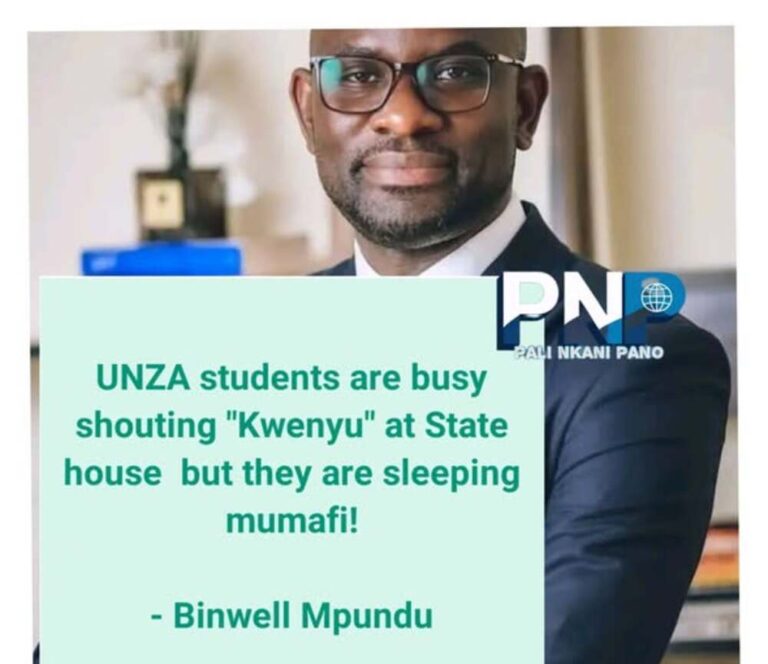
Engagement with students at the University of Zambia this week became a focal point of this critique. Rather than addressing policy or offering visionary alternatives, the interaction descended into disparagement, with one political figure dismissing students with a derogatory phrase.

Students, however, have been vocal in acknowledging tangible governmental actions that have directly improved their welfare—such as the restoration of meal allowances, an 80 percent increase in student loan coverage, the removal of registration fees, and the completion of long-delayed hostel projects.

These measurable outcomes stand in contrast to what critics describe as armchair commentary political rhetoric unsupported by a record of practical service or development, even on campus issues such as infrastructure repairs.

The episode has sparked broader reflection on what Zambia should expect from its emerging leaders. Political relevance, commentators argue, must be earned through respectful debate, policy substance, and accountable service—not through insults, sensationalism, or theatrical confrontation.

If young leaders aspire to national trust and responsibility, the path forward lies in embracing humility, focusing on constructive solutions, and committing to dignified engagement. Only then can they fully contribute to the country’s development with the integrity and honor that true leadership demands.

Bystander Advises MPs to Choose Jail Over Paying K50,000 Court Fine

1
A bystander at the Lusaka Magistrates Court offered unexpected advice to two lawmakers yesterday, suggesting they choose a three-month prison sentence over paying a K50,000 fine each for failing to produce PF social media figure Emmanuel Mwamba in court.

Members of Parliament Andrew Mukosa (Chinsali Constituency) and Anthony Kasandwe (Bangweulu) had previously pledged to ensure Mwamba’s court attendance if he were granted bail. However, Mwamba has since remained absent and at large, frequently appearing only through his online podcast.

Following months of non-compliance, Magistrate Mbuywana Sinvula ruled the two sureties in contempt of court, ordering them to pay K50,000 each within 48 hours or face a three-month simple imprisonment.

After the ruling, a budget-conscious onlooker reportedly approached the MPs, advising them to serve the jail time rather than “waste” the money. MP Mukosa shared the encounter, quoting the man as saying, “Boss, just serve the sentence rather than paying K50,000.”

The contempt charge stems from a bench warrant issued against Emmanuel Mwamba, who is accused of seditious practices for a Facebook post published on November 4, 2023. The State alleges the post, which called for mass action and a national shutdown following a political declaration by Matero MP Miles Sampa, was likely to incite violence or disrupt public order. Mwamba has maintained that his call for protests was lawful and democratic.

Zambia Announces Reset of U.S. Partnership Following Major Aid Commitment

0

With the United States committing over US$2 billion in grants to Zambia over the next five years, President Hakainde Hichilema has announced that Zambia is ready to reset and deepen its strategic relationship with the U.S.

Speaking yesterday when U.S. Assistant Secretary of State for Economic, Energy, and Business Affairs Caleb Orr called on him at State House, President Hichilema emphasized that a renewed focus on foreign aid directed through government channels is highly significant for Zambia.

“We are talking about emphasizing things that will accelerate, as you rightly said, the development potential of this country,” the President said.

He expressed optimism about the visit, acknowledging the longstanding partnership between the two nations and the preparatory work led by U.S. Ambassador to Zambia Michael Gonzales. President Hichilema affirmed his administration’s firm commitment to this reset, looking forward to a successful revitalization of bilateral ties.

The head of state also praised historic U.S. support for Zambia’s health sector while acknowledging past challenges in implementation. He assured that his New Dawn administration is actively working to address these hurdles.

Zambia aims to foster a deepened, strategic cooperation with the United States that delivers tangible and mutual benefits for both countries.

Court Upholds Ruling: No Unfair Dismissal After Fixed-Term Contract Ends

1

LUSAKA – The Court of Appeal has affirmed a High Court decision that a Finance Manager whose two-year fixed-term contract expired without renewal was not unlawfully dismissed.

The manager, employed by Livestock Services Cooperatives Society, claimed her contract was not renewed because she had previously reported her supervisor for alleged sexist remarks. An internal board had investigated the complaint and dismissed it as frivolous.

As her contract approached expiry, some of her responsibilities were reassigned while she was on leave. Upon expiry, she was notified that the contract would not be renewed, despite no such clause being specified in the original agreement.

She later took the matter to the High Court, arguing that the non-renewal amounted to wrongful, unlawful, and unfair dismissal, and even claimed it was a form of redundancy. Both the High Court and a three-judge panel of the Court of Appeal dismissed her claims.

In its delivered last month, the appellate court stated: “The record of appeal shows that the Appellant was not dismissed. She worked until her contract period expired.”

The judges found that she did not prove any statutory breach or substantiate the allegation of sexist remarks. They stressed that Zambian law does not compel an employer to renew a fixed-term contract once it ends.

The court described her claims as vague and speculative, adding that she appeared to be “merely fishing and hoped that one of the claims would stick.” She was ordered to pay her former employer’s legal costs.

The case, Musonda v Livestock Services Cooperatives Society (Appeal No. 165/2023), reinforces that the expiry of a fixed-term contract is not a dismissal, and renewal is not guaranteed.

Volunteer Doctors to Withdraw Services Nationwide Over Unfulfilled Recruitment Promise

1

Volunteer doctors across Zambia are set to withdraw their services this Friday in protest of the government’s failure to fulfill its promise of recruiting them into formal positions.

Resident Doctors Association of Zambia (RDAZ) President, Dr. Paul Chibwe, clarified that this action is not a strike but a “cry for dignity.” In a statement, Dr. Chibwe explained that the decision is driven by the extreme strain on hundreds of volunteer doctors who have continued working under untenable conditions while waiting for promised employment.

He noted that earlier this year, following a nationwide service halt by unemployed health workers, the Ministry of Health assured stakeholders that the recruitment of doctors and other health personnel would be completed within 2025. This assurance was later reinforced by a Presidential Address, which restored hope among both the volunteer doctors and the communities they serve.

Acting in good faith, the volunteer doctors returned to their posts out of loyalty and a commitment to patient care, despite the unimproved conditions. However, with only 23 days remaining in the year, this commitment to recruitment has not been met with concrete action.

Dr. Chibwe stated that the government’s silence has caused significant emotional and professional distress to the doctors and jeopardizes patient care. He announced that, following extensive consultations, all volunteer doctors will down tools effective Friday, December 19, 2025.

He emphasized that this action is not against the nation but a plea for dignity, clarity, and fairness, asserting that no health system can sustainably rely on unpaid labor and that professionals cannot work indefinitely without security or recognition.

Home Deliveries Worry Petauke Health Authorities

0

Authorities in Petauke District of Eastern Province have bemoaned the high numbers of home deliveries being recorded in the district.

Petauke District Commissioner (DC) Martha Mulenga says the trend is a threat to both maternal and neonatal health.

She was speaking during the Catholic Relief Services (CRS) – supported fourth quarter maternal and perinatal death surveillance response meeting, for Lusangazi and Petauke Districts.

“It has come to our attention that both districts are recording a lot of home deliveries, and we are supposed to find a solution as a Committee, together with their royal highnesses. Just three days ago, I received complaints that Petauke urban areas are recording a lot of home deliveries,” Ms Mulenga said.

And Chief Nyamphande who was represented by Joyce Mwanza, attributed this trend to the demands made by health institutions during delivery.

“They demand to bring six pieces of brand new materials (Chitenges). This scares some people off, especially those who cannot afford those items at the time they are needed,” she lamented.

Meanwhile the CRS Senior District Project Officer, under Mayi na Mwana II project, Stanley Sampa, said the institution had carried out a survey to ascertain why the district is in such a position.

Mr Sampa indicated that most reasons bordered on the individual women’s attitude.

“We did a survey where we followed up all women who delivered from home. So, most of the reasons being given are just excuses. You find that a person who stays just half a kilometer from a clinic delivers from home and when we tried to inquire, we were told it is because of transport challenges, he said.

“This behaviour has more to do with attitude. The other thing we noted is that the earlier established by-laws are not being implemented,” Mr Sampa added.

Meanwhile, Chief Mumbi has called for effective communication as a remedy to the situation.

He said in his Chiefdom, the numbers of home deliveries have reduced as a result of effective communication amongst his people, the traditional leadership and the health personnel.

“The number of home deliveries has dropped now in Mumbi chiefdom because we emphasise, especially when we hold meetings, we communicate effectively to the households and all those who are in charge to make sure they keep an eye on ladies who need to go for maternal services, to make sure they do that,” he said.

No decomposed body at Mansa hospital mortuary-PS

0

Government has dispelled false, misleading and alarming statements circulating in some sections of the media and on social platforms alleging that bodies have been decomposing at Mansa General Hospital due to load shedding.

Luapula Province Permanent Secretary, Prudence Chinama, said Mansa General Hospital is on uninterrupted power supply by ZESCO and that the facility is equipped with efficient automatic power backup systems in the event of power failure.

The media reports that Ms Chinama was reacting to a news story published in the News Diggers Online Newspaper quoting a Mansa based Catholic Priest, Andrew Mukosa, claiming he had been holding funerals of decomposed bodies in Church due to load shedding at the health facility.

“My office wishes to categorically dispel the misleading and alarming statements circulating in the media and on social platforms alleging that bodies have been decomposing at Mansa General Hospital due to load shedding. These claims are false, unfounded and do not reflect the true operational status of the hospital’s power supply or mortuary facilities,” Ms Chinama explained.

Ms Chinama clarified that Mansa General Hospital is not subjected to load shedding as the facility remains on an uninterrupted power line adding that in the rare event of unexpected supply disruption, the facility is equipped with a highly efficient automatic backup power system ensuring that critical departments such as Intensive Care Unit (ICU), oxygen plant, theatres and the mortuary remain fully powered at all times.

She further said there has been no report from hospital management, mortuary staff, or bereaved families indicating any case of body decomposition resulting from power failure.

“According to verified records, the mortuary currently houses 14 bodies, including two unclaimed bodies under processing by relevant authorities. Despite the age of the unit, the facility’s refrigeration system remains functional and effective, as confirmed through routine checks and the latest operational report,” Ms Chinama said.

Ms Chinama has since expressed concern over individuals circulating falsehoods, saying they do not mean well for the people of Luapula or the country at large.

“…misinformation of this nature undermines public confidence in essential health systems, particularly when hospitals depend on stable power to sustain life-saving equipment and preserve the dignity of the deceased,” Ms Chinama said.

The Permanent Secretary has also challenged members of the public, clergy and media to verify information through official channels before disseminating it.

And Mansa General Hospital Medical Superintendent, Marcford Chipili said the hospital continues to operate at full capacity with no incident of decomposed bodies.

Dr Chipili disclosed that the hospital is exempted from ZESCO load shedding and has solar and generator backups to keep critical departments such as the mortuary fully electrified.

“At no time is this hospital going to run without power. As you know we are not load shedded and we have power backups with solar and genset at almost all the departments,” Dr Chipili said.

Chief Madzimawe denounces patriarchal society beliefs

0

Chief Madzimawe of the Ngoni people in Kasenengwa district in Eastern Province has denounced patriarchal society where it is deemed as a dominant way of life in tradition.

Speaking to the media about the ongoing 16 days of Activism against Gender-Based Violence (GBV), the traditional leader said there is no Zambian culture that allows a husband or father to corporal punish his wife or kids in the name of discipline.

He said it is inhuman and selfish for men to mete out corporal punishment to anyone in their families, noting that the Zambian law has always denounced such cultural practices.

The traditional leader said some people should have their mindset educated and taught that physical, financial and emotional violence should not be entertained in homes.

He further said people should also know that physical violence is not part of discipline and it is not a way to show commitment and respect amongst married spouses.

Chief Madzimawe said traditional leaders have tailored programmes which have been formulated into chiefdom by-laws in line with the Zambian constitution.

He has since urged Zambians to unite and fight GBV, noting that working in isolation will defeat the purpose of combat.

“Non-governmental organisations, religious groups, government agencies and traditional leaders should come together and do a programme that targets the community and their needs.

Targeting the mindset of young people will be a gateway to eradicating and reducing cases of GBV in the future,” he said.

Chief Madzimawe observed that instead of using their strengths towards abuse, men should target energies towards eradicating poverty which will be a great drive for the economy in Zambia.

Sureties Ordered to Pay K50,000 Each as Mwamba Skips Court in Shutdown Case

6

Zambia: Sureties Ordered to Pay K50,000 Each as Mwamba Skips Court in Shutdown Case

LUSAKA — The Lusaka Magistrate’s Court has directed two Members of Parliament to each pay K50,000 after failing to ensure the appearance of Patriotic Front Chairperson for Information and Publicity Emmanuel Mwamba in a case involving seditious practices. The court warned that failure to comply within 48 hours could result in contempt of court charges and possible imprisonment.

This case has drawn significant attention in Zambia, highlighting the legal responsibilities of public officials.

Magistrate Mbuywana Naiza Sinvula issued the order against Bangweulu MP Anthony Kasandwe and Chinsali MP Andrew Mukosa, who had stood as sureties for Mwamba’s bail. The directive follows Mwamba’s repeated absences from scheduled court proceedings. A bench warrant has since been issued for his arrest.

Mwamba faces charges stemming from a Facebook post published on November 4, 2023. The State alleges the post was likely to incite disaffection against the administration of justice in Zambia and had the potential to provoke violence or actions prejudicial to public order. The post called for mass protests and a national shutdown in response to Matero MP Miles Sampa’s declaration of himself as PF president.

Mwamba maintained that his call for public action was a lawful exercise of democratic rights. In a statement, he said: “We have noted statements from State House and from the Zambia Police responding to our call for mass actions and promoting a day of national shut down in order for Zambians to protect the Constitution, Democracy and the Rule of Law.”

He argued that such expressions fell within the bounds of freedom of speech. However, the court has treated the matter as a criminal offence under provisions related to seditious practices.

Kasandwe and Mukosa entered into a recognisance agreement when Mwamba was granted bail, pledging to guarantee his attendance at all court sessions. Magistrate Sinvula ruled they had breached that obligation by failing to produce him or explain his absence.

The K50,000 forfeiture per surety is a standard enforcement measure under Zambia’s criminal procedure when bail conditions are violated. The funds are payable to the state unless Mwamba voluntarily surrenders before the deadline, which the court has not indicated would reverse the penalty.

As of Monday, December 8, 2025, Mwamba remains at large. The Zambia Police have not disclosed whether active efforts are underway to execute the bench warrant.

Parliament has not issued a statement regarding the conduct of its two members implicated as defaulting sureties. The Patriotic Front has also not released an official comment on Mwamba’s absence or the court’s ruling.

This case underscores the legal risks associated with using social media to mobilise mass civil disobedience, even when framed as a defence of constitutional principles. The prosecution’s continued pursuit of the charge signals the state’s position that calls for national shutdowns may cross into prohibited speech under current law.

The matter remains pending before the Lusaka Magistrate’s Court.

Zambia, U.S strengthen health, technology partnership

1

Zambia and the United States have reaffirmed their commitment to strengthening partnerships in health and technology.

President Hakainde Hichilema said the two countries have great potential for cooperation in many areas such as shared values of their citizens’ wellbeing, peace and cooperation among others.

President Hichilema said this when United States of America Assistant Secretary of State for Bureau  Economic, Energy and Business Affairs, Caleb Orr,  paid a courtesy on him at State House today.

The President emphasised the importance of the US-Zambia partnership and expressed confidence that the two countries would work together in the health services sector, including health reforms, and explore new opportunities for private partnerships.

“We are happy to provide a private partnership and it is very important to us, and we are prepared for this,” he said.

Mr Hichilema noted that technology is very important in driving national development.

The meeting between President Hichilema and Mr Orr aimed to strengthen ties between Zambia and the US, with both countries expressing enthusiasm for future cooperation.

And United States of America Assistant Secretary of State for Bureau Economic, Energy and Business Affairs, Caleb Orr, disclosed that the U.S is offering a $2 billion grant package contingent on Zambia for implementing specific reforms and demonstrating reciprocal commitment to economic transparency and growth.

“We are offering a curated package of technical support to inform, enact and implement key reforms that will unleash greater investment, create jobs and drive private sector led economic growth and development outcomes,” he said.

Mr Orr also said the United States is eager to deepen economic and business collaboration with Zambia which will focus on innovative energy solutions and private sector driven growth that can boost health systems and technological advancement.

He said the partnership aims to leverage U.S investments in clean energy and digital infrastructure, creating jobs and fostering sustainable development in Zambia.

“We come to the table in good faith and will work together with your government in earnest and success of this new approach would position the country as a bold leader that will transform its economy for the sake of future generations,” he added.

Mr Orr further said the U.S is offering Zambia with the choice to be the model of the future of U.S. foreign assistance that delivers tangibly for both countries.

Mambwe set to vaccinate 10,000 cattle against FMD

0

The Department of Fisheries and Livestock in Mambwe District of Eastern Province says it has an annual target of vaccinating 10,000 cattle against Foot and Mouth Disease (FMD).

Mambwe District Fisheries and Livestock Director, Gloria Mulenga, states the district did not have a budget for animal stocking and was only conducting vaccination exercises in order to contribute to the increase in live animal population target of 7 million by 2026 as part of the Presidential priority areas.

She has told the media that other collaborating partners such as ADRA were assisting in stocking of animals such as goats through their restocking programme.

Dr Mulenga said her department had so far vaccinated 7,940 cattle against FMD and aims to strengthen extension services as a measure to reduce livestock deaths.

Dr Mulenga further indicated that the district only had sporadic cases of East Coast fever, African swine fever and Trypanosomiasis which were managed through farmers and extension officers, who were assisting in early disease detection, diagnosis and treatment in order to control spread and any possible outbreak.

Mungwi DC counsels civil servants

0

Mungwi District Commissioner, Muma Musonda, has cautioned civil servants against engaging themselves in politics ahead of the 2026 general elections.

Mr Musonda says civil servants should maintain high levels of professionalism as they execute their duty ahead of the 2026 elections.

He indicated that civil servants have the duty to support and implement government policies and developmental projects.

The media reports that the District Commissioner said this when he officiated at the District Development Coordinating Committee meeting held at the Council Chamber in Mungwi.

Mr Musonda further urged civil servants to take government’s programmes seriously.

He has since emphasised the need for civil servants to find ways of highlighting government policies to the public through several means such as radio programmes.

Mungwi Town Council Secretary, Cleophas Mbotwa, expressed concern that some key stakeholders were absent during the planning meeting.

He noted that involvement of all key stakeholders during such an important meeting is critical because it allows for effective decision making.