Tuesday, June 16, 2026
23.9 C
Lusaka
Home Blog Page 217

Veep Lauds Russian humanitarian food assistance

5

The Russian Government in collaboration with the World Food Programme (WFP) has donated humanitarian food assistance to Zambia’s valued at two million United States Dollars.

The consignment includes 93.8 metric tons of vegetable cooking oil and 648 metric tons of yellow split peas.

And in receiving the donation, Vice President Mutale Nalumango thanked the Russian Government for the humanitarian assistance rendered to Zambia.

The media reports that Mrs Nalumango said that close to two million people are in need of food assistance.

“The 2025 index vulnerability and needs assessment report indicates that approximately close to two million people require some form of food assistance,” said Mrs Nalumango.

She explained that 50 districts across nine provinces are still in need of food assistance.

Mrs Nalumango explained that the 50 districts are part of the districts that were affected by the 2023 to 2024 drought.

The Vice President indicated that not all the districts have fully recovered from the impact of the drought.

She assured the Russian government that the humanitarian assistance will be distributed to intended communities affected by the drought.

And speaking earlier, Russia’s Ambassador to Zambia, Azim Yarakhmedov said the humanitarian assistance is meant to cushion communities from the impact of the drought, induced by climate.

Mr Yarakhmedov said Russia has a duty to support friendly states like Zambia.

The Russian government pledged to continue supporting Zambia’s efforts aimed at strengthening food security.

Government laud Airtel Zambia for investing 107 Million US dollars

0

Minister of Science and Technology, Felix Mutati has commended Airtel Zambia for its significant investment of US$107 million aimed at expanding network infrastructure through the construction of additional towers nationwide.


Speaking during a tour at Nyumba yanga and Chalala Network tower sites, Felix Mutati expressed optimism that the investment will improve the network in the country and create more tax revenue for the government to keep powering development in the country.


The media reports that Mr Mutati disclosed that the US$107 million investment will go towards the construction of 406 network sites, a move expected to significantly enhance the quality of connectivity and service delivery across the country.


Mr Mutati said the investment will boost employment in Zambia by creating jobs for local people, while also spurring additional opportunities in related industries that will support skills development and wider economic growth.


The Minister disclosed that the construction of network towers no longer requires approval from the Zambia Environmental Management Agency (ZEMA), a process that previously took nearly six months to complete.


“We are moving with urgency to provide our people with high-quality network services,” Mr Mutati said.


The Minister applauded Airtel Zambia for investing in solar energy, noting that the initiative helps tackle the country’s power challenges and keeps network towers operational around the clock.


Meanwhile, Airtel Zambia’s Managing Director, Hussam Baday, disclosed that 126 out of the planned 406 sites have already been constructed and are now fully operational.


He stated that all sites are expected to be completed by March next year, emphasising that the company’s engineers are fully capable of meeting the deadline.


He also revealed that the $107 million investment marks Airtel Zambia’s largest single-year expenditure, underscoring the company’s commitment to closing the country’s digital divide.


Mr Hussam assured customers that the investment was driven by the company’s awareness of concerns over poor network quality and their commitment to addressing them.


The move follows increasing public dissatisfaction with Airtel’s network services across the country, as customers have raised complaints about frequent disruptions and poor connectivity, prompting the company to invest heavily in improving its infrastructure.

ECZ commits to inclusive electoral process

0

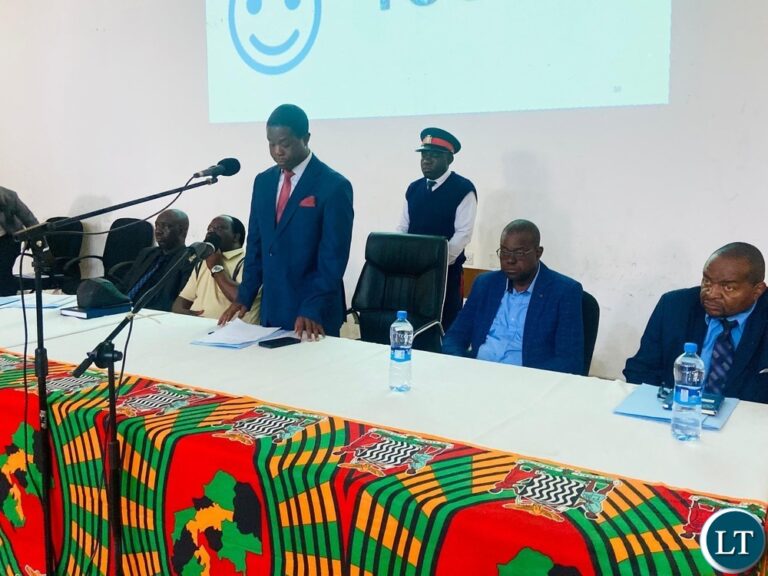
Electoral Commission of Zambia (ECZ) has reiterated its commitment to an inclusive electoral process, which acts as a cornerstone of a thriving democracy.

Speaking at the Women’s Conference for Chawama Parliamentary By-elections in Lusaka, ECZ Assistant Electoral Officer, Victor Kagoli says that the commission has implemented deliberate policies that empower women at every stage of the electoral process.

“We are actively promoting women’s representation in electoral administration, ensuring that their voices are heard and are valued,” added Mr Kagoli.

Mr Kagoli added that the commission is working with communities and other stakeholders to amplify voices of women and promote civic engagement.

He said that ECZ has continued to champion safe and fair elections that allow women to cast their vote and contest for leadership positions with confidence.

Gender Division Director of Gender Development Henry Nkhoma urged the women to join women led groups that promote information sharing and fund sourcing.

He said that there is a need to promote inclusivity and support women to take part in law making and national development.

He said that participation of women in the civic process allows for creation of gender responsive legislations that respond to issues affecting women.

Zambia and China Sign Metrology Cooperation Agreement

0
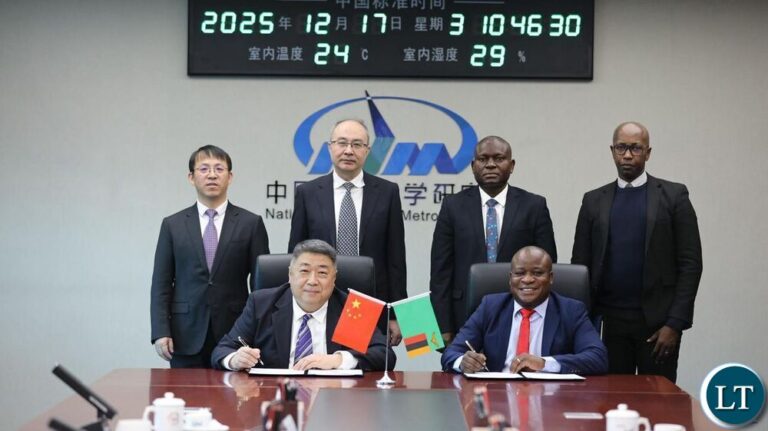
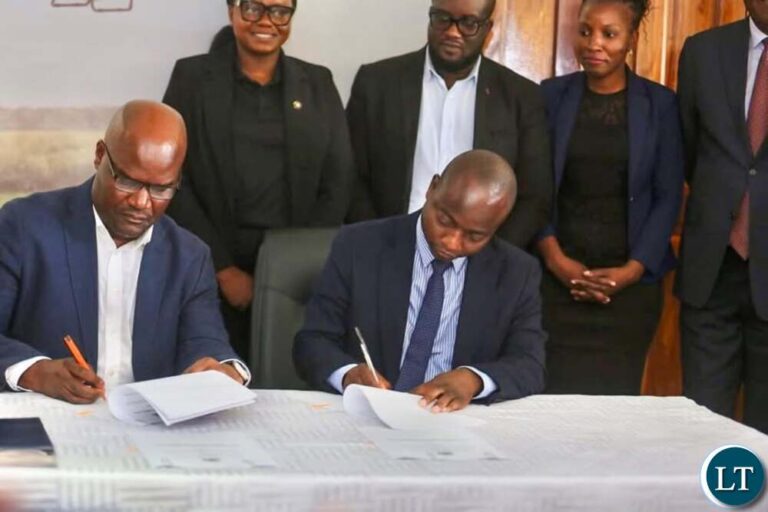
The Zambia Metrology Agency (ZMA) has entered into a cooperative agreement with China’s National Institute of Metrology (NIM). A Memorandum of Understanding was signed in Beijing on Thursday by ZMA Executive Director Humphrey Nkobeni and NIM Director General Li Wentao.

According to a statement from ZMA Senior Public Relations Officer Sandra Mwila, the agreement is designed to strengthen collaboration in metrology research, calibration services, testing, certification, and technical capacity development. Mwila stated the partnership is expected to advance industry, trade facilitation, innovation, and quality infrastructure in both nations.

The signing ceremony was attended by senior officials from both institutions, including Guo Huanxin, the Director General of the Department of Metrology under China’s State Administration for Market Regulation. Guo noted the agreement adds metrology to the strategic areas of cooperation between Zambia and China and will promote practical work in food safety, capacity building, scientific research, and international metrology comparisons.

ZMA Board Chairperson Musamala Nyirongo said the cooperation will enhance measurement accuracy, strengthen consumer protection, and support fair trade. Nyirongo also affirmed the agency’s commitment to good governance and effective implementation of the agreement.

ZMA Executive Director Humphrey Nkobeni described the MoU as strategically important for Zambia, providing a framework for technical cooperation, knowledge exchange, and capacity development. He said the partnership will strengthen Zambia’s traceability to international measurement standards and improve local calibration, testing, and certification services.

NIM Director General Li Wentao stated the agreement will deepen cooperation between the two national metrology institutions. The National Institute of Metrology is China’s premier body for measurement science, operating under the State Administration for Market Regulation, and is responsible for establishing national measurement standards.

logy Agency (ZMA) has entered into a cooperative agreement with China’s National Institute of Metrology (NIM). A Memorandum of Understanding was signed in Beijing on Thursday by ZMA Executive Director Humphrey Nkobeni and NIM Director General Li Wentao.

According to a statement from ZMA Senior Public Relations Officer Sandra Mwila, the agreement is designed to strengthen collaboration in metrology research, calibration services, testing, certification, and technical capacity development. Mwila stated the partnership is expected to advance industry, trade facilitation, innovation, and quality infrastructure in both nations.

The signing ceremony was attended by senior officials from both institutions, including Guo Huanxin, the Director General of the Department of Metrology under China’s State Administration for Market Regulation. Guo noted the agreement adds metrology to the strategic areas of cooperation between Zambia and China and will promote practical work in food safety, capacity building, scientific research, and international metrology comparisons.

ZMA Board Chairperson Musamala Nyirongo said the cooperation will enhance measurement accuracy, strengthen consumer protection, and support fair trade. Nyirongo also affirmed the agency’s commitment to good governance and effective implementation of the agreement.

ZMA Executive Director Humphrey Nkobeni described the MoU as strategically important for Zambia, providing a framework for technical cooperation, knowledge exchange, and capacity development. He said the partnership will strengthen Zambia’s traceability to international measurement standards and improve local calibration, testing, and certification services.

NIM Director General Li Wentao stated the agreement will deepen cooperation between the two national metrology institutions. The National Institute of Metrology is China’s premier body for measurement science, operating under the State Administration for Market Regulation, and is responsible for establishing national measurement standards.

Government Records Development Progress in Northern Province

0

 Government says it has recorded notable progress across several sectors in Northern Province.

Northern Province Minister Leonard Mbao notes that advancements, particularly in the road sector, were playing a critical role in driving the province’s overall development.

Mr, Mbao cited the progress made in the road sector to the Constituency Development Fund (CDF).

He explained that all the local authorities in the province have taken advantage of the increased CDF allocation to procure earthmoving equipment, which he said has enabled councils work on feeder roads.

The media reports that the minister said this in a speech read on his behalf by Northern Province Deputy Permanent Secretary Beauty Undi-Phiri during the 4th quarter Provincial Development Coordinating Committee (PDCC) meeting in Kasama today.

Mr Mbao observed that the developments have helped to reduce post-harvest losses, lower transport costs, and enhance rural participation in the provincial economy.

Northern Province Minister has also  cited the installation of an oxygen plant at Kasama General Hospital, construction of a micro-burn incinerator in Mbala, stabilisation of drug supplies, and installation of maternity annexes in Mbala, Kasama, Luwingu and Chilubi districts as other major achievementsthe province has scored.

“The construction an oxygen plant is one of major sucesses in the province, people used to travel long distances for oxygen, the  upgrading of health facilities, supported by the recruitment of over 24,000 health workers nationally has helped the province too,” he said.

He added that the province has also increased access to education following the implementation of the free education policy.

“The province has increased enrolment by 122,441 learners between 2021 and 2025, representing a 33.3 percent rise. The province has also received 5,468 teachers since 2022, reducing the pupil-teacher ratio from 1:67 in 2021 to 1:21 in 2025,” he revealed.

He added that over 26,000 desks were also procured in 2025, while nine-day secondary schools are under construction with support from the Zambia Education Enhancement Project (ZEEP).

The Minister said the province in the 2024/2025 farming season recorded a bumper maize harvest.

He revealed that the province managed to purchase over 323,000 metric tonnes of maize against a target of 199,100 metric tonnes.

He  welcomed the reduction of ZESCO domestic electricity connection fees from over K4,000 to K300, describing it as a landmark, and people centred policy that will boost small businesses, rural households and youth entrepreneurship.

He has however, expressed concern over low voter registration in the province, which he said stood at 730,230 voters, representing eight percent of the national total.

“As we enter 2026, let us do so with courage, discipline and unity, let us remain accountable and united in driving development in Northern Province,” he said.

And Northern Province Permanent Secretary Bernard Mpundu, who was represented by Northern Province Assistant Secretary Jordan Mwenya, called for strengthened coordination, accountability and partnerships to accelerate inclusive development.

Mr Mpundu explained that the PDCC remains an important forum for sharing progress on ongoing projects across sectors, introducing new initiatives aimed at accelerating development, and identifying opportunities for deeper collaboration among government departments, cooperating partners and community stakeholders.

“This platform allows us not only to share progress but also to harmonise our strategies, ensure accountability and reaffirm our shared commitment to delivering meaningful and sustainable outcomes for the people of our province,” Mr Mpundu said.

Mr Mpundu emphasized that sustained collaboration and a strong spirit of partnership were essential to driving tangible results that improve the wellbeing of communities across Northern Province.

Kabwe Council Awards 763 CDF Bursaries

0

Kabwe Municipal Council (KMC) has awarded skills development bursaries to 763 students under the 2025 Constituency Development Fund (CDF).

Kabwe Municipal Council Director of Planning Chansa Mwila said in an interview with the media that the beneficiaries have been sponsored to undertake various skills-related courses.

Mr Mwila said the sponsorship of 763 students was a clear demonstration of the seriousness that the government attaches to skills development among citizens.

“I am happy to announce that the Kabwe Municipal Council has awarded skills development bursaries to 763 students in the district. This has been done through the 2025 CDF allocation,” Mr Mwila said.

He said the onus is now on beneficiaries of training to use the opportunity to acquire knowledge and skills that will better their living conditions.

He stated that the local authority will continue with its prudent management of CDF funds for the benefit of the residents of both Bwacha and Kabwe Central Constituencies.

Mr Mwila commended the two CDF committees for their commitment towards implementing impactful projects in the respective constituencies.

Government has increased the CDF from K1.6 million to K40 million to accelerate development at constituency level in line with the decentralization policy.

Govt, FQM ink deal

0

Government has signed a Memorandum of Understanding (MoU) with the private partners on cooperation to promote technological and scientific innovation for sustainable mining practices in Zambia.

Ministry of Technology and Science Permanent Secretary Brilliant Habeenzu signed on behalf of the government, while FQM Chief Executive Officer Anthony Mukutuma signed for the private partners.

This mutual agreement is being facilitated by the MineTech Hub, a collaborative effort between the government, through the Ministry of Technology and Science and the NISIR.

Minister of Technology and Science Felix Mutati who witnessed the signing ceremony at the Timbuktoo mine Tech open day organised by the National Institute for Scientific and Industrial Research (NISIR), called for stronger collaboration in the mining sector.

The Minister also toured and inspected NISIR laboratory and computer centre to familiarise himself with the operations where he learnt that the Research (NISIR) has branches where it is excelling in nine other countries in Africa.

Mr Mutati said there is a need for innovations and technology to respond to the growing demands surrounding mining.

He said Zambia will soon become a centre of technological hub in mining in Africa owing to massive investment in technology and science.

He observed that innovation is booming especially from individuals and corporate companies who are developing more innovations in the sector.

The MineTech Hub in Zambia is a collaborative effort between the government, through the Ministry of Technology and Science, and is being implemented by NISIR.

The Minister also commended the United Nations Development Programme for mobilising resources, to realise that there is potential in technology through ambitious innovations.

Speaking, United Nations Development Programme Resident Representative James Wakiaga said the MineTech Hub provides a platform to address critical challenges in mining, drive technological and entrepreneurial advancements, and foster sustainable industrial transformation across the continent.

Mr Wakiaga disclosed that the UN supported 10 individuals in viable innovations.

Mr Wakiage expressed gratitude that innovations in technology have created employment opportunities for thousands of people in Zambia.

He pledged the UN’s support to assisting Zambia meet her needs where there are ‘grey areas’ possible to unlock the nation.

The Mine Tech hub helps promote innovation and research commercialisation by highlighting the bub’s role in supporting innovators, researchers and entrepreneurs to bring market-ready solutions to life.

It also showcases applications that can utilize state-of-the-art facilities to translate ideas into practical solutions alongside attracting strategic partnerships and investment by presenting tangible opportunities for collaboration and innovation programming co-creation.

Hichilema signs Constitution Amendment No. 7 into law and tells Zambians to end the quarrel

15

Hichilema signs Constitution Amendment No. 7 and tells Zambians to end the quarrel

LUSAKA, Zambia, December 18, 2025

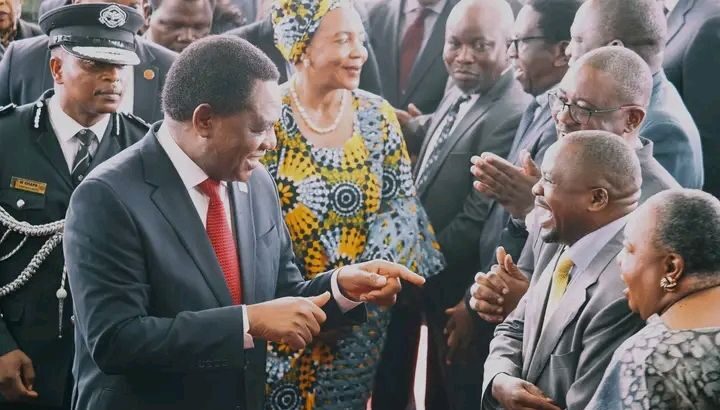
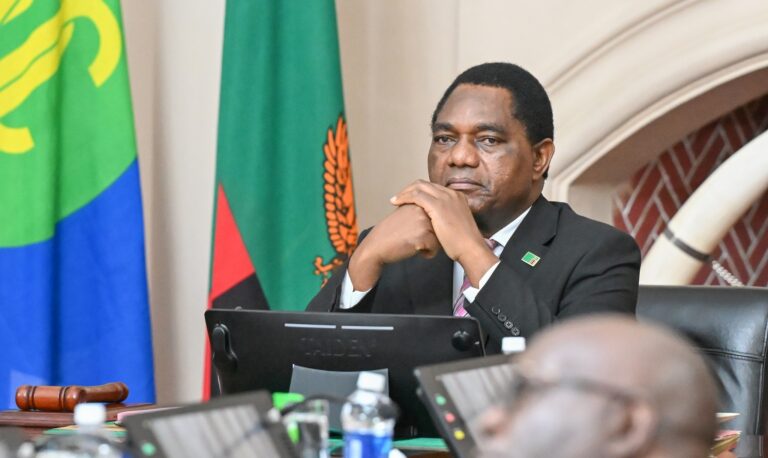
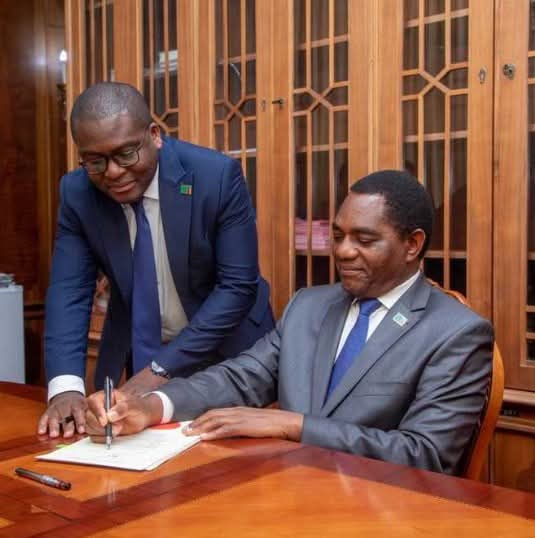
President Hakainde Hichilema on Thursday assented to Constitution Amendment Bill No. 7 of 2025 and urged Zambians to treat the national argument around the measure as settled, shifting attention to electricity supply, decentralised development and economic production.

“After signing, now that is law, I declare that the debate is now behind us,” the President told the ceremony.

A central thread of the address was an insistence that the reform should not be framed as a victory for one party, one leader, one ethnic group or one church. “It’s for the totality of Zambian citizens,” he said, after listing several ethnic identities to emphasise that the moment was national rather than sectional.

He returned repeatedly to that same point, describing the process as belonging to “all the Zambian citizens,” and warning against reading the amendment through partisan lenses.

The speech also pushed back against claims that had circulated during the debate. The President dismissed assertions that Bill 7 included an attempt to extend the presidential term to seven years, remove the 50 percent plus one requirement, or eliminate the running mate arrangement.

“There was nothing in here of that nature,” he said on the term extension claim. On the other allegations, the message was similar, describing them as angles used to scare or divide citizens rather than reflect the content of the amendment.

Instead, the President framed the intent as tackling “non contentious issues” and adding representation for groups he described as under represented in decision making, including women, young people and persons living with disabilities. The argument was presented as additive rather than subtractive, with an emphasis on inclusion.

A notable portion of the address focused on the tone of the national dispute. The President described the argument as intense and wide, including sharp exchanges, then urged a reset.

“My call to the country, now that we’re here, is that we reflect on how we debated,” he said, asking whether citizens had been civil and truthful, and cautioning that debate should not turn into hatred or enmity. A religious illustration followed, drawing on a Biblical teaching about reconciliation before offering at the altar, to reinforce peace making as a national value after a polarising discussion.

On process, the President stated that assent should have happened earlier, around August, but was delayed to allow wider consultations. He credited the Mushabati Technical Committee for completing work within two months and described its contribution as strengthening the final outcome. He rejected claims that the committee was unlawful, presenting it as constituted under the country’s legal framework.

One concrete example used to show “give and take” involved by elections. The President disclosed a preference for removing by elections between general elections to reduce costs and focus on development, then described conceding after the committee and other Zambians maintained that by elections should remain.

That account was followed by a recap of parliamentary votes, presented as cross party. The President referenced the two thirds threshold for constitutional change, then described votes that moved the bill through readings, culminating in what was described as 135 Members of Parliament voting in favour.

From there, the address pivoted to decentralisation and development. A story from a chiefdom visit was used to argue that community level control can reduce project costs and expand delivery. In that example, a school previously costing about K2 million was described as being delivered at about K500,000, allowing more classrooms to be built with the same envelope.

“Why would you be against taking money to the communities instead of Lusaka deciding everything?” the President asked, tying the point to delimitation and an increase in constituencies, which was presented as a pathway to broader distribution of resources.

Electricity dominated the closing sections. The President described citizens’ demands for power to support small businesses and for health centres to function, including the survival needs of children on oxygen. The power crisis was attributed to drought, described as the worst in living memory, and the response was framed as diversifying generation sources, with solar and coal both mentioned.

Specific projects cited included Mamba Phase 2 and the Chisamba development, with remarks that Chisamba Phase 1 was completed and Phase 2 was under construction. The President also referred to unlocking transmission capacity through engagement with Zimbabwe, suggesting that the public had already begun to feel an improvement.

A broader economic sweep followed, citing debt restructuring, recovery in mining, tourism growth “from 500 arrivals in 2021 to 2.5 million tourists arriving this year,” and foreign reserves reaching an all time high. The address also referenced fertilizer self sufficiency and factory plans for domestic medicine production, framed as part of a shift toward production rather than consumption.

The President closed with unity language and a work ethic appeal, calling for “unity” and urging citizens to advance love over hatred. A final integrity pledge came in blunt terms: “There will be no cheating,” followed by a rejection of theft or deliberate wrongdoing, and an assurance that mistakes would be met with correction rather than deception.

“With teamwork, unity of purpose, teamwork, hard work, respect for each other, we’ll be OK,” he said, ending with a blessing for Zambia and thanks to the audience.

U.S. Announces New Visa Restrictions for Zambia

1

The United States has extended its immigration restrictions to include Zambia, according to a new proclamation signed by President Donald J. Trump. The action places Zambia on a list of nations whose citizens will face partial visa limitations.

The White House order expands a policy first implemented in 2025, which applies to countries assessed as having ongoing deficiencies in security screening, vetting procedures, and information-sharing protocols. U.S. officials state the restrictions are enacted to protect national security and public safety.

The new rules do not impose a complete ban on travel from Zambia. Exemptions are specified for diplomats, athletes, current lawful permanent residents of the U.S., and individuals already in possession of a valid American visa. The limitations primarily affect new applicants for certain immigrant and non-immigrant visa categories, who may now face heightened scrutiny or denial.

An official U.S. review identified specific concerns regarding Zambia’s civil documentation integrity and data-sharing systems. The evaluation process reportedly highlighted nations with unreliable birth registration, instances of fraudulent official records, and elevated rates of visa overstays.

Zambia now joins three other African nations—Nigeria, Malawi, and Zimbabwe—under similar partial restrictions. A separate, more comprehensive travel ban remains in effect for several other countries on the continent, including Somalia, Sudan, and Libya.

Analysts have indicated that the policy may create complications for travel and business relations between the two countries. U.S. administration officials describe the measures as tailored to specific national conditions and intended to encourage improved cooperation on security standards.

In Zambia, the announcement has prompted discussion regarding the international perception of the nation’s documentation systems and the potential reforms required to restore unimpeded access to U.S. visas. The Zambian Ministry of Foreign Affairs has not yet issued an official statement.

Government Launches 100MW Siavonga Solar Project

2

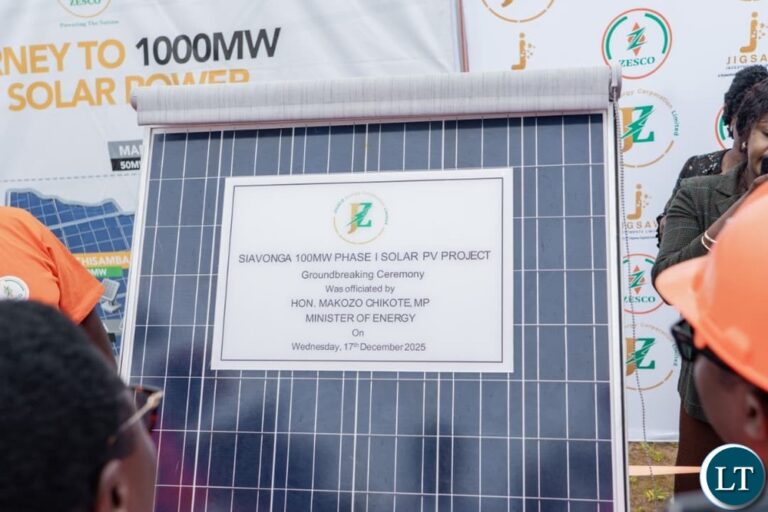
Government has officially launched the construction of the 100-megawatt Siavonga Solar Power Plant in Siavonga District, marking a major milestone in efforts to address Zambia’s power deficit.

The project is a joint venture between ZESCO Limited and JIGSCO Energy Corporation Limited, with an estimated investment of approximately US$80 million.

Minister of Energy Makozo Chikote said the project reflects Government’s commitment to diversifying the country’s energy mix, strengthening energy security, and accelerating investment in clean and renewable energy sources.

The Minister’s remarks were delivered by Ministry of Energy Permanent Secretary Arnold Simwaba during the groundbreaking ceremony held in Siavonga District, Southern Province.

“Government is moving with urgency to strengthen the energy sector through enhanced collaboration with various players and cooperating partners to secure sustainable energy supply,” Mr. Chikote said.

Mr. Chikote said lessons had been drawn from past droughts, prompting government to invest in alternative energy sources in order to reduce reliance on hydroelectric power, which currently accounts for about 80 percent of national electricity generation.

He added that clean energy investments are advancing across the country through initiatives such as the Presidential Energy Initiative, aimed at supporting the national socio-economic transformation agenda.

Zesco Limited Managing Director Engineer Justin Loongo said the project aligns with Zambia’s energy transition and climate resilience agenda and emphasized the need for development that respects land rights, community interests, and environmental sustainability.

“The project is expected to be completed within 10 months and will create about 100 permanent jobs, as well as between 600 and 1,000 jobs during the construction phase,” Engineer Loongo said.

Siavonga District Commissioner Geoffrey Jakopo reaffirmed Government’s commitment to addressing the energy deficit, saying the project will stimulate local economic growth and improve livelihoods in the district.

 The solar power plant is being installed in the Dokota area of Chief Simamba’s Chiefdom, and the event was attended by senior Government officials, traditional leaders, and representatives from ZESCO, JIGSCO, POWERCHINA, and Siavonga Town Council.

Police Intercept Illegal Livestock Movement in Sinazongwe

0

Police in Sinazongwe District have intercepted movement of livestock animals with no stock movement permit from veterinary department and clearance.

According to Southern Province Commanding Officer Moono Namalongo,  a truck loaded with coal and goats was intercepted at Sinazeze mount meru fuelling station after a tip off from an informer.

The Sino truck registration number ADF 2019 with trailer registration number 2018 belonging to Trust Worth Company was being driven by male Foster Mwale aged 40 of Mindolo area in Kitwe accompanied by his wife Vainness Chitiku also aged 40 of the same area in Kitwe.

The truck was coming from Maamba heading to Lusaka and investigations revealed that the duo jointly bought the animals from the mulungwa area in Sinazongwe.

They admitted that the animals did not have stock movement permits and a letter from the village headman where the animals were bought in the senior Mweemba chiefdom area.

They have since been detained in Police custody for the offence of restriction to movement of livestock, contrary to section 16(1) and (2) of the animal health Act number 27 of 2010.

“We have detained the two suspects and they will formally be charged and appear before court soon”. Stated the Commanding Officer in his official statement made available to the press.

He further stated that all the twelve goats and three sheep have been secured at the Police Station.

Hichilema Set to Assent to Bill 7 Today

16

President Hakainde Hichilema is scheduled to sign Constitution Amendment Bill No. 7 into law today, marking the final step in a legislative process that has drawn intense political debate and public scrutiny.

The Bill was passed by the National Assembly on Tuesday after securing overwhelming support from Members of Parliament, with 135 MPs voting in favour and 28 voting against. The approval followed the Third Reading stage in Parliament, where the Bill was adopted after months of deliberations and procedural steps.

Once assented to by the President, Bill 7 will become law, formally amending provisions of the Constitution of Zambia. The amendments are intended to adjust electoral timelines, revise procedures for filling parliamentary vacancies, and harmonise electoral processes with revised administrative arrangements.

According to parliamentary records, the Bill was introduced to address challenges arising from existing constitutional provisions, particularly those related to by-elections and the operational demands placed on the Electoral Commission of Zambia (ECZ). The amendments seek to streamline electoral processes and reduce the frequency and cost of by-elections.

During debate in Parliament, Government representatives maintained that the amendments were necessary to improve governance efficiency and align constitutional procedures with practical realities. Justice Minister Mulambo Haimbe told the House that Bill 7 was designed to close legal gaps that had previously created uncertainty in electoral administration.

The Bill also provides for the introduction of nominated Members of Parliament to represent special interests, including youth, women, and persons with disabilities. Government officials stated that this provision would enhance inclusivity and ensure broader representation in the National Assembly.

Opposition MPs strongly opposed the Bill, arguing that it lacked sufficient public consultation and raised constitutional concerns. They maintained that altering the Constitution without broad consensus undermined democratic principles and could set a precedent for future amendments driven by political convenience.

Civil society organisations and legal bodies have also expressed reservations about the Bill, questioning its timing and the scope of the changes proposed. Some groups petitioned the courts to halt the legislative process, although the Bill proceeded through Parliament following rulings that allowed the legislative process to continue.

Speaker of the National Assembly Nelly Mutti presided over the proceedings that led to the Bill’s passage. The Speaker later confirmed that all parliamentary procedures had been followed, including committee scrutiny and debate at all required stages.

With presidential assent expected today, the focus now shifts to implementation. The ECZ is expected to review its operational frameworks to align with the amended constitutional provisions. Government officials have indicated that subsidiary legislation and administrative guidelines may be issued to support the implementation of the new law.

The passage of Bill 7 has emerged as one of the most consequential legislative developments of the current parliamentary session. Supporters argue that it will strengthen governance systems and improve electoral management, while critics warn that it could have long-term implications for constitutional stability.

President Hichilema has previously stated that constitutional reforms should promote efficiency, inclusiveness, and national development. His assent to the Bill will formally conclude the legislative phase and open a new chapter in Zambia’s constitutional framework.

Security was heightened around Parliament during the final stages of debate, reflecting the level of public interest and political sensitivity surrounding the Bill. Authorities have urged citizens to engage peacefully with constitutional issues and to respect democratic institutions.

The Bill’s enactment comes at a time of heightened political engagement across the country, as parties and civic groups position themselves ahead of future electoral cycles. Analysts note that the practical effects of the amendments will become clearer once implementation begins.

The law is expected to take effect upon publication in the Government Gazette.

34 Charged With Terrorism Over Chingola Presidential Violence

8

Thirty-four people have been charged with terrorism following violent disturbances that occurred during a presidential engagement in Chingola, Copperbelt Province, according to court proceedings held before the Chingola Magistrate’s Court.

The accused were arrested after chaos erupted at Chiwempala Market on November 8, 2025, when President Hakainde Hichilema visited the area as part of official duties. Authorities allege that the suspects engaged in coordinated violent conduct aimed at disrupting the presidential programme.

Court records show that the suspects were jointly charged with terrorism, an offence under Zambian law that carries severe penalties upon conviction. The prosecution told the court that the accused persons acted in a manner that endangered public safety, damaged property, and threatened national security during the incident.

The State informed Magistrate Maybin Kapaya that the accused were involved in acts that included violent disruption of a public gathering, malicious damage to property, and riotous behaviour. Prosecutors submitted that the conduct of the accused went beyond ordinary public disorder and met the legal threshold for terrorism.

The court heard that police officers were forced to intervene after the situation at the market deteriorated, prompting the arrest of dozens of individuals suspected to have participated in the disturbances. The accused were later detained and brought before the court for formal charging.

During the initial appearance, defence lawyers objected to the terrorism charge, arguing that the alleged conduct did not amount to terrorism as defined by law. They submitted that the charge was excessive and requested that the court dismiss it or substitute it with lesser offences.

However, the State opposed the application, stating that the seriousness of the incident justified the charge. Prosecutors argued that the disruption of a presidential event constituted a grave threat to public order and national security, warranting the application of the terrorism statute.

Magistrate Kapaya ruled that the matter raised serious legal questions that required a full trial and dismissed the defence’s request to discharge the accused at that stage. The court ordered that the accused remain in custody pending further proceedings.

In addition to the terrorism charge, some of the accused are facing related counts, including arson, malicious damage to property, and riotous behaviour. The prosecution indicated that investigations were ongoing and that further evidence would be presented during trial.

The court set a date for commencement of trial and directed that all procedural requirements be complied with before the matter proceeds. The accused were remanded in custody.

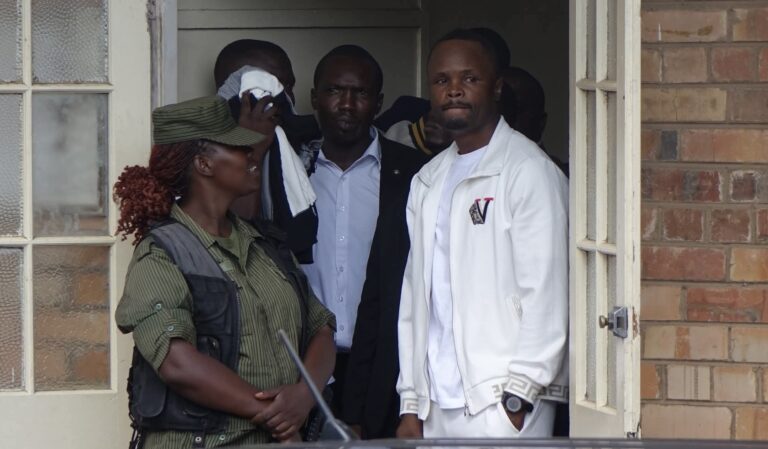
Meanwhile, police officers were seen escorting the suspects into a police truck after the court session, amid tight security at the Chingola Magistrate’s Court.

The incident has attracted national attention due to its political and security implications, coming at a time when Zambia is experiencing heightened political activity ahead of future electoral processes. Authorities have repeatedly warned against violence during political events and public engagements.

Government officials have maintained that the law will be applied firmly against individuals who engage in acts that threaten peace and security. Law enforcement agencies have reiterated their commitment to ensuring the safety of public officials and citizens during official functions.

The case is expected to test the application of terrorism laws in circumstances involving public disorder linked to political events. Legal observers note that the outcome may have broader implications for how such incidents are prosecuted in the future.

The matter returns to court on a later date for continued proceedings.a

Leaders must learn to ‘eat’ with the people; the case of one Christopher Mundia

5

Lately, a lot has been said and written about one Christopher Mundia; the able Legal Advisor to President Hichilema. Many of us would indeed attest that the deeds of Bo Mundia are a proper personification of the attributes of a good leader…..the gentleman is compassionate, very humble, and absolutely generous.

It’s quite disappointing that many of those that seek public office either as Presidents, Cabinet Ministers, Members of Parliament, Mayors, Councilors and Presidential advisors lamentably fail to meet this description!

The 2026 general elections are once again flickering on the horizon; very soon, we shall see individuals of different shades and hues aspiring as Presidents, Members of Parliament, Mayors or Councilors climb down their high horses and assume the role of ‘Santa Claus’ – become very generous all of a sudden when they’ve been eating alone all the while! You’ll see them traversing the breadth and width of our country handing-out crispy clean Bank notes to every Jim and Jack, attending each and every funeral in the neighborhood in their quest to buy coffins and donate foodstuffs or even host alcohol drinking sprees in the townships. And our people will fall for it…..what irony!

Alas, once they get whatever they wanted, they’d vanish from the face of the earth in thin air like methylated spirit and effectively resort to their snobbish ways – ducking phone calls, cruising around the townships in SUVs with tinted windows and simply neglecting to interact with the masses.

Bo Mundia isn’t the one to be blinded by the privileges of power! All this time, he has remained true to himself. Despite hobnobbing with the President on a daily basis, he remains humble and down to earth. Every day, hundreds of people – widows, grandparents, the disabled etc trek to his house daily in search of answers to their problems and challenges! Are they turned away at the gate by the menacing gun-totting Paras? Does he slam his door on their faces? Zero!

He welcomes them with open arms and offers them audience. And he’s not the one to ignore your phone calls, and if he’s busy; surely, he’ll return your calls whenever it’s convenient for him.

Why are we saying all this?

We need more of the caliber of Bo Mundia in public offices as Presidents, MPs, Mayors or Councilors, Permanent Secretaries or even as Presidential aides! We expect expect everyone aspiring for such offices to remain and humble down to earth……ever ready to mingle and eat with the masses no matter what the circumstances. If someone isn’t ready to support widows and orphans, can’t provide care to the sick or aged, then they’re in the wrong place….they don’t deserve to occupy offices as politicians or civil servants!

We are able to say all these things because we were once the beneficiaries of Bo Mundia’s utmost generosity. When we lost our mother sometime this year; we reached out to a number of people within the corridors of power. Bo Mundia is the only that responded to our SOS by sending us a message if condolences and even meeting us at the point of our need.

Bo Mundia is surely following into the footsteps of President Hichilema who has inspired many of us by undertaking charity work and, of course, supporting orphans and vulnerable children in universities and colleges from his days in the corporate world, to the difficult days in the opposition through to occupying State House, today!

Since everyone is clamouring about ‘fresh blood’ assuming the reins of power today, bo Mundia would be one of the best candidate. He would do wonders if given a chance! President Hichilema must consider nominating him as MP in the next government and further appoint him as Minister of Justice. Succession planning is very cardinal in politics; bo Mundia is one individual who would never let the President down in whatever assignment he would be considered.

In conclusion, we’d like to caution envious and jealous individuals within the corridors of power that neglect to eat with the people not to start trying to pull bo Mundia down. Salute!

Prince Bill M. Kaping’a
National Coordinator
HH Mpaka 2031!

Mineral exploration to contribute to national development

4

North-Western Province Permanent Secretary, Colonel Grandson Katambi (Retired) has reaffirmed the Government’s commitment to ensuring that the exploration of the country’s mineral resources contributes meaningfully to national development.

The media reports that Col Katambi said this is the reason the Government continues to revise mining laws in order to align them with global trends and best practices.

He was speaking during a Provincial Stakeholders Sensitisation Meeting on the new mining laws held in Solwezi.

“The Government, through the Ministry of Mines and Minerals Development (MMMD) has over the last few years been implementing policy, legal and regulatory reforms in the mining sector,” Col Katambi said.

The Permanent Secretary noted that the establishment of the Minerals Regulation Commission (MRC) will enhance regulation and monitoring of the mining sector, presenting an opportunity to improve tax revenue collection and curb illegal mining activities.

He further explained that the enactment of the Geological and Mineral Development Act is aimed at accelerating geological mapping and mineral resource exploration as well as promoting the development and growth of artisanal and small-scale mining activities.

Col Katambi added that the new law also provides for the establishment of a fund specifically meant to support artisanal and small-scale miners.

Meanwhile, Ministry of Mines and Mineral Development Principal Geologist, Canisius Chishimba urged small-scale miners to take advantage of the available funds to upscale their operations.

“Through the new law, the Government has provided financial support to enable small-scale miners to expand their businesses,” Mr Chishimba said.