Monday, June 8, 2026
14 C
Lusaka
Home Blog Page 218

The Zambia we are Losing, The Zambia we must Restore

3

THE ZAMBIA WE ARE LOSING, THE ZAMBIA WE MUST RESTORE

By Douglas Leroy Namafente

Zambia caught a rare glimpse of its truest self in Kasama today 9th Dec. The funeral of the late Mayor Theresa Mulenga Kolala Khumalo became more than a moment of mourning. It became a reflection of the country’s oldest and most cherished virtue: unity. For a brief period, the noise of politics faded and the nation remembered what it once was, and what it must remain.

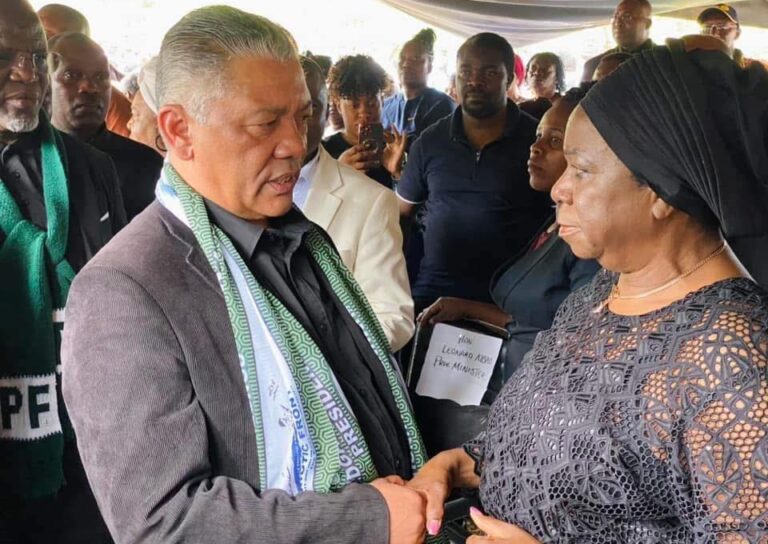
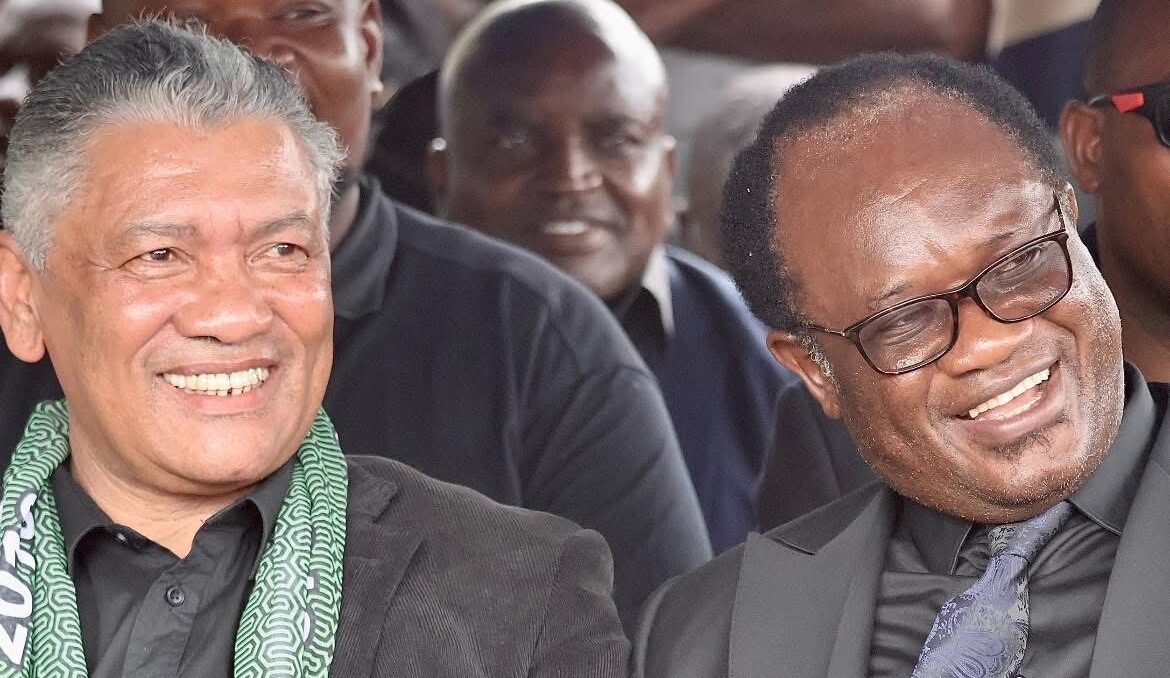
The Vice President stood alongside senior opposition members. Rivals within the Patriotic Front, including those competing for the party presidency, set aside their contest and gathered as one. Supporters of the ruling UPND and the PF consoled each other without hesitation. At Chiba Cemetery, there were no factions, no colours, no slogans. There was only Zambia.
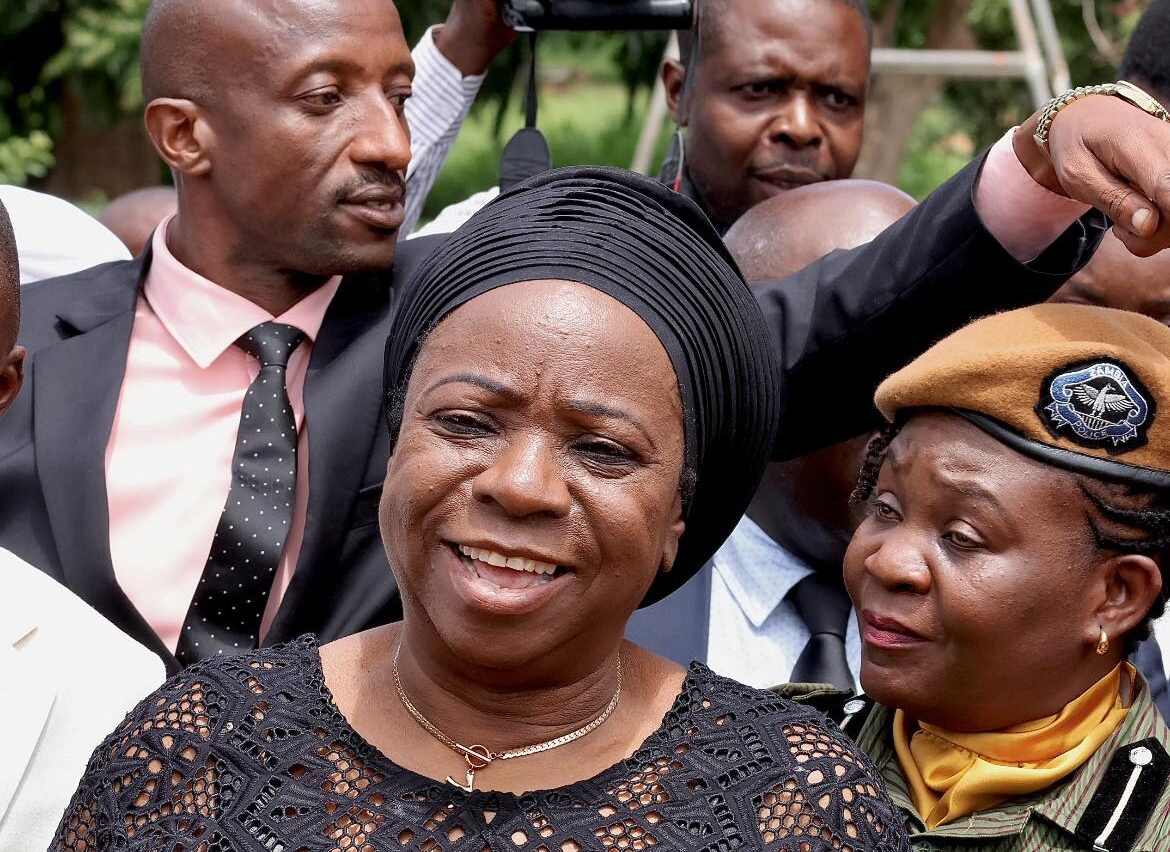
This unity was not by chance. It echoed the character of the woman the country came to honour. Mayor Kolala was remembered by Community Development Minister Doreen Mwamba as a leader who balanced demanding public duty with devotion to God and family. Youth, Sport and Arts Minister Elvis Nkandu described her as someone who treated every person with dignity, regardless of party. Permanent Secretary Nicholas Phiri noted her ability to work in harmony with national vision, even without belonging to the ruling party. These tributes were genuine, and they carried a lesson the country cannot afford to ignore.

There was also public expectation that Hon. Chabinga would attend. His absence highlighted an uncomfortable truth. When political resentment becomes too heavy, it limits a leader’s ability to walk into spaces of truth and humility. Zambia deserves leaders free enough to stand with citizens during national moments, not bound by grudges that serve no one.

What happened in Kasama must not remain an isolated scene of unity. It should be a mirror through which this country re-examines itself. Zambia has drifted into a culture of hostility where political identity overshadows national identity. We have begun to forget that before PF or UPND, before tribe or region, we are a nation that has long believed in love over hate and respect over division. Our Constitution begins with acknowledgment of God. If God is supreme, then hatred cannot guide our politics.

It is time for citizens to rethink how they relate to leaders. Disagreements with a President belong at the ballot, not in personal hatred. Hakainde Hichilema is human. Edgar Lungu is human. Each has made decisions that gained praise and decisions that brought criticism. No President meets every expectation, and none ever will. Governance is a relay race. One leader hands over to the next, and the country moves forward by building on what was done well and correcting what went wrong.

Zambia should appreciate the contributions made by the Lungu administration and acknowledge its failures. It should recognise the achievements of the Hichilema administration and question its shortcomings. This is the balance on which democracy stands. It does not require hatred. It requires maturity.
As the nation prepares to bury former President Lungu, Kasama offers a powerful lesson. Let the country extend to him and his family the same unity shown at Mayor Kolala’s funeral. Let us bury him the way we buried Kaunda, Chiluba and Sata, in dignity and without political poison. Zambia does not gain from quarrelling over the dead. It gains from honouring them respectfully and guarding the peace they leave behind.

This country has never survived on the strength of political parties. It has survived on the strength of its people. The spirit of Kasama must therefore guide us forward. We must choose unity over division, humility over pride and love over hate. Zambia is a nation that has always stood with God at the centre. To honour that tradition, we must restore the peace and togetherness that has defined us for generations.

The funeral of Mayor Kolala reminded us of who we were and who we must become again. The choice is ours.
One Zambia. One Nation.

Smart Zambia, ZESCO sign MoU to boost nationwide E-Govt connectivity

2

Smart Zambia Institute (SZI) has signed a Memorandum of Understanding with ZESCO Limited that will allow the institute to utilise ZESCO’s infrastructure to enhance the delivery of e-government services across the country.

Smart Zambia National Coordinator Percy Chinyama said the MoU will enable the use of ZESCO’s Fibrecom infrastructure to equip health facilities and schools with digital capabilities that improve efficiency in service delivery.

“To me, this is a direct reflection of what our government stands for, using existing infrastructure. We’re not going to be bringing or hauling new infrastructure into the country in order to achieve this connectivity,” Mr Chinyama said.

Smart Zambia Chief Government Technical Officer Kasali Musenge urged the public to embrace technology, stressing that the partnership will transform lives by unlocking wider connectivity for both the public sector and citizens.

“Within the shortest space of time, the 3,200 health facilities we are talking about can be connected in a cost-efficient manner. We have over 10,000 schools in the education sector and it means we can bring all these on board,” Ms. Musenge added.

And ZESCO Limited Managing Director Justin Loongo said the utility will collaborate closely with Smart Zambia through a Joint Project Management Committee to ensure the partnership is well coordinated, measurable and results-driven.

“Connecting schools, clinics and police stations with digital capabilities is not just a technology upgrade, it is an investment in access, responsiveness and equity,” Mr Loongo said,

Mr Loongo added that ZESCO’s subsidiary, Fibrecom, will take the lead in implementing the project.

President Hichilema reaffirms zero tolerance to corruption

1

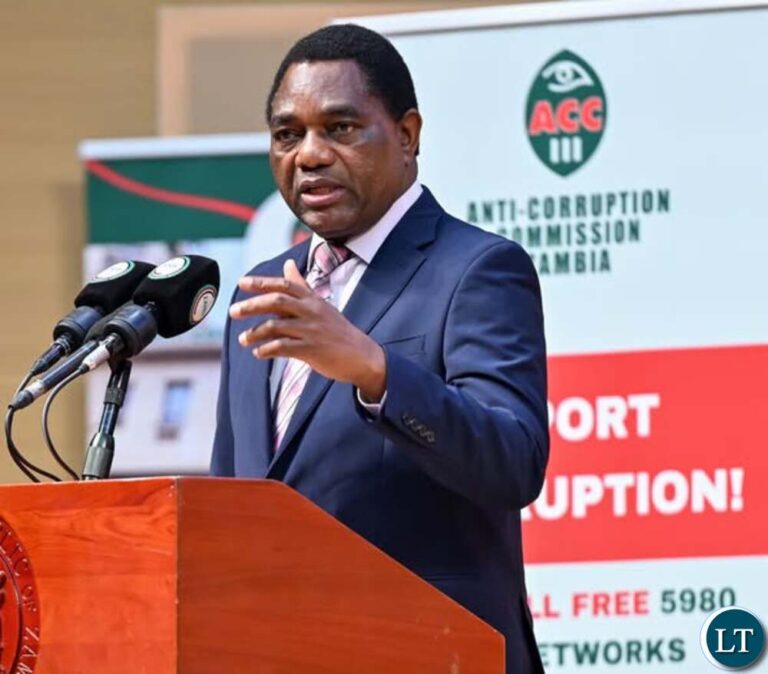
President Hakainde Hichilema has reaffirmed government’s unwavering support to the Anti-Corruption Commission (ACC), urging all citizens to embrace a zero-tolerance approach to corruption as the country works toward building a corruption-free Zambia.

President Hichilema has called on all Zambians, particularly young people, whom he described as key partners in the fight against corruption, to denounce the vice at all levels.

The President emphasised that fighting corruption requires a dual approach involving both law enforcement and the instilling of strong moral values from an early age.

President Hichilema stressed the importance of protecting public resources, noting that national assets belong to the people of Zambia and not individuals.

He said his administration is committed to sealing corrupt leakages to ensure that public funds are channeled towards national development, including critical sectors such as health and education.

“Zambia must work as one to curb corruption,” he said, adding that families must not shield offenders but instead support efforts to hold them accountable.

He also underscored the need to review certain laws to strengthen the fight against corruption through prosecution and asset recovery.

And Anti-Corruption Commission Board Chairperson Evans Hamaundu called for a holistic approach to combating corruption, reaffirming the Commission’s readiness to act on any case, regardless of who is involved.

ACC Director General Daphne Chabu appealed for a corruption-free future for the country’s youth, noting their central role in building tomorrow’s Zambia.

Meanwhile, UNDP Resident Coordinator Beatrice Mutali reaffirmed the organisation’s support to Zambia’s anti-corruption efforts and commended government’s reforms, including the ACC online whistleblower initiative.

Ms. Mutali said young people are powerful agents of change in the anti-corruption agenda.

Transparency International Zambia Chapter President Priscilla Chansa urged youths to continue amplifying their voices in anti-corruption advocacy, stressing that digital innovation must be harnessed to build resilient and integrity-driven institutions.

Representing young people, Brian Mungandu of the Information and Communication University (ICU) Anti-Corruption Club noted that corruption impacts youth heavily and threatens the future they aim to build.

Katongo hails Zambia’s back-to-back AFCON qualification

3

Zambia’s 2012 AFCON-winning captain, Christopher Katongo, has praised the current national team for securing successive AFCON qualifications, describing the achievement as a major milestone for the squad.

Katongo says the back-to-back qualification will give the team vital momentum ahead of the 2025 AFCON tournament in Morocco, scheduled for December 21, 2025, to January 18, 2026, boosting their prospects of advancing to the later stages.

Reflecting on Zambia’s early exits in the 2006, 2008 and 2010 AFCON editions, Katongo said those experiences were instrumental in strengthening players’ mental resilience and sharpening their competitive edge.

He noted that each setback contributed significantly to the team’s growth and understanding of the demands of continental football.

Katongo urged the current squad to “hit the ground running” by focusing immediately on attaining peak physical condition ahead of the tournament, stressing that the entire nation is behind them and expects strong performances.

Zambia heads into AFCON 2025 after topping their qualifying group with a convincing win over Côte d’Ivoire, as the team looks to rebuild under new coaching leadership and rekindle the spirit of their 2012 championship triumph.

The media reports that this year’s qualification marks the first time in nine years that Zambia has secured back-to-back appearances at the continental showpiece.

World Bank Releases $200m to Support Zambia’s Energy Reforms

2

Zambia has secured a 200 million dollar grant from the World Bank to support wide-ranging reforms in the country’s energy sector, a development officials say reflects renewed confidence in ongoing restructuring efforts. The funding is expected to reinforce initiatives aimed at improving efficiency, restoring financial stability within the electricity market, and strengthening the long-term capacity of both public and private institutions participating in the sector.

According to details released by government representatives, the grant forms part of the World Bank’s broader framework for assisting countries undertaking energy transition and governance reforms. Authorities stated that Zambia’s programme was assessed positively due to a series of policy steps taken over the past year, including tariff adjustments intended to move the market toward cost-reflective levels and clearer regulatory oversight covering production, transmission, and distribution. These measures, officials explained, were necessary for creating an environment in which investment can grow and operations can become more predictable.

Government officials noted that Zambia’s electricity sector had, for many years, struggled under the weight of unsustainable pricing and periodic shortfalls in supply exacerbated by declining hydropower generation. They said that without intervention, the utility sector risked slipping further into financial distress, restricting its ability to invest in new infrastructure and undermining national economic performance. The reforms pushed through by the government therefore focused on addressing inherited weaknesses in planning and financing while laying the foundation for future diversification.

World Bank representatives highlighted that the grant is intended to reinforce Zambia’s commitment to transparency, operational efficiency, and improved service delivery. They pointed to mechanisms within the reform programme that strengthen financial reporting, introduce clearer frameworks for debt management, and promote a more commercially oriented approach within state-owned utilities. According to officials associated with the funding arrangement, the reforms also aim to create conditions that attract independent power producers by ensuring that contracts and tariffs are better aligned with market realities.

Among the reforms supported by the grant is the development of a more robust system for planning generation projects. Energy authorities said that the country must reduce its vulnerability to hydrological shocks, which have repeatedly destabilised output in recent years, by expanding solar, wind, and other renewable options. The new funding will help strengthen technical assessments, risk evaluations, and the procurement processes required for such projects to move forward efficiently.

Officials also stressed that the grant is linked to measures designed to protect low-income households from excessive hardship as the sector adjusts. They indicated that part of the funding will support targeted subsidies or social-protection mechanisms intended to ensure that vulnerable communities continue to access electricity while the market moves toward financially sustainable pricing. The government emphasised that social protection remains an essential component of the reform package and will be monitored closely.

The grant further supports efforts to streamline the performance of transmission and distribution networks. Authorities said that ageing infrastructure has contributed to technical losses and limited the ability of the system to accommodate new generation capacity. The funded reforms include work on improving grid stability, expanding the maintenance programme, and equipping the utility with tools for more accurate forecasting and operational planning.

Government representatives also pointed to institutional reforms aimed at improving coordination among ministries and agencies responsible for the energy portfolio. They said clearer regulatory roles and more predictable timelines for licensing and project approval would help reduce uncertainty, which has historically discouraged private investment. The reforms include guidelines for enhancing the independence of the energy regulator and improving data sharing across institutions.

World Bank officials stated that the release of the grant demonstrates confidence that Zambia’s reform programme can restore the financial health of the sector and reduce the frequency of emergency measures, such as load-management periods that have affected businesses, households, and social services. They added that a reformed sector is expected to support industrial growth, agricultural expansion, and broader economic resilience by providing a more stable platform for investment.

Energy authorities in Zambia emphasised that the work is far from complete, noting that the grant marks only one phase of a longer effort to stabilise and expand the sector. They pointed out that additional resources will be required in the coming years to support grid upgrades, renewable-energy projects, and reforms of commercial operations within power institutions. Officials added that the government remains committed to engaging with development partners as long as the reforms continue to yield improvements in transparency and operational efficiency.

Chasefu Father Accused of Causing Death of Four-Year-Old

Police in Eastern Province have detained a man in Chasefu district following the death of his four-year-old daughter in circumstances authorities described as deeply concerning. According to preliminary briefings, officers responded to a report indicating that the child had died at home after an altercation in which the father was alleged to have been involved. Investigators have taken statements from witnesses and family members as part of their efforts to establish the sequence of events that led to the child’s death.

Law enforcement officials said the father, who was taken into custody shortly after the incident, has been cooperating with police inquiries. Officers indicated that early accounts suggested the man may have acted under what he claimed were unusual personal or spiritual beliefs, but authorities stressed that such assertions do not alter the legal obligations surrounding the protection of minors. The matter is being handled by experienced investigators with support from child protection units to ensure that all relevant factors are examined thoroughly.

Police briefings indicated that neighbours alerted authorities when they became aware of distress within the household. By the time officers arrived, the child was unresponsive, and efforts to secure medical assistance could not change the outcome. Officers then initiated standard procedures, securing the scene and transferring the father into custody for questioning. The child’s body was later transported to a medical facility where further examinations will assist investigators in determining the precise cause of death.

Authorities noted that forensic specialists have been assigned to the matter and will provide assessments to guide decisions on potential charges. They emphasised that while the suspect remains in custody, investigations are ongoing and conclusions will only be drawn once all professional evaluations have been completed. Police also confirmed that counsellors have been made available to extended family members who have been affected by the incident.

Community leaders in the area expressed shock at the development, describing the death as a tragic moment for the district and calling for patience as law enforcement continues its work. They appealed for calm and encouraged residents to avoid speculation that might complicate the investigative process. Several local representatives emphasised the importance of strengthening awareness around child welfare and reporting early warning signs when households display signs of distress or instability.

In their update, police underscored that Zambia’s laws place strong emphasis on the safety and dignity of children, and that all allegations involving minors require prompt and thorough handling. They stated that the incident in Chasefu reinforces the need for communities to remain vigilant and to work closely with authorities when dealing with households experiencing conflict or unusual behaviour by guardians. Officers reiterated that prompt reporting can often prevent harm and allow support services to intervene where necessary.

The case has been transferred to higher-level officers within the region to ensure that procedural standards are upheld and that all required documentation is completed meticulously. Authorities confirmed that the suspect will remain in lawful custody while investigators continue collecting evidence. Police further explained that updates will be provided once findings from medical examinations and forensic analyses have been consolidated.

Officials noted that cases involving the death of a child carry significant legal weight and require careful coordination between investigators, prosecutors, and social welfare professionals. They said recommendations on charges will be made once the investigative file is complete and has been reviewed by the National Prosecution Authority. Until then, authorities have urged the public to respect due process and allow the justice system to address the matter in accordance with established law.

The child’s death has resurfaced discussions around mental health support, community surveillance, and the need for early interventions when guardians exhibit behaviour that may endanger minors. Social service groups in the region stated that although many communities rely on traditional support systems, there is an increasing need for structured professional services to assist families under strain.

As police continue their investigation, the incident remains a point of deep concern locally, with officials emphasising that safeguarding children is a collective responsibility involving households, communities, and state institutions. They reiterated that the findings of the investigation will guide the next steps and determine the legal course that will follow.

Zesco Invests $30m in Fresh Solar Generation Capacity

Zesco Invests $30m in Fresh Solar Generation Capacity

Zesco has commissioned a 35-megawatt solar power plant in Chibombo, marking one of the state utility’s notable steps toward broadening Zambia’s energy mix through renewable sources, including solar. The project, valued at about 30 million dollars, was announced during a ceremony attended by senior government officials, representatives from the utility, and stakeholders in the energy sector. The new installation is expected to contribute additional capacity to the national grid whose performance has faced criticism in recent years due to persistent load-management measures driven by reduced hydropower generation.

According to Zesco’s leadership, the facility was conceived as part of a wider programme to improve security of electricity supply by gradually reducing the country’s heavy dependency on hydropower. They explained that inconsistent water levels, increasingly linked to climatic variations, have undermined generation reliability. Under these circumstances, solar investments are seen as an important means to stabilise output and diversify production across renewable platforms, with solar being a key focus. The Chibombo project therefore forms a significant component within a cluster of renewable initiatives Zesco intends to roll out over the medium term.

During the commissioning, officials noted that preparations for the plant began several years earlier, but financial closure and construction were achieved more recently following adjustments to internal planning. They stressed that the project is not intended to function in isolation but rather to complement the utility’s existing transmission network and planned infrastructure developments. The addition of 35 megawatts will not entirely eliminate pressure on the grid, they acknowledged, but will improve Zesco’s ability to balance supply, especially during daylight hours when solar output peaks and solar generation is at its highest.

The event also highlighted ongoing work on a 330-kilovolt transmission line running between Choma and Kafue West. This separate undertaking, estimated at 100 million dollars, is designed to strengthen power flows between southern and central regions of the country and create a more resilient distribution backbone. Officials noted that pairing generation expansion with transmission upgrades is necessary to ensure new production does not become constrained by limited evacuation capacity. They added that the two projects reflect the utility’s commitment to pursuing a modern, flexible grid that can support economic growth while meeting rising household demand.

Government representatives at the launch characterised the solar plant as a practical response to Zambia’s broader energy challenges. They referenced the country’s vulnerability to hydrological shocks, pointing to recent droughts that have led to electricity deficits and forced load-management across multiple sectors. They argued that diversifying the energy mix is key to insulating the economy from such shocks and improving stability for industry, agriculture, and social services. The officials also stated that the project aligns with Zambia’s commitments to adopt greener energy systems and gradually transition away from carbon-intensive generation methods.

The new solar facility was built with technology sourced from established international suppliers, and Zesco engineers underscored the attention given to efficiency standards and long-term maintainability. They explained that the plant includes monitoring systems that allow real-time performance tracking and support preventative maintenance schedules. The utility expects the installation to operate at high availability levels and contribute consistently to daily supply, particularly in periods when hydropower generation is constrained.

In remarks delivered at the ceremony, Zesco noted that further solar capacity is under evaluation. The utility is studying opportunities to scale up renewable generation in other provinces, taking into account land availability, grid access, and regional demand patterns. In addition to solar, there are plans to explore small-scale hydro and wind options where technical assessments indicate viable potential. The officials added that models for public-private cooperation are being considered to accelerate delivery while managing the financial burden on the utility’s balance sheet.

Stakeholders present at the launch emphasised that while 35 megawatts may appear modest relative to national peak demand, the significance lies in demonstrating that solar can be integrated at scale within Zambia’s grid. They argued that incremental additions, deployed steadily across the country, could collectively contribute meaningful volumes and reduce exposure to water-dependent assets. For local communities, the project is also expected to stimulate employment around operational and maintenance services, and create opportunities for auxiliary industries that support renewable energy works.

Although the plant will not fully resolve Zambia’s energy supply concerns, officials reiterated that it represents a purposeful shift in strategy. They noted that solar generation avoids fuel imports, shortens construction timelines, and reduces environmental impacts. The commissioning of the Chibombo facility therefore reflects Zesco’s intent to build a more diverse and climate-resilient electricity system while setting the foundation for future projects as funding and technical capacity expand.

Make It Law, and Explain Later – Bill 7 Depends on a Report No One Is Allowed to See

8

Make It Law, and Explain Later – Bill 7 Depends on a Report No One Is Allowed to See

Testimony before a Parliamentary Select Committee examining Bill 7 has renewed questions about the legality, transparency, and structural implications of the proposed constitutional amendments after senior officials from the Electoral Commission of Zambia (ECZ) revealed that the Executive holds full custody of the delimitation report that informs the Bill’s most contested provisions.

The exchange unfolded when Hon Garry Nkombo pressed the Commission to state when the public would be informed about which constituencies are due for delimitation. The question is central to the Bill 7 controversy because constituency boundaries directly shape political representation, the distribution of power in Parliament, and the weight of the vote in future elections.

In response, the ECZ confirmed that a national consultation exercise undertaken in 2019 produced a full delimitation report which was initially submitted to the Executive and was later revised and resubmitted. According to the Commission, the document that determines the number and configuration of constituencies is now entirely in the hands of the Executive and cannot be made public unless the Executive authorises its release.

The Commission added that once a constitutional amendment is enacted, its responsibility would be limited to publishing a statutory instrument detailing the final boundaries based on decisions already taken. This means the defining phase of delimitation, including which constituencies may be divided or merged, is shielded from public exposure until after the Bill becomes law.

The admission sharpened concerns that Bill 7 risks placing decisive electoral architecture under the influence of the Executive rather than an independent body operating under open procedures. Critics argue that delimitation should precede any lawmaking in order to allow for public scrutiny, stakeholder engagement, and transparent justification for boundary changes. Instead, the committee learned that the determinative process was completed internally and remains confidential.

Legal scholars have stated in earlier commentary that Bill 7 faces existing procedural challenges even before its substantive content is considered. Under Article 79 of the Constitution and relevant Standing Orders, constitutional amendments must follow a defined sequence of public participation, parliamentary debate, and transparent committee review. Opponents say the Bill did not meet these standards following the previous decision by the House not to proceed with a similar amendment in the same session. They argue that the attempt to reintroduce the Bill contravenes the rule preventing repetition of a rejected constitutional amendment.

The latest testimony adds another layer by indicating that the substantive content of the Bill draws from a report that the public, civil society, and even many MPs have not seen. Without access to the data and analysis underpinning the delimitation exercise, stakeholders cannot evaluate whether the proposed increase in constituencies is justified, whether population thresholds have been applied consistently, or whether the changes risk creating imbalances in representation.

Concern also arises from the sequence described to the committee. The ECZ suggested that its role activates only after constitutional amendment, not before. This structure effectively allows the Executive to propose a constitutional change anchored in a report it alone controls, then task the Commission with formalising that outcome through a statutory instrument. Parliamentary oversight is weakened if lawmakers cannot access the foundational report before voting on the amendment.

Civil society groups have previously warned that delimitation exercises should be public from start to finish, with clear demographic data, open hearings, and a published rationale for any boundary adjustments. The absence of such visibility in the process described to the committee has revived fears that Bill 7 consolidates power rather than distributing it.

The committee is expected to continue receiving submissions, but the nature of the testimony has increased pressure on the Executive to release the delimitation report and explain the methodology used. Parliamentary sources say members want clarity on whether the changes recommended by the Commission align with national demographic trends or whether alterations risk favouring specific political outcomes.

The debate surrounding Bill 7 continues to widen as lawmakers, legal experts, and civic organisations assess the implications of a reform package shaped by information that remains outside public reach.

Below is the recording from The Selct Committeee

( Honorable Nkombo Chairman, I see that the Commission, good morning and welcome, um, supports the clause for delimitation of constituencies. I would like to find out, Chair, at what stage the Commission is going to communicate to the nation which constituencies will be due for delimitation. Thank you, Honorable Nkombo.

Witness, please take note. Thank you, Honorable Nkombo Chairperson. At this stage, I seek your indulgence to invite my colleagues to respond to some of the clarifications.

I’ll speak to the first question in terms of where Honorable Nkombo sought clarity from the Commission as to when the Commission will indicate to the people of Zambia which constituencies are earmarked for delimitation. Honorable Chairperson, your committee may wish to note that following the public consultation exercise that the Commission, the Electoral Commission of Zambia undertook in 2019, a report was prepared and that report was submitted to the Executive. It is that report, Honorable Chairperson, that has since been revised to, and again submitted to the Executive to inform the number that is indicated in the bill.

Honorable Chairperson, once the Electoral Commission of Zambia submits that report, or such a report to the Executive, it is no longer in the hands of the Commission to release that report to the public. It is with the Executive. So where the Commission stands is now to await for the amendment of the Constitution and once the implementation, the actual implementation of the new constituencies is done, indicate so the new boundaries of the constituencies in a statutory instrument and thereby inform the public of which constituencies have since been established following the amendment to the Constitution.

Chair, I submit.)

MPs Rally Against Constitutional Bill 7, Pledge Loyalty to Zambia in Meeting with OASIS Forum

0

A delegation of over 40 Members of Parliament, led by former Leader of the Opposition Brian Mundubile, met with representatives of the OASIS Forum at the Catholic Secretariat in Lusaka yesterday, presenting a petition opposing Constitutional Bill 7.

The group, which included notable figures such as Mansa MP Dr. Chitalu Chilufya and Kantanshi MP Anthony Mumba, declared their commitment to defending Zambia’s constitutional integrity, with several lawmakers pledging unwavering loyalty to the nation.

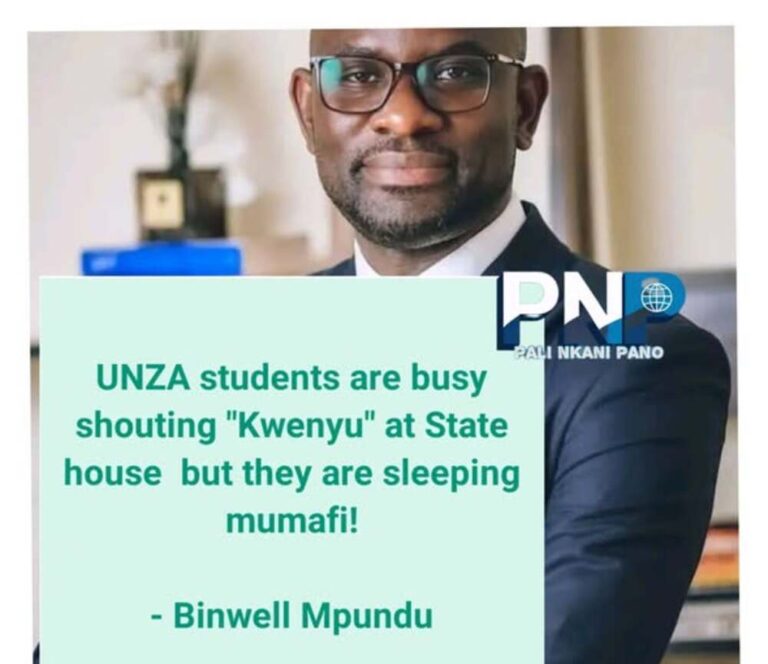
Among independent MPs, only Nkana’s Binwell Mpundu attended the meeting, where the petition against the proposed constitutional amendments was formally submitted to the OASIS Forum—a coalition comprising the Zambia Conference of Catholic Bishops, the Council of Churches in Zambia, the Evangelical Fellowship of Zambia, the Non-governmental Gender Organisations’ Coordinating Council, and the Law Association of Zambia.

The gathering signals deepening political and civic alignment against Bill 7, which has become a focal point of national debate. The OASIS Forum has consistently voiced opposition to the bill, arguing that it undermines democratic processes and constitutional safeguards.

No immediate official response has been issued by the government following the meeting.

PF Presidential Aspirant Makebi Zulu in Road Accident

PF Presidential Aspirant Makebi Zulu and Two Officials Hospitalised After Road Accident Near Kasama

Patriotic Front presidential aspirant Makebi Zulu has been involved in a road accident on the Mpika–Kasama Road as he travelled to attend the funeral of Kasama Mayor Theresa Kolala Khumalo. The accident occurred roughly 25 to 30 kilometres before Kasama, according to information released by party officials.

Mr Zulu was travelling with former Minister of Mines Richard Musukwa and former Disaster Management and Mitigation Unit National Coordinator Chanda Kabwe. The vehicle in which they were travelling overturned after the driver attempted to avoid a cyclist who rode across the road. The impact caused the vehicle to lose control, resulting in the accident that left all three occupants requiring medical attention.

Emergency responders transported the trio to Kasama General Hospital, where medical staff began conducting tests to assess possible injuries. Initial indications suggest the three were stable at the time they were received at the hospital.

Meanwhile, Patriotic Front Acting President Given Lubinda has visited the injured officials at Kasama General Hospital. He told journalists that the three remained under observation as medical personnel carried out diagnostic procedures to rule out any complications. “I am here at the hospital. They are undergoing tests and x-ray just to rule out anything. They are also waiting to see a doctor after the test results,” he said.

Mr Lubinda confirmed that Mr Zulu, Mr Musukwa and Mr Kabwe were travelling to Kasama to attend the funeral and burial of Ms Kolala, a member of the party’s Central Committee who died last week. Several senior PF members were expected to travel to Kasama for the funeral proceedings.

The accident adds to what has already been a difficult period for the party following the death of Ms Kolala, who had served as Kasama Mayor and was widely regarded within PF structures. Details released earlier in the day had indicated that Mr Zulu was en route to the funeral when the vehicle overturned, prompting speculation about his condition until hospital confirmation was issued.

Medical personnel at Kasama General Hospital are expected to release further updates once all required examinations have been completed. Party officials at the hospital said they were awaiting full medical reports before determining whether any of the three would require referral to another facility.

US, Zambia Outline New Economic and Mining Reform Framework

8

US, Zambia Outline New Economic and Mining Reform Framework
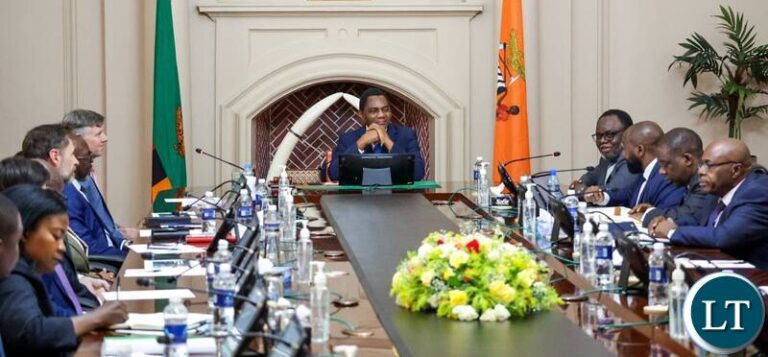
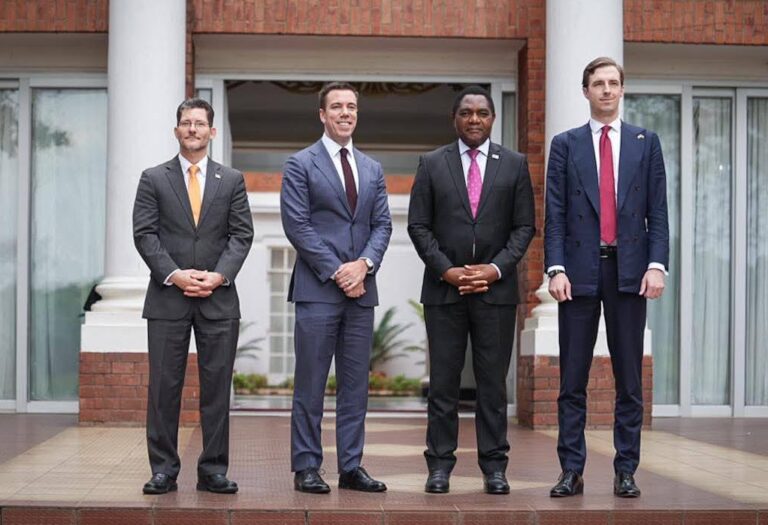
President Hakainde Hichilema and visiting U.S. Assistant Secretary of State for Economic, Energy, and Business Affairs Caleb Orr have agreed on a framework that seeks to reshape bilateral cooperation through a reform-driven support programme. Both the U.S. Embassy in Zambia and State House confirmed the engagement, noting that no specific financial figure was announced publicly. This engagement signifies a pivotal moment in Zambia’s economic journey, emphasizing the importance of transparent governance and sustainable practices in the mining sector. By aligning their interests, both nations aim to foster a climate conducive to investment, thereby enhancing Zambia’s position as a key player in the global mining industry.

According to official communication, the discussions centred on unlocking a substantial grant package tied to Zambia’s willingness to implement targeted reforms in the mining industry and the broader business environment. The proposed support would work alongside a restructured Millennium Challenge Corporation Compact and a five-year collaboration on public health. These reforms are anticipated to lead to more efficient mining operations and improved environmental management, which would not only benefit local communities but also enhance Zambia’s attractiveness to foreign investors who prioritize corporate responsibility and sustainability in their operations.

Assistant Secretary Orr said the United States aims to support Zambia’s economic potential through improvements in regulatory efficiency and transparency. He noted that American firms view Zambia as a market capable of attracting increased investment once predictable rules and streamlined procedures are established. He added that the reform programme is intended to expand opportunities that strengthen supply chains relevant to U.S. strategic interests while contributing to job creation in Zambia. By enhancing the regulatory framework, Zambia can ensure that both local and foreign investors feel secure in their investments, leading to sustainable economic growth and development.

The meeting was held as the Trump Administration repositions its foreign assistance priorities toward partnerships linked to measurable progress. U.S. officials described the evolving framework as an opportunity for Zambia to take a lead role in shaping a new phase of cooperation. They indicated that final terms will depend on the country’s advancement on agreed economic and governance benchmarks. This includes commitments to improve infrastructure development and foster innovation within the country, which are essential for attracting diverse investments beyond the mining sector.

The U.S. delegation included Ambassador Michael Gonzales, Deputy Assistant Secretary for Southern African Affairs and African Foreign Assistance Nick Checker, and senior State Department staff. After the State House engagement, the team began a series of follow-up meetings with senior officials in the Ministries of Finance, Mines and Mineral Development, Commerce, Trade and Industry, Technology and Science, and Agriculture. These dialogues are crucial as they aim to establish a shared vision for Zambia’s economic future, focusing on sustainable development practices that can create jobs and stimulate local economies.

Assistant Secretary Orr is also scheduled to meet representatives from the mining sector and U.S. private sector actors, including KoBold Metals. The delegation will travel to Kansanshi Mine in North-Western Province to observe operations at First Quantum Minerals’ copper facility. These activities form part of efforts to understand the investment landscape and identify areas where cooperation could support reforms in Zambia’s extractive sector and commercial environment. Such site visits will provide valuable insights into the operational challenges faced by mining companies and help formulate strategies that can facilitate a more conducive environment for business.

No timeline has yet been announced for concluding the discussions. Both governments stated that technical teams will continue negotiating as progress is made on sector-specific reforms. Continuous dialogue is essential to ensure that the outcomes of these discussions translate into effective policies that will not only benefit investors but also improve the livelihoods of Zambians by creating jobs and enhancing economic opportunities across the country.

LAZ Faces Internal Pressure as Members Petition for Emergency Meeting

1
LAZ Faces Internal Pressure as Members Petition for Emergency Meeting

A group of members of the Law Association of Zambia has formally petitioned the association’s council, calling for an Extraordinary General Meeting to address concerns about the organisation’s perceived involvement in partisan political matters. The petition, delivered to the LAZ Honorary Secretary, asks the council to urgently convene the meeting and allow members to debate the association’s public posture during ongoing national discussions around constitutional reform and the activities of the Oasis Forum.

The petitioners noted that LAZ, by law and tradition, is expected to maintain strict professional neutrality and avoid taking positions that may be interpreted as aligning with political actors. They argued that the association’s recent engagement with the Oasis Forum, a civil society alliance that has been vocal on matters concerning Bill 7, has raised questions among members about whether the association continues to operate within the limits of its mandate.

Signatories to the petition stated that the issue was not the Oasis Forum’s right to advocate on constitutional matters, but whether LAZ’s visible association with the grouping could be misunderstood as institutional endorsement of a specific political position. They said this perception risked weakening public confidence in the association’s independence at a time when constitutional reform is under heightened scrutiny.

The petitioners asked the LAZ council to clarify the association’s official position, provide a detailed account of its engagements with the Oasis Forum, and explain the basis on which public statements attributed to LAZ were issued during the ongoing national debate. They said only a properly convened Extraordinary General Meeting could allow members to examine the allegations transparently, evaluate the association’s recent actions, and determine whether corrective steps were needed.

A second issue raised in the petition concerned what members described as LAZ’s decision to “take a stance” on the constitutional amendment process without consulting the broader membership. The petitioners argued that LAZ’s commentary on Bill 7 had been interpreted as leaning towards a particular view within a polarised national context and that members were entitled to decide, collectively, whether such a position was appropriate.

The petition states that LAZ’s strength lies in its reputation for impartial legal analysis and that the credibility of its interventions depends on strict adherence to professional neutrality. The petitioners stressed that the current climate demands extra caution, particularly as constitutional matters attract intense public attention and political dispute.

In response to the petition, documents seen indicate that the LAZ Honorary Secretary acknowledged receipt of the notice and confirmed that the matter would be tabled before the council in accordance with the association’s governing framework. The council is expected to determine whether the conditions set out under the Law Association of Zambia Act and the association’s constitution for convening an EGM have been met.

While the petition has not yet been fully debated by the LAZ membership, it has already triggered wider discussion within legal circles about the association’s role in moments of significant national policy change. Senior lawyers contacted separately said the petition reflected growing anxiety over how professional bodies articulate their positions during contentious political periods.

If the council determines that an EGM is warranted, the meeting would allow members to debate the concerns raised, adopt resolutions on the association’s conduct and clarify LAZ’s expected role in national discourse. If the council finds that conditions for an EGM have not been met, petitioners may still escalate the matter through additional procedures provided under association rules.

As debate around constitutional reform continues, the petition marks one of the most visible internal challenges to LAZ’s leadership in recent years and underscores the tensions that arise when professional bodies are drawn into national debates.

The Urgly Face of BILL 7, Zambia in Limbo

The Urgly Face of BILL 7, Zambia in Limbo
By Cosmas Mambwe

Zambia has been talking about Bill 7 for months, but the truth is that the country is no longer debating clauses. It is debating trust. It is debating political intention. It is debating whether those in authority still hear the public at all. Every newspaper, radio station, church platform and social media space has become a battleground of interpretation, accusation and warning. And for a constitutional amendment that should unify the nation around principle, Bill 7 has done the opposite.

Commentary across Zambian newspapers and media outlets, whether on radio or social platforms, reveals a nation that feels uneasy. Citizens are not rejecting reform as a concept. They are rejecting the atmosphere in which the reform is being driven. They are rejecting the selective explanations and the confrontational communication style. A Constitution is the country’s stabiliser, and yet the politics around Bill 7 have felt anything but stable.

Church groups best known for measured voices have stepped forward, not out of politics but out of concern. They have urged restraint, humility and honest consultation. These are not radical demands. They are basic requirements for constitutional change. Yet these appeals have been met with defensive tone from some state-aligned actors. The public has noticed the emergence of a new category of clerics and NGOs that appear more eager to validate the government’s narrative than to act as independent guardians of civic space. Many citizens now believe that these voices have been mobilised to counter Oasis Forum, LAZ and other stakeholders calling for a people-driven process. Whether the suspicion is accurate or not, the perception itself is damaging.

Civil-society organisations have raised a related concern. They warn that misinformation is filling the vacuum left by inconsistent official explanations. In simplified language, some activists have broken down Bill 7 into implications that ordinary citizens can immediately grasp. They argue that the Bill concentrates power in ways that may disadvantage voters. They warn that by-elections may be eliminated, that party control over parliamentary seats may expand and that the structure of representation may shift from citizens to party headquarters. Government disputes these interpretations, but the very fact that citizens must rely on simplified WhatsApp breakdowns rather than comprehensive institutional communication speaks volumes.

Meanwhile, the political class continues to fuel the fire. The PF is locked in public quarrels that reveal deep leadership fractures. Insults, accusations of betrayal and competing press statements reinforce the perception that Zambia’s leaders are more invested in internal combat than national clarity. Even within Parliament, the atmosphere is tense. The contempt proceedings set for 9 December have added a new and unprecedented layer of anxiety.

The contempt case has become its own mirror of national uncertainty. Over 150 MPs, Deputy Speakers, the Clerk and deputies and members of the Select Committee have received summons to appear before the Constitutional Court. Some officers reportedly refused to stamp the documents, yet there is evidence that they were served. The symbolism is heavy. MPs now face a criminally enforceable responsibility to appear and defend themselves as individuals, not institutions. The Attorney General cannot shield them because contempt is personal, not collective. And in some MPs’ own words, failing to appear would violate the oath sworn on the first day of Parliament to defend and protect the Constitution.

When lawmakers must argue in court that they have not violated the Constitution they swore to uphold, something has gone profoundly wrong in the political environment.

The stakes are higher than procedure. The contempt hearing captures the collision between legal certainty and political strategy. Petitioners argue that the Bill’s revival defies the Constitutional Court’s earlier instruction on a people-driven process. Government argues that through the Technical Committee, provincial sittings and parliamentary procedure, it has complied fully with the Court’s guidance. Citizens watching from the outside are left to interpret competing legal claims in a climate where trust in political communication has weakened. This is how democratic fatigue begins.

The anxiety extends to the content of the Bill itself. Simplified explanations circulating online argue that Bill 7 strengthens ruling party dominance by increasing representation in their strongholds, eliminating by-elections and allowing political parties to replace MPs without public consent. Others warn that more nominated MPs and new reserved seats may create loyalty structures that empower the party rather than the community. Still others argue that the expansion of constituencies will distort expenditure and representation. The language used in these explanations may be emotive, but the concerns are rooted in a fear of centralised power.

On the other side, government supporters insist that the Bill widens inclusion, modernises representation and addresses long-standing constitutional gaps. But these claims are not landing with equal force because official communication has not matched the scale of public worry. A nation cannot be asked to trust a constitutional amendment it does not fully understand.

This is why the national atmosphere feels unsettled. People sense that the political class is speaking over them. Old alliances within civil society are being questioned. New alliances between state and religious actors are viewed with suspicion. Parliament itself is under legal scrutiny. And political parties are battling internally at the very moment when clarity is most needed.

Bill 7 has become a test of the State’s credibility, the Opposition’s coherence, civil society’s independence and the citizens’ patience. It is no longer a technical lawmaking exercise. It is a referendum on whether Zambians still trust their institutions to amend the foundational document of their democracy without manoeuvre, coercion or misdirection.

The question now is not whether Bill 7 passes or fails. The real question is whether the political culture surrounding it can still produce a stable, principled outcome. If the process continues as it has began, Zambia risks emerging with deeper mistrust, sharper political divides and a weakened sense of national cohesion.

Constitutions are not amended by confidence tricks. They are amended by consensus.

Right now, Zambia does not have that consensus. And no number of press briefings, sponsored endorsements or selective commentary will create it.

The country is watching. The country is thinking. And the country is not convinced.

Opinion: The Rise of Youth in Leadership Must Be Matched by Maturity and Respect

0

Young leadership is increasingly seen as vital for national renewal, yet its promise is undermined when figures who claim to represent the youth engage in behavior that erodes credibility, maturity, and public respect.

True leadership requires rising above personal emotions upholding dignity, exercising restraint, and demonstrating emotional intelligence even when faced with opposition or uncomfortable truths. When these qualities are absent, political influence becomes more about performance than principle.

Recent conduct in the public sphere has brought this tension to the fore. Repeated suspensions from the National Assembly and a pattern of insulting remarks are being criticized not as acts of political bravery, but as evidence of recklessness that weakens institutional integrity and embarrasses constituents.

Engagement with students at the University of Zambia this week became a focal point of this critique. Rather than addressing policy or offering visionary alternatives, the interaction descended into disparagement, with one political figure dismissing students with a derogatory phrase.

Students, however, have been vocal in acknowledging tangible governmental actions that have directly improved their welfare—such as the restoration of meal allowances, an 80 percent increase in student loan coverage, the removal of registration fees, and the completion of long-delayed hostel projects.

These measurable outcomes stand in contrast to what critics describe as armchair commentary political rhetoric unsupported by a record of practical service or development, even on campus issues such as infrastructure repairs.

The episode has sparked broader reflection on what Zambia should expect from its emerging leaders. Political relevance, commentators argue, must be earned through respectful debate, policy substance, and accountable service—not through insults, sensationalism, or theatrical confrontation.

If young leaders aspire to national trust and responsibility, the path forward lies in embracing humility, focusing on constructive solutions, and committing to dignified engagement. Only then can they fully contribute to the country’s development with the integrity and honor that true leadership demands.

Bystander Advises MPs to Choose Jail Over Paying K50,000 Court Fine

1
A bystander at the Lusaka Magistrates Court offered unexpected advice to two lawmakers yesterday, suggesting they choose a three-month prison sentence over paying a K50,000 fine each for failing to produce PF social media figure Emmanuel Mwamba in court.

Members of Parliament Andrew Mukosa (Chinsali Constituency) and Anthony Kasandwe (Bangweulu) had previously pledged to ensure Mwamba’s court attendance if he were granted bail. However, Mwamba has since remained absent and at large, frequently appearing only through his online podcast.

Following months of non-compliance, Magistrate Mbuywana Sinvula ruled the two sureties in contempt of court, ordering them to pay K50,000 each within 48 hours or face a three-month simple imprisonment.

After the ruling, a budget-conscious onlooker reportedly approached the MPs, advising them to serve the jail time rather than “waste” the money. MP Mukosa shared the encounter, quoting the man as saying, “Boss, just serve the sentence rather than paying K50,000.”

The contempt charge stems from a bench warrant issued against Emmanuel Mwamba, who is accused of seditious practices for a Facebook post published on November 4, 2023. The State alleges the post, which called for mass action and a national shutdown following a political declaration by Matero MP Miles Sampa, was likely to incite violence or disrupt public order. Mwamba has maintained that his call for protests was lawful and democratic.