Monday, June 8, 2026
14.8 C
Lusaka
Home Blog Page 219

Sureties Ordered to Pay K50,000 Each as Mwamba Skips Court in Shutdown Case

6

Zambia: Sureties Ordered to Pay K50,000 Each as Mwamba Skips Court in Shutdown Case

LUSAKA — The Lusaka Magistrate’s Court has directed two Members of Parliament to each pay K50,000 after failing to ensure the appearance of Patriotic Front Chairperson for Information and Publicity Emmanuel Mwamba in a case involving seditious practices. The court warned that failure to comply within 48 hours could result in contempt of court charges and possible imprisonment.

This case has drawn significant attention in Zambia, highlighting the legal responsibilities of public officials.

Magistrate Mbuywana Naiza Sinvula issued the order against Bangweulu MP Anthony Kasandwe and Chinsali MP Andrew Mukosa, who had stood as sureties for Mwamba’s bail. The directive follows Mwamba’s repeated absences from scheduled court proceedings. A bench warrant has since been issued for his arrest.

Mwamba faces charges stemming from a Facebook post published on November 4, 2023. The State alleges the post was likely to incite disaffection against the administration of justice in Zambia and had the potential to provoke violence or actions prejudicial to public order. The post called for mass protests and a national shutdown in response to Matero MP Miles Sampa’s declaration of himself as PF president.

Mwamba maintained that his call for public action was a lawful exercise of democratic rights. In a statement, he said: “We have noted statements from State House and from the Zambia Police responding to our call for mass actions and promoting a day of national shut down in order for Zambians to protect the Constitution, Democracy and the Rule of Law.”

He argued that such expressions fell within the bounds of freedom of speech. However, the court has treated the matter as a criminal offence under provisions related to seditious practices.

Kasandwe and Mukosa entered into a recognisance agreement when Mwamba was granted bail, pledging to guarantee his attendance at all court sessions. Magistrate Sinvula ruled they had breached that obligation by failing to produce him or explain his absence.

The K50,000 forfeiture per surety is a standard enforcement measure under Zambia’s criminal procedure when bail conditions are violated. The funds are payable to the state unless Mwamba voluntarily surrenders before the deadline, which the court has not indicated would reverse the penalty.

As of Monday, December 8, 2025, Mwamba remains at large. The Zambia Police have not disclosed whether active efforts are underway to execute the bench warrant.

Parliament has not issued a statement regarding the conduct of its two members implicated as defaulting sureties. The Patriotic Front has also not released an official comment on Mwamba’s absence or the court’s ruling.

This case underscores the legal risks associated with using social media to mobilise mass civil disobedience, even when framed as a defence of constitutional principles. The prosecution’s continued pursuit of the charge signals the state’s position that calls for national shutdowns may cross into prohibited speech under current law.

The matter remains pending before the Lusaka Magistrate’s Court.
Zambia, U.S strengthen health, technology partnership

1

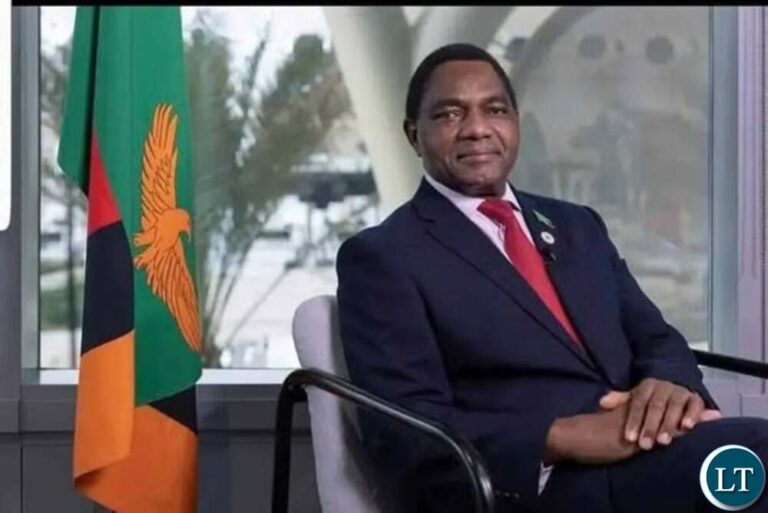
Zambia and the United States have reaffirmed their commitment to strengthening partnerships in health and technology.

President Hakainde Hichilema said the two countries have great potential for cooperation in many areas such as shared values of their citizens’ wellbeing, peace and cooperation among others.

President Hichilema said this when United States of America Assistant Secretary of State for Bureau  Economic, Energy and Business Affairs, Caleb Orr,  paid a courtesy on him at State House today.

The President emphasised the importance of the US-Zambia partnership and expressed confidence that the two countries would work together in the health services sector, including health reforms, and explore new opportunities for private partnerships.

“We are happy to provide a private partnership and it is very important to us, and we are prepared for this,” he said.

Mr Hichilema noted that technology is very important in driving national development.

The meeting between President Hichilema and Mr Orr aimed to strengthen ties between Zambia and the US, with both countries expressing enthusiasm for future cooperation.

And United States of America Assistant Secretary of State for Bureau Economic, Energy and Business Affairs, Caleb Orr, disclosed that the U.S is offering a $2 billion grant package contingent on Zambia for implementing specific reforms and demonstrating reciprocal commitment to economic transparency and growth.

“We are offering a curated package of technical support to inform, enact and implement key reforms that will unleash greater investment, create jobs and drive private sector led economic growth and development outcomes,” he said.

Mr Orr also said the United States is eager to deepen economic and business collaboration with Zambia which will focus on innovative energy solutions and private sector driven growth that can boost health systems and technological advancement.

He said the partnership aims to leverage U.S investments in clean energy and digital infrastructure, creating jobs and fostering sustainable development in Zambia.

“We come to the table in good faith and will work together with your government in earnest and success of this new approach would position the country as a bold leader that will transform its economy for the sake of future generations,” he added.

Mr Orr further said the U.S is offering Zambia with the choice to be the model of the future of U.S. foreign assistance that delivers tangibly for both countries.

Mambwe set to vaccinate 10,000 cattle against FMD

0

The Department of Fisheries and Livestock in Mambwe District of Eastern Province says it has an annual target of vaccinating 10,000 cattle against Foot and Mouth Disease (FMD).

Mambwe District Fisheries and Livestock Director, Gloria Mulenga, states the district did not have a budget for animal stocking and was only conducting vaccination exercises in order to contribute to the increase in live animal population target of 7 million by 2026 as part of the Presidential priority areas.

She has told the media that other collaborating partners such as ADRA were assisting in stocking of animals such as goats through their restocking programme.

Dr Mulenga said her department had so far vaccinated 7,940 cattle against FMD and aims to strengthen extension services as a measure to reduce livestock deaths.

Dr Mulenga further indicated that the district only had sporadic cases of East Coast fever, African swine fever and Trypanosomiasis which were managed through farmers and extension officers, who were assisting in early disease detection, diagnosis and treatment in order to control spread and any possible outbreak.

Mungwi DC counsels civil servants

0

Mungwi District Commissioner, Muma Musonda, has cautioned civil servants against engaging themselves in politics ahead of the 2026 general elections.

Mr Musonda says civil servants should maintain high levels of professionalism as they execute their duty ahead of the 2026 elections.

He indicated that civil servants have the duty to support and implement government policies and developmental projects.

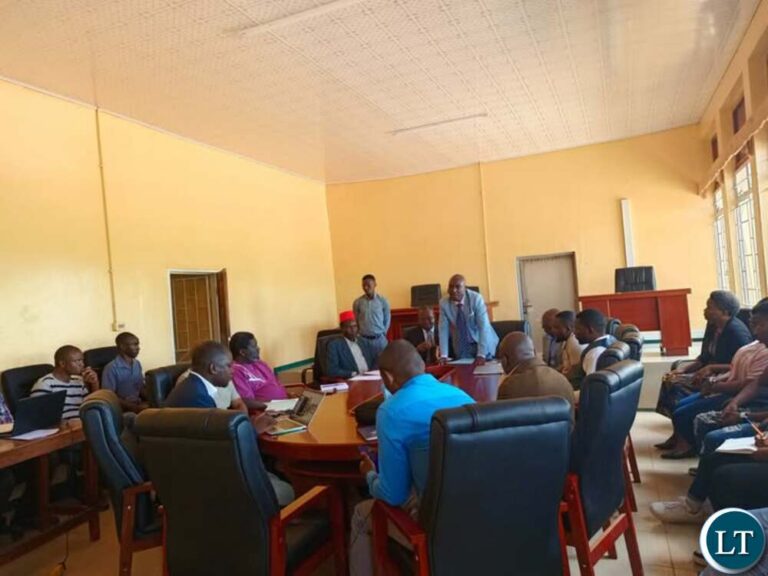
The media reports that the District Commissioner said this when he officiated at the District Development Coordinating Committee meeting held at the Council Chamber in Mungwi.

Mr Musonda further urged civil servants to take government’s programmes seriously.

He has since emphasised the need for civil servants to find ways of highlighting government policies to the public through several means such as radio programmes.

Mungwi Town Council Secretary, Cleophas Mbotwa, expressed concern that some key stakeholders were absent during the planning meeting.

He noted that involvement of all key stakeholders during such an important meeting is critical because it allows for effective decision making.

Rise in Road Traffic accidents worry Transport minister

0

Minister of Transport and Logistics Frank Tayali has disclosed that more than 28,000 Road Traffic Accidents (RTAs) were recorded from January to November of this year, resulting in 893 fatalities.

Speaking during the launch of Road Safety Week on national television, which was monitored by the media, Tayali stated that road crashes remain one of the leading causes of death and injury in Zambia. He expressed regret over the rising number of deaths and injuries stemming from road carnage.

The Minister attributed most accidents to factors including speeding, drunken driving, reckless overtaking, and failure to adhere to road signs.

REA commissions 17 projects in Central Province

0

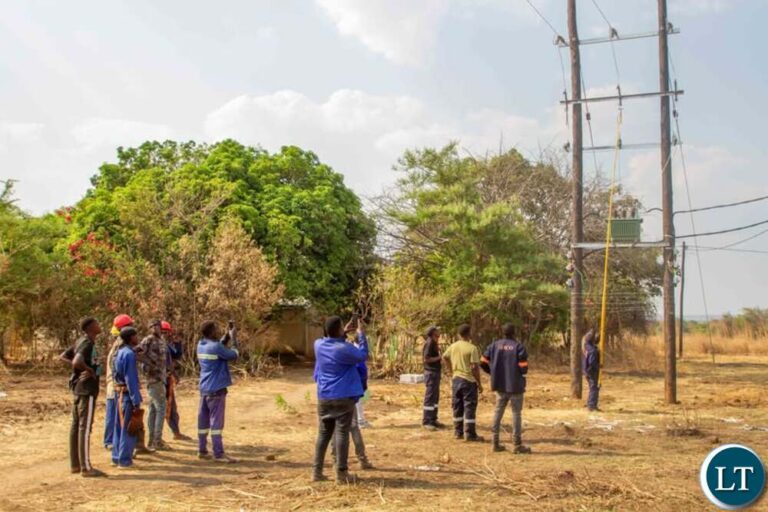
he Rural Electrification Authority (REA) has completed and commissioned 17 projects connecting 62 residential, commercial and institutional entities to the national electricity grid in Central Province.

REA Senior Community Development Officer, Vijue Moonga, told the media that the projects have been implemented in Kapiri Mposhi, Mumbwa, Shibuyunji, Mkushi, Serenje and Chibombo Districts.

Mr Moonga said the power projects are in line with the government’s policy of ensuring universal electricity coverage by 2030.

“Our target is to achieve universal access to electricity by 2030. Every corner of Zambia will be electrified by 2030,” Mr Moonga said.

He said more projects are being undertaken in Chibombo and Chisamba Districts.

Mr Moonga said REA will continue connecting rural parts of the country to the national electricity grid to uplift the living standards of the citizens.

“As REA, we will not leave anyone behind in fulfilling our mandate of taking electricity to all parts of the country,” Mr Moonga said.

He said the reduction of electricity connection fees from K4, 800 to K300 by the government for people living in rural and peri-urban areas, is a clear indication of its commitment to connect more people to the national electricity grid.

Mr Moonga further noted that the authority is optimistic that the anticipated high demand for electricity will be effectively met following the implementation of power generation projects across the country.

WARMA, Chinese Water Institute sign MoU

0

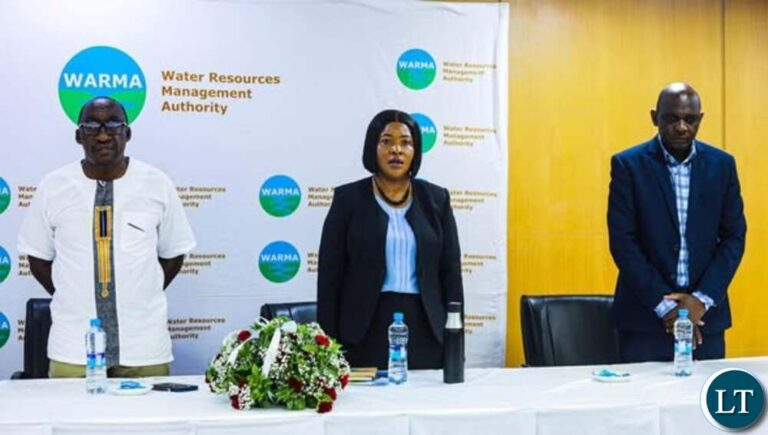
The Water Resources Management Authority

(WARMA) has signed a Memorandum of Understanding (MOU) with China Institute of Water Resources and Hydropower Research (IWHR).

Speaking during the signing Ceremony, Acting Director General Misozi Ngulube says the bilateral partnership is a major step toward safeguarding Zambia’s water security and strengthening national resilience against climate-related challenges.

The media reports that Mrs Ngulube said the MOU comes at a critical time, as Zambia continues to face increasing pressure on its water resources due to climate variability, frequent floods and droughts, rising population demands and competing water uses.

“To effectively respond to these challenges, our country must strengthen technical capacity, embrace innovative technologies and predictive and enhance analytical capabilities,”Mrs Ngulube added.

She explains that the partnership focuses on integrated water resources management, advanced hydrological and groundwater modelling, flood and drought early warning systems, dam safety, hydraulic infrastructure management, water governance, climate change adaptation, and hydro-informatics — including remote sensing, GIS, drone applications and data analytics.

Mrs Ngulube also said the cooperation will enhance WARMA’s capacity in water conservation, water quality forecasting, climate analysis, hydrological planning and water allocation.

She said that the partnership is expected to boost joint scientific research that will support national decision-making and policy formulation.

Mrs Ngulube stressed that the collaboration is not just about institutional relations, but ultimately about improving how Zambia manages its water resources to protect communities and build a resilient economy.

She said the partnership will help strengthen early warning systems, improve agricultural planning, ensure reliable access to clean and safe water, support hydropower production, build national expertise in water science and engineering, and enhance the resilience of households and critical infrastructure.

Mrs Ngulube reaffirmed WARMA’s commitment to making the MoU effective through active data sharing, technical collaboration, research support and sustained institutional engagement.

And Delegation Leader and Chief Engineer from the China Institute of Water Resources and Hydropower Research (IWHR), Peng Wenqi said the MOU will open up a new chapter for the water related management

Dr Peng expressed gratitude for finalising the strategic signing of the MOU between IWHR and WARMA.

ECZ urged to adopt AI in its operations

0

Senditoo, a software developing company specialised in digital solutions, has called on the Electoral Commission of Zambia (ECZ) to adopt Artificial Intelligence (AI) to enhance accuracy, transparency and operational efficiency in future elections.

Senditoo Managing Director, Elson Chigerwe, explains that integrating AI would significantly reduce incidents of ghost voters, while minimising opportunities for human manipulation and miscalculations.

Speaking in an interview with the media in Lusaka, Mr Chigerwe said AI has the capacity not only to safeguard the process but also to ensure that every count is accurate.

He added that AI can also revolutionise ECZ’s approach to planning and resource allocation.

 Mr Chigerwe said with advanced data-analysis tools, the commission would be able to determine population distribution, identify under-resourced areas, and allocate election materials and staff more effectively.

“In terms of resource planning, AI can tell you how many people are in a particular area and which regions are under-resourced. This helps in making adequate and timely allocations,” he noted.

Mr Chigerwe further pointed out that AI can strengthen election logistics by predicting how long it will take for voting materials to reach designated polling centres.

He also indicated that AI is capable of guiding decisions on where to establish polling stations for improved voter access.

And, Mr Chigerwe urged policy makers and political leaders to take AI seriously and integrate it into their daily operations, saying technology is now central to improving public service delivery.

Harrington Considers Legal Action Over Mwila’s Racial Remarks on Lubinda

Harrington Considers Legal Action Over Mwila’s Racial Remarks on Lubinda

LUSAKA — Former Tourism Minister William Harrington has begun consulting legal counsel on the possibility of filing a criminal complaint against former Patriotic Front secretary general Davies Mwila over televised remarks questioning acting PF president Given Lubinda’s eligibility for office on racial grounds. The comments made by Mwila, broadcast nationally and widely circulated online, have drawn swift condemnation from political, religious, and civic leaders across Zambia.

Harrington described Mwila’s statements as “hateful, offensive, and incompatible with constitutional principles on citizenship.” He emphasized that the 2016 constitutional amendments explicitly removed the parentage clause, affirming that any Zambian citizen holding a green national registration card is eligible to run for president, irrespective of race or ancestry. “To suggest otherwise is to deny the letter and spirit of our Constitution,” Harrington said about Mwila.

His move signals a potential escalation from public censure to formal legal accountability. Harrington said his legal team is assessing whether Mwila’s comments constitute hate speech under existing statutes, including provisions in the Penal Code that prohibit the promotion of discrimination or hatred based on identity.

The remarks surfaced amid intensifying leadership struggles within the Patriotic Front, which has seen multiple figures declare interest in the party presidency. Analysts note that while internal rivalries have produced sharp exchanges, Mwila’s racial framing marked a significant departure from accepted political discourse. “Political competition does not justify rhetoric that undermines the foundational principle of equal citizenship,” Harrington said.

Public reaction was immediate and unified. Editorials, church leaders, civil society organisations, and opposition figures issued statements condemning the comments as dangerous to national unity. Media outlets described the remarks as “reprehensible” and “a betrayal of Zambia’s anti racial legacy.” Commentators recalled that Zambia’s independence movement explicitly rejected racial hierarchy, and that post independence governance has sought to uphold an inclusive national identity.

Harrington stressed that his potential complaint is not motivated by partisan interests but by a duty to protect constitutional values. “The aim is not personal retaliation but to reinforce that public influence carries responsibility,” he said. He warned that failing to challenge such rhetoric could embolden others to use divisive language in future electoral contests.

Zambia’s legal framework includes provisions against hate speech and discriminatory incitement. Harrington argued these laws are not symbolic but serve to safeguard public dignity and social cohesion. If a case proceeds, legal observers say it could clarify the boundaries of lawful political speech and test the judiciary’s willingness to enforce anti discrimination statutes.

The Office of the Director of Public Prosecutions has not confirmed whether it has received a formal complaint. Mwila has not issued a public apology or retraction as of December 8, 2025.

Harrington said the episode underscores a broader imperative: that constitutional equality must be defended not only in law but in public conduct. “Zambia cannot afford to normalise language that divides citizens along racial lines,” he said. “The response to this incident will set a precedent for how we handle similar threats to our democratic values.”

Mundubile Demands MPs Return Alleged Bribe Money Linked to Bill 7

Mundubile Demands MPs Return Alleged Bribe Money Linked to Bill 7

LUSAKA — Patriotic Front presidential aspirant Brian Mundubile has called on Members of Parliament to return funds he alleges were paid to secure support for Constitution Amendment Bill No. 7, describing such payments as a betrayal of public trust. His statement sharpens scrutiny of the legislative process and elevates concerns about ethics, transparency, and the integrity of constitutional reform.

Mundubile contends that Bill 7 lost legitimacy the moment it was revived without resolving legal deficiencies flagged by the Constitutional Court in its earlier ruling. He argues that Parliament’s decision to proceed despite these unresolved issues created conditions ripe for unethical conduct. “If any MP accepted money to back this bill, they violated the fundamental duty owed to the citizens who elected them,” he said.

He framed the issue as one of national accountability, not partisan politics. According to Mundubile, constitutional amendments define the nation’s governance architecture and must be handled with the highest ethical standards. He warned that ignoring allegations of inducement risks permanent damage to public confidence in Parliament. “Citizens deserve clarity,” he said. “Those implicated must either deny the claims under oath or return the money and face consequences.”

The controversy arrives amid deepening public skepticism about Bill 7. Civil society groups, legal professionals, and faith-based organisations have repeatedly questioned the legality of reviving the bill without addressing the court’s objections. Mundubile said these concerns should have prompted a pause. Instead, he asserted, the rushed process opened space for “backroom deals that poison democracy.”

He stressed that constitutional reform cannot be legitimate if tainted by bribery. “The Constitution is not a commodity to be bought or sold,” he said. “It is the foundation of our republic.” He called on named MPs to publicly refund any funds received and submit to independent scrutiny. Without such action, he warned, the legislative process would be seen as compromised beyond repair.

Mundubile also highlighted the erosion of public trust. He noted that citizens increasingly view Parliament as detached from their interests, especially when handling foundational laws. “When people hear that votes on constitutional matters may have been purchased, they stop believing in the system altogether,” he said. He warned that this disillusionment could suppress civic engagement long after the current debate ends.

His remarks intersect with broader calls for accountability in public office. He argued that elected leaders must model integrity, particularly on issues that affect the separation of powers and democratic balance. “Constitutional amendments are not routine legislation,” he said. “They require consensus, not coercion or cash.”

Mundubile’s intervention comes amid heightened intra party competition within the Patriotic Front. While he did not present evidence in his public statement, he insisted the allegations warrant formal investigation. “Even the perception of corruption in constitutional matters is dangerous,” he said. “It must be confronted openly, not swept aside for political convenience.”

He urged the government to halt further consideration of Bill 7 until three conditions are met: a transparent account of how the bill complies with the Constitutional Court’s ruling, a public review of the revival process, and disciplinary measures for any proven misconduct. “Political expediency must never override constitutional integrity,” he said.

Parliament has not issued an official response to Mundubile’s allegations. No named Members of Parliament have publicly confirmed or denied receiving payments related to the bill. The Office of the Speaker has not announced plans for an inquiry. Meanwhile, civil society coalitions including the Governance Accountability and Policy Forum and the Zambia Council of Churches have reiterated calls for transparency in the amendment process.

The Constitutional Court’s 2024 ruling, which found procedural irregularities in the previous version of Bill 7, remains central to the ongoing dispute. Legal analysts note that the court declared certain clauses noncompliant with Article 79 of the Constitution, which outlines mandatory public consultation requirements for amendments affecting governance structures. Parliament has not published a legal memo demonstrating how the current version satisfies those requirements.

Mundubile’s statement was delivered during a press briefing in Lusaka attended by party officials and civic representatives. He provided no documentary evidence but cited unnamed sources within parliamentary circles. He said the matter requires urgent attention from law enforcement agencies and anti corruption bodies.

As of Monday, December 8, 2025, Bill 7 remains before the Committee Stage in the National Assembly. A final vote has not been scheduled.

Bill 7 Risks One Party Dominance, Warns Governance Activist Changala

Bill 7 Risks One Party Dominance, Warns Governance Activist Changala

LUSAKA — Political and good governance activist Brebner Changala has issued a strong warning that Constitution Amendment Bill No. 7 contains provisions that could steer Zambia toward one party dominance. His statement adds to growing concern among legal experts, civil society groups, and opposition figures who argue the bill reshapes the political landscape to favour those in power.

Changala pointed to clauses that adjust representation, expand executive authority, and alter the balance between state institutions. He said these changes are not neutral but deliberately tilt institutional dynamics in favour of the ruling administration. “Constitutional reforms must strengthen democratic competition, not weaken it,” he said.

He recalled that the Constitutional Court previously halted an earlier version of the bill, flagging serious legal and procedural concerns. According to Changala, the current iteration reappears without clear evidence that those judicial objections have been addressed. He expressed alarm that lawmakers are advancing the bill through a process many view as opaque. “Constitutional legitimacy requires transparent correction of flaws, not procedural repetition,” he said.

Changala emphasized that Zambia’s multiparty system depends on fair access to state institutions, equal opportunity for political parties, and credible mechanisms for leadership transitions. He warned that embedding structural advantages for the incumbent risks normalizing one party rule over time. “Once rules are rewritten to entrench those in power, future administrations may extend those advantages, slowly eliminating genuine competition,” he said.

His remarks arrive amid heightened public scrutiny. Citizens across urban and rural communities have voiced concerns through radio discussions, church meetings, and local forums. Many fear the bill centralises authority at a time when expectations for greater accountability are rising. Changala’s analysis provides a framework for understanding how technical legal changes could produce significant political consequences.

He also highlighted the bill’s potential to weaken parliamentary independence. If the executive gains broader discretionary powers while the legislature’s oversight role diminishes, he said, Parliament risks becoming a ceremonial body. “Healthy democracies require strong legislatures that can scrutinise appointments, question decisions, and act as genuine checks on power,” he said.

Beyond institutional mechanics, Changala warned of deeper societal effects. He argued that when political competition narrows, public trust declines. Voter participation drops, civic engagement shrinks, and political influence becomes confined to those with access to state resources. “Such trends are difficult to reverse once entrenched,” he said. “They distort governance, weaken national unity, and create openings for abuse.”

Changala insisted that constitutional amendments of this magnitude must emerge from broad national consensus. He criticized the current process for lacking inclusive consultation, public education, and meaningful input from diverse stakeholders. “Major reforms should not be driven by political strategy,” he said. “They must reflect the long term interests of the entire nation.”

He concluded that Zambia stands at a defining moment in its constitutional journey. The choices made now, he said, will shape the resilience of democratic institutions for decades. By labeling Bill 7 a “formula for one party state,” he aims to raise public awareness and prompt sober reflection among lawmakers.

Changala called on Parliament to withdraw the bill immediately and restart the process with full transparency, judicial compliance, and civic engagement. “This is not about partisan politics,” he said. “It is about whether we preserve a system where power remains limited, accountable, and transferable, or one where it becomes permanent and unchecked.”

His warning reinforces a broader call for restraint from civil society groups and legal professionals. As debate intensifies, observers say the handling of Bill 7 will serve as a critical test of Zambia’s commitment to democratic pluralism and constitutional integrity.

Parliament Faces Legal Rebuke Over Bill 7 Amid Judicial Contempt Claims

1

Parliament Faces Legal Rebuke Over Bill 7 Amid Judicial Contempt Claims

LUSAKA — Former Foreign Affairs Minister Harry Kalaba has accused Parliament of acting in contempt of the Constitutional Court by advancing Constitution Amendment Bill No. 7 despite a prior ruling that invalidated an earlier version of the measure. His intervention sharpens scrutiny of the legislative process and raises fundamental questions about the separation of powers in Zambia.

Kalaba contends that lawmakers have resumed work on the bill without first resolving the constitutional deficiencies identified by the court. He stressed that the tribunal’s judgment was binding, not advisory, and legally terminated the previous legislative effort. According to Kalaba, any new attempt to amend the constitution must begin afresh, with full compliance to the court’s reasoning.

“The continuation of this process places Parliament in direct conflict with the judiciary,” Kalaba said. “It signals that court rulings can be ignored when politically inconvenient.”

His remarks echo concerns expressed by legal experts, civil society organisations, and opposition figures. Several groups have called on Parliament to suspend consideration of the bill until it demonstrates how it has addressed the court’s objections. Some have demanded the full text of the ruling be read on the floor of the House to ensure transparency.

Public confusion has grown as senior officials offer conflicting interpretations of the court’s decision. Kalaba warned that inconsistent respect for judicial authority undermines long term stability. He noted that citizens increasingly view Bill 7 not as a technical amendment but as a test of institutional integrity.

Civil society coalitions have intensified pressure on lawmakers to clarify their legal basis for proceeding. Kalaba argued that the issue transcends partisan politics. “This is about whether all state institutions, including Parliament, will operate within constitutional boundaries,” he said.

Government spokespeople have dismissed critics as obstructionists, accusing them of misrepresenting the bill’s intent. Kalaba rejected that framing. He said the core dispute lies in whether Parliament acknowledges the supremacy of judicial review in constitutional matters.

He urged legislators to halt the bill immediately and initiate a genuine compliance process. “Once contempt for court orders becomes normalised, restoring institutional trust becomes exceedingly difficult,” Kalaba warned.

His statement arrives amid heightened public engagement on constitutional issues. Community forums, religious gatherings, and radio call-in shows reflect widespread concern over perceived disregard for the rule of law. Observers say the controversy surrounding Bill 7 now serves as a litmus test for Zambia’s commitment to checks and balances.

Kalaba called on leaders across party lines to prioritise constitutional fidelity over short term political objectives. He warned that failure to do so could entrench a culture where legal constraints are treated as optional.

Mother and Daughter Killed in Tragic Kabanana Electrocution

0

A tragic electrocution in Lusaka’s Kabanana area has claimed the lives of a 44-year-old woman and her 10-year-old daughter, while injuring a second daughter who attempted to rescue them.

According to police spokesperson Godfrey Chilabi, the incident occurred around noon yesterday when the mother, Priscilla Mwansa, was electrocuted while hanging laundry on a washing line. The line had made contact with electrically charged iron sheets on the roof of the home.

Upon seeing their mother in distress, her two daughters, 24-year-old Roma Banda and 10-year-old Faith Banda, rushed to help. During the rescue attempt, the drying wire snapped, causing all three to fall to the ground.

Priscilla Mwansa and young Faith Banda died instantly at the scene. Roma Banda sustained burns on her hand and is currently receiving treatment at Chipata Level One Hospital.

The bodies of the deceased have been taken to the University Teaching Hospital mortuary for a post-mortem examination. Personnel from ZESCO Limited were notified and attended to the scene to address the electrical hazard.

Police have opened an inquiry file into the matter.

Government Spokesperson Accuses NGOCC of Betraying Women’s Progress Over Bill 7

2

Chief government spokesperson Cornelius Mweetwa has accused the Non-governmental Gender Organisations’ Coordinating Council (NGOCC) of aligning with the “enemy of women’s progress” for opposing Constitutional Bill 7.

Mweetwa expressed deep concern that NGOCC, traditionally a leading voice for women’s empowerment, is now resisting what he described as the most practical legislative route to guarantee representation for women and young people in Parliament. Speaking on national television, he stated that President Hakainde Hichilema is disturbed by the organization’s sudden shift, arguing it contradicts its longstanding advocacy for greater female participation in leadership.

He asserted that instead of supporting legislation aimed at expanding political space for marginalized groups, NGOCC has chosen to join forces with what he characterized as opponents of women’s progress.

The minister also criticized the Law Association of Zambia (LAZ), accusing it of issuing statements on Bill 7 without first consulting its membership. He contrasted this with LAZ’s approach during the debate on Bill 10, when it conducted consultations with lawyers before taking a public position.

Mweetwa further highlighted a growing rift within civil society, noting that the student movement has broken ranks with the Oasis Forum to support Bill 7. He said student leaders endorse the bill because it creates a direct mechanism for youth participation in governance, rather than having older groups speak on their behalf.

He commended the students for their historical role as champions of the disadvantaged and their clear stance in supporting the bill. Mweetwa concluded that opponents of Bill 7, including some political parties and civil society allies, seem intent on objecting to government initiatives regardless of merit. He reiterated that the bill is uncontroversial and that the technical committee will reflect the position of the majority in its final recommendations.

Minister Nzovu Calls for Civil Debate on Constitutional Bill Seven

0

Water Development and Sanitation Minister Collins Nzovu has called for respectful and civil debate on the proposed Constitutional Bill Seven. Minister Nzovu emphasized that in a democracy, differing views should be expressed without resorting to personal attacks or disrespect toward political and religious leaders.

He stated that while the Catholic Church and the UPND administration hold opposing views on the amendment process, this disagreement does not equate to animosity, noting that the two parties agree on many other issues. In a statement to the media, Nzovu appealed to the Church to tolerate and accept the views of other citizens and church members who support the bill.

The Minister highlighted that there are serving government officials who are Catholic and support Bill Seven, and their opinions deserve equal respect. He argued that the bill aims to improve social justice and uplift ordinary citizens, which is why he condemns insults directed at clergy who oppose it, as well as offensive language aimed at its supporters.

Nzovu also pointed to the UPND government’s record on social justice, citing initiatives such as the free education policy, the Constituency Development Fund (CDF), cash-for-work programs, social cash transfers, and large-scale employment efforts as evidence of its commitment to supporting vulnerable communities.