Monday, June 8, 2026
17 C
Lusaka
Home Blog Page 221

Hon. Davies Mwila’s Remarks Unacceptable – Ambassador Mwamba

Hon. Davies Mwila’s Remarks Unacceptable—Ambassador Mwamba

Lusaka, December 7, 2025 — Ambassador Emmanuel Mwamba has issued a measured yet unequivocal condemnation of recent remarks by former Patriotic Front (PF) Secretary General Hon. Davies Mwila, calling them “racist,” “unacceptable,” and fundamentally at odds with Zambia’s constitutional values, remarks that surfaced even as the nation mourns the sudden passing of Kasama Mayor Theresa Kolala Khumalo. These comments are particularly troubling given the current socio-political climate in Zambia.

Ambassador Mwamba began by extending heartfelt condolences to the late mayor’s family, the Kasama Municipal Council, the PF leadership, and the people of Kasama. Mayor Kolala Khumalo passed away on December 5, 2025, at St. Fidelis Mission Hospital in Chilubula a date that, poignantly, marks six months since the death of former President Edgar Chagwa Lungu on June 5, 2025. Mwamba urged Zambians to honour her legacy not with political point-scoring, but through the values she embodied: unity, peace, and principled cooperation.

As the conversation around these remarks unfolds, it is crucial for leaders in Zambia to promote dialogue that uplifts the nation rather than divides it.

It was against this solemn backdrop that Mwamba addressed Hon. Mwila’s comments, aired on Diamond Live, a pre-recorded programme broadcast on Diamond TV. “I watched the segment with disbelief,” Mwamba said, describing Mwila’s remarks directed at PF Acting President Given Lubinda as not only inflammatory but deeply offensive. He emphasized that because the show was pre-recorded and hosted by an experienced anchor, the station bore a clear editorial responsibility to excise such content before broadcast. “To air it was not oversight it was negligence,” he stated.

At the heart of the controversy is Mwila’s insinuation that Hon. Lubinda is constitutionally ineligible to lead the PF or stand as its presidential candidate due to questions about his parentage. Ambassador Mwamba firmly rejected this claim, citing Article 100(1) of the Constitution and Section 17 of the Electoral Process Act No. 35 of 2016, both of which affirm that eligibility requires only that a candidate be “a citizen of Zambia by birth or descent.” He noted that Lubinda meets this threshold unequivocally.

Mwamba then provided essential historical context. He recalled that the so-called “parentage clause” which once required both parents of a presidential candidate to be Zambian was introduced in the 1996 constitutional amendment and later challenged in the landmark 1998 Supreme Court case Lewanika v. Chiluba. The Court interpreted the provision generously, recognizing that individuals who acquired citizenship at independence in 1964 or would have, had they been alive satisfied the spirit of the law. Critically, Mwamba reminded the public that this clause was fully repealed in 2016, rendering any reliance on it today not just outdated but misleading.

“Hon. Mwila served ten years as MP for Chipili and as Minister of Home Affairs,” Mwamba said. “One would expect him to know better. If he does not, it is a failure of memory; if he does, it is a betrayal of principle.”

He called on Mwila to issue an immediate and unreserved apology not only to Hon. Lubinda but to the nation. “We are a republic founded on multi-ethnic, multi-racial, multi-religious, and multi-cultural unity,” Mwamba stressed, quoting Article 4(3) of the Constitution. He further invoked Article 11, which guarantees equal enjoyment of rights “irrespective of race, origin, political opinion, colour, creed, sex or marital status.” Remarks that weaponize ethnicity or perceived racial identaity, he warned, “are not political critique they are constitutional violations disguised as opinion.”

Beyond the personal affront, Mwamba expressed deep concern about the timing and intent of Mwila’s statements. With the 2026 general elections approaching, internal cohesion within the PF is more vital than ever. He noted that since 2021, the party has faced “unrelenting institutional pressure,” including what he described as politically motivated actions by the Office of the President and the Registrar of Societies such as the controversial installation of a rival faction led by expelled Mafinga MP Robert Chabinga, which Mwamba alleges was designed to fracture party unity and undermine members’ constitutional rights to freedom of association.

Even so, he insisted, internal disputes over leadership, general conferences, or successionmust be resolved through dialogue, not division. “We cannot allow external forces to dictate our destiny while we tear each other apart from within,” he said.

In closing, Ambassador Mwamba appealed for restraint, reflection, and reconciliation. “The PF has lost two giants this year President Lungu and now Mayor Kolala Khumalo. Let their legacies remind us of what unity looks like. Let us honour them not with noise, but with dignity.”

He ended with a quiet but firm admonition: “Zambia deserves better. And so do we.”

Solar milling plants in North-Western Province making a difference

0

Zambia Cooperative Federation Regional Coordinator, Lloyd Kanyungu, says local communities across North-Western Province have continued to have access to solar energy initiatives implemented by the government through the Ministry of Small and Medium Enterprises.

Mr Kanyungu says the 100 solar milling plants dotted in all the districts in the province have enhanced access to affordable mealie meal and other food supplements for the local communities.

Speaking in an interview with the media in Solwezi, Mr Kanyungu disclosed that th e solar milling plants are dotted in all the districts to provide maize processing services to the far flung places.

He added that the government remains committed to ensuring communities have equal access to energy services and as such the installation of the solar energy milling plants is testament of its commitment.

Mr Kanyungu said community members were made to walk long distances to process their maize into mealie meal and sample, but that is not the case now as milling plants have been brought as close to their homes as possible.

He revealed that the initiative could not have come at a better time than this when the country has continued to grapple with load shedding.

Mr Kanyungu further added that the Zambia Cooperative Federation promotes value addition and urged all cooperatives in the province to utilise the initiative by producing maize in large quantities and process it into maize meal for income generation.

He also noted that the processing of maize meal by cooperatives will help with complimenting government’s effort in cushioning food security at household level and in the country at large.

‘‘The solar milling plants have been placed in all the 11 Districts of North – Western Province to allow the communities to process their maize as close to the homes as possible.

“As ZCF, we want all cooperatives to take interest in growing enough maize that will be processed into Maize meal and sold at a cheaper price,” he said.

Micheal Mbangu, a worker at a milling plant situated in Zangamenu and being managed by Natco Multipurpose Cooperative, expressed gratitude to the government for bringing solar milling plants in the communities, adding that it has created employment to youths.

‘’This intervention is highly commendable and I want to thank the government for bringing such services that are improving our livelihoods. Natco Cooperative has employed me here to work for them and when they pay me, I am able to take care of my family,”Mr Mbangu said.

He further appealed to the government to also consider electrifying the milling plants to enable them to function in rainy season, adding the province usually experiences heavy rains and during such times there is little to no sunlight.

Govt. calls for more support towards SGBV survivors

0

Government has called on the private sector to partner with Copper Rose Zambia in supporting the organisation’s initiative aimed at raising over K250,000 to renovate and equip a safe house for survivors of Sexual and Gender-Based Violence (SGBV) in Lusaka.

Minister of Youth, Sport and Arts, Elvis Nkandu, has described the initiative as a powerful expression of the government’s shared commitment to creating safe environments where youths can thrive.

The Media reports that in a speech read on his behalf by the Ministry’s Permanent Secretary, Kangwa Chileshe, during Copper Rose Zambia’s 10th Anniversary Gala Dinner in Lusaka last evening, Mr Nkandu noted that SGBV hinders youths from participating in sports, arts, education and leadership.

“A safe house is more than shelter, it is the first step towards healing, security, and renewed potential. This partnership with YWCA and Copper Rose Zambia demonstrates the multisectoral approach required to tackle this national challenge. This is not just social work, this is nation-building,” he said.

Mr Nkandu further stated that government recognises that the responsibility of youth empowerment cannot rest on civil society and government alone, and urged the corporate sector to rise to the occasion.

Speaking at the same event, Ministry of Health Permanent Secretary for Technical Services, Kennedy Lishimpi, in a speech read for him by Zambia Association of Gynaecology (ZAGO) President, Dr Samson Chisele, commended Copper Rose Zambia for championing menstrual health long before it became a mainstream conversation.

Dr Lishimpi indicated that in partnership with the Ministry of Health, Copper Rose Zambia has reduced stigma, promoted hygiene and advocated for policy improvements.

He added that menstrual health interventions have significantly contributed to keeping girls in school and improving women’s dignity.

Meanwhile, Copper Rose Zambia Board Chairperson, Cheswa Vwalika disclosed that Copper Rose Zambia has reached over 250,000 adolescents and young people with important messages on sexual and reproductive health, HIV prevention and mental health.

Dr Vwalika also disclosed that Copper Rose reached 25,000 boys and young men across seven districts and reduced school dropout risks.

“Over 12,000 young people were referred to essential services, and we trained more than 1,000 healthcare providers to deliver youth-friendly care,” she added.

Mongu District Electoral Officer calls for peaceful elections

1

Mongu District Electoral Officer, Oliver Muuka, has called on various political parties in the district to co-exist before, during and after the two upcoming local government by- elections in Litawa and Mutondo wards in Nalikwanda Constituency.

Mr Muuka says political players were key drivers in maintaining peace and unity of the nation as they have the power to control electorates and party members from engaging themselves in political violence.

The media reports that Mr Muuka was speaking today during the briefing meeting held at Council Chamber in Mongu, indicating that failure by any political parties to maintain orders can disrupt electoral process and trigger confusions in the country.

He has since implored all political parties in the district to abide by electoral laws and regulations in order to ensure a peaceful electoral environment for voters.

Mr Muuka was quick to warn that the law will punish anyone found wanting regardless of their political affiliations.

He has also urged Journalists to report fairly and balance their stories to ensure equal coverage of all political parties, adding that any unprofessional reporting has the potential of plunging the country into political chaos.

And Litawa Ward Assistant Returning Officer, Simaubi Mazala, said Police Officers also play a critical role in ensuring elections are conducted in a peaceful and transparent manner

Mr Mazala observed that voters and some political players are usually found in conflict with the law because they try to take the law into their own hands.

He has therefore asked all voters not to intervene with police operations.

And, Forum for Democracy and Development (FDD) Provincial Secretary, Kelvin Sipalo, said elections are a prime base on which democracy is anchored and called for peaceful by- elections.

The Electoral Commission of Zambia is set to conduct three by- elections in Western Province, with two being in Mongu District in Nalikwanda Constituency and one in Senanga District.

President Hichilema assures farmers of receiving farming inputs in good time

0

President Hakainde Hichilema has reaffirmed government’s commitment to providing farming inputs to farmers under the Farmer Input Support Programme (FISP) in good time for the 2025-2026 farming season.

And, President Hichilema notes that he is aware of farmers that sold their maize to the Food Reserve Agency (FRA) and have not yet been paid.

President Hichilema has since assured the farmers that government is committed to ensure that farmers are paid on time despite the challenges that are being experienced.

The media reports that the President was speaking in Siavonga at the Bagande Traditional ceremony in a speech read for him by Minister of Local Government and Rural Development, Gift Sialubalo.

Mr Hichilema further reaffirmed government’s commitment to developing all parts of the country, as witnessed from the increased Constituency Development Fund (CDF) in the past four years from K1.6 Million in 2021 to K40 Million in 2026.

The Head of State also stated that Siavonga has not been left out as over 16 projects across the district in all the 12 wards are being implemented.

“Development is being taken to all rural communities through the provision of water reticulation systems, and improved infrastructure in the education and health sectors,” Mr Hichilema said.

He also indicated that government has already allocated K1.4 Billion to provide clean and safe water to rural communities, and that an additional 3,500 teachers and 2, 500 health workers county wide has already been set to be recruited.

The President said among other things, the government has targeted to increase Social Cash Transfer to 1.5 million households to support the elderly and vulnerable citizens.

Earlier, Chief Simamba thanked the government for the mass development in infrastructure such as the Chief’s palace, schools and health facilities in the Chiefdom.

“We thank the government for the massive infrastructure we are seeing in the chiefdom, schools and renovation of classroom blocks and also the free education that the children are benefiting,” Chief Siamamba said.

Speaking through his Representative, Phanuel Simamba, Chief Siamaba also called for peace and unity among Zambians across the country.

Govt. to cover funeral expenses for the Solwezi-Chingola Road accident

0

 North-Western Province Permanent Secretary, Grandson Katambi, says government will cover funeral expenses for the eight people from Mushindamo District who died in a road traffic accident along the Solwezi-Chingola Road.

The tragic incident occurred on Tuesday 2nd December, 2025 when a canter carrying people who had gone to sell maize in Solwezi was involved in an accident on their way back to Mushindamo, with eight people dying on the spot while five are hospitalised.

Col Katambi retired, said government understands the challenges that come with such predicaments, hence, the initiative to extend a helping hand.

The media reports that speaking when he visited a representative of the grieving families, the Permanent Secretary appealed to the families and the owner of the vehicle to quickly come to an agreement so that the deceased could be laid to rest.

“We sympathise with you and we hope that you can come to an agreement that will allow the loved ones to be put to rest,” he said.

He disclosed that government will procure coffins, provide food, and offer other logistical support during the burial.

Col Katambi (rtd) also visited victims of yesterday’s Likili Road Traffic Accident, who are admitted to Solwezi General Hospital.

He has also sent a message of condolences to the families of the eight who died in the canter accident and the two who died in the Likili bus accident.

“We are mourning with you during this difficult time,” he said.

Col Katambi (rtd) has further called on motorists to adhere to traffic rules to help prevent accidents and save lives.

Speaking on behalf of the eight families, Kenneth Kasongo, has thanked the government for coming to the aid of the families.

He added that the support will cushion the challenges they are facing during this difficult time.

Government concerned with high prices of cement

1

Minister of Commerce, Trade and Industry, Chipoka Mulenga, has directed cement manufacturing companies to normalise prices and address the shortage of the commodity on the local market by Monday.

Mr Mulenga has expressed concern with the high prices of cement in the country.

He says it is worrying that the commodity is highly available for the export market at the expense of local consumers.

The media reports that speaking when he met officials from cement manufacturing companies in Lusaka today, Mr Mulenga said the government is pleased with high demand of cement both locally and internationally.

He, however, said that while it is encouraging to see a demand in the commodity both internationally and locally, this should not lead to exorbitant pricing and shortage of cement on the local market.

Mr Mulenga disclosed that President Hakainde Hichilema directed his Ministry to hold a meeting with cement manufacturers to find a common solution that will benefit the Zambian consumer.

Meanwhile, cement firms have pledged to work hard to quickly address cement shortages and pricing of the commodity.

Speaking on behalf of the companies, Dangote Cement, General Manager for Sales and Marketing, Cassandra Mhone, said for both the short and long term, the firms will improve their production capacities.

Ms Mhone assured that the companies will try to navigate around the challenges they are facing in terms of power supply for the plants based in Ndola.

ZESCO Chief Operations Officer, Peter Chamfya, assured the firms that power shortages will be addressed for Dangote Cement and Zambezi Portland Cement plants in Ndola immediately, as premium customers will not be affected by load management.

Chilanga Cement, Zambezi Portland, Sinoma Cement and Dangote Cement were all represented in the meeting.

President Hichilema is Taking The Country Into Civil Unrest – Mwamba

3

President Hichilema is Taking The Country Into Civil Unrest

The recent serious post-election conflicts witnessed in the neighbouring states of Mozambique and Tanzania, saw wide-spread violence, looting and riots, needless loss of life, damage to public and private property, and the subsequent threats to the countries’ national peace, security, and stability, provide credible insights, fear and prediction to where Zambia is going into in 2026. The situation is reflective of trends that could escalate if not addressed promptly.

Sadly for the Sahel and parts of West Africa Region, we have recently witnessed grave turn of events where post-election conflicts and poor handling of the electoral process have led to military coups, often triggered by disputed results, lack of electoral credibility, insecurity, especially with legacy issues such economic hardships as seen in Mali, Guinea, Burkina Faso, Chad, Niger, Gabon, and Sudan,

The seizure of power, using the excuse and citing failure to deliver democracy or credible elections and stability, have instead seen the worsening of human rights and governance and the installation of military dictatorships in these countries-the very serious issues that credible, democratic and transparent elections and fair electoral process are designed to cure and prevent.

The mishandling of pre-election issues and concerns have shown that they spawn deadly consequences and now threaten the democratization process that Zambia and Africa embarked on.

Therefore, it is crucial for Zambia to learn from these regional dynamics to ensure a stable political environment.

H.E Hakainde Hichilema

It must be stated without any fancy illusions or pretence, that President Hakainde Hichilema has been both methodical and systematic in setting up a dangerous stage for Zambia to degenerate into civil unrest.

He has embarked on a clear path to undermine and destroy democracy and the Rule of Law by attempting to steal, kill and destroy the largest Opposition party in Zambia-the Patriotic Front (PF).

This action alone has undermined the multi-party character of our democratic nation.

He has enacted extremely draconian laws, relived such archaic and anti-democratic laws such as seditious laws.

He recently hijacked legsilation against cyber security and cyber crimes to weaponise them against speech and freedom of expression.

Even mundane legislative amendments to laws such as ZNBC and IBA Acts have seen provisions placed on to undermine freedom of expression and freedom of the media.

From the onset, he appointed stooges, UPND loyal cadres to head both Parliament and the Electoral Commission of Zambia.

Wherever he found professional public workers such as the Chief Registrar of Societies, Thandiwe Phiri-Mhende, who attempted to prevent the breaking of the law, they were forcibly removed from their offices and positions to pave way for the lawlessness that occurred and prevails.

To control the Judiciary totally, President Hakainde Hichilema has appointed a significant number of judges, and by 2025, over 50 new judges across various superior courts (High Court, Court of Appeal, Constitutional Court) since he took office, including major batches like 20 in early 2023 and another large group of 27 in one instance, aiming to reshape Zambia’s judiciary.

The Judges did not go through a competitive and public process and many were poorly qualified to hold the positions.

The recent events surrounding Bill 7, a proposed law to extensively change the governance framework, including: Expansion of Parliament: Increasing the number of constituency-based seats in the National Assembly from 156 to 211,remove two-term limits for local government leaders, and revise nominations and electoral procedures.

These changes are dramatic and extensive and cannot be done without establishing a legal framework, engage in a broad consultative process and gain acceptance among key stakeholders.

Despite the Constitutional Court striking down this Bill 7, both Government and The Speaker of the National Assembly refused to comply with court orders and kept the Bill active on the floor of the House.

State House embarked on a hurried and what later became a sham process by appointing a motley group they purported was a Technical Committee on the constitution-making process, and without enacting supporting legal framework and giving the Committee an impossible deadline, were it was made to conduct what they purport were a consultative process.

Sadly both the Draft Constitution and Report emerging from this process has been discarded as the law required for the implementation would require fresh public gazette and notices.
As stated by the Law Association of Zambia(LAZ) Bill 10 is dead and government has a duty to comply with court orders.

State House has abandoned talks and negotiations with the OASIS Forum, a key grouping representing the Church, civil society actors and the Law Association of Zambia.

It has become apparent that President Hichilema halted public demonstrations against the Bill and tricked the leadership of the OASIS Forum into talks destined to window-dress his masked intentions to enact Bill 7 into law.m
To everyone’s horror, the Speaker of the National Assembly, Nelly Mutti appointed a Select Committee and ordered that it starts work and conduct hearings to prepare for Bill 7 to come up for second reading.

It is sad to witness Parliament continuing to act with utter contempt of court by hearing and conducting proceedings for Bill 7.

It must be noted that the Speaker of the National Assembly, her Deputies and members of Parliament have been cited for contempt for discussing a Bill that has been declared illegal and unconstitutional by the Constitutional Court.

On Friday 5th December Members of the Select Committee; Hon. Garry Nkombo (Mazabuka), Sibeso Sefulo (Mwandi), Brian Kambita (Zambezi East) Emmanuel Banda (Serenje), Sibongile Mwamba (Kasama Central), Mubita Anakoka (Luena), Jacqueline Sabao (Chikankanta), Stanley Kakubo (Kapiri Mposhi), Newton Samakayi (Mwinilunga), Simon Banda (Petauke), Wamunyima Imanga (Nalolo), Misheck Nyambose (Chasefu), Elias Daka( Msanzala), Davies Mungandu (Chama South), and George Kandafula (Serenje), began a hurried process to rush the process of finalizing the Bill before Parliament adjourns sine die.

It clear that President Hichilema is determined to enact and entrench a dictatorship, reverse the democratic dividends so far achieved and attempt to guarantee his rule over Zambia with or without the Will and Consent of Zambians.

This is a dangerous path for our country and well -meaning Zambians and institutions must stand and halt the perilous path President Hichilema is subjecting the country to.

With his detrimental actions against democracy so far witnessed, President Hichilema has become a sole danger to our democracy, is threatening our peace and his actions threaten the stability of our country.

It is also important for the international community, especially those invested in our country using their financial, human and technical resources, to take keen interest in Zambia’s pre-election instability brewing and help to prevent Zambia to be plunged into chaos as recently seen in Mozambique, Tanzania and other parts of Africa and to ensure that the country holds credible, democratic, free and fair elections so that our peace, security, stability and our sincere quest to promote sustainable development, is not disrupted or destroyed.

It is easier to manage pre-election political tensions and threats to peace than handle post-election conflict and violence.

Amb. Emmanuel Mwamba

Chairperson of Information and Publicity
Member of the Central Committee
PATRIOTIC FRONT

Technical Committee Report Sets Out Broad Constitutional Changes Amid Legitimacy Disputes

4

Technical Committee Report Sets Out Broad Constitutional Changes Amid Legitimacy Disputes

Lusaka, December 6, 2025. The Technical Committee appointed by President Hakainde Hichilema to examine proposed constitutional amendments has released an extensive package of reforms against a backdrop of continuing objections from groups that question the legality of the process. Critics argue that the decision to proceed with Bill 7 disregarded earlier court interventions and bypassed parliamentary standing orders, which prevent reintroducing a rejected Bill in the same session. Despite these concerns, the committee completed its assignment and has now outlined significant adjustments to Zambia’s political and administrative framework, including measures that will impact governance in Zambia. This process aims to ensure that the voices of all citizens in Zambia are considered, thus reinforcing the commitment to a democratic Zambia.

The committee, chaired by retired Justice Christopher Mushabati, was appointed on October 2, 2025. It conducted provincial sittings in all ten provinces and supplemented these with virtual sessions in district council chambers. Written submissions were received through submission boxes across all districts, the official website and email platform, as well as oral presentations in English, local languages and sign language. The report confirms a total of 11,864 submissions, including 2,181 made during public sittings, 3,667 through district submission boxes and 6,016 via online platforms. These contributions informed the recommendations contained in the document, further highlighting the importance of citizen engagement in shaping the future of Zambia and ensuring that every citizen’s voice in Zambia counts towards a thriving Zambia.

A central proposal is the introduction of a Mixed Member Proportional Representation system for Parliament and local government. The National Assembly would increase to 283 members, consisting of 226 constituency based Members of Parliament elected under First Past the Post, and 40 reserved seats allocated through closed party lists according to each party’s share of the national vote. The reserved seats would be distributed as follows: 16 for women, 12 for youth and 12 for persons with disabilities. In addition, the Assembly would include up to 10 nominated Members of Parliament, the Vice President, the Speaker and the First and Second Deputy Speakers.

The committee states that these proposals respond to the wide support expressed during consultations for enhanced participation of groups that are not well represented in the current political structure. Submissions from the public drew attention to regional and international practices that use proportional mechanisms and quotas to broaden representation. The committee notes that several past constitutional review bodies have recommended similar adjustments.

The report includes a recommendation to lock the total number of constituencies in the Constitution and require a transparent delimitation process at intervals of not more than ten years. This process would rely on census data to ensure that constituency boundaries reflect population changes and support fair allocation of public resources. The committee also proposes clearer rules for handling nomination disputes by adding an appeal mechanism that allows unsuccessful candidates before a nomination tribunal to appeal to the Constitutional Court within seven days, with the Court required to hear and determine the matter within twenty one days.

With regard to the executive, the committee recommends amending Articles 116 and 117 to require that Ministers and Provincial Ministers be appointed from outside Parliament, subject to ratification by the National Assembly. The report states that this measure would improve separation of powers, strengthen oversight and allow Members of Parliament to focus on constituency and legislative responsibilities. It also recommends that Ministers continue in office after Parliament is dissolved to preserve continuity in the discharge of executive functions.

Local governance proposals include removing term limits for mayors and council chairpersons, leaving decisions about tenure to voters. The committee further recommends retaining by elections, citing their value for accountability and representation. Public submissions also called for Councillors to receive gratuity, and for Councillors and Ward Development Committee members to be considered for salaries. These proposals are included in the committee’s summary of recommendations. The committee also recommends replacing the phrase “Grade 12 certificate” with “School Certificate” in relevant sections of the Constitution.

The report sets out additional reforms, including extending the presidential petition hearing period from fourteen to twenty one days and ensuring that the Attorney General and Solicitor General remain in office until successors are appointed. It standardises age definitions by classifying a child as a person under eighteen, a youth as a person aged eighteen to thirty four and an adult as anyone eighteen or older.

Taken as a whole, the report outlines major adjustments to Zambia’s electoral system, governance arrangements and administrative processes. The scope of the recommendations reflects both the volume and diversity of submissions received, even as questions about how the process progressed continue to feature prominently in national discussion.

Click here for Full Report
REPORT-OF-THE-TECHNICAL-COMMITTEE-ON-THE-AMENDMENT-OF-THE-CONSTITUTION-OF-ZAMBIA

CDF-Driven Projects Accelerate Local Development Across Districts

CDF-Driven Projects Accelerate Local Development Across Districts

Developmental activity across Zambia continued to build pace as Constituency Development Fund allocations and district-level contributions produced visible improvements in schools, clinics, water systems and local enterprise facilities. The decentralised financing model, which places decision-making closer to communities, has resulted in a surge of projects completed or underway in several regions.

In Sinda and Kapoche, Government officials commissioned a group of CDF-funded initiatives valued at about K10 million. The projects include a youth-operated metal fabrication workshop, newly constructed classroom blocks and rehabilitated boreholes. Ward development committees identified the interventions as priority needs for their communities, and district authorities said the approach has strengthened local participation in planning. Teachers in the area said additional classrooms will reduce congestion, particularly in lower grades where large class sizes have disrupted learning. The fabrication workshop is expected to support technical training and introduce new income opportunities for young people.

Sinda District leadership noted that decentralised financing has shortened approval timelines and allowed constituencies to move more quickly on projects. Officials explained that communities now have increased visibility into the planning process, which has improved both accountability and engagement. They said the model enables authorities to act directly on concerns raised by residents without long waits for central approval.

In Kasama, the Municipal Council procured earthmoving machinery worth K16 million to improve feeder road networks. The equipment includes graders, rollers and tipper trucks intended to strengthen the district’s capacity to maintain rural roads that connect villages to markets and public services. Farmers have previously recorded losses during rainy seasons when roads became impassable. Council representatives said the new machinery will help address transport challenges and reduce crop spoilage linked to poor road conditions.

Several wards in Kabwe reported improvements in health facilities following CDF investments. Clinics received maternity beds, solar installations and structural repairs to ease pressure on overstretched health posts. Health workers said the upgrades will allow them to serve more patients, including expectant mothers who previously travelled long distances to find reliable care. Community representatives said the changes were long awaited and would help stabilise services in facilities that had struggled with limited infrastructure.

School construction also advanced in Mwinilunga, where CDF allocations have funded classroom blocks at multiple sites. Headteachers said the new structures have reduced absenteeism and dropout rates linked to deteriorated buildings. Many of the old classrooms suffered from leaks, insufficient space and poor ventilation. Local contractors were hired for the works, contributing to short-term employment and adding financial activity within the district.

Kapopo Secondary School completed a major rehabilitation project using its 2025 CDF allocation. Roof repairs, repainting, window replacements and staff room improvements were carried out to enhance durability and learning conditions. School administrators said the upgrades came at an ideal time, as enrolment has increased steadily and the school needed reliable infrastructure to accommodate growing numbers.

Other districts reported youth empowerment initiatives supported by the fund. Welding machines, carpentry kits and block-making equipment were distributed to youth cooperatives to support small business development. Local authorities said strengthening youth enterprises remains central to the aims of the CDF framework, as it can generate both skills and livelihoods.

District officials across several provinces said the decentralised model has accelerated development by reducing bureaucratic delays. They said ward participation has made project selection more responsive and community-focused. While they acknowledged the need for stronger monitoring to ensure timely completion and quality assurance, they described the overall momentum as encouraging.

Complementary support from ministries, NGOs and development partners added value to CDF-funded projects through additional school furniture, medical supplies and minor bridge construction. Combined, these efforts contributed to closing service gaps that have affected rural and peri-urban areas.

As of early December 2025, development gains across Zambia reflected a shift in how communities plan and implement infrastructure. With CDF at the centre of these changes and local authorities driving implementation, districts continued to record advances in education, health, transport and youth enterprise, contributing to a broader foundation for national progress.

Parliament begins hearings on Bill 7

3

Parliament has formally opened public hearings on the Constitution of Zambia (Amendment) Bill Number Seven of 2025, ushering in a critical stage of the Government’s effort to revise key parts of the national charter. The Select Committee, chaired by Nalolo Member of Parliament Imanga Wamunyima, held its first session in Lusaka, where the Zambia Law Development Commission appeared as the first witness.

The session began with an overview of the main issues under review: how by-elections are handled, the rules for independent candidates to qualify, and what happens when a parliamentary seat becomes vacant close to a general election. The Commission shared findings showing that frequent by-elections strain public finances and interrupt the normal rhythm of governance. Vice Chairperson Chipo Nkatha proposed a practical solution avoiding full elections for vacancies that occur within 180 days of a general poll, and instead managing them through administrative means.

Nkatha also spoke about Article 52, underlining that the law must safeguard the right of independent candidates to take part in elections on equal footing. She made it clear that the Constitution should not create unnecessary barriers that make it easier for party-backed candidates while making it harder for independents. The Commission argued that the current system needs fine-tuning to ensure electoral access is open, fair, and rooted in enduring democratic values.

Meanwhile, Government Chief Spokesperson Cornelius Mweetwa addressed the national conversation around the amendment process. He emphasized that the Government is not rushing changes but is working within the framework laid out by Parliament. According to Mweetwa, the proposed reforms aim to strengthen governance, and the process includes parliamentary oversight, legal scrutiny, and public input. He urged that the debate not be cast as a standoff between Government and civil society, but as a shared effort to shape a modern constitutional order.

In a related legal development, the Constitutional Court removed President Hakainde Hichilema from contempt proceedings brought by Brian Mundubile. The court found that the President had not been properly included in the case, noting the allegations did not meet the legal standard required to compel his appearance. It also chose not to stop the declaration of the Chawama parliamentary seat as vacant, clearing the way for by-election preparations to move forward.

Adding to the broader context, Speaker Nelly Mutti reminded all parties that Parliament exercises its own constitutional authority. She stressed that legislative work is carried out independently and cannot be swayed by outside pressure. Mutti said Members of Parliament are expected to review submissions on Bill 7 with fairness and care, and that the final decision will reflect Parliament’s collective judgment, not political agendas.

Separately, the Government called for calm, reasoned discussion on national issues. Religious groups, civic organisations, and traditional leaders were encouraged to engage thoughtfully in public conversations, especially as constitutional changes continue to draw close attention. Officials pointed out that Zambia’s democracy thrives when there is broad involvement, mutual respect, and a clear understanding of the law.

Together, these parliamentary, judicial, and executive actions mark a period of deep constitutional engagement. With public submissions now open, the Select Committee will hear from civil society groups, legal associations, citizen coalitions, and political parties before finalising its report. The views shared during these hearings are likely to influence political dynamics and help define the next steps in the legislative journey.

The Bill 7 hearings remain at the heart of Zambia’s current governance dialogue. As the process unfolds, Parliament faces the complex task of weighing legal insight, public expectations, and its own institutional duties in deciding the future shape of the nation’s Constitution.

Zambia Reviews National Standards for Adolescent Health Services

0

Zambia’s Ministry of Health is reviewing the Minimum Package and Standards for Adolescent Health services, with support from the AUDA-NEPAD and the WISH 2 program.

This review process has entered its first phase, led by the Ministry and involving key stakeholders at the national, provincial, and district levels. Participants include members of Adolescent Health Technical Working Groups, Civil Society Organizations, the Zambia Agency for Persons with Disabilities (ZAPD), various line ministries, and implementing partners like UNICEF and UNFPA.

The review acknowledges the unique health needs of adolescents, who undergo rapid physical, cognitive, and psychosocial growth. This development influences how they feel, think, and interact with their environment. To ensure healthy development, adolescents require age-appropriate information—including comprehensive sexuality education—opportunities to build life skills, equitable and effective health services, and safe, supportive environments.

Following the initial review, a validation meeting will be held. This meeting will include adolescents, young people, and other stakeholders to ensure the finalized guidelines are comprehensive, practical, and directly aligned with adolescent needs. The overall goal is to approve and disseminate an updated document that improves health outcomes for adolescents across the country.

PF Councillor Warns Internal Divisions Spell Doom for Party Ahead of 2026

1

A Patriotic Front (PF) councillor on the Copperbelt has issued a stark warning that the ongoing divisions among senior party members will lead to electoral doom.

The former ruling party, currently described as “leaderless,” has been engulfed in public infighting, with senior figures exchanging fierce accusations through the media. This has resulted in a series of daily press briefings where rival factions denounce one another.

Commenting on the situation, Chembe Ward Councillor in Kalulushi, Nivel Musukwa, appealed to the party’s leadership to stop prioritizing personal interests over the national interest. In a press statement, Musukwa expressed disappointment that the PF is mired in confusion and internal conflict just five months before the 2026 presidential nominations.

“There is no sign of unity among our top leadership despite all the provincial, district, constituency, ward leadership and general membership of PF being intact,” Musukwa observed.

The local government leader urged the feuding leadership to accept that not everyone can become President. “Learn to give chances to each other and support each other,” he advised.

He further cautioned that the opposition United Party for National Development (UPND) won the 2021 elections not because it was the preferred party, but because it was the most organized and disciplined at the time. “But with these divisions in the party [PF] we can’t go anywhere,” Musukwa observed, adding, “Let’s avoid hatred. Let’s avoid utterances which can bring divisions in the party. Let’s learn to forgive each other. Let’s love each other.”

Health Ministry Warns Professionals Against Using Marriage to Avoid Rural Postings

0
The Ministry of Health has expressed concern over the tendency of many health professionals to abandon their rural assignments in favor of positions in Lusaka. It has issued a warning against using marriage as a convenient excuse to escape remote postings.

The ministry is troubled by a growing trend where officers, after being deployed to rural districts, suddenly cite marital complications or argue that their spouses cannot find work outside the capital.

Speaking on behalf of Health Minister Dr. Elijah Muchima, the ministry’s Nursing and Midwifery Director, Daphne Shamambo, stated that such excuses amount to a silent sabotage of public service delivery, particularly in areas that desperately need health workers.

Dr. Muchima reminded health professionals that rural communities depend heavily on their presence. He emphasized that returning to Lusaka under the pretext of marriage is unprofessional and undermines national healthcare goals.

These remarks were delivered in Chongwe yesterday during the 10th graduation ceremony of the Starkey Hearing Institute (SHI) Zambia.

“Be ready to serve where you are needed most, including the rural areas. So if you are asked to serve in a rural area, ladies, don’t fake a marriage to come back to Lusaka. Gentlemen also, don’t think that where you are, your wife cannot work because the organization she works for is not found there,” he stated.

The minister urged graduates to uphold high ethical standards, embrace professionalism, and remain committed to serving communities regardless of location. He challenged them to view healthcare as a constantly evolving field and stressed the importance of lifelong learning.

“What you know today will evolve in the coming years. Relying solely on your current knowledge will leave you behind, so keep improving and adapting,” he said.

Dr. Muchima further reiterated the government’s priorities, which include expanding ear, nose, and throat (ENT) and audiology services, raising the profile of trained professionals, promoting early detection and school screenings, and ensuring that hearing care reaches communities beyond just hospitals.

New Opposition Coalition ‘We Are One Zambia Alliance’ Launched

1

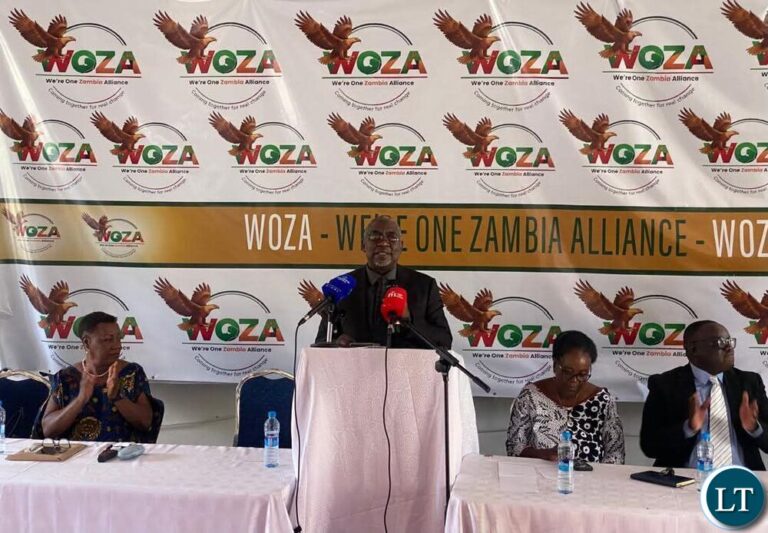
Former United Kwacha Alliance (UKA) chairperson Sakwiba Sikota has launched a new opposition coalition named the We Are One Zambia Alliance (WOZA).

The alliance unites Sikota’s United Liberal Party (ULP), Chishala Kateka’s New Heritage Party, the United National Independence Party (UNIP), the People’s Alliance Party (PAC), and the Zambia We Want Party (ZWW).

Unveiling the coalition, Sikota stated that WOZA was formed to address Zambia’s rising cost of living through decisive economic measures, including price controls, subsidies, and expanded social protection programmes.

He committed the alliance to running a government with zero tolerance for corruption and pledged to strengthen the country’s anti-corruption institutions.

“We shall ensure transparency in our administration, that appointments in the civil service are made on merit, and ensure accountability in public office,” he said.

Sikota outlined that the coalition would support agriculture by providing affordable farming inputs, improving extension services, and promoting agro-processing industries.

He explained that WOZA would foster inclusive politics by respecting dissenting views, engaging other opposition parties, and safeguarding democratic participation.

The alliance also promises to prioritize citizen-focused development by investing in healthcare, education, and rural infrastructure.

Addressing the energy crisis, Sikota pledged a pragmatic and intelligent approach to ending load shedding to support sustainable economic growth.

“Our coming together for real change means we shall address the load shedding in a pragmatic and intelligent manner, to ensure sustainable economic development,” he said.

The opposition leaders have called on Zambians to rally behind the newly formed We Are One Zambia Alliance.