Monday, June 8, 2026
25.4 C
Lusaka
Home Blog Page 234

President Hichilema warns against rising political violence, lawlessness

2

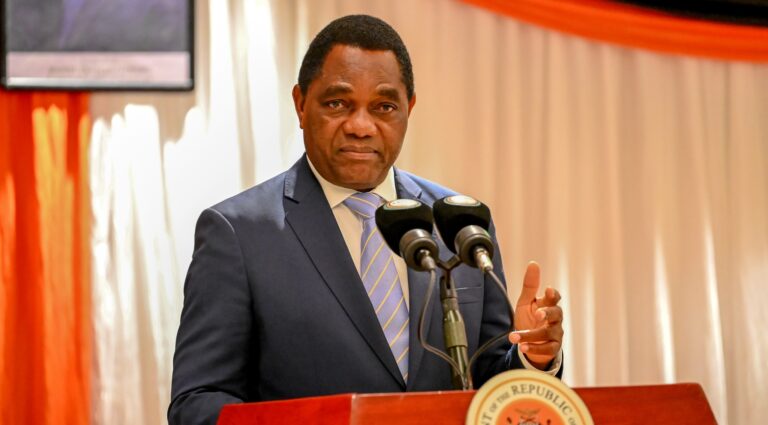
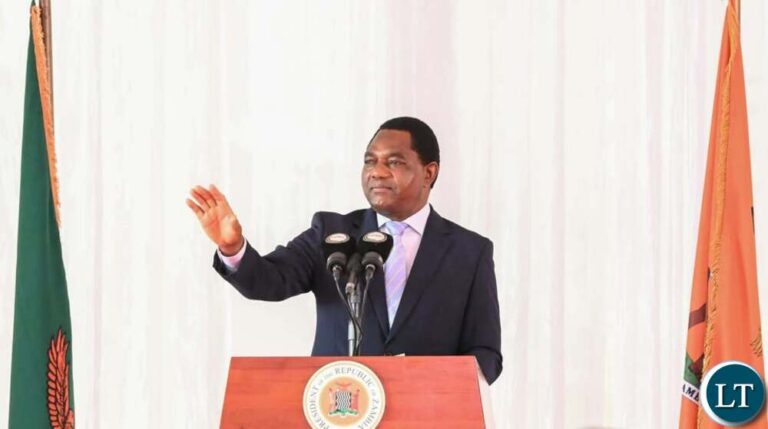
President Hakainde Hichilema has issued a stark warning against what he described as a resurgence of political violence and lawlessness, cautioning that recent incidents of violence threaten to erode national stability and reverse economic gains.

Speaking during a press conference at State House in Lusaka today, the President said he will not allow Zambia to return to the days of party thuggery, intimidation and street chaos.

Mr Hichilema said his administration’s reforms, including restoring order at bus stations and markets, were at risk of being undone by groups he said were attempting to re-establish illegal “party tax” systems that previously targeted bus drivers and marketeers.

The President said the government had observed individuals promoting violence on social media and vowed that law-enforcement agencies would not tolerate any form of militia activity, possession of illegal firearms, or attempts to seize public spaces such as markets and bus stations.

“All the progress we have made can be destroyed by lawlessness,” President Hichilema said, insisting that before 2021, transport operators were regularly extorted by political cadres.

“Today people move from one location to another freely. If we do not control this menace, all these positives will be wiped out,” President Hichilema emphasised.

President Hichilema revisited several incidents from his years in opposition, saying he personally survived multiple attacks, including stoning incidents, firearm threats and road ambushes.

He also referenced cases of assault on his supporters and the killing of citizens during previous regime’s political clashes, naming several victims and stressing that the country could not return to an environment where political groups operated above the law.

Responding to groups threatening demonstrations over constitutional amendment proposals, the President urged political actors to use institutional channels, including Parliament, the courts and formal dialogue platforms, rather than mobilising young people for street protests.

He revealed that civil society organisations had previously submitted constitutional proposals through established processes and encouraged critics to do the same.

“Why choose shouting in the streets when the door to dialogue is open? Do not send other people’s children into confrontation when you can walk into State House and talk,” President Hichilema said.

He warned that street confrontations would unsettle investors and harm the economy, citing examples of neighbouring countries where frequent protests led to disruptions of operations at major ports.

The President strongly condemned what he called attempts to use ethnicity, religion, or church affiliations to fuel division.

He said Zambia’s unity depended on leaders rejecting narratives that promote entitlement to political power.

President Hichilema also said he had previously restrained his own party supporters from retaliating during the 2021 general election aftermath, noting that leadership required preventing bloodshed.

President Hichilema has also directed the Ministry of Home Affairs to continue removing illegal firearms from communities, stating that tools for development must replace weapons in the country.

“We want spanners, not guns. We want computers, not weapons,” he said, adding that a breakdown in internal security would scare away investment.

Commenting on ongoing debates over constitutional changes, President Hichilema accused some actors of attempting to manufacture chaos to weaken the government’s international standing.

He said Zambia’s courts, civic platforms and parliamentary systems remained available to all citizens, insisting that any disagreements should be resolved through those mechanisms.

Mr Hichilema further reaffirmed that his government would not tolerate a return to the political violence and cadre dominance that characterised previous years.

“We will not allow anyone to take Zambia backward, this country will be governed by the rule of law,” he said
President Hichilema reiterates commitment to boosting energy supply

1

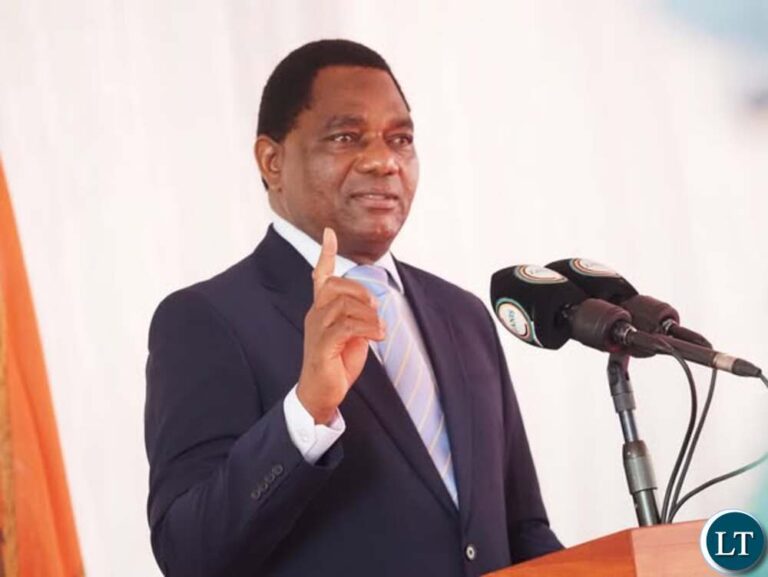
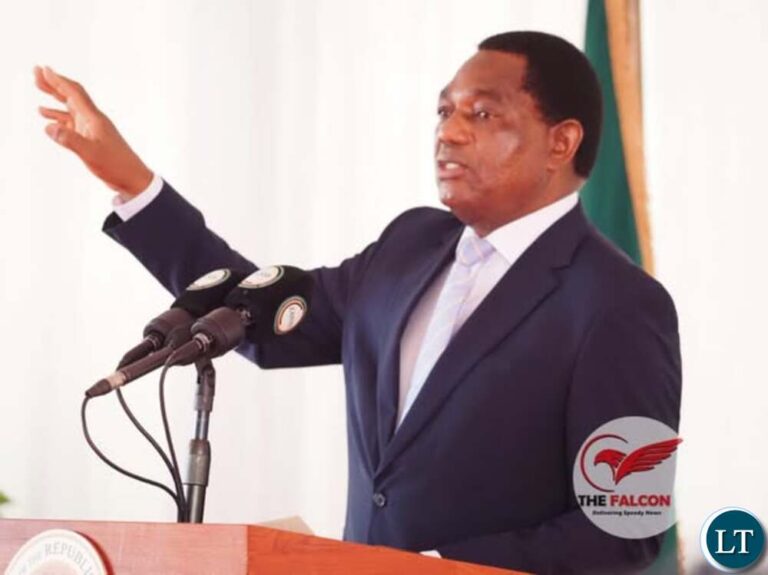
President Hakainde Hichilema says the government is taking decisive steps to increase the country’s energy supply, beginning with the roll-out of solar power stations in all constituencies.

Speaking during a media briefing at State House today, President Hichilema said each constituency will host a two-megawatt solar power plant, a move he believes will significantly reduce the impact of power outages.

He explained that the government has earmarked a substantial amount of money to a tune of K100 million for the project, and that part of the Constituency Development Fund (CDF) will be redirected to support energy development.

According to the President, once fully implemented, the initiative will add over 320 megawatts to the national grid, helping to ease the current power deficit.

President Hichilema also noted that private-sector players, including several banks, have shown strong interest in supporting the solar rollout, recognising its potential to stabilise the country’s energy supply.

He attributed the ongoing power shortages to what he described as the worst drought in Zambia’s recent history, which has drastically reduced electricity generation capacity.

However, he assured citizens that the government is working tirelessly to resolve the situation.

“With the interventions we are putting in place, the power shortage will soon be addressed. Our goal is to ensure stable and reliable power for all citizens,” he said.

The President also highlighted several major projects currently underway, including the 300 megawatt (MW) Maamba expansion, 600 MW Capital Fertilizer project, 100 MW Chisamba project and the 50 megawatts Mansa project among others.

He added that policies such as open access to power infrastructure, independent power trading, and net metering are encouraging more private investment in the energy sector.

President Hichilema further urged households to consider adopting renewable energy solutions to help diversify the country’s energy sources.

He revealed that, for the first time, constituencies will be allowed to sign power purchase agreements with utility companies like ZESCO to sell excess power generated from their solar plants.

The Head of State emphasised that accelerating procurement processes is key to ensuring the swift establishment of the solar projects in constituencies.

He concluded by stressing that energy is central to economic growth and that the two-megawatt projects, once implemented in constituencies, will greatly enhance service delivery across the country.

President Hichilema calls on Zambians to take advantage of improved credit rating

1

President Hakainde Hichilema has called on Zambians to take advantage of the country’s improved credit rating to invest and create employment opportunities.

Speaking at a press conference at State House today, President Hichilema said the improved credit rating has attracted more investors to the country, adding that Zambians should capitalize on this positive development.

Mr Hichilema indicated that the credit rating will translate into Zambia having more investors coming into the country.

President Hichilema said the government has put in place measures to improve the business environment and attract investments, and it is now up to Zambians to seize the opportunities available.

“The improved credit rating is expected to boost investor confidence and attract more investments into the country, creating jobs and stimulating economic growth,” he said.

Mr Hichilema noted that the upgrade has positioned the country as a meeting place for business and investment, with countries from the east, west, Middle East and the Arab world showing interest in doing business with Zambia.

“The mining sector is already experiencing a revival, with several mines that were previously considered dead now back to life and the influx of investments is a testament to the government’s efforts to improve the business environment,” he added.

“This is a time to celebrate together as a nation, we have worked hard to get here and we will continue to work hard to ensure that Zambia becomes a prosperous country, ” he said.

He also urged Zambians to work hard and contribute to the country’s development.

The President’s remarks come after Zambia’s credit rating was upgraded by international rating agencies, citing the government’s efforts to improve the country’s economic outlook and debt restructuring.

President Hakainde Hichilema has also praised the successful restructuring of Zambia’s debt, which has led to an improvement in the country’s credit rating and attracted more investors.

He said the government has worked hard to restructure the country’s debt, achieving a 94 percent success rate.

“This is a significant milestone for Zambia and we have moved from being a basket case to a viable country, attractive to investors,” he said.

The President attributed the success to the hard work of the government, the support of cooperating partners, and the patience of the Zambian people.

“We did not say who created the debt, we just worked hard to address the problem and today we are seeing the benefits of our efforts, with more investors coming into the country,” he added.

The President highlighted several areas where the government has made progress, including education, employment, and infrastructure development.

“We have introduced free education, and over 2.3 million children have come back to school and we have also created employment opportunities, with nearly 100,000 young people employed in the public sector, ” he said.

Mr Hichilema also emphasised the importance of inclusivity and unity in driving the country’s development.

“We must work together as one nation, one people, one Zambian, we must be accommodative and work towards inclusion, not exclusion,” he emphasised.

High GBV cases in Eastern province worry chief Madzimawe

0

Chief Madzimawe of the Ngoni people in Eastern province has noted with concern the continuous record of high number of GBV cases, including teenage pregnancies and child marriages in that region.

Chief Madzimawe wondered if the outreach programmes in his chiefdom, which he said are very effective, have contributed to the rise in reporting GBV cases to relevant authorities.

The traditional leader said it appears that people have been made more knowledgeable about the need to report GBV cases and are now freely reporting.

Speaking in a phone interview with the media, the chief said his chiefdom has come up with a deliberate programme of ensuring the targeted audience is present as community engagements are being done.

“Most of the cases that you find involve the young people and for Eastern province, we are still trending for having the highest number of teenage pregnancies and early marriages which means we have a long way to go,” he noted.

Chief Madzimawe explained that the target now should be dealing directly with the young people by reaching out to them, hearing them and finding out what they are doing.

The traditional leader stressed that the relationship between his chiefdom and the stakeholders like government and the non-governmental organisations in approaching GBV cases in his area is cordial as they have to provide the necessary services.

He further added that skills development through Community Development Fund (CDF) is helping in reducing the cases of GBV in homes as it is helping more women to become self-reliant as they learn a skill.

Chief Madzimawe further highlighted that the skills training through CDF helps keep the young people busy thereby reducing the number of GBV cases in his chiefdom.

He cited lack of safe homes for survivors of GBV in his chiefdom as one of the challenges that the area is facing in the fight against GBV.

He has since called for a one stop centre that will have the necessary support for the survivors.

“Apart from having a secretariat and the tolls that we are using, we do not have a dedicated village-led one stop centre where people would go and find peace. We have failed to secure convictions in cases of GBV and rape. Sometimes we find that a victim will have nowhere to be kept, hence the importance of having such a facility,” he added.

Mwiimbu Warns Church Leaders Against Planned Protests

3

Home Affairs and Internal Security Minister Jack Mwiimbu has expressed concern over plans by some church leaders to protest the constitutional review process.

Mwiimbu warned that such actions could divide both the nation and the church. As a devoted member of the Roman Catholic Church, he said he was troubled that sections of the clergy were preparing to lead demonstrations instead of encouraging dialogue.

He said the church, which has long served as Zambia’s moral compass, risks straying from its calling if it takes a confrontational approach at a time when the country needs calm and sober engagement.

“The proposed protests will not unify our country. On the contrary, they will further polarise both the nation and the church itself,” Mwiimbu said. “At a time when Zambia requires collective wisdom and unity, such divisive actions are regrettable and counterproductive.”

He added that the planned protests could damage the country’s fragile unity and create divisions within the church.

Mwiimbu urged religious leaders to step back, reflect, and return to dialogue, saying Zambia’s strength has always been rooted in stability rather than confrontation.

“I therefore appeal to the leadership of the Roman Catholic Church and other faith-based organisations to reflect seriously on this matter. The church must remain a beacon of hope and dialogue, not a source of division,” he said.

According to a statement issued by Ministry of Home Affairs principal public relations officer Mwala Kalaluka, the Ministry has encouraged all faith-based organisations to avoid actions that may inflame divisions.

Chama residents urged to elect development-focused leaders

0

Eastern Province Minister Peter Phiri has urged residents of Chama District to critically scrutinise political leaders and elect those who prioritise development over personal interests and politicking.

The media reports Mr Phiri said it was disheartening that some opposition figures were frustrating access to Constituency Development Fund (CDF) resources in their areas due to what he described as retrogressive political posturing.

He noted that all 156 constituencies receive an equal CDF allocation of K36.1 million, yet some political leaders continue to hinder communities from benefiting from these funds.

“I want to urge the people that as they chose leaders, let them choose leaders that prioritize development and not their personal gains,” he said.

The minister, who is also a Malambo Member of Parliament, said this when he toured Chama Day Secondary School, where the roof of a 1×3 classroom block was recently blown off.

Mr Phiri urged school administrators in the district to engage the Constituency Development Fund Committee (CDFC) and promptly present challenges requiring attention.

He also encouraged them to work closely with the District Commissioner’s office, noting that his office, as part of the CDFC, plays a key role in setting community development priorities.

” I am embarrassed here that you are lamenting over a blown off roof when you have money under disasters on CDF and no member of parliament can cheat that they do not receive these money and I am proud to serve under this government because we were voted into offices and the money came to us,” he said.

He said the New Dawn Government’s policies, such as free education, have resulted in many pupils returning to school, making collaboration between administrators and local leaders even more essential.

Mr Phiri emphasized the urgent need to rehabilitate and expand learning spaces, especially in rural areas like Chama, to ensure that learners fully appreciate the government’s development agenda.

He reminded the school leadership that Chama North Constituency’s expanded CDF allocation of K36.1 million presents an opportunity for local solutions, and urged them not to rely solely on central government support.

He further assured the school management that he will engage the area Member of Parliament, the District Commissioner and the CDFC leadership to address the school’s challenges, including inadequate classrooms and water points.

Meanwhile, Chama Day Secondary School Head Teacher Edward Kachali said the school has recorded a reduction in dropouts linked to teen pregnancies, crediting the improvement to outreach initiatives involving the PTA and community members during open days and annual general meetings.

Mr  Kachali said that the school currently has an enrolment of 1,543 learners, a situation he attributed largely to the free education policy and feeding programmes supported by government partners.

He said the school has used government grants to install a water tank to help address water shortages. It has also repaired 86 double-sitter desks and 93 chairs in line with the President’s directive that no child should sit on the floor while learning.

The Head Teacher added that the school has a staff complement of 67 teachers, 31 female and 36 male and continues to perform well in Grade 9 and Grade 12 examinations, ranking among the top five schools in the district.

Mr Kachali, however, bemoaned the lack of transport at the school, saying the situation makes it difficult to take sick pupils to the nearest hospital, which is located more than one kilometre away.

ZAMBIA TO HOST LEATHER SUMMIT IN LUSAKA

0

Zambia is set to host the 18th Africa Leather Value Chain forum from the 26th to the 28th November 2025 at Lusaka’s Mulungushi International Conference Centre.

The summit has attracted over 100 delegates in the leather value chain from across the continent.

Ministry of Commerce, Trade and Industry Director of Industry, Musokotwane Sichizuwe disclosed in a Press briefing that while Minister of Commerce, Trade and Industry, Chipoka Mulenga will grace the summit.

Mr Musokotwane highlighted that the summit will focus discussions on value addition in the leather value chain, Trade facilitation, increasing competitiveness and investments in the sector among other things.

“Deliberations during the forum will focus on value addition in our locally sourced hides and skins, competitiveness, access to finance especially for SMEs, Trade facilitation and investments promotion, all aligned to the Agenda 2063 of the African Union, the African Continental Free Trade Area AfCFTA” he said

He added that over 40 entrepreneurs in the leather value chain from across Africa are also expected to showcase their work and will provide them an opportunity to share knowledge and network from other enterprises in the value chain

The Director also stated that the summit is being held in collaboration with the Common Market for Eastern and Southern Africa (COMESA) Secretariat and the Africa Leather and Leather Products Institute ALLPI.

And speaking at the same Press Briefing, Africa Leather and Leather Products Institute ALLPI Executive Director. Nicholas Mudungwe shared that the institute and other shareholders in the leather value chain are concerned that Africa, despite being a large-scale producer of livestock, contributes only 3% of the 2.2 billion leather shoes sold globally.

Mr Mudungwe expressed that the low contribution by Africa is a clear indication that the continent is lagging behind in value addition and employment creation in the industry.

He expressed confidence that with collaboration and technical knowledge sharing at the summit, Africa’s contribution can be increased to the targeted 50%.

The summit is being held under the theme: Unleashing Africa’s leather potential; sustainable, inclusive and competitive.

Councils urged to reserve land for youth, women and marginalised groups

0

Southern Province Gender Division Principal Officer Doreen Chingobe has urged councils to formulate deliberate policies that would allocate a certain percentage of land to the youth, women, and other marginalised groups for them to have access to this factor of production.

Ms Chingobe made the call in Kalomo over the weekend at an engagement with the youth, traditional leaders, and other line government departments to get challenges the youth are facing in their quest to embark on entrepreneurship and self -employment commitments.

This follows complaints raised by the youth under the Youth employment and entrepreneurship (YEE) project in Kalomo who lamented that land acquisition still remains a challenge and called on both the local civic authority and the traditional leadership to assist them have access to portions of land for them to do their entrepreneurship activities.

The youth have since made a passionate appeal to chief Chikanta and Sipatunyana who attended the meeting and the local civic authority to consider them on land plot allocations so that they put the skills they have acquired to good use.

Over 600 youths from Namwianga, Mwaata, Siachitema and Choonga wards of Kalomo have been trained on basic life, social development, entrepreneurship internship, mentorship opportunities and networking by the SNV Netherlands funded YEE project which is being implemented by Environment Africa.

And Youth employment and entrepreneurship (YEE) project field officer Reuben Mutofwe has called on youth to fully participate in programmes that the government and its collaborating partners have put in place to improve their livelihood.

Mr Mutofwe says the project aims at fostering a strengthened approach to youth employment programming by addressing structural barriers, offering tailored support and promoting collaboration among community, private sector and government stakeholders to create dignified livelihood for young people.

The Netherlands Development Organisation, a non-governmental organization ( SNV), four year scaling up youth employment in agriculture initiative opportunities for youth employment (OYE)+ project, now called YEE, is being implemented in 20 districts of Central, Southern, Northern, Eastern and North-Western provinces targeting 20,100 out of school youths aged between 18 to 35.

The project’s objective is to match young people to economic opportunities in their communities by using market development and increased financial inclusion and also to increase access to employment and entrepreneurship skills and development opportunities.

Civil Society Group Defends Bill 7 Consultations, Moves to Join Petition

13

Civil Society Group Defends Bill 7 Consultations, Moves to Join Petition
A consortium of eight civil society organisations that participated in the national consultations on Bill 7 has moved to join the Oasis Forum petition currently before the courts. The group says it is seeking to defend what it describes as a broadly consultative constitutional reform process, arguing that thousands of citizens, including their own members, made submissions to the Technical Committee.

The consortium states that it finds the Oasis Forum’s petition puzzling, especially since some of the petitioners had members appointed to the same committee they now challenge. It adds that the organisations calling the process “not inclusive” were among those that declined to participate in countrywide consultations, yet are now questioning a process they chose not to engage in. Their full press statement is reproduced below exactly as issued.

Full Press Statement Below

Press Statement by Consortium of 8 Civil Society Organisations on Governance
Held at Mika Hotel, Kabulonga
Monday, November 24, 2025

Ladies and gentlemen of the press, thank you for joining us.

Our consortium of civil society organisations has been actively engaged in the constitutional reform process since March 2025, when the Government announced its intention to amend the Constitution. While we had our own reservations regarding the earlier process that led to Government introducing Bill 7, particularly regarding the limited consultations at the beginning of the process, we nonetheless chose to support the initiative. We did so with the hope that these reforms would strengthen governance and address ambiguities and inconsistencies that have long existed in our Constitution.

Working together with other civil society coalitions outside our consortium, we met with the Republican President and successfully advocated for the deferment of the bill. This was done to allow for the establishment of a Technical Committee that would facilitate broader public consultations.

It is important to note that organisations such as the Law Association of Zambia and NGOCC, who were also part of these engagements, have now petitioned the court, arguing that the process is not inclusive and that certain members should not have been appointed to the committee. We find this position rather puzzling.

We say this because some of the organisations raising these concerns have members—and even former members—who were appointed to the Technical Committee. It is surprising that they now question the ability of their own representatives to gather and articulate the views of ordinary citizens. Their stance suggests that the process would only be considered “people-driven” if their preferred individuals were on the committee.

What the public needs to know is that the Technical Committee received thousands upon thousands of submissions from citizens across the country. As a consortium, we played an active role in raising public awareness and encouraging participation. We made our own submissions in Lusaka and in every province, and our individual member organisations also filed their respective contributions.

At this stage, both we and the many citizens who participated expect the committee’s report and its recommended amendments to be released. This will allow the public to assess whether their voices were truly captured. We did not anticipate that this expectation  rooted in transparency and accountability would be hindered by a court action initiated by those who, although constitutionally entitled to do so, chose not to take part in the consultation process.

Regrettably, it now appears that those who stayed away from the process are the ones claiming it is not people-driven. Their message seems to be that the process would only be legitimate if they, or their preferred representatives, were part of it.

As a consortium, we stand ready to defend the constitutional amendment process to which we have contributed our time, resources, and expertise. For this reason, we have today applied to be joined as an interested party in the petition filed by the Oasis Forum. Our application was formally submitted this morning. We trust that the court will allow us to present our perspective so that it can make a balanced and well-informed decision, reflecting the full breadth of contributions made by the public.

We acknowledge and respect the right of our colleagues in the Oasis Forum to bring this matter to court. In the same spirit, we also assert our right to participate in the proceedings. Our consortium stands on equal footing with all other registered organisations—those who support the process and those who oppose it. In civil society, there is no “bigger brother.” No organisation or church group is more important or more legitimate than the others.

Thank you.

Solomon Ngoma
Acting Consortium Chairperson & Executive Director
Acton Institute for Policy Analysis Center (AIPAC)

Derrick Chekwe
Acting Executive Director
Zambian Civil Liberties Union (ZCLU)

Arthur Muyunda
Executive Director
Southern African Center for Constructive Resolution of Disputes (SACCORD)

Patrick Kaumba
Executive Director
Governance Elections Advocacy Research Services (GEARS) Initiative Zambia

ClifFtone Chifuwe
Executive Director
Center for Peace, Research and Advocacy

George Shonga
Executive Director
Measures of Justice and Democracy Foundation (MJDF)

Bernard Uteka
Executive Director
Community Action Against Political Violence (CAAPOV)

Bernadette Mulenga
President
Anti-Political Violence Association of Zambia

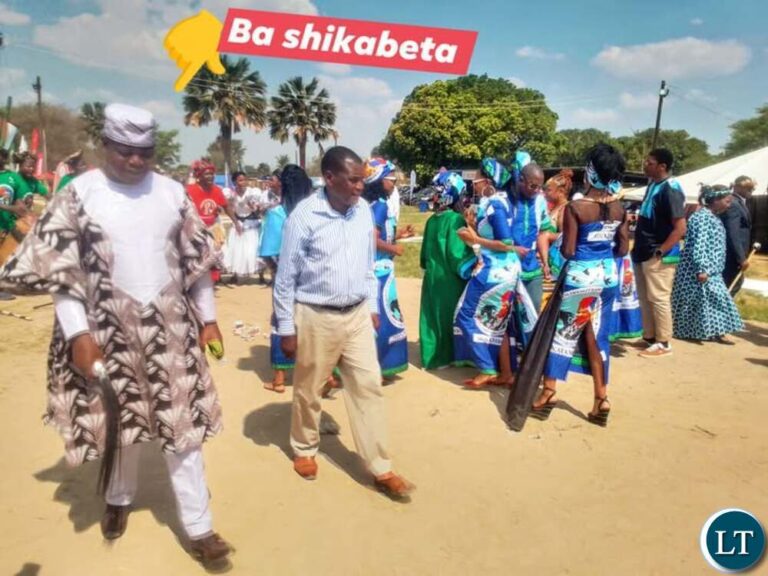
Chief Shikabeta appeals for more boreholes

1

Chief Shikabeta of the Soli people in Rufunsa district has appealed to the government to construct boreholes in his chiefdom in order to ensure that subjects have clean water.

Chief Shikabeta bemoaned that some areas in his chiefdom lack adequate supply of water hence the need to sink some boreholes.

Speaking to the media in an interview, the traditional leader called on the government to consider drilling more boreholes in his area.

He attributed the shortage of water to low rainfall received in the area in the previous rain season.

The traditional leader said water blues become worse during the dry season.

“The problem of water in my area poses severe hardship, extra expense and health risks on my people. What we are supposed to spend on food, we spend it on water,” he said.

Chief Shikabeta said as a result, women walk long distances to fetch water and often resort to getting the commodity from unprotected sources such as shallow wells and streams.

He explained that the scarcity of water is worsened by uncontrolled obstruction of water by some farmers upstream.

He has since appealed to stakeholders to partner with him as well as the local authority to advocate for water security, governance and management in order to ease the lives of his subjects.

Chief Shikabeta added that the shortage of water has a negative impact on business.

To address the water scarcity, the Government through the National Rural Water Supply and Sanitation Programme envisages to improve rural water supply in Zambia so that 75 percent of the rural population will be within 0.5 kilometre from an improved water supply by 2030.

Govt. launches National Child Protection Strategy Act

0

The Ministry of Technology and Science, in partnership with ZICTA and UNICEF, has launched the National Child Online Protection Strategy 2025–2029.

The strategy is a framework aimed at creating a safe and inclusive digital environment that shields children from online abuse, exploitation, and harmful content.

The new strategy follows the revision of the 2020 National Online Protection Strategy and responds to the rapidly evolving digital landscape, which presents both opportunities and risks for children.

Speaking during the launch, Minister of Technology and Science, Felix Mutati, says the strategy marks a major milestone in Zambia’s efforts to safeguard children in digital spaces.

Mr Mutati said in a speech ready for him by his Permanent Secretary, Brilliant Habeenzu, that government childrens as young as ten years old should be free from bullying and harassment when they are introduced to digital platforms.

He emphasised that as internet access expands across the country, protecting children from cyberbullying, harmful content and exploitation is important.

He added that achieving this goal requires a strong national child online protection system built on collaboration among government agencies, the private sector, civil society and communities.

Meanwhile, UNICEF Country Representative, Saja Abdullah, said the strategy reflects Zambia’s collective commitment to defending children from online violence and abuse.

Ms Abdullah noted that online abuse remains a growing global concern, with emerging threats such as Artificial Intelligence (AI) generated deep fake content and simulated exploitation in virtual environments.

And ZICTA Director General, Collins Mbulo, said in a speech read form by Universal Access and Service Director at ZICTA, Collins Chomba that the success of the initiative hinges on collaboration from all sectors of society.

And representing children at the event, 16-year-old Lukele Faifai from Mpunde Secondary School expressed gratitude for the initiative and called for children’s rights to remain central to all digital innovations rolled out in the country.

RDA posts significant progress in road projects in 2025

0

The Road Development Agency (RDA) has announced major milestones achieved in Zambia’s road sector in 2025 around the country.

The agency indicated that remarkable progress has been made under both Public Private Partnerships (PPP) and government funded projects.

Speaking at the end of year media briefing in Lusaka today, RDA Board Chairperson, Eugene Haazele, one of the major achievements is the Lusaka–Ndola dual carriageway project under the Public Private Partnership financing model.

He said the Lusaka-Ndola dual carriage way is now at over 58.5 percent complete with 236.15 kilometres of asphalt surfacing laid, while progress on the Ndola-Sakania-Mufulira road in the Copperbelt Province is at over 16 percent.

He added that the cumulative physical progress for the road works on the Kasomeno-Mwenda road and bridge infrastructure stands at 15.5 percent.

Mr Haazele, who cited progress in many other road and other related infrastructure, told journalists that the RDA remains focused on enhancing connectivity, promoting economic growth, improving road safety, and integrating rural communities into the broader economy.

SADC Confirms Mission to Zambia Following PF Complaint Over 2026 Election Climate

11

Gaborone, Monday, 24 November 2025
The Southern African Development Community has confirmed that it will dispatch the SADC Electoral Advisory Council to Zambia to examine concerns raised by Patriotic Front Information and Publicity Chairperson Ambassador Emmanuel Mwamba regarding the credibility of the 2026 General Elections.

The confirmation is contained in a formal response from the SADC Secretariat to Ambassador Mwamba’s correspondence in which he detailed a series of complaints related to the political environment, electoral preparations, and governance concerns. The Secretariat acknowledged receipt of the complaint and noted the PF official’s readiness to travel to Gaborone for further engagement.

According to the letter, the matters raised fall within the mandate of the SADC Electoral Advisory Council, a technical body responsible for advising the regional bloc on electoral processes, governance, and adherence to the SADC Principles and Guidelines Governing Democratic Elections of 2021. The Secretariat indicated that SEAC is already preparing a mission to Zambia under Article 7.3 of the revised guidelines.

Ambassador Mwamba’s complaint outlined several allegations, including claims that President Hakainde Hichilema is influencing political and judicial processes, that restrictive laws have reduced citizens’ freedom of expression, and that proposed constitutional amendments could affect the credibility of the 2026 vote. The PF official also accused the administration of actions that, in his view, undermine the independence of the Electoral Commission of Zambia.

Responding on behalf of the Secretariat, Ms Onalenna Nthase of the Directorate of the Organ on Politics, Defence and Security Affairs stated that the concerns qualify for review under the SEAC framework. She explained that SEAC missions serve to review post-election environments, evaluate recommendations from electoral observation missions, and encourage member states to implement those recommendations.

The Secretariat further advised that once consultations with the Government of Zambia are concluded, Ambassador Mwamba’s office will receive notification of the dates and venue for SEAC’s engagement with electoral stakeholders. The letter emphasised that this forum will allow the PF representative to present his concerns directly to the advisory body.

SEAC is one of SADC’s technical structures responsible for promoting credible elections across the region. Its mandate includes providing advisory support, reviewing electoral processes, and assessing member states’ adherence to the organisation’s electoral principles.


Full SADC Letter

SOUTHERN AFRICAN DEVELOPMENT COMMUNITY SECRETARIAT
Private Bag 0095
Gaborone
Botswana

E-mail: [email protected]
Website: www.sadc.int
Telephone: (267)3951863
Telefax: (267)3972848 / (267)3181070

REF: SADC/13/5/7
23 NOVEMBER 2025

Amb. Emmanuel Mwamba
Chairperson for Information and Publicity
Patriotic Front
LUSAKA, ZAMBIA.

Dear Sir,

RE: THREATS TO DEMOCRACY AND THE HOLDING OF FREE AND FAIR ELECTIONS IN THE REPUBLIC OF ZAMBIA

Reference is made to your letter of the above reference.

The SADC Secretariat takes note of the concerns that you raised in the letter mentioned above, and of your readiness to travel to Gaborone, Republic of Botswana, to further make representations on the matter.

The concerns that you have raised fall within the mandate of the SADC Electoral Advisory Council (SEAC), which, incidentally, is preparing to travel to the Republic of Zambia to carry out a post-election review mission in terms of Article 7.3. of the revised SADC Principles and Guidelines Governing Democratic Elections (2021).

These reviews are critical to address any post-election conflicts, to evaluate recommendations made by electoral observation missions, and as a platform through which Member States can be encouraged to implement all relevant recommendations emanating from the SADC Electoral Observation Missions (SEOM) and SEAC Reports.

Based on ongoing consultations with the Republic of Zambia, the Secretariat will communicate with your offices on the dates and venue for the SEAC consultations with electoral stakeholders in Zambia. This will be the ideal forum for you to make the representations above.

Member States:
Angola, Botswana, Comoros, Democratic Republic of Congo, Eswatini, Lesotho, Madagascar, Malawi, Mauritius, Mozambique, Namibia, Seychelles, South Africa, United Republic of Tanzania, Zambia, Zimbabwe

All correspondence should be addressed to the Executive Secretary.

For further information and enquiries on logistical issues, please contact: Magabolle
Mafiri, Email: [email protected], Tel: +267 3611600 / +267 76077142 and Elijah
Munyuki, Email: [email protected], Tel: +267 77036916.

Please accept the assurances of my highest consideration.

Prof. Kula I Theletsane
Director – Organ on Politics, Defence and Security Affairs
For/EXECUTIVE SECRETARY

HH warns Zambia will not return to violent political culture

9

HH warns Zambia will not return to violent political culture

President Hakainde Hichilema has reiterated that Zambia will not revisit the turbulent political climate associated with violence and confrontational mobilisation, saying the country’s future depends on maintaining a stable and peaceful civic environment. He delivered the remarks during the Evangelical Church in Zambia’s Diamond Jubilee celebrations at the Matero congregation in Lusaka, where he joined church members for the commemorative service.

Hichilema said Zambia’s democracy has matured because citizens have consistently chosen dialogue over confrontation. He noted that periods of political tension in previous years created anxiety among residents, disrupted local economic activities and strained relationships within communities. According to him, the country should learn from these experiences and avoid behaviour that undermines public safety or disturbs daily activities in neighbourhoods.

He told congregants that political violence affects citizens who are not always involved in disputes. He said confrontations often interfere with trading, schooling and household responsibilities, adding that they divert attention from development needs in communities. Maintaining peace, he said, is therefore not only a governance issue but a practical necessity for families across the country.

Hichilema emphasised that every Zambian has a responsibility to preserve order. He said individuals must reject calls for confrontational actions that threaten public safety or disturb community life. He urged citizens to speak up when they see behaviour that may escalate tensions, noting that peace is preserved when communities collectively reject violence.

He also encouraged church leaders to continue supporting national conversations through balanced, factual guidance that helps citizens understand governance processes. He said institutions such as the church provide important platforms for reflection and dialogue, enabling people to participate constructively in issues affecting the country.

The President said constitutional and governance discussions should be approached calmly, with room for differing opinions. He said the ability to discuss sensitive matters without confrontation reflects the maturity of the country’s democratic systems. He stressed that constitutional engagement must take place in an atmosphere where citizens feel safe to express themselves.

He reminded congregants that Zambia’s progress is linked to its reputation for peace, which has made the country a stable destination for investment and regional cooperation. He said preserving this image requires all citizens, including political players, to prioritise responsible conduct over actions that fuel tension.

Hichilema noted that public order is central to efforts aimed at improving essential services and expanding economic opportunities. He explained that instability disrupts government programmes and limits support reaching communities. He said peaceful conduct helps sustain development initiatives meant to enhance livelihoods.

He urged political actors to guide their supporters toward respectful engagement. He said leadership must avoid encouraging emotions that heighten confrontation and instead promote discussions grounded in facts. Clear communication, he said, helps reduce misunderstandings that often cause unnecessary tension.

The President added that Zambia’s long-term aspirations rely on stable communities where people can work, trade and raise families in secure environments. He said past incidents of violence demonstrated how easily public order can be disrupted when political actors allow disagreements to escalate.

He concluded by encouraging Zambians to continue building a society where disputes are resolved through lawful channels. He said peaceful civic participation is essential to protecting the gains the country has made since independence and to ensuring future generations inherit a stable and united nation.a


Mususu’s New Stance on Bill 7 Raises Fresh Questions

4

Mususu’s New Stance on Bill 7 Raises Fresh Questions

LUSAKA – The recent remarks by Evangelical Church in Zambia (ECZ) Presiding Bishop Paul Mususu on the government’s constitutional amendment process have sparked widespread national reflection, prompting measured responses from governance institutions, ecclesiastical leaders, and civil society stakeholders about their implications for the ongoing discourse surrounding Bill 7. Although his plea for restraint was issued during a devotional celebration, the ensuing reactions underscore how deeply entwined the reform effort has become with broader concerns over transparency, procedural timing, and institutional integrity.

Bishop Mususu delivered his address during the Diamond Jubilee celebrations of the ECZ Matero Congregation, where he urged those contemplating public demonstrations against Bill 7 to contemplate the nation’s pressing developmental imperatives. Citing Kasempa as an illustrative case, he highlighted the logistical and administrative challenges posed by excessively large constituencies, noting how such expanses hinder churches and civic groups from effectively accessing the Constituency Development Fund. In his view, delimitation could be instrumental in ensuring a more equitable distribution of development resources.

His appeal was couched in terms of long-term national interest, emphasizing that reforms designed to close systemic gaps in service delivery and representation merit thoughtful consideration. At the same gathering, Bishop Mususu also condemned the stoning incident involving President Hakainde Hichilema in Chingola, reiterating that the dignity and safety of the Head of State must be upheld. He implored citizens to refrain from allowing political discord to devolve into violence or unrest.

Nevertheless, governance organizations,some of which previously partnered with Bishop Mususu during earlier constitutional advocacy initiatives have responded with notable caution. These groups recall his pivotal role in challenging the former Bill 10, wherein he was among the most vocal church leaders raising concerns about both procedural legitimacy and substantive content. Like Bill 7, that earlier draft also included delimitation provisions. Civic actors now maintain that the underlying issues they identified at the time remain unresolved.

At the heart of their apprehension is the continued non-publication of the most recent Delimitation Report. These organizations assert that this document is indispensable for meaningful stakeholder input to the Technical Committee guiding the reform process. In its absence, they argue, it is nearly impossible to assess the demographic ramifications of proposed boundary changes, their alignment with principles of fair representation, or their practical impact on constituency governance. They stress that their reservations are not directed at delimitation per se, but at the decision to advance legislative changes without furnishing foundational data.

The divergence between Bishop Mususu’s earlier, more assertive advocacy and his current call for composure has prompted introspection within segments of the evangelical community. While some interpret his statements as a prudent effort to foster dialogue amid heightened political sensitivities, others perceive a potential recalibration of the evangelical leadership’s posture on state affairs. The fact that his remarks were delivered in the presence of the President has further fueled speculation about whether the church’s role in constitutional discourse is undergoing a subtle, yet significant, transformation.

Despite these varied readings, civic organizations remain unwavering in their demand for procedural transparency. They contend that the constitutional review must be anchored in the principles of open access to information, inclusive consultation, and clear articulation of the rationale behind each proposed amendment. To them, the immediate release of the Delimitation Report would constitute a vital first step toward restoring confidence in the integrity of the process.

The discussion surrounding Bishop Mususu’s intervention illuminates the broader national reckoning with Bill 7, a debate intensifying as Zambia approaches the 2026 electoral cycle. With church bodies, civil society actors, and political institutions each advancing distinct expectations, the reform effort has become a focal point of intense public scrutiny. How the government responds to calls for documentation, and how religious leaders continue to navigate their civic responsibilities, will profoundly influence public trust in the coming months.

For now, Bishop Mususu’s address has introduced a new dimension to an already intricate national conversation, drawing renewed focus to both the aspirations and anxieties tied to Zambia’s constitutional evolution. The civic response demonstrates that while stakeholders may be open to considering the developmental merits of delimitation, their engagement remains fundamentally conditioned on transparency. As positions continue to evolve, all parties await clearer direction on how Bill 7 will be stewarded and communicated to the citizenry.