Saturday, June 6, 2026
25.2 C
Lusaka
Home Blog Page 234

The real motive behind HH’s call for dialogue on Bill 7

3

The real motive behind HH’s call for dialogue on Bill 7

By Morgan Shansonga

The conversation around Bill 7 has reached a stage where the political temperature speaks louder than any prepared statement. Although many voices have stepped forward, including a detailed critique from Dr. Shishuwa Shishuwa, the essence of the matter is visible even without leaning on anyone’s commentary. The pace and method of the amendment process point to a presidency intent on securing constitutional changes before the country enters the turbulence of the 2026 campaign period.

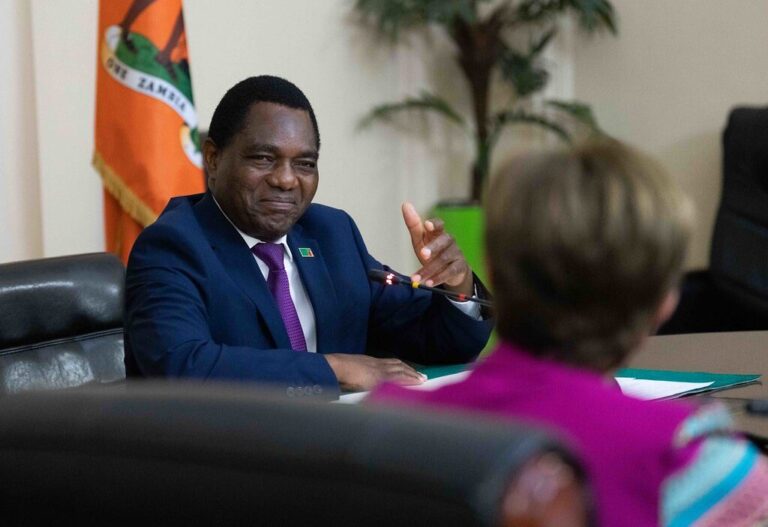
My reading of the situation is straightforward. Bill 7 is not being pushed for cosmetic reasons. It is being pushed because it offers the executive a more predictable constitutional environment. The President prefers order, and he prefers controlling the terms under which national systems operate. From his viewpoint, revising the framework early reduces institutional disputes, limits legal shocks, and gives the administration a settled foundation ahead of an election year. But this political logic also explains why his call for dialogue surfaced only after the conversation moved out of quiet rooms and into the open.

The timing of the President’s appeal is telling. The technical committee has already completed most of its work. Public consultation, where it appeared, was narrow and scattered. For weeks, the bill advanced steadily without any clear sign that State House intended to slow down or widen the process. The moment civil society gathered momentum and the Oasis Forum announced a peaceful march, the tone shifted. Suddenly, the table was presented as the responsible alternative to public demonstration.

I see that shift not as an opening, but as an attempt to manage the clock. A public march—especially one led by clergy, lawyers, students, and ordinary citizens—immediately changes the national mood. It signals that the issue has outgrown political structures and entered the public conscience. Once that happens, parliamentary numbers are harder to secure. MPs become sensitive to the streets. The environment becomes unpredictable. And unpredictability is exactly what the administration wants to avoid at this stage.

The President’s emphasis on dialogue can therefore be interpreted as an effort to neutralise a moment that could disrupt the timeline. A meeting behind closed doors reduces visibility. It slows pressure. It allows the executive to regain control of the pace. A march does the opposite. It accelerates scrutiny, lifts the matter to a national spotlight, and forces every institution, including Parliament, to measure its decisions against public sentiment.

For anyone watching closely, the sequencing raises its own questions. If genuine dialogue was the intention, it should have come at the beginning. The technical committee would have been paused. Civil society would have been brought into the room before the process advanced. Instead, openness only arrived when public resistance became organised. That makes the invitation feel less like an attempt to build consensus and more like a way to soften the impact of civic mobilisation.

My concern is that the administration appears to be prioritising speed over confidence. Constitutional changes demand transparency. They demand broad legitimacy. They demand a process that is not only legal but also trusted. When people sense they are being invited into a discussion only after a decision is nearly final, they naturally question the motive.

Yet the presidency sees Bill 7 as essential. That much is clear from the urgency. The view inside State House seems to be that the country cannot continue operating with loose edges in its constitutional structure, especially heading into an election. HH prefers systems that move without friction. But systems lose their authority when those affected by them feel excluded.

Whether the Oasis Forum marches or chooses the negotiation table, the fundamental issue does not disappear. Zambians want to know why the process advanced quietly for so long and why dialogue became desirable only when pressure increased. A constitutional amendment cannot rely on timing that appears convenient to one side.

What this moment reveals is simple: trust is the real currency in any constitutional review. Without it, even the most carefully drafted amendment becomes a political flashpoint. Bill 7 is now at the centre of that contest, and the country must watch closely to see whether dialogue becomes a genuine turning point or a brief pause in a process already shaped behind closed doors.

Justice Sichinga Seeks Constitutional Court Interpretation of Article 142 (6)

Justice Sichinga Seeks Constitutional Court Interpretation of Article 142 (6)

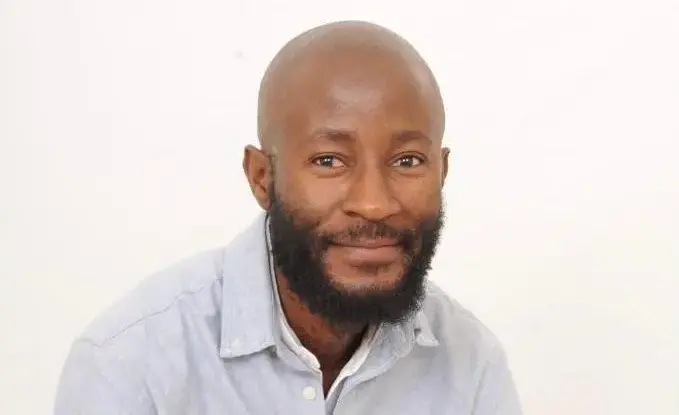
LUSAKA, Zambia – Former Court of Appeal Judge, Hon. Justice Dominic Yeta Sichinga, SC, has lodged an originating summons with the Constitutional Court of Zambia seeking an interpretation of Article 142 (6) of the Republican Constitution. The case, registered as 2025/CCZ/0030, raises essential questions concerning the constitutional criteria for judges accepting appointments to roles outside the Zambian Judiciary.

The senior jurist, represented by Messrs. Likando Kalaluka & Co., resigned from his position on 31 March 2025 after he was appointed a Non-Resident Judge of the Seychelles Court of Appeal. In his affidavit, he explained that the Seychelles assignment is not full-time and requires him to preside over matters only three times a year. Despite the limited schedule, he felt obliged to step down because of the wording of Article 142 (6), which states: “Where a judge is appointed or assigned to an office, which is not an office in the Judiciary and that judge wishes to take up the appointment, the judge shall resign from the office of the judge.”

The applicant notes what he considers an inconsistency in how this provision has been applied. According to his summons, several senior members of the Zambian bench have taken up roles outside the judiciary—such as Commissioners to the African Commission, Rapporteurs for the African Committee of Experts on the Rights and Welfare of the Child, members of the SADC Administrative Tribunal, and lecturers at the Zambia Institute of Advanced Legal Education (ZIALE)—without relinquishing their judicial positions.

His filing seeks clarity on whether Article 142 (6) compels a judge to resign when accepting part-time, temporary, or one-off appointments outside the Judiciary. He stresses that interpreting this clause is of “fundamental constitutional importance,” especially in light of resignations such as that of Lady Justice Nicola Sharpe-Phiri, who left her Court of Appeal post after accepting a similar appointment in Seychelles.

The affidavit also highlights wider challenges affecting the Judiciary, including understaffing, as reflected in the recent call for new recruits, and objections by stakeholders like the Legal Resources Foundation Limited, which has petitioned the court over the constitutionality of the recruitment process.

His legal representatives had earlier written to the Attorney General, State Counsel Mulilo Kabesha, requesting the State’s position on the correct interpretation of Article 142 (6).

The matter is expected to carry major implications for judicial administration and for how constitutional provisions on external appointments are understood. The Attorney General has 14 days to respond. The ruling will likely shape the future handling of part-time international assignments by Zambian judges and influence procedures relating to judicial resignations and appointments.

This case underscores the need for precise constitutional interpretation to support the effective functioning of the Judiciary and maintain public confidence in the legal system.

Hon. Mr. Justice Dominic Luther Yeta Sichinga, SC, was appointed Judge of the Court of Appeal on 13 June 2016. He holds a Bachelor of Laws degree from Anglia University in the United Kingdom and was admitted to the bar in 1996. He was conferred with the rank and status of State Counsel in 2003.

The former appellate judge previously served as Permanent Secretary at the Ministry of Transport, Works, Supply and Communications from 2009 to 2011 and as Solicitor General of the Republic of Zambia from 2003 to 2009. He was appointed Judge of the High Court in 2011.

Earlier in his career, he worked in the United States as a Child Support Officer in the Office of the Attorney General of Texas from 1999 to 2003, and as an Administrative Officer on the UN Kosovo Law Enforcement Project from 1998 to 1999. He also served as a Legal Consultant at COMESA in 1998 and as a Nascent Advocate at Budd Martin Burrett in the United Kingdom from 1992 to 1994.

The former Court of Appeal member has held numerous board leadership roles, including Board Chairperson of the Tanzania-Zambia Railway Authority in 2011, National Airports Limited from 2009 to 2010, Mpulungu Harbour Corporation Limited in 2009, Contract Haulage Limited in 2009, and the Zambia Telecommunications Company Limited in 2009. He has also served on various other boards, commissions, and committees.

Opposition MPs Accused of Accepting Payments to Support Bill 7

7

Opposition MPs Accused of Accepting Payments to Support Bill 7

Dr. Shishuwa Shishuwa, a historian, writer, and academic with extensive credentials in African studies and political history, has raised concerns that several opposition Members of Parliament have privately committed to support Bill 7 in exchange for financial benefits or relief from possible legal action. His remarks came during a broadcast interview focused on the ongoing constitutional debate and the conduct of the executive.

According to Dr. Shishuwa, the executive has intensified efforts to secure the parliamentary votes required for Bill 7. He referred to the earlier Constitutional Court decision which found the previous process leading to the bill unconstitutional. The ruling, in his view, required two things: a public-driven process and the use of an independent expert body. Current steps, he said, do not reflect those conditions.

The committee appointed to review the constitutional matter was described by him as lacking independence, with its composition conflicting with the expectations set by the court. The continued presence of the bill in Parliament, despite the earlier judgment, was presented as evidence of a process that has not been realigned with the ruling. This, Dr. Shishuwa stated, created a strong push within the executive to gather additional support from MPs.

Financial incentives were at the centre of his allegations. Dr. Shishuwa reported that some MPs were approached and offered three million kwacha each to support Bill 7. The arrangement, according to accounts he received confidentially, involved an initial payment of one point five million kwacha before the vote and the balance after the vote. The information, he said, was provided by individuals with direct knowledge of the discussions.

Other MPs, he stated, were approached using unresolved legal matters. Files involving corruption-related issues and other serious offences were reportedly presented to certain legislators as leverage. In those situations, support for Bill 7 was described as a condition that could prevent prosecution. Dr. Shishuwa said several MPs agreed to back the bill after such engagements.

To improve public transparency, he recommended that the Oasis Forum request MPs to sign a clear commitment declaring that they would not support Bill 7. Legislators who decline to sign, he noted, would reveal their position through their refusal. Such a measure, in his view, would help citizens identify MPs willing to uphold constitutional responsibilities without external influence.

The internal landscape of the Patriotic Front was also highlighted. Dr. Shishuwa pointed to a fragmented structure consisting of factions linked to Given Lubinda, Brian Mundubile, Chabinga, and Makebi Zulu. These divisions, he said, have made the party vulnerable to external pressure and weakened its ability to take unified positions on national matters.

Two of the factions were described as having backing from state actors, a development he said increases internal strain and complicates the party’s capacity to respond to the constitutional issue. Such conditions, according to him, make targeted engagement with individual MPs easier for those seeking support for Bill 7.

The allegations, Dr. Shishuwa noted, reflect a broader concern about the vulnerability of MPs facing financial difficulties or unresolved legal issues. Citizens, he said, expect their representatives to act responsibly, and decisions made under private arrangements weaken public trust.

He urged the Oasis Forum to continue with its planned peaceful demonstration intended to deliver a petition on Bill 7 to the president. Postponing the event, he said, would support efforts to push the bill before the parliamentary recess. A peaceful march and formal delivery of concerns, he added, would give the public a clear opportunity to be heard.

Dr. Shishuwa encouraged citizens to follow the conduct of their representatives closely, noting that public attention remains essential as developments around Bill 7 continue.

SDA Church funds burial of 40 unclaimed bodies in Lusaka

1

The Seventh Day Adventist (SDA) church in Lusaka has partnered with the Lusaka City Council to bury 40 unclaimed bodies that have been in the University Teaching Hospital (UTH) mortuary for many weeks.

Mandevu Member of Parliament, Christopher Shakafuswa, has commended the church saying its decision to sponsor the burial of 40 unclaimed bodies is a solemn duty and an example of Ubuntu.

Mr Shakafuswa noted that this kind of duty was commanded to human beings by Jesus Christ in the book of Matthew in the Bible that when one is thirsty, you give them water and those that lack shelter, you take them in among others.

He was speaking at Mandevu SDA church during the service that preceded the burial ceremony, at Chingwere cemetery.

“The reward for such a duty can only be gotten from above,” he said.

Mr Shakafuswa has since urged the community to approach the church and civic leaders for assistance with funerals, rather than leaving loved ones in mortuaries without a befitting sendoff.

“We have a sense of duty, all of us, including you, the journalists, to ensure that we put humanity first,” he said.

And Lusaka City Council Director of Public Health, Victor Kagoli, said the church’s gesture had come at a time when the local authority was facing budget constraints, making it difficult for it to bury the bodies in a timely manner.

Mr Kagoli said the help has eased the burden of the council adding that the local authority was grateful for the SDA church’s support and commitment to serving the community.

“This act of kindness will go a long way in bringing closure to the families of the deceased and restoring dignity to the departed,” he added.

Mr Kagoli explained that the council has a responsibility to ensure that unclaimed bodies are buried in a dignified manner, but the lack of funds often hinders this effort.

“We appeal to families to be coming forward and claim their loved ones, we understand that sometimes it is difficult, but it is essential that we give our loved ones a proper sendoff,” he said

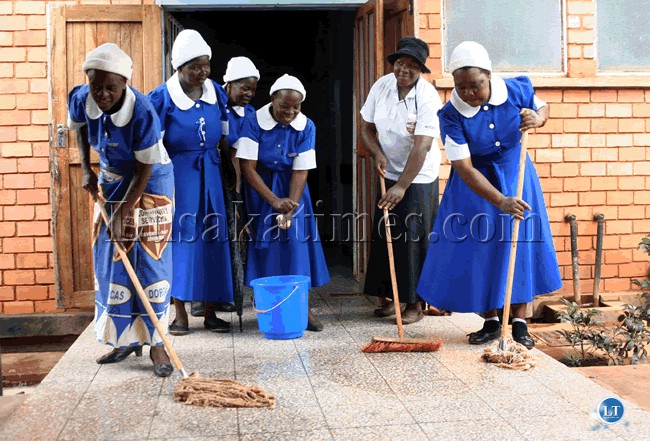
Meanwhile, Mandevu Mission District Seventh Day Adventist Federation Leader, Martha Hadebe, said over K40, 000 has been spent on the burial of the 40 unclaimed bodies from the University Teaching Hospital (UTH) mortuary.

Ms Hadebe said the church undertook the task as part of its community service, citing Biblical teachings that emphasiSe the importance of helping those in need.

“This is community service, and it is written in the Bible that we should help people. We received contributions from Dorcas workers, well-wishers, which has enabled us to cover the costs of burying these unclaimed bodies,” she said.

She expressed gratitude to the donors who contributed to the cause, saying their generosity had made it possible for the church to provide a dignified burial for the deceased.

“We appreciate the support we have received from the community, it is a reminder that we are all part of a larger community, and we should strive to help one another in times of need,” she said.

Ms Hadebe added that the church would continue to work with the community to address social issues, including supporting vulnerable members of society.

Lightning kills woman in Nakonde

0

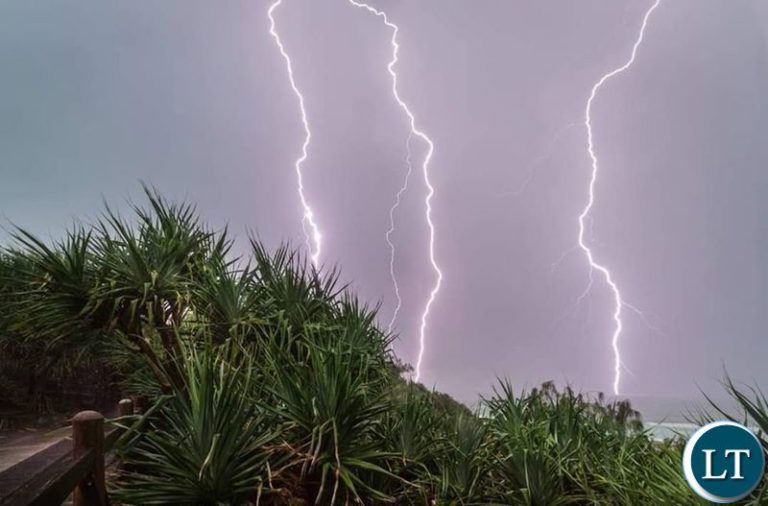
A 33-year-old woman of Nakonde district in Muchinga Province has been struck and killed by lightning.

Muchinga Province Police Commissioner, Dennis Moola, said Silvia Nachalwe, met her demise while seated in her house during a rainstorm.

Nachalwe was with her children when she was struck by lightning in Ibrahim village.

In a press statement made available to the Zambia News and Information Services (ZANIS), Mr Moola stated that the incident occurred around 12:00 hours on Friday, November 21, 2025, when rains, accompanied by lightning and thunder, started.

Mr Moola disclosed that the deceased’s father, Benny Sichalwe, who reported the incident to the police, said he was in the kitchen when he heard his grandchildren crying and running for help.

The police commanding officer added that Sichalwe rushed to the scene and found his daughter unconscious with burns on her back, while her four-month-old baby lay beside her, crying.

He said Nachalwe was rushed to Nakonde Urban Clinic where she was pronounced dead upon arrival.

Mr Moola said the police were notified and an investigation into the circumstances surrounding her death was launched.

He said no foul play is suspected and the body has been deposited at the Nakonde Urban Clinic mortuary pending post-mortem examination.

“Acting on the report, officers inspected the body and they observed burns on the back and later issued a B.I.D form,” he said.

Zambia Exits Debt Default as S&P Upgrades Credit Rating

8

 Zambia has officially moved out of external debt default after S&P Global Ratings upgraded the country’s long- and short-term foreign currency sovereign credit ratings to ‘CCC+/C’ from ‘SD/SD’, with a stable outlook. The announcement marks a major milestone in the country’s economic recovery efforts.

S&P Global Ratings, a leading international credit assessment agency, evaluates the ability of governments and companies to meet their financial commitments. The upgrade signals renewed international confidence in Zambia’s economic reforms under the current administration.

According to the Ministry of Finance and National Planning, the new rating reflects steady fiscal discipline, strengthened policy credibility, and the government’s decisive actions to resolve the debt overhang that has constrained economic activity since 2020. It also highlights improvements in Zambia’s macroeconomic environment, driven by progress in external debt restructuring, resilience in the mining sector, and stabilizing inflation expectations.

S&P noted that Zambia has secured restructuring agreements with official and commercial creditors representing about 94 percent of eligible debt. Only a small portion—mostly held by commercial banks—remains under negotiation.

Finance and National Planning Minister Situmbeko Musokotwane welcomed the development, calling it a strong vote of confidence in Zambia’s reform agenda and governance.

“It confirms that Zambia has moved out of default status and is steadily restoring its place as a credible, stable, and investable economy,” Dr. Musokotwane said.

He described the upgraded rating as recognition of the country’s pioneering role under the G20 Common Framework, noting that Zambia was one of the earliest countries to undertake the complex restructuring process.

“The upgrade is not only a recognition of economic progress, but a testament to the determination, discipline, and endurance of the government and the Zambian people,” he added.

Dr. Musokotwane emphasized that the rating supports the government’s strategy focusing on debt sustainability, export-led growth, stable macroeconomic management, improved governance, and expanded energy capacity. He said these reforms are aimed at delivering more jobs, stable prices, greater opportunities for youth and women, and broader economic participation by local businesses.

The government expressed appreciation to official and commercial creditors, cooperating partners, civil society, the private sector, and citizens for their support throughout the restructuring process. Their engagement, the ministry noted, helped put Zambia back on a sustainable economic path.

Going forward, the government reaffirmed its commitment to fiscal discipline, completion of remaining debt restructuring steps, expansion of energy capacity, stronger social protection programs, and support for private-sector-driven growth.

Zambia’s exit from default also underscores that risks from potential holdout creditors remain limited. This is due to safeguards such as the comparability-of-treatment principles under the G20 Common Framework and “most-favoured-creditor” clauses embedded in Eurobond agreements.

With the upgrade, Zambia is now positioned to gradually rebuild its global financial standing and pursue long-term economic prosperity.

CAF Trophy Hunt: Win Apple MacBook Pro, PlayStation 5 Pro, Xiaomi POCO X6 Pro and other prizes in 1xBet promo!

0

The second half of 2025 promises to be really hot for all African football fans. CAF, the official partner of the global bookmaker 1xBet, will host several major tournaments: the Women’s Africa Cup of Nations (WAFCON 2024), the African Nations Championship (CHAN 2025), the CAF Super Cup, the Confederation Cup, the Champions League, and the Africa Cup of Nations 2025 (AFCON 2025).


For this busy period, 1xBet has launched a grandiose CAF Trophy Hunt promo, where you can support your favorite African teams and compete for valuable rewards, including an Apple MacBook Pro, PlayStation 5 Pro, Xiaomi POCO X6, GoPro HERO13 and more.


How to take part?


1xBet aims to make football and exciting experiences accessible to all fans, so it has made the promo terms as simple as possible. To participate, you need to:


  1. Log in/register on the 1xBet platform.
  2. Fill out the required fields in your Account.
  3. Click the Take Part button on the promo page.
  4. Bet at least 14.2 ZMW on matches under the auspices of CAF.


The promo includes single bets with odds of 1.3 or higher, as well as accumulators with odds of 1.3 or higher for each event. At least one of them must be a CAF tournament game.


For each prediction, you will receive promo tickets and automatically enter the draw. Newcomers will get a nice bonus: for their first bet, they will receive an extra 4 tickets. 


The more tickets you have, the greater the possibility of winning a valuable reward. To increase your chances of success, try Lucky Matches and collect trophies that unlock super prizes. 


The CAF Trophy Hunt promo will be held in six stages, with each one concluding with a prize draw:


  • Stage 1: drawing – July 29, 2025
  • Stage 2: drawing – September 2, 2025
  • Stage 3: drawing – October 21, 2025
  • Stage 4: drawing – December 1, 2025
  • Stage 5: drawing – January 20, 2026
  • Final stage: super prize drawing – January 27, 2026.


All results will be posted on the promo page.

CAF Champions League & CAF Confederation Cup 2025: the struggle for prizes has begun!

The biggest battles of African club football are getting closer — the CAF Champions League and the CAF Confederation Cup return this November, bringing together the continent’s strongest teams. That means it’s time to hurry and collect as many tickets as possible.

At the 4th stage, 1xBet will draw the following prizes:

  • Smartphones and tablets: Xiaomi Pad 6, Xiaomi POCO X6 Pro, 
  • Apple MacBook Pro  
  • Smart gadgets: Apple Watch Series 11 
  • Gaming devices: PlayStation 5 Pro + EA SPORTS FC 25, Microsoft Xbox Series X, Nintendo Switch Lite
  • Other gadgets: Apple AirPods Max, JBL Flip 6 portable speaker, GoPro HERO13 
  • Promo codes 


Join the 1xBet promo – don’t miss your chance to root for your favorite team and win the gadgets you’ve long dreamed of!

Govt. to assist Chongwe families affected by heavy rains

0

Chongwe District Commissioner, Evans Lupiya, says the government, through the Disaster Management and Mitigation Unit (DMMU), will provide relief food and iron sheets to five families whose houses collapsed in Mwanshelela village on 16th November 2025 following heavy rains.

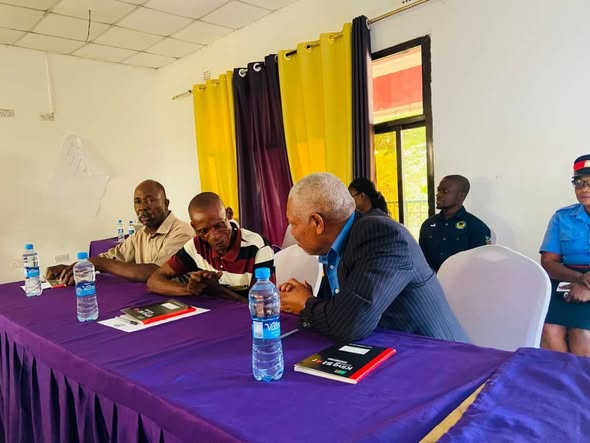
Speaking during a District Disaster Management Committee (DDMC) meeting, Dr Lupiya stated that the families will also be assisted with farming inputs to enable them to plant crops during this year’s farming season.

Apart from other losses, the families also lost farming inputs during the rains.

He reaffirmed the government’s commitment to providing the necessary assistance to families that will be affected by disasters in the district.

The District Commissioner has since commended the DDMC for responding swiftly to the disaster which occurred in Mwanshelela village.

“A team was assembled immediately and a report of the damaged houses was received from vice headman Mwanshelela to conduct an assessment of the disaster and recommendations on the assistance to be offered to the affected families were made,” he said.

Dr Lupiya disclosed that no life was lost and that only one person was injured during the disaster.

He said the affected families have since been provided with temporary shelter where they are being accommodated, adding that they will however need assistance to enable them to rebuild their houses.

Meanwhile, some of the affected families interviewed by the media thanked the government for showing concern towards their welfare following the disaster.

Ms Mirriam Chakaleka, whose house was damaged by the rains, said the quick response by DDMC demonstrated the government’s willingness to render the necessary assistance to the affected families.

Ms Chakaleka however appealed to the government to make efforts to provide farming inputs within the planting season.

“Our fertiliser and seeds which we bought to plant were destroyed by the rains which damaged our houses. We are appealing to the government to ensure that they don’t take too long to help us with inputs so that we can plant while our area is still receiving rains,” Ms Chakaleka said.

She also called on the government to ensure that the families are helped with iron sheets for roofing as soon as possible to enable them to construct houses before the area receives more heavy rains.

She also called on other well-wishers to supplement government efforts and render assistance to the affected families.

Ultra-modern hospital nearing completion in Nsumbu

0

Government has constructed an ultra-modern hospital in Nsumbu area in Nsama district in Northern Province.

The hospital has been constructed at a cost of K23 million using funds from Lake Tanganyika Development Project under the Ministry of Green Economy and Environment.

Ministry of Green Economy and Environment Permanent Secretary, Douty Chibamba, who in the company of Northern Province Permanent Secretary Bernard Mpundu, toured the hospital, is elated that the infrastructure, which comes with state-of-the-art equipment, is almost complete.

Dr Chibamba told ZANIS in an interview that the hospital is being developed under the Lake Tanganyika Development Project whose main mandate is to conserve the environment around the Lake Tanganyika basin.

“The main objective of the Lake Tanganyika project is to conserve the environment and natural resources around the Lake Tanganyika basin, but within the project, we provided the social economic component to look at the health status of the very communities we want to conserve the environment for, hence the coming up of projects such the construction of the hospital here,” he explained.

He expressed happiness that the development project is nearing completion and is expected to be launched soon.

Meanwhile, Northern Province Permanent Secretary, Bernard Mpundu, has described Nsumbu hospital as a major milestone in health care provision in not only the district but also the surrounding districts like Kaputa, Mporokoso, lake shores of Lake Tanganyika, including those from neighboring Congo Republic of Congo.

Mr Mpundu said the transition from a 14 bed health centre at Nsumbu rural health centre to the 300 bed hospital will greatly impact the lives of people in the area.

“We are excited to have this infrastructure here. It has come with all necessary medical equipment including X-ray machines, scanners, neonatal care machines, furniture and other specialised medical tools,” Mr Mpundu explained.

And Nsama District Health Director, Venacio Banda, explained that the facility is a boost and motivation to members of staff.

Dr Banda thanked the government for putting up a state-of-the-art infrastructure in a rural district that will ensure people in the area receive good quality health care services.

He disclosed that the district recently lost two pregnant mothers in a space of two weeks in the process of referral, the thing he said will come to an end once the hospital is officially commissioned.

And Josephine Mwila, a resident of Nsumbu, thanked the government for constructing a state of the art hospital in Nsumbu area saying the community used to access health services from distant neighbouring districts.

Modern bus station underway in Chavuma

0

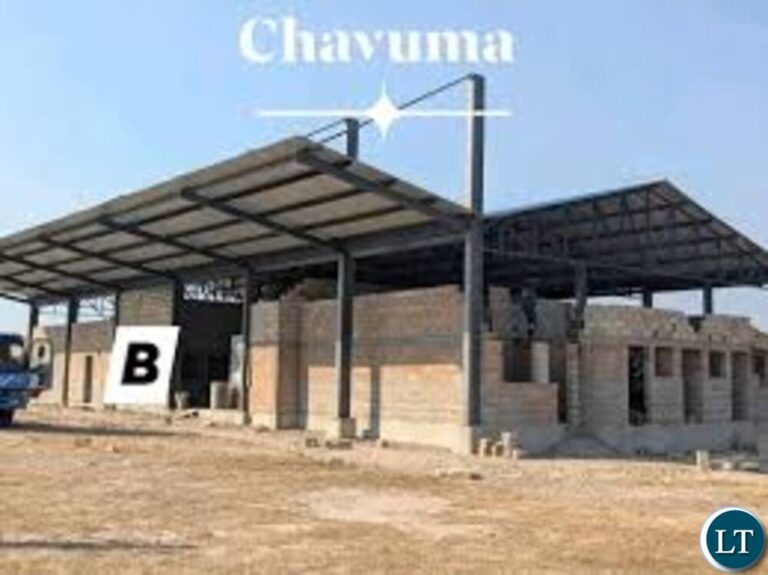
Government has released over K8 million for the construction of an ultra-modern bus station in Chavuma district in North-Western Province.

Chavuma Town Council Engineering Assistant, Stephen Nonde, says once completed, the bus station will provide a decent packing space for long distance bus drivers.

He said the building will provide world class facilities such as banks and shops.

Mr Nonde added that the building is at 65 percent complete with the superstructure already done and ceiling board installed.

He said the remaining works include plumbing and electrification before it is opened to the public.

And Site Manager, Godfrey Chasanda, said the building is set to be completed early next year.

He disclosed that the construction phase has provided employment opportunities to the locals as 20 people have been engaged at the project site.

Bus drivers who are currently facing challenges say the construction of a new bus station would alleviate some of their challenges.

Dito Hamoonga, a Power Tools bus driver, said the current environment at the station is prone to outbreak of water borne diseases especially during the rain season.

Hamoonga said there are pools of water at the station especially now that it is rain season.

And Danny Sichula, a bus conductor, said there was no reliable security at the current bus station, a situation that makes the bus crews have sleepless nights.

Haimbe to represent President Hichilema at AU-EU Summit

2

Minister of Foreign Affairs and International Cooperation, Mulambo Haimbe, is expected to represent President Hakainde Hichilema at the seventh African Union (AU) – European Union (EU) summit, scheduled to take place from 24th to 25th November, 2025 in Luanda, Angola.

The summit serves as a high-level platform to deepen the strategic partnership between Africa and Europe, with a focus on key global and continental priorities, including peace and security, economic cooperation, sustainable development, climate action, investment, and innovation.

This is contained in a statement issued to The media in Lusaka by the Ministry of Foreign Affairs and International Cooperation Principle Public Relations Officer, Eva Hatontola.

Ms Hatontola explained that Zambia’s participation in the summit presents a strategic opportunity to advance national interests, particularly by advocating for increased EU support in priority sectors such as infrastructure development, green energy, agriculture, and health.

She explained that it also shows Zambia’s strong commitment to African-led development and regional integration.

Zambia’s attendance of the summit also underscores the country’s dedication to multilateralism and proactive engagement in both continental and global affairs.

Ms Hatontola noted that in addition to the seventh AU-EU summit, Mr Haimbe is expected to attend a Special Session on AU Institutional Reforms scheduled for 26th November 2025, in Luanda.

She further stated that Zambia’s participation in this session is significant as it emphasises the country’s commitment to shaping and strengthening the institutional effectiveness of the AU.

She also reaffirmed the Ministry’s commitment to its mission of promoting Zambia’s voice and influence in regional, continental and international fora in pursuit of national development and the well-being of the Zambian people.

Zambia’s Power Gap Stems From Years of Stagnant Investment, Says Siliya

17

Zambia’s Power Gap Stems From Years of Stagnant Investment, Says Siliya

Former Information Minister Dora Siliya says Zambia is facing a genuine electricity shortage caused by years of limited investment and rapid growth in national demand. She explained that the situation reflects a structural supply gap, not planned load management.

Dr Siliya linked the present deficit to long-term trends in the energy sector. She noted that Zambia’s electricity consumption per person peaked in the late 1980s before declining due to economic pressures. According to her, the country has not seen major improvements in per-capita consumption since then, despite a population that has more than doubled.

She stated that Zambia’s population has continued to grow at a steady pace while investment in new generation capacity has remained slow. She referenced recent ZESCO figures indicating that more than 200 megawatts have been added to residential connections since 2021, a development she said reflects how quickly household demand has expanded. She noted that daily consumption is now shaped by widespread use of phones, computers, entertainment devices and modern appliances that require power throughout the day.

Dr Siliya pointed to the country’s economic structure as another source of pressure. She said agriculture, mining, manufacturing and the service sector all depend on stable power supply, and that most businesses operate for longer hours than in the past. She added that many small enterprises run entirely on mobile devices or digital platforms, creating overlap between household and commercial electricity needs.

She explained that the traditional distinction between peak and off-peak hours has weakened because usage patterns have changed across the country. In her view, the grid now carries heavy demand for most of the day, leaving little room for surplus power or strategic reductions in consumption.

Dr Siliya encouraged households to maintain mixed-supply systems such as solar, inverters and generators, saying alternative sources have become a practical requirement. She said many consumers adopted these systems late because they expected national supply to keep up, but the rapid expansion in both population and economic activity changed the demand picture far faster than anticipated.

Addressing public claims that exports are worsening the shortage, Dr Siliya said most export arrangements are either firm commitments or dependent on regional coordination that only occurs when domestic demand temporarily eases. She said the core issue lies within Zambia’s own consumption levels, not the small volumes of power shared through the regional Southern Power Pool.

She also noted that the cost of fuel affects the ability of households and small businesses to operate alternative systems. She said generators and hybrid power setups depend on affordable fuel, and that stable pricing is important for productivity, especially in sectors where backup power is essential to daily operations.

Dr Siliya urged government to provide a clear national plan showing how power generation will expand in the coming years. She called for information on future hydro and coal projects, including timelines, funding structures and the investors involved. She said citizens want to understand how the shortage will be addressed in both the medium and long term and argued that transparent communication can reduce public uncertainty.

She said Zambia needs deliberate over-capacity in electricity generation to keep pace with modern consumption and future economic growth. According to her, electricity has become one of the country’s most critical essential commodities, and sustained investment is required to prevent recurring shortages.

Dr Siliya said Zambia’s electricity challenge is rooted in population growth, rising industrial activity and new consumption patterns driven by technology. She added that long-term planning and reliable investment in new generation projects are necessary to stabilise national supply and support development.

𝐁𝐞𝐲𝐨𝐧𝐝 𝐌𝐢𝐧𝐠𝐚𝐥𝐚𝐭𝐨: 𝐖𝐡𝐲 𝐙𝐚𝐦𝐛𝐢𝐚 𝐂𝐚𝐧𝐧𝐨𝐭 𝐁𝐞 𝐒𝐢𝐥𝐞𝐧𝐜𝐞𝐝 𝐋𝐢𝐤𝐞 𝐓𝐚𝐧𝐳𝐚𝐧𝐢𝐚 𝐨𝐫 𝐂𝐚𝐦𝐞𝐫𝐨𝐨𝐧

3
𝐁𝐞𝐲𝐨𝐧𝐝 𝐌𝐢𝐧𝐠𝐚𝐥𝐚𝐭𝐨: 𝐖𝐡𝐲 𝐙𝐚𝐦𝐛𝐢𝐚 𝐂𝐚𝐧𝐧𝐨𝐭 𝐁𝐞 𝐒𝐢𝐥𝐞𝐧𝐜𝐞𝐝 𝐋𝐢𝐤𝐞 𝐓𝐚𝐧𝐳𝐚𝐧𝐢𝐚 𝐨𝐫 𝐂𝐚𝐦𝐞𝐫𝐨𝐨𝐧
By Dr Mwelwa

Tanzania teaches Africa that power can silence opponents by simply removing them from the ballot. When dominant parties fear competition, they do not defeat rivals at polling stations  they eliminate them long before voting begins. Zambia must recognise this pattern early.

Senegal, however, showed a different script. When the state jailed Ousmane Sonko to weaken the opposition, his supporters united behind Bassirou Diomaye Faye, turning a prison cell into a political launchpad. Even behind bars, leadership found a way to communicate loyalty and strategic unity.

That victory shook the foundations of authoritarian politics in West Africa. It proved that a determined electorate can defeat sophisticated state machinery. Senegal’s youth refused manipulation, refused fear, and refused division. They voted for freedom, not intimidation.

Tanzania demonstrated how governments block competition by legal tricks, disqualifications, and strategic arrests. Senegal demonstrated how citizens can still reclaim democracy when they refuse to surrender their collective voice. Two nations, two lessons, one warning for Zambia.

There are deep rumors that some of Zambia’s strongest candidates may be blocked or entangled in criminal charges before 2026. This resembles the Tanzanian method: remove the popular, distract the voters, and declare victory without competition.

But Zambia is not Tanzania. Our citizens, churches, civil society, and digital spaces are too awake to allow quiet elimination of candidates. Every attempt at electoral manipulation risks creating a Senegal-style backlash that the ruling elite cannot contain.

If any leading figures are barred, jailed, or politically silenced, unity becomes the weapon. Senegal won because the opposition refused fragmentation. A single candidate, backed by all, becomes unstoppable even in the face of state power.

Zambia must learn that you cannot imprison an idea whose time has come. You can lock up the leader, but you cannot lock up public hunger for change. That is the lesson Senegal sent across Africa like a political earthquake.

Elections in Malawi showed humility: a peaceful transition, and a president who respected the will of the people. Tanzania showed the danger of shrinking democratic space. Cameroon showed the tragedy of leaders who fear competition entirely.

𝒁𝒂𝒎𝒃𝒊𝒂 𝒎𝒖𝒔𝒕 𝒄𝒉𝒐𝒐𝒔𝒆 𝑴𝒂𝒍𝒂𝒘𝒊’𝒔 𝒄𝒐𝒖𝒓𝒂𝒈𝒆 𝒂𝒏𝒅 𝑺𝒆𝒏𝒆𝒈𝒂𝒍’𝒔 𝒓𝒆𝒔𝒊𝒍𝒊𝒆𝒏𝒄𝒆 𝒏𝒐𝒕 𝑻𝒂𝒏𝒛𝒂𝒏𝒊𝒂’𝒔 𝒆𝒙𝒄𝒍𝒖𝒔𝒊𝒐𝒏 𝒐𝒓 𝑪𝒂𝒎𝒆𝒓𝒐𝒐𝒏’𝒔 𝒔𝒕𝒂𝒈𝒏𝒂𝒕𝒊𝒐𝒏. Our voters must understand that power only becomes abusive when citizens become silent. Silence is the oxygen of manipulation.

No matter what mingalato is applied selective arrests, delayed court processes, disqualifications, intimidation, or propaganda  Zambia’s democracy remains stronger than these tactics.

The Zambian voter is wiser, hungrier, and more alert than before.The ruling party must realise that political engineering cannot defeat national awakening. When people decide to reclaim their future, even the strongest machinery collapses. This is the warning Senegal delivered to every government that toys with electoral justice.

Zambians must stay vigilant, united, and strategic. When the moment of choice arrives, do not look to politicians for courage  look to the Senegalese, who turned oppression into victory. Zambia is next, if its people remain unafraid.

Vice President commissions Shiwang’andu Civic Centre

0

Government has commissioned the first ever modern Civic Centre in Shiwang’andu District of Muchinga Province, which has been completed and furnished at a total cost of K6, 606. 400.

Vice President Mutale Nalumango who commissioned the infrastructure today, said she is impressed with the quality of works and the initiative to modernise the building.

Mrs Nalumango said the construction works which commenced in January 2015 and was expected to be completed in August 2025 had stalled for eight years after the initial contractor abandoned the project.

She therefore said to ensure completion of the project the Constituency Development Fund Committee allocated K4.2 million to revive and complete the civic center, with a Council Police Office included at a cost of K170, 000 to improve security at the premises.

“K1,294, 400 was spent on assorted furniture leading to a total CDF expenditure of K5,142. 000 and overall project cost to K6, 606,400,” she said.

Mrs Nalumango added that a number of constituencies are doing well when it comes to utilisation of CDF while a few others are not, a thing which cannot be blamed on the Government as people have been given the authority to choose the project that they want under CDF.

The Vice President said CDF resources are distributed equitably, hence development such as more schools, health facilities and empowerment of people among others, has also resulted in job creation among the local people.

Meanwhile, Muchinga Province Minister Njavwa Simutowe says Government is committed to the use of bottom-up approach as clearly shown through initiatives such as the Constituency Development Fund (CDF), Cash for Work and the Zambia Devolution Programme.

Mr Simutowe said the programmes have transformed lives of people including those in Shiwang’andu, adding that the Provincial Administration remains committed to effectively deliver Government projects.

“This is evident by how Muchinga Province has performed in the implementation of CDF projects in the Province,” he said.

The Provincial Minister has since appreciated President Hakainde Hichilema and the Vice President for fostering collaborative Governance and development for the benefit of all Zambians.

Meanwhile, Shiwang’andu District Commissioner Maureen Bwembya says 10, 566 people have benefited from the Cash for Work programme under CDF in the district.

Ms Bwembya said the Cash for Work programme which was part of the drought response has helped to improve the livelihoods of people.

And in a vote of thanks Chief Mukwikile of the Bemba people of Shiwang’andu District said the infrastructure will greatly improve the working environment of council workers and improve service delivery.

Environmental threats due to increased mining activities-ZCCN

0

Zambia Climate Change Network (ZCCN) Founding Board Chairperson Noah Zimba says Northwestern Province has registered appreciable development in the recent past characterised by an influx of people and increased economic activities overwhelming available infrastructure and resources.

Professor Zimba said this has resulted into human and environmental threats such as manifestation of communicable diseases and pollution of both water and land systems putting the lives of people, rivers and productive soils into a serious health threat.

The media reports that he said this in Solwezi today during a media briefing on ZCCN steering committee’s impressions arising from the interactions and physical observations undertaken in the Province in four districts namely Kasempa, Kalumbila, Mufumbwe and Solwezi.

Prof Zimba said some perennial streams and rivers have registered low levels as well as drying effects, a phenomenon he described that has never happened in the Province before.

He said they observed environmental harm attributed to recent informal small scale and artisanal mining activities in the region.

Prof Zimba said there is need to provide a sector and stakeholder platform where mining companies will share their experience to inspire replication and scale of good practices for the impact.

Speaking at the same media briefing, Co-convener Patrick Kaumba has commended government and other stakeholders that have come on board to train small scale and artisanal mining cooperatives with good mining practices that include environmental protection.

Mr Kaumba has therefore appealed to the government to encourage foreign and local investment partnerships and increase financing mechanisms for small scale and artisanal miners to avoid them selling their mining licenses to foreign investors.