Sunday, June 14, 2026
13.1 C
Lusaka
Home Blog Page 262

WB delegation evaluates education projects in Western Province

0

A delegation from the World Bank, led by Task Team Leader, Hongyu Yang, has arrived in Western Province to assess the progress of the Zambia Education Enhancement Project (ZEEP) and the Zambia Early Education Learning (ZEEL) programme.

The team, accompanied by the Ministry of Education Director of Early Childhood Education, Charm Kalimbika, and officials from the Ministry of Finance and National Planning, paid a courtesy call on Western Province Permanent Secretary, Simomo Akapelwa, to discuss the implementation of the projects.

The media reports that through ZEEP and ZEEL, the World Bank is funding the construction of 22 secondary schools and 34 Early Childhood Education (ECE) centers in Western Province, comprising 17 hubs and 17 satellite centers.

Mr Kalimbika indicated that the projects form part of a broader national effort to build 120 secondary schools and 440 ECE centers across Zambia.

He added that initiatives further aim to expand access to quality education and improve learning outcomes for children in the province.

The World Bank mission will provide an opportunity to evaluate the progress made so far and identify areas for further improvement.

Western Province Permanent Secretary, Simomo Akapelwa, has urged the Provincial Education Office to take interest in monitoring the projects doted around the province to appreciate the challenges faced.

He noted the importance of such infrastructure in the province, adding that the move is also in line with the government’s ideology in education sector.

Mr Akapelwa highlighted the need to also understand the geographical location of the province as it will help understand funding allocations of projects.

Zambia to experience isolated thunderstorms

2

The Zambia Meteorological Department (ZMD) has forecast isolated thunderstorms from 5th to 9th November 2025.

According to a statement issued by the ZMD in Lusaka today, the thunderstorms will be influenced by elevated temperatures being experienced across the country.

The thunderstorms will also be induced by a moist and unstable airflow from Congo, coupled with airflow from the southeast and localised convection.

“Moist and unstable airflow from Congo together with a combination of airflow from the southeast and localised convection due to elevated temperatures across much of Zambia, are expected to trigger isolated thunderstorms,” the statement read in part. 

The anticipated rains are expected to cover mainly the western half of the country and gradually extend eastward covering the rest of the country during the forecast period.

The statement indicated that the anticipated rains are expected to be heavier in Southern, Western, Northern, Copperbelt, Central and Luapula Provinces. 

“These rains are anticipated to be heavier especially in parts of Southern, Western, Northwestern, Copperbelt, Central and Luapula Provinces.”

As part of precaution measures, the department has warned members of the public to avoid sheltering under trees during thunderstorms to reduce the risk of lightning strikes, suspend water transport activities during stormy conditions to prevent accidents while farmers have been urged to protect their harvested crops so as to prevent damage from rain.

Lundazi police picks unidentified body along Lundazi River

0

Police in Lundazi District of Eastern Province have retrieved the body of an unidentified man believed to be between 30 and 40 years old.

The decomposed body was discovered along the banks of the Lundazi River near the Castle Hotel.

Eastern Province Commissioner of Police, Robertson Mweemba, confirmed the incident to ZANIS in Lundazi, saying the discovery was made around 08:00 hours today by a 40-year-old man who was walking along the riverbank to buy fresh fish from local fishermen.

Mr. Mweemba said the man noticed a strong stench and a swarm of flies coming from the riverbank and, upon investigating, found the body lying face-up, shirtless, and dressed in grey ripped jeans.

“The man is estimated to have been dead for about seven to fourteen days based on the state of decomposition,” Mr. Mweemba stated.

He added that the Public Health Office from the Lundazi Town Council was engaged, and a decision was made to bury the body and mark the grave for possible future exhumation.

Police have since launched investigations into the matter. No reports of missing persons have been recorded at the station in recent weeks

ZAPD expresses concern over low upgrade of physical infrastructure

0

The Zambia Agency for Persons with Disabilities (ZAPD) says government has done a tremendous job in ensuring that people with disabilities are catered for in accessing public infrastructure.


ZAPD Public Relations Officer, Rachael Chako, says the approval of the disability policy which ensures that persons with disabilities are involved in all developmental aspects is one of the achievements which government has recorded.


This ensures that people with disabilities access physical infrastructure, therefore promoting inclusion.


Ms Chako added that an ultimatum was given by the Ministry of Infrastructure, Housing and Urban Development to ensure that various organisations and institutions erect ramps as well as lifts to help people with disabilities to have access to them.


She said ZAPD has however observed that only a few institutions have so far adhered to the directive.

She said it is still a challenge for some institutions to implement the directive.


Ms Chako has further said irrespective of the extremely low adherence to the ultimatum, ZAPD is engaging different stakeholders to raise the welfare of the people with disabilities.


She said ZAPD is liaising with relevant authorities to speed up the process of implementing the ultimatum by approving all construction works that will be in line with the guidelines of the requirement.


Ms Chako has meanwhile appealed to the members of the public to adhere to the guidelines in the ultimatum to make both public and private infrastructure accessible to persons with disabilities as this will raise the aspect of inclusivity.


She reiterated that government needs to act swiftly by engaging all those not adhering to the guidance stipulated in the ultimatum as soon as possible.


In October 2024, the Ministry of Infrastructure, Housing and Urban Development released a newsletter discussing ongoing efforts to develop infrastructure, particularly using Public -Private Partnerships (PPP) to overcome financing gaps.

VNF calls for extension of Presidential Petition hearing period

0

 The Vision Network Foundation in Luapula Province has called for the extension of the Presidential Petition hearing period from 14 to 21 days.

Vision Network Foundation Executive Director, Bishop Maxwell Luchile, observed that extending the hearing period would give both parties sufficient time to present their cases.

Speaking when he made submissions on behalf of his organization to the ongoing Technical Committee sitting in Luapula Province, Bishop Luchile proposed that the 21-day period should exclude weekends and public holidays.

He further recommended that the 21-day timeframe should also apply to all elective positions, including Members of Parliament and councillors.

Bishop Luchile also proposed that all election petition hearings be broadcast live to allow the general public to follow the proceedings.

On the matter of candidates who resign after filing their nominations, Bishop Luchile said elections should proceed unless the withdrawal is due to the death of a candidate.

He noted that no individual should be allowed to disrupt an election for personal gain.

“In the case of the death of a candidate, other candidates who had already filed their nominations should not be subjected to fresh nominations apart from the political party involved,” he stated.

The Bishop also suggested that Members of Parliament should be limited to serving two terms to allow others the opportunity to serve.

Meanwhile, the United Party for National Development (UPND) in Luapula Province has submitted that all elective positions, apart from that of the President, should be tied to political parties to eliminate the need for by-elections.

Luapula Province UPND Chairperson, Alfred Mwape, said by-elections are costly to the nation and should be avoided by allowing the political party that won the seat to nominate another candidate in the event of death.

Mr. Mwape further stated that by-elections have often been a source of political violence, hence the need to abolish them.

“On delimitation, we are of the view that it should proceed, especially for large constituencies in the country such as Bahati and Mansa,” he said.

The Technical Committee sittings in Luapula have today entered Day 3, with the exercise expected to conclude tomorrow.

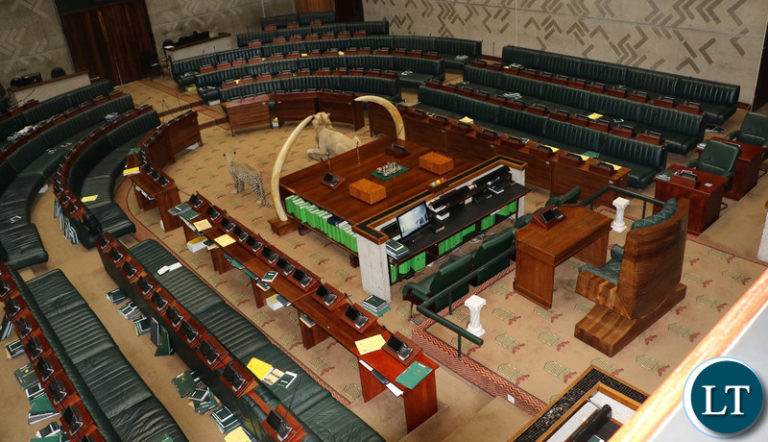
Speaker, Discipline, and the Unspoken Perception Inside Parliament

2
Speaker, Discipline, and the Unspoken Perception Inside Parliament

Inside Zambia’s National Assembly, the Speaker’s authority is not questioned in principle. Everyone in the chamber knows the Standing Orders are the rules. Every MP knows the presiding officer holds that final gavel. But beneath the procedural surface, there is a recurring sentiment that some suspensions and rulings look selective, or that enforcement can lean harder on certain voices.

Most MPs will never say this on the floor. They will not risk being ruled out of order for imputing motive. But in private political discussion, in café corners at Parliament Motel, and in corridors outside the chamber, this perception exists. Some MPs feel that interventions arrive faster and harsher depending on who is speaking, not only what is said. The friction point is not the rulebook itself but interpretation of when the Speaker decides a statement is disorderly, combative, inflammatory, or threatening the dignity of the House.

The basic tension is this:

  • The Speaker believes they are safeguarding order.
  • Some MPs believe order is enforced unevenly.

This is where political optics matter. When the same procedure punishes some very quickly while others appear to get longer rope, MPs translate that as bias. Fair or unfair, this is how they interpret it. The Speaker might see a technical breach. The MP interprets the ruling as targeted. That perception gap is the breeding ground of the belief that certain benches are handled differently.

There is also a second deep current: the suspicion that the Speaker reacts more sternly to opposition posture, and more diplomatically to government benches. Again: not because Standing Orders say so, but because MPs measure patterns over time. When the same category of intervention produces different consequence, it produces narrative.

And in politics, narrative matters more than procedure.This is why disciplinary actions routinely ignite emotional response. Suspensions are not seen as individual correction. They are read as a larger institutional signal about power control in the chamber. They become proof to some that the playing field inside the chamber is heavily tilted.

This is where the political truth sits: Parliament is not only a law-making arena. It is a stage of power. Each ruling is not merely administrative. It is interpreted symbolically. MPs remember who gets shut down fast. They remember who gets protected with “caution first.” They know who is likely to be told “order” and who is likely to be removed from the microphone. The Speaker might be enforcing discipline. MPs might be reading control.

That is the tension.And until both sides acknowledge that Parliament is not just procedure but perception, this belief will not disappear.

IBA creating enabling environment for broadcasting stations

0

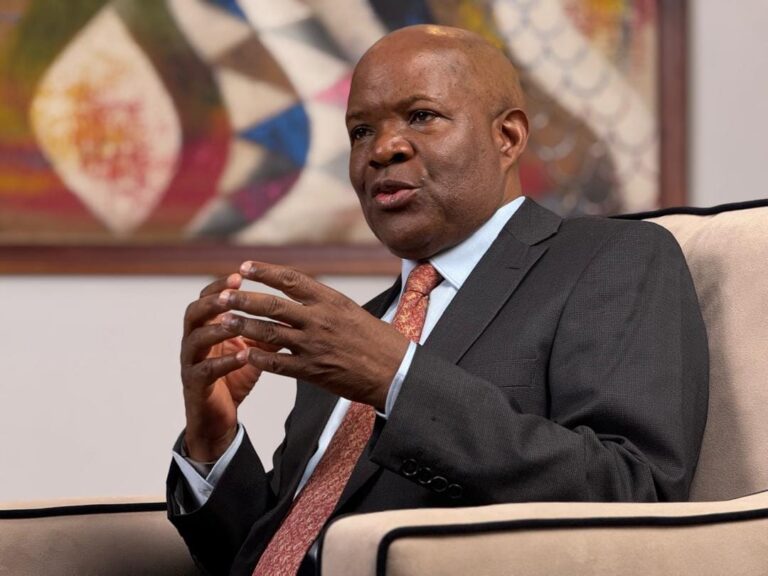
Speaking during a familiarisation tour at Live Radio 97.3 FM in Lusaka, Mr Malido said the IBA’s new direction focuses on strengthening partnerships with broadcasters to address challenges in the sector.

“We are not just here to regulate. We want to enable you and to collaborate more, than being enforcers of laws,” he said.

Mr Malido commended Live Radio, also known as The Green Station, for its commitment to compliance and professionalism since receiving its first license in 2016.

And Live Radio Chief Executive Officer, Jamia Nkhoma, welcomed Mr Malido’s visit, describing it as an opportunity for broadcasters to share ideas and strengthen relations with the regulator.

As part of his familiarisation programme, Mr. Malido also visited Diamond Television.

The IBA Director General toured the station’s facilities and thanked the management and staff for their warm welcome, noting that such visits help the IBA better understand the daily operations and challenges faced by broadcasters.

He noted that IBA is working to strengthen internal systems and to improve efficiency and accountability, both to the public and the broadcasters.

He further noted that IBA is committed to supporting broadcasters in their growth and encouraging diversity in media content across the country.

Consider merits within Bill 7, not discard entire draft – Chief Machiya

5

Consider merits within Bill 7, not discard entire draft – Chief Machiya
Chief Machiya has urged the Bemba speaking people not to reject Bill 7 in its entire form but to instead support the sections that produce positive benefit. The headline indicates that the Chief is calling for a targeted evaluation approach to the amendment bill rather than complete rejection. The position being presented is that constitutional amendment processes require consideration of the content that brings national value. This headline therefore communicates a message that Bill 7 should not be dismissed as a whole document but filtered so that clauses which produce beneficial outcomes are preserved.

A constitutional amendment is usually presented as a multi component legislative package that includes technical clauses, governance alignment clauses, administrative adjustments and institutional empowerment measures. The Chief’s position suggests that the valuable areas within Bill 7 could still contribute to the governance process if retained. The headline indicates that citizens should not collapse the debate into a binary outcome of complete rejection but instead take a measured approach which preserves useful proposals. This position implies that scrutiny should be applied to the clauses individually because some of them can contribute positively to national governance operations.

The Chief’s argument as presented in the headline suggests that if a clause is beneficial then it should not be discarded simply because the broader bill contains controversial provisions. People evaluating public governance proposals are encouraged to consider the utility of specific components and protect the clauses that contribute public benefit. The headline communicates the idea that certain proposed amendments can still serve national development objectives if allowed to stand. Political conversation around constitutional amendment frameworks often involves tension between those who support wholesale acceptance and those who favour rejection. The Chief’s position introduces a third approach which is one of selective retention.

The headline also shows that the Chief is taking an advisory stance regarding public engagement in constitutional amendment processes. This advisory posture is directed at citizens so that they engage with Bill 7 constructively, in a way that separates beneficial proposals from less favourable ones. When amendments are proposed, the underlying purpose is to strengthen institutional alignment and legal responsiveness in the national governance system. The Chief emphasises that some proposals merit protection because they have the capacity to benefit the country. The position presented in this headline therefore advocates for a rational review culture based on evaluation of functional outcome.

The headline suggests that national constitutional conversation requires sober reflection that separates narrowed political reactions from institutional interest. This approach is based on the principle that reform inputs should be assessed for positive contribution even if they exist alongside issues that attract disagreement. The Chief’s message as conveyed in this headline is that public discourse should recognise this nuance. The endorsement of good proposals is therefore seen as an act of constructive participation in constitutional reform. Selective support is therefore positioned as a method for building outcome based amendment dialogue.

M’membe told to Retrospect

5

Socialist Party president Fred M’membe has been advised to reflect on the extent of division reportedly affecting members of the party following internal friction which has been the subject of public debate. The statement on the front page points to concern that the party is experiencing disintegration and internal fragmentation. The sentiment is that the party leadership should consider the causes of this situation and what has driven the sequences of division among party members. The core message is a call to introspection and an appeal for re-examination of internal dynamics.

This matter is considered a topical political development. Socialist Party has positioned itself as a critical voice on governance, but internal cohesion forms a key pillar of credibility in national political competition. The advice to reflect suggests that stakeholders expect the Socialist Party leadership to address this structural weakness if the party is to function as a united institution. The headline points to concerns about the stability of internal structures and decision-making processes which shape the party’s national performance capacity.

Fragmentation of political movements often weakens organisational influence because internal discord results in loss of messaging consistency, deterioration of internal trust, weakening of campaign coherence, and reduced confidence among supporters. The headline indicates that the Socialist Party leadership has been urged to examine these matters from within. If a political party experiences an internal split or organisational disagreement, public perception is influenced through visible outward outcomes such as resignations, conflicting statements, public disagreements, reduced mobilisation strength, and doubts about leadership authority. The headline reflects a viewpoint that addressing internal division is a priority area for strategic survival.

Political parties in Zambia operate within a competitive public space where internal discipline often determines how strongly a political formation can influence national discourse. When a leadership is advised to introspect, it implies that the issues are not purely external. Internal matters such as organisational clarity, communication alignment, party governance procedures, branch structures, and internal election outcomes are part of a political ecosystem that requires direction. Reflection can involve reassessing how decisions are made, how disagreements are resolved, how ideological cohesion is maintained, and how members view their collective identity.

The Socialist Party has positioned itself as an anti establishment movement built around a defined ideological identity. Public commentary on disintegration raises questions about ideological unity and whether members view the leadership pathway consistently. The action of introspection that has been advised is aimed at resolving this gap. Internal unity forms the foundation of campaign credibility because political messaging must demonstrate consistency. Without internal alignment, campaign communication loses sharpness and becomes less persuasive. In this context, introspection is linked to reforming internal structure to restore cohesion.

The headline signals a call to deal with the underlying reasons that have led to the current party fragmentation. This includes the possibility that internal disagreements may be linked to organisational approach, leadership style, policy alignment, or the way internal differences are reconciled. Reflection can be used to identify which areas require adjustment. Political organisations require union of purpose. When disintegration is referenced in a headline it suggests that members or concerned voices expect change from the inside.

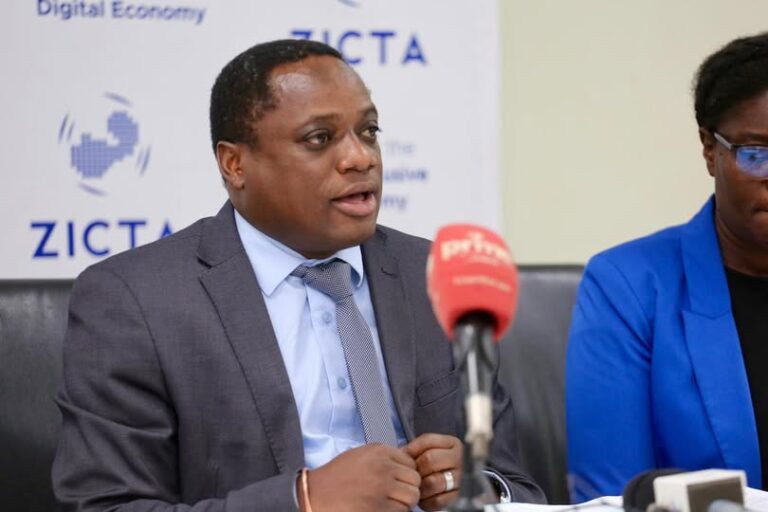
ZICTA gives mobile operators 21 days to fix quality concerns

ZICTA gives mobile operators 21 days to fix quality concerns

The Zambia Information and Communications Technology Authority has directed Infratel and IHS Towers to submit clear and practical measures within 21 days that will address the deterioration in network service quality which members of the public have complained about. ZICTA director general Collins Nswana said citizens have been subjected to unacceptable call drop rates, low signal reliability, unstable mobile internet and limited throughput at various usage periods. He said that Zambia’s people deserve consistent and dependable mobile connectivity because communication has become a central layer of daily economic and social participation.

Nswana said the reason this intervention is targeted at infrastructure providers is because this is the layer where the foundational signal environment originates. In Zambia the public experiences mobile service through operators such as MTN, Airtel and Zamtel, but these retail networks depend on the quality and resilience of towers, backhaul systems, power stability, fibre distribution, radio system calibration and equipment capacity owned or managed by Infratel and IHS. Nswana said that without structural engineering corrections at this backbone level, downstream operators will remain restricted in what they can deliver to their subscribers.

He said ZICTA is not asking for intentions or broad concepts but for a technical breakdown of measures that will restore voice stability, improve coverage, reduce call drop patterns, strengthen data consistency and provide more reliable connectivity for rural communities. He said the regulator expects engineering solutions that can be quantified, measured, timed and verified. Nswana said this directive is a compliance obligation and not a symbolic request.

He said Zambia’s development model has shifted to a digital dependent environment, therefore outages and inconsistent communications have direct economic effect. He stated that banking transactions, tax filing, agriculture advisory systems, irrigation equipment signalling, health access coordination, transport dispatch software, land registry interactions, voter registration database linkages, civil registration processes, corporate ICT platforms, education management systems and online payment rails all rely on stable digital communication layers. Nswana said that mobile quality is now directly linked to national performance indicators.

He said the regulator is aware that citizens no longer treat poor connectivity as a minor inconvenience but as a service failure that affects economic participation. Nswana said that user expectations are valid because consumers are paying for services that must meet quality requirements. He added that poor connectivity delays business decisions, slows information flow and affects productivity. Nswana said the regulator expects infrastructure operators to demonstrate clear evidence of real engineering work rather than high level presentations.

ZICTA has therefore demanded that each infrastructure provider demonstrate how they will close capacity gaps, remove known dead zones, stabilise rural corridor networks, strengthen base stations where signal performance is inconsistent, improve backhaul redundancy, update equipment that is producing unstable performance, and adopt operational upgrades that create measurable improvement. Nswana said this directive aligns with the need to ensure Zambia’s digital ecosystem remains functional, reliable and fit for development.

Mubanga urges business collaboration for growth

0

Minister of Small and Medium Enterprises Elias Mubanga has urged business entities to work closely with the government to drive economic growth and development in the country.

‎Speaking during the Invest Ndola business forum, Mr Mubanga said the government wants to promote economic growth and bring development to the people, hence the need for partnership with the private sector.

‎He said the government has created an enabling environment for businesses to thrive through various sectors such as mining and agriculture.

‎Mr Mubanga has called on investors to take advantage of the mining sectors, which have been revamped on the Copperbelt Province.

‎He has called on the stakeholders to change their mindset and be innovative in the manufacturing sector.

He added that the government is willing to support business personnel who have innovative ideas but lack resources.

‎He said the government has partnered with financial institutions to support businesses.

‎Copperbelt Province Minister, Elisha Matambo said Ndola offers many avenues for potential investment, such as access to business entities in the Democratic Republic of Congo (DRC), Angola and Tanzania.

‎‎He  noted that  the  initiative of the Ndola and District Chamber of Commerce and Industry will help unlock Ndola’s full potential of repositioning the city as a dynamic centre for commerce, logistics, and sustainable industry.

‎”This forum resonates with the President Hakainde Hichilema’s call to promote business growth and investment attraction that fosters a pro-business environment through streamlined regulations, investment initiatives, and robust support for SMEs and startups,” he said.

‎The Provincial Minister said Ndola has seen the establishment of technical and vocational training  for youths in various skills, which has been crucial for building a skilled local workforce that can support industrial growth.

‎Ambassador of DRC to Zambia,Didier Sebge Bapaga, has called for a deeper engagement between Zambia and DRC, mostly with Ndola and the  Province.

‎He said the two countries will economically grow and extend their partnership through such forums.

‎”I am happy  for the participation of over 20 Congolese companies in the forum, “he said

‎Ambassador Bapaga added that  there is need to intensify trade and investment between provinces and foster strategic partnerships that can generate employment and create economic value for both.

‎Ndola Chamber of Commerce and Industry Diana Kabaila commended government for developing the country in all sectors.

‎Ms Kabaila said the government efforts stimulate growth and improve livelihoods through Job Creation.

‎She has called on government through private public partnership to build more logistics and warehouse near airports and roads.

‎She also called on government to establish Ndola economic reviving council, a collaborative platform that would bring together public and private sector partners to identify, package and implement key infrastructure projects within.

Muchinga youths support inclusive constitution reforms

1

Youths in Muchinga Province have thrown their weight behind efforts to make their submissions in the on-going Constitutional Amendments sittings, emphasising the need for effective participation of young people, women and persons with disabilities in leadership positions.

Speaking during submissions to the Technical committee on the Constitutional amendments being held at the Civic Centre in Chinsali today, a Youth from Lavushimanda District, Van Kalanje said increasing representation of youths, women and persons with disabilities is a good move to promote inclusive leadership.

Mr Kalanje added that increased representation will also encourage each group to have leaders that will have empathy to addressing issues peculiar to them.

And another youth from Mafinga District, Friday Silwimba said that there is need for enhanced representation of youths, women and persons with disabilities to represent them in leadership positions.

Meanwhile, other members of the Public including senior citizens also made their submissions on various proposed terms of references.

Hildah Nachalwe, a senior citizen based in Chinsali District said holding of by-elections is costly for the nation and proposed that in an event that an elected leader such as area Member of Parliament or a Councillor dies, the political party where the deceased belonged should select another member to replace the deceased.

Ms Nachalwe added that in an event that the deceased is an independent person then the candidate who was second can take up the position without spending on by-elections.

And another Senior citizen, Oliver Mulenga also submitted similar reviews that the Country loses a lot of resources on by-elections, adding that in the case of the death of an elected candidate, the other candidate who came second during the election should automatically replace the deceased.

 As part of the ongoing constitutional amendments process, stakeholders from across the province have been making submissions, the exercise has been hailed as a testament to the government’s commitment to transparency and broad-based

FRA Payment Delays Threaten New Farming Season, Chanda Warns

9

FRA Payment Delays Threaten New Farming Season, Chanda Warns

Kanchibiya Constituency has formally raised alarm over what it describes as a worsening crisis in the agricultural sector, citing late farmer payments under the Food Reserve Agency and a lack of decisive reform to restore confidence ahead of the new farming season.

Hon. Sunday Chanda, MP for Kanchibiya, says the situation is no longer academic nor political  farmers who supplied maize to the FRA are now deep in the new planting cycle without the payments they were promised, and this has placed actual livelihoods at risk.

The delayed payments, coupled with what he describes as unconvincing incremental disbursements, have resulted in growing frustration among farmers and have renewed calls for sweeping structural changes within both the FRA and the Farmer Input Support Programme.

The MP insists that Zambia cannot continue debating old political history at a time when real farmers, across districts, are waiting for money owed to them. He says agriculture must be anchored on honesty, accountability, urgency, and timelines  not blame.

He argues that the responsibility for delivery rests with the current system, and that confidence can only return if government shows a clearer roadmap and issues firm, time-bound commitments to farmers.

Below is the full press statement issued:


PRESS STATEMENT

FOR IMMEDIATE RELEASE
Date: November 2025

Kanchibiya Constituency Calls for Urgent Reforms and Accountability in the Agricultural Sector

Sadly, on account of time, we could not present our question to the Minister of Agriculture on the floor of Parliament over the delayed payments to farmers who sold their maize to the Food Reserve Agency (FRA). The piecemeal approach being applied to settle these payments as announced by the Minister is not inspiring at all. After all is said and done, this crisis stands as an indictment on both the Ministry of Agriculture and its agency, the FRA, for failing our farmers at a time when the agricultural season is already upon us.

On the floor of Parliament, the people of Kanchibiya have consistently called for sweeping reforms to the Food Reserve Agency (FRA) and the Farmer Input Support Programme (FISP). These reforms are not optional but essential if we are to transform the agricultural sector and restore confidence among the farmers who sustain our nation’s food security.

It is disheartening that the Minister chose to lay blame on the past regime for the current malaise in the agricultural sector. Zambians voted for change, among other things, to make agriculture better, more efficient, and more rewarding for farmers. We cannot be trapped in the past. The inability to steer the sector out of its current challenges is not an indictment on the past, but a reflection of how the present Ministry of Agriculture has performed regarding this crucial sector.

Our farmers do not deserve rhetoric, arrogance, or lip service. What they need and deserve pis honesty, transparency, and urgency. The ministerial statement missed an opportunity to apologize to the farmers, and more importantly, to provide a clear and structured timeline for when every last farmer will receive their payment.

We therefore call upon the Government to adopt a more structured and time-sensitive approach to the question of farmer payments. The Ministry of Agriculture and its agency, FRA, must take responsibility and inspire confidence among farmers across the country.

In addition, we reiterate our call for comprehensive reforms in both the Ministry and the FRA. The current operational model has failed our farmers, and without decisive reform, Zambia risks undermining its own food security and the livelihoods of the very people who feed the nation.

Issued by:

Hon. Sunday Chanda, MP
Member of Parliament for Kanchibiya Constituency
National Assembly of Zambia

ZESCO Cuts Power Supply to Three Hours Daily as Generation Crisis Deepens

0

ZESCO Limited has announced a further reduction in electricity supply hours for residential areas across the country, cutting down from two hours to three hours of power supply per day. The power utility attributes this adjustment to a severely constrained power generation situation that has significantly impacted its operations and overall electricity distribution capacity.

In a statement issued by the company, ZESCO explained that the current interconnected power system is under extreme pressure, affecting not only local generation but also the corporation’s ability to import power from regional sources. The strain on the regional power grid has led to reduced access to external electricity imports, which has in turn forced the utility to make additional adjustments to its load management and rationing schedules.

“ZESCO informs its customers that it is operating under a severely constrained power generation situation. An under-pressure interconnected power system has equally affected the Corporation’s access to regional imports,” the statement read. The company emphasised that the difficult circumstances have made it necessary to disrupt previously planned load management schedules and reduce supply hours as a way of safeguarding the national power system from potential collapse.

According to ZESCO, the new electricity rationing schedules covering the period from 2nd to 8th November 2025 will reflect this variability as the corporation strives to maintain grid stability. The utility explained that these measures are essential to prevent system overloads and avoid irreversible damage to generation and transmission infrastructure. The statement assured customers that the company is doing everything possible within its means to restore normal operations and improve power supply as soon as conditions allow.

“ZESCO assures its customers and the public that it continues to work hard and is doing everything possible within its means to resolve the challenges affecting the generation and transmission system and restore better service through improved electricity supply,” the utility noted.

Despite the reduction in power supply hours, ZESCO reaffirmed its commitment to adhering to the published load-shedding schedules. However, the corporation warned that unforeseen circumstances such as technical faults, vandalism, or theft of electrical infrastructure may cause additional unplanned outages. The company highlighted that such disruptions could alter the supply pattern, making it difficult to stick strictly to the published timetable.

“The Corporation will endeavor to promptly communicate such disruptions to the affected customers. Customers are urged to report any outage lasting longer than 24 hours and to help curb the high levels of vandalism and theft by reporting any suspicious activity to law enforcement agencies,” the statement added.

The utility company further appealed to members of the public to cooperate during this period of constrained supply by reporting prolonged outages and assisting in the fight against vandalism. ZESCO reiterated that its technical teams are working tirelessly to address the current generation challenges and ensure the restoration of stable electricity supply across the country.

BOZ calls for innovative payment systems to enhance inclusion

0

Bank of Zambia (BOZ) Deputy Governor for Administration, Rekha Mhango, has called for the creation of an enabling and innovative payment environment to promote greater financial inclusion across the country.

Ms Mhango said developing modern and inclusive payment systems is key to ensuring that more citizens, especially those in rural areas, have access to affordable and reliable financial services.

“The Central Bank remains committed to supporting innovations that make digital transactions safer, faster, and more accessible to all Zambians,” she said.

Ms Mhango was speaking in Lusaka today during the official launch of the First National Bank (FNB) and Airtel Mobile Money on Point of Sale (POS) machines that will allow Airtel Money customers to make payments directly from their mobile wallets using FNB’s POS terminals.

She has since encouraged financial institutions to invest in technologies that meet the needs of small businesses and underserved communities, as this will contribute to a more inclusive and resilient economy.

Meanwhile, First National Bank (FNB) Zambia Director General, Kapumpe Chola, explained that the innovation will enable both merchants and customers to conduct secure, instant, and seamless transactions using only their mobile phones.

“Financial inclusion is part of our shared prosperity. Our growth depends on the growth of the communities and customers around us,” she said.

Ms Chola also commended the Bank of Zambia for its leadership in creating an enabling environment for digital financial innovation.