Monday, June 8, 2026
14.8 C
Lusaka
Home Blog Page 27

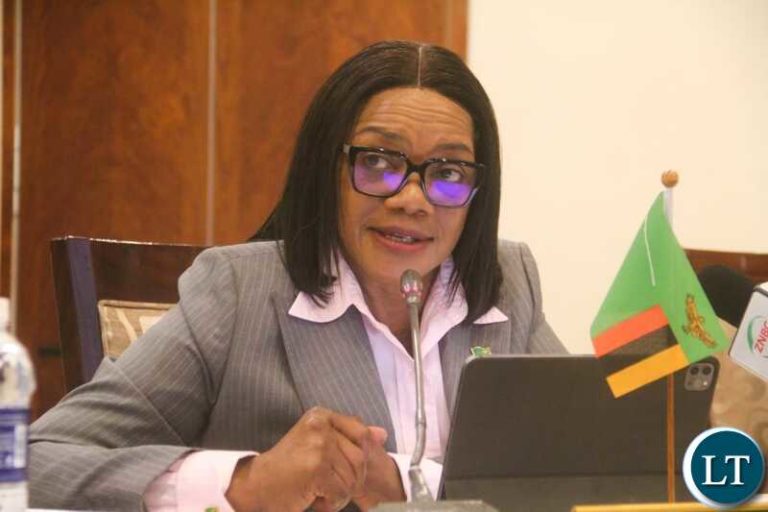
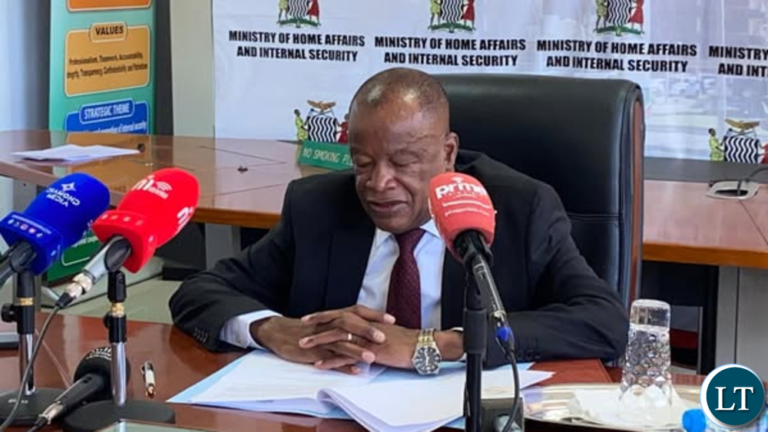
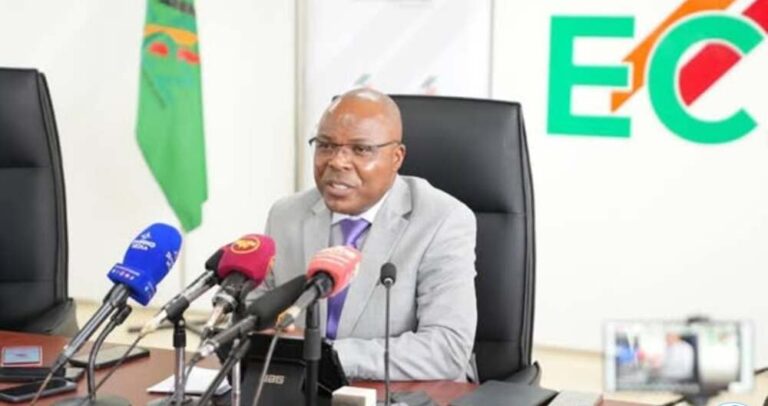
ECZ: Bring 1,000 Supporters Next Week if You Missed Pre-Screening

The Electoral Commission of Zambia (ECZ) has directed aspiring presidential candidates who did not take part in the provincial supporter pre-screening exercise to present all 1,000 supporters during the official nomination period next week.

ECZ Chairperson Mwangala Zaloumis said the week-long exercise, conducted across all 10 provinces, was designed to verify supporters in advance in order to reduce congestion and delays during nominations.

She said some political parties made use of the exercise, while others failed to participate despite expressing interest.

“Today, we had seven political parties that showed interest to have their supporters pre-processed… And only two actually came up,” she said.

Zaloumis explained that candidates who missed the exercise are still eligible to file nominations, but will be required to bring all their supporters physically during nominations for verification.

“If they wish to come next week, we will be open, but they have to bring the 1,000 supporters for us to be able to process them,” she said.

She added that timing will be strictly observed, warning candidates to adhere to the scheduled programme.

“If the schedule says Monday, you can’t come on Friday,” Zaloumis said.

The ECZ said the pre-screening initiative was introduced to reduce pressure during nominations by allowing advance verification of supporters required for presidential candidates.

Zaloumis said the Commission’s ICT teams are preparing for increased activity during the nomination period, with additional equipment expected to speed up processing.

“As you saw, 100 supporters took about 40 minutes to process. On that day we will have more kits so that we can process as many as possible,” she said.

She further described the exercise as largely successful, adding that final participation figures will be announced after all provincial reports are consolidated.

“Next week is the week we will know who is actually going forward to become a candidate in the election,” she said.

Hichilema Has Worked, 2026 “Ni Sonta Epo Wabomba” – Mwaliteta

UPND Lusaka Province Chairperson Obvious Mwaliteta says President Hakainde Hichilema’s performance in office has left the ruling party with a simple campaign message ahead of the 2026 general elections.

Mwaliteta said there is little left to promise voters, arguing that the focus will be on showcasing results under the current administration.

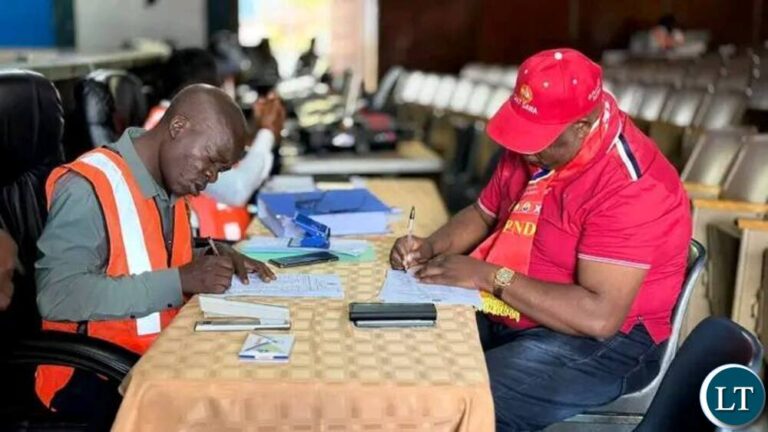
He said this during the Electoral Commission of Zambia (ECZ) pre-screening exercise for presidential supporters held in Lusaka, where 100 supporters participated in support of President Hichilema.

Mwaliteta said the turnout reflected strong confidence in the President’s leadership, adding that the numbers would have been higher if space had allowed.

“I want to confirm to you that Lusaka Province has managed to bring 100 supporters… and I wish the number was more than 100 so that we can accommodate even about 500,” he said.

He said the party is confident of victory in the August 13, 2026 elections, citing growing support across the province.

“This is the indication to show you that the President is set for victory. Come 13th August 2026, we are prepared, we have been prepared,” he said.

Mwaliteta further said President Hichilema’s track record has made campaigning easier for the ruling party, stating that the message will largely focus on achievements.

“We want to thank the President for having made this campaign for 2026 very easy for UPND because this man has worked. He has worked, so there is nothing more to talk about,” he said.

He added that the campaign will rely on a performance-based message rather than new promises.

“There’s nothing to talk about any promise, we are just going to do ‘Sonta Epo Wabomba,’ like our colleagues used to say,” he said.

Mwaliteta also expressed confidence that the party will mobilize even larger numbers during the nomination period, claiming support in Lusaka Province will continue to grow.

Hichilema Will Win Big on the Copperbelt – Elisha Matambo

UPND Copperbelt Province Chairman Elisha Matambo says President Hakainde Hichilema is expected to secure a strong victory in the August election in the Copperbelt Province.

Matambo said the turnout of supporters during the pre-processing of presidential supporters held at Lowenthal Theatre in Ndola demonstrated strong backing for the President in the province.

He said the numbers reflect growing confidence in President Hichilema based on what he described as the delivery of development during his time in office.

“We are set for this election. Instead of coming with 100 supporters, we came with close to 10,000 of them. This shows that President Hichilema will win big on the Copperbelt Province,” Matambo said.

He said the party is targeting 80 percent of the vote for President Hichilema in the province.

“Our target is 80 percent of the vote for President Hakainde Hichilema here on the Copperbelt. We will work hard and fight to deliver better results,” he said.

Matambo also said the UPND aims to secure all 29 parliamentary seats, all 256 councillorships, and all 10 mayoral positions in the Copperbelt Province.

He urged party members to intensify campaign efforts and act as campaign agents for the President ahead of the general election.

“I am urging all party members to continue supporting and being the President’s campaign managers ahead of the general election,” he said.

Meanwhile, Electoral Commission of Zambia (ECZ) Chairperson Ambassador Ndiyoyi Mutiti said the pre-processing exercise in Ndola was conducted smoothly and without violence.

IMF Says Zambia Has Made Progress in Restoring Macroeconomic Stability

The International Monetary Fund (IMF) says Zambia has made substantial progress in restoring macroeconomic stability following a two-week mission to Lusaka.

IMF Mission Chief Edward Gemayel said the country has recorded notable improvements in key economic indicators, including inflation, fiscal performance and external reserves.

He said inflation has returned to the Bank of Zambia target band of 6 to 8 percent, standing at 6.8 percent in April 2026. Gross international reserves have increased to US$6.4 billion, equivalent to 4.4 months of import cover.

The IMF further noted that Zambia recorded a primary fiscal surplus of 3.1 percent of GDP in 2025, while debt restructuring agreements now cover about 94 percent of the restructuring perimeter.

The Fund said these developments reflect continued progress in stabilising the economy and strengthening fiscal and external positions.

Meanwhile, President Hakainde Hichilema has welcomed the IMF findings, describing them as independent confirmation of the economic reforms undertaken by his administration.

In a statement issued by State House Chief Communications Specialist Clayson Hamasaka, President Hichilema said that while progress has been made, challenges remain, including external pressures linked to global geopolitical tensions and rising fuel costs.

“These findings are an independent confirmation of the disciplined economic stewardship we have pursued since taking office,” he said.

He said government remains committed to cushioning citizens while maintaining economic stability.

The President also welcomed ongoing discussions with the IMF on a successor programme, expected to continue after the August elections, describing it as a sign of international confidence in Zambia’s economic direction.

He further thanked the Ministry of Finance, the Bank of Zambia and other stakeholders for their role in achieving the progress.

Zambia Sugar’s US$76 Million Twazabuka Project Set for 2027 Completion

5

Zambia Sugar says its US$76 million Twazabuka Project is progressing well and is expected to be completed and commissioned in August 2027.

Zambia Sugar Managing Director Oswald Magwenzi confirmed the development during a site visit to the company’s estates in Mazabuka, where he was accompanied by ABF Sugar Chief Executive Officer Paul Kenward.

The project involves the construction of a modern warehousing and packaging facility designed to improve storage capacity, enhance product safety, and ensure the company can maintain a 12-month product supply cover to meet market demand.

Magwenzi said the project is already generating economic benefits during its construction phase, with a local contractor engaged alongside several Zambian subcontractors. He added that the project is also contributing to growth in related sectors such as retail and accommodation in the area.

He further stated that once completed, the facility will improve supply chain efficiency, enhance product handling, and create more than 150 permanent skilled and semi-skilled jobs.

ABF Sugar CEO Paul Kenward expressed satisfaction with the pace of construction, saying the group remains committed to investing in projects that strengthen operations and support local economic development.

Hichilema Mourns Emeritus Archbishop Telesphore Mpundu

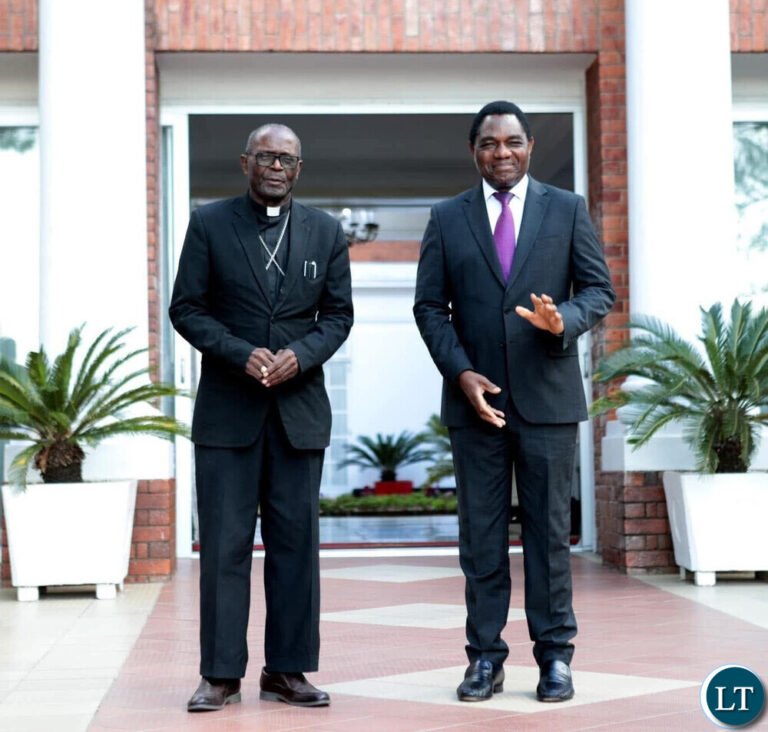
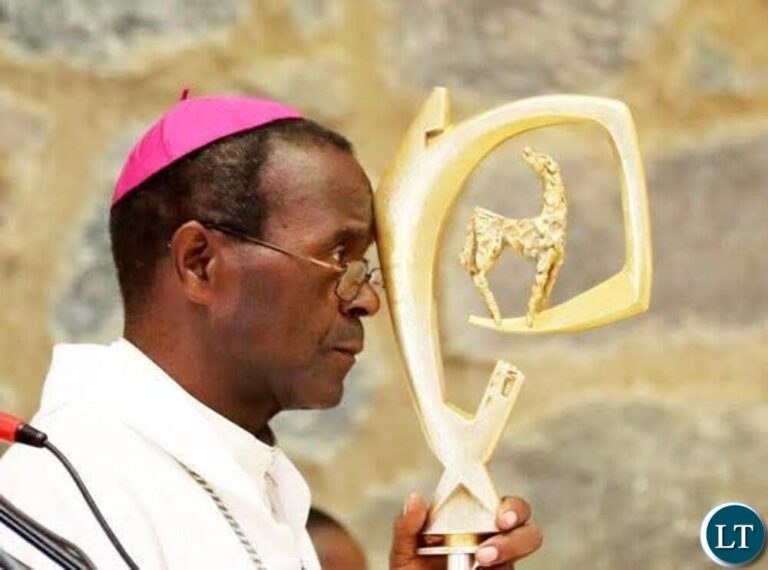
President Hakainde Hichilema has expressed deep sorrow following the passing of Emeritus Archbishop of Lusaka, Most Rev. Telesphore George Mpundu.

Archbishop Mpundu died yesterday after an illness, according to church authorities.

In his condolence message, President Hichilema said the late Archbishop will be remembered for his distinguished spiritual leadership, humility, and strong commitment to dialogue, peace, justice, and national unity.

“It is with profound sorrow that we have learnt of the passing of His Grace Telesphore George Mpundu, Archbishop Emeritus of Lusaka,” he wrote.

“We extend our heartfelt condolences to the Catholic Church in Zambia, the Archdiocese of Lusaka, and the Catholic faithful across the country,” the President added.

Archbishop Mpundu had been admitted to Maina Soko Medical Centre in March this year, where he was receiving medical treatment.

Lusaka Archbishop Dr. Alick Banda said in a statement announcing his death that funeral arrangements will be communicated in due course.

Born on May 21, 1947, at Kapatu Mission, Archbishop Mpundu was ordained to the priesthood in 1972 and later consecrated as Bishop in 1987.

He served as Bishop of Mbala, now Mpika Diocese, for 19 years before being appointed Coadjutor Archbishop of Lusaka in 2004. He later became Archbishop of Lusaka in 2006, a position he held until his retirement in 2018 due to age and health reasons.

During his episcopal ministry, Archbishop Mpundu also served several terms as President of the Zambia Conference of Catholic Bishops (ZCCB), where he was widely respected for his outspoken views on governance, social justice, and national affairs.

ECZ Says new polling stations aren’t new voting centres

The Electoral Commission of Zambia (ECZ) has clarified that the increase in polling stations for the 2026 General Election does not mean new voting centres have been created through delimitation.

Chief Electoral Officer Brown Kasaro said the rise from 12,152 polling stations in 2021 to 13,529 for 2026 is due to more voters being assigned to existing voting centres, requiring additional voting rooms.

“Following the certification of the Register of Voters, the number of registered voters increased to 8,786,300 and once the Register of Voters is certified, the Commission is then able to determine the number of polling stations required across the country based on the number of registered voters assigned to each voting centre,” he said

Mr Kasaro explained that voting takes place at voting centres, and each centre can house one or more polling stations, also called voting rooms, depending on the number of registered voters.

He cited the University of Zambia Sports Hall as an example saying, it is one voting centre but may contain several voting rooms and each voting room is treated as a polling station.

“This means polling stations are not always separate physical locations, in 2021, the ECZ announced 12,152 polling stations, but these were spread across about 9,000 voting centres, with many centres hosting multiple stations, “he said.

Mr Kasaro further said for 2026, the number of voting centres remains about 9,000 and increase in polling stations comes from adding more voting rooms within those existing centres to accommodate the larger voter register.

“The number of voting centres has remained the same at about 9,000, what has increased is the number of polling stations within existing voting centres to accommodate the increased number of registered voters,” Mr Kasaro said.

He said the approach allows voters to use familiar centres while helping the Commission manage the larger voter population and improve the voting process.

This is according to a press statement released to the media by ECZ Chief Electoral Officer

Emeritus Archbishop Telesphore Mpundu Dies

Emeritus Archbishop of Lusaka, Most Rev. Telesphore George Mpundu, has died a few days before his 79th birthday, the Archdiocese of Lusaka has announced.

Lusaka Archbishop Dr. Alick Banda confirmed the death, stating that Archbishop Mpundu had been admitted to Maina Soko Medical Centre in March this year, where he had been receiving treatment.

In a statement, Dr. Banda said the funeral programme will be communicated in due course and called on all parishes and religious communities in the Archdiocese to offer Masses for the repose of his soul.

“It is with deep sorrow that I inform the faithful, clergy, religious, and all people of goodwill of the passing of the Emeritus Archbishop of the Archdiocese of Lusaka, Most Rev. Telesphore George Mpundu,” Dr. Banda said.

Born on May 21, 1947, at Kapatu Mission, Archbishop Mpundu was ordained to the priesthood in 1972 and later consecrated as Bishop in 1987.

He served as Bishop of Mbala, now Mpika Diocese, for 19 years before being appointed Coadjutor Archbishop of Lusaka in 2004. He succeeded as Archbishop of Lusaka in 2006, a position he held until his retirement in 2018 due to age and health reasons.

During his ministry, Archbishop Mpundu also served multiple terms as president of the Zambia Conference of Catholic Bishops (ZCCB), where he became known for his outspoken leadership on governance, social justice, and national affairs.

Dr. Banda described him as a courageous church leader who consistently spoke out on issues of truth and justice while guiding the faithful with compassion and wisdom.

Nevers Mumba Urges Lungu Family to Bring Body Home for Burial

Former Vice President Dr. Nevers Mumba has called on the family of former President Edgar Lungu to repatriate his body to Zambia for burial as the country heads towards the August 13 general elections.

Former President Lungu died in a South African clinic on June 5 last year, and next month will mark one year since his body was placed in a mortuary.

Speaking in a video address on Tuesday, Dr. Mumba said the continued uncertainty surrounding the burial and repatriation of the former Head of State is a national shame.

He stated that since President Hakainde Hichilema has reportedly indicated that he may not need to be present at the funeral, the family should consider bringing the body home.

“The confusion around the burial of our sixth president is a national shame. This impasse is not President Hichilema’s creation, it is the product of a nation that has not yet learned to bury political differences,” he said.

Dr. Mumba emphasized that a former president belongs to the nation and should be laid to rest in a manner that reflects national unity rather than political divisions.

“A former president belongs to the nation and must be preserved in its history, not by a political party or political faction. And the sitting president also deserves the respect of the nation. All this must be demonstrated in our actions and words, this is enshrined in our Constitution,” he said.

He further noted that former presidents should be accorded equal respect as sitting presidents, urging that the matter be resolved.

“Let us put the former president to rest now,” Dr. Mumba said.

Siliya Questions Independent Presidential Candidates

Former Cabinet Minister Dr. Dora Siliya says politicians who frequently switch political parties or choose to run as independent presidential candidates may not be suited for national leadership.

In a write-up, Dr. Siliya argued that leadership is built through consistency, patience and growth within established political party structures.

Her remarks come at a time when several aspiring presidential candidates have either shifted between political parties or opted to contest as independents ahead of the August 13 general elections.

Dr. Siliya said politics should not be treated as a shortcut to power or an opportunity to “chance” leadership, but rather as a long-term process of gaining experience, influence and institutional knowledge.

She stated that strong leadership develops within political parties where aspiring leaders learn from senior members and gradually build governance experience.

According to Dr. Siliya, politics must not revolve around personal ambition or the desire to become president “at all costs” regardless of the political platform being used.

She warned that such an approach could reflect selfishness, individualism and disregard for democratic principles.

“If you cannot find people to follow you within a political party, how can you effectively lead a government and a nation?” she questioned.

Dr. Siliya further stressed that politics should be based on teamwork and collective responsibility, which she said is why she does not support independent presidential candidates.

She acknowledged that politicians may change political parties in certain circumstances but maintained that consistency within party structures remains important for democratic governance.

The former minister cited examples of international leaders who spent years building experience within their political parties before rising to the presidency.

“This is why people like Biden were in their party and the USA Congress from a young age, learning from seniors and acquiring experience and institutional memory for years,” she said.

Dr. Siliya added that long-term politicians should focus on building influence and credibility gradually rather than seeking quick routes to power.

Mutti Bids Farewell to MPs as National Assembly Dissolves for August General Election

70-plus bills passed in final session; free education enshrined in law; Bill 7 expands parliament to 280 seats; former ministers bid farewell; legal body warns on transition governance

Zambia’s 13th National Assembly dissolved on May 15, 2026, bringing to a close four years and eight months of legislative activity that produced one of the most far-reaching packages of constitutional, electoral and social policy reforms in the country’s post-independence history, while also attracting scrutiny over the independence of the Speaker, the conduct of ruling party MPs and the passage of a proportional representation law that opponents said could strengthen the ruling party’s parliamentary position.

The dissolution took effect automatically under Article 81(3) of the Zambian Constitution, which requires Parliament to dissolve 90 days before a general election. Speaker Nelly Mutti, the first woman to hold the office in Zambia’s history, addressed lawmakers during a final sitting marked by emotional farewells from members on both sides of the House. Mutti said she hoped lawmakers seeking re-election in August would return to preserve institutional memory, noting that significant legislative capacity had been built during the assembly’s five-year tenure.

The legislative record remains significant on multiple fronts. The assembly passed the Access to Information Act No. 24 of 2023, granting citizens, media institutions and civil society organisations the legal right to access public information, delivering a reform successive administrations had failed to implement. The Education Amendment Bill of 2026 made free public education from early childhood to secondary school a legally enforceable right. The National Pension Scheme Amendment Bill of 2023 allowed eligible citizens to make a one-off pre-retirement withdrawal of 20 percent of their pension contributions. Lawmakers also repealed the 2021 Cyber Security and Cyber Crimes Act and replaced it with two separate laws: the Cyber Security Act No. 3 of 2025 and the Cyber Crimes Act No. 4 of 2025.

The most contentious legislative measure was the passage of what became known as Bill 7, which introduced a Mixed Member Proportional Representation system, increased parliamentary constituencies from 156 to 226 and created 40 reserved seats for women, youths and persons with disabilities. The incoming 14th National Assembly will now have 280 members, up from the 167 who served in the 13th Assembly. Opposition parties said the law would primarily increase the number of seats available to the ruling United Party for National Development. Speaker Nelly Mutti’s visible celebration on the floor of the House immediately after the bill passed also attracted criticism from opposition lawmakers who argued it undermined the neutrality expected from her office. Legal practitioners also noted that the full voting record showing how individual MPs voted on the bill had not been publicly released.

The 13th Assembly also recorded two major institutional losses. Levy Mkandawire, the United Party for National Development Member of Parliament for Kabwata, died in a road accident in November 2021. Clerk of the National Assembly Roy Ngulube also died during a work trip in Tashkent, Tashkent in 2025. Nine parliamentary by-elections were held during the life of the assembly.

The constitutional transition now places significant administrative authority in the hands of permanent secretaries. Former Secretary to Cabinet Leslie Mbula publicly urged permanent secretaries to exercise restraint and prudence in the use of public resources during the transition period. Governance advocate Isaac Mwanza backed that call, urging permanent secretaries to consult the Attorney-General and Solicitor-General on major policy decisions instead of acting independently. Former ministers including Jack Mwiimbu, Cornelius Mweetwa and Robert Lihefu used farewell events to make final public appeals for professionalism, peace and continuity.

The 14th National Assembly will consist of 280 members elected under a hybrid model combining 226 constituency seats and 40 proportional representation seats. Parliamentary nominations close on May 20, 2026. Campaigns officially open on May 23 and run until August 12, with Zambians heading to the polls on August 13, 2026.

Public Gatherings Bill Risks Undermining August Election Freedoms, LAZ Tells President

LAZ invokes 1995 Supreme Court ruling, warns new law reintroduces permit regime declared unconstitutional three decades ago

The Law Association of Zambia has formally demanded that President Hakainde Hichilema withhold assent to the Public Gatherings Bill No. 71 of 2026, warning in a detailed legal statement that several provisions of the proposed law are inconsistent with the Constitution and risk undermining democratic freedoms with the campaign period set to open within days.

LAZ president Anold Kaluba said the association’s objections were legally precise and went beyond general concern about civil liberties. Sections 6, 8 and 13 of the bill, Kaluba said, effectively reintroduce the permit regime that the Supreme Court of Zambia declared unconstitutional in its landmark ruling in the case of Christine Mulundika and 7 Others versus The People, Judgement No. 25 of 1995. That ruling established that citizens possessed the constitutional right to peaceful assembly without requiring prior permission from authorities. The new bill’s provisions directly contradict that settled constitutional principle, LAZ argued.

Kaluba said the bill in its current form granted excessive powers to regulating authorities and created conditions under which those powers could be deployed to restrict peaceful assembly in the period immediately before the August 13 general election. “In light of the foregoing concerns, LAZ respectfully calls upon President Hakainde Hichilema to withhold the assent of the bill, as several of its provisions are inconsistent with the Constitution,” Kaluba said. LAZ confirmed it had made comprehensive written submissions to the National Assembly during the legislative process highlighting constitutional and human rights concerns, but those concerns were not adequately addressed before the bill passed its final parliamentary stages.

The constitutional challenge reaches the President’s desk at a moment of deep historical irony. Hichilema and the UPND made the repeal of the Public Order Act a central campaign commitment during years in opposition, repeatedly accusing both the Movement for Multiparty Democracy and the Patriotic Front of deploying the law to block UPND rallies and restrict political opposition. The Socialist Party has been blocked from holding political rallies more than 30 times since 2021 under the existing Public Order Act, with police citing security concerns that opposition parties described as unfounded. The ruling party held rallies and campaigned across the country throughout the same period without advance police notification.

The Public Gatherings Bill No. 71 of 2026 was presented as a replacement for the Public Order Act. LAZ’s position is that rather than expanding constitutional freedoms as promised, the legislation takes away the limited space citizens already enjoyed and concentrates broader regulatory authority in institutions that have demonstrably used similar powers to restrict opposition political activity. The association said the bill undermines Article 11 of the Constitution, which guarantees fundamental rights and freedoms, alongside Articles 20, 21 and 23, which protect freedom of expression, assembly and freedom from discrimination.

The timing intensifies the challenge’s political weight. The Electoral Commission of Zambia announced that the campaign period officially opens May 23, 2026, meaning the gatherings bill, if assented to in its current form, would take immediate legal effect during the most active phase of public political activity before polling day. Parliamentary candidates across 226 constituencies will be seeking to hold rallies and community engagements in the weeks between May 23 and August 12. Any regulatory restriction on those activities under the new law would have direct consequences for the fairness of the electoral process.

Hichilema has not publicly responded to the LAZ demand. The Public Gatherings Bill No. 71 of 2026 was passed during the 13th National Assembly’s final session before Parliament dissolved on May 15. Kaluba said further engagement and consultation should be undertaken with relevant stakeholders before the bill is presented for presidential assent. If Hichilema assents and the legislation is subsequently challenged through judicial review, the same constitutional arguments articulated by LAZ grounded in the 1995 Mulundika ruling — would form the foundation of that litigation.

Former Ministers Rejected by Own Structures as Adoption Chaos Grips Ruling Party

Former Ministers Rejected by Own Structures as Adoption Chaos Grips Ruling Party: Masebo’s Influence Looms Large

Former ministers, defectors rejected by grassroots; party chairman warns primary wins do not guarantee candidacy; opposition reads results as wider public rejection of Hichilema

The ongoing adoption chaos raises questions about the role of key figures, including Masebo, in shaping the party’s future.

A wave of defeats suffered by former cabinet ministers, sitting Members of Parliament and high-profile Patriotic Front defectors in United Party for National Development primary elections has exposed significant internal fractures within Zambia’s ruling party less than three months before the August 13 general election, with opposition figures interpreting the results as confirmation of broad public dissatisfaction with President Hakainde Hichilema’s administration.

The scale of the rejection is notable. Former Home Affairs and Internal Security Minister Jack Mwiimbu, former Information and Media Minister Cornelius Mweetwa, former Tourism Minister Rodney Sikumba and former Health Minister Sylvia Masebo are among the most prominent former cabinet members who lost adoption primaries against lesser-known challengers. Former Members of Parliament including Michelo Kasautu, Twambo Mutinta, Mirriam Chonya and Robert Chabinga also fell to newcomers in contests that party structures had been expected to resolve in favour of incumbents.

Former Patriotic Front acting president Given Lubinda said in an interview that the results confirmed the depth of public frustration with the ruling party’s performance. “And for MPs in the ruling party to tumble the way they are tumbling is an indication of the dissatisfaction of the Zambian people as expressed by the UPND structures,” Lubinda said. “This dissatisfaction in the members of Parliament is only a symptom of the dissatisfaction in the presidency.” Lubinda specifically targeted former PF MPs who defected to work with Hichilema after winning their parliamentary seats on a PF ticket, saying their rejection by UPND grassroots structures reflected popular contempt for political disloyalty. He warned the ruling party to expect a significant electoral reversal in August.

The internal chaos was compounded by an extraordinary internal memo issued on May 13 by UPND chairman for elections and campaigns Likando Mufalali, who directly warned primary election winners not to celebrate their results on social or mainstream media. Mufalali disclosed that the party’s National Management Committee resolved in 2021 that primary rankings were only one part of a wider adoption procedure and that several other factors would be considered before any final candidate was formally adopted. The practical implication is that the NMC retains authority to override grassroots primary outcomes and impose preferred candidates regardless of local election results.

People’s Pact vice president Bob Sichinga offered the opposition’s most pointed commentary on the UPND adoption chaos. Sichinga said former opposition MPs who crossed to the UPND seeking to contest on the ruling party’s ticket had made a fundamental error of political judgement. He singled out former Mafinga MP Robert Chabinga, who publicly threatened to reveal damaging information about the UPND if the party did not adopt him, describing the threat as evidence of a fundamental absence of integrity. “What beans is he talking about? Meaning they did some clandestine things with the UPND and now that things are not going well, he wants to make threats,” Sichinga said. Leadership Movement presidential candidate Dr Richard Silumbe went further, predicting that most UPND and former PF MPs would lose even if eventually adopted.

The UPND’s adoption difficulties carry immediate electoral consequences. Candidates who believe they won primary contests fairly and are subsequently passed over by the NMC carry the motivation and local networks to contest as independents, splitting the ruling party’s vote in constituencies it would otherwise be expected to win. The prohibition on celebrating primary results from Mufalali is a remarkable instruction from a party that built its electoral identity around democratic participation and internal accountability.

Parliamentary nominations are scheduled for May 20, 2026, following ECZ’s revised timetable. The campaign period opens May 23 and runs through August 12. Any UPND aspirant denied adoption after winning a primary and choosing to contest as an independent must file their own nomination papers by May 20. The party has confirmed it holds certificates that could prevent some rejected aspirants from registering independently, a claim Sichinga said, if true, would further undermine the credibility of the ruling party’s democratic commitments. President Hichilema ran unopposed in the UPND’s internal presidential primary.

Mwiimbu calls for professionalism among staff ahead of elections

0

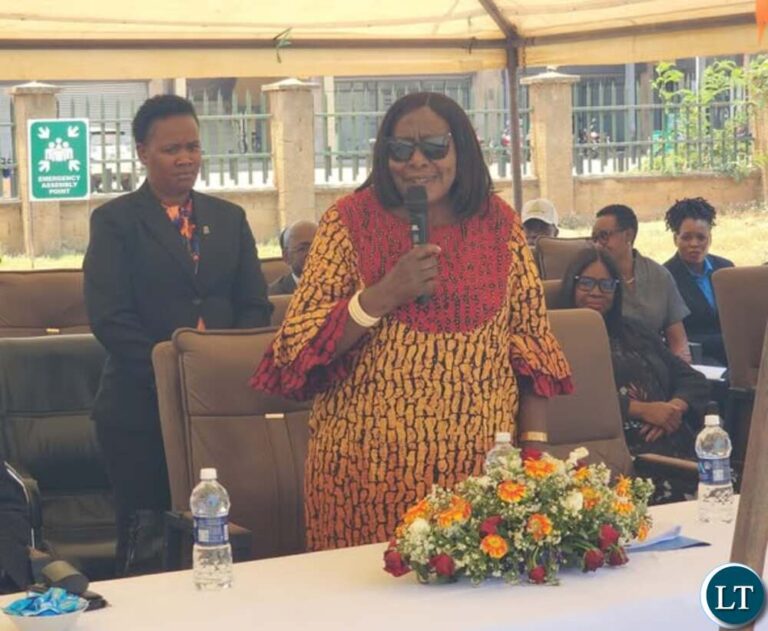
Minister of Home Affairs and Internal Security, Jack Mwiimbu has urged staff in his Ministry to be professional and to ensure law and order as the country heads towards elections.

He has noted that the Ministry is the anchor of law and order, warning that any compromised conduct by staff has the potential to destabilise the peace prevailing in the country.

Mr Mwiimbu has stressed that peace and stability are key in ensuring that elections are free and fair.

The Minister said this during a farewell event hosted for him at the Ministry headquarters, in Lusaka.

Mr Mwimbu further commended the Ministry staff for their commitment and dedication to maintaining peace and stability in the country, ultimately creating an enabling environment for development to thrive.

He added that because of this the country has scored numerous developmental achievements such as increased investment and tourist visits, among others.

“You have made Zambia proud. You have heard the accolades that have been showered on Zambia, pertaining to economic development which is unprecedented”, he pointed out.

Speaking at the same event, Permanent Secretary in the Ministry, Dickson Matembo thanked the Minister for his leadership in strengthening the Ministry’s mandate.

“You have successfully steered critical policy formulation processes, ensuring that our legal and policy frameworks remain relevant and responsive”, he said.

And in a vote of thanks, Director for Human Resource in the Ministry, Nicolyn Nyoni pledged, on behalf of the Ministry staff, to ensure the forthcoming elections are free and fair.

ECZ Says new polling stations aren’t new voting centres

4

The Electoral Commission of Zambia (ECZ) has clarified that the increase in polling stations for the 2026 General Election does not mean new voting centres have been created through delimitation.

Chief Electoral Officer Brown Kasaro said the rise from 12,152 polling stations in 2021 to 13,529 for 2026 is due to more voters being assigned to existing voting centres, requiring additional voting rooms.

“Following the certification of the Register of Voters, the number of registered voters increased to 8,786,300 and once the Register of Voters is certified, the Commission is then able to determine the number of polling stations required across the country based on the number of registered voters assigned to each voting centre,” he said

Mr Kasaro explained that voting takes place at voting centres, and each centre can house one or more polling stations, also called voting rooms, depending on the number of registered voters.

He cited the University of Zambia Sports Hall as an example saying, it is one voting centre but may contain several voting rooms and each voting room is treated as a polling station.

“This means polling stations are not always separate physical locations, in 2021, the ECZ announced 12,152 polling stations, but these were spread across about 9,000 voting centres, with many centres hosting multiple stations, “he said.

Mr Kasaro further said for 2026, the number of voting centres remains about 9,000 and increase in polling stations comes from adding more voting rooms within those existing centres to accommodate the larger voter register.

“The number of voting centres has remained the same at about 9,000, what has increased is the number of polling stations within existing voting centres to accommodate the increased number of registered voters,” Mr Kasaro said.

He said the approach allows voters to use familiar centres while helping the Commission manage the larger voter population and improve the voting process.

This is according to a press statement released to the media by ECZ Chief Electoral Officer