Thursday, June 11, 2026
23.5 C
Lusaka
Home Blog Page 276

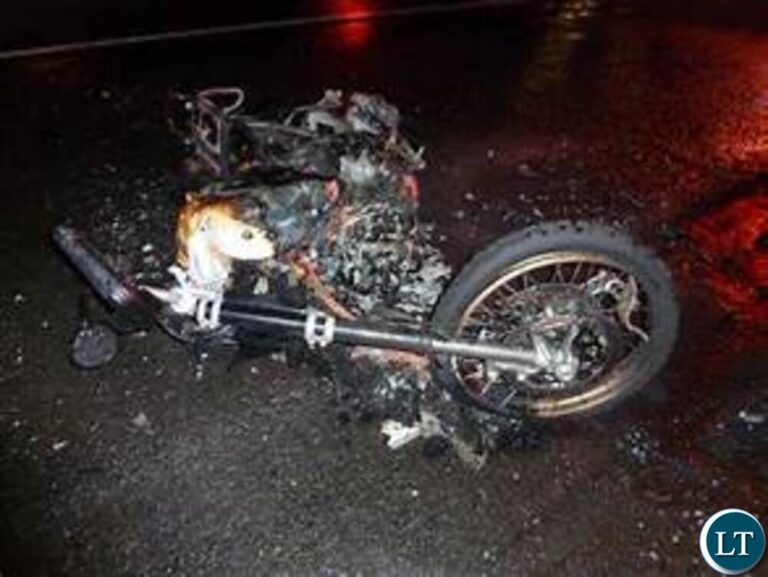
Increasing number of motorbike accidents in Senga Hill worrying

1

A Resident of Senga Village in Senga Hill District of Northern Province has bemoaned the rising number of motorbike accidents along the Senga-Chinakila Road.

Senga Village Secretary, Nonde Sichilima, has attributed this to the excessive speeding and absence of speed-reducing humps.

Mr Sichilima says the community has been recording a number of tragic incidents involving motorbike crashes, with some accidents resulting in the loss of lives.

Mr Sichilima said this in an interview with ZANIS in Senga Hill District today.

He has since disclosed that as a way to respond to the problem, the community has taken an initiative to raise funds towards the construction of road humps.

Mr Sichilima disclosed that each household in the area has been requested to contribute K10 to purchase cement and other materials for the project.

He added that the community will engage the Road Development Agency (RDA) to assist in the implementation of the project.

Mr Sicilima has also called on neighbouring villages to support the initiative, describing it as a noble cause aimed at saving lives and improving road safety for all.

Construction of industrial pharmacy laboratory underway at UNZA

0

The construction of a state-of-the-art Industrial Pharmacy Laboratory facility is underway at the University of Zambia (UNZA) Ridgeway Campus in Lusaka.

The project, whose total construction cost is about 500 000 Euros, is supported by the European Union (EU), the German government and Southern African Development Community (SADC) in partnership with the University of Zambia.

SADC Secretariat Acting Senior Programmes Officer for Technology and Innovation, Reaboka Morakabi, has commended Zambia for its commitment to regional excellence in pharmaceutical development.

Mr Morakabi said the facility, which is scheduled to be completed in March 2026, will expand Zambia’s capacity to deliver advanced pharmaceutical training.

He further noted that the advanced pharmaceutical training will be achieved through the SADC Industrial Pharmacy Fellowship Programme (IPFP).

Mr Morakabi explained that the training of pharmaceutical professionals will address the region’s skills gap in the pharmaceutical industry.

“The facility will serve as a centre for advanced learning, research and industrial training, directly supporting the expansion of local manufacturing of pharmaceuticals.

The programme is not only developing individual skills but also laying a foundation for sustainable health, economic diversification and industrial transformation within SADC,” Mr Morakabi said.

He described the Industrial Pharmacy Laboratory as a cornerstone of the SADC region.

And European Union Programme Manager from the EU Delegation, Marta Palmarola, pledged support towards SADC and Africa’s health sovereignty agenda.

Ms Palmarola explained that the E.U member states have joined hands to support Africa in creating resilient health systems.

“The E.U is proud to stand by SADC and other partners in advancing a shared vision of a more resilient, self-reliant Southern African region. The E.U and member states are proud to work together with our African partners to ensure that everyone can access the medicine they need,” she said.

Meanwhile, University of Zambia Acting Vice Chancellor, Boniface Namangala, thanked the partners for selecting UNZA to host the facility.

Professor Namangala described the move as a demonstration of trust in the ability of UNZA to contribute to building a sustainable ecosystem for science, technology and innovation in the SADC region.

“I also want to express gratitude to the government for providing policy direction and partnerships which have made such projects possible,” he said.

President Hichilema commissions construction of Pharmaceutical Manufacturing Plant

1

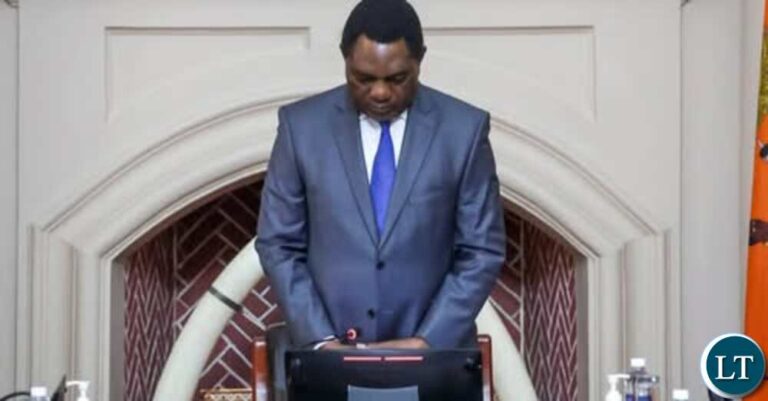
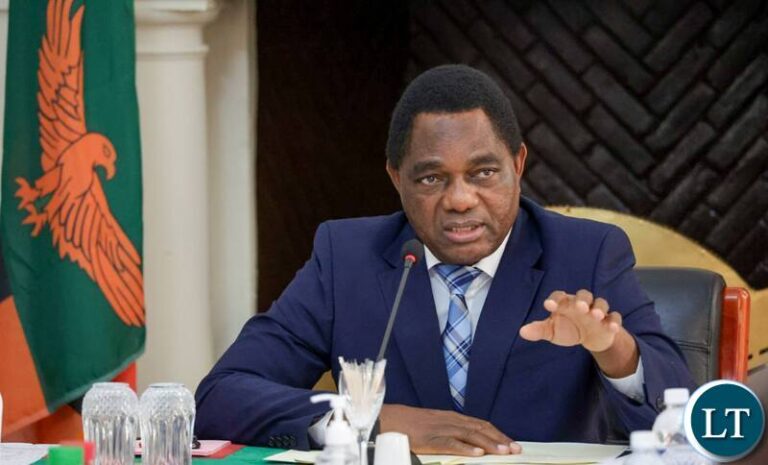
President Hakainde Hichilema has commissioned the construction of Zambia’s first-ever pharmaceutical manufacturing plant, marking a historic milestone in the country’s quest to produce its own medicines locally.

The President notes that the plant, established at the Lusaka South Multi-Facility Economic Zone, will enable Zambia to manufacture over 750 essential medicines, including specialised treatments such as cancer drugs.

Mr Hichilema was speaking in a speech read on his behalf by Minister of Youth Sport and Arts, Elvis Nkhandu, during the groundbreaking ceremony, a joint venture between government and India’s Akums Drug Pharmaceuticals Limited.

ZANIS reports that the Head of State further noted that the development will drastically reduce the country’s dependence on imported medicines, lower costs, and ensure consistent access to life-saving drugs for citizens.

He emphasised that producing medicines locally will not only safeguard the nation’s health security but also create jobs, stimulate innovation, and position Zambia as a regional hub for pharmaceutical excellence.

President Hichilema also reaffirmed government’s commitment to universal health coverage, innovation, and industrialisation.

Akums Drugs and Pharmaceuticals Limited Managing Director and Founder, Sandeep Jain, stated that his company is bringing world-class pharmaceutical expertise to Zambia to support the country’s vision of producing its own medicines locally.

He noted that all medicines to be produced at the facility have been fully approved and will meet international quality and safety standards.

Mr Jain added that the project demonstrates Akums’ confidence in Zambia’s investment climate and its commitment to contributing to the country’s industrial and healthcare transformation.

He also expressed optimism that the new plant will position Zambia as a regional hub for pharmaceutical excellence, supplying high-quality, affordable medicines to neighbouring countries and strengthening health security across Africa.

And, Ministry of Health Permanent Secretary for Technical Services, Kennedy Lishimpi, added that the establishment of the plant will significantly strengthen the health supply chain by ensuring that essential and life-saving medicines are produced locally and made available in all health facilities across the country.

Dr Lishimpi noted that the local production of medicines will not only reduce the burden on the national drug budget but also help the Ministry maintain consistent supplies, especially for critical conditions such as cancer and chronic diseases.

He stated that the new facility will complement government’s ongoing reforms in the health sector, aimed at improving efficiency, reducing shortages, and ensuring quality assurance of all medical products.

Mpika woman dies in a motorbike accident

2

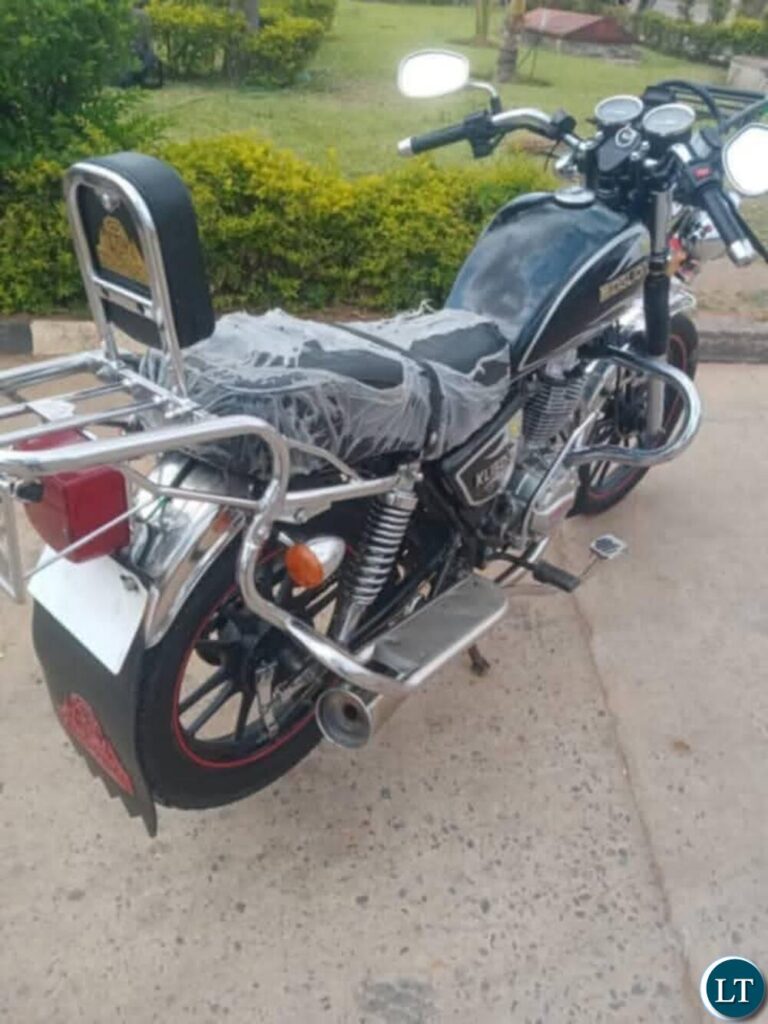
A 35-year-old woman has tragically died in a road accident after she fell off a motorbike and was run over by an oncoming motor vehicle in Mpika district of Muchinga Province.

Muchinga Province Police Commissioner, Dennis Moola confirmed to the media that the accident happened at Kamambwe gold mine along Chipundu gravel road about 35 kilometers east of Mpika Boma.

Mr Moola said the accident happened around 10 hours yesterday. He said a woman, identified as Mercy Mula aged 35 from Mikanga village in Mpika district, was run over by an Isuzu UD 90 bearing registration number BAD 2882 after falling off a Gatoma Motorbike bearing registration number ARC 7408 ZM.

Ms Mula was a passenger on the Gatoma motorbike.

According to Mr Moola, the accident happened after the motorcycle rider lost control of the bike causing the passenger to fall off the motorbike and was then run over by the motor vehicle which was coming from the opposite direction.

He explained that the driver of the Isuzu UD 90 and motorcycle rider both fled the scene after the accident.

Mr Moola explained that the now deceased sustained bleeding from nose, fractured right hand cut on the head, and was pronounced dead upon arrival at Mpika urban clinic and the body has since been deposited to Mpika urban clinic mortuary awaiting postmortem examination.

Meanwhile, Mpika District Commissioner, David Siame has expressed sadness at the untimely death of Ms Mula.

Mr Siame noted with concern that Mpika district has recorded an increased number of traffic accidents involving motorcycles in the past few months.

“I am urging all motorbike riders to be extremely conscious as they ride their motorbikes,” he said.

Two people die in a road accident in Choma

0

Two people have died in a road traffic accident along the Great North Road near Maleba Layby, about five kilometers north of Choma Town.

Southern Province commanding officer Auxensio Daka confirmed the Road Traffic Accident which occurred on October 16, 2025, at around 18:40 hours.

Mr Daka said the accident occurred when the driver of the Volvo Truck and Trailer registration numbers CAH 2269 ZM, CAH 2271 ZM, and CAH 2270 ZM from south to north failed to keep to his near-side lane.

He said it thereby collided with the VW Golf registration number BBF 4948 ZM from north to south and Land Rover Freelander registration number AIE 4384 ZM, also from north to south, which were both traveling in the opposite lane.

Mr Daka identified the deceased as Abel Kabole Chanda, aged 45, of unknown house number, MC, Livingstone, who was driving a VW Golf motor vehicle who sustained fatal injuries and died on the spot.

Mr Daka identified the other as Veronica Chimwongo Masheta,36, who was in the Land Rover Freelander motor vehicle, of unknown house number, Riverside, Choma, who sustained fatal injuries and died on the spot.

He said involved was Mr Emmanuel Mbokoshi, aged 45, of house number ZT 45, Chandamali Compound, Choma, who was driving a Land Rover Freelander motor vehicle, also from north to south. He sustained serious head injuries, and the vehicle was extensively damaged.

“On board the Land Rover Freelander were four passengers, one of whom died on the spot while the remaining three sustained serious injuries,” Mr Daka said.

He identified the injured passengers as Oliness Kachimba,43, of unknown house number, Chandamali Compound, Choma, who sustained a cut on the right eye and general body pains,

Others are Mwiitwa Masheta, aged two years, of Riverside Township, Choma, who sustained a cut on the right eye and general body pains and Male Juvenile, Tumelo Masheta, aged six years, of Riverside Township, Choma, who sustained a suspected fractured right hand and general body pains.

He said the injured passengers have since been admitted to Choma General Hospital, where they are receiving treatment.

Mr Daka said the bodies of the deceased persons have since been deposited in Choma General Hospital mortuary awaiting postmortem.

Mr Daka has since urged all motorists to exercise lane discipline and avoid improper overtaking, adding that drivers are reminded that maintaining the correct lane and observing traffic regulations is essential in preventing road crashes and saving lives.

53% increase in energy access possible-expert

An energy expert has observed that achieving 53 percent increase in energy access by 2030 in rural areas is possible provided there is an enabling environment.

Boniface Zulu told the media in an interview in Lusaka today, that the implementation of cost reflective tariffs will attract investors that will have the capacity to invest in the country’s energy sector and improve both rural and urban electrification.

Mr Zulu said even though the cost reflective tariffs will increase the cost of living for ordinary Zambians, it will create more competition in the energy sector among investors, thereby attracting more investments.

He added that there is need to ensure energy diversification through energy sources such as solar and thermal energy as well as clear guidance through policies that have already been put in place.

Mr Zulu said policies such as the net metering and open access policy will create a conducive environment for private and public partnerships.

He has however called for more sensitisation for people in rural areas on the utilisation of electricity as well as teaching them on poultry and irrigation farming using electricity.

He further pointed out that the provision of electricity will contribute to better education and healthcare in rural areas.

Parliamentarians commemorate post Day of the Girl Child

0

First Deputy Speaker of the National Assembly, Malungo Chisangano, has revealed that Zambia is the first country, out of the 11 Southern African Development Community (SADC) nations who are part of Parliamentary Forum on Sexual and Reproductive Health and Rights (SRHR) project, to come up with the initiative of setting up a group of parliamentarians to advance sexual and reproductive health and rights.

Speaking when she officiated at the belated commemoration of the International Day of the Girl Child at Parliament in Lusaka today, Ms Chisangano said the caucus has about 50 Members of Parliament who are part of the Sexual Reproductive Health and Rights, Life Skills and Health Education and are supported by the SADC SRHR project.

She stated that sanitary hygiene should be addressed candidly and respectfully as it is a natural part of life, particularly for girls and women.

“There is absolutely nothing shameful about talking about the changes that come with puberty as they are normal biological processes that should not be surrounded by stigma or silence,” she added.

The First Deputy Speaker highlighted the importance of sanitary hygiene saying it is not just a matter of health, but also of human rights, equity and respect.

Ms Chisangano has since urged the girls and boys to freely participate as their submission will help the government identify ways of making sanitary pads and better healthcare packages for them and other young people affordable.

And a Child Activists under AIDS Healthcare Foundation, Charity Chanda has called for the removal of Value Added Tax (VAT) on sanitary pads in order to make them more affordable.

Meanwhile, Boys to Men Vice President, Treva Nkole appealed to the parliamentarians to allocate funds to the Ministry of Health and Ministry of Education in the national budget for free pads in public schools especially in rural areas.

And a pharmacologist, Thandiwe Zulu, also called for the removal of importation taxes of raw materials used in the manufacturing of sanitary pads.

Ms Zulu explained that the removal of the importation taxes will reduce the cost of sanitary manufacturing thereby making sanitary pads more affordable.

Oasis Forum Calls for Transparent and Inclusive Constitutional Reform Process

6

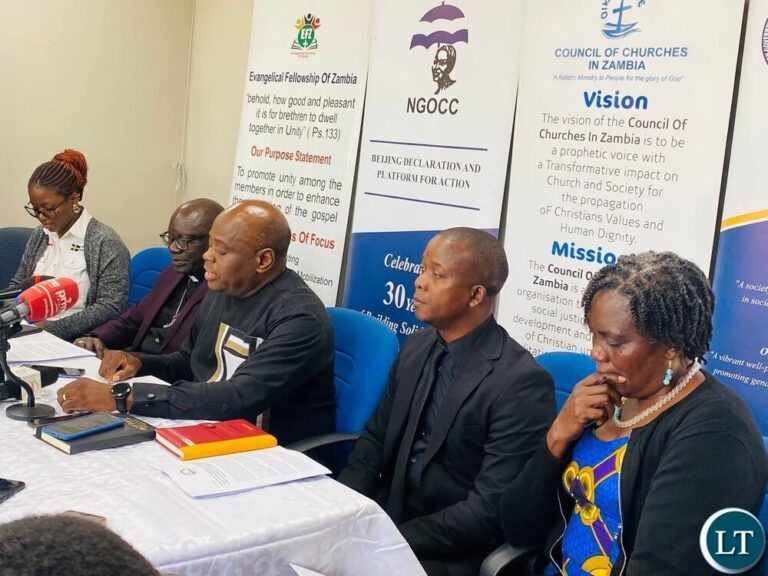
The Oasis Forum, a coalition of church, civil society, and legal bodies, has issued a statement responding to President Hakainde Hichilema’s appointment of a Technical Committee to consult citizens and draft amendments to the Constitution. The statement was presented during a media conference held on Thursday, 17th October 2025, at the Council of Churches in Zambia (CCZ) Boardroom.

The Oasis Forum—comprising the Council of Churches in Zambia (CCZ), the Evangelical Fellowship of Zambia (EFZ), the Law Association of Zambia (LAZ), the Non-Governmental Gender Organisations’ Coordinating Council (NGOCC), and the Zambia Conference of Catholic Bishops (ZCCB)—acknowledged the President’s announcement made on 7th October 2025.

The group described the appointment of the Technical Committee as a “positive step” in Zambia’s long-standing constitutional reform process, especially as it follows the Constitutional Court ruling in the case of Munir Zulu and Celestine Mukandila vs Attorney General (2025/CC7/009), which nullified the initiation process of Constitutional Amendment Bill No. 7 of 2025.

However, while welcoming the intent behind the decision, the Oasis Forum expressed concern that the current approach does not align with the inclusive and established procedures that have guided previous constitutional reform processes. The Forum stated that although the initiative may be progressive in spirit, it “falls short of the correct procedural path necessary to guarantee legitimacy and broad-based ownership of the outcome.”

According to the Forum, the mere appointment of a Technical Committee is “not sufficient to yield a legitimate, holistic constitutional reform process” unless measures are urgently implemented to strengthen and safeguard the process.

Although the initiative may be progressive in spirit, it “falls short of the correct procedural path necessary to guarantee legitimacy and broad-based ownership of the outcome.”

The Forum also raised concerns over the lack of transparency surrounding the Committee’s Terms of Reference, which it said remained undisclosed to the public even after the appointment and swearing-in of its members. The statement noted that this lack of clarity had fueled public fears about transparency and accountability in the process.

In light of these concerns, the Oasis Forum called on the government to enact a legal framework to guide and protect the work of the Technical Committee. Such a framework, it said, should ensure the Committee’s independence, transparency, and accountability.

Timeline and Elections

The Oasis Forum further cautioned against linking the constitutional reform process to the 2026 General Elections. The statement emphasized that the purpose of the reforms should be to “strengthen democratic institutions and expand the Bill of Rights,” rather than serve as a “quick fix for electoral purposes.”

The Forum urged that the timeline and roadmap for the Technical Committee’s work be insulated from electoral pressures to allow for broader national consultation and consensus building.

Call for Withdrawal of Bill No. 7

The Forum also addressed the continued presence of Bill No. 7 of 2025 before the National Assembly, despite the Constitutional Court having declared its initiation unconstitutional. In its ruling in Munir Zulu and Celestine Mukandila vs Attorney General (2025/CC2/009), the Court determined that the process leading to Bill No. 7 was a nullity.

The Oasis Forum stated that keeping the Bill before Parliament undermines public trust and called on the government to formally withdraw it as a demonstration of good faith. The statement warned that any attempt to base the new consultations or draft amendments on the discredited Bill would amount to “resurrecting an illegitimate process” and would erode public confidence in the reform efforts.

Commitment to Good Governance

In its conclusion, the Oasis Forum reaffirmed its commitment to promoting constitutionalism, the rule of law, and good governance. The statement underscored that these principles are “essential for Zambia’s democratic advancement and the welfare of its citizens.”

The press statement was duly signed by the convenors of the Oasis Forum and represented the collective stance of the member institutions: CCZ, EFZ, LAZ, NGOCC, and ZCCB.

CB Minister urges Zambians to repent wholeheartedly

1

Copperbelt Province Minister, Elisha Matambo, has called on Zambians to forgive one another and avoid harbouring hatred as the country commemorates the National Day of Prayer, Fasting, Repentance and Reconciliation tomorrow.

‎Mr Matambo said during the Bible Reading in Ndola today, that Christian values should help Zambians to embrace love and unity.

‎He noted that Zambians should practice true repentance and avoid pretence in order to attract the blessings of God.

‎The Minister further urged Zambians to turn up in numbers tomorrow to worship God in truth and spirit.

‎Mr Matambo, who read the Bible from Genesis chapter 8, said God remembered Noah and fulfilled all the promises, noting that He will similarly remember all Zambians.

He has also appealed to Zambians to pray for rains to help in eradicating the load management of power which the country is experiencing.

Meanwhile, Copperbelt Province Permanent Secretary, Lawrence Mwanza, also appealed to Zambians to continue cherishing the unity that the country has continued to embrace.

Lusangazi faces water, sanitation challenges

0

Lusangazi District in Eastern Province has continued to face challenges in accessing clean water and sanitation services.

Lusangazi District Administrative Officer Cordrington Sakala, who represented District Commissioner Margaret Zulu, during the commemoration of Global Handwashing Day, said many communities in the district still lack adequate water and sanitation facilities.

Ms. Zulu noted that limited access to clean water and proper sanitation increases the risk of preventable illnesses such as diarrhoea and respiratory infections, including COVID-19 and influenza.

She emphasised the importance of regular handwashing with soap, especially before meals, after using the toilet and after caring for the sick, as a key measure to prevent disease transmission.

She further urged residents of Lusangazi to make handwashing a daily routine and called on local leaders to mobilise more resources to improve water and hygiene infrastructure.

“My government continues to drill boreholes and provide sanitation services across the country,” she said.

Meanwhile, Lusangazi Council Chairperson Blackson Tembo said Global Handwashing Day serves as an important reminder of the life-saving benefits of handwashing with soap.

Mr Tembo described handwashing as a simple yet heroic act that protects public health, particularly that of children, adding that it helps reduce school absenteeism and pressure on the healthcare system.

Fire destroys goods in Mufumbwe market

0

Goods worth thousands of Kawcha have been destroyed in a fire that gutted two shops under unclear circumstances at the new Market area in Mufumbwe District of Northwestern Province.

Northwestern Province Police Commissioner Brighton Siwale confirmed the incident, which occurred on October 14, 2025, around 06:00 hours.

In a statement issued to the media in Solwezi today, Mr Siwale said Mwinilunga Police Station received a report of the fire on October 15, 2025, at about 07:30 hours from Ross Shimona, aged 28, of GR Compound, who reported that her shop and two others had been burnt, destroying goods worth thousands of kwacha.

“Brief facts of the matter are that the reporter and other victims operate makeshift shops at the New Market area near the Green Market section, where they sell groceries and other assorted products,” he said.

Mr Siwale explained that on October 13, 2025, the shop owners closed their businesses for the day, only to wake up the next morning to find their shops engulfed in flames and all their goods reduced to ashes.

He said Shimona lost goods worth K90,000, while Steven Shimona, aged 29, also of GR Compound, lost goods worth K30,000 while Elizabeth Mwansa, aged 27, lost goods worth K25,000 in the inferno.

Police, working with ZESCO staff, rushed to the scene and found the makeshift shops ablaze and ZESCO immediately disconnected illegal power connections supplying electricity to the shops from a nearby source.

“The Police, with the help of members of the public, managed to extinguish the fire, but the goods had already been destroyed,” said Mr Siwale.

He added that a man identified as Donnie Chakalika, aged 39, of GR Compound, was interviewed by both Police and ZESCO officials and confirmed that the three shops had been tapping electricity illegally from his shop.

Mr Siwale said the cause of the fire remains unknown, but investigations are ongoing and an inquiry file has since been opened.

Govt mourns former Cabinet Minister Rodgers Sakuhuka

3

North-Western Province Minister Robert Lihefu says government is deeply saddened by the death of Rodgers Sakuhuka, a former Cabinet Minister in the UNIP government who also held other senior portfolios.

Mr Lihefu described the late Mr Sakuhuka as a dedicated leader who served the nation with passion, enthusiasm and patriotism.

Mr Lihefu said the late Mr Sakuhuka was a great man who deserved to be mourned and honoured with the highest dignity befitting a patriot.

He noted that the former Cabinet Minister was a trusted public servant whose contribution to national development was exceptional, adding that his passing is a great loss not only to his family but to the country as a whole.

The Minister said this when he visited the bereaved family at the funeral house in Zambezi District ahead of the burial.

“The Republican President, Mr Hakainde Hichilema, would have wished to be present personally. However, due to other pressing national engagements, he has sent me to represent him and convey his message of condolence that he is mourning with you and the entire nation,” he said.

Mr Lihefu urged the bereaved family to find comfort and strength in the remarkable legacy the late Mr Sakuhuka left behind and called on all Zambians to honour his memory by emulating his selfless service to the country.

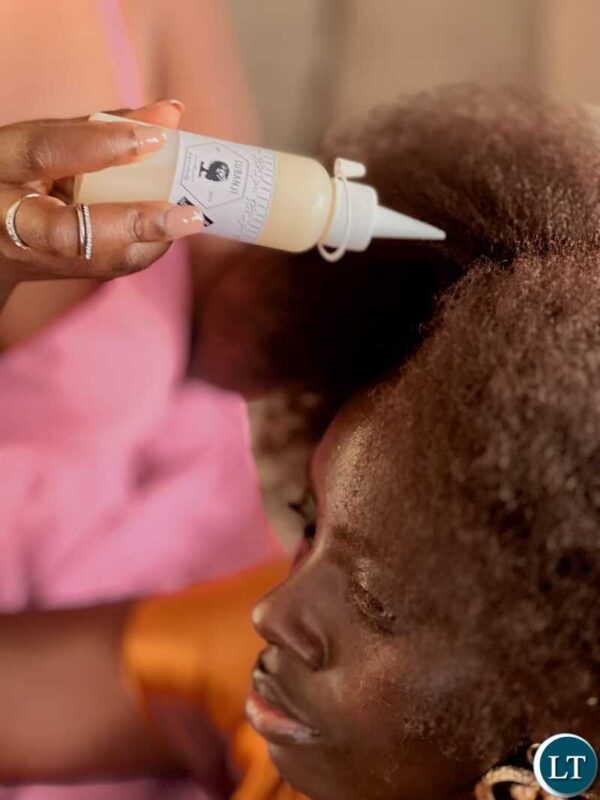
Rediscovering Beauty: Redefining Self-Care with Lubanji

In a world where beauty is often defined by trends and standards, Lubanji Haircare is rewriting the narrative one hair care product at a time.

Founded by Molly Kaumba, Lubanji was born from a simple yet powerful belief: that beauty begins with self-care, and self-care begins with intention. After years of experimenting with different products and routines, Molly wanted something more meaningful — something that celebrated the richness of African heritage and the healing power of nature.

“Lubanji is more than a brand,” she says. “It’s a reminder that taking care of yourself — your hair, your skin, your mind — is an act of self-love and strength.”

The name Lubanji, means beauty in Molly’s mother tongue, Lunda, and the brand carries the essence of “coming home to yourself.” Every product is handmade in Zambia with care and attention — from the Peppermint Whipped Shea Butter that nourishes hair and skin, to the Mintea Shampoo Bar that cleanses gently without stripping, and the Luscious Lox Oil Blend that keeps every curl, coil, and strand thriving.

Lubanji hair products

While the ingredients are inspired by the continent’s natural abundance — rich shea butter from West Africa and carefully selected essential oils — the brand’s soul is deeply Zambian. It’s about returning to our roots, embracing nature’s simplicity, and finding beauty in authenticity.

With each product, Lubanji encourages women to slow down, be intentional, and reconnect with themselves, one self-care ritual at a time.

So if you’ve been meaning to pause, breathe, and nurture yourself a little more, let this be your reminder. Rediscover beauty. Rediscover you.

You can find Lubanji on Instagram and Facebook (@lubanji_) to learn more about the range.

A Nation Lied To: Hichilema’s Shameful K24-to-a-Dollar Lie

9

By Kapya Kaoma

Is President Hakainde Hichilema losing touch with reality? His recent boast that his “strategic thinking” brought the Kwacha down from K24 to K22 to the dollar would be laughable—if it weren’t so disturbing. It’s not just another false claim; it’s a calculated distortion of Zambia’s economic truth.

Everyone knows the Kwacha never hit K24 to the dollar under the Patriotic Front. That record belongs squarely to Hichilema’s own administration—under which it climbed to nearly K30. The data is public and indisputable. For him to suggest otherwise, and for his supporters to applaud, reveals something deeper: a politics built on deception, not fact. When citizens begin cheering for lies, democracy itself begins to rot. Hichilema has not only weakened the economy—he has cheapened truth in public life.

The real story behind the Kwacha’s brief recovery is far less flattering. Its temporary strengthening had little to do with “strategic thinking” in State House and everything to do with global shifts—especially a short-lived dip in the U.S. dollar. Any credible economist knows this. The president, who touts his business acumen at every turn, surely does too. But he prefers spin to substance. If he were honest, he would explain why fuel prices are rising even as he celebrates a “strong” Kwacha.

Even his much-trumpeted “K22” is already history. The currency has slipped again, hovering above K23 as the dollar rebounds. More crucially, the Kwacha of 2024 is not the same as the Kwacha of 2021. Its purchasing power has been gutted. Five dollars today buys far less than it did under Edgar Lungu’s tenure. That’s not progress—it’s decline. So much for the economist-president.

Hichilema’s game is –if the Kwacha weakens, he blames others; when it briefly strengthens, he takes all the credit. This is not economic stewardship—it’s public relations. Governance, under his watch, has been reduced to marketing slogans and applause lines.

The illusion of stability, however, is seasonal and shallow. After harvest, Zambia briefly benefits from agricultural exports; once the rains return, pressure mounts again. This is the cycle of a consumption-driven economy with a dangerously narrow export base. Until Zambia shifts from consumption to production, no amount of presidential optimism will keep the Kwacha afloat.

Nowhere is this failure clearer than in the mining sector. By surrendering our national assets to foreign and politically connected interests, Hichilema’s government has eroded Zambia’s control over its own wealth. Each ton of copper, each briefcase of gold, and each bag of emeralds that leaves the country enriches outsiders while we face higher prices, stagnant wages, and a weakening currency.

This is more than an economic crisis—it is a moral one. As a nation, we must not ignore his lies anymore. Doing so makes us complicit in his corrupt practices. A president who manipulates numbers to protect his image betrays the public trust. How can we expect him to fight corruption when he lies openly? Leadership demands truth, humility, and accountability—not propaganda. Enough is enough.

As we count down to August 2026, Hichilema’s state of mind appears increasingly unstable. Lately, he has insisted that life is better under his rule, that load-shedding “isn’t that bad,” and that critics “don’t live in Zambia” or “don’t understand progress.” But we, ordinary citizens, know the truth. We see it at the market, the fuel pump, and the dinner table. If we speak out, we risk police harassment or arrest. Speaking truth to power has become an act of courage—speak at your own risk. Is this the Zambia we knew?

We deserve better. We need a leader grounded in facts, not fiction. Economic recovery begins with moral honesty. Until President Hichilema learns that truth is the foundation of prosperity, the Kwacha will remain what it has become under his watch—a reflection of failed leadership: unstable, uncertain, and steadily losing value. And so will he.

Fred M’membe Responds to Information Minister Mweetwa’s Accusations Over Madagascar Events

10

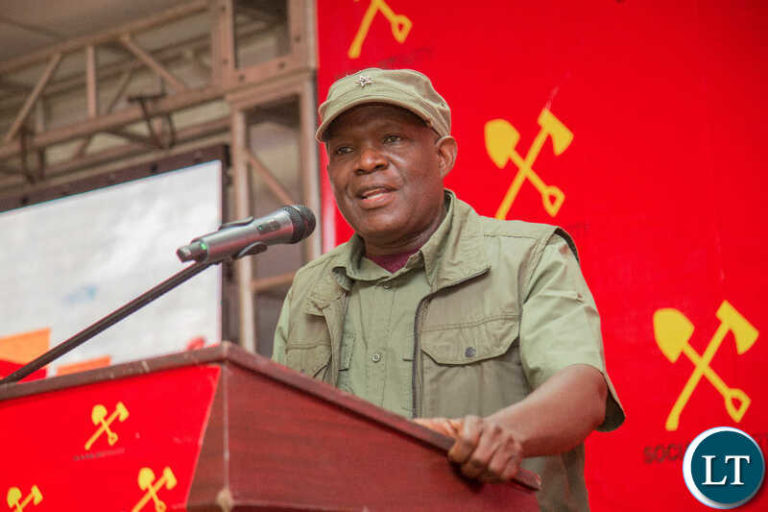
Socialist Party President Dr. Fred M’membe has responded to accusations made by Zambia’s Information Minister, Mr. Cornelius Mweetwa, alleging that he celebrated the removal of the government in Madagascar.

In a statement issued on Thursday titled “Frightened Little Men, Scared of Their Own Shadows,” Dr. M’membe dismissed the accusations, describing Mr. Mweetwa and government officials as “frightened little men scared of their own shadows.” He questioned why the minister appeared troubled by the recent developments in Madagascar, suggesting that those who are guilty are often the most fearful.

Dr. M’membe outlined the sequence of events that led to the removal of Madagascar’s government, emphasizing that the situation was well-documented and public. According to him, protests began on September 25 in the capital, Antananarivo, led by a youth movement called “Gen Z Madagascar.”

The demonstrations, which started over widespread water and electricity shortages lasting more than 12 hours daily, escalated into broader protests against poverty, corruption, and governance failures. Protesters accused the government of enriching business elites through close ties with officials and called for the end of President Andry Rajoelina’s 15-year administration.

In response to growing unrest, President Rajoelina dismissed his prime minister and reshuffled the cabinet. However, these actions failed to appease the demonstrators. The protests reached a turning point when the army’s elite unit, CAPSAT, sided with the protesters, refusing orders to open fire. Rajoelina described the event as an “attempt to seize power,” while CAPSAT stated it would not shoot civilians.

The unrest led to at least 22 deaths and dozens of injuries as security forces attempted to disperse protesters. Demonstrators blocked roads with burning tires and rocks and attacked public buildings, transport systems, and private property.

Despite attempts by Rajoelina to restore order—including the appointment of army General Ruphin Fortunat Zafisambo as prime minister on October 6 and invitations for dialogue—the protesters rejected his overtures, accusing the government of ruling “with weapons.”

The youth-led movement, Gen Z Madagascar, issued a statement on its website, declaring that it sought to end 16 years of “inaction” by the Rajoelina administration. It demanded the president’s resignation, the dismantling of key state institutions—including the Senate, electoral commission, and constitutional court—and the prosecution of businessman Maminiaina Ravatomanga, a close adviser to Rajoelina.

The group also warned that the former president could face charges at the International Court of Human Rights for alleged repression and embezzlement. Eventually, opposition parties initiated impeachment proceedings against Rajoelina, accusing him of “abandoning” his duties. The country’s high court later confirmed CAPSAT head Colonel Michael Randrianirina as Madagascar’s new leader.

Dr. M’membe stated that this summary of events was the same situation that Mr. Mweetwa accused him of supporting. He urged Zambian leaders and citizens to understand the circumstances in Madagascar rather than dismissing or fearing them.

He further elaborated on the principles of democracy and the right of citizens to remove a government that fails to serve their interests. Quoting political philosophy and historical precedents, Dr. M’membe said that the right to remove a government—sometimes called the “right of revolution” or “right of rebellion”—can be exercised through peaceful or, in extreme cases, armed means.

He pointed out that citizens can achieve political change through elections, civil disobedience, or constitutional reforms. In parliamentary systems, he added, governments can be removed through a vote of no confidence.

Dr. M’membe referenced the American Declaration of Independence, which affirms the people’s right to “alter or abolish” any government destructive to their rights, noting that such measures are a last resort after a “long history of abuses and usurpations.”

Concluding his statement, Dr. M’membe said that as a lawyer, Mr. Mweetwa should understand these democratic principles rather than display “crass ignorance and uncouthness.”