Tuesday, June 16, 2026
14.5 C
Lusaka
Home Blog Page 283

Rediscovering Beauty: Redefining Self-Care with Lubanji

In a world where beauty is often defined by trends and standards, Lubanji Haircare is rewriting the narrative one hair care product at a time.

Founded by Molly Kaumba, Lubanji was born from a simple yet powerful belief: that beauty begins with self-care, and self-care begins with intention. After years of experimenting with different products and routines, Molly wanted something more meaningful — something that celebrated the richness of African heritage and the healing power of nature.

“Lubanji is more than a brand,” she says. “It’s a reminder that taking care of yourself — your hair, your skin, your mind — is an act of self-love and strength.”

The name Lubanji, means beauty in Molly’s mother tongue, Lunda, and the brand carries the essence of “coming home to yourself.” Every product is handmade in Zambia with care and attention — from the Peppermint Whipped Shea Butter that nourishes hair and skin, to the Mintea Shampoo Bar that cleanses gently without stripping, and the Luscious Lox Oil Blend that keeps every curl, coil, and strand thriving.

Lubanji hair products

While the ingredients are inspired by the continent’s natural abundance — rich shea butter from West Africa and carefully selected essential oils — the brand’s soul is deeply Zambian. It’s about returning to our roots, embracing nature’s simplicity, and finding beauty in authenticity.

With each product, Lubanji encourages women to slow down, be intentional, and reconnect with themselves, one self-care ritual at a time.

So if you’ve been meaning to pause, breathe, and nurture yourself a little more, let this be your reminder. Rediscover beauty. Rediscover you.

You can find Lubanji on Instagram and Facebook (@lubanji_) to learn more about the range.

A Nation Lied To: Hichilema’s Shameful K24-to-a-Dollar Lie

9

By Kapya Kaoma

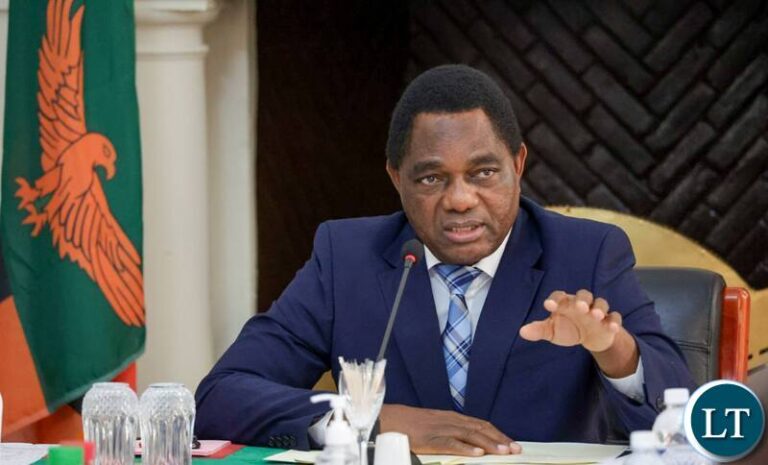
Is President Hakainde Hichilema losing touch with reality? His recent boast that his “strategic thinking” brought the Kwacha down from K24 to K22 to the dollar would be laughable—if it weren’t so disturbing. It’s not just another false claim; it’s a calculated distortion of Zambia’s economic truth.

Everyone knows the Kwacha never hit K24 to the dollar under the Patriotic Front. That record belongs squarely to Hichilema’s own administration—under which it climbed to nearly K30. The data is public and indisputable. For him to suggest otherwise, and for his supporters to applaud, reveals something deeper: a politics built on deception, not fact. When citizens begin cheering for lies, democracy itself begins to rot. Hichilema has not only weakened the economy—he has cheapened truth in public life.

The real story behind the Kwacha’s brief recovery is far less flattering. Its temporary strengthening had little to do with “strategic thinking” in State House and everything to do with global shifts—especially a short-lived dip in the U.S. dollar. Any credible economist knows this. The president, who touts his business acumen at every turn, surely does too. But he prefers spin to substance. If he were honest, he would explain why fuel prices are rising even as he celebrates a “strong” Kwacha.

Even his much-trumpeted “K22” is already history. The currency has slipped again, hovering above K23 as the dollar rebounds. More crucially, the Kwacha of 2024 is not the same as the Kwacha of 2021. Its purchasing power has been gutted. Five dollars today buys far less than it did under Edgar Lungu’s tenure. That’s not progress—it’s decline. So much for the economist-president.

Hichilema’s game is –if the Kwacha weakens, he blames others; when it briefly strengthens, he takes all the credit. This is not economic stewardship—it’s public relations. Governance, under his watch, has been reduced to marketing slogans and applause lines.

The illusion of stability, however, is seasonal and shallow. After harvest, Zambia briefly benefits from agricultural exports; once the rains return, pressure mounts again. This is the cycle of a consumption-driven economy with a dangerously narrow export base. Until Zambia shifts from consumption to production, no amount of presidential optimism will keep the Kwacha afloat.

Nowhere is this failure clearer than in the mining sector. By surrendering our national assets to foreign and politically connected interests, Hichilema’s government has eroded Zambia’s control over its own wealth. Each ton of copper, each briefcase of gold, and each bag of emeralds that leaves the country enriches outsiders while we face higher prices, stagnant wages, and a weakening currency.

This is more than an economic crisis—it is a moral one. As a nation, we must not ignore his lies anymore. Doing so makes us complicit in his corrupt practices. A president who manipulates numbers to protect his image betrays the public trust. How can we expect him to fight corruption when he lies openly? Leadership demands truth, humility, and accountability—not propaganda. Enough is enough.

As we count down to August 2026, Hichilema’s state of mind appears increasingly unstable. Lately, he has insisted that life is better under his rule, that load-shedding “isn’t that bad,” and that critics “don’t live in Zambia” or “don’t understand progress.” But we, ordinary citizens, know the truth. We see it at the market, the fuel pump, and the dinner table. If we speak out, we risk police harassment or arrest. Speaking truth to power has become an act of courage—speak at your own risk. Is this the Zambia we knew?

We deserve better. We need a leader grounded in facts, not fiction. Economic recovery begins with moral honesty. Until President Hichilema learns that truth is the foundation of prosperity, the Kwacha will remain what it has become under his watch—a reflection of failed leadership: unstable, uncertain, and steadily losing value. And so will he.

Fred M’membe Responds to Information Minister Mweetwa’s Accusations Over Madagascar Events

10

Socialist Party President Dr. Fred M’membe has responded to accusations made by Zambia’s Information Minister, Mr. Cornelius Mweetwa, alleging that he celebrated the removal of the government in Madagascar.

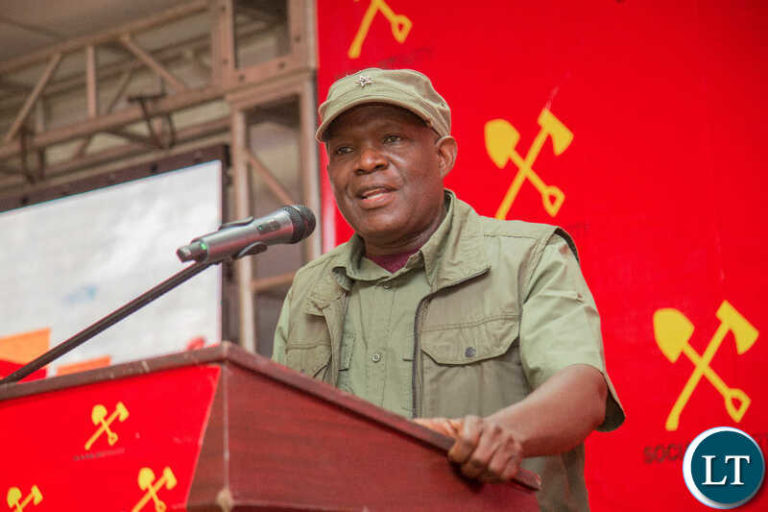
In a statement issued on Thursday titled “Frightened Little Men, Scared of Their Own Shadows,” Dr. M’membe dismissed the accusations, describing Mr. Mweetwa and government officials as “frightened little men scared of their own shadows.” He questioned why the minister appeared troubled by the recent developments in Madagascar, suggesting that those who are guilty are often the most fearful.

Dr. M’membe outlined the sequence of events that led to the removal of Madagascar’s government, emphasizing that the situation was well-documented and public. According to him, protests began on September 25 in the capital, Antananarivo, led by a youth movement called “Gen Z Madagascar.”

The demonstrations, which started over widespread water and electricity shortages lasting more than 12 hours daily, escalated into broader protests against poverty, corruption, and governance failures. Protesters accused the government of enriching business elites through close ties with officials and called for the end of President Andry Rajoelina’s 15-year administration.

In response to growing unrest, President Rajoelina dismissed his prime minister and reshuffled the cabinet. However, these actions failed to appease the demonstrators. The protests reached a turning point when the army’s elite unit, CAPSAT, sided with the protesters, refusing orders to open fire. Rajoelina described the event as an “attempt to seize power,” while CAPSAT stated it would not shoot civilians.

The unrest led to at least 22 deaths and dozens of injuries as security forces attempted to disperse protesters. Demonstrators blocked roads with burning tires and rocks and attacked public buildings, transport systems, and private property.

Despite attempts by Rajoelina to restore order—including the appointment of army General Ruphin Fortunat Zafisambo as prime minister on October 6 and invitations for dialogue—the protesters rejected his overtures, accusing the government of ruling “with weapons.”

The youth-led movement, Gen Z Madagascar, issued a statement on its website, declaring that it sought to end 16 years of “inaction” by the Rajoelina administration. It demanded the president’s resignation, the dismantling of key state institutions—including the Senate, electoral commission, and constitutional court—and the prosecution of businessman Maminiaina Ravatomanga, a close adviser to Rajoelina.

The group also warned that the former president could face charges at the International Court of Human Rights for alleged repression and embezzlement. Eventually, opposition parties initiated impeachment proceedings against Rajoelina, accusing him of “abandoning” his duties. The country’s high court later confirmed CAPSAT head Colonel Michael Randrianirina as Madagascar’s new leader.

Dr. M’membe stated that this summary of events was the same situation that Mr. Mweetwa accused him of supporting. He urged Zambian leaders and citizens to understand the circumstances in Madagascar rather than dismissing or fearing them.

He further elaborated on the principles of democracy and the right of citizens to remove a government that fails to serve their interests. Quoting political philosophy and historical precedents, Dr. M’membe said that the right to remove a government—sometimes called the “right of revolution” or “right of rebellion”—can be exercised through peaceful or, in extreme cases, armed means.

He pointed out that citizens can achieve political change through elections, civil disobedience, or constitutional reforms. In parliamentary systems, he added, governments can be removed through a vote of no confidence.

Dr. M’membe referenced the American Declaration of Independence, which affirms the people’s right to “alter or abolish” any government destructive to their rights, noting that such measures are a last resort after a “long history of abuses and usurpations.”

Concluding his statement, Dr. M’membe said that as a lawyer, Mr. Mweetwa should understand these democratic principles rather than display “crass ignorance and uncouthness.”

A Call to Heal: National Prayer Day Must Mend Zambia’s Divisions

4

A Call to Heal: National Prayer Day Must Mend Zambia’s Divisions

By Mutinta Hamansenya

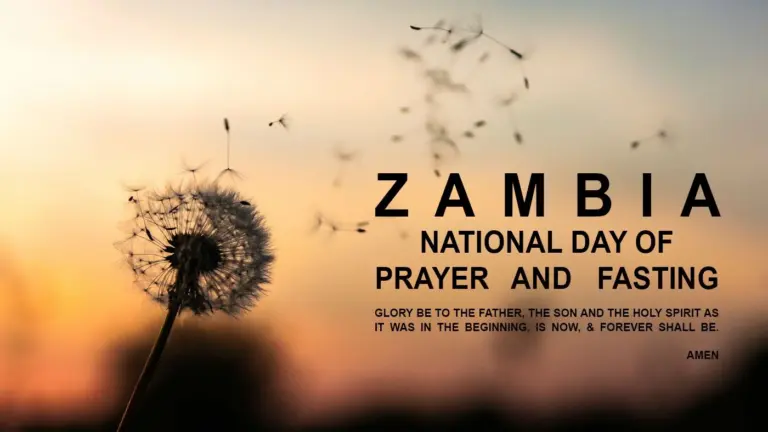
Every year on October 18, Zambia pauses to pray, fast, and reflect. The flags fly at half-mast, hymns echo from churches, and leaders across the political divide stand before the nation asking God for guidance. But this year, the National Day of Prayer, Fasting, and Reconciliation must be more than ceremony. It must become a national cleansing, a moment to end hostility, heal political wounds, and return the country to the path of unity and constitutional order. This prayer is essential for our national healing.

Zambia’s peace has endured for decades. Through transfers of power and economic storms, the nation has avoided collapse because its people choose dialogue over destruction. Yet peace is fragile. It must be renewed by justice, humility, and truth. This year’s day of prayer arrives as the nation wrestles with mistrust between government and opposition, between the state and its citizens, and within the opposition itself, making our collective prayer even more vital.

For the ruling UPND, this is the moment to show grace. The prolonged dispute over the burial of former President Edgar Chagwa Lungu, the tension surrounding the judiciary, and the perception of selective justice have eroded confidence. President Hakainde Hichilema has an opportunity to use this sacred day to reset. True leadership is shown not in asserting power but in yielding it when conscience calls. Releasing institutions  the judiciary, the police, and the electoral commission  to act independently would restore trust faster than any speech. Embracing this call to prayer can be a step towards that trust.

The government should also ensure that the ongoing issues within the Patriotic Front are handled constitutionally and at arm’s length. The case involving Mr Chabinga, who claims PF leadership amid internal contestation, must not be perceived as a state-facilitated process. Government must be guided strictly by the Registrar of Societies Act and the party’s own constitution, avoiding interference that could deepen suspicion. Let procedure, not politics, decide.

At the same time, the opposition must accept responsibility for its role in national unity. The PF cannot rebuild through bitterness or endless court petitions. It must reconcile within itself, rebuild structures through lawful means, and engage government with respect and reason. The nation gains nothing when opposition leaders trade insults or recycle allegations that divide citizens  including reckless claims about freemasonry, tribalism, or personal faith. Zambia’s democracy matures when debate replaces defamation.

The economy remains the wound that touches every home. The rising cost of mealie meal, the volatile dollar, and the unrelenting fuel prices have strained families. Many citizens feel betrayed by unfulfilled promises of a better life. The government should use this Day of Prayer to acknowledge those realities honestly. Admitting shortfalls is not weakness; it is courage. Transparency about the economic plan what has failed and what can still work would rekindle public faith.

Still, progress must not be forgotten. The expansion of social-cash transfers, the CDF-funded classrooms, the rural clinics, and the renewed ties with international creditors all show forward motion. Zambia’s challenge is not the absence of progress; it is the absence of collective credit. When leaders fail to recognise one another’s contributions, unity fades.

Today must therefore mark the start of a national truce. The Day of Prayer should bring together not just churches but all political leaders  to stand side by side and pledge civility. Let the government soften its tone. Let the opposition speak truth without contempt. Let the church rise above partisanship. Let journalists report without fear. Let every Zambian remember that no political victory is worth the loss of national peace.

As Parliament reconsiders Bill 7 of 2025 and other constitutional reform proposals, wisdom must prevail. The process should not be hurried or clouded by electoral anxiety. With general elections only eight months away, pursuing such sensitive amendments now risks deepening mistrust and politicising what should be a national consensus exercise. The government would do well to defer this process until after the polls when emotions have cooled and dialogue can take place freely and inclusively. Reform must be born of reflection, not reaction. True democracy thrives when leaders listen first and legislate later.

This Day of Prayer should also silence the culture of name-calling. Words like enemy, tribalist, corrupt, and Freemason have poisoned public discourse. They have pitted believers against believers, families against families. Zambia’s founders built the nation on tolerance  that spirit must return.

Every leader should be reminded that authority is temporary, but legacy is eternal. Hichilema’s government can choose humility over hostility. The PF can choose rebuilding over resentment. The clergy can choose truth over comfort. And citizens can choose forgiveness over fury

As the nation bows its head today, the true prayer item is not for more rain or riches. It is for renewal that the government may loosen its grip on the institutions of justice, that the opposition may end its self-inflicted divisions, and that together they may set a new moral tone before the 2026 polls.

Zambia has always been a land of peace. Let this day ensure it remains so. Let our leaders remember that the loudest prayer is the one lived, not spoken.


Kenya’s Honour in Death, Zambia’s Lesson in Leadership

Kenya’s Honour in Death, Zambia’s Lesson in Leadership
Four months after former President Edgar Chagwa Lungu’s death in South Africa, his body still awaits burial. The delay has become a national symbol of mistrust and political arrogance  a reminder of what happens when authority forgets empathy. kindly read this with an open mind not political lenses,

The deadlock between the State and the Lungu family has stretched the country’s patience. What began as a protocol question  where to bury a former Head of State  has mutated into a contest of egos. Bishop Joshua Banda, appointed by government to mediate, and Archbishop Alec Banda, chosen by the family, were expected to find common ground. Instead, the process has become mired in accusations of insincerity by family and government. Each side claims the other is acting in bad faith.

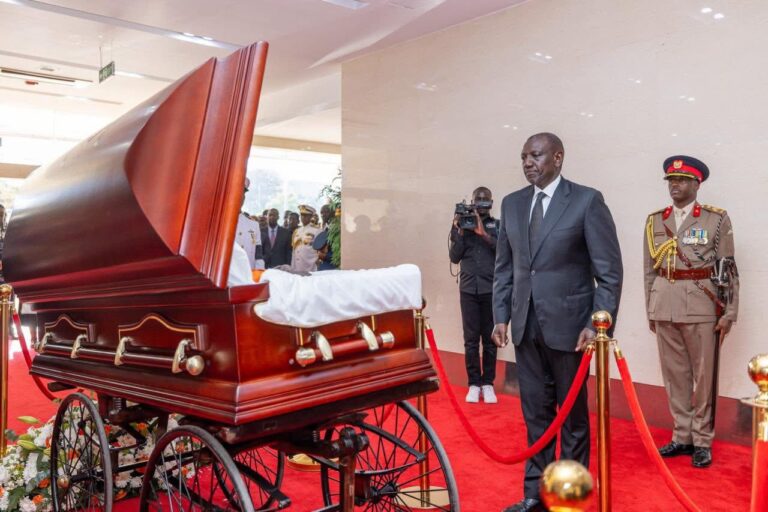
Meanwhile, ordinary Zambians are left to wonder why the country that once set a continental standard for peaceful transitions is now paralysed by its own pettiness. The contrast with Kenya could not be clearer. There, the passing of Raila Odinga  a man who spent decades in opposition  was met with honour from the same State he often criticised. President William Ruto personally directed the repatriation of Odinga’s body from India and respected the family’s request for a private burial within 72 hours.

No contraversial committee was needed to decide what was humane. No press conference was called to justify compassion. Kenya understood that death belongs to family, not politics.

Zambia chose another path. Statements from State House and party officials turned mourning into messaging. Every gesture was interpreted through the lens of power. When government figures spoke of protocol and precedent, citizens heard coldness. When family representatives spoke of love and memory, they were labelled obstructionists. A dialogue that should have been private became a public contest.

This is where leadership matters. Had President Hakainde Hichilema stepped back and allowed the family’s wish to prevail, he would have emerged stronger. In African politics, magnanimity is not weakness; it is power refined by humility. Ruto proved it by honouring his rival Odinga (though he was not president but he was a prime minister). Hichilema could have done the same for Lungu.

Instead, the burial has become a mirror reflecting everything Zambia claims to reject division, stubbornness, and political vindictiveness. The State has lost the moral high ground. The family has lost its peace. And the nation has lost its patience.

October 18, the Day of Prayer, Fasting and Reconciliation, will arrive with its founder still above ground. That is a symbol too painful to ignore. How can a country speak of reconciliation when it cannot reconcile with its own dead?

Beyond the emotion, this is a moment to re-examine the ethics of power. Leadership is not about being right; it is about doing right. A government that cannot forgive even in death risks appearing haunted by its insecurities. The people are watching, and their judgment is quiet but enduring.

Kenya offered a manual on grace. Senator Oburu Odinga’s confirmation that his brother would rest beside their parents summed up a nation’s resolve to respect family first. Ruto’s eulogy captured what statesmanship sounds like: “He carried himself with courage and grace … His legacy is written in the sands of time.” Those words would fit any leader who once served his country if only spoken with conviction.

Zambia’s leaders can still recover dignity from this crisis. It requires no law, no committee, and no directive  just an act of humility. Let the family bury their own. Let the government provide honours without conditions. Let the nation grieve without sides.

When that day comes, the story of Lungu’s burial will cease to be a cautionary tale and become a testimony to maturity. Until then, Zambia remains suspended between protocol and peace  a country still searching for its better self.

Works on Katunda- Tateyoyo 87km stretch on Mongu- Lusaka Road advance

0

Rehabilitation works of the Katunda- Tateyoyo 87km stretch on the Mongu- Lusaka Road have progressed with 50 percent of the works done.

The media reports that Western Province Permanent Secretary, Simomo Akapelwa, in the company of Kaoma District Commissioner, Kashina Sheba, and Road Development Agency (RDA) engineers inspected the project.

Mr Akapelwa disclosed that 40km of the 87 km, will be tarred between October and December this year and once complete, it will be opened to the public.

“This is the Katunta- Tatayoyo 87km section project on the Mongu-Lusaka Road. What is being done here is that they are now laying the stone base by stabilising it, as you can see the machinery is very heavy and after what is being done here on Monday next week they’ll start doing the trial assfort surfacing.

“And if it’s satisfactory, then between next week and December, 40km or 50% of the contract will be surfaced, it’ll be opened to the public and then we can concentrate on the next road,” explained Mr Akapelwa.

He also disclosed that the contractor for the upgrading of the Katunda- Lukulu -Watopa- Mumbezhi Road project will soon be on site to commence the works.

Project Resident Engineer, Abdus Sattar is confident of completing and delivering the project within the time frame.

Earlier, Mr Akapelwa called on Chief Mutondo, Webby Mulubisha at his Lukena Palace in Mangango to discuss various developmental issues specifically the two road projects that include the upgrading of the Katunda- Lukulu -Watopa- Mumbezhi and the Katunda- Tatayoyo stretch project respectively.

Mr Akapelwa also inspected the construction of Chief Mutondo’s palace and appreciated the works.

DPP receives prestigious Public Service Leadership Award

0

Director of Public Prosecutions, Gilbert Phiri, has been conferred with the prestigious Public Service Leadership Award for exceptional service and dedication through transformative justice reforms.

The award was presented during the 7th Annual African Corporate and Government Counsel (ACGC) Forum in Livingstone, which brought together legal professionals and delegates from over 20 African countries.

The award marks the launch of a special category designed to honour a senior public sector legal leader in the host country.

In a statement made available to ZANIS in Lusaka today, National Prosecution Authority (NPA) Public Relations Officer, Chali Hambayi, indicated that the Authority sees the award as a strong validation of its strategic direction, confirming that Zambia’s progress in building a strong and professional justice system is gaining attention on the continent.

He noted that the award highlights continental recognition of the NPA’s reform efforts such as the Director of Public Prosecution’s contributions in advancing prosecution independence, integrity and transparency under his leadership.

Principal State advocate, Frank Sikazwe, received the award on behalf of Mr Phiri at the ACGC Forum Awards Gala, which was held on October 3rd, 2025.

Southern Province Expo closes

0

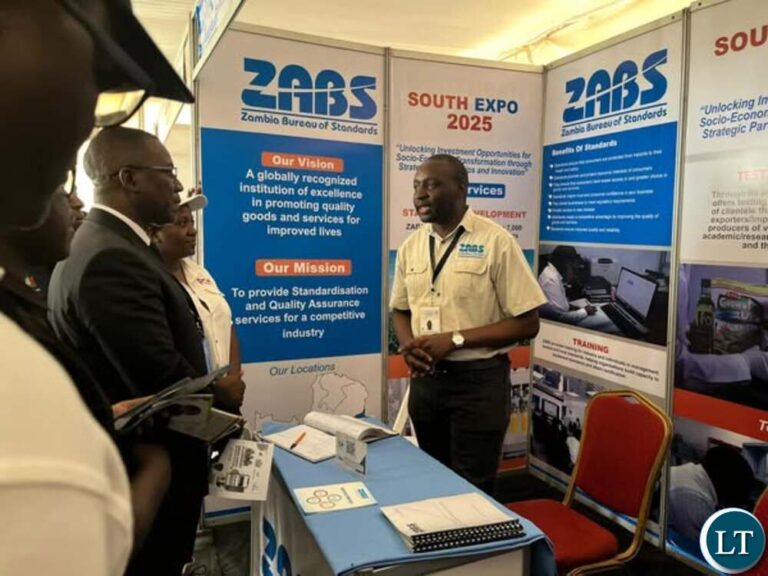
The five days Southern Province Investment and Trade Exposition, which opened on Sunday, October 5, 2025 has come to an end.

The media reports that speaking at the closing ceremony held this afternoon, Southern Province Minister, Credo Nanjuwa, described the event as fruitful.

Mr Nanjuwa said he was happy that for the past few days, the province had witnessed innovation, rich history and culture, business and vision for greater opportunities ahead.

“As we come to the end of this south expo 2025, our hearts are filled with gratitude, pride and renewed purpose. This has not just been an event but a movement, a celebration of Southern resilience, creativity and the unstoppable series of progress,” Mr Nanjuwa said.

The Minister thanked the sponsors of the event for the confidence they had shown and for providing support to ensure a successful event.

He commended Kanona Power Company Limited, Maamba Energy and other partners who made their finances available to make the event a success.

Mr Nanjuwa was pleased to mention that the sponsors of the South Expo invested in an idea that the province can be a hub of excellence, adding that today that idea has come alive for the whole world to see.

“To our exhibitors, you brought this expo to light. Your innovation, your products and your stories have inspired countless conversations and sparked new opportunities and you have also shown that the south is always ready for such undertakings,” he added.

Mr Nanjuwa assured the people in the province, the business partners, sponsors and everyone that participated during the Expo that as the event has come to a close, it does not mean that it has died completely, but that it will be held on an annual basis.

Earlier, Southern Province Permanent Secretary, Namani Monze, thanked the Provincial Minister for providing great leadership by ensuring that the event was a success.

Gender PS calls for concerted efforts in child protection rights

0

Gender and Child Development Permanent Secretary Mainga Kabika has called on the mining companies in North Western Province to compliment the government’s effort in strengthening child protection rights.

Ms Kabika says the government remains committed to ensuring all Provinces across the country have fully functional one stop centers and habitable safe houses to host gender-based violence victims and sexually abused children.

Ms Kabika said this when she paid a courtesy call on Barrick Lumwana Mine in Kalumbila District yesterday

The Permanent Secretary said the Department of Gender is working tirelessly to safeguard the wellbeing of the affected victims by placing them in safe homes equipped with essential amenities.

She said the government highly recognises public private partnerships as they play a significant role in sustainable economic growth as well as enhancing socio economic development in the local communities.

She added that the country has continued to record an increase in gender-based violence and child defilement cases across the country, hence the need for collaboration to curb the vice through increased sensitisation programs in work places, schools and communities.

Lumwana Mine Community Welfare Coordinator Belinda Lubasi said the Mine has a safe house within its premises where GBV victims are housed.

She added that the Mine works in collaboration with the Ministry of Health, Justice and the Zambia Police.

And the Mines Community relations manager Bernadette Shonga expressed gratitude for the gesture.

ZP Forensic Ballistic Expert testifies in Shikapwasha’s murder case

0

A Witness from the Zambia Police Forensic ballistic expert, Isaac Kalimanshila, has witnessed in a matter involving former Home Affairs Minister, Lieutenant General, Ronnie Shikapwasha’s widow, Jane Lusengo 73, has told the Lusaka High Court that the items obtained from the crime scene and submitted for chemistry laboratory forensic analysis had evidential ballistic traces on them.

Mr Kalimanshila, who appeared before Judge Zulu, cited a pair of black shoes, dark blue trousers, Chitenge jacket, white blouse, a white vest and a dark blue skirt, as among the items that had evidential ballistic traces.

A white T-shirt torn in two even pieces with a gun short damage on the abdominal medial part, was also presented as evidence during the continuation of trial.

Mr Kalimanshila identified the white T-shirt in question which was presented to him by the State advocates as being the T-shirt he was presented by the officer handling the case at the crime scene.

He further informed the court that the left side of the white T-shirt had a gun short damage on the abdominal medial part.

“The T-shirt was torn into two even pieces, and one piece of the two had a gun short damage on the abdominal medial part, it was white in colour.

“It was observed that the left side of the T-shirt had a gun short damage on the abdominal media part,” Mr Kalimanshila stated.

Meanwhile, a report containing pictures showing the primary crime scene and how furniture and personal belongings were found, was also presented as evidence.

According to Mr Kalimanshila, the photo in the report was captured in the eastern north of the master self-contained bedroom.

Among the pictures in the report, one shows the alleged laying position of the victim’s body, while the other picture shows the position where suspected blood sustains were observed.

The pictures were captured from the crime scene at Plot 477 of ibex hills.

Earlier, State Advocates made an application before Judge Zulu requesting the court to be moved to the crime scene.

The application was meant to allow the court to appreciate the evidence presented by the witness during cross examination.

Judge Zulu granted the application which was supported by the defence lawyers.

The Court later moved to Ibex Hill for a scene visit in a case Lusengo 73 is accused of shooting Lt. Gen. Ronnie Shikapwasha, who was also former Zambia Air Force Commander.

In the house, Mr Kalimanshila showed the court where the body was found in the master bedroom.

He earlier testified that the deceased was shot at close range and that he had no exit bullet wound.

Mr Kalimanshila also described how the scene was found during investigations into the case.

Ms Lusengo, 73, is charged with murder in connection with the death of retired Lt. Gen Shikapwasha, 76, who died on January 15, 2024.

She is accused of allegedly shooting him using a double barrel at the couple’s Ibex Hill house in Lusaka, a day before he died at the hospital.

However, Ms Lusengo pleaded not guilty to murder before Judge Conceptor Zulu and the state called witnesses to testify against her, with the latest being a police forensic ballistic expert, Isaac Kalimanshila, on stand.

After visiting the crime scene, Judge Zulu said she will give a date after independence for the next hearing.

Zambia reaffirms commitment to strengthening pharmaceutical manufacturing

0

Government has reaffirmed its commitment to fostering innovation and building a resilient pharmaceutical sector that promotes self-reliance and access to essential medicines across Africa.

Minister of Technology and Science, Felix Mutati, said the commitment aligns with the government’s agenda to enhance local production, strengthen supply chains, and promote technology transfer in the health sector.

In a speech read on his behalf by his Ministry’s Permanent Secretary, Brilliant Habeenzu during the official opening of the Pharma-Connect Africa Conference 2025 in Lusaka, Mr Mutati said technology has the power to transform health systems and improve access to affordable healthcare when effectively harnessed.

He said the government is implementing the Eighth National Development Plan (8NDP), which places science, technology, and innovation at the centre of Zambia’s industrialisation and economic transformation agenda.

Zambia is also part of key regional frameworks, including the African Union’s Pharmaceutical Manufacturing Plan for Africa, the SADC Industrialisation Strategy, and the COMESA Regional Pharmaceutical Plan.

Mr Mutati said innovation in the pharmaceutical sector requires policy coherence, human capital development, and market access to attract private investment and boost local value addition.

“With this approach, Zambia’s pharmaceutical sector has the potential to contribute millions of dollars to the national manufacturing GDP and create more than 5,000 skilled jobs by 2030,” he said.

The minister further disclosed that Zambia is finalising processes to ratify the African Medicines Agency (AMA) treaty, which seeks to harmonise regulatory standards and improve access to quality-assured medicines across the continent.

He added that the future of healthcare in Africa lies in investing in people, particularly in equipping young scientists and engineers with skills in biotechnology, regulatory science, and pharmaceutical engineering.

The Government, through the Ministry of Health and higher learning institutions, has introduced the Doctor of Pharmacy programme to meet the growing demand for expertise in biotechnology and pharmaceutical manufacturing.

Mr Mutati also said medicine security has been recognised as part of digital security, with the digital transformation strategy prioritising e-logistics, data interoperability, and smart traceability systems to eliminate counterfeit medicines.

“As we look to the future, our actions must be guided by science, collaboration, and accountability,” he said, reaffirming Zambia’s commitment to promoting innovation and industrial capacity development in line with Africa’s pharmaceutical self-reliance agenda.

And SADC Senior Programmes Officer, Lanboly Kumboneki, says SADC is pleased to be part of an initiative where they can discuss the future of pharmaceutical industry and supply.

Mr Kumboneki noted that it is important to examine the role of innovation and system modernisation in order to address the ongoing challenges to medicines access.

“It is important to identify what is required in order to foster a culture of innovation that explores the causes of intractable medicine access issues,” he said.

Mr Kumboneki has reaffirmed SADC’s continued partnership with the government in order to improve the application of accessing medicines.

Govt. committed to establishing modern tourism centers

0

Government says it is committed to establishing modern tourism centers across the country as part of its strategy to enhance Zambia’s position as a preferred tourist destination in the region.

Minister of Tourism, Rodney Sikumba, says the initiative is aimed at promoting both domestic and international tourism by creating accessible information and cultural hubs that will showcase Zambia’s diverse attractions.

The media reports that Mr Sikumba, who is also Livingstone Central Member of Parliament, was speaking in Livingstone today when he commissioned a Tourism and Education Center, located within Dambwa North Township.

He explained that the proposed centers will serve as one-stop facilities where visitors can access information on tourism sites, accommodation, transport, and local heritage.

Mr Sikumba noted that such infrastructure will also help stimulate economic growth by linking communities to the tourism value chain.

“The government remains steadfast in its commitment to expanding the tourism industry by providing facilities that make it easier for visitors to explore and appreciate what Zambia has to offer.

 “These centers will not only improve visitor experience but also create employment opportunities for local people,” Mr. Sikumba said.

He emphasised that Livingstone, being the country’s premier tourist capital, will serve as a model for the rollout of similar centers in other provinces.

The Minister further explained that the government’s focus is to ensure that every major tourist circuit has a functional information hub to coordinate activities and support private sector participation.

And, Mr Sikumba noted that tourism remains a key driver of Zambia’s economic diversification agenda, adding that the government under President Hakainde Hichilema, is determined to transform the sector into a sustainable contributor to national development.

He further urged local authorities and stakeholders to support the initiative by promoting community-based tourism projects that will complement the national vision of attracting more visitors and increasing the country’s visibility on the global tourism map.

“The creation of these tourism centers will reaffirm our commitment to making Zambia a must-visit destination, not just for its natural beauty but for the quality of experiences we provide,” Mr Sikumba added.

The Ministry of Tourism is currently working with local councils, traditional leaders, and private investors to identify suitable locations for the first phase of the project which is expected to begin in 2026.

Government urges social protection beneficiaries to tap into beef export

0

The Ministry of Community Development and Social Services has welcomed President Hakainde Hichilema’s announcement on the country’s ambitious beef export plans, urging social protection beneficiaries to take advantage of the emerging opportunities in the livestock sector.

Speaking in Livingstone at the South Expo 2025, held under the theme “Unlocking Investment Opportunities for Socio-Economic Transformation Through Strategic Partnerships and Innovation,” President Hichilema disclosed that Zambia aims to export one million tonnes of beef annually through the creation of Special Beef Economic Zones, the initiative that is expected to create jobs and stimulate economic growth through value chain development.

Reacting to the announcement, the MCDSS Permanent Secretary for Technical Services, Beatrice Chilomo, expressed optimism stating that the initiative would open up sustainable income-generating opportunities, especially for small and medium enterprises.

She said beneficiaries under government-supported programmes such as the Alternative Livelihood Initiative (ALI), Food Security Pack (FSP), and Supporting Women Livelihood (SWL) should consider venturing into cattle rearing and related agribusinesses.

Ms Chilomo added that SWL beneficiaries can form cooperatives and establish feedlots to supply cattle to commercial markets, while FSP recipients can pursue agriculture and livestock ventures either individually or in groups.

“We are excited about the potential for our social protection beneficiaries to engage in livestock production, particularly cattle farming, and benefit from the growing demand in the export market,” said Ms Chilomo.

The Permanent Secretary further noted that the Ministry’s Skills Training Colleges are actively involved in empowering Community-Based Volunteers (CBVs), who are providing technical training in livestock management and business skills to communities.

She called on all social protection beneficiaries to be proactive and embrace the government’s support in entering the beef value chain.

Ms Chilomo urged the beneficiaries to seize the opportunity and position themselves to contribute to the country’s beef export target describing it as a viable pathway to improved livelihoods and poverty reduction.

‘’The government has reiterated its commitment to supporting inclusive economic growth through strategic empowerment initiatives and targeted interventions aimed at transforming vulnerable households into productive participants in the national economy, ’she said.

MOE builds 73 classrooms in Chilanga

0

The Ministry of Education has constructed 73 classrooms in Chilanga District this year, as part of efforts to improve learning infrastructure under the free education policy.

According to the District Development Coordinating Committee (DDCC) third-quarter report from the education sector, the district’s target for 2025 is 175 classrooms, comprising 15 for early childhood education (ECE)50 for primary and 110 for secondary education.

The report noted that despite the ongoing construction, classroom shortages remain a major challenge, largely due to the increase in learner enrolment following the implementation of the free education policy.

“There is still a challenge of classroom space in most schools as the number of learners has tremendously increased due to the free education policy and a shortage of infrastructure for early childhood education,” the DDCC report revealed.

It recommended the construction of more classrooms in existing schools, as well as the provision of furniture suitable for ECE learners and the recruitment of additional teachers to meet the rising demand.

The DDCC report also confirmed that all 26 primary and 23 secondary schools managed by the government in Chilanga have fully implemented the free education policy.

In addition, the report stated that 26 primary23 secondary and 28 community schools are benefiting from the School Feeding Programme, jointly supported by the World Food Programme (WFP) and the Disaster Management and Mitigation Unit (DMMU).

Through this initiative, over 66,000 learners across government and community schools in the district are receiving daily meals aimed at improving nutrition and school attendance.

The report further revealed that five primary schools have been upgraded to secondary level to accommodate Form One classes, thereby expanding access to secondary education in the district.

Shangombo residents applaud ECZ for swift voter registration exercise

0

Residents of Shangombo district have commended the Electoral Commission of Zambia for the swift process of issuance of voter registration cards.

‎Speaking to the media in an interview Musonda Chipasha, a resident of Shangombo says he did not expect the registration process to be fast but to his surprise it was done within minutes.

‎”I would like to thank the Electoral Commission of Zambia for the swift issuance of voter’s cards. I came to have my lost voters card replaced; I honestly thought the process would be slow but I am happy to mention that it was done within a good number of minutes.” he added

‎Mr Chipasha added that the decision to replace his lost voter’s card is in order to exercise his democratic right to vote in the 2026 general elections and choose representatives both local and internationally.

‎”I am here at the registration Centre to replace my voter’s card because I want to exercise my democratic rights by participating in the upcoming 2026 general elections through voting. By voting I will choose a leader of my choice to represent us both locally and internationally” he said

‎Mr Chipasha has since called upon all eligible citizens to take advantage of registration centres within their areas and obtain their voter cards because a voter’s card is an important document and one cannot be allowed to vote without it.

‎Meanwhile, another resident of Shangombo Elizabeth Mabenga has also appreciated the commission for the continuous sensitisation of the exercise through electronic media.

‎”I knew about the mass voter registration electronically, the commission has done a good job in terms of sensitising the public through various platforms such as Facebook page, television, radio and our local WhatsApp groups through Shangombo town council,” she said.

‎She added that the voter education facilitators have done a commendable job in the voter education exercise to the public.

Mass voter registration is a national exercise which is currently being conducted in all 156 constituencies of the country.

The voter’s registration exercise commenced on the 13th of October and will run until 11th November 2025.

During this period the commission will be conducting various services such as new registrations, replacement of lost voters’ cards, transfers from one polling station to another, removal of deceased voters and many other services.

‎The doors of the registration centres are open from 08 to 17:00 hours daily.