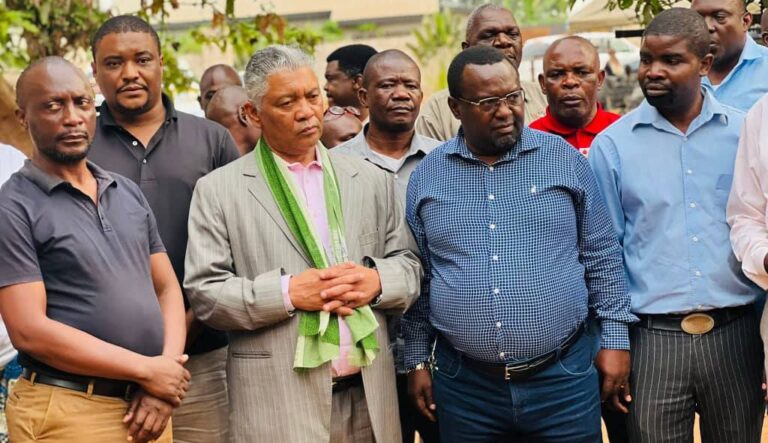
The Tonse Alliance is not just a failed project; it is a dead horse being shamelessly dragged across Zambia’s political landscape by men and women too selfish, too greedy, and too delusional to admit their irrelevance.
What was once branded as a so-called united front has degenerated into a circus of power-hungry individuals with nothing to offer except backstabbing, propaganda, and violence.
Today, every Jim and Jack in the alliance dreams of State House. Given Lubinda fancies himself as a redeemer, yet he was part of the corrupt Patriotic Front government that left Zambia drowning in debt and riddled with gassing scandals, mukula smuggling, and shameless plunder of national resources.
Sean Tembo, a political loudmouth without substance, continues his reckless outbursts that have made him more of a national clown than a serious contender.
Kelvin Bwalya Fube. better known for his inconsistency than conviction, oscillates between opposition and ruling parties like a political nomad chasing personal gain.
And Brian Mundubila, a man without a real political base, is trying to smuggle himself into relevance on the backs of other failed politicians.
The Tonse Alliance is a coalition without a vision, without direction, and without an ounce of discipline. What holds them together is not a shared plan for Zambia’s future but a shared bitterness against President Hakainde Hichilema and the UPND government.
They blame the government for everything while failing to control themselves in the most basic form of leadership order and unity. How can a group that cannot manage its own affairs pretend it can manage the affairs of 20 million Zambians?
These are the same characters who once presided over Zambia’s darkest hours: corruption was rampant, public resources were looted, cadres terrorized citizens, and national institutions became playgrounds for political thugs.
They left the people suffocating under unprecedented debt while shamelessly enriching themselves. The PF era gave us record corruption scandals at ZAMTEL, FRA, Ministry of Health, and ZESCO. Contracts were inflated, ghost workers multiplied, and civil servants were reduced to beggars while PF elites bought luxury cars and mansions.
And now, instead of reflecting and repenting, these men return dressed in new political coats, recycling their lies and chaos. Sean Tembo cannot point to a single community project or legacy achievement beyond insults.
KBF still believes political opportunism is strategy, forgetting that Zambians see through his inconsistencies. Lubinda, meanwhile, has failed to shake off the PF stench of plunder and abuse of power. These are not leaders, they are political failures wrapped in recycled propaganda.
Make no mistake: granting the likes of Lubinda, Tembo, Fube, or Mundubila another chance to govern Zambia would be catastrophic. It would be a return to the politics of plunder, cadres unleashed on the streets, stolen contracts, and institutions used as tools of repression.
To most businesses, the playbook has been redefined due to the digital transformation, and the sports and entertainment industry has not been left behind. Gone are the days when one had to physically move from one place to another to place a bet or check the results of a game. Today, applications on mobile phones and tablets bring users to the action as never before, integrating live streaming, rich interactivity, and secure transaction capabilities.
In the world of today, one no longer has the option of choosing between convenience and security. Be it tracking local teams, accessing global betting systems, or watching live sports, modern sports applications offer users a streamlined experience. If you are wondering whether it will be worth the effort to check out these new platforms, the answer is yes, take the plunge, for these platforms offer a great combination of reliability and functionality.
Why Security is Foremost of All in Sports Apps
Along with developing newer digital platforms comes evolving threats. Sports apps handle sensitive financial and personal data, so security is a priority for developers and users alike. Secure systems protect data against cyber attacks while allowing for seamless transactions.
This is especially important in regions with digital adoption is growing rapidly. For example, many bettors on Melbet appreciate functionalities designed specifically for native needs. In this case, a sport bet in Nigeria is no longer simply a matter of excitement but a guarantee of funds and data being properly protected. Apps incorporate encryption, secure log-in, and regular system updates to make security a part of the process.
Convenience as the New Benchmark
Apart from security, convenience has been the benchmark of excellent apps. People desire speedy navigation, simple layouts, and cross-device compatibility. No one has the time to waste on searching for live match odds or page loading.
Human and technology concept. People and sport. Handsome African guy in headphones listening to music using his smart phone with blank copy space screen for your advertising text or information
Developers now create apps with more slender code, so they perform well even on old telephones. Push alerts provide real-time updates, while integrated payment platforms facilitate quick deposits and withdrawals. The focus is clear: to allow fans to experience the thrill of the game rather than the app’s machinery.
Key Features Defining Modern Sports Apps
To understand why such platforms are popular worldwide, let’s have a look at what makes them unique:
Live Streaming Integration – Many apps currently allow fans to view matches in real time, offering one place for engagement.
Instant Odds Updates – Live updates ensure users never miss the best offer.
Multiple Payment Options – Localized payment gateways accommodate credit cards, e-wallets, and mobile money programs.
Responsible Gaming Features – Self-exclusion features and spending controls promote healthy use.
These factors prove that sports apps are designed not only for entertainment but also for safe and healthy use.
Comparison of Security and Convenience Features
To compare the balance between convenience and safety, the following is a comparison of how today’s sports apps balance both priorities:
Feature
Security Aspect
Convenience Aspect
Login & Authentication
Two-factor authentication, biometrics
Quick one-tap login features
Transactions
Encrypted gateways
Prompt deposits and instant withdrawals
Data Protection
Advanced firewalls, GDPR compliance
Smooth account management capabilities
In-App Navigation
Trusted APIs for unintrusive functionality
Responsive designs, clean layouts
This table shows how each component is built with double motivations: to protect the user and enhance their overall experience.
Payment Flexibility and Local Adaptation
Regarding apps, the ability to incorporate different modes of payment on the same platform is fast becoming a most appreciated feature. Different countries have different points of view and attitudes, and as such, the platform needs to be responsive to them. In some areas, mobile wallets or banking integrations are favored, whereas in other areas, debit and credit cards thrive.
Melbet, for instance, has been able to incorporate local payment systems to ensure that users feel comfortable. This incorporation not only enhances confidence but also erases barriers that may discourage new players from joining it. The ability to make quick and secure transactions is a game-stopper when it comes to user satisfaction.
Role of Technology in Advancing Apps
As simple and secure as the interfaces are, there is much tech that is employed. Services are made stable through the use of cloud computing, artificial intelligence works to do the personalization, and the use of blockchain is increasing to add more ease and speed up the transactions. These are reliable technologies and will boost users’ trust.
Also, machine learning technologies use algorithms to analyze the behavior of game players to provide personalized services and also track suspicious behavior of fraudsters. Enjoyment and safety are at work in this environment.
Responsible Gaming as a Nucleus
Apps are no longer only about maximizing play but also about engaging customers to play responsibly. Numerous applications of today even have built-in reminders, self-imposed deposit limits, and immediate access to support agencies. These steps mark a new path in the direction of sustainability and care for the welfare of players.
Responsible gambling is a key component of trust-building, so users are assured that sites care about long-term relationships rather than instant revenues. It also meets global regulatory requirements, reinforcing credibility in increasingly competitive markets.
Why Convenience Matters to Global Fans
Convenience is not only time saved; it’s ease of access. Emerging market users may be on mid-tier smartphones or have slower internet. Sports apps accommodate these conditions by optimizing performance and offering offline capabilities, for example, saved betting slips or saved match data.
Across the globe, convenience also means integration. Applications also interact with social media for quick sign-up or commenting within communities. This offers another level of interaction since followers can comment on predictions and congratulate victories with friends.
Future Outlook for Sports Apps
Looking ahead, sports apps are likely to see more adoption of new technologies. Virtual reality could enable users to visit fully immersive, computer-generated stadiums, and 5G technology could allow for real-time, ultra-fast live betting. The balance between user convenience and security will be the primary focus of any emerging technology innovation.
As the demand for more convenient, engaging, and safe experiences increases, sports apps are expected to evolve rapidly. For users, the possibilities are endless, as the new age of sports apps will focus on providing users with engaging and safe experiences.
Security and Convenience Define Tomorrow’s Winners
The testament to the speed of growth of contemporary sports apps is the fact that the set of features that will always rule the future is the set that is completely secure and as convenient as it gets. Apps today completely change the relationship that fans have with their most adored games, ranging from local payment options to completely immersive streaming.
The message to the fans is extremely simple. Security is equivalent to trust, while convenience is a promise of joy. Together, they form the very foundation of sports experiences that are being developed, enhanced, and proliferated across the world.
Solwezi deputy Mayor Adrian Nkolomba has implored Solwezi Municipal Council Management to intensify inspections of drinking places and stop the mushrooming bars and taverns in communities.
Mr Nkolomba said undesignated drinking places are a public nuisance and if left unchecked, has potential to become breeding grounds for criminality.
He said there is a need to bring sanity in communities by heightening inspections and ensuring adherence to provisions of the liquor licensing Act number 20 of 2011.
“Ensure your inspections are intensified, what we are seeing in communities is unacceptable. We have the liquor licensing Act that gives us power to close down any place found wanting, “Mr Nkolomba said.
Mr Nkolomba who is also Kimale ward Councillor was speaking today when he presided over the first ordinary council meeting for the 2026 civic year.
He said underage drinking and noise pollution are becoming common in communities and that this should not be allowed to continue.
“We have been talking about this trend for a long time and people look at it to be normal but it is not something that we should accept in our community, so let us go there and do patrols and ensure there is order, ” Mr Nkolomba said.
And Kazhiba Ward Councillor Collins Chiwaya expressed concern with the number of children patronising drinking places at the expense of school in communities.
Mr Chiwaya said there is need to curb the vice by conducting regular patrols in bars and taverns and closing down any operator found abrogating the Liquor Licensing Act.
“Your worship, there is a bar in my ward just at the market that allows underage children and pollutes the place with their music and people are complaining. Our inspectors need to conduct random patrols in some of these communities,” Mr Chiwaya said.
Meanwhile, the council has directed management to demolish Excel Lodge situated near the Solwezi main market by October month-end as it is a health and safety hazard.
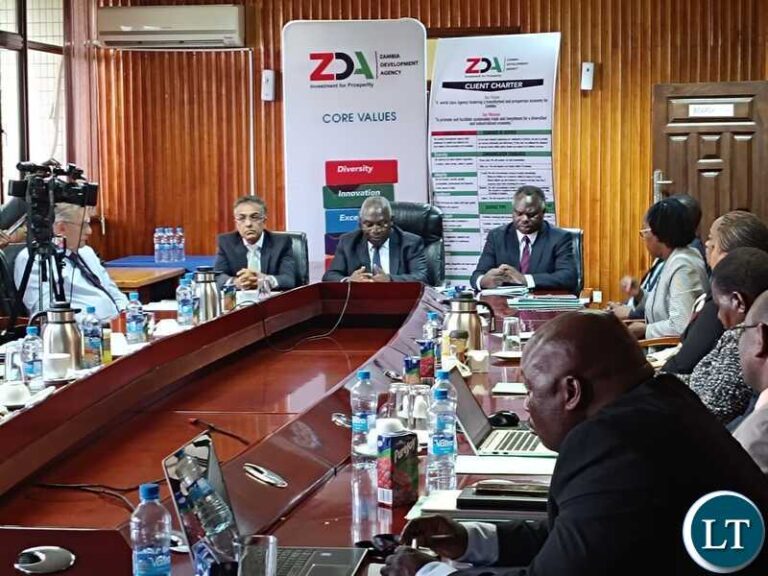
The Zambia Development Agency (ZDA) has signed two landmark Memoranda of Understanding (MOUs) aimed at strengthening investment promotion and advancing evidence-based policy formulation.
The agreements were signed at ZDA headquarters in Lusaka, one with the China-Shanghai Cooperation Organization (SCO) Economic and Trade Exchange Center Guangdong–Hong Kong–Macao Development Committee and another with the Southern African Institute for Policy and Research (SAIPAR).
ZDA Director General Albert Halwampa said the MOU with the China-SCO Center provides a framework for ‘bigger things to happen’ across Zambia’s investment landscape.
Mr Halwampa explained that the collaboration spans across mining, agriculture, manufacturing, tourism and energy.
“We are so happy that today we are signing this very important memorandum of understanding that provides a framework for greater collaboration,” he said,
He said that Zambia offers competitive incentives such as tax concessions and VAT relief to attract investors.
Mr Halwampa further announced that a joint implementation committee will be formed immediately to monitor progress and ensure tangible results.
And speaking through his interpreter, China-SCO Economic and Trade Exchange Center Director Wang Ruicai said the agreement will serve as a blueprint for expanding trade, diversifying investment and optimizing trade structures.
He added that it will encourage Chinese enterprises to invest in Zambia while opening access for Zambian businesses to the fast-growing Greater Bay Area economy.
Meanwhile, ZDA also signed a second MOU with SAIPAR, that will strengthen research, policy advice and linkages that guide investment strategies.
SAIPAR Executive Director Manenga Ndulo welcomed the agreement, stating that it will foster impactful research and stronger engagement between policymakers and researchers.
“With this partnership, we reaffirm our shared commitment to promoting evidence-based policy. Ultimately, that is the most important thing we are trying to achieve,” Prof. Ndulo said.
Ministry of Community Development and Social Services Permanent Secretary, Angela Kawandami, says supporting women and girls remains one of the most effective ways of reducing poverty and strengthening communities in Zambia.
She explains that when women are empowered with livelihoods and girls are kept in school, entire households benefit through improved welfare, better nutrition, and greater opportunities for future generations.
Ms Kawandami has emphasised that empowering women and girls is not only about social inclusion, but also about driving Zambia’s long-term economic growth.
She was speaking in Lusaka today during the launch of the Supporting Women’s Livelihood (SWL) Impact Evaluation Findings, under the Girls’ Education and Women’s Empowerment and Livelihoods Project (GEWEL).
Ms Kawandami revealed that the project, implemented with support from the World Bank and cooperating partners, has provided direct cash transfers and food security packs to vulnerable households across the country.
She added that lessons from the impact evaluation will help the government design future graduation programmes that can scale up support for poor and vulnerable families.
The Permanent Secretary noted that the initiative comes at a critical time, with 60 percent of Zambians currently living in poverty and nearly half facing extreme poverty.
She restated that the government is prioritising social protection as the highway to inclusiveness to ensure that no one is left behind.
And, World Bank Country Manager, Achim Fock, described the GEWEL Project as an example of how layering interventions under a cash-plus approach can create a more comprehensive system of social services.
In a speech read on his behalf by World Bank Senior Social Protection Specialist, Nadia Selim, Mr Fock stated that the SWL component is the engine of the project, as it is deliberately designed to economically empower extremely poor women and help them sustainably move out of poverty.
He emphasised that a fully government led lean economic inclusion model, can lift households out of extreme poverty while enabling long-term growth.
Mr Fock further highlighted that the focus on self-employment is particularly relevant, given that two-thirds of Zambians are engaged in the informal sector, with women forming the majority.
“While structural transformation and private sector development will generate jobs in the long term, focusing on the informal sector provides immediate opportunities and quick wins,” he said.
Meanwhile, Ministry of Community Development and Social Services Department of Community Development Director, Changano Ngoi, revealed that under the Supporting Women’s Livelihood component, a total of 144,297 women across 81 districts aged between 19 and 64 have benefited from a comprehensive package.
He explained that this package includes life and business skills training, mentoring, peer support, productivity grants, links to other interventions, and support for the formation of savings groups.
Mr Ngoi noted that women beneficiaries are now running businesses such as livestock rearing, trading, and crop farming.
“To ensure sustainability, 5,329 savings groups have been formed nationwide, with a membership of more than 115,720 women,” he said.
The United Nations Population Fund (UNFPA) and the African Union Development Agency (AUDA-NEPAD) have urged governments and stakeholders in the Southern African Development Community (SADC), to make strategic investments in young people, particularly in Sexual and Reproductive Health and Rights (SRHR), as a way of harnessing the demographic dividend.
ZANIS reports that speaking during a Multisectoral Consultative Forum on SRHR and the demographic dividend in Lusaka today, UNFPA Country Representative, Seth Brockman, said empowering young people with education, employable skills, governance and health services is critical for the region’s development.
“This week marks an exciting moment of co-creation and partnership as we collectively commit to advancing our continent’s future through its young population,” he said.
Mr Brockman noted that the forum is not merely a technical exercise but a milestone in shaping a regional SRHR investment framework for youth, adding that the insights gathered will guide national agendas.
“With over half of our population under the age of 30, we have a unique opportunity to accelerate growth and reshape development,” he said.
Mr Brockman added that the foundation of unlocking the demographic dividend lies in protecting the sexual and reproductive health and rights of young people, especially adolescent girls.
SADC Director of Social and Human Development at SADC Secretariat, Duduzile Simelane, stressed the importance of building knowledge and sharing experiences on SRHR investment across the region.
Ms Simelane observed that many young people in SADC still face barriers such as lack of access to education, employment opportunities and comprehensive sexuality education, which limits their ability to realise their full potential.
“Without youth-friendly health services, family planning centers and comprehensive sexuality education, young people risk being deprived of opportunities to complete education and secure employment,” she said.
She emphasised that the demographic dividend is not automatic, but requires deliberate and sustained investments in human capital.
“Failure to safeguard the rights of our youth is not only a loss for individuals, but also a loss for Africa’s collective potential to reduce inequality and build prosperity,” she said.
Paramount Chief Chitimukulu of the Bemba people has commended the Lozi-Bemba Cousinship Association for fostering unity, cooperation and mutual support among the two tribes.
The traditional leader says the association has been key in maintaining peace through promoting trust, understanding and solidarity even across other tribes.
Speaking when the Lozi-Bemba Cousinship Association Chairperson, Brian Kayongo, paid a courtesy call at his palace in Mungwi, the Mwine Lubemba noted that the association has been used in social relationships and is breaking barriers and strengthening national identity under the umbrella of the One Zambia One Nation motto.
“This association has strengthened national identity through social relationships in jokes and is breaking barriers,” he observed.
The Chitimukulu added that the traditional cousinship between the Lozis and Bembas has built strong inter-tribal relationships which have led to a sense of common identity and solidarity that transcends political or cultural division.
The traditional leader further indicated that the relationship between the two tribes has also helped to facilitate collective actions and mutual assistance during times of hardships.
The Paramount chief noted that activities of the association have also encouraged easy interaction among Lozis and Bembas in the nation.
“These Ngonis should not even feel jealous of us because we defeated them and they ran back to their land, we value old cousinship and it stands,” he jokingly said.
And Lozi-Bemba Cousinship Association Chairperson, Brian Kayongo, said the association has been key in preserving cultural traditions and family heritage by ensuring that these practices are passed onto future generations.
Dr Kayongo observed that the traditional cousinship in Zambia is a historical foundation among tribes which contribute significantly to national unity and harmony among groups.
“This cousinship has contributed to the unity and harmony among many tribes in the country,” he said.
He explained that the association allows for light-hearted teasing and humour, which can defuse tensions and replace conflict with love and respect.
Dr Kayongo also disclosed that the association helps to facilitate the movements of its members to attend and support other traditional ceremonies in the nation.
“We have been key in ensuring that we support and promote cultural exchange through attending various traditional ceremonies across the country,” he said.
He said the association has also embraced the Ngonis, who have been traditional cousins with Bembas and Tongas who have been playing traditional cousinship with the Lozis, to ensure the bond for these tribes continues to grow stronger.
Minister of Youth Sport and Arts, Elvis Nkandu, has revealed that the government has increased this year’s Ngoma awards prize money from K5, 000 to K20, 000 minimum and will continue increasing the amount in the years to come.
Mr Nkandu says the initiative to increase the prize money is meant to motivate the artists, uphold their dignity and give them the visibility they deserve.
Speaking when he launched the 20th Ngoma Awards Edition, scheduled to be held on December 11, 2025 last evening, the Minister said the step to increase the award money demonstrates the government’s seriousness in promoting art and reflects its commitment to ensuring that creativity is not only celebrated but also rewarded in a meaningful way.
“Some of you remember when I pledged that this year’s Ngoma awards will be different. Hence, you should expect something big and just work hard because we want to celebrate you and we want to celebrate excellence and hard work,” he added.
Mr Nkandu stated that the Ngoma awards is not just a ceremony but a celebration of the country’s creativity, identity and resilience of artists who use their talents to educate, entertain and tell the Zambian stories.
He noted that the Ngoma awards have over the years become a platform where Zambians pause to reflect, appreciate and reward those who keep the country’s culture alive.
Mr Nkandu added that by celebrating the 20th edition of the Ngoma award, the country is celebrating a milestone that has shaped Zambia’s landscape over the past two decades.
The Minister further explained that this year’s awards have been categorised in three parts namely, adjudicated awards with nine categories, popular voting awards with 10 categories and recognition awards with four categories which include the presidential recognition award.
Mr Nkandu further thanked partners and sponsors who believe in the potential of the Zambian artists to contribute to the country’s economic development.
He highlighted that the support from sponsors and partners is a clear indication that the growth of the arts sector is not only the government’s responsibility, but a shared responsibility, adding that working together can create an environment for art to thrive.
Mr Nkandu also called on more stakeholders to join in supporting and developing artists, stressing that celebrating the 20th edition of the Ngoma awards is not just about marking time, but about a reminder of the artistic journey in shaping the country’s identity.
He further reaffirmed the government’s commitment to supporting the arts industry by ensuring that it continues to thrive and is appreciated as it creates jobs and contributes meaningfully to national development.
The Economic Association of Zambia (EAZ) says the expected economic growth of 6.4 percent for Zambia is achievable if the targeted funds are spent according to the budget and wasteful spending is eliminated.
EAZ President, Oswald Mungule, says the projected expenditure estimated at 27% of the country’s Gross Domestic Product (GDP), is sufficient to support the 6.4% growth rate.
Referring to the 2026 national budget, which was presented last week, and its strategic economic imperatives, Dr Mungule described the budget as transformative, saying it will significantly improve the livelihood of the Zambian people.
Dr Mungule, who was flanked by EAZ Acting Chief Executive Officer, Tendai Posiano, disclosed this at a press briefing in Lusaka today.
“The 2026 national budget sets a stage for consolidating the economic gains achieved and aims to propel Zambia towards becoming a prosperous middle-income country,” he said.
Dr Mungule joined other stakeholders who applauded the budget, stating that the Association stands ready to work closely with government, civil society, private and public institutions in the country in ensuring that the budget is implemented.
He explained that to build a prosperous, resilient and equitable Zambia, it is not the responsibility of the government alone but all stakeholders in the nation.
Dr Mungule, who firmly supported the budget, called on the government to diversify the energy mix, expand mobile money infrastructure, support and improve legislation surrounding Small and Medium Enterprises by making them cheaper and affordable.
He further advised that the country must target 10% GDP or more because of its social imperative economic aspect.
“Resources must be spent and implemented on the intended plan. Wasteful spending must be avoided at all costs,” Dr Mungule stressed.
Last week, Minister of Finance and National Planning, Dr Situmbeko Musokotwane unveiled a K253.1 Billion national budget for 2026.
A video is trending on social media whereby Copperbelt province minister is seen confronting a police traffic officer mounting an illegal check-point on a busy road as his colleagues scurry away in different directions like frightened mice! The cop briskly salutes non-stop as a visibly upset minister gives him tongue lashing. The cop definitely deserves a place in the Guinness book of world records for saluting a record times within the flash of an eye.
“You want people to go late for work? People are going for work at 07:00 hours and you are putting a roadblock? You want to make this government unpopular!” Matambo, affectionately referred to as the Lamba Bull in the Copperbelt, is hyperventilating and seething with anger.
What’s our take on this?
If we may call a spade a spade, traffic check points are no longer a precautionary and safety measure on our roads…..it has become a thriving enterprise to mint gold! The traffic police don’t even have to worry about rushing to Mufumbwe as the rest of us are doing…..they simply have to mount check points and laugh all the way to the Bank at the end of their shift!
When they waylay you for exceeding the speed limit on the highway or stop you for whatever reason, they slap you with hefty traffic fines. You are left with two options; either pay through the nose and get a receipt or grease their palms and drive away without a receipt.
Why should we continue allowing the police to be cashiers on our roads? Isn’t this abetting bribery and corruption? Where’s Hon. Jack Mwimbu, the Home Affairs & Internal Security Minister?
If you took stock of activities of the traffic police officers on our roads in every city, you’ll establish that they deliberately ignore the minibus and taxi drivers who are the major culprits of traffic violations but instead concentrate on ordinary motorists. Why is it so? Thanks to corruption, traffic police officers are now the ‘big bwanas’ in the public transport sector!
One of the many reasons why people booted PF out of power was the arrogance and nuisance of the traffic police on our roads. For instance, within a short span of 40 kilometers from Kitwe to Chingola; motorists would be inconvenienced by at least 5 roadblocks – Kitwe Central police at the Eye clinic, Riverside police at Kitwe Central Hospital, Mindolo police at the Copper Hill Mall, Chambishi police at NFCA mine and Chingola police around Lima Motel!
Why have we allowed the traffic police to sneak back on roads and continue harassing the motorists and extracting bribes? We expect Hon. Mwimbu to immediately crack the whip and restore sanity back on our roads, for once and for all!
Prince Bill M Kaping’a
National Coordinator
HH Mpaka 2031!
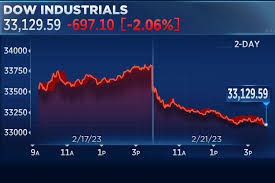
The US is once again staring down the barrel of a government shutdown, and the implications for investors in America and abroad are significant, warns the CEO of one of the world’s largest independent financial advisory and asset management organizations.
Congress has failed to pass the necessary funding bills, with the deadline expiring tomorrow. Unless lawmakers strike a last-minute deal, large parts of the federal government will grind to a halt.
The standoff comes against the backdrop of soaring deficits, an economy already showing cracks, and political divisions that are as wide as they have been in decades.
Nigel Green, CEO of deVere Group, comments: “Gold prices have already surged to record highs as investors move into safe-haven assets. Treasury yields are oscillating, with history pointing to declines during shutdowns, but the political rancour and concerns over debt could push them higher this time. The US dollar, which remains the global reserve currency, is vulnerable to shifts in confidence.”
He continues” “Shutdowns are not the same as defaults, but they send a damaging signal about political dysfunction in the world’s largest economy.
“Investors everywhere are forced to reassess risk, and that has ripple effects across asset classes and geographies.
“Shutdowns in the past have tended to be short and economically manageable, yet this one is being viewed with more trepidation.”
Since 1950, there have been 21 such episodes, most lasting only a few days. The longest, in 2018–2019, stretched on for 35 days and cost the economy an estimated $3 billion in permanently lost output. During that episode, the S&P 500 saw a correction, yields fell, and confidence took a hit.
What makes the looming shutdown more concerning is the context: slowing global growth, geopolitical shocks, and tighter monetary conditions.
“This is happening at a time when investors are already grappling with an unpredictable environment,” says Nigel Green.
“It magnifies volatility and could accelerate the flight of international capital away from US markets.
“We’ve already seen allocations to the US shrinking in recent times, and another political standoff could reinforce that trend.”
One of the overlooked but important consequences of a shutdown is the disruption to data collection.
Government agencies could halt the release of critical economic statistics, including jobs numbers and inflation reports.
Markets rely heavily on these indicators to set expectations for corporate earnings, interest rates, and currency valuations.
“Without them, speculation fills the void, raising the risk of mispricing and abrupt swings,” notes the deVere CEO.
“Investors base decisions on reliable information. If reports on employment or consumer prices are delayed, it doesn’t just inconvenience economists, it destabilizes markets and complicates central bank policy. The absence of data at a critical time can cause lasting damage to sentiment.”
Equity markets are especially exposed. Short shutdowns are often brushed aside by investors, but prolonged ones dent confidence and trigger sell-offs.
Companies dependent on government contracts or regulatory approvals can face delays that hit revenues. Consumer confidence also tends to slip, which can feed into spending and earnings.
The symbolism matters as much as the substance for international investors. The US is still the largest and most liquid market, but recurring shutdown threats highlight political fragility. All this undermines the dollar’s allure as a safe-haven asset and strengthens the case for diversification.
“Investors should not be paralysed by political drama in Washington, but they should be pragmatic,” says Nigel Green.
“Holding quality companies with strong fundamentals remains essential. Diversification across geographies and asset classes is more critical than ever. Alternative assets, including gold, are once again proving their worth as part of a balanced portfolio.”
The political calculus in Washington is unlikely to improve quickly. Even if a temporary patch is found, longer-term agreements remain elusive.
The growing polarization means the threat of future shutdowns will remain, keeping a degree of permanent uncertainty embedded in US assets.
Nigel Green concludes: “Markets can live with economic cycles, even with inflationary pressures and shifting monetary policy.
“What undermines confidence most is dysfunction at the top. Every shutdown erodes the credibility of the US as a dependable steward of the global economy.”
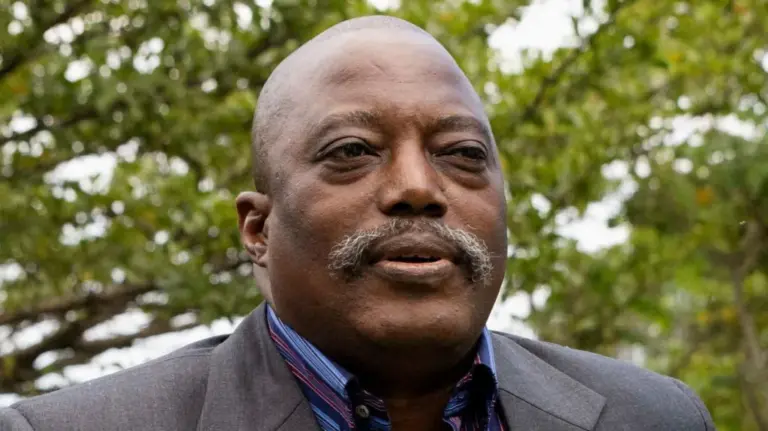
Former Democratic Republic of Congo President Joseph Kabila has been sentenced to death in absentia for war crimes and treason.
The charges concern accusations that Kabila has been supporting the M23, a rebel group who have wreaked devastation across the country’s eastern region.
Kabila was convicted on Friday by a military court of treason, crimes against humanity, and war crimes, including murder, sexual assault, torture and insurrection. He denied the charges, but did not appear in court to defend himself.
The ex-president rejected the case as “arbitrary” and said the courts were being used as an “instrument of oppression”. His current whereabouts are unknown.
The 54-year-old led DR Congo for 18 years, after succeeding his father Laurent, who was shot dead in 2001.
Kabila handed power to President Félix Tshisekedi in 2019, but they later fell out and Kabila went into self-imposed exile in 2023.
In April this year, the former president said he wanted to help find a solution to the deadly fighting in the east and arrived in the M23-held city of Goma the following month.
President Tshisekedi accused Kabila of being the brains behind the M23 and senators stripped him of his legal immunity, paving the way for his prosecution.
Decades of conflict had escalated earlier this year when the M23 seized control of large parts of the mineral-rich east, including Goma, the city of Bukavu and two airports.
Pointing to overwhelming evidence, the UN and several Western countries have accused neighbouring Rwanda of backing the M23, and sending thousands of its soldiers into DR Congo.
But Kigali denies the charges, saying it is acting to stop the conflict from spilling over onto its territory.
A ceasefire deal between the rebels and the government was agreed in July, but the bloodshed has continued.
As Zambia approaches the 2026 election, a dangerous narrative has taken hold — repeated by UPND cadres — that “Hichilema’s victory is inevitable because the opposition is disorganized.” This is not political analysis; it is propaganda. Worse still, it undermines democracy itself. To claim the nation’s fate rests not on leadership, vision, or the will of the people but on the weakness of rivals is to strip democracy of its very soul. In truth, the UPND has implicitly admitted that Hichilema does not deserve a second term on merit—hence their reliance on the myth of opposition disunity.
The good news is that the 2026 election will not be decided by who shouts loudest about opposition division. It will be decided by ideas, competition, and the resolve of Zambians to reclaim their future.
The 2026 election is too important to be reduced to a simple contest of “unity versus division.” Democracy thrives on competition, not enforced conformity. Every Zambian has the constitutional right to aspire to the presidency. Yet we have been sold the myth that multiple challengers weaken democracy. That is false. Competition is democracy’s lifeblood. From councillor to MP to president, the right to contest freely must be respected and encouraged. Whoever wins must earn a genuine majority mandate, not depend on the acquiescence of the excluded. PF candidates must be free to compete under transparent processes, and alliances must be formed through choice, not coercion. Unity imposed at the expense of choice is not unity at all — it is a betrayal of democracy. This is why the “founder” or “life president” model that dominates many Zambian political parties remains a direct threat to democratic progress.
The good news is that the 2026 election will not be decided by who shouts loudest about opposition division.
History offers clarity. We must distinguish between “alliances of parties” and “alliances of voters.” The electorate is not naïve. On election day, people align with the party most likely to unseat the incumbent. Both the PF and the UPND rose to power through such “alliances of voters,” not through backroom deals among political leaders. In the last two elections, the MMD and other smaller parties were starved of votes because citizens wanted to remove the ruling parties. In 2026, the UPND will likely face the same fate. Voters will form an alliance with a single goal–to unseat Hichilema. He knows this. That is why his “weak opposition” refrain is not insight but a shield for his mingalato.
Moreover, Zambia’s constitutional requirement of 50% + 1 makes coalitions inevitable. Whether the UPND can achieve this outright is uncertain. No doubt a runoff would almost certainly trigger an alliance of voters against the ruling party. Hichilema may try to co-opt rivals, but political self-interest will drive opposition leaders to mobilize against a common adversary. Most can already sense the growing discontent with the incumbent. Aligning with that mood offers greater reward than clinging to the status quo. To do otherwise would be political suicide.
Once Parliament is dissolved, survival instincts will also reshape the political landscape. MPs denied UPND adoption — whether prospective or incumbent — will defect or run as independents. These shifts will redraw the presidential battlefield. Local parliamentary campaigns will fuel alliances and mobilization, giving an advantage to parties with nationwide networks.
Beyond political mechanics lies a deeper truth: the national mood. Public frustration with the incumbent is rising. Hichilema may hope voters will reward him for his “achievements,” but many view those policies as failures. Cadre harassment and violence may instill fear, but intimidation collapses at the ballot box. PF’s excesses were punished at the polls; the UPND risks the same fate in August 2026. Malawi’s recent elections offer a clear warning–the voters are rejecting leaders who fail to deliver. Zambia is watching.
Finally, there is the question of electoral manipulation. Hichilema may believe fraud can secure another term. History says otherwise. From Kaunda to Banda to Lungu, no scheme has ever survived the will of the Zambian people. Come August 2026, the “weak opposition” mantra will collapse under a greater truth: a determined citizenry cannot be silenced.
When that day arrives, Zambia will not whisper slogans. It will roar — not for one leader, but for freedom from complacency, propaganda, and governments that mistake themselves for democracies.
Zambia Must Prosper President and senior Tonse Alliance member, Kelvin Bwalya Fube (KBF), has called for calm among members of the alliance, particularly the youth, urging them not to be used in fights between leaders.
In a statement dated 30th September 2025 on the state of affairs in the Tonse Alliance, KBF addressed fellow citizens, compatriots within the alliance, and the youth whom he described as the “vanguard of our movement.” He noted that the alliance is going through a fragile moment and stressed the need for clarity, responsibility, and sobriety.
“I feel compelled both as a patriot and as a senior member of the Tonse Alliance to offer a word of clarity, a voice of reason, and a call to collective responsibility,” KBF said.
He commended the alliance leadership for choosing dialogue over discord by attending the Council of Leaders (COL) meeting convened to chart the way forward after the passing of founding chairperson, Dr. Edgar Chagwa Lungu.
“Your commitment to the ideals of democratic engagement and institutional continuity is both timely and commendable,” he stated.
According to KBF, the meeting was intended as a solemn exercise in introspection and strategy, meant to confront internal contradictions and recalibrate the alliance’s vision. He said the late Dr. Lungu’s absence had created a vacuum politically, ideologically, and emotionally, but emphasized that his legacy should inspire rather than divide.
KBF expressed regret that the meeting was disrupted by unruly elements, whom he said came primarily from within the youth ranks. He condemned the behavior, describing it as contrary to the values of leadership consultation.
“This behavior, which I unequivocally condemn, reflects not the revolutionary zeal of progressive youth but the manipulated energies of those serving narrow partisan interests many of whom, I must say with great concern, appear to have been co-opted by external actors, including some from the Patriotic Front,” KBF said.
He urged the youth not to allow themselves to be manipulated.
“To the youth of Tonse I urge you: do not allow yourselves to be weaponized in political games that ultimately undermine your own future. The urgency of this moment demands discipline, restraint, and maturity. Agitation without direction is not activism; it is sabotage,” he cautioned.
KBF reassured the public that the Tonse Alliance remains intact, resilient, and committed to democratic ideals. He said the alliance is working on a roadmap towards the 2026 General Elections through structured dialogue, consensus-building, and strategic foresight.
“Let it be clearly understood: the Tonse Alliance remains intact, resilient, and fundamentally committed to democratic ideals. We are fully engaged in crafting a clear and inclusive roadmap towards the 2026 General Elections, and we shall do so through structured dialogue, consensus-building, and strategic foresight not through populist disruption or emotional blackmail,” he said.
Addressing the broader Zambian public, KBF acknowledged demands for transparency and accountability within the alliance.
“To the broader Zambian public: your concerns have not fallen on deaf ears. We are aware of the growing demand for transparency, accountability, and direction from within our ranks. These demands are valid, and they shall be addressed. The process of internal realignment is already underway, and as leaders, we are approaching it with both urgency and humility,” he said.
KBF stressed that unity remains the core principle of the alliance.
“Our message is simple but resolute: Tonse believes in unity and unity shall prevail. We will not allow temporary storms to derail a long-term vision for national transformation,” he declared.
In his closing remarks, KBF appealed to members of the alliance, especially the youth, to act with sobriety and responsibility.
“Let us allow leadership to lead. Let us not tear down what we have so laboriously built. Let wisdom rise above emotion. Let dialogue eclipse disruption. And let unity remain our enduring compass,” he concluded.
He ended his statement with a call for peace and progress: “May peace, purpose, and progress guide us all. God bless the Tonse Alliance. God bless our Republic.”
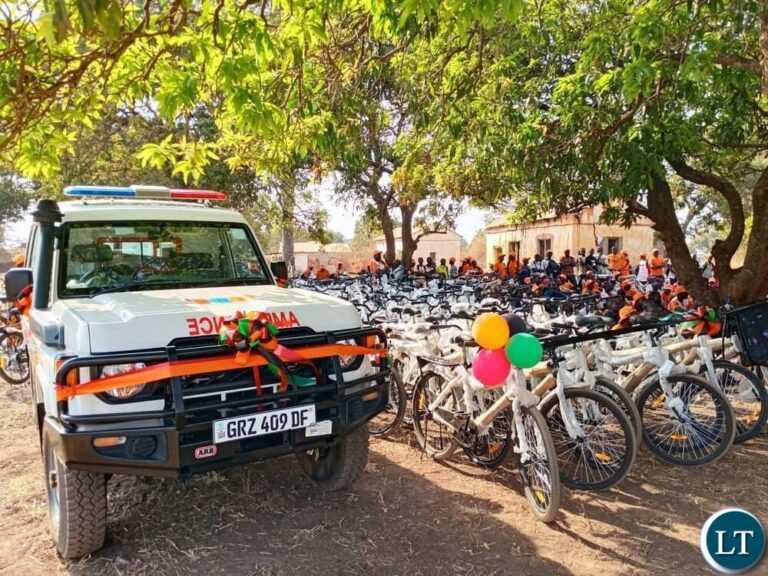
The Barotse Royal Establishment (BRE) has commended government for improving patient care through the delivery of ambulances to all 156 constituencies, including Nalolo.
Speaking during the handover at Muoyo Rural Health Centre today, BRE representative Matakala Mundia-Induna Mooto described the ambulance as a significant gift to the people of Nalolo, who have long awaited such support.
“There is nothing as uncomfortable as getting sick, hence receiving a utility vehicle for the welfare of our people is very exciting,” he said.
Induna Mooto thanked all those involved in ensuring the ambulance reached Nalolo safely, singling out President Hakainde Hichilema for addressing the needs of citizens equally across the country.
He also praised Chieftainess Mbuyu Imwiko, who oversees Nalolo and Senanga Districts, for her commitment to the welfare of her people.
And Nalolo District Health Director, Douglas Singini, noted that the ambulance is equipped with advanced equipment not even available at Muoyo Rural Health Centre.
“I was joking with the Clinical Care Officer that maybe we should monitor patients in the ambulance and then take them back to the clinic,” Dr. Singini said, expressing gratitude for the new vehicle.
Meanwhile Nalolo District Commissioner, Namatama Mupo, said the ambulance arrived at a crucial time when the Health Department was struggling with transportation and most times relied on taxis for patient transport.
She urged health officials to guard the vehicle carefully to ensure it lasts long.
“Accidents are accidents, but we must ensure the vehicle is taken care of at all times,” she said.
And in Pemba, Pemba Council Chairperson, Kingstone Handiindo has handed-over an ambulance to the Department of Health.
The vehicle is part of the 119 ambulances being rolled out countrywide through the Constituency Development Fund (CDF).
Speaking during the handover of the ambulance, Mr Handiindo reassured the community of Government’s determination to invest in the health sector.
He stated that the Government is committed to safeguarding lives and ensuring that emergency medical care is accessible when needed.
“These initiatives reflect the vision of the United Party for National Development (UPND) government to create a healthier, stronger and United Zambia where no one is left behind,” Mr Handiindo said.
And Pemba District Commissioner, Obey Habeenzu said the vehicle has come at the right time when the district is in dire need of an ambulance.
“Today we are witnessing the handover of an ambulance which will ensure that the people of Pemba District receive quality health services,” Mr Habeenzu said.
Meanwhile, Pemba District Health Director, Grant Nkoswe, has expressed gratitude for the ambulance which has been handed over to the department.
Dr Nkoswe said the ambulance will help enhance service delivery in terms of emergency medical services.
“This ambulance will enhance service delivery in terms of critical care also as it comes fully equipped with items that will allow us to take better care of our patients as we transport them to referral sites,” Dr Nkoswe said.
He added that the department will ensure that measures are put in place to ensure that the vehicle is safeguarded.