Wednesday, June 17, 2026
23.6 C
Lusaka
Home Blog Page 40

Government commended renaming of Manyumbi Tollgate

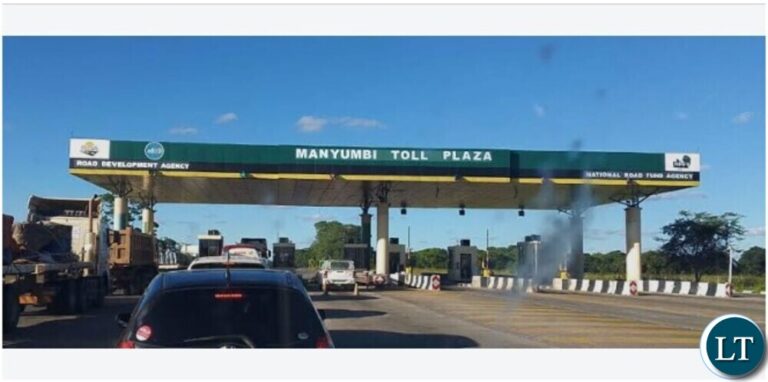
Super Secretary General (SG) for Mines United Football Club Chizengu Lukama has hailed the renaming of Manyumbi tollgate after legendary coach and player Godfrey Ucar Chitalu.

Lukama says the honoring of the legendary football icon was long overdue, describing the move as a fitting tribute to a man whose contribution to Zambia football remains unmatched.

Lukama told the media in an interview, that the renaming of the Manyumbi toll plaza to Geoffrey Ucar Chitalu was a good move as it was intended to recognize the extraordinary role played by the legendary footballer in promoting national pride, unity, and international recognition through football.

Lukama noted that Chitalu’s achievements on the pitch elevated Zambia’s image globally and inspired generations of footballers and sports enthusiasts across the country.

“Chitalu’s legacy continues to motivate young people to pursue excellence in sports and in life. He was not only a football player but a national hero whose dedication, discipline and talent brought honour to the country,” he said.

Lukama added that Chitalu has remained one of Africa’s most celebrated football figures as he is remembered for his remarkable goal scoring record of 107 goals in one season and his immense contribution to the growth of football in Zambia.

“The decision to rename the toll plaza is a good move as it recognizes the man who dedicated his life to the sport and the nation,” he added.

The newly named Godfrey Ucar Chitalu toll plaza stands as a lasting tribute to the legendary striker’s enduring impact on Zambian football history and national identity.

10 die in suspected illicit beer poisoning in Choma

10 people have died in Choma District following suspected consumption of contaminated illicit alcohol locally known as gwala and kachasu.

According to the statement issued to the media by Choma District Health Director Belita Zulu today, the deaths occurred between May 11th and 14th, 2026, in what health authorities described as a serious public health emergency.

The victims are suspected to have consumed highly concentrated and potentially contaminated alcohol products.

Health officials have warned that illicit beer may contain dangerously high alcohol content, toxic contaminants and harmful chemicals used during the brewing process.

The District Health Office stated that such substances can lead to severe illness, organ failure, blindness, coma and death.

Authorities have since urged members of the public to avoid consuming unknown alcohol products and to immediately seek medical attention for anyone showing symptoms such as confusion, vomiting, difficulty breathing, seizures, unconsciousness and acute blindness after drinking alcohol.

The Choma District Health Office has described the loss of 10 lives within four days as a strong warning on the dangers of consuming unsafe alcohol.

Police have also launched investigations into the suspected illegal brewing and distribution of the alcohol linked to the deaths.

Zambia, Uganda must strengthen bilateral trade-Bwalya

Ministry of Commerce, Trade and Industry Permanent Secretary (PS) Lillian Bwalya says Zambia and Uganda must strengthen trade cooperation and create sustainable partnerships that will unlock economic growth and expand opportunities for businesses in both countries.

Speaking in Lusaka today during the Zambia-Uganda Trade and Business Forum, the PS said the two countries have established mechanisms such as the Joint Trade Committee to address trade-related challenges and improve business cooperation.

Ms Bwalya commended Zambia and Uganda for organising the Forum, describing it as an important platform for deepening cooperation in trade and investment at a time when African countries are seeking stronger regional economic integration.

“This forum comes at a pivotal moment as nations across Africa strive to strengthen economic cooperation, expand trade opportunities, and promote sustainable private sector-led growth,” she said.

Ms Bwalya noted that trade remains a key driver of economic development because it stimulates industrial growth, promotes innovation, facilitates technology transfer, and enhances competitiveness.

She highlighted several products Uganda can source from Zambia, including fertilizers, cement, sugar, textiles, and home care among other products.

The Permanent Secretary said Zambia and Uganda share similar development aspirations and possess abundant natural resources that can be leveraged for mutual benefit.

She observed that Uganda has emerged as an oil-producing nation, while Zambia remains rich in copper and agricultural resources, adding that the two countries should focus on exploiting their comparative advantages rather than competing against each other.

“The idea is not for us to compete, but the idea is for us to tap into our comparative advantage and together build and tap into external markets, so that we mutually benefit from our collaboration,” she said.

Ms Bwalya stressed the importance of private sector participation in driving inclusive economic growth and unlocking investment opportunities.

She said Zambia offers investment opportunities in sectors such as manufacturing, agriculture, mining, tourism, energy, and Information and Communication Technology (ICT).

She stressed that the Zambian government continues to implement reforms aimed at improving the business environment and attracting investment.

Ms Bwalya said Zambia has introduced structures such as the Public Private Partnership Dialogue Forum to address bottlenecks affecting business development and has also rolled out a single window system to streamline trade processes and reduce delays at border posts.

Ms Bwalya further called for stronger cooperation between governments and the private sector in removing barriers to trade, promoting value addition, and advancing regional integration.

She encouraged businesses, investors, and stakeholders attending the forum to take advantage of the platform to network, exchange ideas, and establish practical partnerships that will increase trade and investment flows between Zambia and Uganda.

The Permanent Secretary also welcomed efforts to expand air connectivity between the two countries, noting that collaboration between Uganda Airlines and Zambia Airways could contribute to the growth of the aviation sector.

She reaffirmed the government’s commitment to supporting private sector development under the leadership of President Hakainde Hichilema.

“Our idea is to make sure that we do come out of this with tangible partnerships,” she said.

Meanwhile, Uganda’s High Commissioner to Zambia Fred Mwesigye said the Uganda-Zambia Trade and Business Forum is intended to facilitate practical business engagements through business-to-business and business-to-government meetings.

Colonel (Rtd) Mwesigye said Uganda and Zambia should work together to reduce trade barriers, improve logistics and connectivity, strengthen standardisation, and support regional value chains that enable African countries to trade more with each other.

“We’re particularly keen to encourage joint ventures, technology transfer, nurturing cross-border social partnerships, and increasing trade in locally produced goods and services,” he said.

He added that modern economic diplomacy must focus on measurable outcomes such as attracting investment, unlocking markets, supporting exporters, and creating opportunities for citizens, especially women and young people.

The Ugandan Envoy urged participants at the Forum to translate discussions into concrete partnerships, investment commitments, and long-term business relationships.

“To the private sector, Uganda is open for business,” he said.

7-year-old girl drowns

A seven-year-old girl of Washeni Village in Chief Tungati’s Chiefdom has drowned after falling into a well while playing with her siblings.

Disclosing the matter to to the media in a statement, Northern Province Police Deputy Commanding Officer, Charles Mbita identified the deceased as Odenia Katuta.

Dr Mbita revealed that the incident occurred on May 14, 2026, around 16:00 hours, and that the matter was reported to Luwingu Police Station at 17:15 hours by the child’s grandfather, Alimagasi Mwape, aged 65.

He said preliminary investigations revealed that the juvenile was playing by jumping across the top of a covered well when the lid gave way, causing her to fall inside and drown.

He said police officers visited the scene and retrieved the body, no foul play was suspected, and the family has since been advised to proceed with burial arrangements.

Dr Mbita expressed concern over the increasing number of drowning incidents linked to uncovered or poorly secured wells.

“It is particularly unfortunate that barely a month ago, another child lost a life in similar circumstances. These are preventable tragedies that should not continue recurring in our communities,” he said.

The Deputy Commanding Officer strongly condemned negligence by individuals and property owners who leave wells uncovered or insecure, thereby exposing children to danger.

“We urge all community members to take immediate responsibility by properly covering, fencing, or securing wells and other hazardous structures within residential areas,” Dr Mbita emphasised.

He further appealed to parents and guardians to closely monitor children during playtime and educate them on the dangers of playing near wells.

Dr Mbita reaffirmed the Service’s commitment to safeguarding lives and called upon local authorities and community leaders to work together in preventing such avoidable tragedies.

Milenge electoral officer urges peace ahead of campaigns

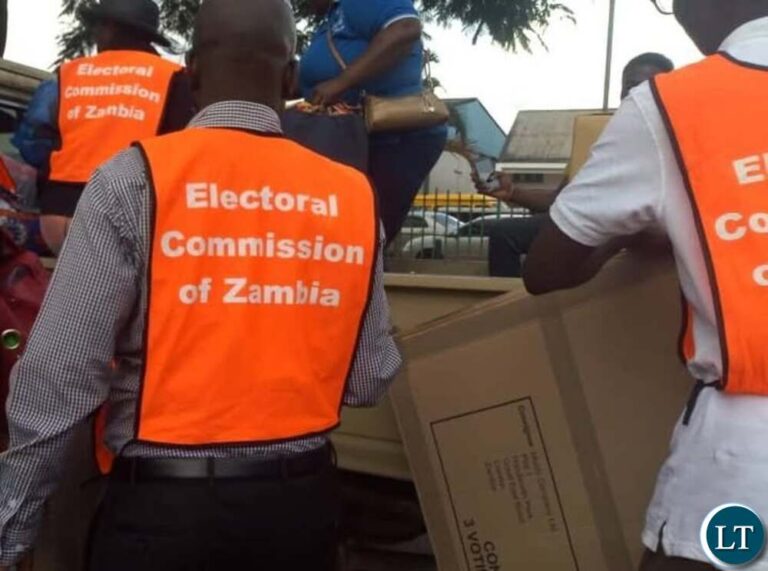
Milenge District Electoral Officer Cleophasio Mbotwa has urged aspiring candidates in the district to maintain peace and unity ahead of the commencement of the campaign period for the forthcoming general elections.

Speaking during the Electoral Commission of Zambia (ECZ) briefing for aspiring candidates and election agents, Mr Mbotwa said political players should conduct their campaigns in a peaceful and respectful manner in order to promote harmony and avoid unnecessary conflict among community members.

He said elections should not divide communities but instead provide an opportunity for citizens to freely choose leaders in a peaceful environment.

“As we enter the campaign period, I would like to urge all aspiring candidates and their supporters to uphold peace, unity and tolerance throughout the electoral process,” Mr Mbotwa said.

 He further emphasized the need for political parties and independent candidates to respect one another regardless of political affiliation.

“Political competition should be based on issues and development agendas and not violence, insults or intimidation. Let us work together to preserve the peace that Milenge District is known for,” he said.

Meanwhile, Milenge District Returning Officer Bright Chota said that all aspiring candidates were expected to adhere to the Electoral Commission of Zambia (ECZ) guidelines and requirements for successful nominations during the nomination process.

Mr Chota noted that candidates should ensure that all nomination papers are correctly filled in and submitted within the stipulated time frame to avoid inconveniences.

“All aspiring candidates are encouraged to familiarise themselves with the ECZ guidelines and nomination requirements to ensure a smooth and successful nomination process,” Mr Chota said.

He observed that compliance with electoral regulations was important in safeguarding the credibility and transparency of the electoral process.

Mr Chota   further called on candidates to cooperate with electoral officials and security wings during the nomination and campaign periods to ensure orderly conduct of the elections.

Battle for Super League 3rd place deepens

2

Nchanga Rangers and Kabwe Warriors have been left fighting for third position as the Super League season enters the penultimate round on Saturday, 16th May 2026.

With the Super League winners and runners up already known, Nchanga, Warriors, Green Eagles and Mufulira Wanderers are the teams standing a chance to finish on number three.

Power Dynamos have defended the title and Red Arrows have secured second place.

Nchanga are on Saturday visiting Lusaka to face former champions Zanaco at Sunset Stadium.

Brave Rangers are placed third on the table with 50 points in 32 matches.

Seventh placed Zanaco, who are four points behind Nchanga, are coming from a 2-0 midweek loss to Napsa Stars.

Nchanga deputy coach Humprey Malikoni has declared Brave Rangers ready for battle against the Bankers.

“We have trained well and now focusing on winning the game against Zanaco,” Malikoni told the club media in a pre-match interview.

“We are expecting a tough match because Zanaco are coming from a loss. Our players must be focused throughout the game,” he said.

Zanaco coach Mumamba Numba said he is looking forward to the encounter against Nchanga at home in Lusaka.

At Godfrey “Ucar” Chitalu Stadium, Kabwe Warriors will be out to displace Nchanga from third place in case the Chingola side drop points at Zanaco.

Warriors will host limping Zesco United with a focus to win.

MUTONDO BATTLING FOR LIFE

Kitwe side Mutondo Stars will continue with their relegation fight as they host already relegated Mines United at Arthur Davies Stadium in Kitwe on Saturday.

Mutondo are just one points above relegation with two matches left in the season.

Mines are bottom of the 18-team league with 15 points in 31 matches.

Mutondo must beat Mines to keep their survival hopes alive.

SUPER LEAGUE – WEEK 33

SATURDAY, 16TH MAY 2026

Kabwe Warriors 15h00 Zesco United

Mutondo Stars 15h00 Mines United

Zanaco 15h00 Nchanga Rangers

SUNDAY, 17TH MAY 2026

Nkana 13h00 FC Muza

Green Eagles 15hoo Power Dynamos

Konkola Blades 15h00 Napsa Stars

Mufulira Wanderers 15h00 Red Arrows

FC Leopards 15h00 Green Buffaloes

Nkwazi 15h00 Kansanshi Dynamos

Chitundu targets COSAFA glory

0

Women Super League champions Zesco Ndola Girls inspirational captain Avell Chitundu says the club has set its sights on clinching the COSAFA Women’s Champions League title after successfully defending the league title.

Chitundu scored twice as Zesco thumped Luyando Foundation 7-0 in a Week 33 league fixture at the Levy Mwanawasa Stadium on Wednesday to successfully defend their ZPL/WSL title with a match to spare.

Zesco also earned back-to-back qualification to represent Zambia at the COSAFA WCL with the Ndola-based side having finished as runners-up to Botswana’s Gaborone United last year in South Africa.

Speaking in an interview after steering her side to victory, Chitundu expressed delight at her side’s league triumph while also calling for ample preparations for the upcoming regional club competition.

“We feel good as a team because we really worked hard for this title,” Chitundu said,

“We should just prepare adequately so that we can start from where we’ll finish,” she added.

“We went there for the first and we came second so that way it has given us that [motivation] that we can do much better and win the trophy there.”

Chitundu has enjoyed a stellar season and is in pole position to bag the 2025/26 ZPL/WSL Golden Boot accolade after scoring an impressive 26 goals to inspire Zesco to the league triumph.

The Copper Queens forward has attributed her prolific goal scoring form this term to her teammates’ joint effort.

“I think it is the teamwork that has motivated me to score all those goals because without my teammates I couldn’t have scored those 26 goals,” she said.

Meanwhile, Chitundu further described the soon-to-be concluded campaign as challenging and applauded her side’s resilience to successfully deliver yet another league crown despite the hurdles faced.

“This has been the best season we have faced so far because we had a lot of draws which cost us a lot but we pushed as a team and finally we have achieved the goal that we had set as a team,” she concluded.

Zesco will for the second successive year compete at the COSAFA Women’s Champions League which also serves as a pathway for qualification to the premier CAF Women’s Champions League.

MOH gets digital records management upgrade

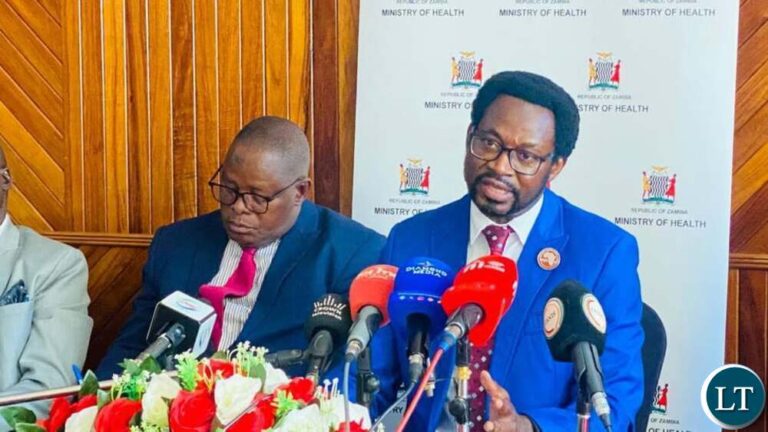
Minister of Health Alex Katakwe says the digitalisation of records management systems is critical to improving efficiency, accountability and service delivery in Zambia’s health sector.

Speaking during the handover of e-Registry equipment by the United Nations Population Fund (UNFPA) to the Ministry of Health in Lusaka today, Dr Katakwe described the donation as a major milestone in Zambia’s journey towards building a fully digitalised, efficient and people-centred health system.

Dr Katakwe said the donated equipment, which includes computers, high-volume digital scanners and multifunctional printers, is expected to strengthen records management, improve document processing and enhance information accessibility within the ministry.

He stated that the government, under the leadership of President Hakainde Hichilema, has placed digital transformation at the centre of national development and public service delivery, adding that the health sector remains one of the key beneficiaries of the country’s digital reform agenda.

“This occasion marks a long-awaited milestone in Zambia’s journey towards a fully digitalised, efficient and people-centred health system,” Dr Katakwe said.

The Minister explained that the Ministry of Health’s digital transformation agenda is anchored on the National Digital Health Strategy 2022–2026, which seeks to strengthen healthcare systems through technology and improve service delivery across the country.

He noted that the government has already made significant progress through the rollout of electronic health record systems such as Smart Care and PEPFAR Information Platforms, as well as the implementation of the Laboratory Information System and the Electronic Logistics Management Information System known as DELVIS.

“These are not small achievements.

They represent years of deliberate investment and collaborative effort by government, cooperating partners and dedicated health workers across the country,” he said.

Dr Katakwe stressed that digitalising registry operations is essential in addressing inefficiencies associated with paper-based systems, which he said have contributed to delayed processing of files, missing records and limited access to critical information.

“Data is the lifeblood of a functioning health system. Every document processed in our registry, every file retrieved for action and every decision made begins with reliable information management,” Dr Katakwe said.

He added that the newly acquired equipment will strengthen accountability, improve audit readiness and support faster retrieval of documents required for policy direction and decision-making at the highest levels of health governance.

Dr Katakwe further called on public workers to uphold professionalism, integrity and accountability in the management of records and public documents, warning against corruption and unethical conduct in public offices.

“With the equipment being handed over today, the era of missing records should become history. But technology alone is not enough. We must also change our mindset and work ethic,” he said.

Meanwhile, UNFPA Country Representative Seth Broekman said consultations conducted with various units within the Ministry of Health revealed critical weaknesses in the existing paper-based records management system, which has continued to affect document storage, retrieval and information flow.

He said the donated equipment will help convert physical records into searchable digital files and improve document indexing, storage and retrieval.

And Ministry of Health Assistant Director for Human Resources Goodson Kamanga thanked cooperating partners for supporting the ministry’s efforts to modernise records management systems and appealed for continued staff training to ensure officers effectively operate and maintain the equipment.

Digital technology saves lives, Links Communities-Mutati

Minister of Technology and Science, Felix Mutati has defined Zambia’s digital agenda as connecting remote villages, delivering power to clinics and enabling health workers to save lives via digital links.

Speaking at a farewell cocktail last night, Mr Mutati said his approach to the ministry was rooted in learning and service, not technical expertise.

Mr Mutati said his job was to inspire, to transform, to innovate and create new possibilities.

He recalled addressing the United Nations in New York as Zambia’s representative for the global south, alongside ICT Ministers and tech executives from around the world where he used the platform to explain what digital means for Africa.

“In Africa, digital means, in the very remote part of Zambia, where there was no connectivity, you now connect the people, where the nurse was operating, using the light on the cell phone, you deliver power, where the nurse was using her best endeavor to deliver a child, she was now connected digitally,” he said.

Mr Mutati highlighted what the ministry has achieved in the last five years among them is over  600 young innovators connected to resources and funding, distribution of more than 12,000 computers across the country, launch of Zambia’s first 5G network in 2022 at Mulungushi International Conference Centre among others.

Ministry of Technology and Science Permanent Secretary Brilliant Habenzu said Mr Mutati’s humility, decisiveness and ability to inspire confidence had left a legacy of professionalism and service.

“You have nurtured colleagues, empowered teams and left behind not only policies and programmes but also people who are better because of your guidance,”Mr Habenzu said.

He noted that the ministry’s work on cyber security, including the STAR 707 short code for reporting mobile fraud, had built trust in Zambia’s digital systems, enabling citizens to transact, learn, innovate and communicate without fear.

“As we bid farewell to the Honorable Minister, we do so not with sadness but with pride and gratitude, “Mr Habenzu concluded.

Meanwhile, Global System for Mobile Associations of Zambia Chairperson Abbad Reda said Mutati’s tenure has left an indelible mark on Zambia’s digital transformation journey.

Mr Reda recalled how the minister’s “three A’s” of access, affordability and availability had shaped industry efforts on network coverage and device accessibility.

He said mobile broadband coverage now reaches more than 93-94% of the Zambian population across all ten provinces.

He highlighted Mr Mutati’s role in phasing out scratch cards within his first 100 days, working with GSMA Zambia and ZICTA to move subscribers to electronic top up systems.

“This has also contributed to digital financial inclusion and made the environment safer, “he said.

Mr Reda also commended the Minister for leading coordinated responses during last year’s energy crisis, bringing mobile network operators and tower companies together to maintain quality of service.

He said the minister’s approach of collaborations over silos, progress over process, and outcomes over optics had strengthened trust between government and the private sector.

“Your willingness to engage with MNOs, to listen to the challenges to think bigger and act bolder has helped us really strengthen the trust between the public and private sectors,” Mr Reda added.

He added that Mr Mutati’s support for corporate income tax reductions had accelerated ICT investment and expanded broadband coverage, positioning Zambia as an emerging digital economy in the region.

Nakonde District Hospital management given ultimatum to improve sanitation

Muchinga Province Permanent Secretary Tuesday Bwalya has given the Nakonde District Hospital management a 14-days ultimatum to improve sanitation at the health facility.

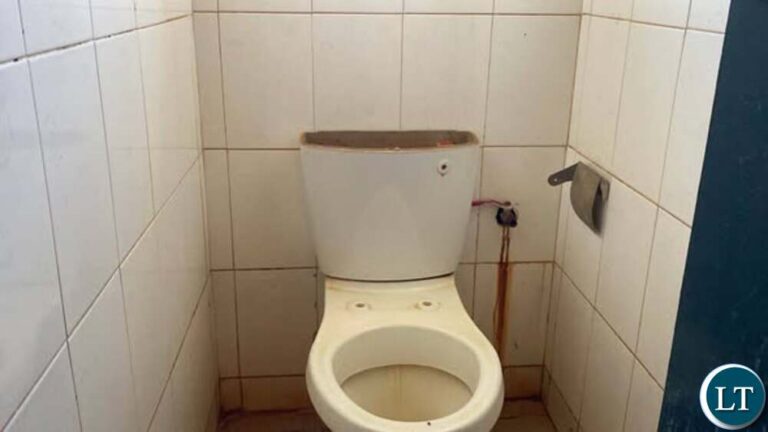
Dr Bwalya noted with concern that the toilet facilities at the hospital are not well maintained with most of them having been non-functional for some time.

ZANIS reports that, speaking when he inspected the health facility in Nakonde yesterday, Dr Bwalya lamented that patients at the hospital are forced to use buckets and water drums due to the poor water reticulation systems for the toilets.

He charged that the situation observed is below governments expected standards of a health facility, stating that management should address the sanitation problem within 14 days.

“We do not want our patients to be subjected to such conditions when they are seeking medical services and I want the hospital management to take this directive very seriously because I will come back to check if the need has been done,” he added.

Dr Bwalya further appealed to management at the facility to also address the problem of the mortuary which has not been functional for over three months now.

He said there is also need to urgently fix the fridges at the mortuary in order to avoid congesting the Nakonde Urban Clinic which has a limited body capacity.

The Permanent Secretary explained that these measures are aimed at improving health service delivery to the people in a conducive and sanitary environment.

And acting Nakonde District Director for Health Services, Moses Bwanga assured the Permanent Secretary that the situation will be addressed within the stipulated time frame.

He stated that the hospital management will immediately engage engineers from the local authority to make a thorough assessment after which work on sanitation problems will commence.

“I wish to mention that our estimated cost for this sanitary rehabilitation process will cost us about K100,000 inclusive of the re-operationalisation of the mortuary,” he added.

He also thanked government for the continued support that it has been rendering to the health facility especially in terms of the availability of essential drugs which stands at over 75 per cent.

Meanwhile, Nakonde Council Secretary Donald Mwanza, said that the local authority will work hand-in-hand with the hospital to ensure that all sanitary problems at the facility are resolved in time.

Mr Mwanza said the two parties will immediately source funds for the rehabilitation exercise through various revenue ventures from the local authority.

Parliament dissolves today ahead of 2026 general elections

The National Assembly of Zambia has announced that Parliament officially stands dissolved today Friday, 15th May 2026, in accordance with the provisions of the Constitution of Zambia ahead of the 2026 General Elections.

According to a press statement dated 14th May, 2026 by Acting Clerk of the National Assembly, Loveness Mayaka, the Fifth Session of the Thirteenth National Assembly adjourned sine die on Tuesday, 12th May 2026.

Mrs Mayaka explained that Article 81(3) of the Constitution provides that Parliament shall stand dissolved ninety days before the holding of the next general election.

She further stated that Article 56(1) of the Constitution stipulates that a general election shall be held every five years after the last general election on the second Thursday of August.

Mrs Mayaka said the second Thursday of August for the forthcoming general election falls on 13th August 2026, making Friday, 15th May 2026 the official date for the dissolution of Parliament by operation of law.

The combined effect of these Constitutional provisions is that in an election year, Parliament stands dissolved automatically ninety days before the second Thursday of August.

“The combined effect of these Constitutional provisions is that in an election year, Parliament stands dissolved automatically ninety days before the second Thursday of August,” the statement read.

The dissolution of Parliament paves the way for preparations towards the August 2026 General Elections.

Central PS calls for community involvement in ending hunger

Central Province Permanent Secretary Milner Mwanakampwe has called for a paradigm shift in the mindset of community members for the country to end hunger.

Dr Mwanakampwe says hunger at household or community level can only be ended if people take responsibility.

Speaking when the National Programmes Director for Hunger Project, Samuel Mutambo paid a courtesy call on him, Dr Mwanakampwe said farmers must stop being seasonal but grow crops throughout the year.

ZANIS reports that the Permanent Secretary encouraged the Hunger Project to tag along with relevant government ministries such as the Ministry of Community Development and Social Services, Water Development and Sanitation, and the Ministry of Small and Medium Enterprise to build entrepreneurs.

And Hunger Project National Programmes Director Samuel Mutambo said the project works to build sustainable community-based programmes using epicenter strategy, an integrated approach to rural development.

Mr Mutambo emphasised that the epicenter is a dynamic hub of community mobilisation and action, as well as an actual facility built by community members.

He explained that through the epicenter, people are brought together in clusters in rural villages, giving them more influence with the local government, while also increasing the community’s ability to collectively utilise resources.

Mr Mutambo said the Hunger Project which has established its existence in Eastern Province was now expanding to Shubuyunji’s Nakayiba Ward in Central Province, where a third epicenter will be constructed

He said through the epicenter strategy, the project will work with community partners to successfully access the basic services needed to lead lives of self-reliance and achieve agreed upon markers of success, such as the Sustainable Development Goals.

Mutti commissions solar photovoltaic plant at Parliament buildings

Speaker of the National Assembly, Nelly Mutti has described the commissioning of the one megawatt solar photovoltaic plant at Parliament Buildings as a major milestone in promoting sustainable energy and institutional resilience.

Speaking during the commissioning ceremony, Dr Mutti said the project demonstrates Parliament’s commitment to addressing emerging national and global energy challenges while supporting the government’s aspirations under the Eighth National Development Plan and Vision 2030.

She noted that Zambia continues to face energy challenges due to increased electricity demand, climate-related pressures, and constrained power supply, adding that the solar PV plant forms part of the broader national response aimed at enhancing energy security and promoting alternative and sustainable energy sources.

Dr Mutti said the initiative is in line with Cabinet Circular Number 13, which directs public institutions to install solar power systems and other alternative energy sources in order to reduce dependence on the national grid.

Dr Mutti explained that the solar plant will help supplement power requirements for Parliament Buildings and surrounding communities, while enhancing operational continuity and reducing dependence on conventional electricity sources.

She further disclosed that any surplus power generated from the plant will be fed back into the national grid, describing the move as an additional contribution towards the country’s energy security and sustainability efforts.

Dr Mutti also said the project aligns with the National Assembly of Zambia’s Strategic Plan 2022–2026, particularly under Pillar Three on Administrative Service Delivery, which seeks to improve institutional efficiency and resilience through infrastructure development.

Speaking at the same event, Head of the Presidential Delivery Unit, Kusobile Kamwambi said the project demonstrates the government’s commitment to addressing energy challenges through investment in alternative and renewable energy sources.

Earlier, the Ministry of Energy, Permanent Secretary for Electricity, Arnold Simwaba reaffirmed the ministry’s commitment to supporting initiatives that expand access to clean energy.

Veteran MPs Defeated in Primaries as Party Overrules Voters in Southern Province

LUSAKA/MONZE — Chief Choongo of the Tonga people of Monze District and Chief Sandwe of the Nsenga people of Lusangazi District issued separate warnings against the imposition of unpopular candidates on voters ahead of the August 13 general election, with their cautions arriving as it emerged that UPND’s provincial committee in Southern Province cancelled primary results that saw multiple incumbent MPs defeated by newcomers.

The two traditional leaders, speaking from different provinces, converged on the same core argument: forcing candidates on communities who have already expressed a preference is undemocratic, breeds voter apathy and historically drives popular figures to contest as independents, costing the very parties that impose candidates the seats they sought to protect. Chief Choongo said the pattern of imposition explained why Zambia had such large numbers of independent candidates in previous elections, noting that those independent races were typically caused by parties refusing to respect the will of the people. “Parties should respect the will of the people and adopt an individual that voters want, and not a situation where someone is imposed on them,” he said. Chief Sandwe said imposing candidates from outside constituencies who did not understand local dynamics was particularly harmful, producing representatives who consistently underperformed because they lacked genuine community connection.

The warnings arrived with direct institutional relevance. In Southern Province, several incumbent UPND members of parliament were defeated by newcomers during internal party primary elections for adoption. The defeated MPs included Jack Mwiimbu, Cornelius Mweetwa, Michelo Kasautu, Twambo Mutinta, Rodney Sikumba and Kafue’s Mirriam Chonya. Following those results, the UPND provincial committee cancelled the outcomes, stating that the structures had erred by using primary elections rather than the party’s approved ranking system. The cancellation has generated significant internal tension within the ruling party at precisely the moment it needs to consolidate for nomination week, with candidates who won primary votes now uncertain about their status and incumbent MPs whose positions had appeared threatened now potentially restored.

The broader concern raised by UPND front runner in Bwacha North Constituency Mike Moonga added a constituency accountability dimension to the candidate imposition debate. Moonga said voters are deeply unhappy with elected leaders who vanish after elections and only resurface during campaigns, a pattern he described as fuelling voter apathy and spreading misinformation across constituencies. He said the disconnect that emerges when members of parliament and ward councillors go absent from their areas allows rumours to fill the information vacuum and causes voters to lose trust in government programmes and proposed law reforms. “People feel used and dumped. They don’t see any benefits of electing leaders and this is killing those who want to serve genuinely,” he said. Moonga pledged monthly ward meetings, community radio updates and public CDF accountability reports if elected, and called on fellow aspirants who were not adopted to accept the outcome and support the party’s final candidate.

The candidate imposition concern connects directly to the cancellation of Southern Province results because the ranking system the provincial committee cited as the correct process is precisely the mechanism through which party leadership can influence outcomes that grassroots voting might produce differently. Primary elections, when they produce unexpected results, reveal genuine grassroots preferences. Ranking systems, administered by party structures, are more susceptible to the kind of leadership influence that traditional leaders and community members describe when they speak about imposition. The conflict between these two processes is not unique to Zambia, but its emergence in the week Parliament dissolved, when nomination decisions will be made within days, gives it immediate electoral consequences.

For the UPND, the Southern Province primary cancellation creates a reputational challenge that opposition formations will exploit. The ruling party has consistently positioned itself as a reform administration committed to democratic governance and rule of law. Cancelling grassroots primary results, regardless of the procedural justification, provides the opposition with a direct line of attack linking the government’s broader governance record to its own internal candidate selection practices. The chiefs’ warnings, issued independently and without partisan framing, give opposition formations additional authority to question whether the ruling party’s democratic credentials extend to its own internal operations.

For voters in constituencies where incumbent MPs were defeated in primaries, the uncertainty about who will appear on the ballot for the ruling party adds complexity to their electoral calculations. If the ranking system ultimately produces the same incumbents that grassroots primaries rejected, some of those voters may follow the independent candidate path that Chief Choongo identified as the natural consequence of imposition, further complicating the UPND’s seat calculations in a province where it has historically performed strongly. Nominations open May 18 and 19, at which point the practical consequences of the Southern Province decision will become visible in who files papers under the ruling party banner

New alliance tests UPND ahead of August election

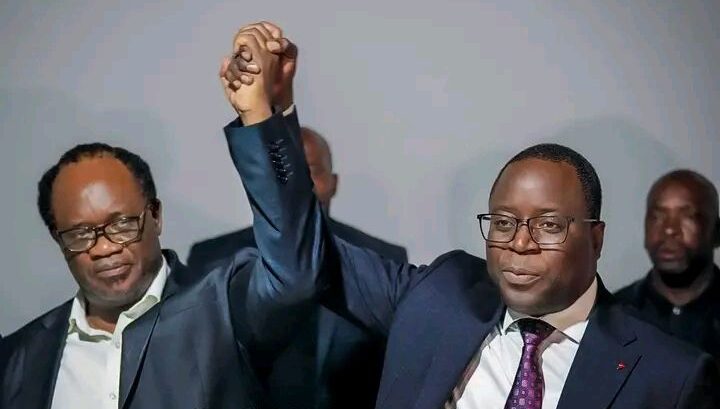
LUSAKA — Brian Mundubile and Makebi Zulu have formally merged their presidential efforts days before nominations open, creating the biggest opposition realignment since Zambia’s 2021 election and forcing rival opposition figures to quickly declare where they stand ahead of the August 13 general election.

The alliance immediately altered the political landscape heading into nominations on May 18 and 19. While the merger was framed by its architects as an attempt to consolidate anti-UPND votes, it also exposed sharp fractures inside opposition ranks, particularly within the faction of the Miles Sampa-led Patriotic Front. Party officials congratulated the new alliance while simultaneously warning that the coalition could face legal action for using PF symbols, regalia and references linked to former presidents Michael Sata and Edgar Lungu without authorisation.

PF deputy secretary general Edwin Lifwekelo urged the Electoral Commission of Zambia to intervene, while in the same statement congratulating the alliance. The twin messages exposed how fragmented PF structures have become as senior figures and sitting lawmakers increasingly align themselves with competing political centres ahead of nominations.

Nason Msoni strongly backed the alliance and urged remaining opposition leaders to abandon individual ambitions. He said opposition fragmentation could hand President Hakainde Hichilema and the ruling Hakainde Hichilema another victory in August if rival candidates continue splitting votes. Msoni described the merger as a major political breakthrough and argued that opposition leaders now face pressure to choose between coalition politics and isolated campaigns.

Harry Kalaba took a different route. He welcomed the merger but declined to join it, saying his party had its own industrialisation agenda centred on Zambia’s natural resources. Kalaba said he had not been presented with the coalition’s governing framework and insisted Citizens First would continue operating independently. He also criticised the ruling party over legislation he said restricts civil liberties and pledged to reverse such measures if elected.

The most direct internal clash came from Bright Nundwe, who publicly dismissed Sampa after being accused of betrayal. Nundwe confirmed he had aligned himself with the new alliance and had already applied to contest Chawama under that arrangement. He said preparations were already underway to transport supporters for the ECZ pre-processing exercise and rejected suggestions that he intended to join UPND.

The ruling UPND responded with visible confidence. Party media director Mark Simuuwe said the new alliance offered nothing new to voters and described it as a regrouping of politicians already rejected in 2021. Alliance spokesperson Leslie Chikuse similarly dismissed the merger as cosmetic. The response signalled UPND’s early campaign strategy of portraying the coalition as recycled PF politics rather than a fresh electoral threat.

The broader opposition picture remains unsettled. Harry Kalaba remains outside the coalition, while smaller parties continue fielding candidates. Given Katuta, Xavier Chungu, Brian Mushimba and Willah Mudolo all continued processing nomination requirements across multiple provinces.

That means the core problem the opposition is trying to solve remains unresolved. The Mundubile-Makebi alliance has created momentum, but it has not fully unified the anti-UPND vote. With nominations opening in days, parties now face a shrinking window to either consolidate further or risk entering August divided.

Editors Note: Parliamentary and presidential nominations open on May 18 and 19. The final alliances registered before that deadline are likely to define Zambia’s electoral map heading into the August 13 general election.