Thursday, June 11, 2026
13.1 C
Lusaka
Home Blog Page 4521

Hunt for Successor 38 :Democracy under threat

53

By Field Ruwe

Fast forward to Zambia 2021
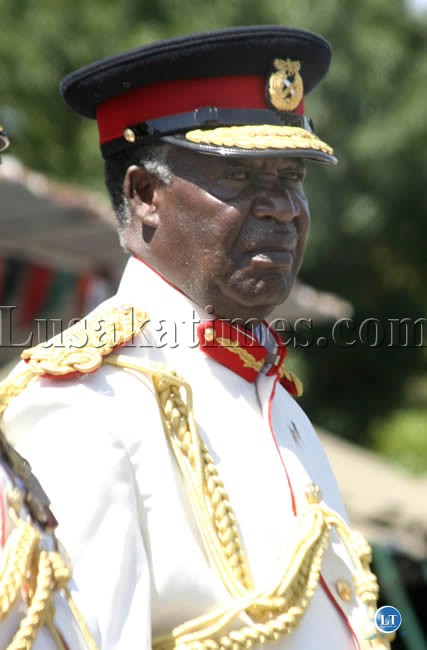
President Michael Sata at a commissioning parade of Zambia Army officer cadets at Kahoma Barracks in Kabwe

Please take a moment to read this article. It is clear that president Sata will not rule Zambia beyond 2021. Two obstacles stand in his way, the Constitution and age. In 2021 he will be 84 years-old, adding another five years of reign will be a strain on his health and unfair to a progressive democratic Zambia. Since this is a scenario that cannot be changed, it is our duty as Zambians to begin now, to prepare a Zambia for the future generation so that whoever succeeds the incumbent can lead a dynamic democratic African country interconnected socially, politically, and economically to a technologically explosive world.

But as things stand, this is unassailable because we are a divided people. In his quest to consolidate his power, our president is creating and encouraging divisions, and fostering enmity in opposition parties so as to weaken them. We are witnessing the arrest of opposition leaders on flimsy grounds. Violent PF cadres are disrupting rallies and claiming fatalities. The president is using the same methods and stratagems as some of his predecessors. In doing so, he is pitting party against party, cadre against cadre, neighbor against neighbor, and tribe against tribe.
Democracy is under threat. The president has given the police force carte blanche to operate with judicial oversight. In a democracy, a police force is an agency of government that is not only knowledgeable and professional, but also non-partisan. In Sata’s democracy, the police force is repressive as under fascism and is subject to the wishes of the ruling party. Sending a police coterie to parliament to restrain the country’s lawmakers is a clear indication of where the country is heading—to netherworld.

No people can advance in a country where civil liberties are disregarded. We cannot prepare a model for Africa under repressive circumstances. We can’t; not when those who can contribute to change face extrajudicial punishment. They are arrested, threatened and detained—some released after spending days in TB infested cells. We cannot advance until we begin to fight this undemocratic seizure of our rights.

39 years down the road and Findeco house remains the tallest high-rise in Zambia

Lusaka's tallest building, Findeco House, which has 22 floors.
We are in the second year of Sata’s reign and nothing much is happening. We are as we were before—a stagnant people. Like still water our country continues to lose its purity due to fractured politics. From Chililabombwe to Livingstone, our architects have hardly changed the face of the country. The 39-year old, 295ft tall Findeco House still remains the tallest high-rise in the country and the symbol of our immobility.

PHD -mentality of Zambians

From 1964, years have rolled away. It’s 2013. Our politics are still the same—of poverty, corruption, manipulation, and deceit. Our leaders are as they have always been—dishonest, greedy, insensible, and narcissistic. And we are the same individuals—proud, lazy, divided, and easily manipulated. Each one of us carries an element of pride that makes it impossible to work with the other.

In short, we hate each other’s guts. It bothers us greatly when our friends do well in life, school or at work. We hate their talents, aptitudes, and proclivities. Our natural compulsion is to drag them down, trodden them beneath our feet, so we can stand tall even when we have nothing to offer. As a result, we have failed to take ourselves on a virtuous road to eminence—to the perfection of our moral, intellectual, and physical nature.
We are a failed people, suffering from severe cultural lag, a disorder that has become an impediment to the advancement of our political, social and economic status; and one that makes it difficult for us to catch up with technological modernisms. “Cultural lag” is a term coined by William F. Ogburn. In this case it refers to the slow rate at which we are keeping up with the ever-changing and challenging world. We can’t seem to synchronize our adaptive instincts with those of the advancing world.

And yet we can do better. We can become the African country that changed the continent. Yes, we can become a “Singapore” of Africa. It took only thirty years (1965 – 1995) for a small former British-colonized country of Singapore to grow from a developing country to one of the most developed of the Asian nations. Like Singapore, our natural resources should not be minerals, but ourselves and our strong work ethic.

I already can hear groans of a lazy man: “You can’t compare our situation with that of Singapore.” The “Rome was not built in a day” syndrome has become our extenuation. We are like a vagabond who squats at the railway station watching trains enter and leave. Each time one stops, he rushes to the platform for handouts from disembarking passengers. He has become so addicted to begging, shame is not an emotion in him. When asked, he retorts; “What do you want me to do, steal? It’s not my fault that I find myself in such a situation.”

In the great leap from Colonialism to independence we have and continue to overlook the fact that the great number of us live by the use of our hands and have failed to put brains and skills into our daily modern occupations. We refuse to understand that we shall advance only when we learn to dignify our god given intellect and apply it collectively, cooperatively, and in harmony.

Taking charge of Zambia’s destiny

Again, the stumbling block is the undemocratic politics of the day. The president is blocking collectivism and corporation. We need them because they are synonymous with true democracy. We need them for our politico-economic advancement. We need them to alleviate poverty, hunger, and disease. Our people have suffered enough.
Since the incumbent has failed to take us on a true democratic path, we should take ourselves. We should form a freestanding, non-party “public good” pressure group to keep democracy and its ideals alive. The pressure group shall focus on finding ways to transform Zambia into a “Singapore of Africa.” It should comprise advocates of democracy within Zambia and in the Diaspora. These should include political and democratic activists, practitioners, academics, policy makers, and all those who are ready to confront Zambia’s challenges in the 21st century. The mantra of the pressure group should be “change.” It should be a means and a social goal, essential to our advancement.

The future is not ours but for our children
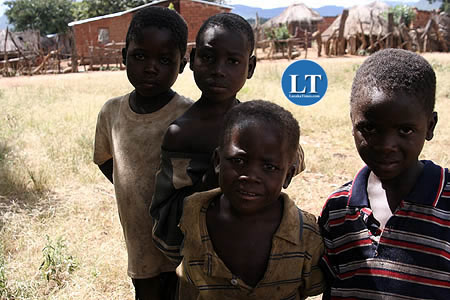
Some village boys pose for a photograph in Milanzi
File: Some village boys pose for a photograph

In the 48 years of our independence, we have witnessed firsthand a tranche of successes and failures of our Founding Fathers and their successors. We are now able to understand them. We know their style of leadership is the same. We now understand that if we maintain the status quo their style will be passed on to us and our children. We therefore intend to change the political landscape of our country and develop a set of strategies and recommendations for effectively addressing today’s complex and intractable developmental issues.

We need to live in a country where our thinking and actions are not stifled; where our intelligence is not eroded. Our future leader should see us as a path to upward mobility and as a weapon for intellectual success. As we educate our sons and daughters, we shall also educate children of the poor, and kaponyas. They are the ones who will be gliding through the mazes of technology. We need to identify in them those skills, which will give them the occasion to practice. We should make it possible for the gifted to showcase their talent in the arts and sciences and reward them accordingly.
That’s right, “our sons and daughters;” it is among them a leader should arise, for it is not ours, but their future. It will not do them any good to continue lagging in technology and society. They need strong analytical skills, practical ingenuity, creativity, good communication skills, business and management knowledge, leadership, high ethical standards, professionalism, dynamism, agility, resilience, flexibility, and the pursuit of lifelong learning.

The existing assumptions and values surrounding our current archaic education system leave them all but at a loss. A new form of “culture education” is the only upward mobility; one that is aimed at the improvement of their condition. The years preceding 2021 must be devoted to their advancement. In paving the way for them, we are paving our way to a respected and prosperous people.

The greatest frustration is that we don’t believe in ourselves. The major questions are: Don’t you think we have been held to ransom by the same old politics long enough? Are you happy with the direction in which our country is heading? Don’t you think we have been a disrespected people around the world for a long time? Isn’t it time to show them we are a force to reckon with? Do you truly believe we can change this country? Wouldn’t you want to be part of the people that did it?
There are 14 million intelligent people in Zambia waiting to be elevated in the scale of existence. All we need is a change of character and attitude. We need to start replacing all the negative words with positive ones—“can’t” with “can,” “don’t” with “do,” “hate” with “love” “failure” with “success” and “impossible” with “possible.” We must build a culture of hope; of curiosity; of success; and of efficiency. We must begin to communicate happiness amongst ourselves.
Working together, we can revive Livingstone Motor Assemblers and not just assemble cars, but also make them; Mansa batteries and make solar batteries for rural electrification and locally made radios; help Clive Chirwa realize his dream of a railway system of modern times. We can create new factories for computers, cellphones—even planes, believe it or not. If we believe in ourselves, we can make Zambia a thriving nation with the highest per capita real income.

Call me a dreamer if you like. I believe anything is possible. We can become a country that takes risks; a country that invents and innovates. We can become a Singapore of Africa. Let’s start with the pressure group so that we ensure that democracy guarantees our freedoms and rights. We shall need a thousand brave men and women to sign up in order to have the pressure group registered. Again, this is not a political party. It is an initiative aimed at changing our country. If you believe we can change Zambia send your name, comment, suggestion, or response to [email protected]
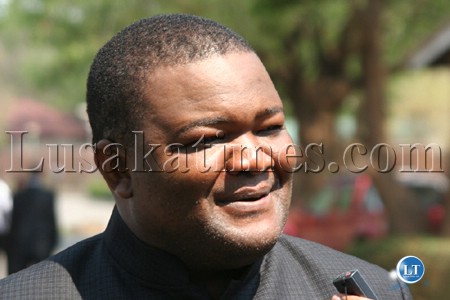
Field Ruwe is a US-based Zambian media practitioner, historian, and author. He is a PhD candidate at George Fox University and serves as an adjunct professor (lecturer) in Boston. ©Ruwe2012

Rebel MMD MPs say they voted for the removal of Immunity because they are working with Government of the day

144
Local Government and Housing Deputy Minister, Forrie Tembo

Nyimba Member of Parliament, Forrie Tembo, and his Kapoche counterpart, Nicholas Banda, said they voted in favour of the motion to lift former Republican President Rupiah Banda’s immunity because they were working with the government of the day.

The two, who are Local Government Deputy Ministers, said there was no way MMD Members of Parliament working as Deputy Ministers would have voted against the motion.

They said there was a rule in parliament called the Three Line Rule which advices every MP to support the motion tabled by parliament.

“We voted in favour of the motion to lift the former republican president’s immunity because we work with the government of the day and you do not expect us to work against it,” they said.

Mr Tembo said he was ready for any action that would be taken by his party against him, saying he was abiding by the rule which requires supporting the government of the day.

The three MPs have been accused of being traitors by the MMD in Eastern Province despite serving in government and the former ruling party believes they could have supported the former Republican President by not participating in the voting.

Meanwhile, MMD in Eastern Province has warned that it would not tolerate indiscipline among its Members of Parliament (MPs).

Provincial MMD Chairperson Alexander Miti said in Chipata today that MPs found wanting would be disciplined harshly.

Mr Miti said that the MMD Provincial Executive Committee (PEC) was disappointed with Nyimba MP Forrie Tembo who has challenged the executive committee’s stance on MMD MPs who voted for lifting of immunity for former republican president Rupiah Banda.

[pullquote]“We voted in favour of the motion to lift the former republican president’s immunity because we work with the government of the day and you do not expect us to work against it,” they said.[/pullquote]

“As MMD we are warning all MPs in Eastern Province to be careful with statements because some of them we might discipline them,” he said.

Mr Miti expressed shock that Mr Tembo including Kapoche MP Nicholas Banda and Mkaika MP David Phiri decided to back the lifting of immunity for Mr Banda.

He described the three MPs who are currently serving in Government as deputy ministers of being ungrateful to Mr Banda because some of them faced resistance at constituency and district levels during the adoption process for the 2011 general elections.

And Provincial MMD Secretary Samuel Lugomo Phiri stated that the MPs would face disciplinary action for betraying their former leader.

Meanwhile, United Party for National Development (UPND) has vowed to continue supporting former republican president, Rupiah Banda after parliament removed his immunity.

UPND Deputy National Chairperson for Youth and Sports Development Michael Chuzu said in Chipata today that Mr Banda needs support because he proved to be a good leader, the time when he served as a republican president.

Mr Chuzu said that this could be evidenced by the international recognition which the former head of state has received.
He also stated that the UPND was watching with keen interest latest developments that have followed the lifting of immunity of Mr Banda.

“UPND will continue supporting Mr Rupiah Bwezani Banda because he proved to be a good leader the time when he served as a republican president between 2008 to 2011,”Mr Chuzu said.

Mr Banda who appeared before the Government Joint Investigating Team (GJIT) for the second time on Tuesday was warned and cautioned on three counts bordering on corruption.

Investigative Team Spokesperson Namukolo Kasumpa said Mr Banda was warned and cautioned for his role in the oil supply deal with unnamed Nigerian Oil firm, campaign materials for 2011 elections and Mpundu Trust Development Fund.

Mr Banda is expected to return to Drug Enforcement Commission (DEC) headquarters on Friday for continued questioning.

UNZASU President arrested for forgery and attempted theft

61

The Drug Enforcement Commission has arrested the University of Zambia Student Union (UNZASU) President and two other students for forgery, uttering of false documents and attempted theft involving K50 million.

Ali Tunkara, 25, of 22/11 Emmasdale Lusaka, has been arrested and jointly charged with Augustine Mukuka, 24, of Chilanga and Philip Siame, 24, of 7876/2 Woodlands Extension, Lusaka, for forgery, uttering of false documents and attempted theft.

Particulars of the offence are that Ali Tunkara, UNZASU President whilst acting jointly together with Augustine Mukuka and Philip Siame both students at UNZA, between 1st December 2012 and 31st January 2013 did forge the signature of the Deputy Dean of Students, purporting that he had authored an introductory letter to a named bank to enable them open a bank account for the union and deposit a cheque of K50, 000,000.

The cheque was donated to the student union by Prof. Nkandu Luo through Constituency Development Fund (CDF).
The suspects are currently in custody and will appear in court soon.

Zambians urged to own shares in public entities

22
Secretary to the Treasury, Fredson Yamba

Secretary to the Treasury Fredson Yamba has urged Zambians to play a more effective role in managing and running state owned entities in the country.

Mr. Yamba said there was need for state owned entities to list on the Lusaka Stock Exchange (LuSE) so as to give citizens an opportunity to own shares and consequently benefit from capital gains and dividends from these entities.

He was speaking in Lusaka today at a consultative workshop for state owned enterprises that are being quoted on the Zambian capital markets.

He said listing on the stock exchange market will not only benefit citizens but also state owned entities themselves because most of them were embarking on massive projects that will require large amounts of capital to take off and complete.

Mr. Yamba said getting quoted on the exchange market will accord state owned entities an opportunity to raise the much needed capital to fund their projects adding that this will also help them raise their public profile with their clients, investors and the media.

He further observed that state owned entities have the potential to be transformed into globally recognised competitive institutions.

He expressed happiness at state owned entities which were choosing new sources of funding other than banks.

And Securities and Exchanges Commission Chief Executive Officer (CEO) Wala Chabala has commended government for looking at alternative ways of growing and sustaining the economy of the country.

Dr. Chabala said the zeal and impetus that government has shown in growing the economy will certainly score a different result especially that the country has been known to do the same things for over 40 years with the same results.

He cited the rebasing of the Kwacha and the Bank of Zambia amendment bill as among the initiatives that were likely to yield different results for the benefit of the economy.

Dr. Wala has since called on government and cooperating partners to continue being creative and looking at other ways of having a greater impact on the economy to achieve development for the majority of citizens of Zambia.

ZANIS

Copperbelt Minister castigates millers for creating artificial mealie meal shortage in the province.

13

Copperbelt Minister Mwenya Musenge has castigated millers for creating artificial mealie meal shortage in the province.

Mr Musenge said after making prompt visits to milling companies in Kitwe that some of them were selling mealie meal above the agreed price with Government.

The minister said in a side interview that he would report his findings to higher authorities for action to be taken against those found wanting and ensure shortage normalises.

Some millers in Kitwe have overpriced the price of the commodity at their depots which traders were buying in bulk and resale at exorbitant prices which consumers could not afford.

Olympic Milling depot opposite Chisokone market has pegged a 25 kilogrammes bag of breakfast at KR52 instead of KR50 as recently directed by President Michael Sata, while a 25 kilogrammes of roller meal was fetching at KR38.

Mpongwe Milling depot in Chimwemwe Township was selling a 25 kilogrammes bag of breakfast at KR50 at its depots which forced some retailers to buy in bulk and resell the commodity as much as KR65.

“The millers are not supporting the Government on this issue. The depots that I have visited have a problem to implement the presidential directive as agreed between Government and millers and this is creating a problem to control the prices of the commodity,” he said.

The minister, who was accompanied by Kitwe District Commissioner Elias Kamanga, said it was regrettable that millers were selling the commodity at retail price instead of wholesale.

Residents of Chimwemwe Township charged that the Mpongwe Milling depot in the area was selling the commodity to unscrupulous traders who were smuggling it DRC.

“The millers were retailing instead of wholeselling the commodity which was creating the shortage and this was compounded by the fact that they sell in bulks to people who resell at exorbitant prices,” they complained.

Ruth Chulu and Faith Mwaba, all Chimwemwe residents, said they had been struggling to buy a single bag of mealie meal in the area for the past one week because of the artificial shortage.

This forced the minister to direct sales persons at Mpongwe depot to immediately start selling the commodity to residents who had been waiting to buy mealie meal for hours.

Meanwhile, Mr Musenge said Government managed to impound 12 trucks laden with 1, 200 bags of mealie meal each during last month which was intended to be smuggled into Democratic Republic of Congo via Kasumbulesa border.

The shortage of mealie-meal on the Copperbelt worsened in November last year affecting Kitwe, Chingola and Chililabombwe with a 25 kilogramme bag of breakfast fetching K75,000 and the Millers Association of Zambia assured that the situation would normalize in few days time.

NORTEC students protest over the quality of certificates issued by the institution

27

Students from the Northern Technical College (NORTEC) yesterday stormed the streets of Ndola in protest against the quality of certificates that the Technical Education, Vocational and Entrepreneurship Training Authority (TEVETA) issues to graduates from the institution.

Police in riot gear had a tough time restraining the vengeful students who chanted slogans and sung solidarity songs as they marched their way to Cabinet Office seeking an audience with Copperbelt Minister Mwenya Musenge.

NORTEC students’ union president Gift Mumbi said the certificates issued by TEVETA did not have the Institution’s name, the candidate’s NRC number and the programme duration making it hard for graduates to be identified with the college.

“We wrote a letter to TEVETA informing them that these certificates given to NORTEC students do not have our institution’s name, the course duration and the candidates NRC number, so how can one know that I was trained at NORTEC,” he said.

Copperbelt Minister Mwenya Musenge who addressed the students told them to remain calm as he, together with their union representatives and NORTEC management would this Friday meet the TEVETA director general to discuss the matter.

“I have heard all your concerns and, I together with your college management and union representatives, will this Friday meet with the TEVETA director general so that we find the best solution to this problem,” Mr Musenge told the students.

In a separate interview TEVETA director General David Chakonta said the examination body had already put in place measures to ensure that the said features reflected on the certificates for this year’ graduates.

“We have adopted some changes, so for this year’s graduates, the names of the institution and assessment centers will be inserted on the certificates, however the NRC numbers may not reflect due to security features put in place to avoid forgery of documents ” he said.

After the address by the minister, the students returned to NORTEC and by midday, it was business as usual at the institution.

Shamenda tells Human Resource Institute to put in place measures enforcing ban on foreigners in HR management postions

11
Mr Shamenda
Mr Shamenda

Government has challenged the Zambia Institute of Human Resource Management (ZIHRM) to put in place mechanisms that will enforce the ban on non-Zambians from performing human resource functions.

Labour and Social Security Minister Fackson Shamenda said this during a consultative meeting with human resources heads from various companies in Lusaka yesterday.

Mr Shamenda reiterated that it was Government’s view that non-Zambians should not perform human resource functions as the country had enough trained citizens to effectively handle such duties.

“Human resource functions are better understood by Zambians who have an in-depth understanding of the local people and their cultural practices.

“In this regard, Government would like to challenge the Zambia Institute of Human Resource Management to put in place mechanisms to enforce the provisions of the Act,” he said.

He said Government in conjunction with ZIHRM would be reviewing the ZIHRM Act to strengthen the enforcement of the mechanisms which would be acceptable by everyone.

He said Zambia had seen an increase in unlicensed human resource practitioners working in various institutions, something which should be addressed.

Mr Shamenda warned that Government would not allow non-Zambians to engage in businesses that could effectively be undertaken by Zambians as that reduced job creation opportunities for the citizenry.

“Government will soon be taking appropriate action to address this concern. The Ministry has also received reports that there are few employers who are not complying with the Statutory Instrument (SI) on the revision of the minimum wage, but it is expected that they would all do so by June this year,” he said.

He said the ministry had continued receiving reports of employers abusing their workers in various forms instead of promoting an atmosphere that fostered good relations through social dialogue to sort out disputes.

He warned that Government would not condone industrial unrest as it was retrogressive to national development, adding that investment could only thrive where there was industrial harmony.

He extended his warning to employers who were terminating employment contracts without giving employees a chance to exculpate themselves to desist as that was against the International Labour Organisation Convention 158 and international best practices.

Friedrich Ebert Stiftung programme manager Kathy Short pledged her organisation’s commitment in realising a better Zambia for all by promoting dialogue as well as a decent working environment.

ZIHRM president Winner Kanyembo said the Institute welcomed the ban on foreigners to perform human resource functions as the country churned out enough Zambians to perform that task and was hopeful the directive could be backed by a legal framework.

Zambia Federation of Employers executive director Harringtone Chibanda emphasised on the importance of social dialogue as well as labour as a key factor of production.

Zambia Congress of Trade Unions president Leonard Hikaumba said it was gratifying to note that Government was committed to ensuring that only local and qualified human resource practitioners were allowed to practice and was hopeful that such a provision be clearly outlined in the law, if it did not exist.

ZNUT complains about the complicated procedures in accessing loans

1

The Zambia National Union of Teachers (ZNUT) in the northern province is concerned about the complicated procedures in accessing loans from the Public Service Pensions Fund (PSPF).

This is contained in a press statement to ZANIS in Kasama yesterday by the provincial chairperson Jonas Musonda.

Mr Musonda said that the union will not condone the victimization of its members who joined the service starting from the year 2000 to date.

He explained that the teachers have been contributing to the pensions fund and hence need to benefit from this loan scheme, which PSPF is providing.

Mr Musonda added that it is not fair that a teacher who has been contributing to the scheme for 13 years cannot benefit from the loan scheme.

He has since appealed for an explanation from the public service pension’s fund.

And some civil servants bemoaned that the loan conditions are stiff which may force some people to continue borrowing from commercial banks.

They have since appealed to the scheme managers to ensure that the public is well informed about the matter.

ZANIS

Southern Province youths shun empowerment fund

16

The Ministry of youth and Sports in Livingstone has expressed worry over the slow response by youths to access the youth empowerment funds to enable them engage in gainful enterprises.

Speaking in an interview with ZANIS yesterday , Southern Province Youth Coordinator Vincent Sitali said it was worrying that so far only 25 applications have been received from Livingstone district despite the massive sensitisation programme carried out by the department.

Mr. Sitali said seven applications received were for grants while 18 were for loans under the youth fund.

He said although some applications have not yet been received from the Other districts, there were indications that the response from the youths has not been impressive.

“As a department we worried at the rather poor response from youths to apply for these funds and we hope that with the help of some districts volunteer committees that we formed to continue sensitisations we hope to see an increase in the number of application forms submitted,” said Mr. Sitali.

“In my own opinion I would be happy if we can have least 150 applications approved for the entire province”.

He said the department had planned to conduct the first evaluation exercise of the application forms on 20 February to facilitate release of funds to approved projects this month but could not do so because of the poor response.

“We were supposed to have the first evaluation of the forms on 20th February but we are still waiting to have at least 30 forms to begin the evaluation process”, said Mr. Sitali.

Government this year allocated K1.3 Billion (KR1.3 Million) under the youths empowerment fund for southern province for youths to engage in projects including tourism, agro processing, primary agriculture, arts among many others.

He further explained that the department would like to utilize all the money allocated unlike last year when the province only used about K500 Million to approved youths projects out of the total allocation of K1.1 Billion.

He encouraged the youths to apply for the funds to enable them benefit from the United Nations World Tourism Oranisation General Assembly (UNWTO) to be co-hosted between Zambia and Zimbabwe in August this year.

ZANIS

Chief Government spokesperson Kennedy Sakeni has been admitted to UTH

67
Chief Government Spokesperson Kennedy Sakeni

Chief Government spokesperson Kennedy Sakeni has been admitted to the University Teaching Hospital UTH.

Mr. Sakeni who is also Information and Broadcasting Minister was admitted to UTH on Sunday the 17th of March 2013.

UTH Managing Director Lackson Kasonka has confirmed that Mr. Sakeni was admitted to the hospital but could not disclose further what he was suffering from.

Dr. Kansonka said that Mr. Sakeni has responded well to treatment and would be discharged soon.

Hunger looms in Shang’ombo

6

Shang’ombo district in Western province will have a 75 per cent reduction in this year’s crop because of a prolonged dry spell which the area experienced.

This is according to the Ministry of Agriculture and Cooperatives crop assessment that was conducted in Siwelewele Camp. The assessment shows that most crops are dying.

Siwelewele Camp Agriculture Assistant Officer Maybin Malama said the poor rainfall pattern experienced this season has negatively impacted the crop performance in the district.

Mr. Malama said a reduction in crop yield especially in maize is ranging between 15 to 20 per cent.

He said the camp has between 450 and 500 households and about 700 farmers that will be affected by the food shortage.

The agriculture officer said the crop assessment report reveals estimated crop yield of 400 to 500 kg of maize per hectare with rice estimated at 150 to 250 kg and cow peas at 100 to 250 kg per hectare among other crops

And newly appointed Deputy Minister of Information and Broadcasting Services Poniso Njeulu, who is also Sinjembela Member of Parliament, declared the hunger situation as a disaster.

Mr. Njeulu assured the people in the area and the entire Shang’ombo district that he would tell relevant authorities about the situation.

He said government, through the Disaster Management and Mitigation Unit (DMMU), will ensure that the food shortage was averted through a provision of relief food to the district.

Mr. Njeulu is in the area to identify possible development projects which can be established in order to address critical challenges facing the district.

ZANIS

Leslie Domingo Arrives Friday Showdown With Catherine

10

Philippines boxer Leslie Domingo says knows very little about Catharine Phiri whom she faces on Friday for the WPBF bantamweight title in Lusaka.

Domingo arrived in Lusaka on Tuesday afternoon from Manila together with her trainer Delima Jeephel.

“I am ready, although I don’t know much about her,”Domingo said.

Like, Phiri, Domingo is still in her prime and is unbeaten.

The 18-year-old boxer is also unbeaten in her five professional fights with four wins and a draw.

Catharine, 20 also comes into Fridays fight at the Government Complex with five professional fights that includes one knockout.

She won the WPBF women’s bantamweight title last October after an unanimous decision win over Nathalie Forget of Canada at the same venue.

Chris Katongo Joins Zambia

11

Christopher Katongo has joined Zambia in training in Johannesburg.

The Zambia captain joined camp this morning after flying in from his base in China at second division club Henan Jianye.

Katongo has a individual workout before joining his team mates for the rest of Tuesday morning’s practice.

His arrival completes the list of call-ups for Zambia’s march 24 away 2014 FIFA world Cup group D qualifier against Lesotho in Maseru.

Meanwhile, defender Stopilla Sunzu is in a race to be fit for Sunday’s game.

The TP Mazembe defender arrived in camp on Sunday with a knee injury.

Zambia lead Group D on six points, Ghana are second on three points, Sudan is third with one point, level with bottom placed Lesotho after two rounds of matches played.

Blackpool: Giving Mighty Refuge Was Not hard

2

Mufulira Blackpool say it was not a difficult decision to give temporal refuge to their sworn enemy ‘Mighty’ Mufulira Wanderers at John Kachofa Stadium this season while Shinde Stadium was getting an upgrade.

Derbies between Wanderers and Blackpool are usually violent as witnessed in 2011 when the FAZ Division One North Week 21 game was abandoned at Shinde.

This is after Wanderers were awarded a second penalty by referee Chris Mauma who was later injured in the fracas that ensued.

In an interview, Blackpool vice secretary Raphael Kamanga told LT Sports that they regard Wanderers as partners and not enemies.

“We have welcomed them (Wanderers).It was not even difficulty because football is not about rivalry. We all play for the same community and we have one objective,” he said.

“Even if we compete, we treat them as colleagues. Even when Wanderers is doing well it benefits the entire Mufulira community,” Kamanga added.

FAZ Division One North Week One Results

16-17/03/2013
North
Kitwe United 1-Nkwiza 1
Mansa Health Stars 3-Kalewa 2
Ndola United 1-Indeni 2
Prison Leopards 2-FQM Operations 1
Greneker 2-Chindwin Sentries 0
Premium Sport 0-Kansanshi Dynamos 0
Bresmar United 1-Mumbwa Medics 0
Chambishi 1-Mufulira Blackpool 1
Mufulira Wanderers 1-National Assembly 2

SOUTH
Young Stars 1-Luena Buffaloes 1
Livingstone Pirates 0-Lusaka of Lusaka 1
Lusaka City Council 0-Nampundwe 0
Paramilitary 1-Nakambala Leopards 1
Green Eagles 2-Riflemen 0
Mazabuka United 1-Lusaka Tigers 1

*Mongu Youth Sport- Panza
*Kafue Celtic- Young Green Eagles
*Lusaka Dynamos-Kalomo Jetters *Not played

Nothing less than a win in the Lesotho would be accepted-Kambwili

14
Sports Minister Chishimba Kambwili at the Soccer Match

Sports Minister Mr Chishimba Kambwili says nothing less than a win would be accepted from the Chipolopolo boys’ World Cup Qualifier against Lesotho on Saturday.

And Mr Kambwili says it is worth it for the country to bid for the hosting of the 2019 Africa Cup of Nations because of the many financial, infrastructural and social benefits this would have on the country.

Speaking shortly after he held a meeting with South African government officials and the Local Organising Committee (LOC) for the 2013 Afcon in Johannesburg on Monday, Mr Kambwili said the nation expects the Chipolopolo boys to win at all cost.

“People must be weary of the fact that what we are spending is tax-payers money. In most countries the FA (Football Association) must stand on its own to raise money for these games,” Mr Kambwili said. “In Zambia we have taken a stance that government must fund the senior national team programmes.”

Mr Kambwili said the nation would not continue accepting negative results from the national team, adding that Zambia was a big footballing nation on the Continent and no excuses would be entertained because if Lesotho were improving, so should Zambia’s be much more.

“We expect nothing but a win. In fact qualification to the World Cup is non-negotiable. It’s a do or die,” he said.

On the plans to bid for the hosting of the 2019 Afcon, Mr Kambwili said he met the LOC and government officials to compare notes on how South Africa managed to secure the 2013 Afcon bid.

He said he had learnt that it was profitable to host the tournament, saying the South African government made about US$3 million net profit from hosting the 2013 Afcon as well as the gross effect extending towards generating revenue in the tourism sector.

Mr Kambwili said he would wait for a write-up from South African officials so that he could prepare a Cabinet memo detailing issues to do with expenditure, profitability and the social impact the hosting would have on the nation.