Wednesday, June 10, 2026
12.9 C
Lusaka
Home Blog Page 71

ECZ Announces 70 New Constituencies Across Zambia

1

The Electoral Commission of Zambia has officially announced the creation of 70 new constituencies, with Eastern Province and Southern Province receiving the highest allocation of nine constituencies each.

According to the Commission, Central Province and Copperbelt Province have each been allocated eight new constituencies, while North-Western Province and Western Province have received seven each.

Meanwhile, Lusaka Province, Muchinga Province and Northern Province have each been allocated six constituencies, with Luapula Province receiving the least at five.

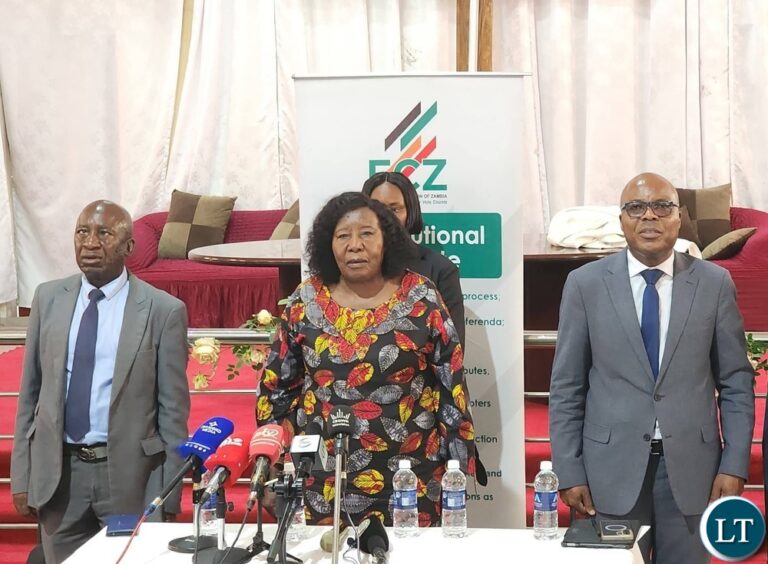
Announcing the development, ECZ Chairperson Mwangala Zaloumis said the delimitation process involved balancing public expectations with constitutional requirements.

“Today’s outcome may not meet every expectation. That is understandable. Delimitation is never an exercise in satisfying every demand, especially given that we only have an additional 70 constituencies against a total of 116 districts countrywide,” she said.

Zaloumis explained that the Commission had to consider various factors, including population density, geographical size, and accessibility challenges in different parts of the country.

“Some areas are large and remote, others densely populated, and some difficult to access. Equality must be balanced with practicality,” she said.

She added that the creation of new constituencies is aimed at strengthening democratic representation as the country prepares for future elections.

“The Commission had to weigh all these realities carefully. As we announce these 70 new constituencies, let us remember that democracy is strongest when representation grows with the people, when institutions work within the law, and when national decisions are explained honestly and accepted peacefully,” she said.

Bishops Council of Zambia commends President Hichilema

0

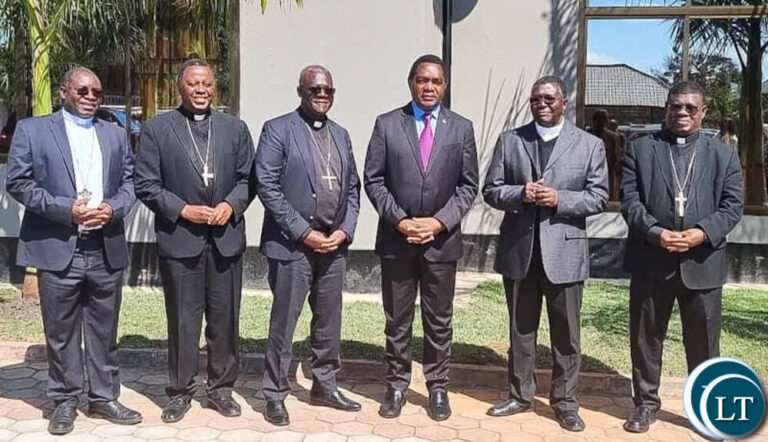
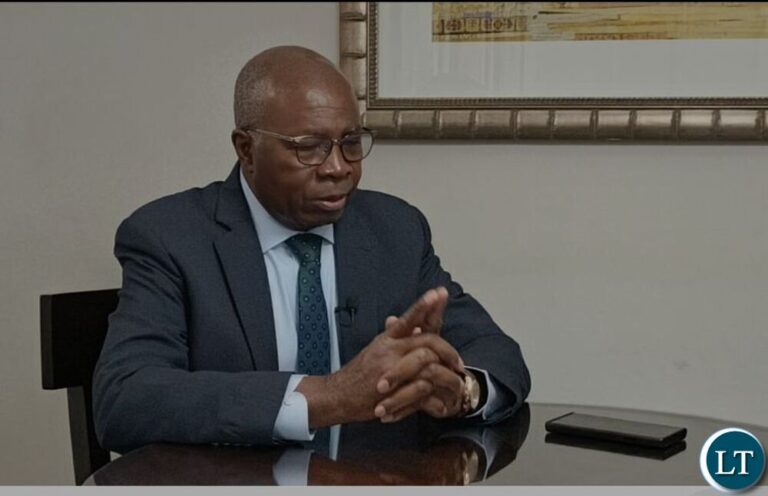
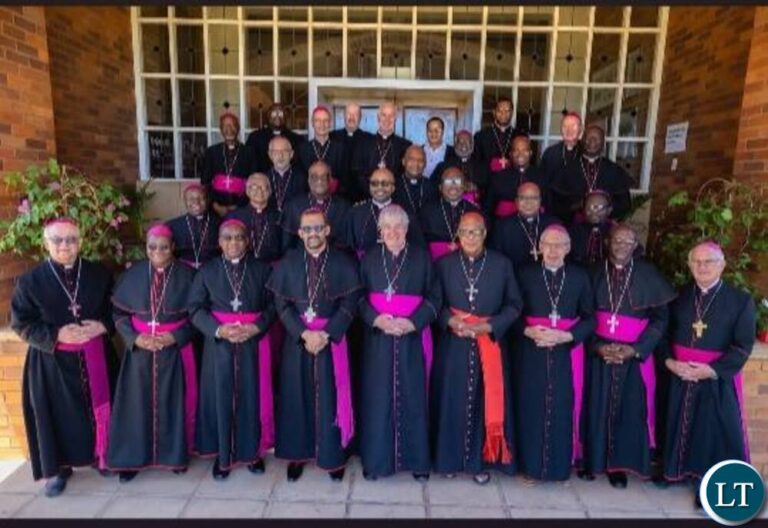
Bishops Council of Zambia President Martin Silwimba has congratulated President Hakainde Hichilema on his election as President of the United Party for National Development (UPND), noting that the development is as a reflection of the confidence and unity within the ruling party.

Speaking in an exclusive interview with the media, Bishop Silwimba says President Hichilema’s election at the just-ended UPND convention demonstrates the party’s commitment to democratic principles and orderly leadership transitions.

“We wish to sincerely congratulate President Hakainde Hichilema on his election as President of the UPND, this is a clear indication of the trust and confidence that party members have in his leadership, “he said.

Bishop Silwimba has also urged party members who were not adopted or elected during the convention to remain loyal and supportive of the party leadership, emphasising the importance of unity in sustaining national development.

“To those who were not adopted or elected, we encourage you to remain steadfast and continue supporting the President and the party. Unity is key to building a stronger and more prosperous Zambia,” he said.

Bishop Silwimba further commended the UPND for holding a peaceful and orderly convention, noting that the conduct of the event sets a positive example for Zambia’s political landscape.

“We are impressed with the peaceful manner in which the UPND conducted its convention, this is the kind of political maturity that the country needs as we move forward,” he said.

Bishop Silwimba has since called on the opposition political parties to emulate the UPND by promoting peace, love and unity in their internal processes and national engagements.

“As a nation, we must prioritise peace and unity above all else, we encourage other political players to learn from this example and ensure that their activities contribute to national development”, he said.

The Bishops Council of Zambia has reiterated its commitment to promoting peace, dialogue and unity as the country continues on its democratic path.

Govt team begins consultations on mine closure guidelines

0

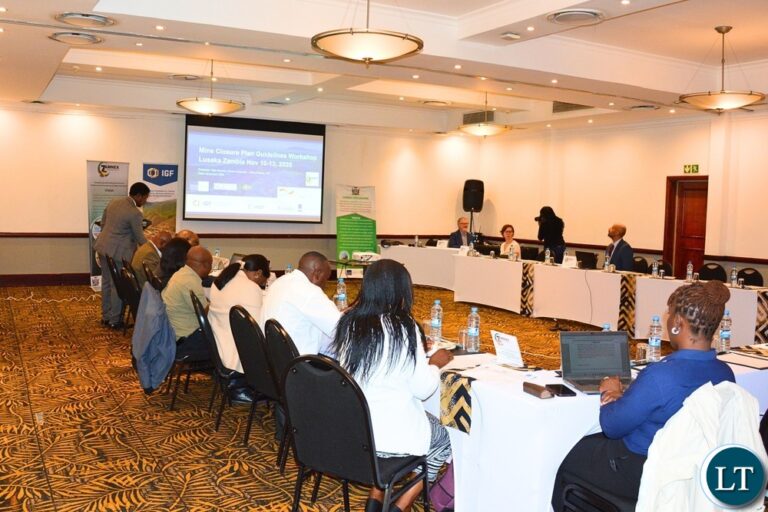
A technical team engaged by the government under the Zambia Mining and Environmental Remediation and Improvement Project (ZAMNEX) has arrived in Northwestern Province to support the development of national mine closure guidelines.

The team will consult local communities and traditional leaders to understand how mine closures may affect people whose livelihoods depend on mining.

Mine Closure Work Coordinator and Senior Geologist Anna Apler said during a courtesy call on the Provincial Administration in Solwezi that inadequate mine closure planning can lead to long‑term environmental damage and prolonged socio‑economic challenges for mining‑dependent communities.

“We are here in Northwestern Province to listen to the views of as many people as possible because mine closure may mean different things to different people,” she said.

Dr Apler noted that with several mines in the province approaching mid‑ to late‑life stages, this is an opportune moment to assess how mine closure is currently planned and governed.

“There is a need to explore pathways for post‑mining transitions that are environmentally sound, socially inclusive and economically sustainable,” she said.

She added that the case study will contribute to national efforts to strengthen Integrated Mine Closure (IMC) approaches, with particular focus on social aspects such as livelihoods, service provision, land use and long‑term community resilience. The findings will help inform the development of comprehensive National Mine Closure Plan (MCP) guidelines.

Meanwhile, Northwestern Province Deputy Permanent Secretary Luckson Mulumbi said mine closure planning is a critical component of mining operations.

Mr Mulumbi emphasised that the province plays a major role in Zambia’s mining sector, contributing significantly to national copper production.

Welcoming the case study, Mr Mulumbi stressed the importance of preparing for life after mining.

“We understand that every mine has a lifespan. So what happens to the people in mining areas after the minerals are depleted? What happens when we no longer see excavators in the pits or trucks transporting copper? What happens to communities when there is no income from mining?” he asked.

He said it is essential to develop a scientific understanding of the implications of mine closures and to put guidelines in place to support affected communities.

Mr Mulumbi added that government has a vested interest in ensuring a smooth transition while protecting citizens’ rights in line with the Constitution.

He also highlighted the need to prioritise environmental protection, noting that tailings dams may contain hazardous materials that pose long‑term risks if not properly managed.

Mr Mulumbi urged ZAMNEX to ensure mine closure planning considers how other sectors such as tourism, manufacturing and agriculture can continue to grow after mining ends.

He warned against over‑reliance on a single sector, saying poorly managed mine closures can have consequences that last for decades.

WWF upgrades 27 boreholes in eastern province districts

0

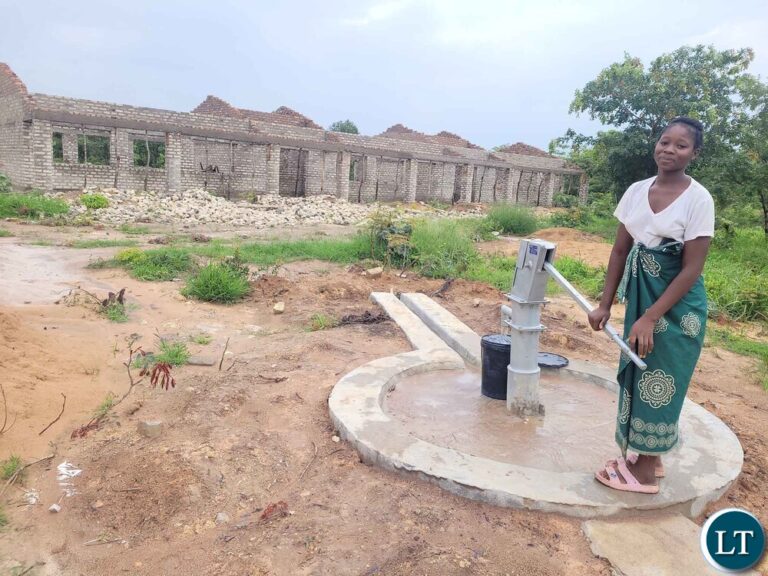
he World-Wide Fund for Nature (WWF) With support from the Global Environment Facility (GEF) and the Food and Agriculture Organisation (FAO) has upgraded and mechanized 27 boreholes in Nyimba, Petauke and Lusangazi Districts of Eastern Province.

WWF Business Incubation Officer Philip Miyoba said the borehole mechanisation exercise was a drought response action after the drought experienced in the 2023/2024 farming season.

“To improve production at community level, the project has engaged the Ministry of Water Development and Sanitation to mechanize the boreholes. So, across the three districts we have 27 boreholes that have been mechanized and upgraded from hand pump to solar systems,” he said.

Mr Miyoba also indicated that the institution was drilling 16 exploratory boreholes for ground water monitoring adding that, the project has produced three aquifer maps for the three districts.

“We have 16 exploratory boreholes that have been drilled in the three districts. These boreholes will help give the relevant stakeholders essential information on the groundwater mapping in the three districts,” he said.

Further, Mr Miyoba disclosed that about 4,000 hectares of land have been preserved through the various Community Forest Management Groups (CFMGs) his institution was supporting.

“In Nyimba, we have three CFMGs, in Petauke we have one and in Lusangazi we also have three. So, the total area that these communities have committed to sustainably manage is 4,000 hactares,” he said.

Hichilema Acknowledges Concerns Over Police Recruitment

21
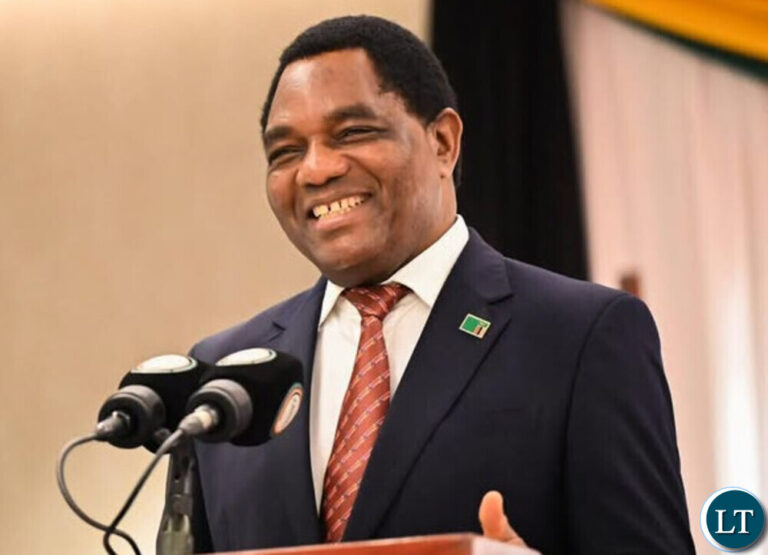
President Hakainde Hichilema says government is aware of public concerns surrounding the recent police recruitment exercise and has begun addressing the matter.

The President’s remarks follow complaints from members of the public and stakeholders over an in-house recruitment conducted by the Zambia Police Service, which some have criticised as lacking transparency.

Police earlier clarified that the exercise was intended to fill vacancies arising from retirements, attrition, and resignations, and that it had received the necessary approvals. However, critics argue that the 2026 recruitment process should have been publicly advertised.

Speaking during the United Party for National Development general assembly, President Hichilema assured citizens that the concerns are being handled.

“I have heard about the issues of police recruitments. We are addressing those issues right now,” he said.

The Head of State emphasised that it is government’s responsibility to respond to issues affecting citizens, noting that Zambians entrusted his administration with the mandate to create jobs.

“That’s our job, that’s why you put us into office… we are a Government that has been recruiting people across the country,” he said.

President Hichilema further stated that government remains committed to creating more employment opportunities by fostering a conducive economic environment for growth and development.

Government Backs Smart Mining Innovations

0

Government has reaffirmed its commitment to supporting innovations that promote smart mining in Zambia.

Mines and Minerals Development Permanent Secretary Hapenga Kabeta said the formulation of favourable policies is key to driving technological advancement and sustainability in the mining sector.

Speaking during the commissioning of an all-electric Hitachi EH 4000 truck at Kansanshi Mine, Dr. Kabeta noted that embracing innovation will enhance productivity and position Zambia’s mining industry as a competitive player on the global market.

Meanwhile, First Quantum Minerals Limited (FQM) Chief Executive Officer Tristan Pascall said the company remains committed to advancing innovation and energy efficiency in its operations.

He explained that the introduction of modern electric mining trucks at Kansanshi Mine is aimed at reducing dependence on fuel and lowering carbon emissions.

In a related development, Ray Kitic, Vice President of Hitachi’s Mining Business Unit, described the deployment of electric equipment as a major step toward cleaner and more sustainable mining operations.

The initiative reflects growing efforts within Zambia’s mining sector to adopt environmentally friendly technologies while improving operational efficiency.

Zambia Loses US$200 Million in Fuel Tax Relief Measures – Musokotwane

Minister of Finance and National Planning Situmbeko Musokotwane says Zambia has lost approximately US$200 million in revenue due to tax relief measures implemented on petroleum products.

Dr Musokotwane explained that the loss stems from government’s decision to suspend excise duty and zero-rate Value Added Tax (VAT) on fuel, a move aimed at cushioning citizens and businesses from rising costs.

The minister made the remarks during the IMF and World Bank Spring Meetings held in Washington, D.C., where he shared Zambia’s experience in managing the economic impact of global shocks.

Speaking at the IMF Africa Fiscal Forum, Dr Musokotwane called for African countries to adopt more strategic fiscal policies that go beyond responding to crises and instead focus on long-term economic transformation.

He warned that a potential energy crisis linked to tensions in the Gulf region poses an immediate threat to African economies over the next 12 months.

According to the minister, such a crisis could drive inflation higher, increase production costs, and put additional pressure on already strained national budgets.

“African governments must also continue undertaking domestic reforms that improve resilience and strengthen the quality of public spending,” he said.

Dr Musokotwane further challenged African nations to reflect on why the continent has fallen behind in sectors where it once had competitive advantages.

He stressed the need for increased investment in productivity, skills development, manufacturing, and value addition.

“Economies that produce more, diversify more, and trade more competitively are better positioned to absorb shocks without slipping into repeated crisis,” he said.

Southern African Catholic Bishops Rebuke Trump Over Remarks on Pope

0
The Southern African Catholic Bishops’ Conference (SACBC) has come to the defence of Pope Leo XIV, expressing concern over comments made by Donald Trump and urging him to refrain from what they described as arrogance.

The development follows recent remarks by Pope Leo XIV condemning the ongoing conflict involving the United States and Iran, where he called for dialogue and peaceful resolution.

However, the Pope’s stance drew criticism from Trump, who reportedly described the Pontiff as “terrible” and “weak on foreign policy.”

In response, Pope Leo maintained his position, stating during a trip to Algeria that he would continue speaking out against war and was not intimidated by the Trump administration.

Backing the Pope, SACBC President Cardinal Stephen Brislin said those who initiate wars cannot claim that such actions reflect the will of God.

“God is the God of life, not the God of destruction and death,” Brislin said in a statement.

The bishops said they were deeply disturbed by what they described as misleading allegations directed at the Pope and reaffirmed their support for his stance on peace, human dignity, and justice.

They further emphasised the Pope’s concern for migrants, victims of war, and the dangers of prioritising power and wealth over moral responsibility.

“We are grateful to the Holy Father for his fidelity in proclaiming the Gospel and we support him as he prophetically speaks truth to power,” the statement read.

The bishops also called on global leaders, particularly those involved in conflicts, to listen to the suffering of affected populations and embrace humility.

“We call for conversion from arrogance and trust in power and domination,” Brislin added, urging a shift toward compassion and peace.

Zambia’s ruling partys’ diminishing terms in office

By Nkonkomalimba Kafunda

The upcoming general election has had me thinking about how ruling party’s terms in office have been progressively declining since independence in 1964.

Broadly speaking the United National Independence Party (UNIP) ruled for six terms with strongman Kenneth Kaunda at the helm from 1964 to 1991, their last term being cut short by two years due to early elections brought about by popular discontent against the 17 year old one party state. On December 4, 1990 President Kaunda repealed article 3 of the constitution which had prohibited multipartism.

The unsilenceable calls for democracy concerted by pressure group turned political party, the Movement for Multi Party Democracy (MMD) had forced Kaunda’s hand.

At elections held on October 31, 1991 MMD candidate, firebrand union leader, sophistical rhetorician and accomplished orator, Frederick Chiluba convincingly trounced Kaunda garnering 80% of the popular vote. His party, MMD, won 125 of the 150 seats in the national assembly.

In 2001, Chiluba reluctantly anointed Levy Patrick Mwanawasa as his successor having failed to extend his reign beyond the constitutionally limited two terms.

At elections held at the end of December[Ma1] 2001, Mwanawasa emerged victorious with the narrowest of margins, a cloud of controversy and widespread accusations of rigging. His closest opponent, Anderson Kambela Mazoka of the United Party for National Development, formed only three years previously, trailed Mwanawasa by less than a percentage point, the latter getting around 28.3% and the former 27.6% or thereabout. A protracted legal battle ensued but Mwanawasa carried the day. Mazoka died in 2003.

Having successfully run for the 2006 re-election, Mwanawasa died in office in2007 and was succeeded by his vice president Rupiah Banda after the first ever Zambian presidential by election.

In 2011, the MMD’s four terms came to an abrupt halt when Banda lost the election to Michael Sata of the Patriotic Front. Upon Sata’s death in October 2014, Lawyer Edgar Chagwa Lungu took the reigns of power wining the presidential by election in January 2015 and the general election 15 months later.

Incumbent President, Hakainde Hichilema ended the PF’s two terms with a decisive victory at elections held on August 12, 2021. From the pattern that has been set above, would it be far fetched and unreasonable to conclude that the UPND is a one term government?

The reasons for the decline in ruling party fortunes are as varied as they are various. An overview.

United National Independence Party (1964-1991)

As the name suggests, UNIP was the party of liberation, independence and self determination for the Africans of Northern Rhodesia. Upon attainment of independence Kaunda and his colleagues set out to develop the infant country through education, health and infrastructure projects across all economic sub sectors. Additionally, they sought to transfer the means of production into indigenous hands. The Mulungushi and Matero reforms of 1968 1nd 1969, for all intents and purposes, nationalized industries ranging from insurance to banking, mining to haulage, transport to hotels and the hospitality industry in general. Coupled with investments in value added industry in rural areas such as pineapple cannery in Mwinilunga, batteries in Mansa, coffee in Kateshi, tea in Kawambwa, the government not only sought to strengthen its grip on industry, it also aimed to prevent rural urban migration.

UNIP also had a brutal side to it. Pro opposition businessmen were denied trading licences, UNIP card holders were given priority in getting both government employment and accessing government services like health care and education. Interparty violence was rampant as were detentions and prosecution of opposition leaders. In 1973 a one party state was introduced after a 1969 plebiscite that voted for abolition of the multi party state.

These changes made Kaunda, more or less, president for life. The position of Vice President was abolished clearly indicating that succession was not on Kaunda’s mind. (The country up to this point had had three Vice Presidents Reuben Kamanga, Simon Mwansa Kapwepwe and Mainza Chona, in that chronology). The oil crisis that followed the Yom Kippur war of October 1973 when Arab armies attacked Israel almost annihilating the Jewish state, coupled with falling copper prices wrecked havoc on the Zambian economy. The government borrowed heavily and unsustainably to meet budget deficits. In the early 1980’s the UNIP regime fell out with both Bretton woods institutions; The World Bank and the International Monetary Fund (IMF)bringing an already fiscally handicapped economy onto it’s knees. Foreign exchange was in short supply to an extent that imports of things considered luxuries by the government were banned. Concentrates for Coca cola, apples, chocolates, butter were nowhere to be seen. A privileged few who had access to dollars could shop from a handful of duty free shops run by the government that charged hard currency for all goods and services. An attempt at self reliance was made and locally produced goods such as sub standard soft drinks Tip Top and Quench hit the shelves.

In the wider economy, there were shortages of almost everything. It was advisable, at the time, to join any queue you find as you may be lucky enough to buy one of the rationed essential commodities whether you needed it or not.

By 1986 the shit had hit the fan. Zambians had had enough. Food riots broke out in Lusaka and the Copperbelt shaking UNIP to it’s core, this being the first popular uprising against Kaunda and his cohorts. By 1990 the writing was on the wall. On June 30 Junior army officers unsuccessfully attempted to overthrow the government. On July 25-26 the MMD was formed to push the multiparty agenda. On December 4, Kaunda capitulated freeing all political prisoners (including coup plotters) and repealed article 3 of the constitution ushering in a new multi party dispensession.

Movement for Multi Party Democracy (1991-2011) The MMD with Chiluba at the helm inherited a country in economic decline. The mines were suffering from lack of reinvestment. The transport sector was inadequate. There were shortages of almost everything from beer to mealie meal, cooking oil to washing soap. The parastatal sector had failed. The government set about liberalizing access to the economy and privatization of state owned enterprises, or at least those that were viable. The result was massive redundancies and retrenchments, the shrinking of formal employment figures and closure of many companies which could not compete with imports from more efficient production process from more advanced economies.

An economic Structural Adjustment Program was put in place. This was later replaed by a more advanced Enhanced Structural Adjustment Program the forerunner to the Highly indebted Poor Country HIPC) initiative.

When Mwanawasa ascended to power in January 2002 he continued with these policies which enabled the country reach the HIPC completion point and debt relief with help from the catholic driven Jubilee 2000 initiative. The country enjoyed a period of macro economic stability, a strong exchange rate that led to importation of vehicles and other luxuries by ordinary citizens. In this period of relative prosperity, the mines were privatized and new operations opened up in North Western Province. These green fields included Lumwana and Kansanshi mines.
Upon Mwanawasa’s death in 2007, Vice President Banda won the by election. His short three year reign, by and large, did not shift from the path left by his predecessor. Banda was seen as a steady pair of hands who loved his peace and frowned upon anything that would rock the boat. Economic fundamentals were largely positive, with low inflation, a stable exchange rate, reasonable base lending rate and negligible foreign debt.

However, Zambians wanted change and in Michael Sata and his political rhetoric they saw deliverance. The populist former MMD National Secretary and CEO whipped up popular support promising the masses ‘more money in your pockets’ and encouraging voters to accept campaign freebies from the MMD without necessarily voting for them. This won him the 2011 poll with 43% against Banda’s 38%.

From the outset the Sata presidency was a comedy of errors. He appointed people to positions they did not qualify (at one time appointing a bank branch manager relative as Deputy Governor of the central bank) he nominated 10 members of parliament instead of 8. He created districts with no budgetary provision for their establishment.

At a luncheon held at state house in honor of the then immediate past American President George W Bush and his wife, Sata had to be corrected by Bush that the Americans, having been a colony themselves, had never colonized any country, after Sata had lambasted American colonialism in his speech.

On the economic front, the disaster was worse. Money was borrowed at commercial rates rather than the traditional concessionary rates of the World Bank and the IMF, through three Euro Bonds totaling US$3 billion. More loans were contracted bilaterally, most notably from China ostensibly for infrastructure projects. This trend continued after Sata’s demise and Lungu’s ascendancy.

But what really cost the PF the election was the unprecedented levels of Indispline exhibited by both party cadres and officials. Harassment of traders, bus drivers and ordinary citizens became so common place that it was the rule not the exception. Cadres charged and collected levies from bus stations and markets. The police were rendered impotent in the face of cadre aggression to an extent that cadres once stormed a police station and assaulted officers. By the time the United Party for National Development (2021-) came to power in August 3021, the country was back at unsustainable debt levels, an empty treasury and the notoriety of having been the first African country to default on its foreign debt obligations during the COVID pandemic.

After it’s resounding victory, the UPND set debt restructuring as a priority . After protracted negotiations with the Paris Club of creditor nations co chaired by France and China, the country is now paying around US$900million from US$2.3 billion per year and the administration is seeking ways to reduce this even further even though this is really kicking the can down the road as future generations will find and struggle with this debt.

Macro economic stability has been attained, with single digit inflation and a stable exchange rate, the Kwacha having gained about 33% in value in the past few months. The UPND has introduced free education, school feeding programs, bursaries for tertiary education and grants and loans for cooperatives through enhanced Constituency Development Funded which has skyrocketed from K1.6 million in 2021 to K40 million in 2026. In the agriculture sector, support has been enhanced with the introduction of various financing programs for farmers. Interventions have also been made to support growth in tourism, mining and manufacturing.

The problem working against UPND longevity in office is the cons outweigh the pros. The cost of living remains unbearably high for the vast majority with families having one or no meal a day . Whatever gains the UPND may have achieved, real or imagined, have not had a trickle down effect. Prices have remained stagnant or have gone up. Selective justice on mainly corruption and other economic crimes is largely seen as targeted at the opposition Patriotic Front leadership and their followers. Shenanigans to discombobulate the PF through an orchestrated campaign of destabilization has backfired with Zambians sympathizing with the PF for what they see as gross injustice.

The fight against corruption is seen as largely flawed, with many questioning the autonomy of the Anti Corruption Commission and the Drug Enforcement Commission where the country’s Anti-Money Laundering Unit sits. Deals like the sale of Mopani mine without parliamentary oversight as required by law, and the haughtiness and arrogance exhibited by mines minister Paul Kabuswe when questioned in parliament have not held the ruling party in good stead.

The tendency by government to enter into Memoranda of Understanding with foreign investors containing non disclosure clauses and the dishing out of ten year tax holidays to foreigners, a courtesy not extended to locals, has also raised suspicions on accountable and transparent management of national resources. Infrastructure projects under Private Public Partnerships have also been questioned after roads and bridges failed, in some instances, less than a year after completion.

Oversight institutions of governance are seen as ineffective. The judiciary, for instance, is considered compromised, prone to political interference from the executive and generally invertebrate.

Perhaps the elephant in the room, the whale in the tub that everyone is seeing but not talking about, is the perceived tribalism evidenced in the disproportionate number of southerners in top government and quasi government institution positions. Reports of harassment, intimidation and mistreatment of non Tongas in the civil service and government agencies are rife causing widespread resentment against southerners who are estimated to make up only 12% of the population.

Additionally, the despised , ill defined cyber crimes and cyber security laws are seen as tools used to shrink the country’s democratic space and are being used to stifle dissent. If this were a game park, freedoms of speech, expression and assembly would be considered endangered, almost extinct species. Fred M’membe leader of the socialist party recently revealed that his party had unsuccessfully applied for rally permits 34 times since 2021 adding that the election will be a sham as the opposition have been denied their right to mobilize.

The most abused provision of these laws is hate speech whose definition remains ambiguous, vague and opaque.

The UPND, however, have one thing going for them: a fragmented opposition. The seeds of discord they surreptitiously planted in the PF are now bearing fruit or are they? Mafinga PF Member of Parliament Robert Chabinga is considered a traitor and his sentiments that he will ensure the PF is not on the ballot clearly define the content of his character or in this case the lack of it. In fact is it wise for the UPND to embrace him whole heartedly? What if he is offered more silver in future to do a repeat hatchet job this time on the UPND?

Although Miles Sampa is back in the fold, Brian Mundubile and Makebi Zulu are leading two separate campaigns for the presidency when theirs should be a combined effort.

The mass defection of MPs, Mayors and Councilors, while stage managed for the optics to have maximum effect of showing a week and disoriented opposition, have not fooled the people with the majority of callers to various radio stations having no kind words for the renegades.

The biggest opposition, however, remains the hungry and angry people of Zambia who feel they have been lied to, trampled upon and taken advantage of. They often cite the prolonged load shedding the nation endured while ZESCO was exporting power to the region as an example of how indifferent this government is. The fact that normal supply has been restored as we head to elections is seen as a ploy to hoodwink voters.

After four and a half years of UPND rule, are Zambians waiting for dusk to set to the new dawn come August 13? We shall wait and see.

Hunt For Successor Two: Why Hichilema is The Wrong President For Zambia

24

By Dr. Field C. Ruwe

African Autonomy vs Oppenheimer’s Neoliberal Imperialism

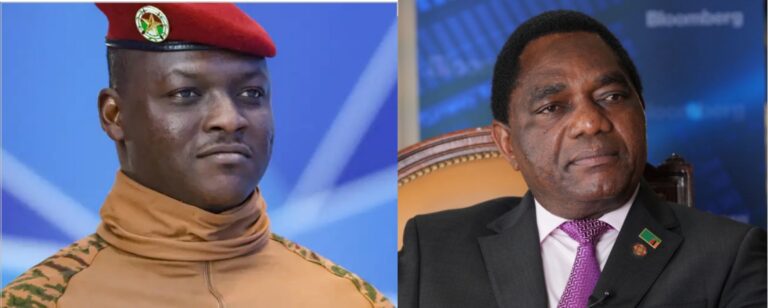
Recent political comparative analyses indicate that Captain Ibrahim Traore of Burkina Faso has eclipsed President Hakainde Hichilema of Zambia in Africa’s quest for economic autonomy. Recognized as one of the youngest heads of state globally, the 38-year-old Traore has attracted considerable interest from Africa’s youth, who commemorated Hichilema’s decisive victory on August 16, 2021.

The ascent of Hichilema in 2021 was regarded as a significant milestone in African politics, driven by the urgent aspiration of African youths for African autonomy. His triumph was achieved through the “Silent Revolution,” which was partially propelled by a digital alliance of Zambian social media influencers, among them Joseph Kalimbwe, Mutale Mwanza, and Mwizukanji, who leveraged social media to remove President Edgar Lungu through the electoral process.

The Silent Revolution was hatched out of the Tunisian Revolution (Dec 17, 2010-Jan 14, 2011) that ousted President Zine El Abidine Ben Ali, profoundly reshaping African politics. The revolution’s slogan, “The people demand the fall of the regime” became a cross-border anthem for protesters across Africa demanding Pan-African governance that catered to their needs.

It was the first time in Africa, the youth used social media to circumvent censorship, coordinate protests, disseminate information, expose police brutality, and remove a sitting president. The success of the revolution served as the catalyst for a broader African awakening that led to the removal of Egyptian Hosni Mubarak (2011), Zimbabwean Robert Mugabe (2017), South African Jacob Zuma (2018), and Sudanese Omar al-Bashir (2019).

Similarly, the youth-led voter mobilization in Zambia brought an end to the progressively autocratic governance of Edgar Lungu. The remarkable voter turnout observed on election day was referred to as a “Ballot Revolution,” which caused youths across Sub-Saharan Africa to join in the celebration of Hichilema’s triumph, deemed a model for the peaceful removal of African dictators.

In South Africa, ecstatic youths disseminated videos of Hichilema’s inaugural address, highlighting his commitments to African autonomy. Their plea revolved around “Economic Pan-Africanism”—an ideology based on “sell Africa to Africans,” intended to achieve collective self-reliance and the empowerment of African nations.

What the youths of South Africa, as well as the broader African youth, including the Zambian youths who voted for Hichilema did not know was that he does not identify himself as a Pan-Africanist. He belongs to the reactionary African bourgeoisie or comprador elite. By virtue of his wealth, estimated at $340 million as of early 2026, according to Al Jazeera, his cattle ranch, together with property investments in South Africa and the UK, and his cabal (secret faction) connections, he identifies himself as a neo-liberal imperialist.

Within the framework of radical Pan-Africanism and anti-imperialism discourse, an African neo-liberal imperialist such as Hichilema is viewed as a “neocolonial servant” and is considered an enemy of the African continent. This perception arises from his prioritization of foreign investment and the repayment of debts owed to the IMF and World Bank. His policies frequently trap resource-abundant Zambia in cycles of foreign exploitation, aimed at fulfilling substantial interest payments that result in severe poverty for local communities.

According to the World Bank 2025 report, Zambia faces the highest levels of poverty globally, with over 64% of the population living on less than $2.15 a day. The Gini Index shows stark inequalities in income and wealth distribution. The top 10% of the population controls 56% of income and 68% of wealth, while the bottom half owns just 9% income and 3% wealth.

These disheartening statistics were released at the height of recognition of Hichilema as one of the world leaders for 2025 by The Telegraph. His selection was not attributed to the transformation of Zambia into a self-sufficient country, to thecontrary, it stemmed from his involvement in global geopolitics, his openness to foreign investment and his mineral diplomacy that enabled foreign access to Zambian resources.

In order to secure support from Western nations, Hichilema has found it necessary to acquiesce to their influence and cultivate personal connections that diverge from the interests of the broader Zambian population. Rather than prioritizing local needs, he has engaged with international cartels, trusts, and foundations, relocating Zambian resources to their organizations, a move that mirrors crony capitalism.

One notable foundation is the now-defunct Brenthurst Foundation, which was founded in 2004 by the Oppenheimer family, known for their involvement with De Beers and Anglo American in South Africa. The foundation is the reason Hichilema is president of Zambia. According to Africa Confidential, Oppenheimer played a role in ensuring Hichilema was elected president, and in transforming him into an imperialist president.

Africa Confidential claims that the foundation is alleged to have been involved in a conspiracy to assist Hichilema in achieving victory in the 2021 election by offering strategic political counsel and financial support. Africa Confidential further states that once Hichilema took office, he enacted policies that were consistent with the Brenthurst Foundation’s Western/neoliberal perspective, which emphasized foreign investment.

Disclosures akin to those made by Africa Confidential have tarnished Hichilema’s reputation among his fellow African leaders. His opponents portray him as a “sellout” who is catering to “Rhodes-Oppenheimer,” thus facilitating “state capture” by foreign entities. After it became known that Hichilema was prioritizing foreign individuals and concepts over local alternatives, Zambian social media influencers who previously supported his election campaign shifted their focus to Ibrahim Traore.

I googled Traore’s achievements since October 21, 2022:

Natural Resources: Reclaimed control over all natural resources. Economic autonomy: Nationalized two major gold mines and stopped exporting gold to Europe. IMF: Rejected assistance from IMF and World Bank. Health: 100% free medical care for all citizens. Education: Scholarships for Nuclear Science. Processing Plants: Cashew and Cotton.

Evidently, Traore’s achievements are the reason young Zambians and their peers across Africa favor him over Hichilema. They see Thomas Sankara in Ibrahim Traore. Renowned for his saying, “he who feeds you, controls you,” Sankara, during his presidency in Burkina Faso (1983-1987), dismissed foreign aid and promoted self-reliance.

A Vote for Hichilema is a Forfeiture of Economic Autonomy

Due to Hichilema’s identity as a neo-liberal imperialist, he is incapable of providing self-reliance for Zambians, regardless of the duration of his tenure. Under his governance, Zambia is perpetually confined to “indirect rule” by Western powers.
The neo-liberal doctrine is perceived as a system that enables foreign corporations to extract copper using foreign labor, rather than promoting a self-sustaining domestic economy led by Zambian workers. Job opportunities are limited because neo-liberalism utilizes legal and institutional frameworks to restrict post-colonial sovereignty and protect the international division of labor, rather than encouraging economic self-determination.

Zambia urgently needs a leader of Traore’s caliber; a leader who emphasizes nationalization and redistribution efforts to recover wealth and reduce dependence on foreign investment. The decision this year, should revolve around African autonomy, which has fostered economic advancement in Burkina Faso, versus liberal imperialism, characterized under Hichilema by four years of severe poverty, wealth inequality, and intermittent power outages.

In the months leading up to this year’s presidential elections, it is crucial to keep in mind that Jonathan Oppenheimer’s objective is to preserve Zambia’s existing condition in which the owner of the mineral resources continues to be a constant subordinate, and the investor takes on the position of ultimate authority.

If you, the youth of Zambia, aspire to break away from the shackles of the West,  it is essential you come together once again and emulate the actions taken in 2021, which led to the removal of a sitting president from State House through the electoral process. There is a Traore in Zambia. Find him. The forthcoming election offers you an opportunity to once again showcase the potential of Zambian youth to the older generation. Start your mobilization today!

Author is a Doctor of Education and a scholar practitioner, affiliated with Northeastern University, Boston, Massachusetts, USA.

Nkana & Power in midweek victories

0

Unstoppable Super League leaders Power Dynamos thrashed Kabwe Warriors 3-0 away in Kabwe on Wednesday, to post their 18th victory in the season.

The away win against Warriors aided defending champions Power to open a seven-point lead at the top of the table with 61 points from 27 matches played.

Power demonstrated their intent to win early by taking a 1st minute lead against Warriors when Super League leading scorer Moses Shumah found the back of the net.

Shumah doubled Power’s lead 10 minutes later – to ink his 20th goal of the season.

Daniel Adoko wrapped up the scoring in the 27th minute as Power edged closer to defending their Super League crown.

It was Power’s third straight victory in a space of eight days.

Fifth placed Warriors remained on 43 points after playing 28 matches.

NKANA END WINLESS RUN

Nkana came from behind to thump bottom side Mines United 3-1 at home in Wusakile on Wednesday to end a five-match winless drought.

Before today’s win, Nkana traced their last win to 7 March when beating Konkola Blades 2-0 at Nkana Stadium.

Luka Ng’uni scared Nkana when he helped Mines to take a 13th minute lead against the run of play at Nkana Stadium.

The two teams went to the half time break with a 1-1 score-line thanks to Harrison Chisala’s equaliser.

Striker Daka stole the limelight in the second half after registering a brace with goals in the 58th and 85th minutes.

Nkana moved two places up to number 11 with 34 points in 29 matches, while bottom placed Mines have 15 points from 28 matches played.

NKWAZI EDGE NAPSA IN RELEGATION CLASH

Nkwazi have jumped out of relegation after beating fellow strugglers Napsa Stars 2-1 in the midweek Lusaka derby.

Former Zambia defender Adrian Chama scored the winner for Nkwazi in the 68th minute.

Habib Kyombo had equalised for Napsa after Carlos Kaoma handed Nkwazi a sixth minute lead.

Nkwazi have jumped one position up to number 14 on the table with 30 points after playing 28 matches.

Napsa are third from the bottom of the table with 27 points from 28 matches played.

In the other midweek match, Green Eagles beat Mutondo Stars 1-0 in Choma thanks to Derrick Bulaya’s 55th minute goal.

Mutondo have dropped in the bottom four after the loss to Eagles.

FAZ Confirms Häuptle’s Request for 50% Pay Cut

4

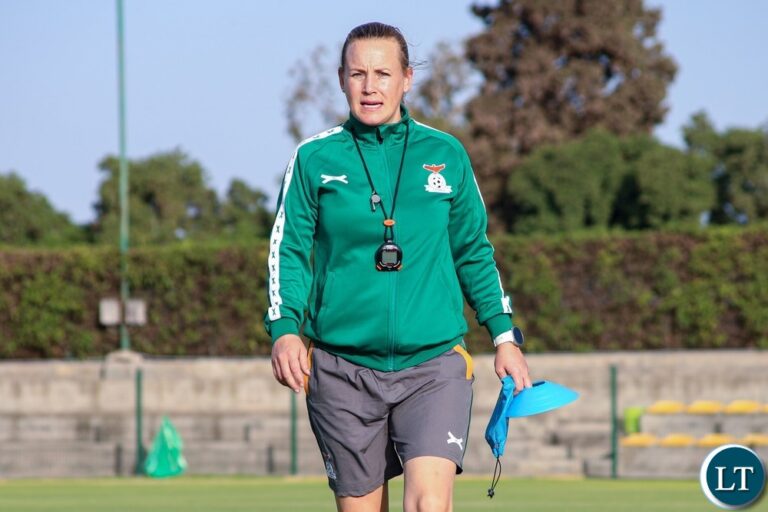
The Football Association of Zambia (FAZ) has confirmed that Copper Queens head coach Nora Häuptle has requested a 50 percent reduction in her salary.

FAZ Head of Media and Communications Nkweto Tembwe disclosed during a media briefing in Lusaka that the request is aimed at allowing Häuptle to take up other professional engagements while still managing the national team.

Tembwe further revealed that Häuptle has also asked to step down from her role as Technical Advisor for the youth teams.

In addition, the coach has reportedly escalated the matter to FIFA, seeking compensation and future bonuses related to the Women’s Africa Cup of Nations (WAFCON) and the FIFA Women’s World Cup.

FAZ says it is currently engaged in discussions with Häuptle in an effort to resolve the matter amicably.

Andyford Banda Declares Third Presidential Bid

9

Two-time presidential candidate Andyford Mayele Banda has announced that he will once again contest Zambia’s top office in the August 13, 2026 general elections, marking his third attempt at the presidency.

Banda, who will run under the People’s Alliance for Change (PAC), said his campaign will focus on empowering Zambians and protecting the country from foreign domination and exploitation.

In a statement, Banda said PAC remains committed to its founding mission and is ready to build on its political journey as it seeks to reshape Zambia’s economic direction.

“It’s time for PAC to carry on its path fighting for the empowerment and protection of Zambians within the country and from foreign domination and exploitation,” he said.

Banda first contested the presidency in 2016 at the age of 35, finishing fourth out of nine candidates. He later returned in 2021, where he again placed fourth, this time out of 16 candidates.

With his 2026 bid, Banda is set to compete against President Hakainde Hichilema and other contenders in the race to State House.

PAC, which has been in opposition since its formation in January 2016, says it has continued to build its electoral strength through participation in by-elections across the country.

During its convention held on September 4, 2025, the party re-elected Banda as president and endorsed him as its candidate for the 2026 general election.

Banda also revealed that the party will revive its 2021 campaign agenda, which had been paused due to unsuccessful attempts at forming alliances with other political players.

“However, PAC believes it’s time to reverse the economic order to ensure that Zambians have a significant role to play in the economy,” he said.

The PAC 2026 campaign will run under the slogan “This time, it’s time for Zambia,” with the party pledging to prioritise citizen participation in governance and economic development.

Drunk Man Kills 3-Year-Old Niece After Tossing Her in the Air

3

A tragic incident in Ndola has left a three-year-old girl dead after her uncle allegedly tossed her into the air while intoxicated and failed to catch her.

The deceased, identified as Janet Mazimba, died after sustaining fatal injuries when she landed on the ground.

According to reports, the suspect, 38-year-old Alimon Simukonda, returned home around 02:00 hours after a drinking spree. Instead of going to sleep, he reportedly began playing with the child.

In the process, Simukonda allegedly threw the girl into the air, sending her over two metres high, but failed to catch her on the way down.

The impact caused severe injuries, with the child bleeding from the nose and mouth. She died shortly after.

The girl’s grandmother reported the matter to Jacaranda Villa Police Post, prompting police to visit the scene.

Officers reportedly found the suspect still heavily intoxicated and largely unaware of what had occurred.

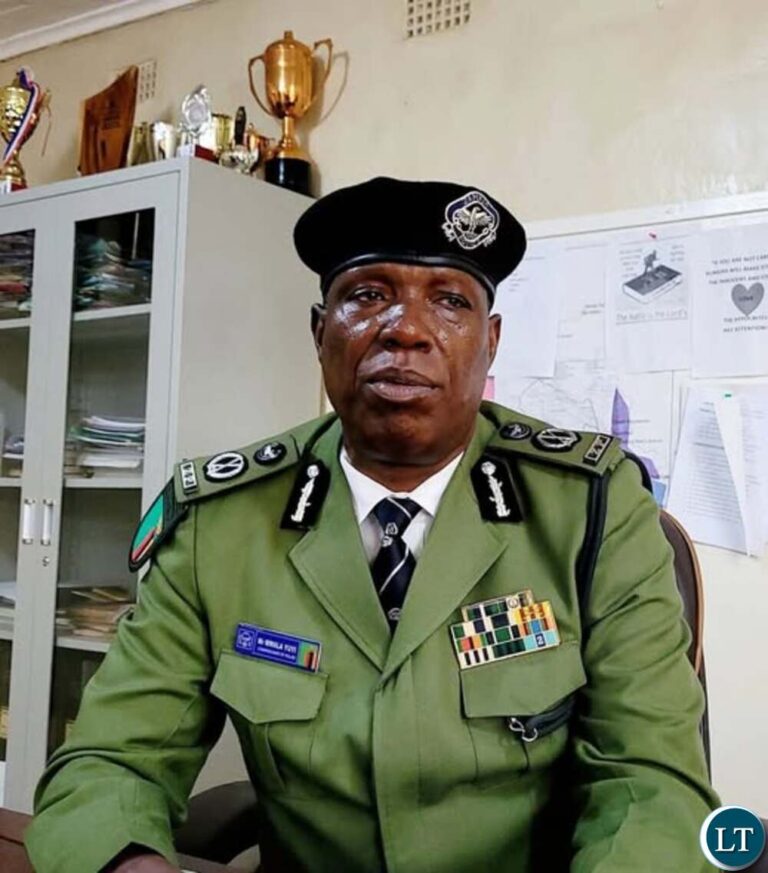
Copperbelt Province Police Commanding Officer Mwala Yuyi confirmed the incident and the arrest of Simukonda.

The suspect is currently in police custody and is expected to appear in court to face charges related to the child’s death.

Hichilema Declared UPND Presidential Candidate Ahead of 2026 Polls

5

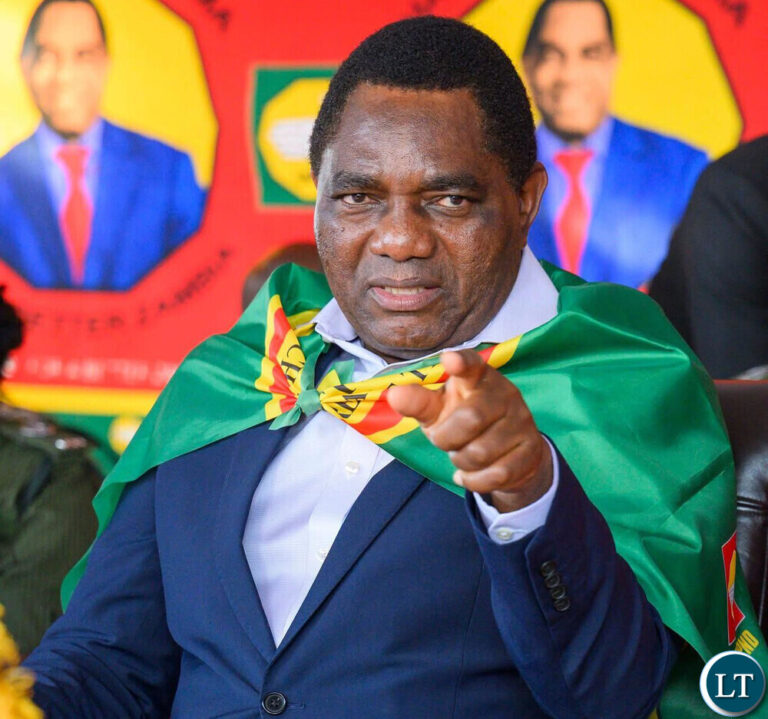
President Hakainde Hichilema has been officially declared the presidential candidate for the ruling United Party for National Development (UPND) ahead of the 2026 General Election.

The declaration follows his unopposed nomination at the party’s ongoing General Assembly held at the Mulungushi International Conference Centre.

Returning Officer Isaac Mwanza announced the outcome, confirming that no candidate had challenged President Hichilema for the party’s top position.

Mwanza further disclosed that three petitions had been filed in an attempt to challenge the Assembly proceedings. However, after review, the petitions were dismissed for being vexatious and lacking merit.

With his adoption as the party’s candidate, President Hichilema is now set to represent the UPND in the 2026 General Election, where he will face contenders from other political parties.

The development solidifies his position as the ruling party’s flag bearer as Zambia prepares for the August 13, 2026 polls.